Inspiration
As head of growth at oro, one of our biggest problems is not being able to outmog our opps.
What it does
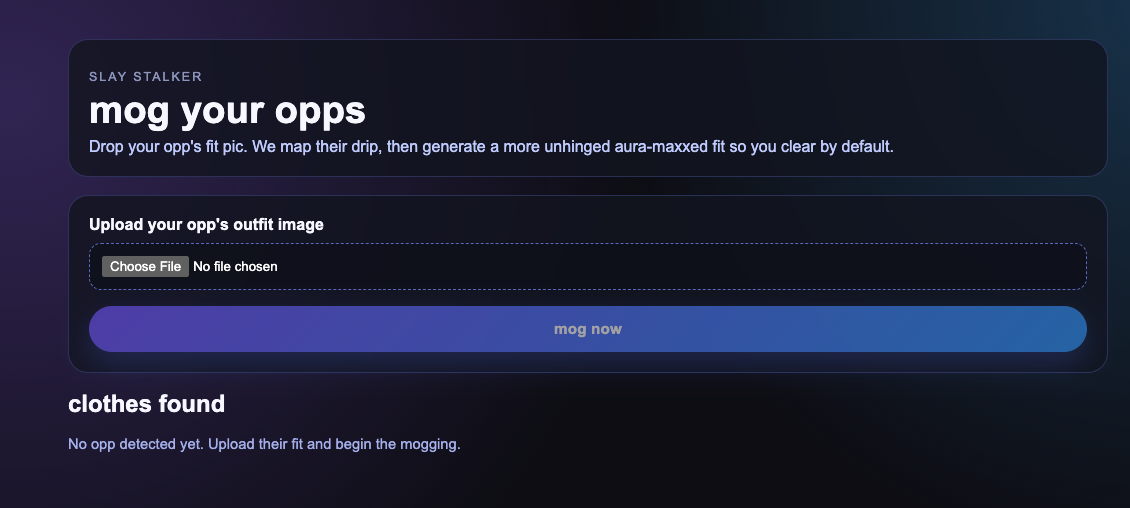
- Upload your opp's fit
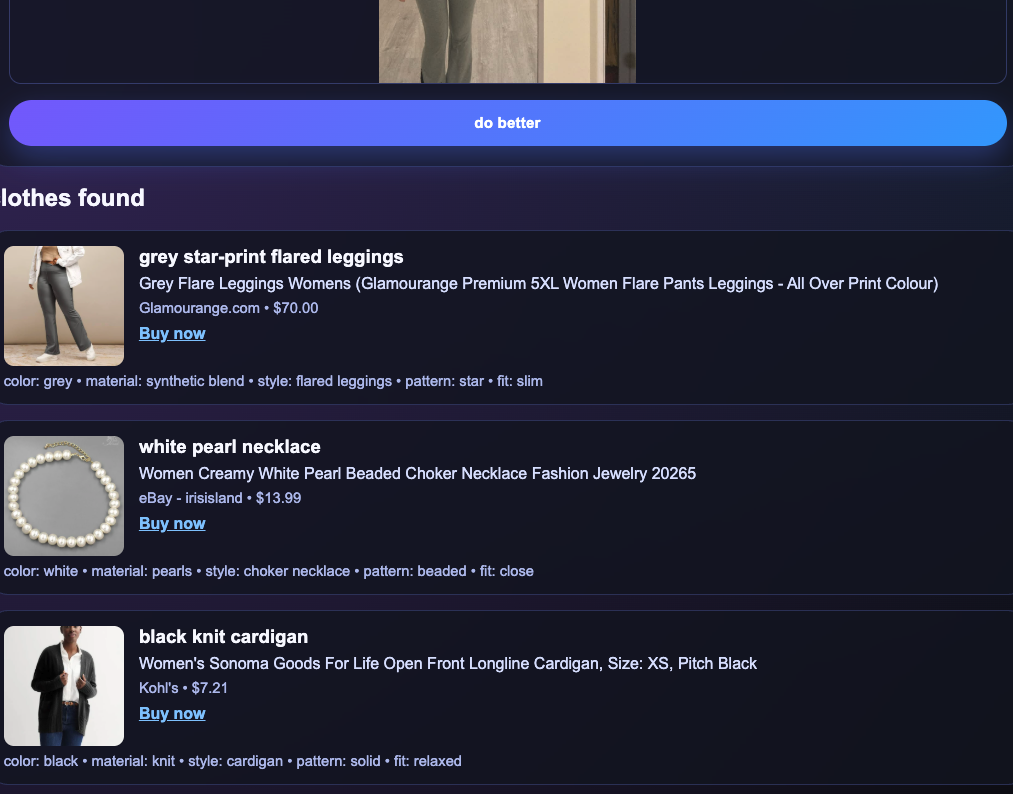
- Finds out where that fit is from
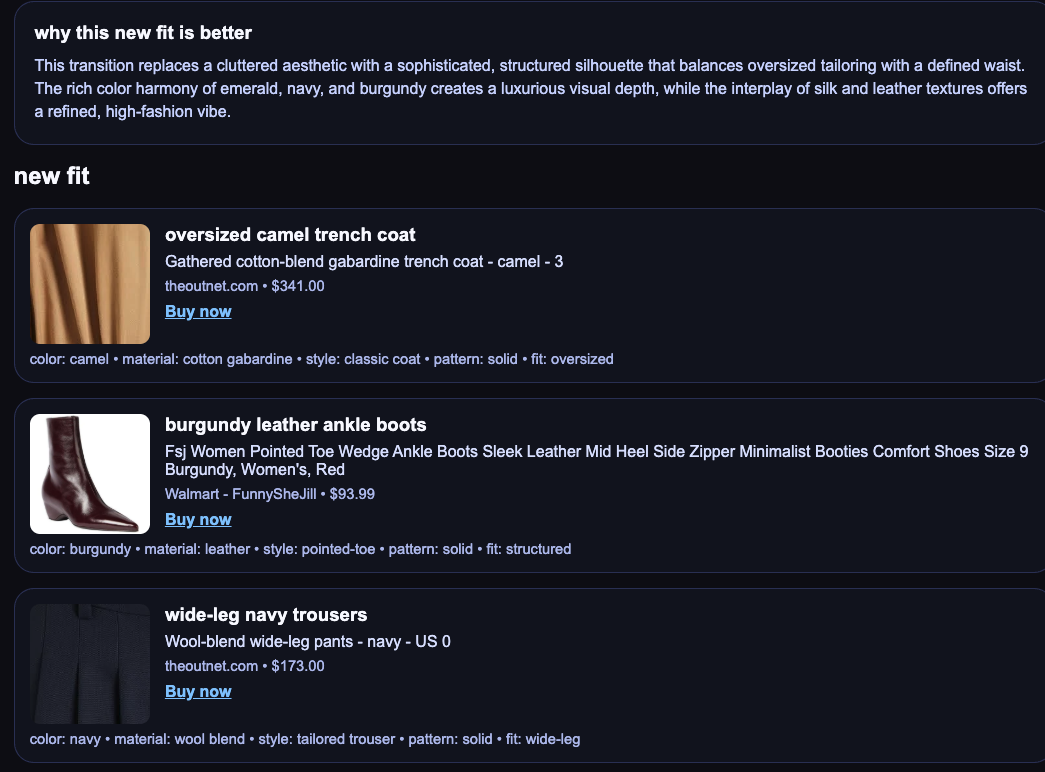
- Suggests ways to MOG your opps
How we built it
- Frontend: Next.js App Router pages (/ landing and /stalk analyzer), custom dark UI, card-based results. Image analysis: Gemini multimodal prompts to extract visible clothing items and attributes (color, style, material, fit).
- Shopping retrieval: Serper shopping API for real product links/images.
- Fit upgrade flow: Gemini proposes a new outfit direction, then Serper resolves those ideas into real products.
- Explainability layer: Gemini generates a short rationale between “clothes found” and “your mog fit.” Response shaping: strict JSON parsing, sanitization, and fallback model logic for robustness.
Challenges we ran into
- Shopping auth/provider mismatch: early 401s required better diagnostics and clearer provider-specific setup.
- Hallucinated product assets: Gemini-generated links/images weren’t consistently real, so we switched to retrieval-backed product resolution via Serper.
- “New fit” quality: initial outputs repeated similar garments, so we tightened prompting and similarity filtering to force more distinct outfit families.
- Tone consistency: balancing meme/brainrot copy with still-usable UX took iteration.
Accomplishments that we're proud of
- Built a full end-to-end pipeline from image input to shoppable output.
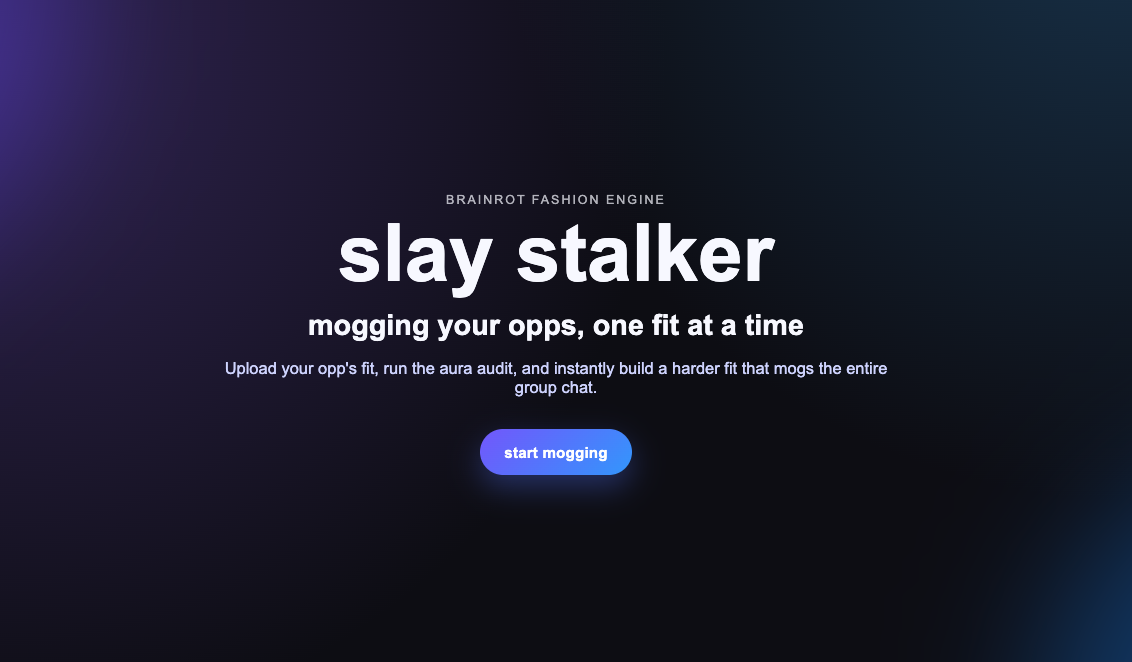
- Added a fun, distinctive brand voice that matches the “dress better than your opp” concept.
- Improved reliability by replacing AI-only product URLs with search-backed real listings.
- Added explainability (why this fit mogs your opp) to make recommendations feel intentional.
- Shipped fast iteration loops on copy, UX, and ranking behavior based on live testing feedback.
What we learned
- AI-only generation is great for creative direction, but retrieval is essential for trustworthy commerce results.
- Prompting alone isn’t enough; adding lightweight post-filters dramatically improves recommendation quality.
- Error observability (status/body snippets/context) is critical when chaining multiple APIs.
- Users care as much about tone and vibe as raw functionality for consumer-facing AI products.
- Small UX wording changes can significantly improve perceived product personality and engagement.
What's next for slay stalker
- integrate this into oro?

Log in or sign up for Devpost to join the conversation.