-
-
stay or leave - remove your confusion
-
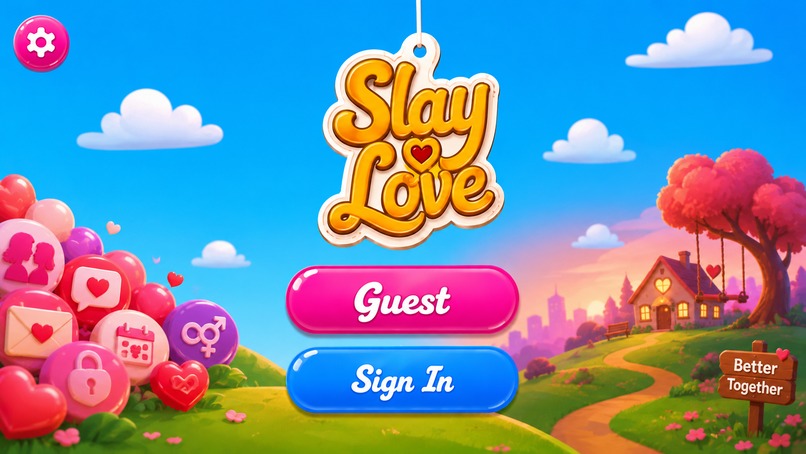
UI for Laptop
-
AI coach - ask anything about your relationship
-

website icon
-
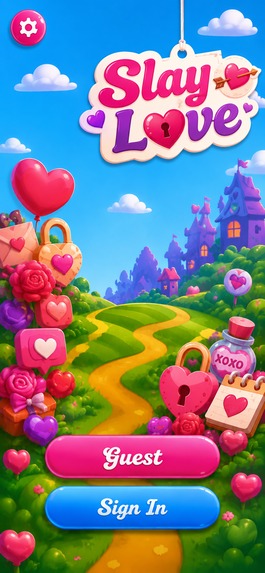
UI for phone
-

guidance feature - get to know what to do next
-
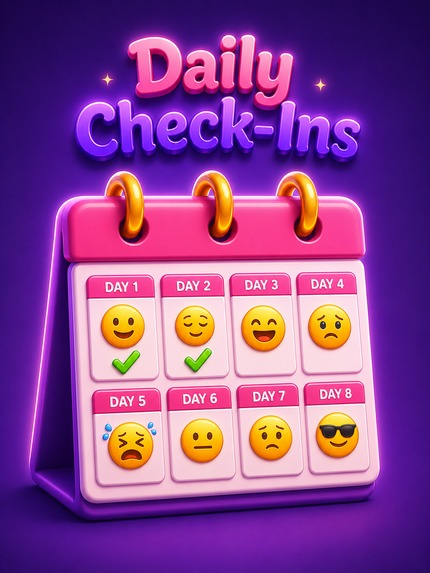
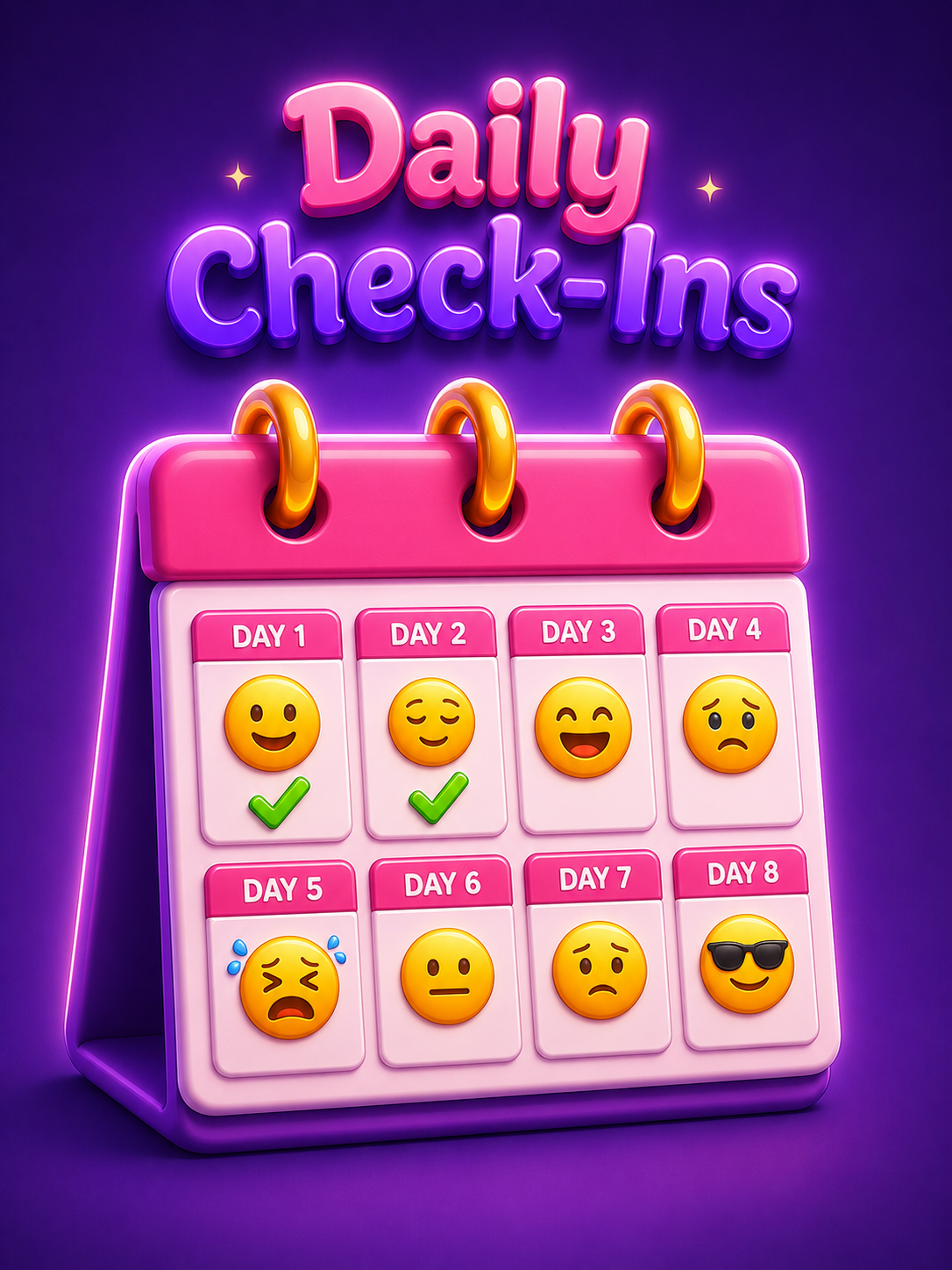
daily mood tracker - long term analysis of your mood
-

people and partners - to compare options
-

healing feature - your best listener and friend

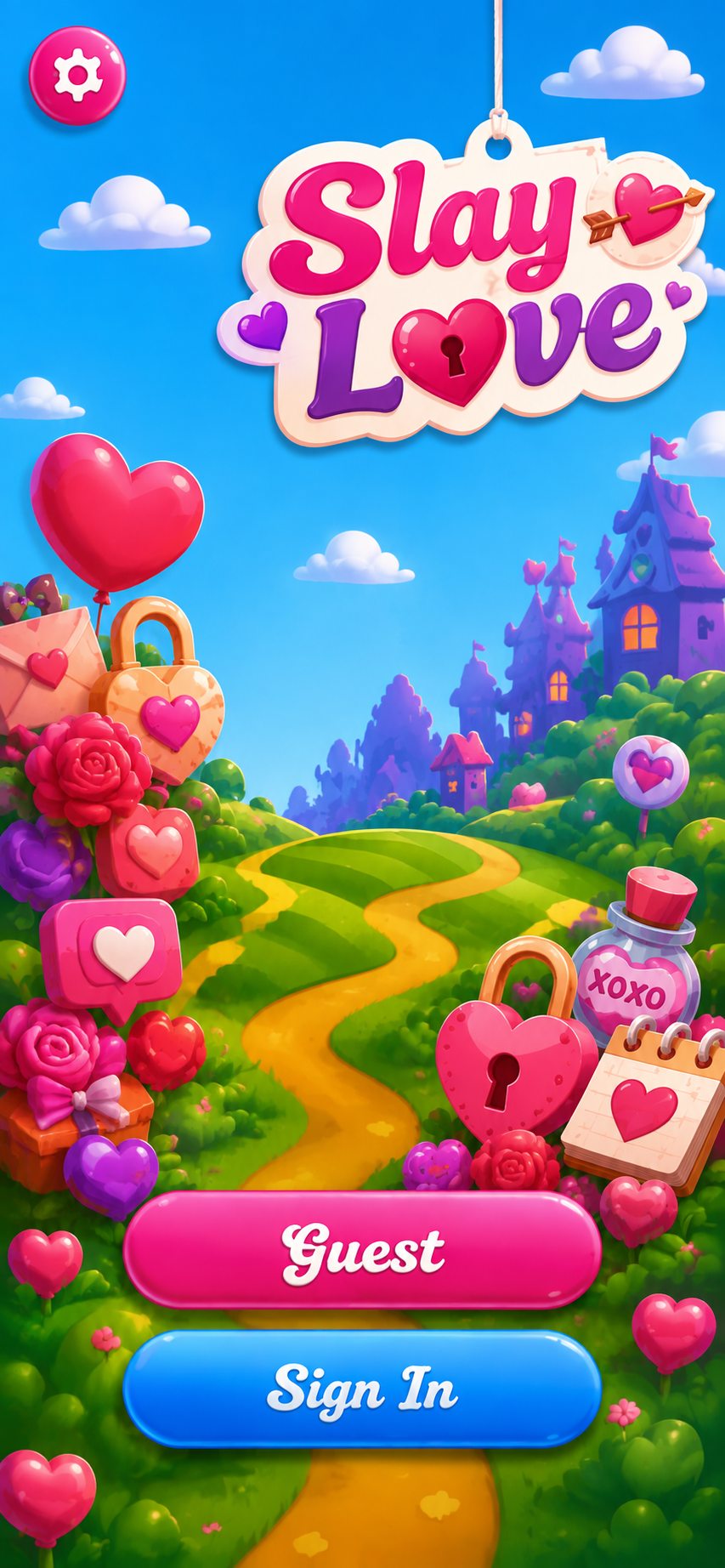



Slay Love — Your AI Relationship Operating System
Inspiration
Relationships are one of the biggest sources of happiness, uncertainty, and emotional friction in people's lives. Yet when someone asks, "Is this a red flag?", "Why do we keep having the same argument?", or "Should I stay or leave?", the answer is usually scattered across friends, Reddit, YouTube, podcasts, therapists, and generic relationship advice.
We wanted to build something different.
Slay Love is an AI Relationship Operating System designed to help people understand their relationships, recognize patterns, reflect before making difficult decisions, and continuously become better partners.
The key idea behind Slay Love is:
AI should help you think more clearly about your relationship — not think for you.
Instead of creating another chatbot that gives one-off advice, we designed Slay Love as a connected system where relationship reflection, decision support, learning, recovery, partner comparison, daily check-ins, and personal growth reinforce each other.
What We Built
Slay Love is organized around four connected pillars:
❤️ 1. Choose the Right Person
The People module helps users keep structured profiles of people they are dating or have dated.
Users can compare people, record relationship observations, and think through compatibility rather than relying entirely on emotions in the moment.
💛 2. Build a Healthy Relationship
The Home experience creates a lightweight daily reflection loop.
Users can:
- Complete mood check-ins
- Record reflections
- Track Relationship Health
- Earn Relationship IQ
- Complete quests
- Maintain progress streaks
- Receive suggested next actions
The goal is to turn relationship self-awareness into a small, repeatable habit.
🧠 3. Make Better Decisions
Slay Love includes structured decision-support experiences for difficult relationship moments.
Instead of producing a simplistic "stay" or "leave" answer, the system helps users examine:
- Communication
- Trust
- Conflict resolution
- Emotional wellbeing
- Future compatibility
- Relationship strengths
- Risks
- Pros and cons
- Possible future trajectories
The Future Simulator uses the user's own inputs to construct a structured relationship assessment.
🌱 4. Become a Better Partner
The Learn Hub and Recovery experiences focus on personal development.
Users can explore relationship education, communication skills, emotional awareness, conflict resolution, and guided recovery activities.
This makes Slay Love useful not only when something is going wrong, but throughout the entire relationship journey.
The Agentic Experience
The most important part of Slay Love is not simply answering questions.
It is the guided reasoning workflow.
The Slay Coach takes a user through an eight-stage relationship assessment:
- Understanding the Situation
- Relationship History
- Communication Dynamics
- Trust & Security
- Emotional Wellbeing
- Conflict Resolution Patterns
- Future Expectations & Alignment
- Decision Readiness
At each stage, the user provides structured information about their situation.
The system then combines those signals into a relationship report containing:
- Overall relationship health
- Communication score
- Trust score
- Conflict score
- Future compatibility
- Green flags
- Red flags
- Relationship strengths
- Risks
- Emotional patterns
- Attachment insights
- Recommended actions
- Short-term and long-term goals
The important distinction is that Slay Love is designed to organize and reason over the user's relationship information rather than pretend to know another person's private thoughts.
The product intentionally keeps the human in control.
A Structured Relationship Reasoning Model
The assessment converts qualitative relationship signals into multiple dimensions rather than relying on one arbitrary score.
The relationship health model combines:
$$ H = f(C, T, R, F, E) $$
where:
- (C) = communication
- (T) = trust
- (R) = conflict resolution
- (F) = future compatibility
- (E) = emotional wellbeing
Each dimension is derived from the user's responses during the guided assessment.
For example, consistently reporting open communication and healthy repair contributes positive signals, while recurring stonewalling, unresolved conflict, emotional exhaustion, or major values conflicts contribute negative signals.
The result is not presented as an objective truth about the relationship.
It is a reflection framework that helps the user see what their own answers are telling them.
Why This Is More Than a Chatbot
Traditional relationship chatbots generally follow:
Question → AI response → conversation ends
Slay Love is designed around:
User activity → structured memory/state → assessment → reasoning → personalized insight → recommended action → future activity
A user's interactions can contribute to their broader relationship journey.
For example:
Check-in → reflection → relationship signal → assessment → action → learning → future reflection
This creates a feedback loop where the product becomes more useful as the user continues engaging with it.
The long-term vision is to evolve this into a true autonomous relationship agent that can continuously monitor the user's consented relationship context, identify meaningful patterns, initiate appropriate reflection workflows, and prepare personalized interventions without requiring the user to start from scratch every time.
Product Architecture
The application is built as a component-based web application.
Frontend
- Astro
- React
- TypeScript
- Tailwind/custom CSS
- Lucide React
- Canvas Confetti
Application State
Slay Love maintains a centralized application state containing information such as:
- User profile
- Relationship profiles
- AI Coach messages
- Check-ins
- XP
- Streaks
- Quests
- Achievements
- Relationship assessments
- Application preferences
Client-side persistence currently uses localStorage, allowing the prototype to preserve the user's experience between sessions.
Application Modules
The codebase separates major product experiences into reusable modules:
- Home Dashboard
- People & Partner Comparison
- AI Coach
- Decision Support
- Learn Hub
- Recovery
- Authentication
- Settings
- Onboarding
- Relationship Assessment
- Gamification
The project is configured for deployment using Astro's Cloudflare adapter and Wrangler.
Designed for Human Autonomy
Relationship advice is unusually sensitive because an AI cannot know the complete reality of another person's behavior, intentions, or feelings.
We therefore designed Slay Love around several principles:
The AI does not make the final decision.
It should help users structure their thinking rather than dictate whether they should stay or leave.
The AI does not claim to read minds.
The system works from information the user provides instead of making unsupported claims about another person's intentions.
Scores are reflection tools.
A relationship health score is not presented as a clinical or objective measurement.
Growth matters more than gamification.
XP, streaks, quests, and achievements are used to encourage reflection and learning rather than pressure users into endless engagement.
Gamification With a Purpose
We wanted relationship improvement to feel engaging rather than clinical.
Slay Love therefore includes:
- XP
- Relationship IQ
- Levels
- Streaks
- Quests
- Achievements
- Level-up celebrations
- Progress feedback
- Interactive animations and sound effects
But the reward system is intentionally tied to meaningful behavior.
A user earns progress by engaging with reflection, learning, check-ins, and decision-support activities.
The goal isn't:
"Keep using the app."
The goal is:
"Keep becoming better at understanding yourself and your relationships."
Challenges
Turning Emotional Complexity Into Structured Data
Relationships are messy and highly contextual.
One of our biggest challenges was creating enough structure to make relationship patterns computable without pretending that human emotions can be reduced to a perfect number.
We solved this by separating the assessment into multiple dimensions instead of relying on a single score.
Building a Connected Product Instead of a Collection of Features
Another challenge was avoiding the common problem of building several unrelated AI tools inside one application.
The architecture therefore uses shared application state so that different modules can participate in one continuous user journey.
The product is designed around a loop:
Reflect → Understand → Decide → Act → Learn → Reflect again
Making AI Responsible in an Emotionally Sensitive Domain
An AI that confidently tells someone "your partner doesn't love you" could cause real harm.
This forced us to think about AI differently.
The most valuable response isn't necessarily the most confident response.
Sometimes the best AI behavior is to ask another question, surface a contradiction, show a pattern, or help someone examine evidence they already have.
What We Learned
1. The best AI experience isn't always conversational.
A useful AI system can guide a structured workflow, collect context, reason over multiple signals, and produce an actionable output.
2. Context is more valuable than generic advice.
A user doesn't need another article explaining communication.
They need help understanding their communication pattern.
3. Sensitive domains require uncertainty.
When dealing with relationships, the system should distinguish between:
What the user knows
and
What the AI is merely inferring.
That distinction shaped the entire product philosophy.
4. Gamification must serve the outcome.
We learned that points and streaks are only meaningful when they reinforce behavior that actually benefits the user.
For Slay Love, that behavior is reflection, learning, communication, and self-awareness.
What's Next
The current project establishes the product experience, guided reasoning engine, state architecture, and core relationship workflows.
The next evolution is to turn the guided system into a fully autonomous agent architecture.
That includes:
- Gemini-powered reasoning
- Long-term consent-based relationship memory
- Retrieval across journal and check-in history
- Pattern detection across time
- Autonomous recommendation workflows
- Specialized relationship sub-agents
- Background processing
- Privacy-aware memory controls
- Cloud-based persistence
- Agent observability and audit trails
For example, instead of requiring a user to manually ask:
"Why do I keep feeling unheard?"
the future Slay Love agent could recognize a recurring pattern across consented check-ins, surface the evidence, explain the pattern, recommend a relevant communication exercise, and create a reflection task for the user.
That is the direction we're building toward:
not another chatbot, but an agent that continuously helps people understand the most important relationships in their lives.
Impact
A healthier relationship isn't created by one perfect piece of advice.
It is created through hundreds of small moments of awareness:
- noticing a pattern,
- communicating more clearly,
- recognizing a boundary,
- understanding your own behavior,
- learning how to repair conflict,
- and making decisions with better information.
Slay Love is designed to make those moments easier to access.
Your relationship is your life. Slay Love is your second brain for navigating it. ❤️
Built With
- antigravity
- astro
- canvasconfetti
- cloudflare
- gemini
- localstorage
- lucidereact
- tailwindcss
- typescript
- wrangler

Log in or sign up for Devpost to join the conversation.