-
-
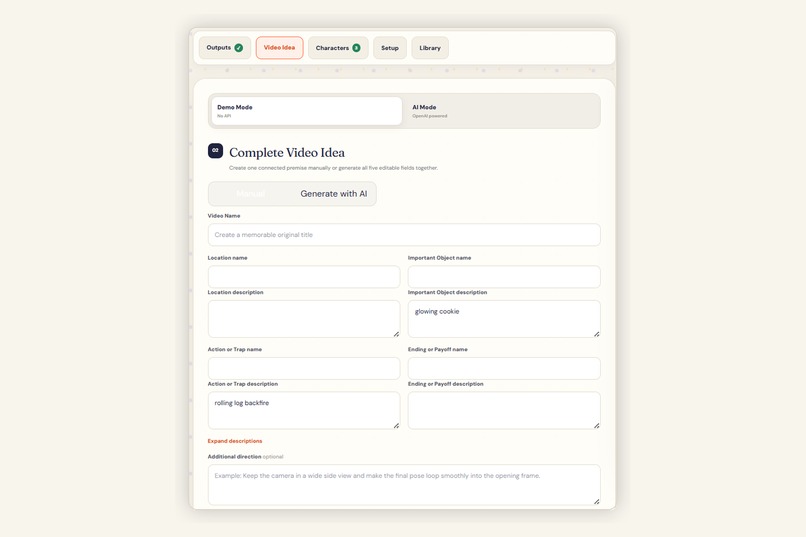
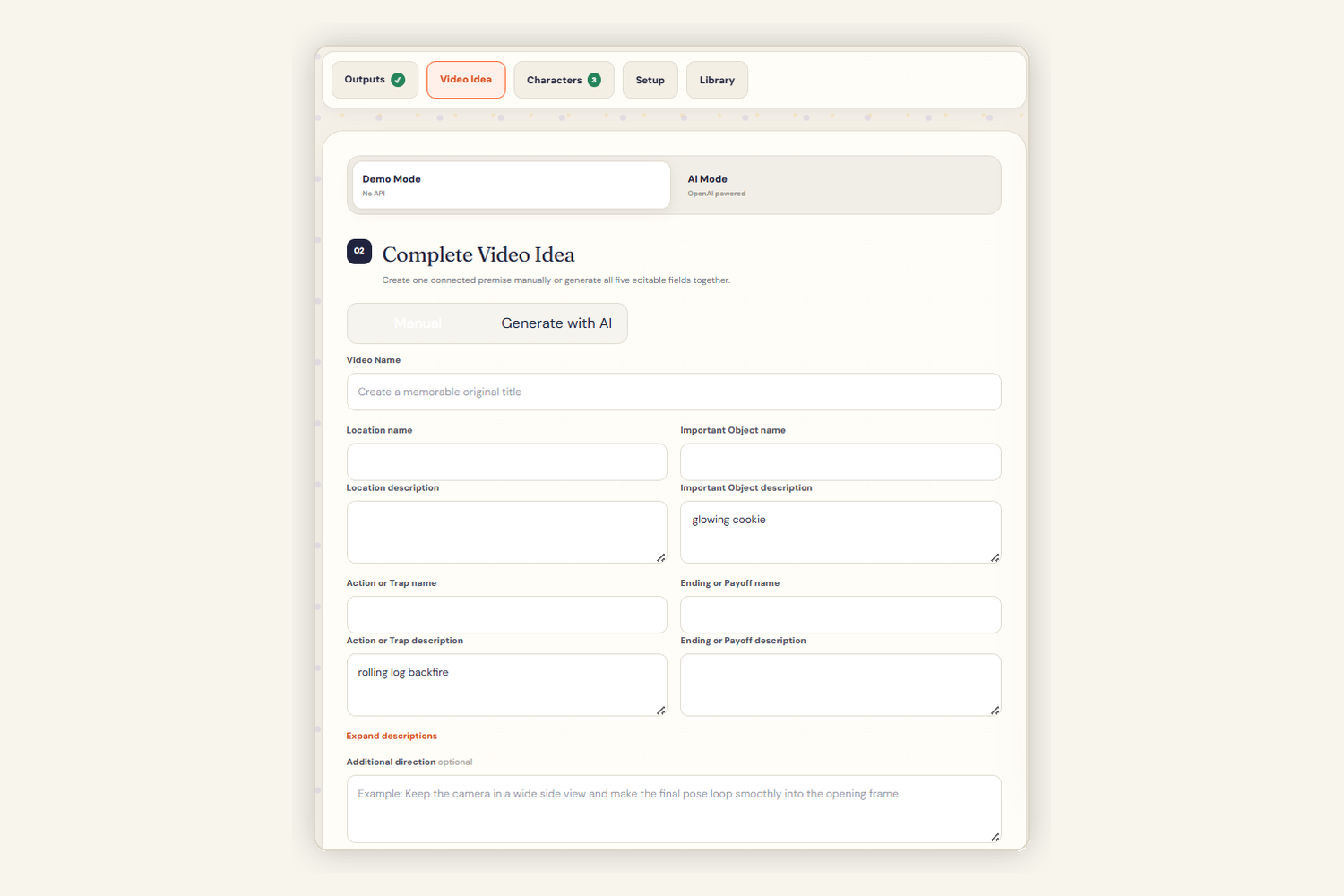
Video idea section
-
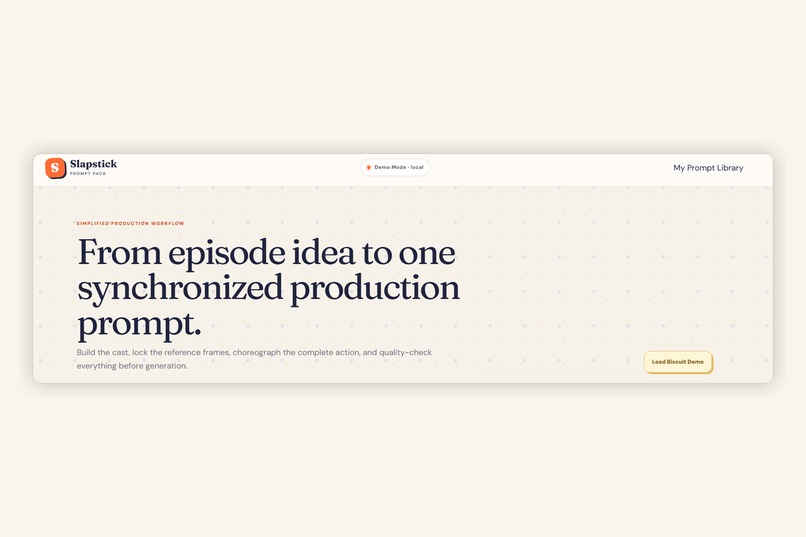
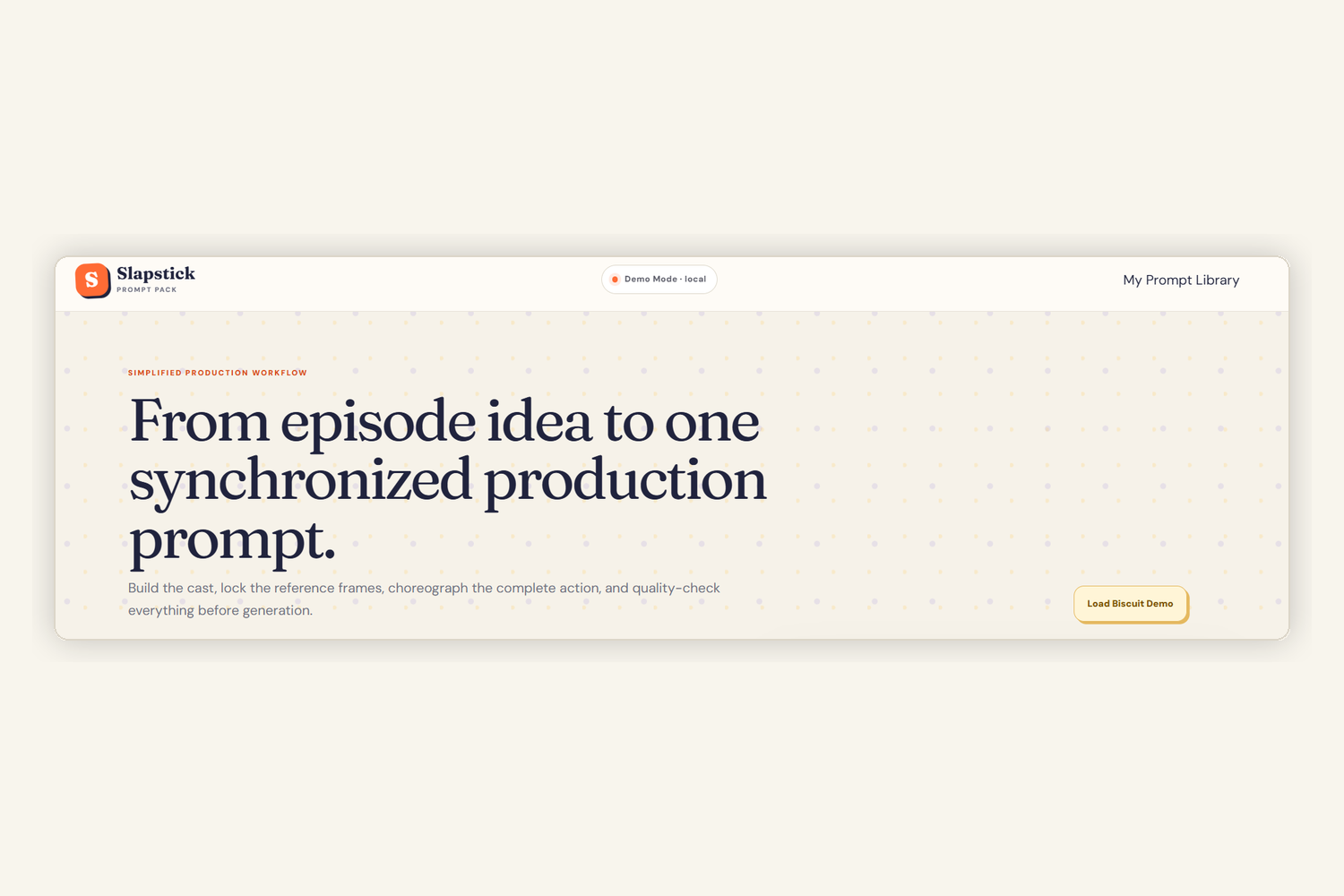
background/front page
-
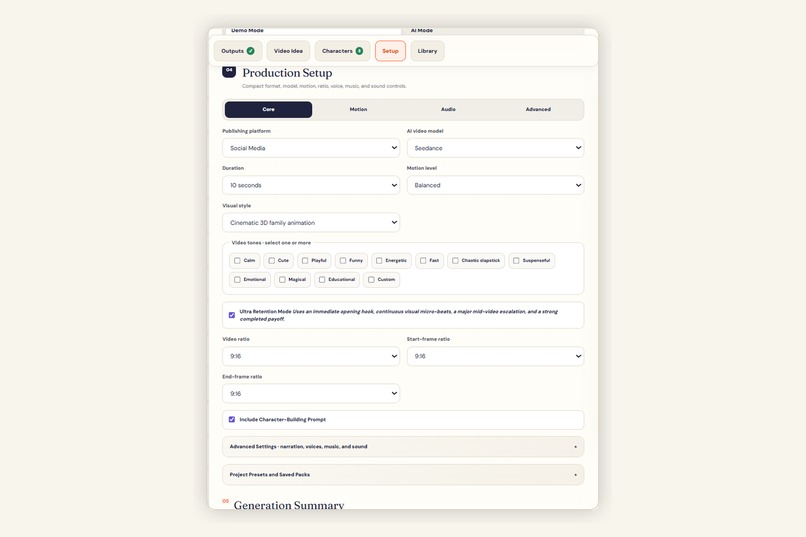
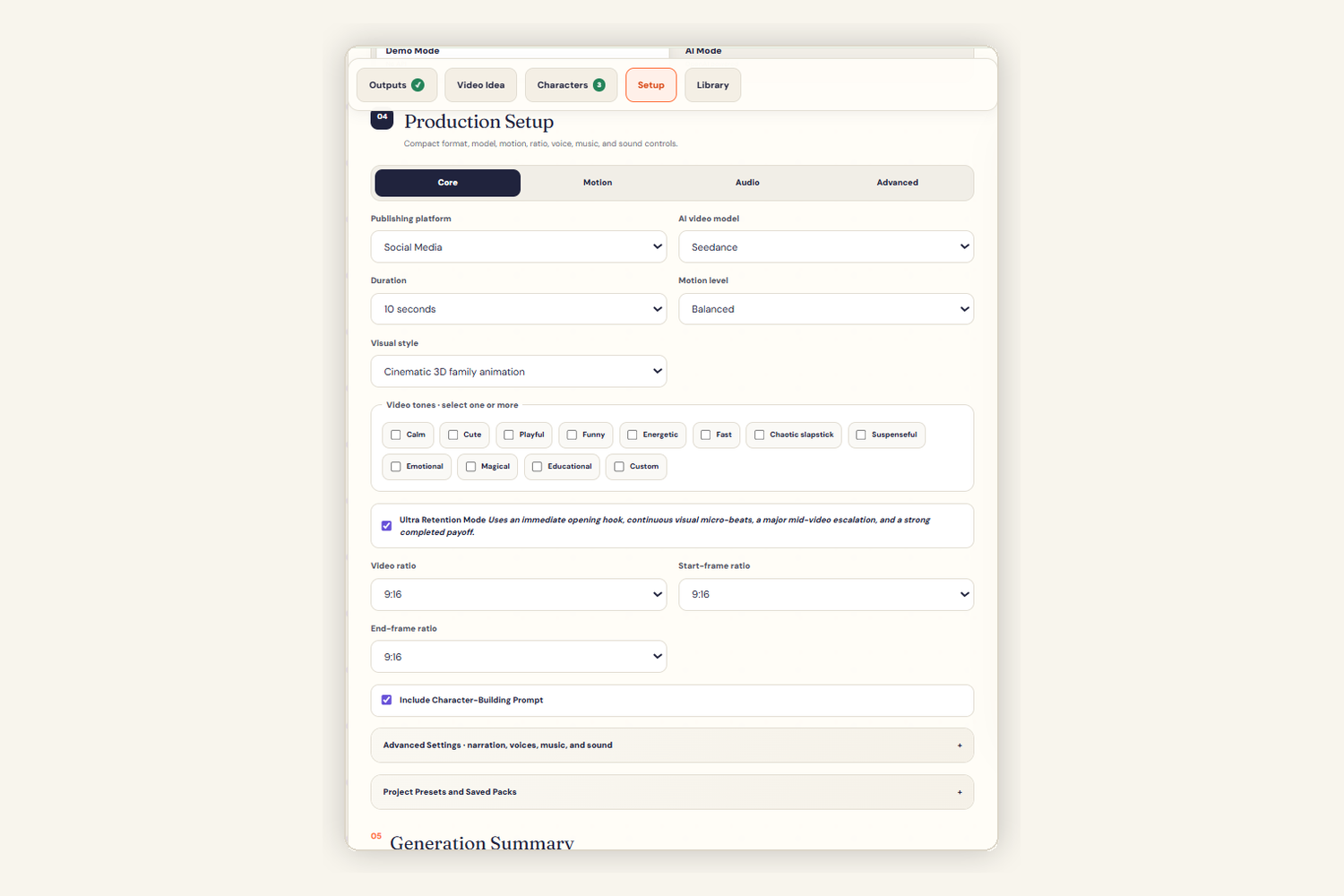
setup section
-
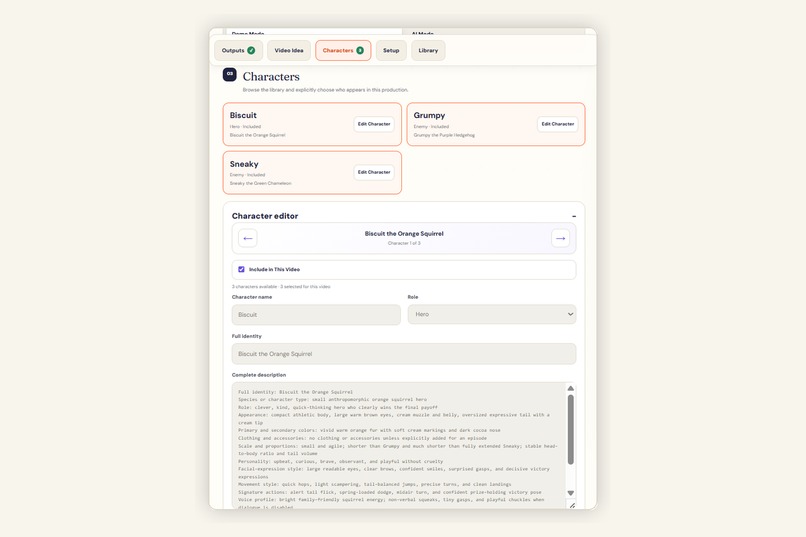
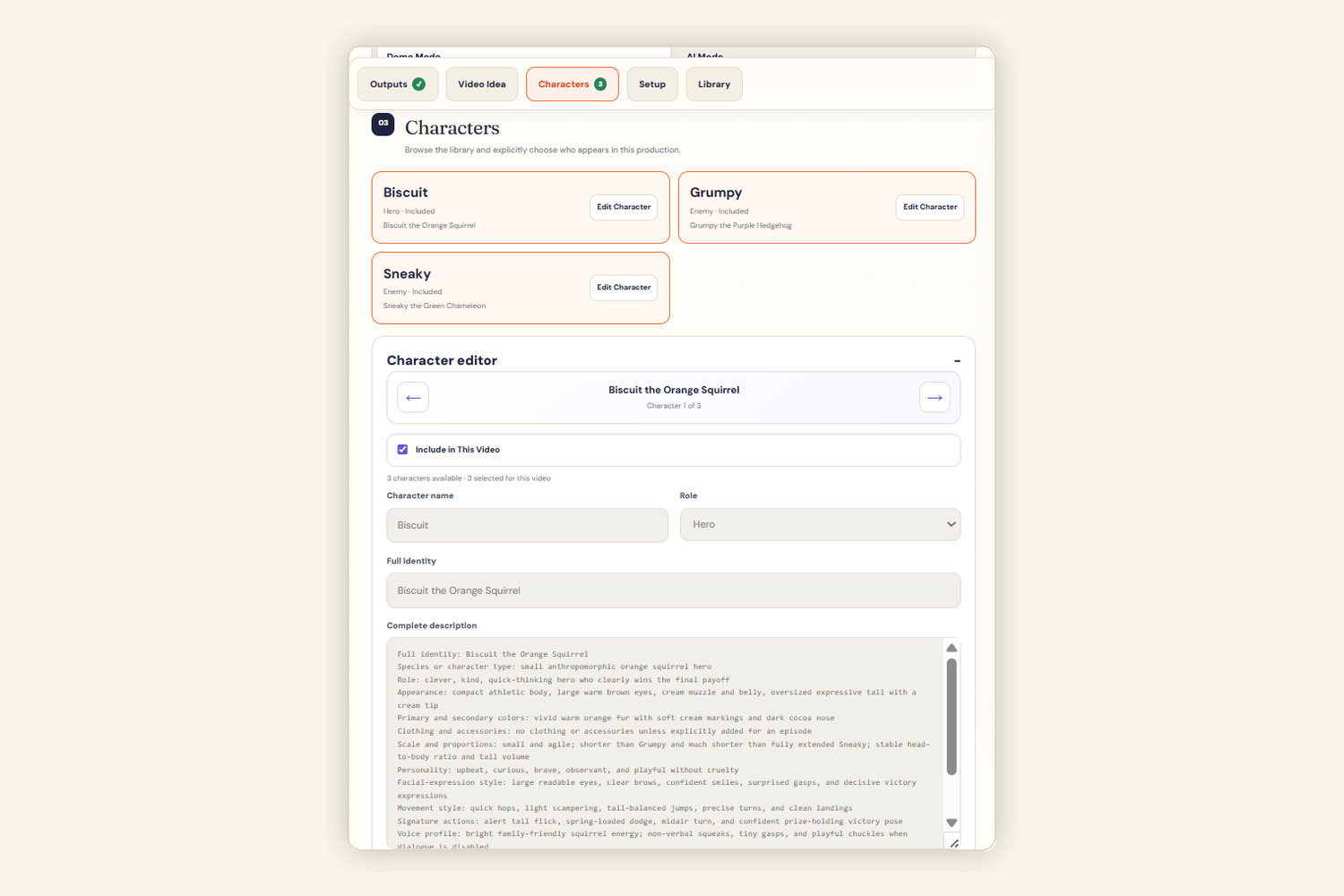
character section
-
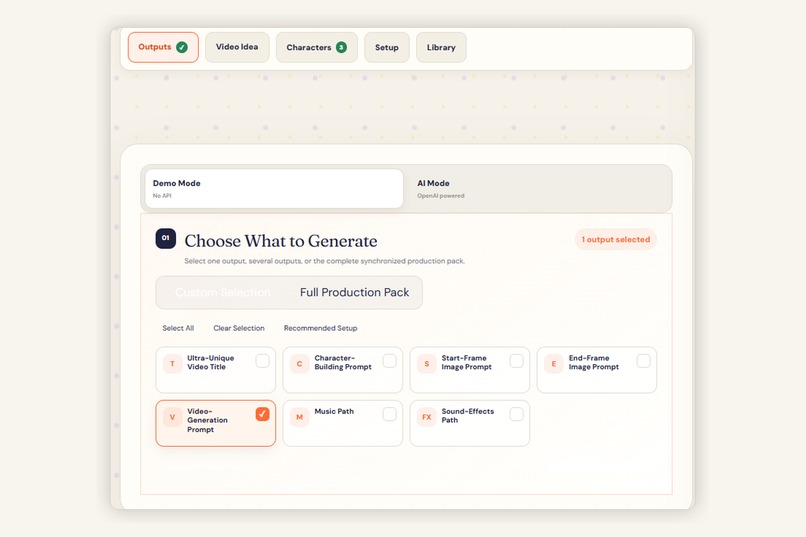
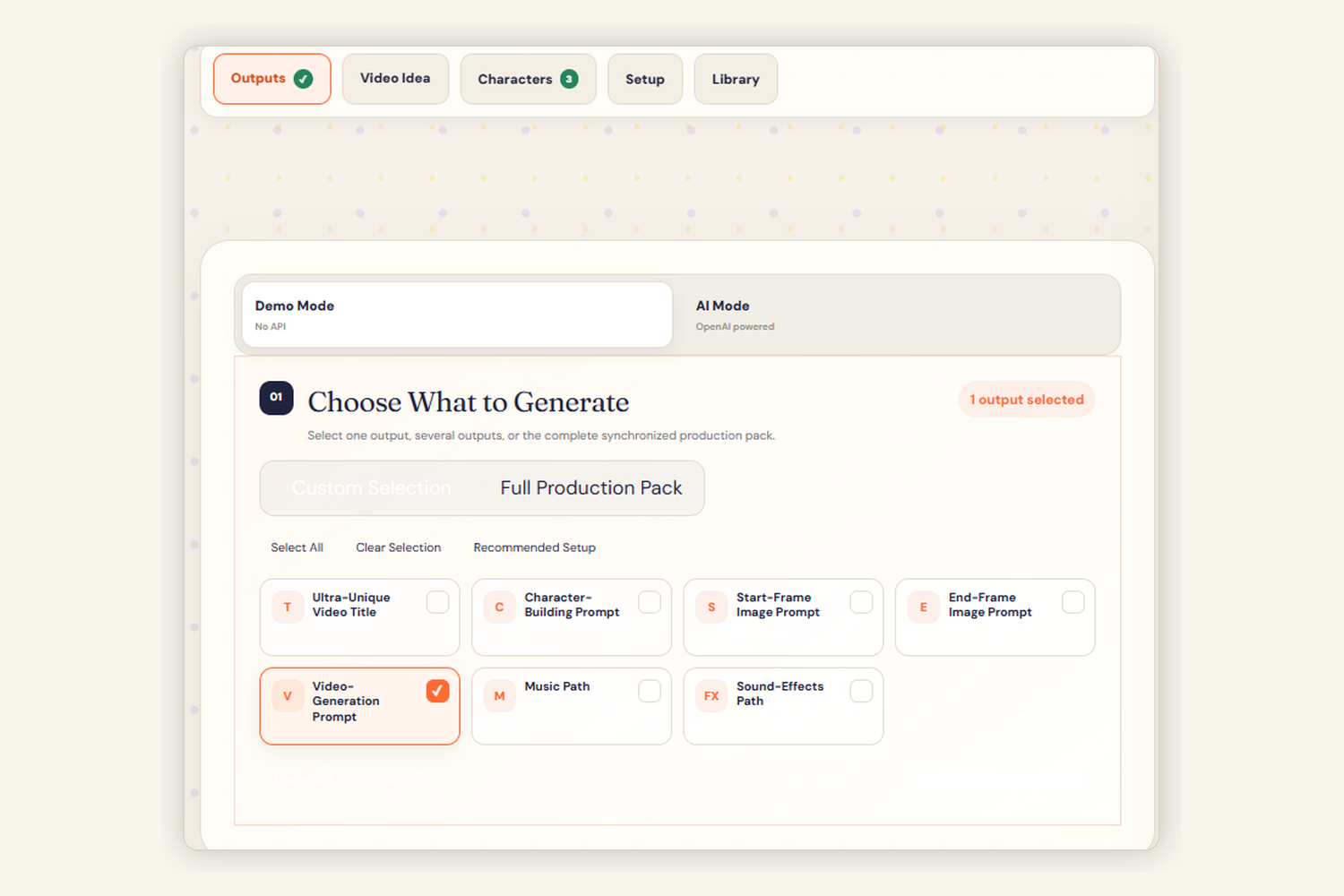
Output section
-
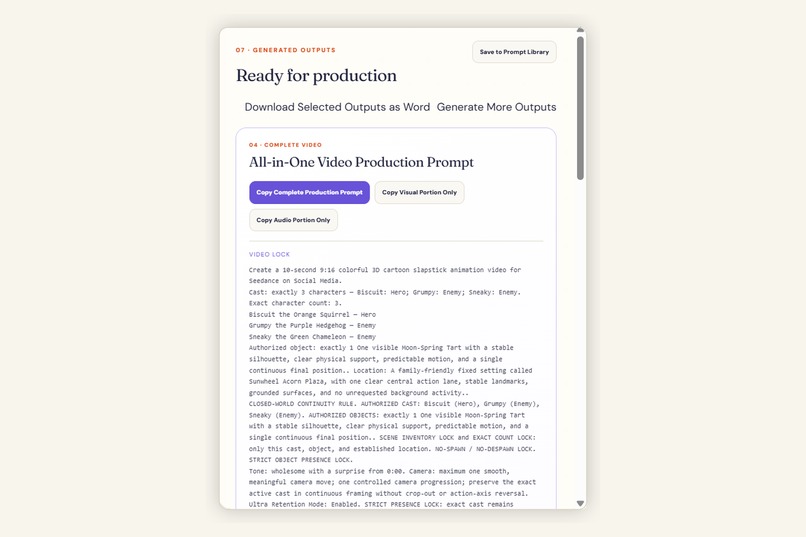
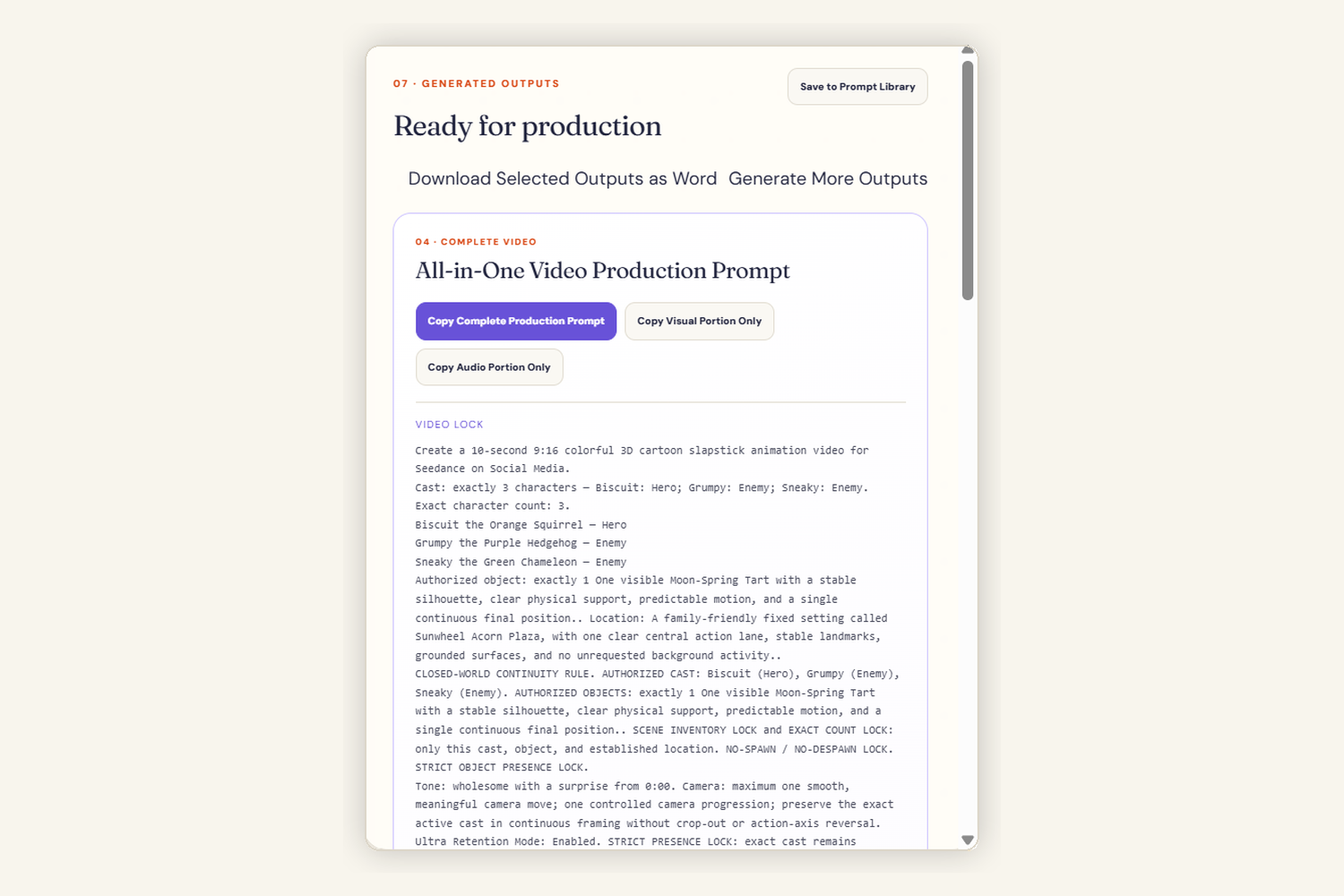
prompts section
Inspiration
Slapstick Prompt Pack was inspired by a practical problem I experienced while creating short animated videos with AI.
Producing one short video often requires many connected creative elements: the episode idea, character descriptions, location, important objects, start and end frames, the main video prompt, camera instructions, music direction, sound effects, character sounds, and timing.
When these elements are written separately, they can easily contradict one another. Characters may change appearance, objects may suddenly appear, actions may not connect logically, camera instructions may conflict, and the final result may feel disconnected from the original idea.
I wanted to build one structured workspace that could turn a simple concept into a synchronized production pack that is easier to understand, edit, save, and use across different AI image and video-generation platforms.
The project was also inspired by my own slapstick animation workflow. I needed a system that could preserve character identities, create strong physical comedy, organize the action clearly, and keep every generated production element focused on the same story.
What it does
Slapstick Prompt Pack helps creators transform one connected video idea into a complete AI production plan.
The user can create an idea manually or generate one with AI. The idea is organized into several connected fields:
- Video name
- Location
- Important object
- Main action or trap
- Ending or payoff
- Additional creative direction
The user can then select and manage the characters that will appear in the production, define their roles and visual identities, and configure the technical requirements of the video.
The production setup can include:
- Target AI platform and model
- Video duration
- Video aspect ratio
- Image aspect ratio
- Visual style
- Camera direction
- Music direction
- Sound effects
- Narration or nonverbal character sounds
- Start-frame requirements
- End-frame requirements
- Timeline and movement instructions
The application connects this information and uses it to generate synchronized outputs for the complete production workflow.
The generated outputs can include:
- Start-frame image prompt
- End-frame image prompt
- Main video-generation prompt
- Music direction
- Sound-effect direction
- Narration or character vocal direction
- Timed production instructions
The results can be reviewed, edited, saved to the Prompt Library, and reused later.
The objective is not simply to generate attractive text. The application is designed to create a connected production system in which every output describes the same characters, environment, objects, actions, camera direction, and final payoff.
How I built it
I built Slapstick Prompt Pack as a modern web application using Next.js, React, TypeScript, GitHub, OpenAI, and Vercel.
The application was designed around structured production data instead of one large, unorganized prompt field. The episode idea, selected characters, production settings, requested outputs, and generated results are connected so that the full workflow remains consistent.
The website supports two operating modes:
- Demo Mode, which allows users and judges to explore the workflow without requiring an API connection
- AI Mode, which uses OpenAI to generate, expand, refine, and synchronize production content
I used OpenAI to support creative idea generation and structured prompt production. The AI does not only produce a general story. It works with individual production fields so the content can remain editable and connected throughout the workflow.
I also created a Prompt Library that allows completed production packs to be saved and accessed again. This helps creators preserve successful work instead of rebuilding the same production structure from the beginning.
GitHub was used for version control, feature branches, code review, and managing the development history. Vercel was used to produce preview deployments and publish the production application.
The development process also included automated tests, TypeScript checking, linting, production builds, storage migration validation, and security checks to make sure sensitive values such as the OpenAI API key remain on the server side.
Challenges I faced
One of the biggest challenges was preventing the system from producing ideas that appeared different only because the names of the objects or locations had changed.
For example, replacing one object with another does not make a video idea original when the physical action, movement path, trap mechanism, and final payoff remain nearly identical.
To address this, I improved the uniqueness system so it evaluates meaningful characteristics of the action rather than depending only on titles, object names, or surface-level wording.
The system considers the underlying physical mechanism, movement structure, interaction pattern, and payoff. This helps reduce cases where the same gag is repeated with renamed props.
Another major challenge was keeping every generated output synchronized.
The start frame, end frame, main action prompt, camera instructions, sound effects, music, and timeline must all describe one continuous production. A contradiction in only one section can cause the image or video model to generate an incorrect result.
The prompts therefore need to reduce problems such as:
- Characters changing appearance
- Missing or duplicated characters
- Objects appearing without introduction
- Teleportation or sudden position changes
- Unnatural floating
- Incorrect physical reactions
- Conflicting camera movement
- Unplanned scene cuts
- Start and end frames that do not match the main action
- Sound instructions that occur at the wrong moment
The user interface was another important challenge. Earlier versions contained too many independent sections and generation controls. Although the application was powerful, the workflow could feel complicated.
I redesigned it into clearer stages:
- Outputs
- Video Idea
- Characters
- Setup
- Generated Results
The final structure places the production workflow and generated outputs beside each other, helping the user understand what information has been entered and what will be produced.
Another challenge was preserving existing user information while improving the application. Storage structures and saved content had to be migrated carefully so that new features would not unnecessarily remove earlier work.
What I learned
This project taught me that professional prompt generation requires much more than asking an AI model to produce a long paragraph.
A useful production prompt must be:
- Structured
- Internally consistent
- Editable
- Model-aware
- Visually precise
- Physically understandable
- Connected to the other production outputs
- Focused on the creator’s actual workflow
I learned that AI output should be validated instead of being accepted automatically. A generated result may sound creative while still containing contradictions, repeated concepts, weak movement, or instructions that an image or video model may misunderstand.
I also learned the value of separating creative information into structured fields. When characters, locations, objects, actions, and technical settings are stored independently, they can be reused and synchronized more reliably than when everything is placed inside one large block of text.
From the development process, I learned how to manage a real application using:
- GitHub branches and commits
- Pull requests and controlled production merges
- Automated tests
- TypeScript validation
- Linting
- Production build checks
- Vercel preview and production deployments
- Environment variables
- Server-side API security
- Storage migrations
- User-interface redesign and testing
Most importantly, I learned that a successful AI product should solve a real workflow problem instead of demonstrating AI only as a novelty.
Accomplishments that I am proud of
I am proud that Slapstick Prompt Pack developed from a simple prompt generator into a structured AI production-planning application.
The current version includes:
- Manual and AI-assisted video-idea creation
- Connected fields for location, object, action, and payoff
- Character selection and identity controls
- Production-model and platform configuration
- Start-frame and end-frame planning
- Multiple synchronized production outputs
- Music, sound-effect, and vocal direction
- Prompt Library storage
- Demo Mode and AI Mode
- Semantic duplicate detection
- Data-preserving storage improvements
- Responsive production workflow
- Automated testing and deployment validation
I am particularly proud that the project addresses a problem I personally encountered while producing AI-assisted animation.
It was not created only as a technical demonstration. It was built around a real creative workflow and a real need for greater consistency, organization, and production quality.
What is next
The next stage is to launch Slapstick Prompt Pack for real creators, collect customer feedback, and learn which features provide the greatest practical value.
The initial public product will focus on professional prompt generation and production planning. This provides a focused and achievable foundation while allowing the platform to validate real customer demand.
If the platform receives strong customer interest and adoption, I plan to develop a major expansion that transforms Slapstick Prompt Pack from a prompt-generation tool into a complete AI production studio.
The future platform could support the complete creative journey inside one connected environment:
- Idea and story development
- Professional prompt generation
- Character creation and identity management
- Location and visual-world development
- Start-frame and end-frame image generation
- Image creation and refinement
- AI video generation
- Music and sound-effect planning
- Voice and character-sound creation
- Reusable asset storage
- Production history
- Project organization
- Final export and delivery
Instead of moving between several separate applications, creators could develop an idea, create the production plan, generate the visual assets, and produce the final video from one synchronized workspace.
This could save customers significant time by reducing repeated setup, manual copying, prompt rewriting, and the need to transfer project information between multiple platforms.
It could also save money by reducing dependence on several separate subscriptions and helping users produce more accurate results with fewer failed generations.
The current version is the foundation of this larger vision.
Its structured production system, character controls, synchronized outputs, Prompt Library, model configuration, and connected creative fields are designed so the product can grow naturally into a broader AI creative studio after customer demand has been validated.
My long-term goal is to make AI-assisted content production more organized, affordable, and accessible—not only for slapstick animation, but for many forms of short-form video, storytelling, advertising, educational content, and digital entertainment.
Built With
- ai
- css
- generativeai
- github
- html
- javascript
- localstorage
- next.js
- node.js
- openai
- openaiapi
- promptengineering
- react
- responsivedesign
- restapi
- typescript
- vercel

Log in or sign up for Devpost to join the conversation.