-
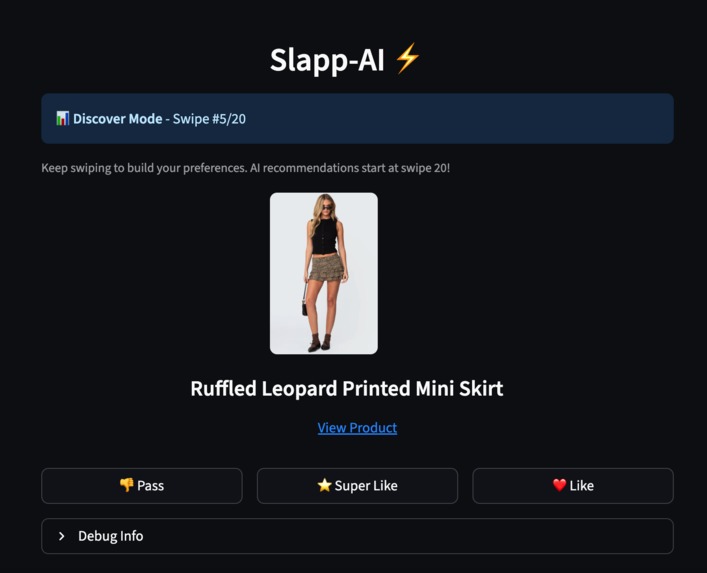
App UI
Inspiration
The challenge with online shopping isn't just finding things you think you want, but discovering pieces you didn't even know you'd love. I wanted to build a system that perfectly balances exploitation (showing you more of what you like) with exploration (surprising you with new styles), creating a truly addictive discovery loop that feels personal and exciting.
What it does
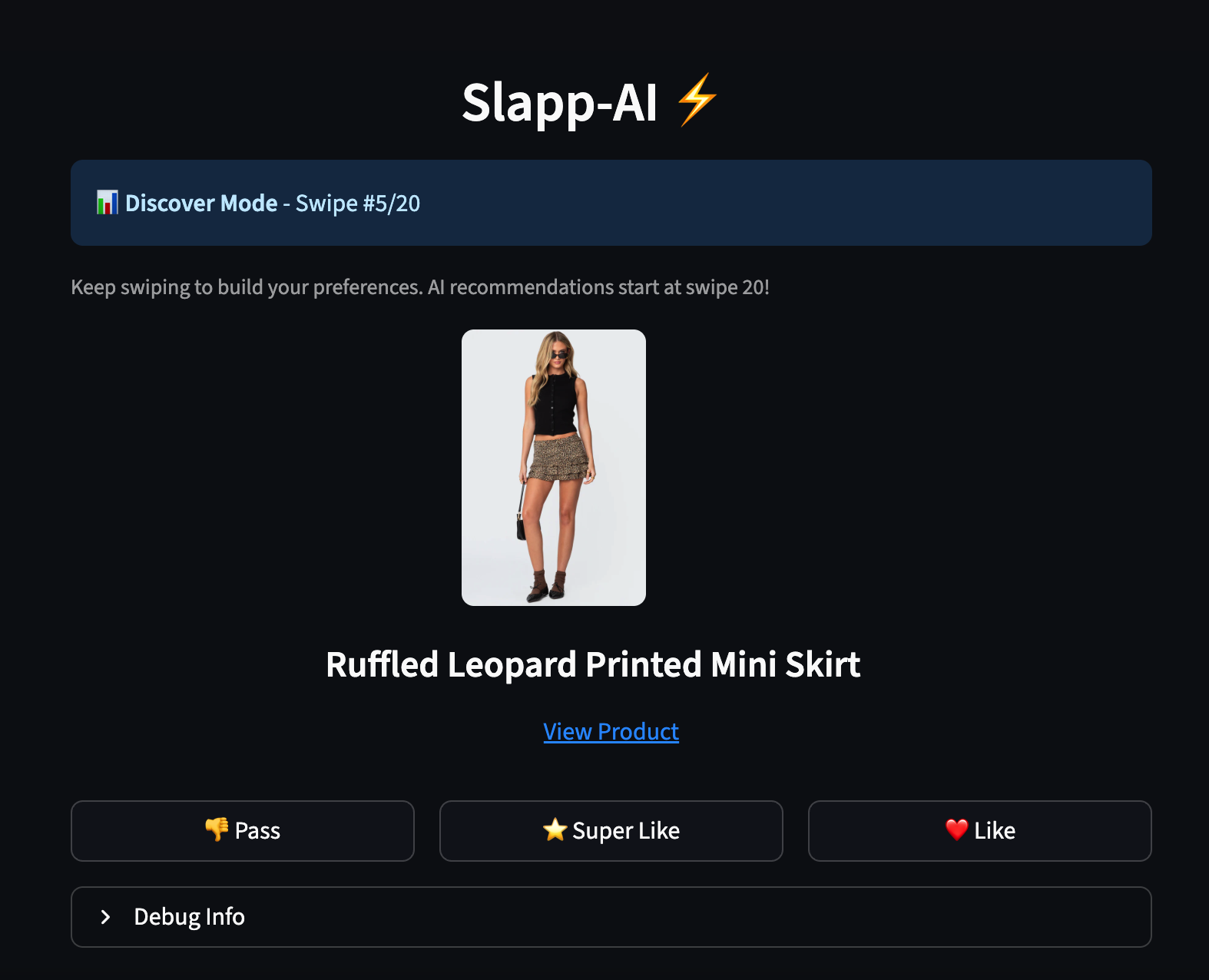
Slapp-AI is a "TikTok for Fashion" that learns your personal style in real-time. The experience is simple: you swipe through a feed of clothing items.
Swipe Right (❤️)/⭐ Super Like: Love a teal mini dress? Swipe right, and the feed instantly adapts to show you more items with a similar aesthetic and vibe.
Swipe Left (👎): Not a fan? Swipe left, and the system learns to deprioritize that style—but without overreacting. A single dislike for a red dress won't remove them forever. The algorithm is designed to distinguish between a passing mood and a genuine long-term preference.
This core mechanic is built to excel against five key pillars: Accuracy, Adaptability, Innovation, Preference Balancing, and Usability.
How we built it
I built Slapp-AI using a modern, Python-centric tech stack. The frontend is a Streamlit web application, which allowed me to rapidly prototype the dynamic swipe interface. For the core AI logic, I integrated the SuperMemory API to handle real-time preference learning and generate personalized recommendations.
A significant part of the project was building the dataset. I aggregated over 6,000 products from 8+ premium brands and used the LLaVA Vision Model to generate rich, semantic descriptions for every item. This enriched data is the secret sauce behind the recommendation engine's accuracy.
Challenges we ran into
Finally, building a truly responsive, real-time swipe UI in Streamlit that didn't feel laggy as the AI processed preferences in the background required careful optimization, and tricky methods to avoid mishaps.
Accomplishments that we're proud of
I'm incredibly proud of successfully implementing the core discovery algorithm that balances exploitation and exploration. The system's ability to adapt to short-term swipes without corrupting the user's long-term style profile is a key accomplishment that directly addresses the "Preference Balancing" pillar. The
What we learned
The practical experience using a memory-based AI system like SuperMemory for personalization, confirming that it's an incredibly effective way to manage dynamic user profiles. Most importantly, this project drove home the principle that the quality of your recommendation system is a direct reflection of the quality of your data
What's next for Slapp-AI
Maybe build out persistent user accounts to save style profiles across sessions. Longer-term, I want to introduce advanced filters (e.g., by occasion or price) and maybe even social features, like sharing a favorite item or a curated "lookbook" with friends.

Log in or sign up for Devpost to join the conversation.