Inspiration
Katrina has severe anemia that prevents efficient oxygen absorption in the blood, so her brain does not receive enough oxygen and she will fall unconscious at unpredictable times. She cannot control it, so she has fallen asleep even during critical times like final exams.
Function
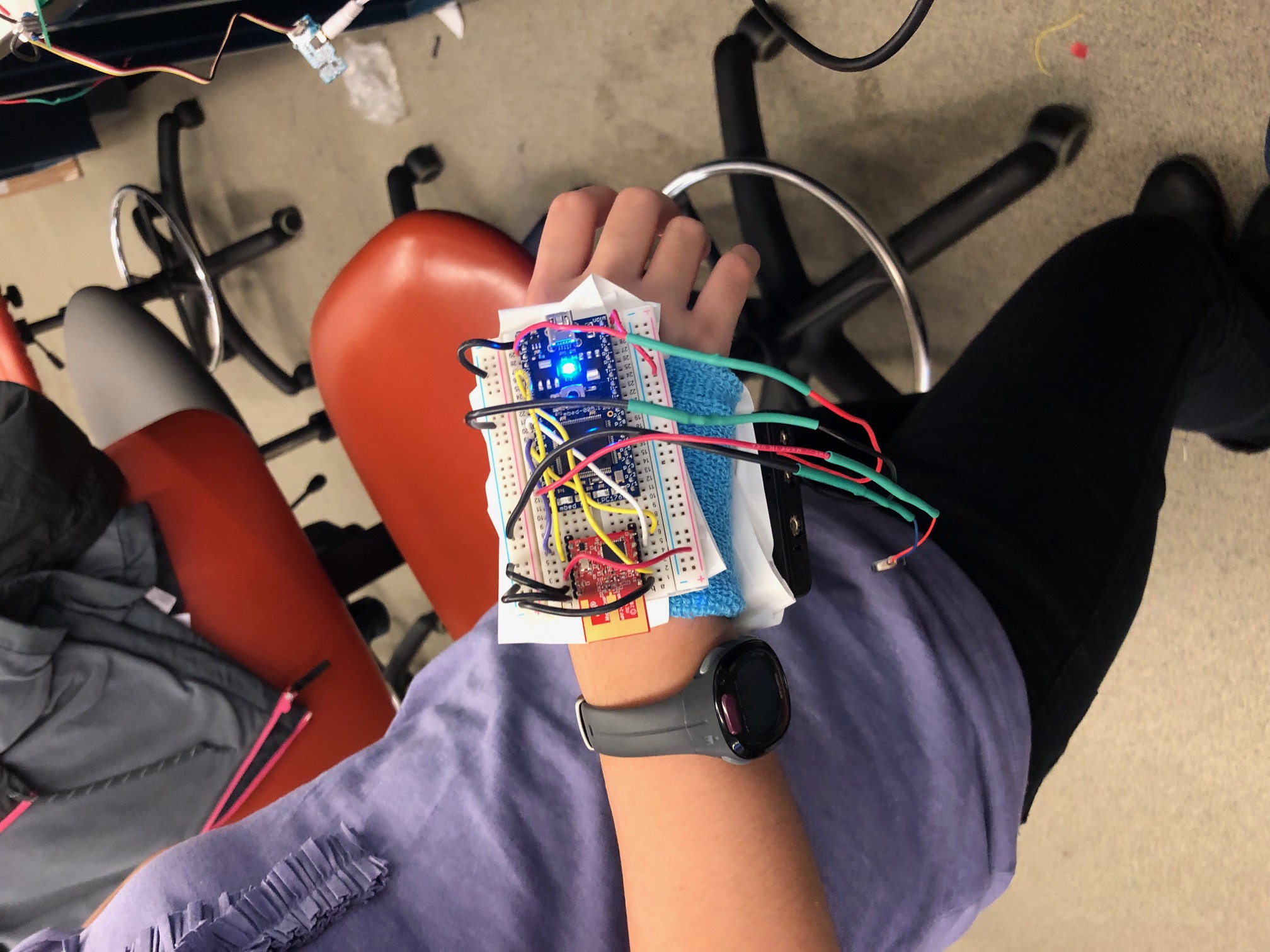
It senses when the user falls asleep and activates a vibration motor on the wristband to wake them up. The main sensors are connected to a small pack that can fit in the pocket of a hoodie while the wristband holds the motor.
Baseline Goals (Updated):
● Use a sensor (ECoG) to determine when the user is falling asleep
● Make the mechanism wearable
● Use a buzzer that receives the data and activates when the user falls asleep (the buzzer will only vibrate, so no sound should be produced to reduce disruptions in quiet settings and it should also not cause pain)
Stretch Goals (Updated):
● Determine levels of exhaustion (starting to fall asleep versus being fully asleep) via breathing rate sensor and an accelerometer (head movement when the user is "nodding off")
● Control amount of vibration based on how heavily asleep the user is
System
There are 2 sensors in use: an ECG sensor and a muscle movement sensor. The ECG sensor measures heart rate, which decreases slightly when asleep. The muscle sensor will capture blinks within a certain time frame. If the user doesn't blink in 20 seconds, it is likely that they have fallen asleep, since the average human must blink at least once every 20 seconds. The accelerometer was eventually removed, because the other two sensors were enough to determine exhaustion. If the heart rate decreases, the buzzer on the pack will turn on as a warning to the user that they are resting and close to beginning to fall asleep. If the user hasn't blinked in 20 seconds, then the buzzer in the wristband will activate, since it is in direct contact with the user and is more likely to wake them up. The checks between the heart rate and the number of blinks alternate, so the first occurrence of either indication of falling asleep will activate the appropriate buzzer.
Challenges
Initially, the wrong type of breakout board was used for the heart rate sensor. It took some time to realize this issue. We also faced difficulties with communicating between the sensors and the wristband. We selected radio instead of Wi-Fi or Bluetooth, because we felt that we could learn the most about radio and understand it best in the given amount of time that we had for the project. Many of the MRF24J40's that we tried to use in our project turned out to be broken and non-functional, but we did not realize this issue at first, so it led to numerous other trials and errors, until we realized that those MRF24J40's didn't work.
Accomplishments
We were able to have both of the radio chips properly send data between themselves. We also received clean signals from both sensors. Our system and main project goals were successfully completed.
What we learned
We learned how to use radio (the MRF24J40), as well as general interfacing with the Mbed (our choice of microprocessor for this project). We also learned how to design a PCB, using Altium.
What's next for Slap-a-Nap Pack
To further increase the marketability of this product, we could compact the device even more and make it less conspicuous.
Built With
- 2-mbeds
- 2-mrf24j40-chips
- ecg-sensor
- muscle-sensor
- pcb

Log in or sign up for Devpost to join the conversation.