-
-
-
-
-
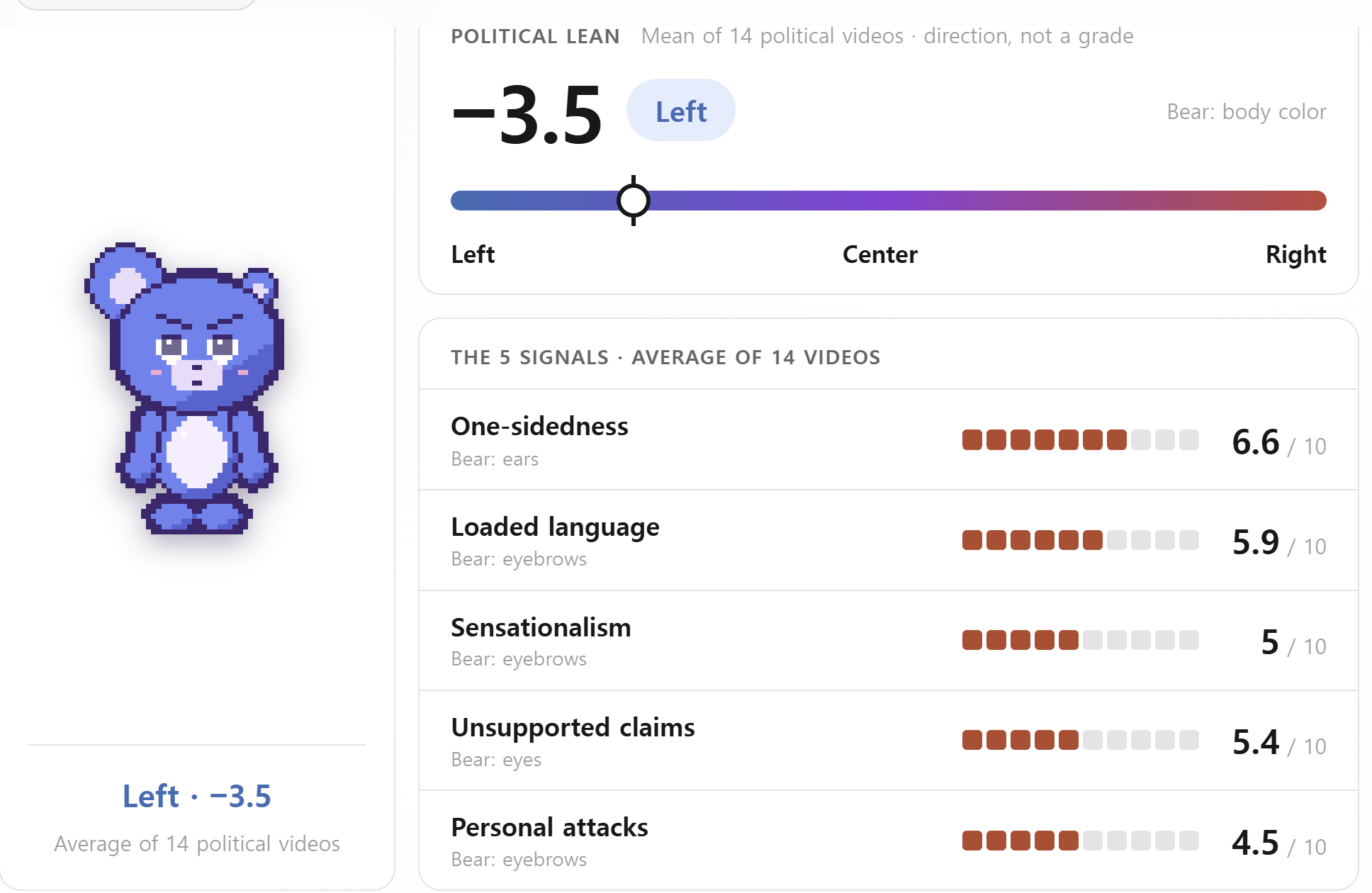
Your history (average political lean)
-
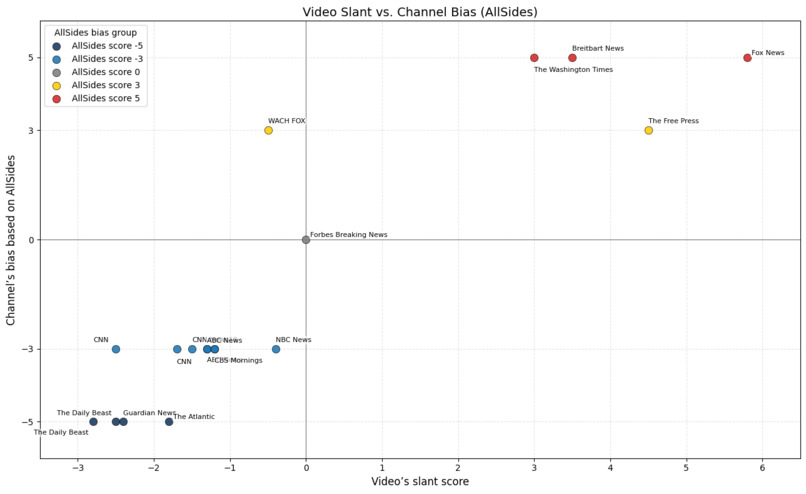
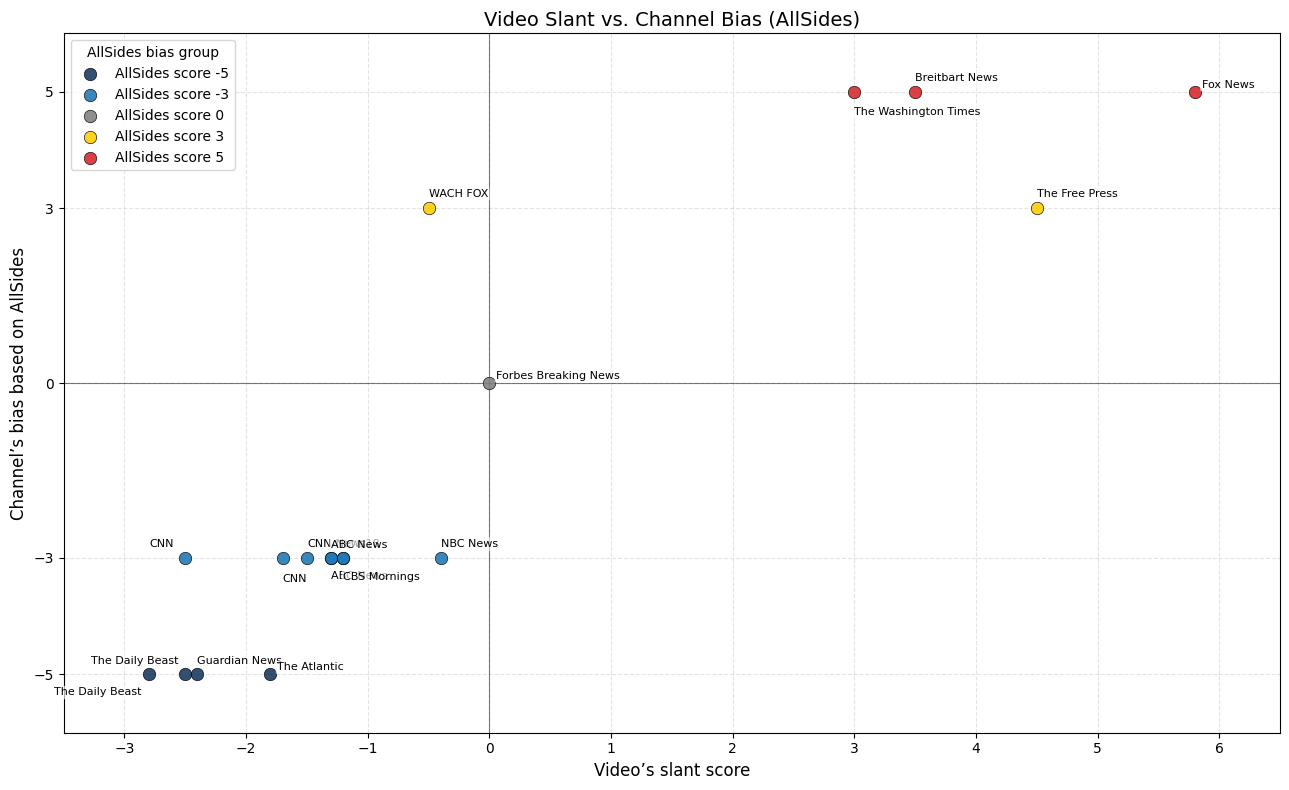
Validation (AllSides news org. bias chart vs. Slant)
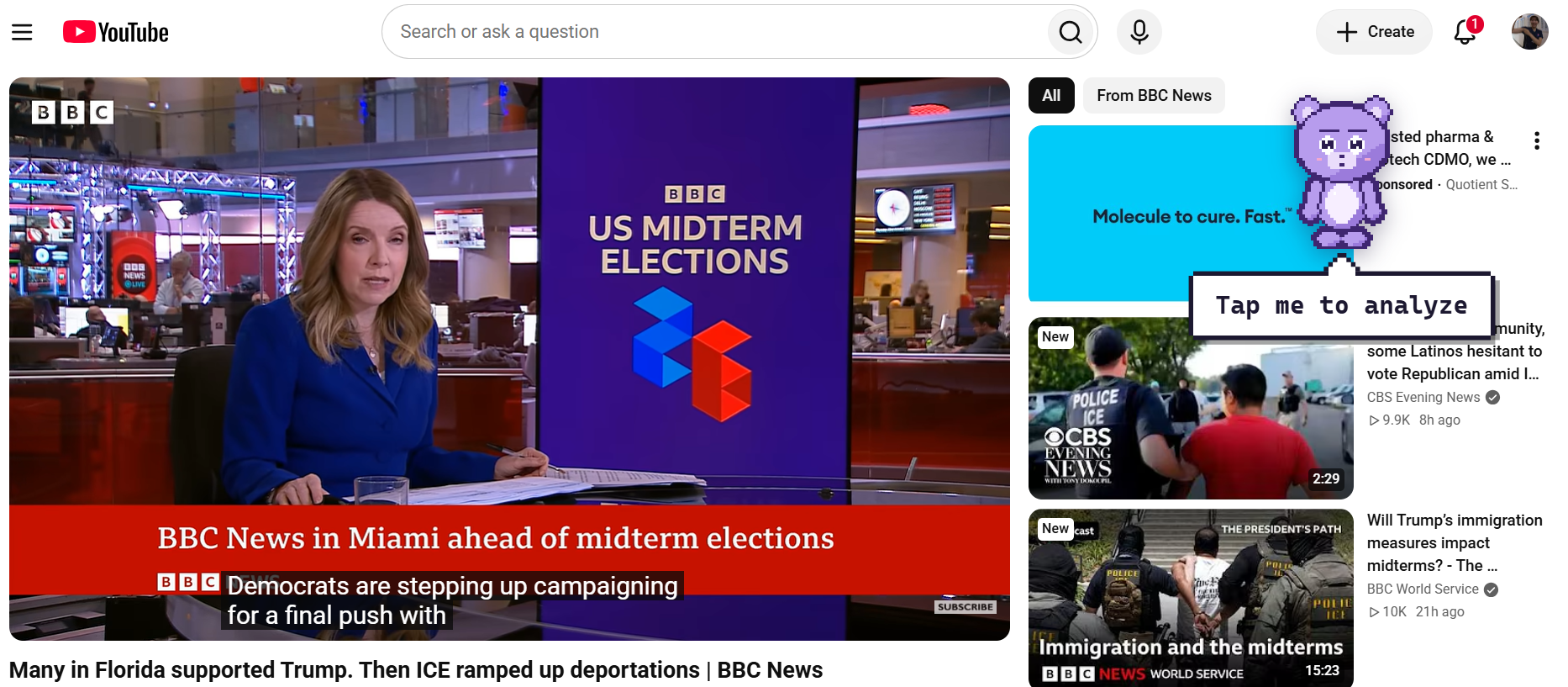
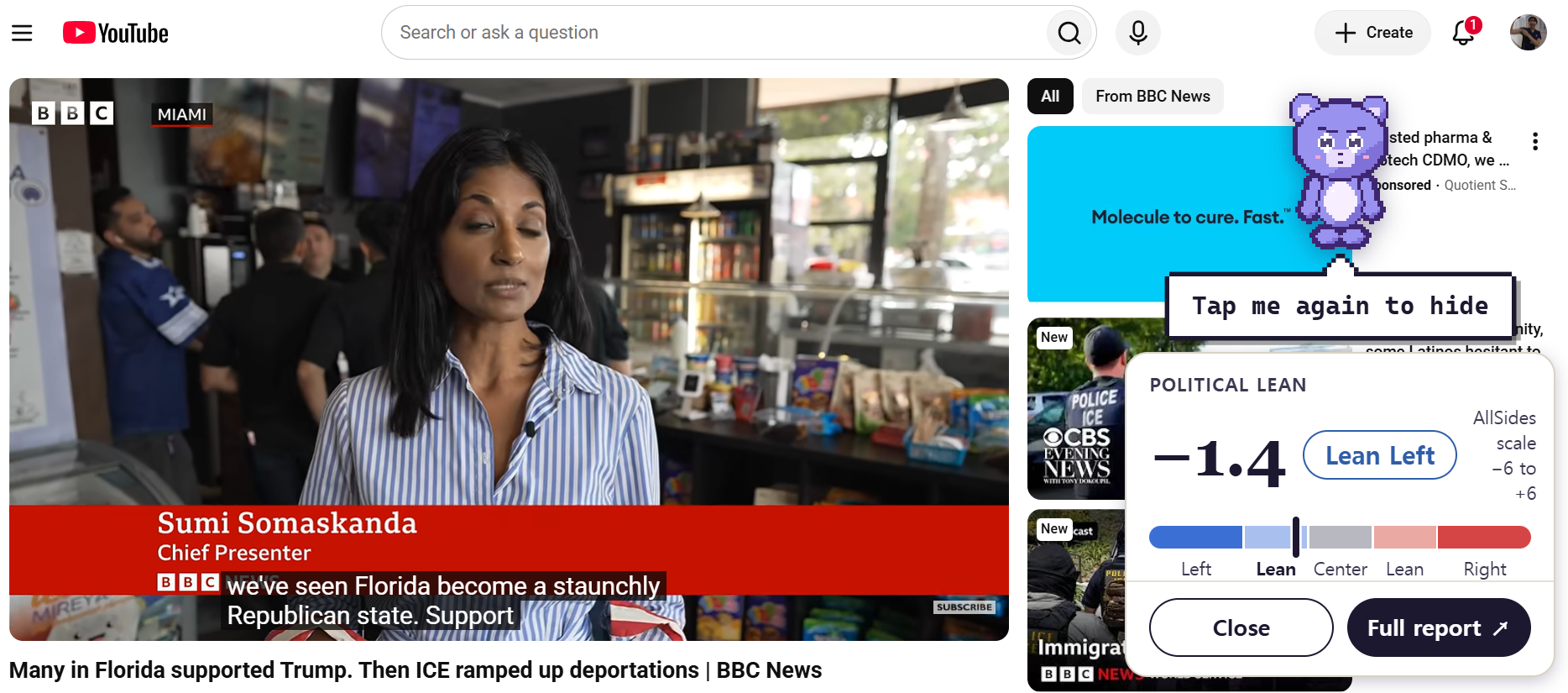
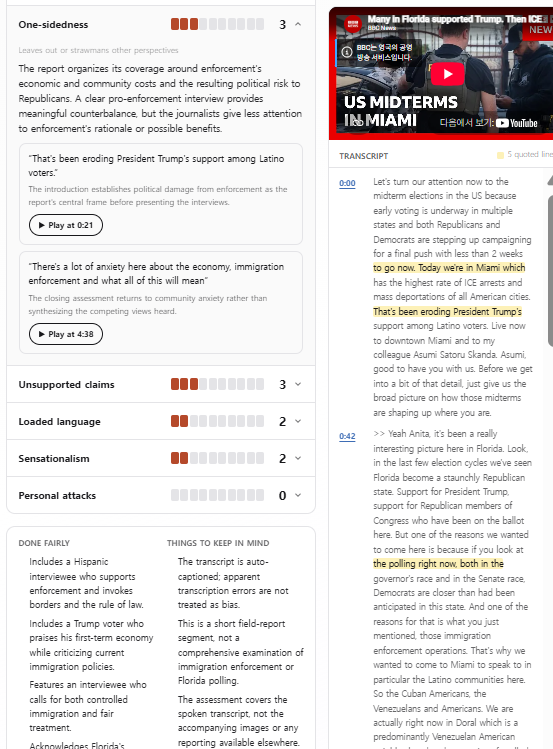
Inspiration
Our idea started with a concern for our grandparents and older generations, who may have difficulty recognizing misleading or politically biased content on social media. But this problem actually affects all of us!! Recommendation algorithms can reinforce our existing beliefs and make it harder to encounter different perspectives, creating echo chambers.
On YouTube, where millions of people form their understanding of politics, it is easy to mistake a video’s framing for the whole story. We built Slant to make that framing visible, helping people look beyond the headlines and think more critically about what they watch.
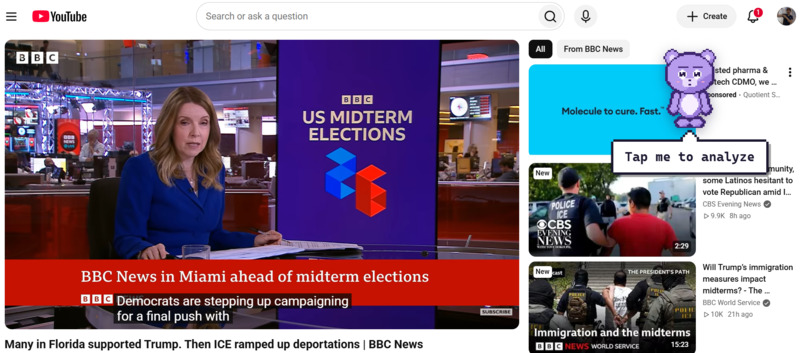
We also recognized that simply building a website where users have to copy and paste a video link might not be enough. People who are already in echo chambers may not actively seek out a tool to challenge their existing perspectives. To make media literacy more accessible, we wanted to bring the analysis directly to users rather than ask them to take extra steps to find it.
What We Built
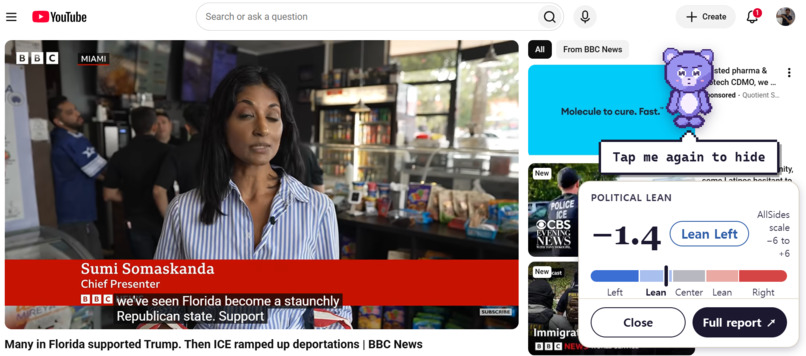
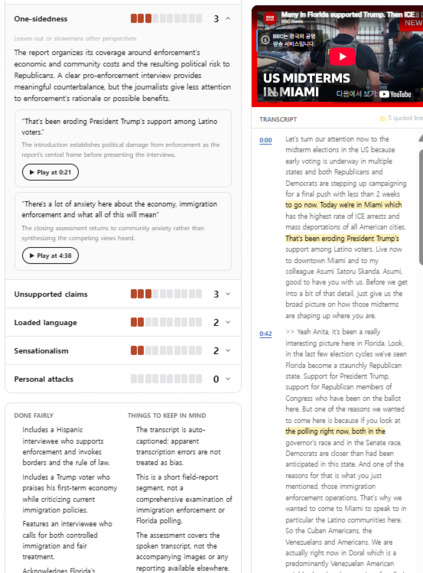
Slant is a website and Chrome extension, that helps users understand the political framing of YouTube videos. With a single click, users can analyze a video's estimated political lean, measured using the scale of political bias tracker AllSides, along with common markers of bias; one-sidedness, loaded language, sensationalism, unsupported claims, and personal attacks, ranked in terms of presence on a scale from 0-10, low to high.
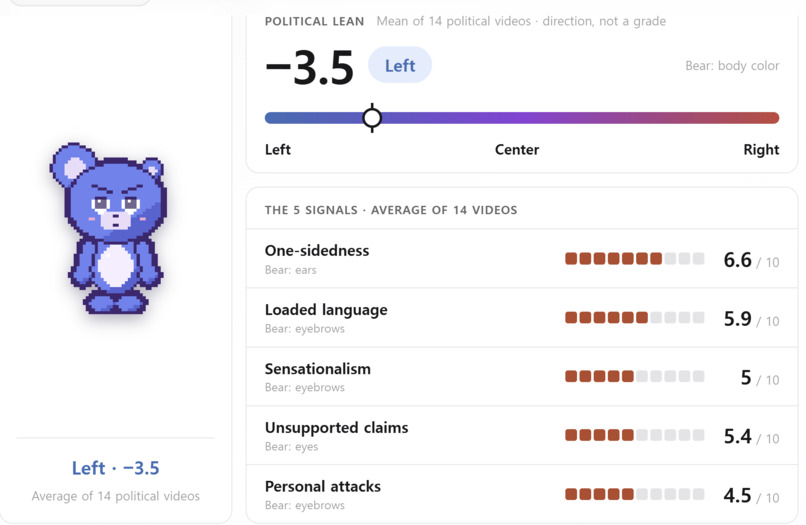
We also put considerable thought into our bear icon's visual design. Rather than presenting analysis results through numbers and text alone, we designed the bear to change its colors, eye size, and eyebrow expressions based on the analysis results. These visual cues make complex information easier to interpret at a glance, help users notice potentially concerning content, and make the experience more engaging and approachable. The bear is not just a decorative icon; it is an integral part of how Slant communicates its findings to users.
Beyond individual video analysis, our "Your Feed" system gives users a personalized dashboard of their previously analyzed videos, helping them reflect on the political perspectives they consume over time and recognize potential patterns or imbalances in their media diet. We use a bear-themed visual design to make complex analysis results more approachable, intuitive, and engaging.
Slant is not designed to tell users what to believe or label every video as right or wrong. Instead, it encourages users to step back, question what they watch, and become more aware of their own media consumption habits.
We explored comparing Slant's video-level scores with AllSides' media bias ratings as a validation of model's accuarcy. Since AllSides rates media outlets while Slant analyzes individual YouTube videos, this comparison is a starting point for manual evaluation rather than definitive proof of accuracy.
Challenges We Faced
One if the biggest challenge was establishing clear criteria for evaluating political slant. Political bias is complex and cannot always be reduced to a single score. We had to think carefully about what our tool should measure, how to interpret language and framing, and how to make our results useful without presenting AI-generated judgments as objective facts. This process taught us that building a tool for media literacy requires not only technical implementation but also thoughtful research, transparent evaluation criteria, and an awareness of the limitations of our approach.
What We Learned
Building Slant taught us how to connect a browser extension's interface with a data-processing workflow, work through integration challenges, and think critically about evaluating AI-generated results. We also learned that a responsible tool for political content should encourage curiosity rather than reinforce another echo chamber.
What's Next
We aim to expand Slant to be generalized to mobile devices as well as contexts other than politics. We also want to improve our validation process by evaluating videos from individual creators, not just established media outlets. Since independent creators can have different perspectives, styles, and incentives, testing across a more diverse range of sources will help us build a more reliable and broadly useful tool. Ultimately, we hope to empower users to think critically about any content they consume, regardless of who created it.
Built With
- css
- figma
- gemini
- javascript
- mana.space
- python
- react

Log in or sign up for Devpost to join the conversation.