-
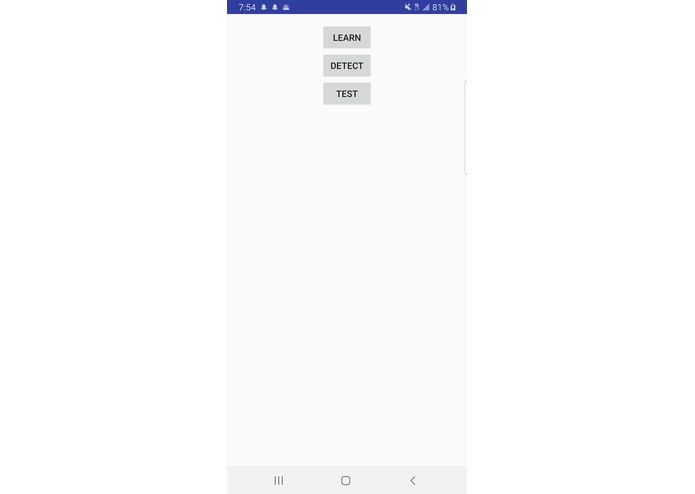
The homepage of the SLang app.
-
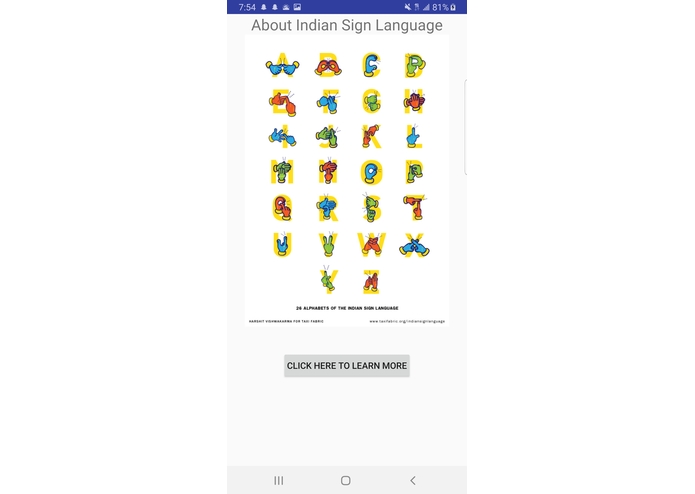
By clicking on the "learn" button, this page shows.
-
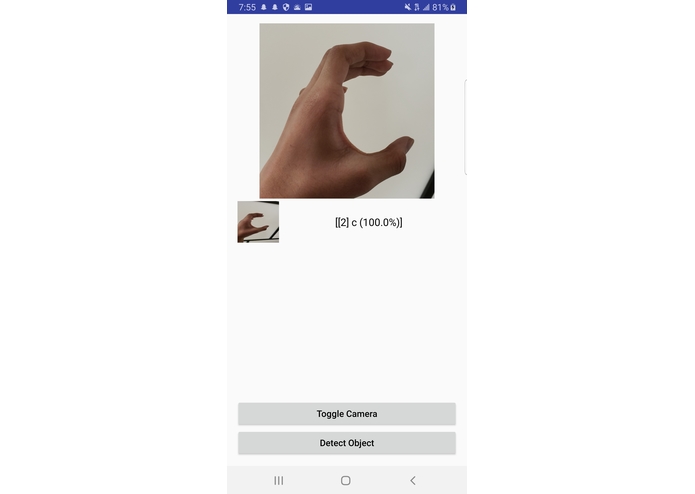
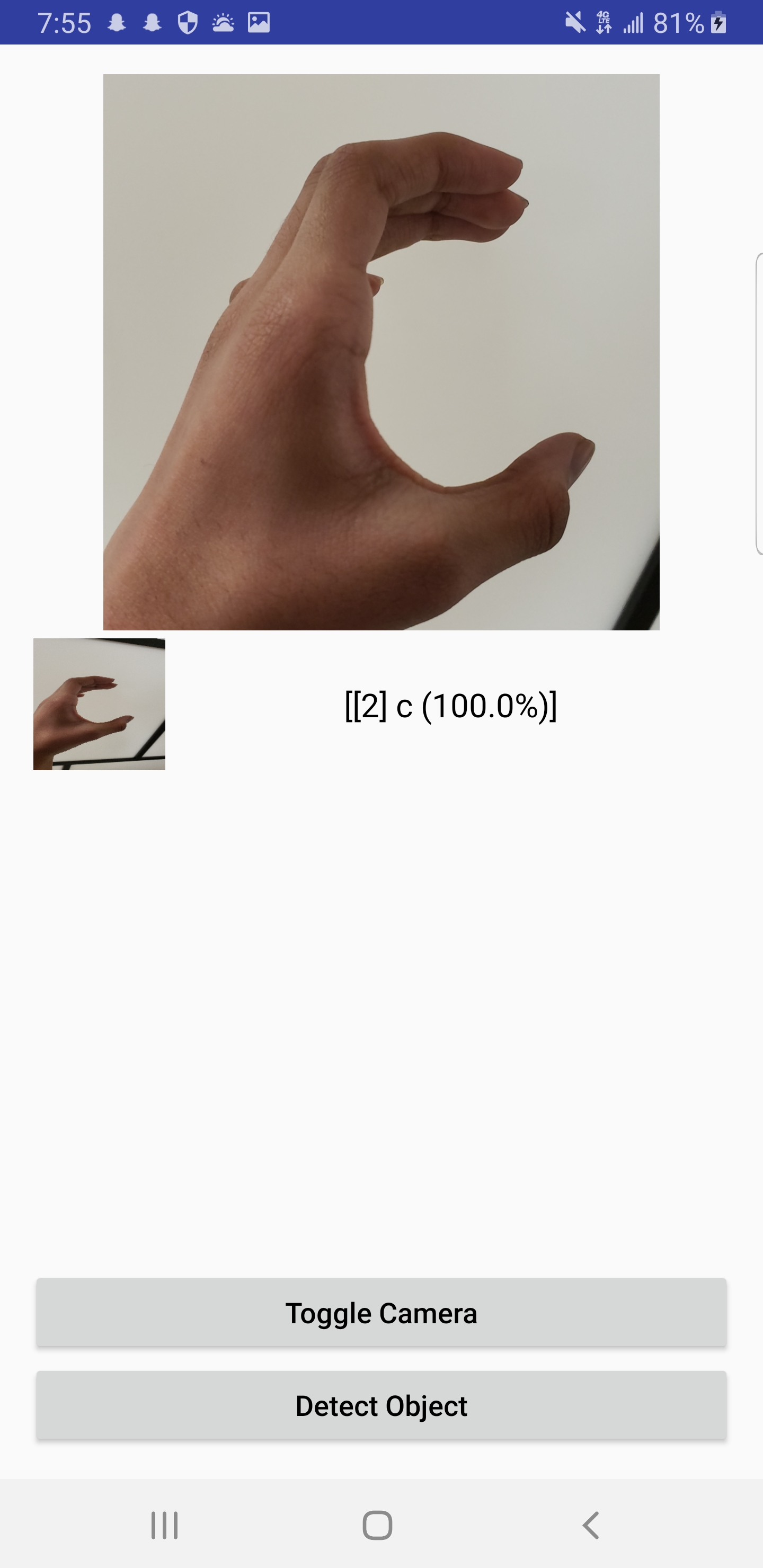
The "Detect" button prompts the user to make a letter. The letter C was recognized.
-
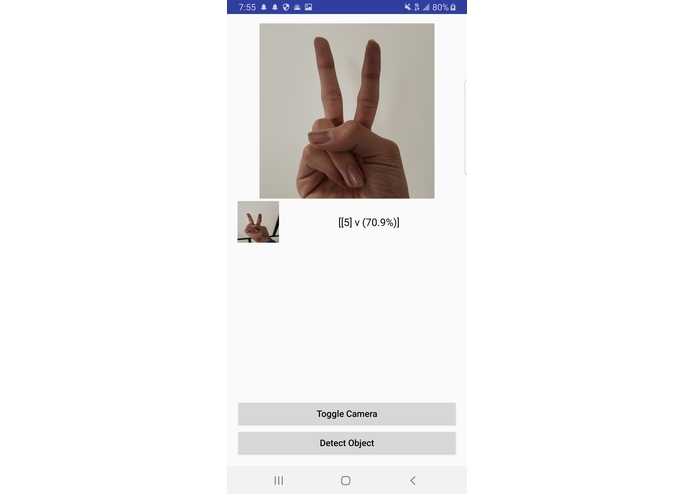
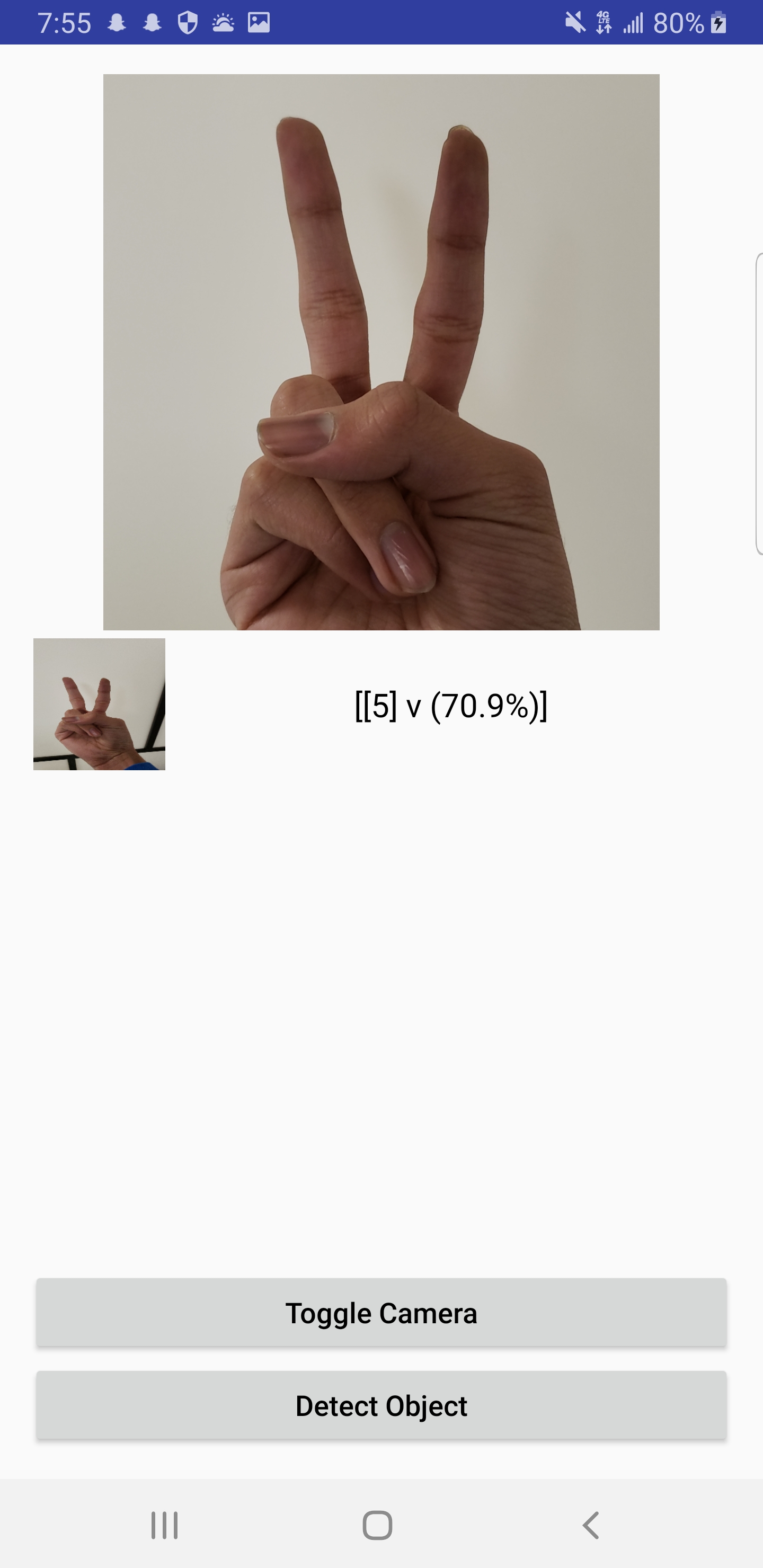
The "Detect" button prompts the user to make a letter. The letter V was recognized.
-
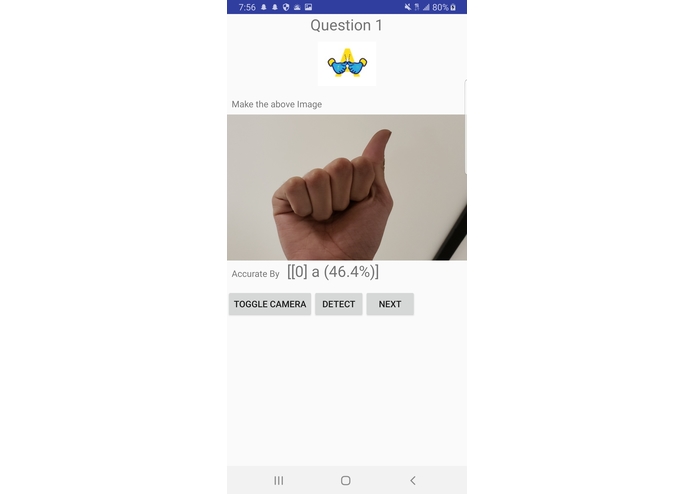
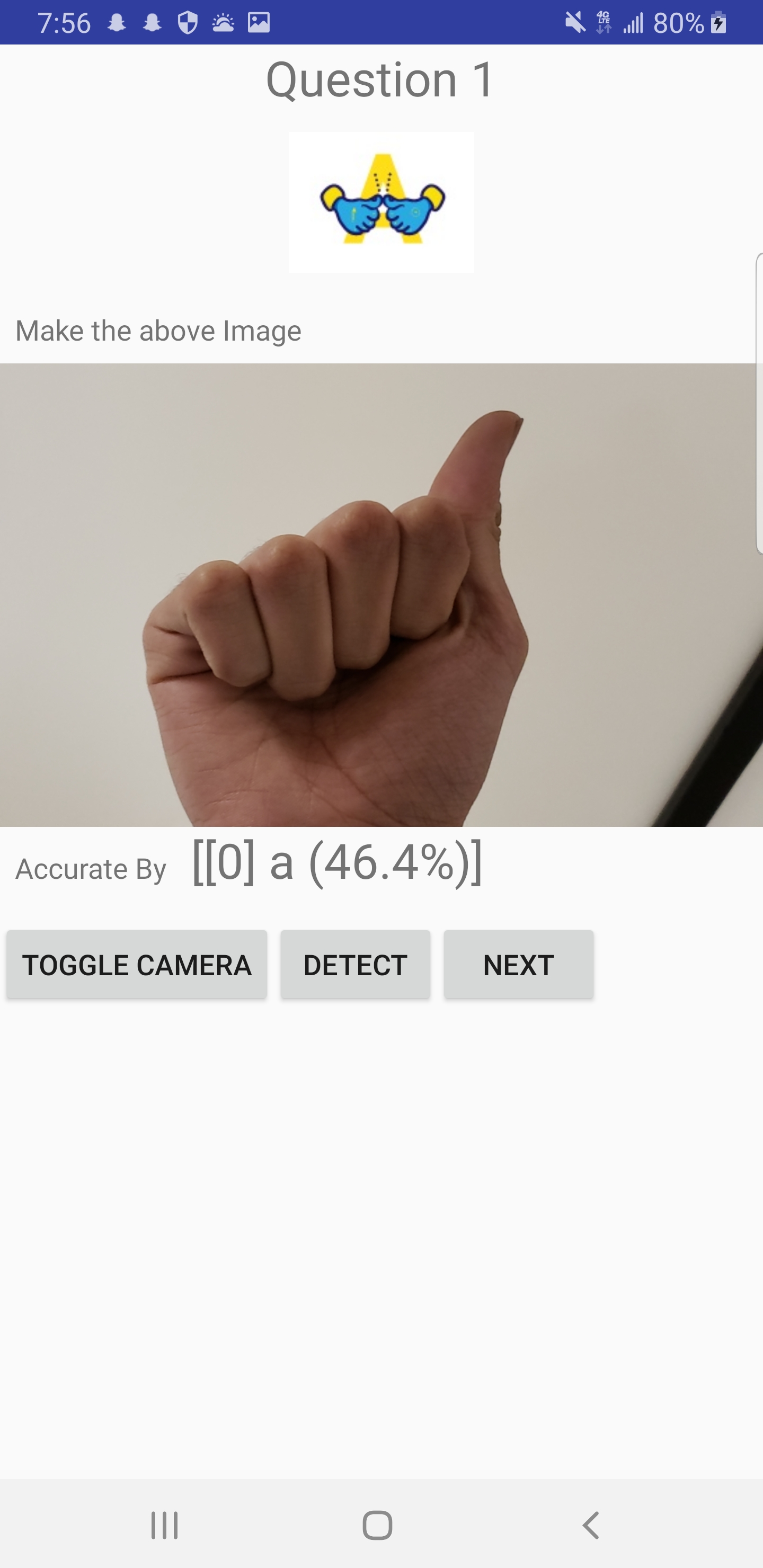
The "Test" button allows the user to take a small quiz on their sign language knowledge.


Inspiration
We can't imagine how hard it is for the hearing-impaired to live their everyday lives. These people have such difficulties in communicating with others. Unable to hear the speaker, they are also unable to convey their thoughts and ideas. On the other end, the speaker, may not understand what the deaf individual is saying through their sign language. This is why we developed SLang. We wished to create a product that would help make these interactions more efficient. Thus, this product is on a device that we all carry: our phone.
What it does
Website The website serves the purpose to provide general information about SLang. It covers our mission, what the app does, meet the team, a contact us page, and a 'try-now' section.
App The app has two main purposes: to help communication between a deaf to a speaker, and between the speaker to the deaf. In order to accomplish this, we have the speaker speak into the mic, and the app displays the words. In return, the deaf will read the message, and respond in sign-language to the camera. The app will interpret the hand motions and display what the individual is trying to say. So, an effective communication is happening between both people. Alongside this, the app has 'learn' and 'test' features. In the 'learn' menu, the user is shown pictures of letters and its corresponding hand symbol. In the 'test' menu, the user takes a small quiz to test their knowledge on sign-language.
How we built it
Website The website was created in the Atom text editor, and incorporated HTML, CSS, and JavaScript. HTML was used to make the overall structure of the site. CSS was used to add various colors and styles. Lastly, JavaScript was used to add simple transitions that polished the site. Also, it uses a .tech domain.
App The app was created in Android Studio. The hand-recognized feature was created through machine learning in Python. The program interpreted hundreds of pictures of each letter (made from hand), and made an effective model to understand any gesture it's given.
Challenges we ran into
Website The website contained multiple formatting issues. We had to play a lot with the values in order to get the correct placement of blocks, as well as keeping everything aesthetically pleasing. We overcame this problem by drawing a layout of how everything should be laid out, and worked towards achieving that.
App The app had so many small, but destructive bugs. Sometimes, these bugs would completely crash the app, and prevent anything from being displayed. We overcame this by simply debugging, and persevering in order to pass these obstacles.
Accomplishments that we're proud of
We are very happy that we were able to incorporate most of our ideas into our products. We worked around obstacles, and learnt new material in the process. We are proud that we gained new experience overall.
What we learned
We learnt the basis of machine learning, and web structure.
What's next for SLang
For SLang, we hope to further sophisticate the app. The app is not 100% accurate, and can definitely be improved. Alongside this, we can make it more aesthetically pleasing, and add more functionality. Next, we wish to expand the platforms SLang is currently available on. Currently restricted to Android, we hope to broaden our reach to iOS, and then other platforms. The app can also be used as a great tool to learn and teach sign-language. We want to incorporate teaching materials as another resource. Lastly, our final longterm goal is to work with phone companies in order to establish SLang into their software. This way, anyone can get access to sign-language, and communicate with the deaf.


Log in or sign up for Devpost to join the conversation.