-
-
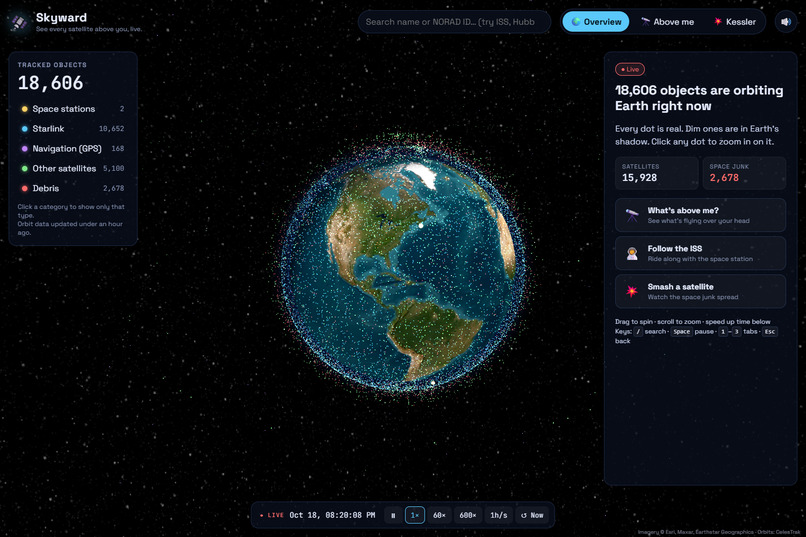
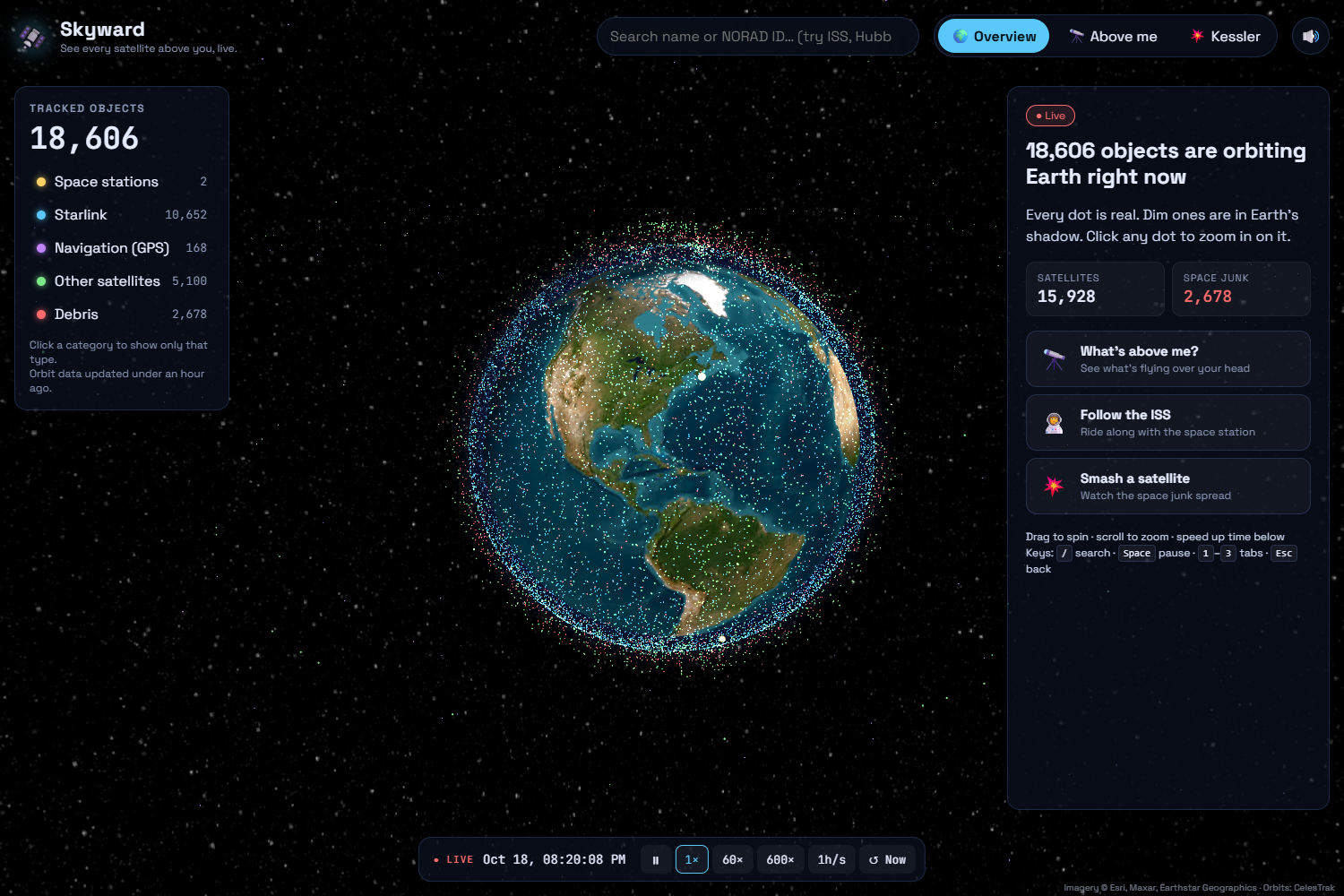
All 18,606 tracked objects orbiting Earth, live. Every dot is real.
-
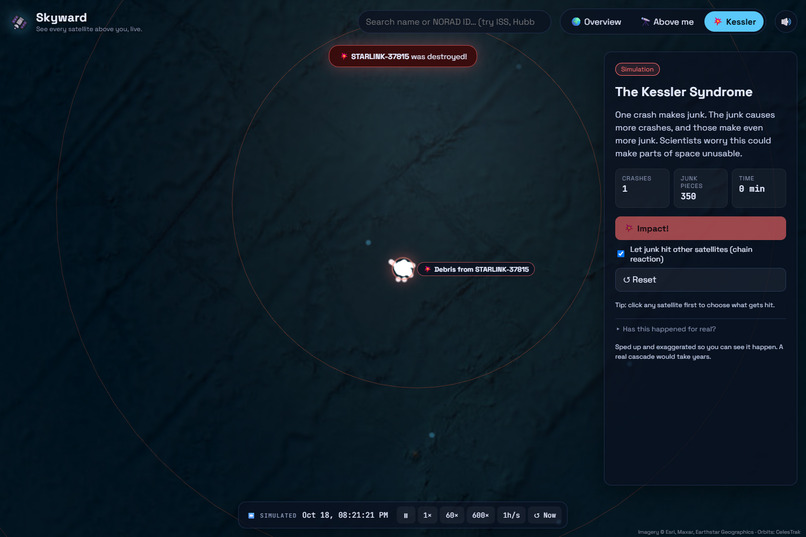
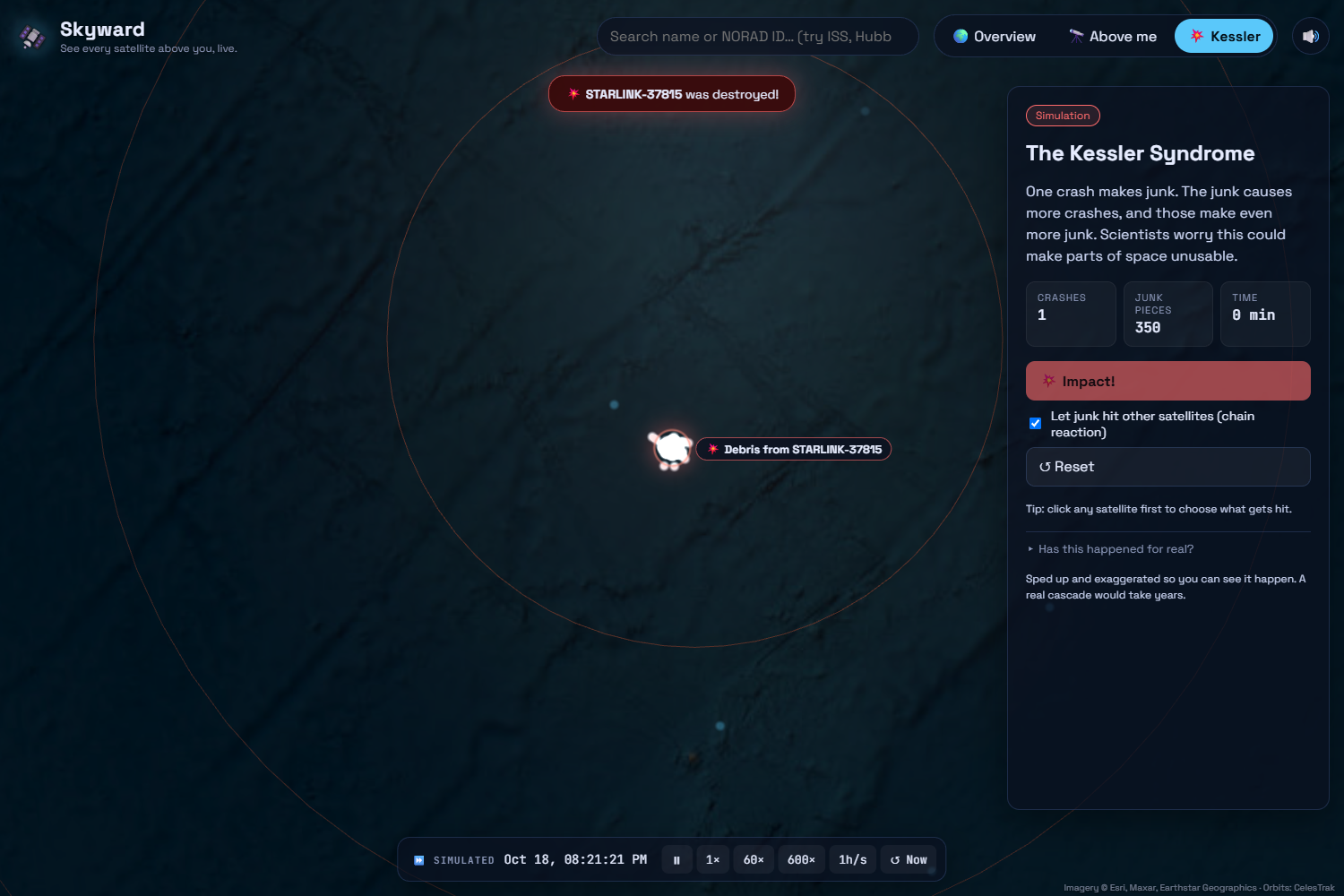
Impact! A fireball, shockwave and explosion.
-
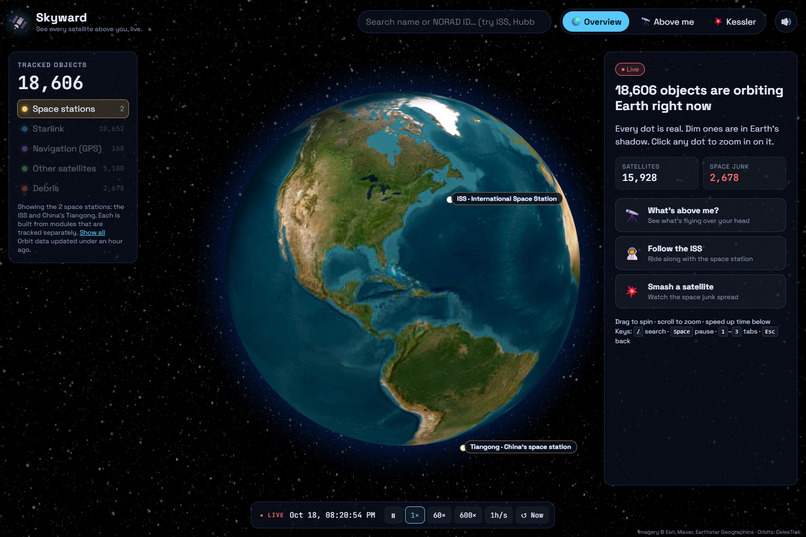
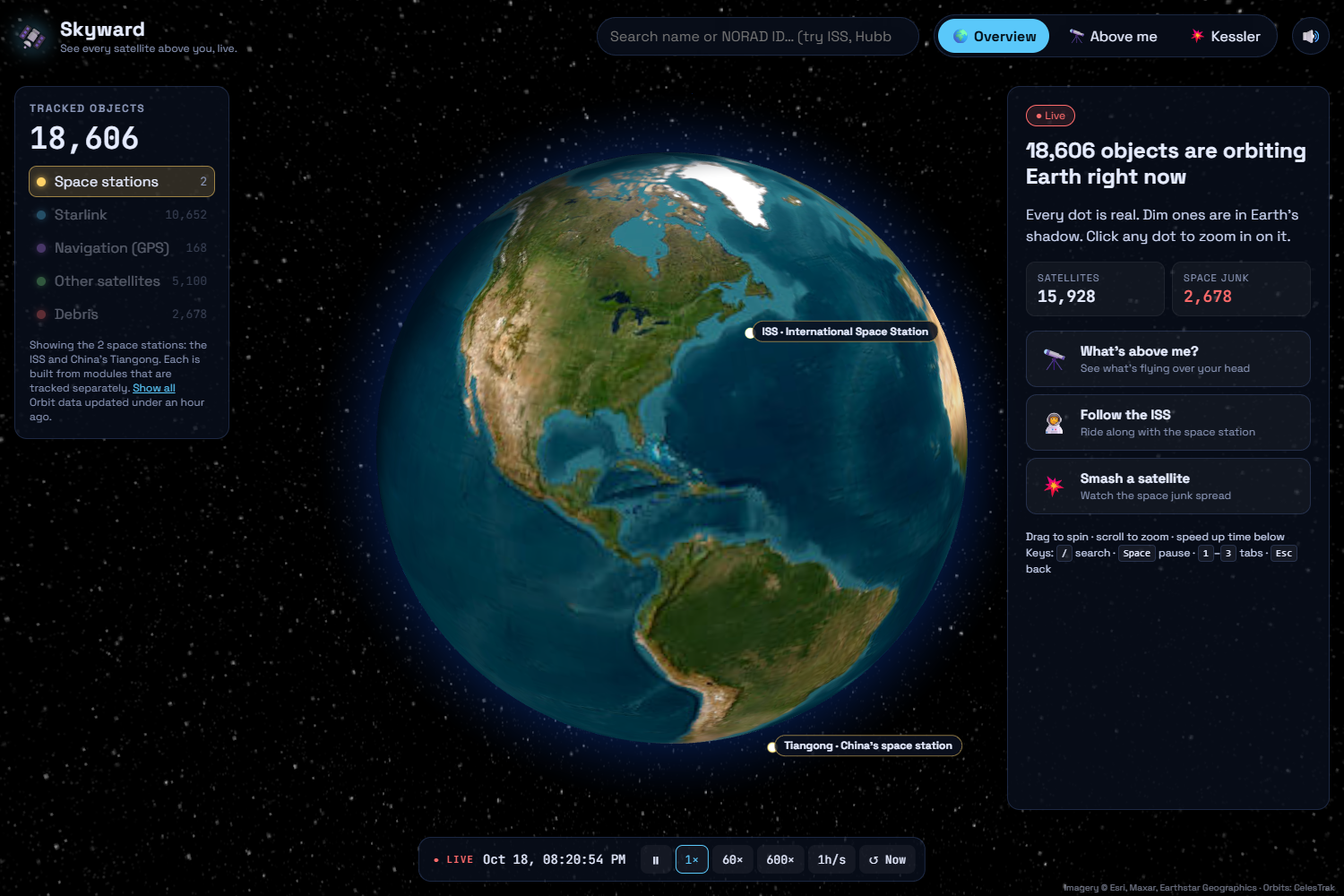
The only two space stations in orbit: the ISS and China's Tiangong.
-
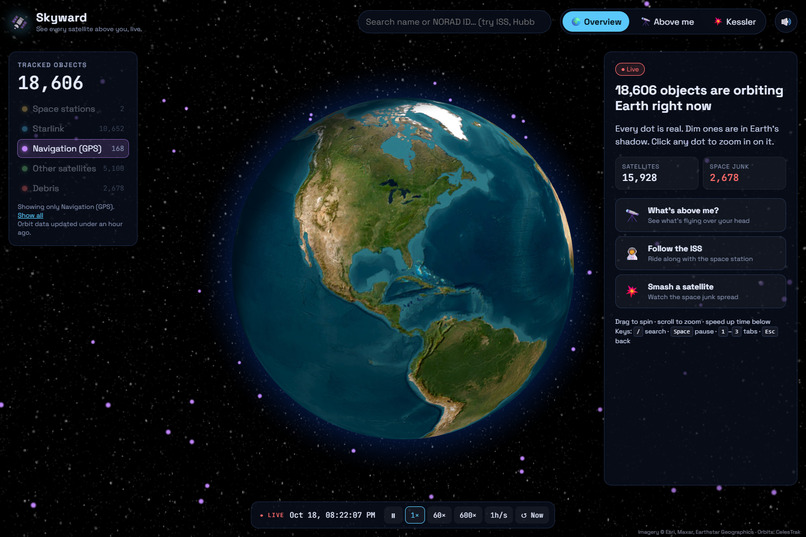
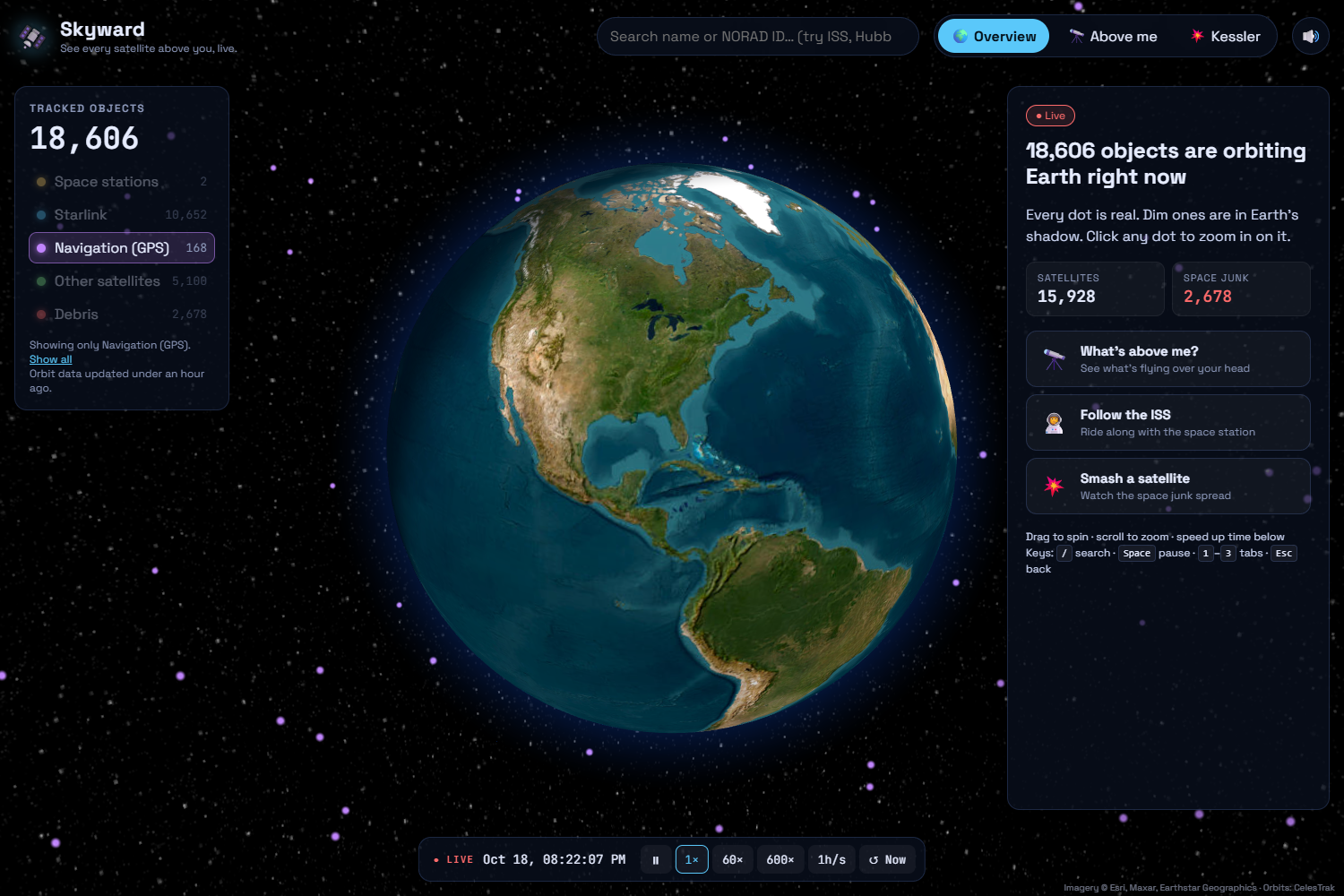
Filter by type: the GPS satellites, about 20,000 km up.
-
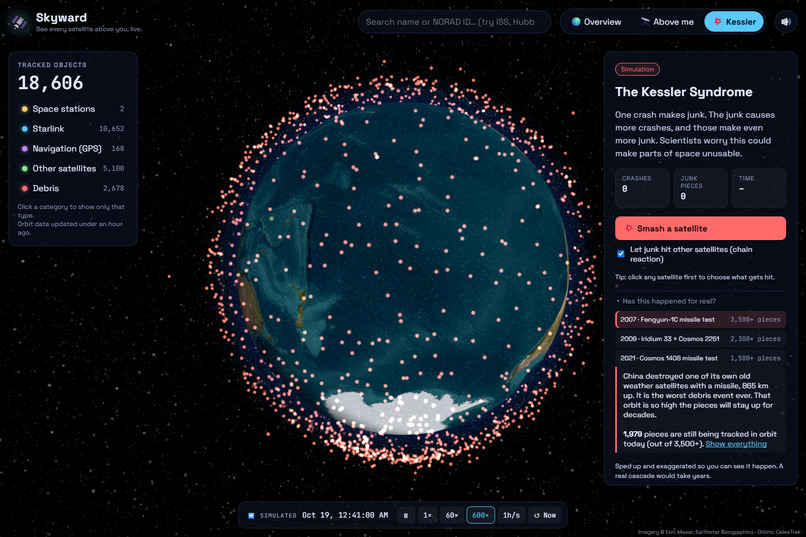
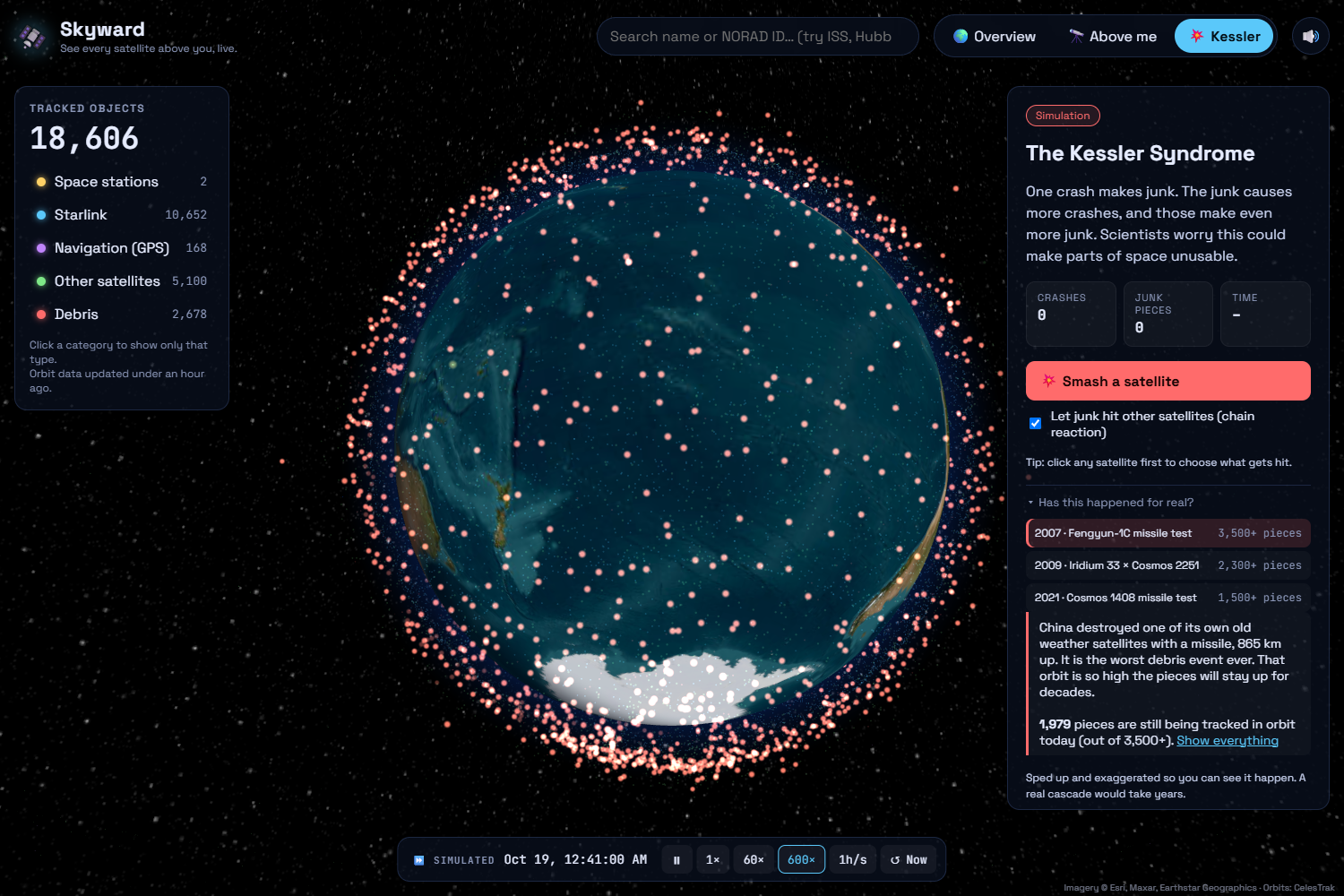
Real history: almost 2,000 pieces from the 2007 Fengyun-1C missile test still circle Earth today.
-
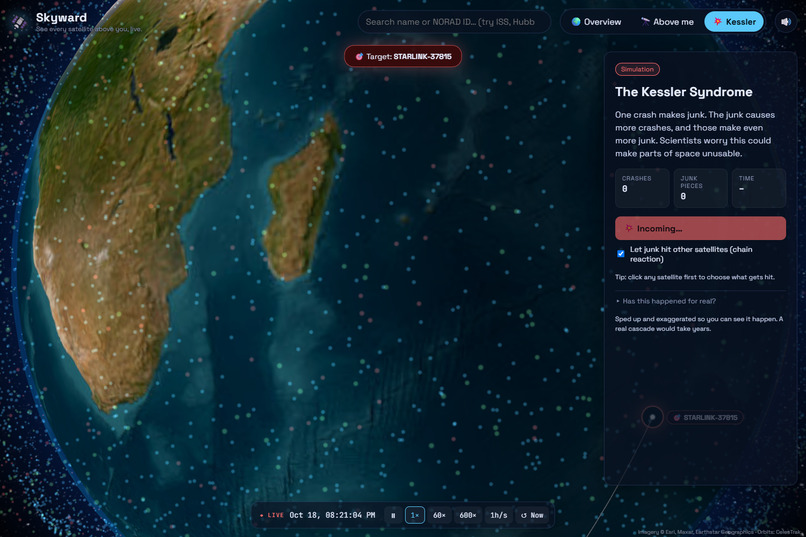
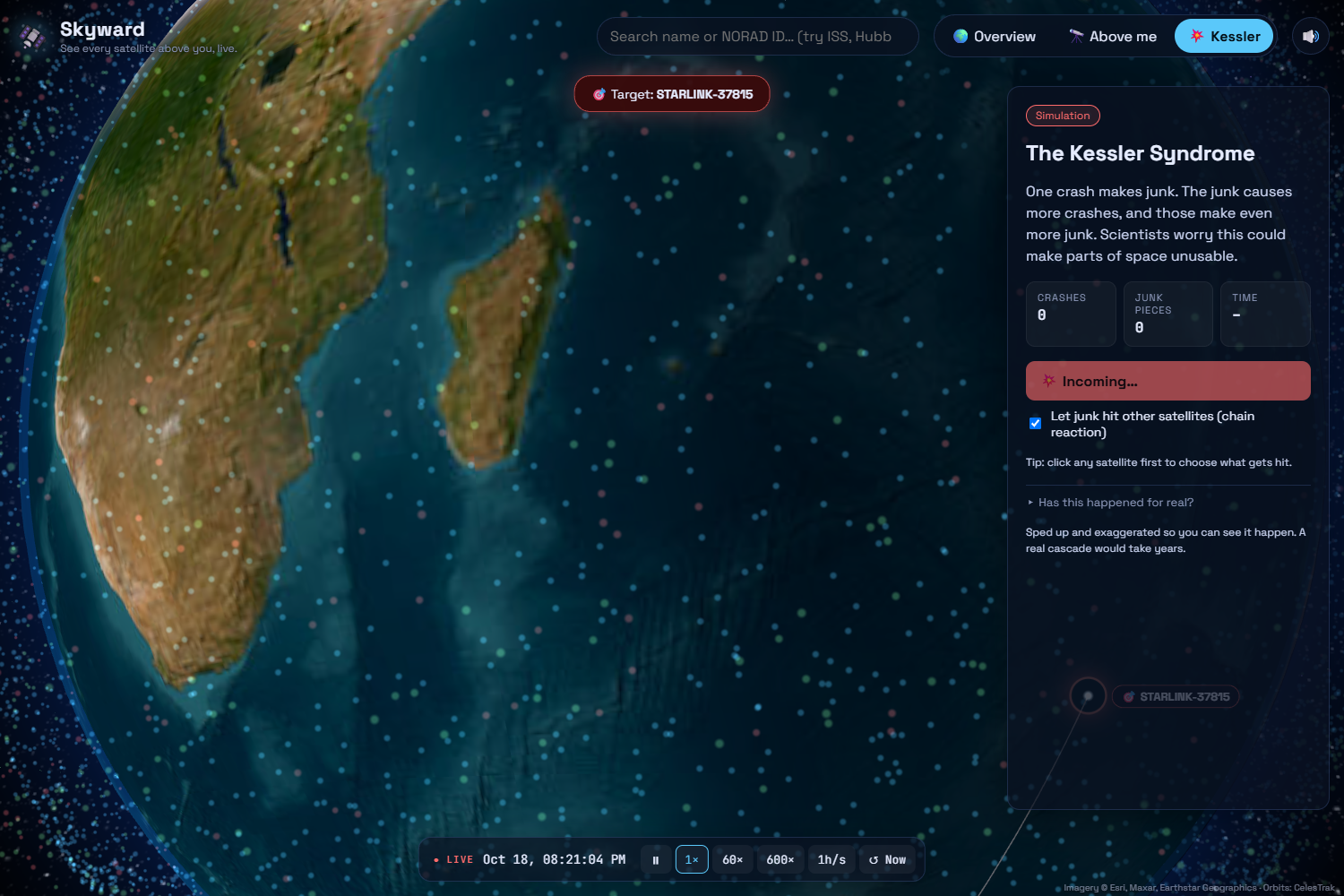
Kessler simulator: the camera locks onto the target before impact.
-
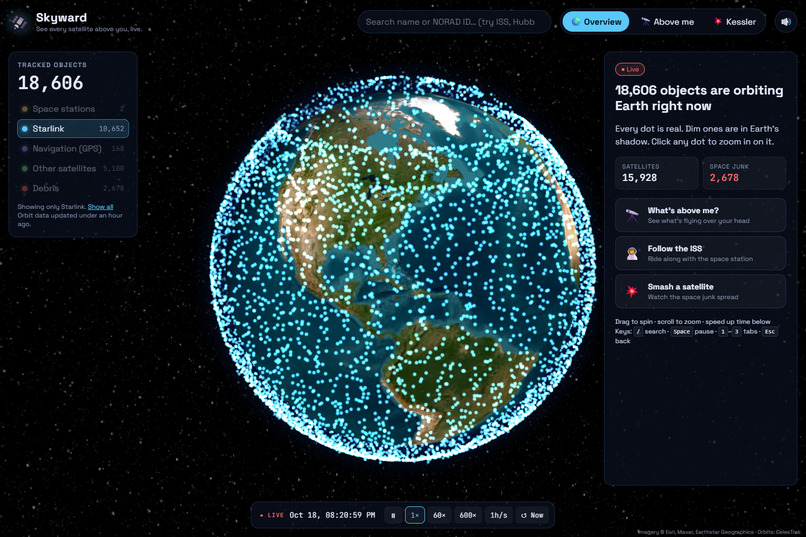
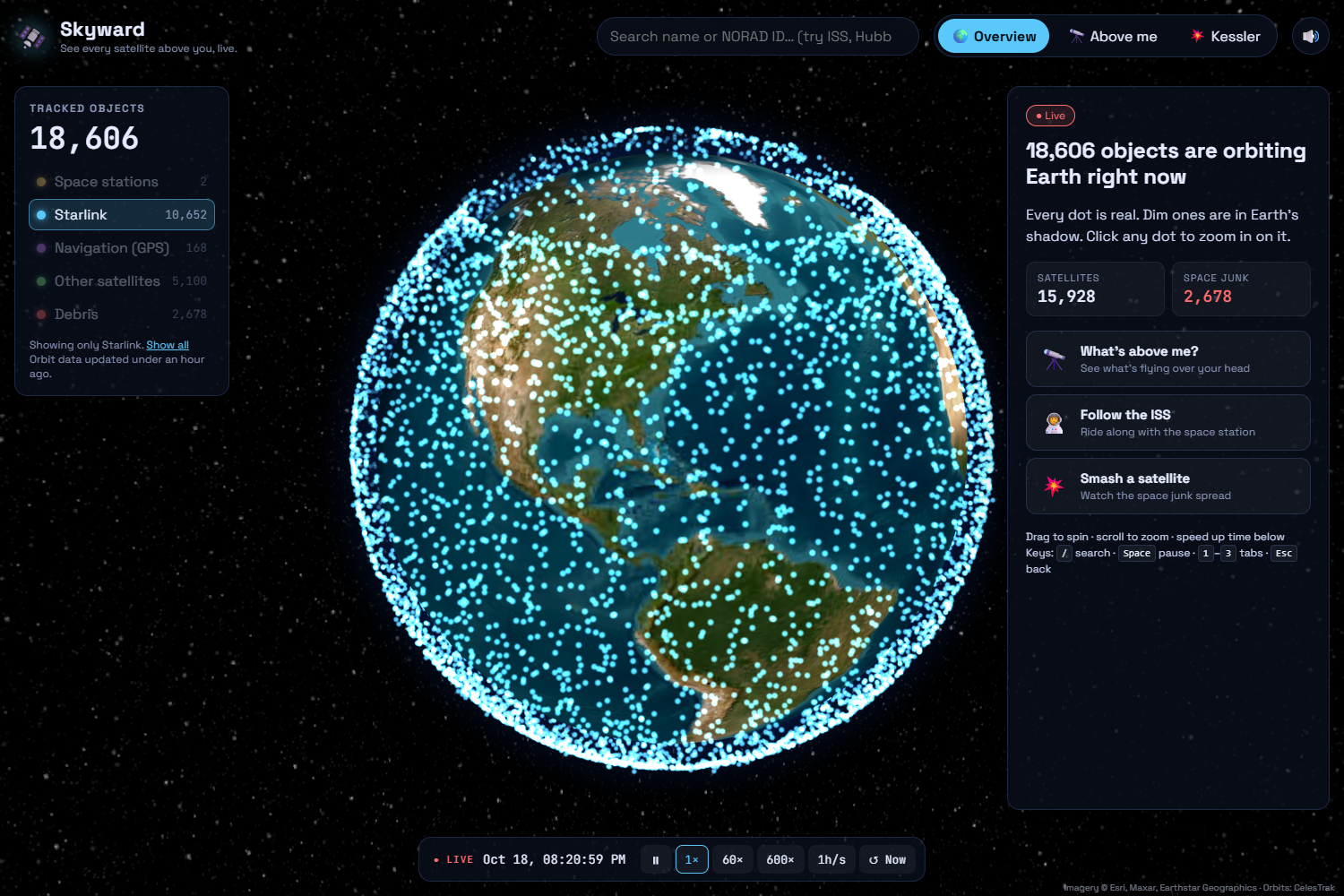
Starlink: more than 10,000 satellites from one company.
-
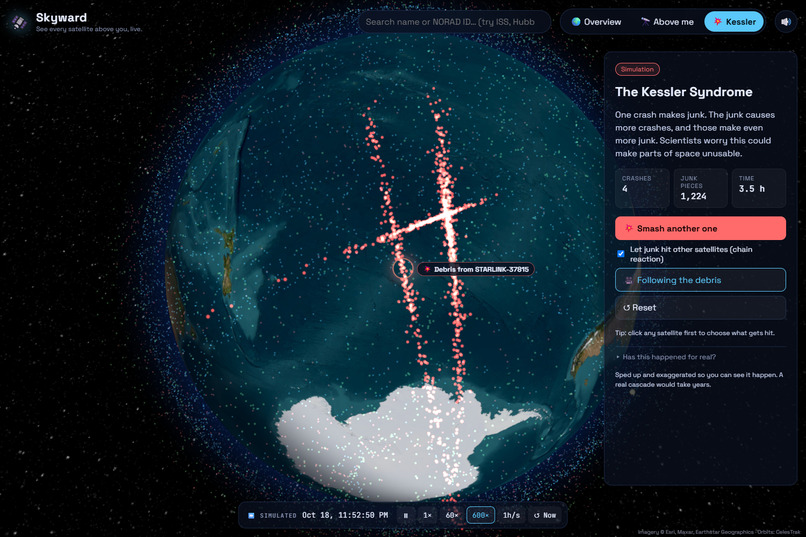
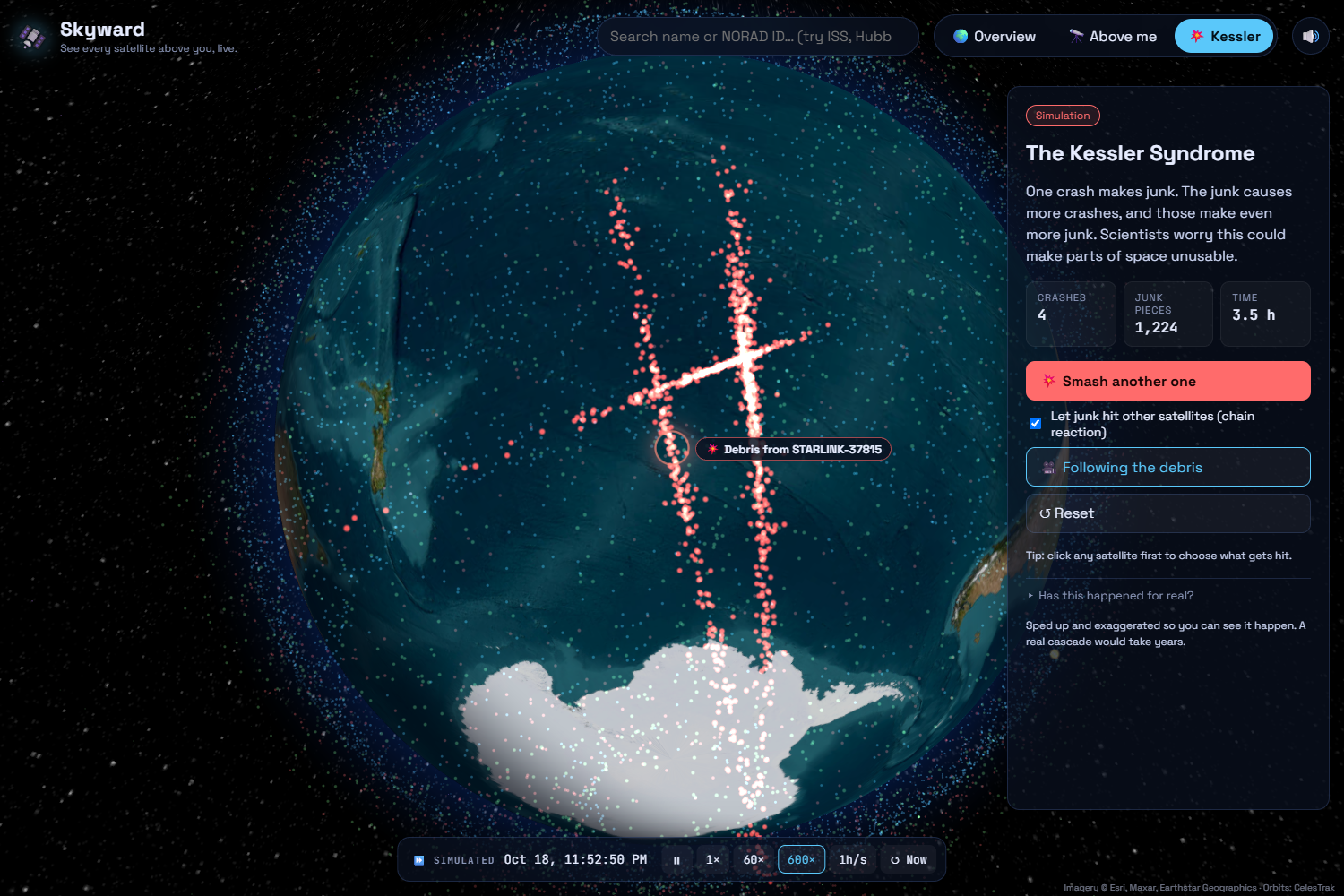
Debris spreads around Earth and triggers a chain reaction of new crashes.
-
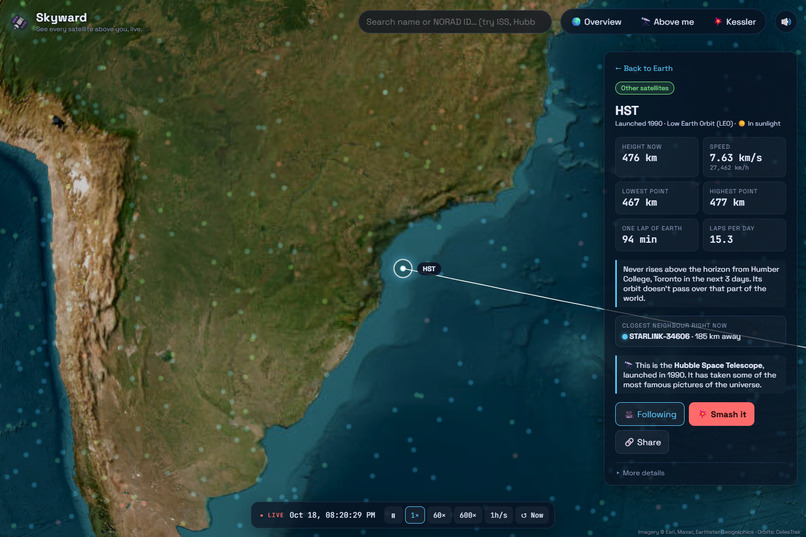
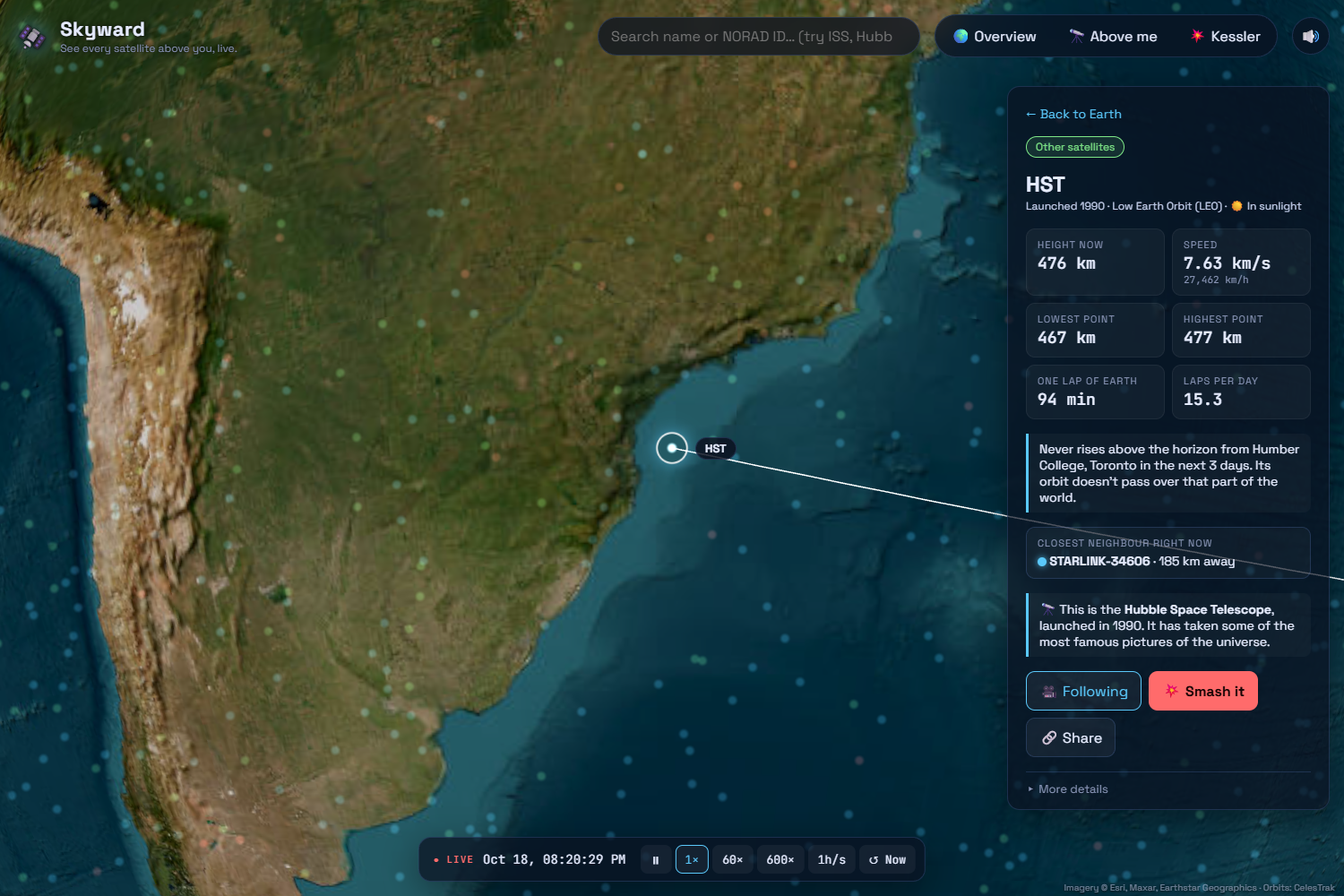
The Hubble Space Telescope, with its orbit and its nearest neighbour in space.
-
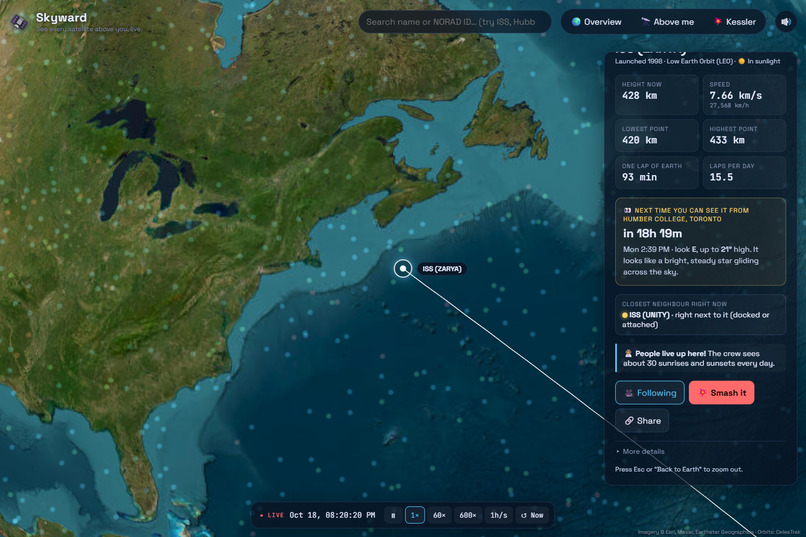
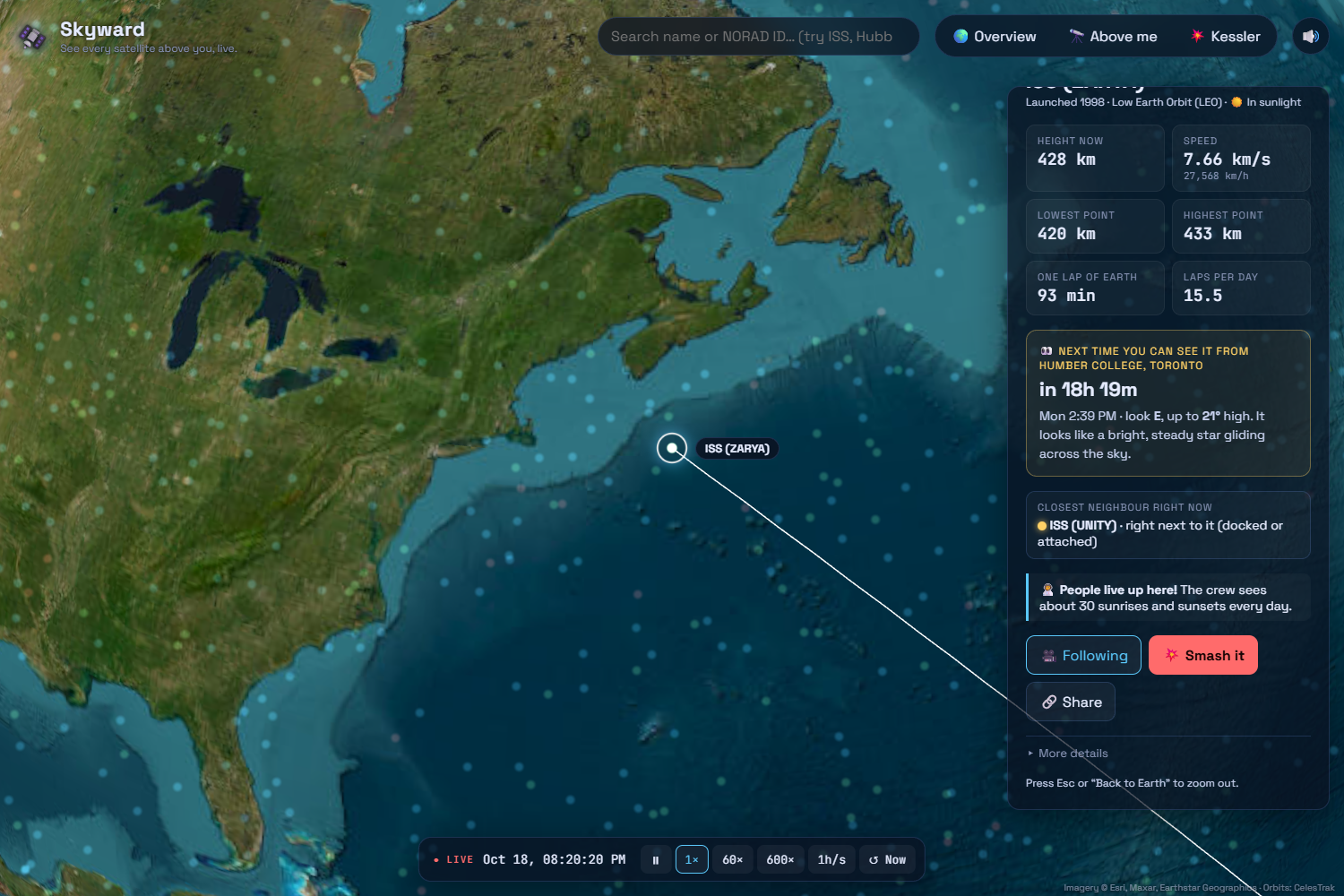
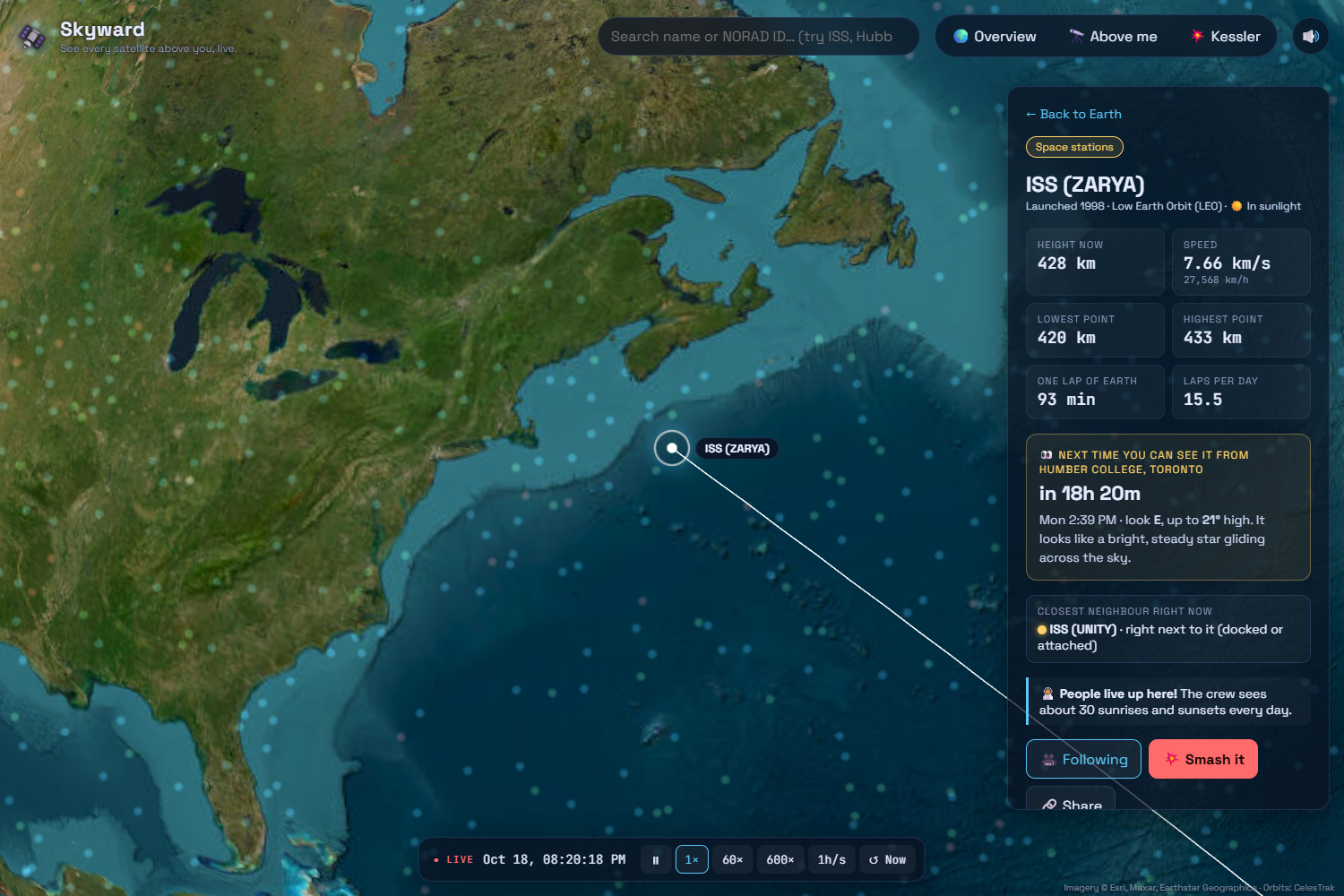
The ISS card: speed, height, a countdown to when you can see it, and its close neighbor.
-
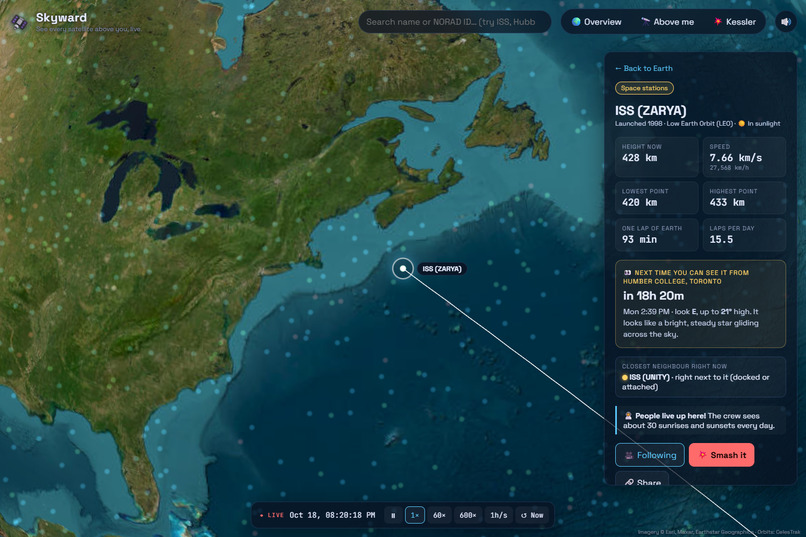
Click any object and the camera flies to it and follows it. Here, the ISS and its orbit.
-
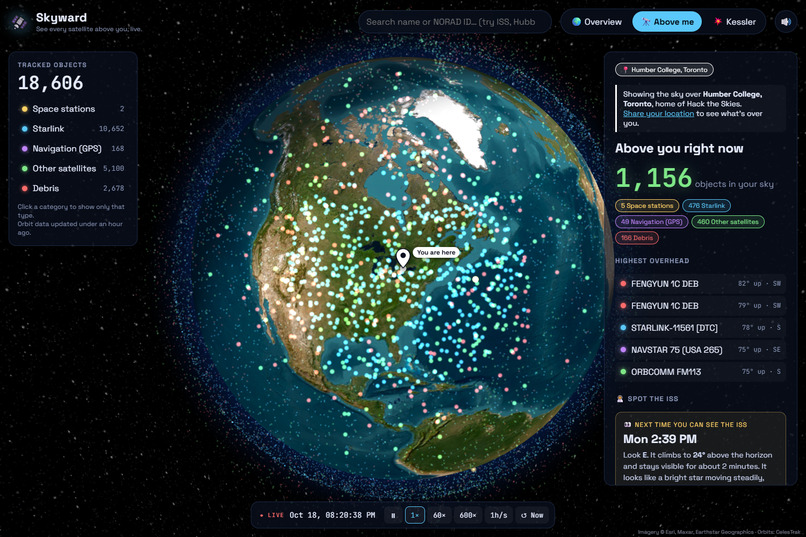
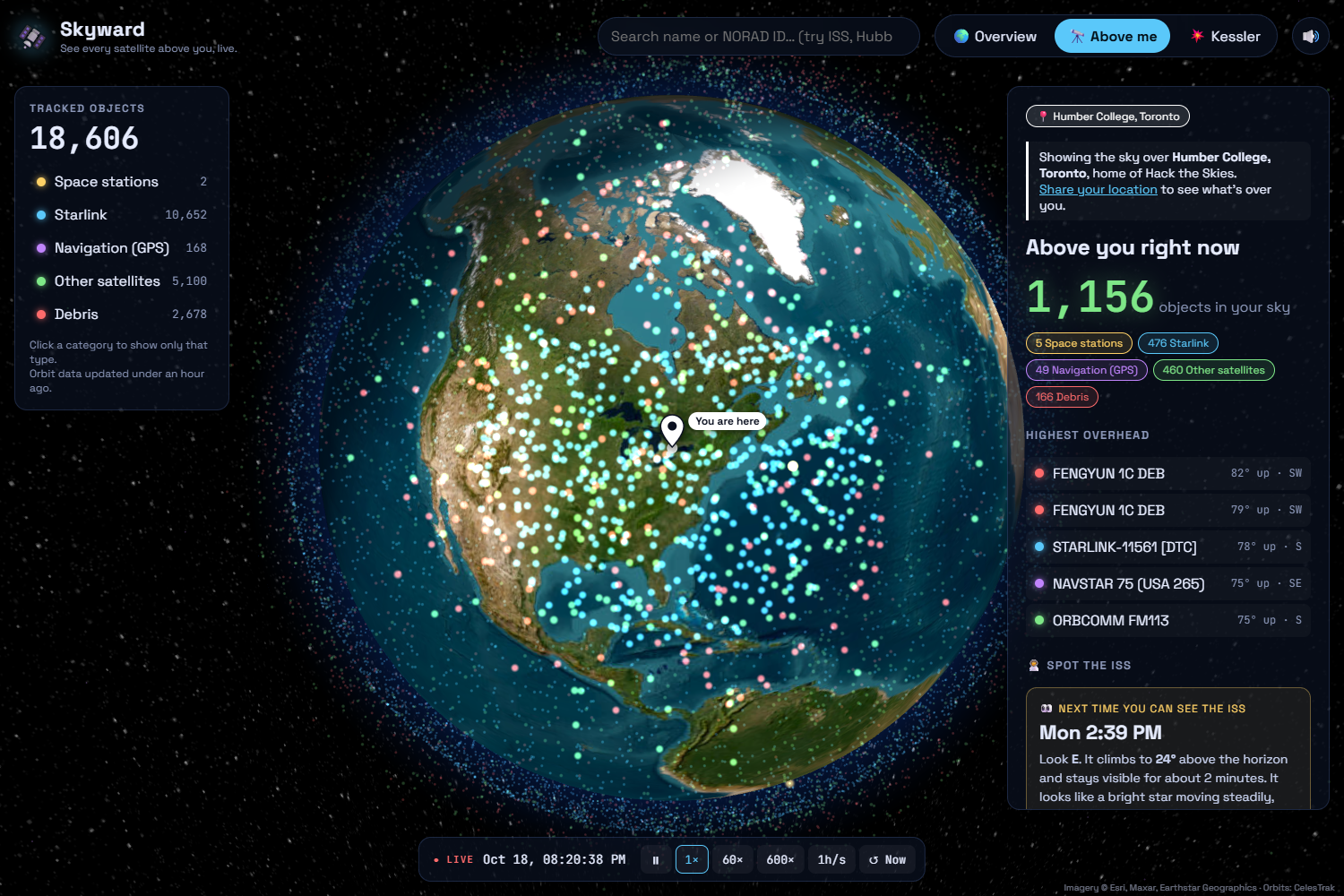
Above me: over 1,000 objects are above your horizon at any moment.
Inspiration
More than 18,000 tracked objects are orbiting Earth right now. Scientists warn about the Kessler syndrome: one crash makes debris that causes more crashes. I wanted everyone to be able to see that live, in a browser.
What it does
- A live 3D globe of all ~18,600 objects, with day and night and Earth's shadow.
- Click any satellite to follow it and see its height, speed, closest neighbour and when you can see it from where you are.
- Above me shows what's over your head right now.
- Smash a satellite and watch the debris spread across Earth, hitting other satellites in a chain reaction.
- Real disasters: light up what's left of real debris events, like the 2007 Fengyun-1C missile test.
How I built it
- Data: a GitHub Action downloads fresh orbit data from CelesTrak every 6 hours.
- Orbit math: satellite.js runs SGP4 (the US Space Force's orbit model) to place every object, in a background thread so the page stays smooth.
- Graphics: three.js plus a custom GPU shader draws all 18,600 objects at once.
- Crash physics: each piece of debris follows real gravity, $$\ddot{\vec r} = -\frac{\mu \vec r}{|\vec r|^3}$$ and burns up if it falls below 120 km.
- Hosting: a free static site on GitHub Pages, with no server and no sign-up.
Challenges we ran into
Keeping 18,600 objects moving smoothly, making the camera follow a crash so you can see it, and calculating orbit heights correctly because Earth isn't a perfect sphere.
Accomplishments that we're proud of
- All the objects move smoothly, with no server.
- It tells you exactly when and where to look to see the ISS with your own eyes.
- Built solo in my first hackathon, from just an idea to a working web app.
What we learned
Orbital mechanics, GPU shaders, and how serious the space-debris problem really is.
What's next for Skyward
Close-approach warnings between real satellites, and alerts when the ISS flies over you.

Log in or sign up for Devpost to join the conversation.