-
-
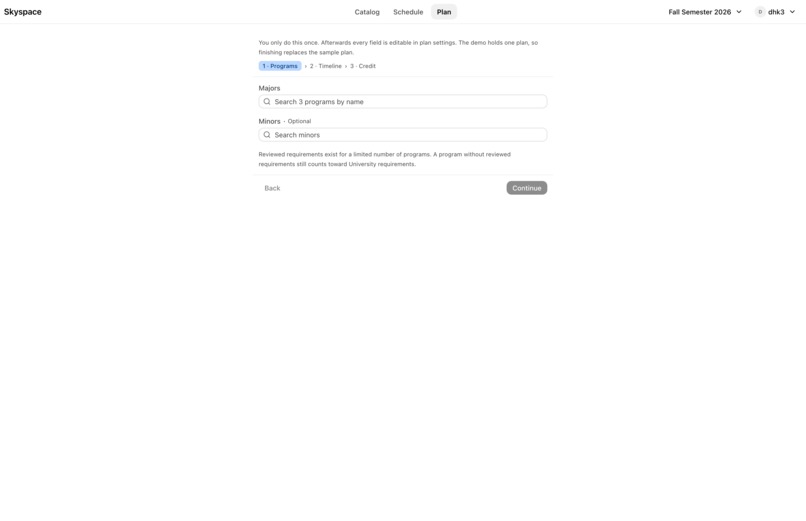
plan adder
-
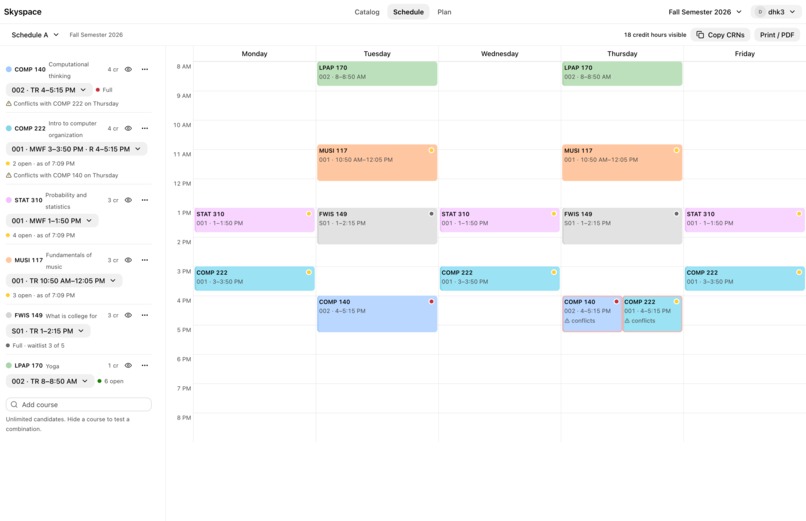
schedule
-
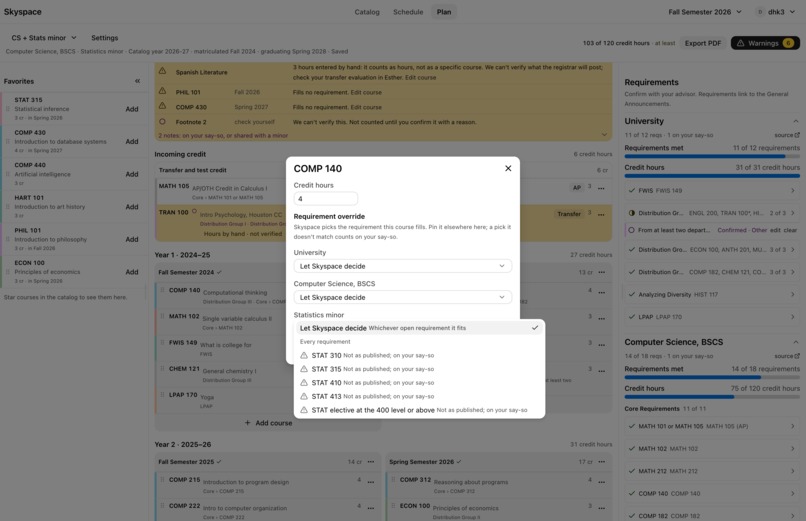
course override
-
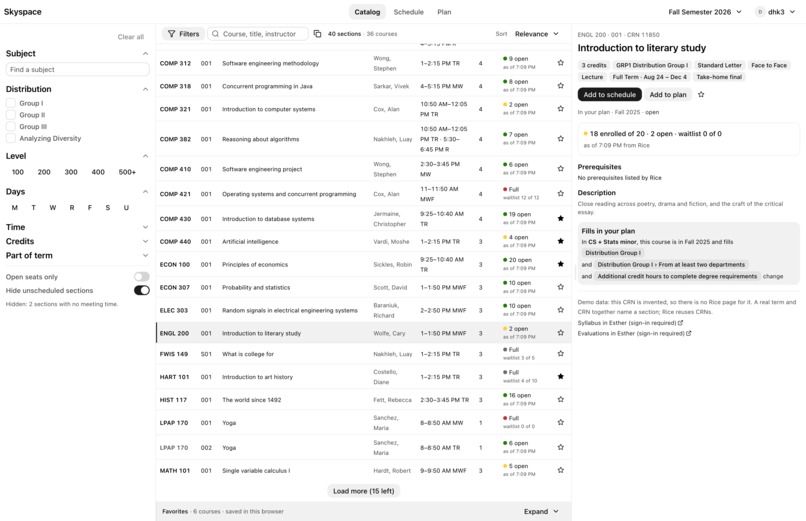
courses
-
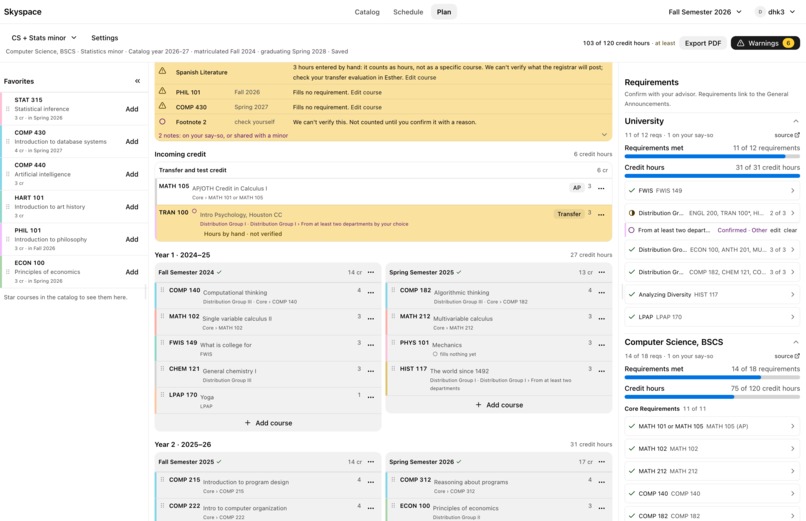
plan
-
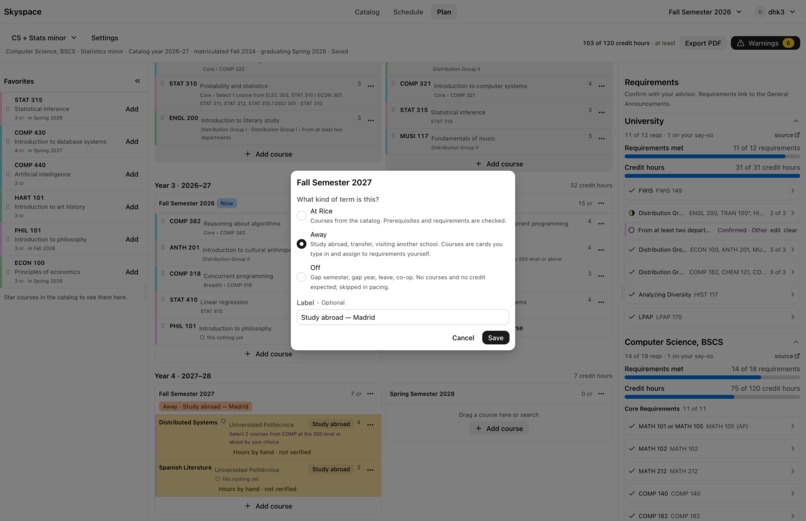
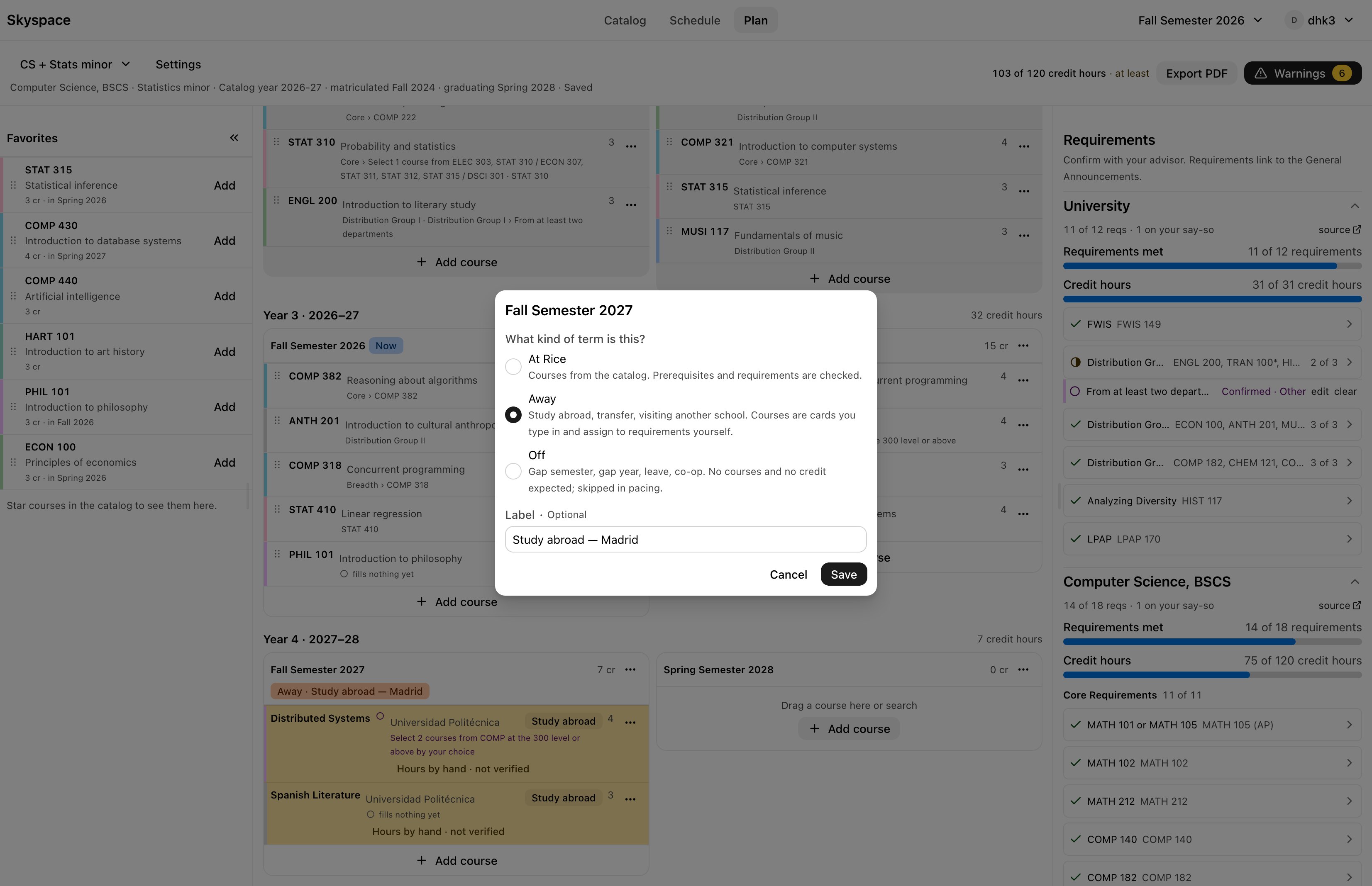
study abroad/gap semester
-
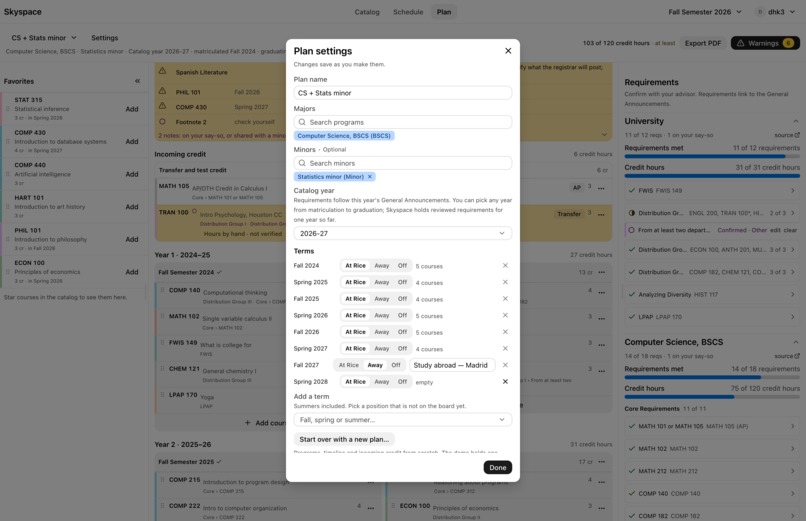
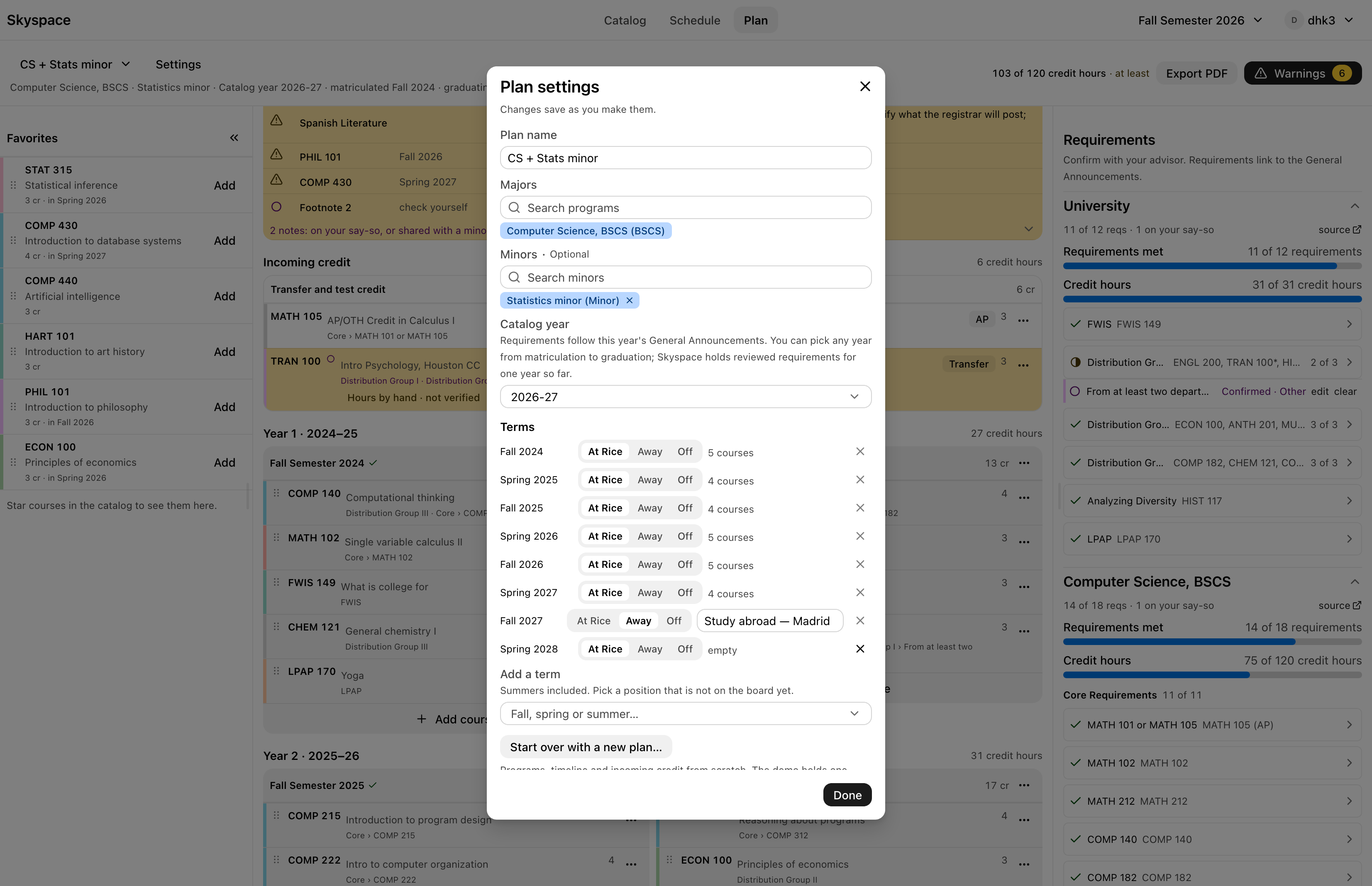
settings
Inspiration
Rice students plan a degree with a PDF, a spreadsheet, and many browser tabs. Two student tools that helped with this have shut down. We wanted one tool that does the three jobs: find courses, fit them into a schedule, and check the plan against the real degree requirements.
What it does
Skyspace has three pages.
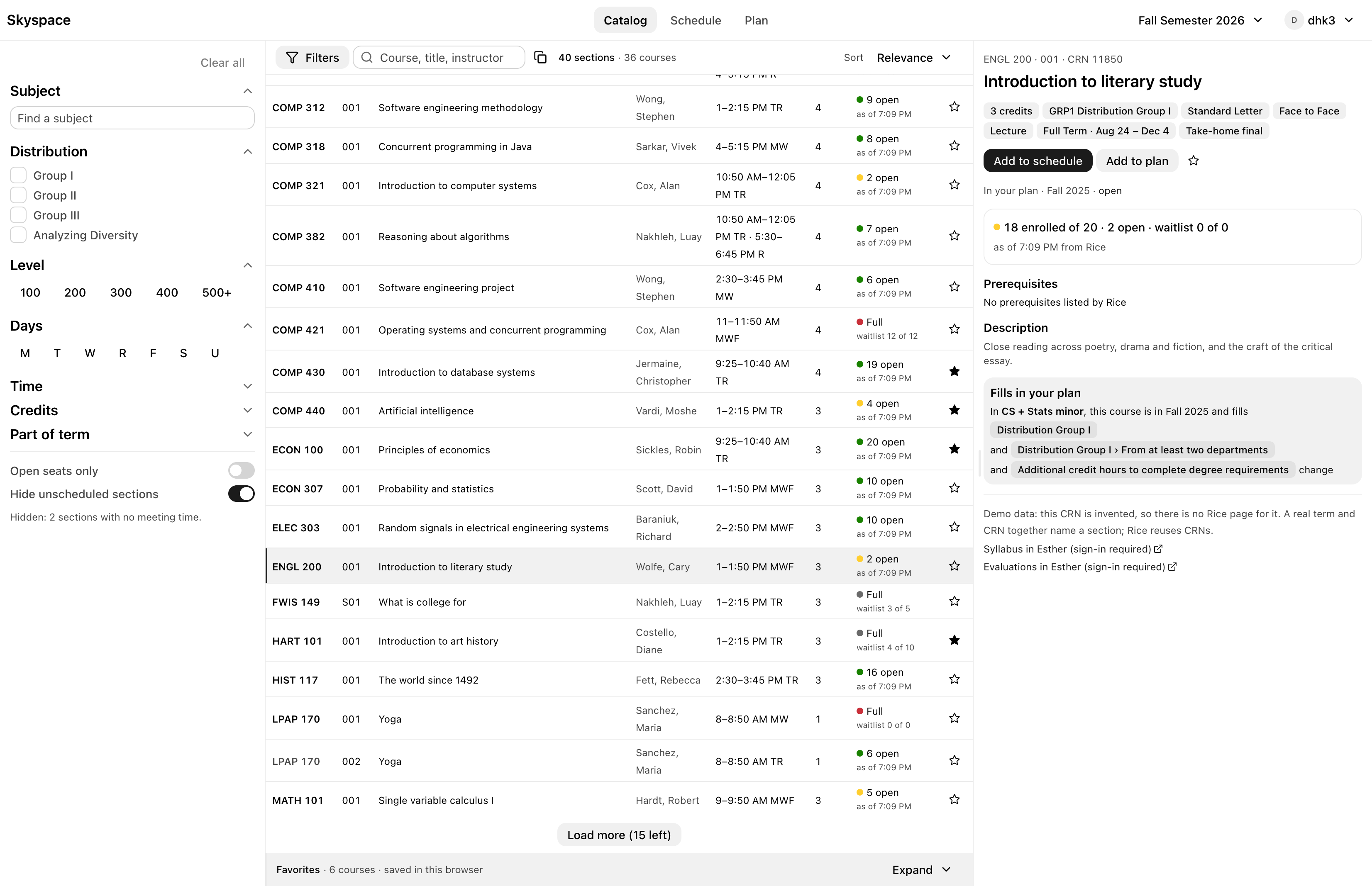
- Catalog. Search the current term. Filter by distribution group, day, time, and open seats. Open a section to see seats, prerequisites, and which requirement it fills in your plan.
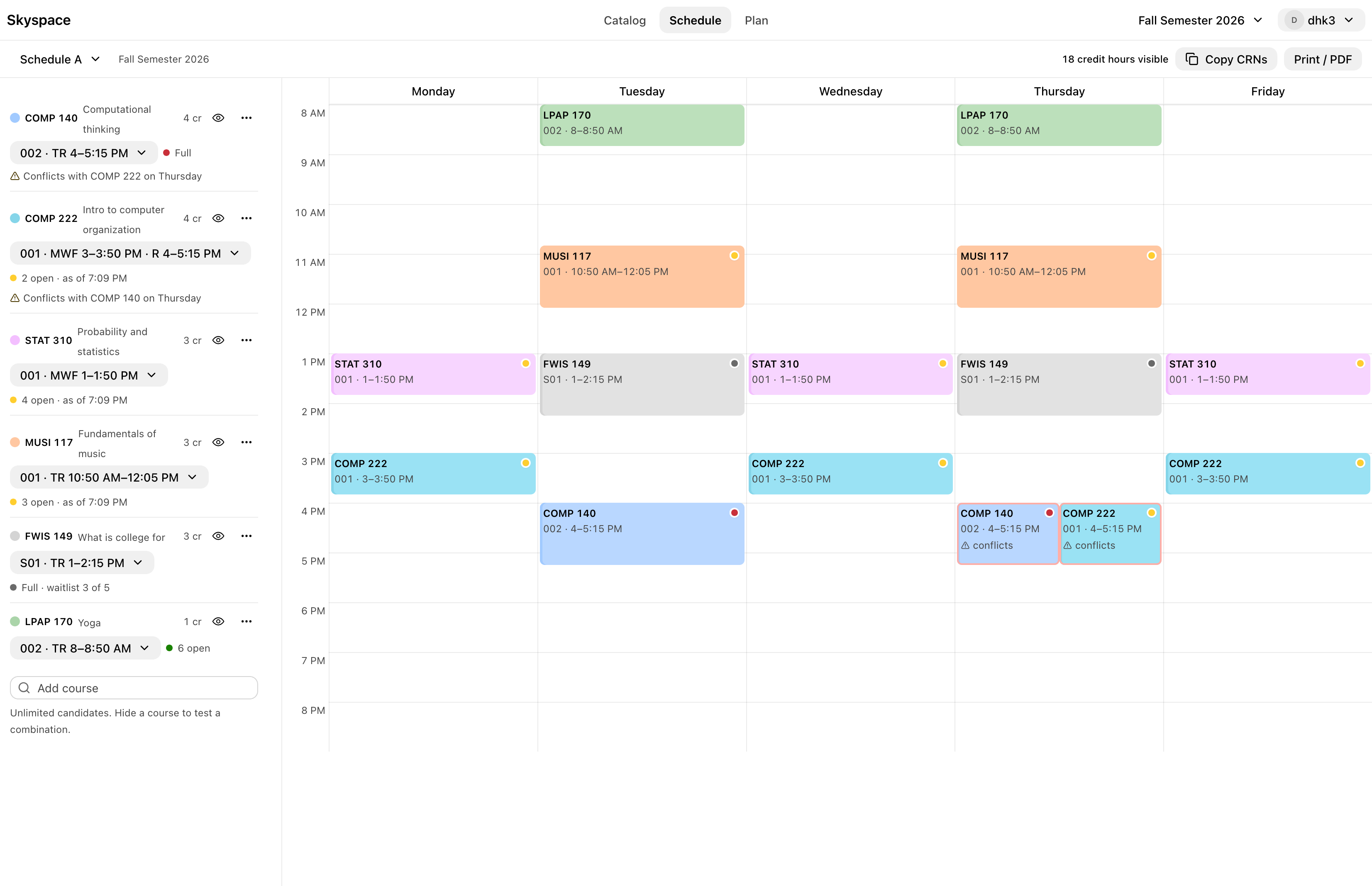
- Schedule. Add many candidate courses for one term. Hide a course to test a combination. The grid marks time conflicts and full sections. Copy the CRNs to paste into Esther.
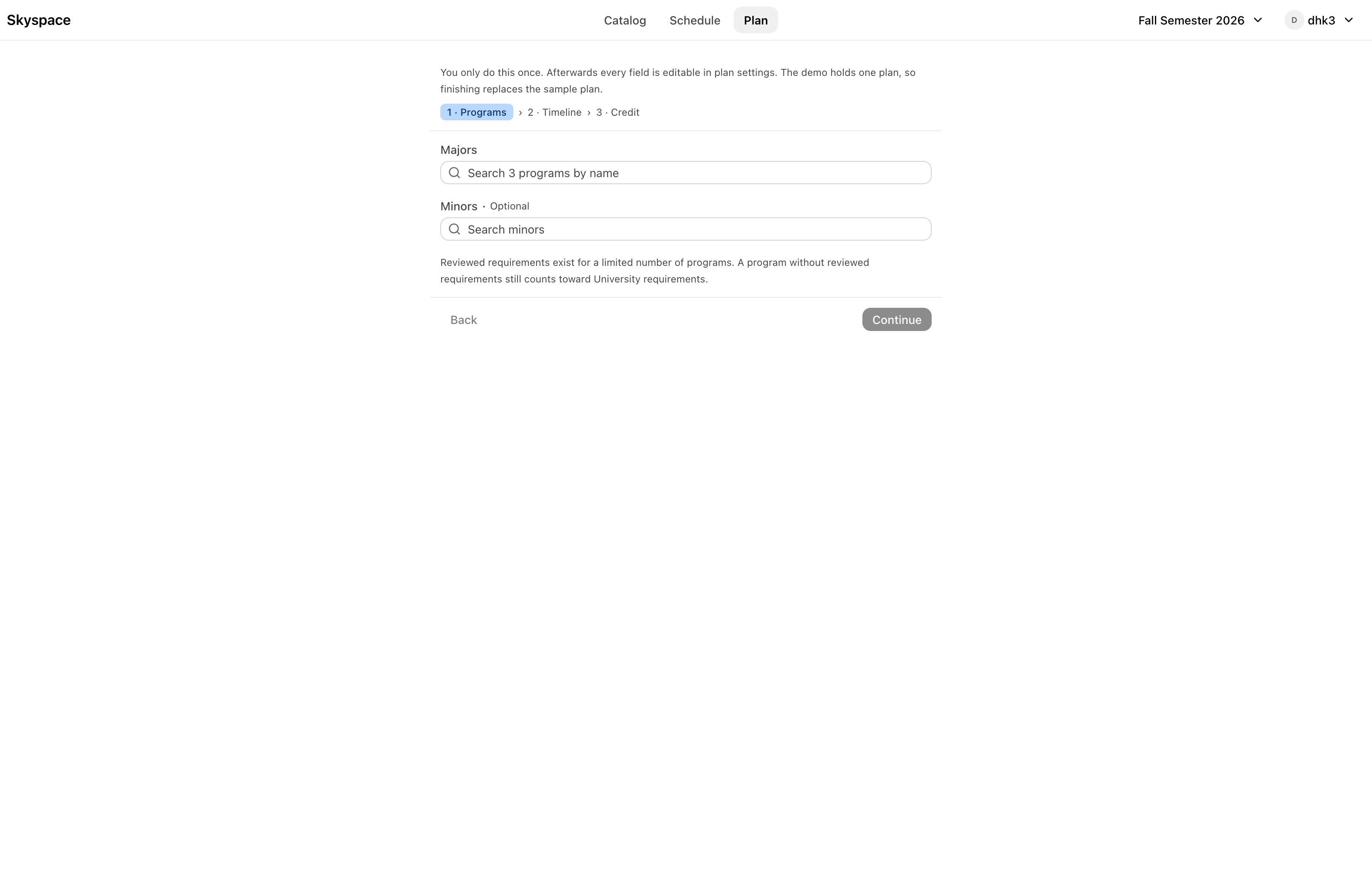
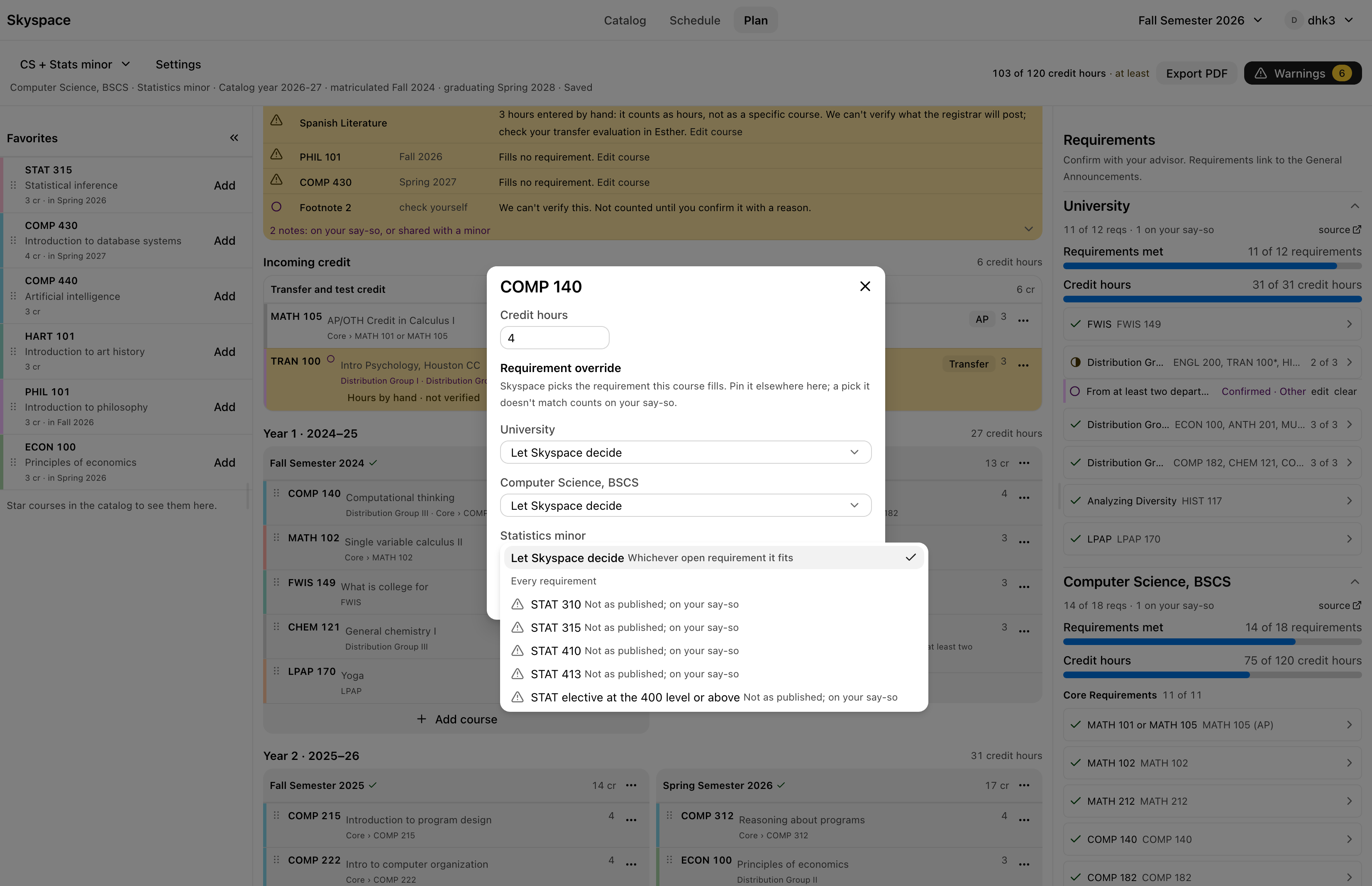
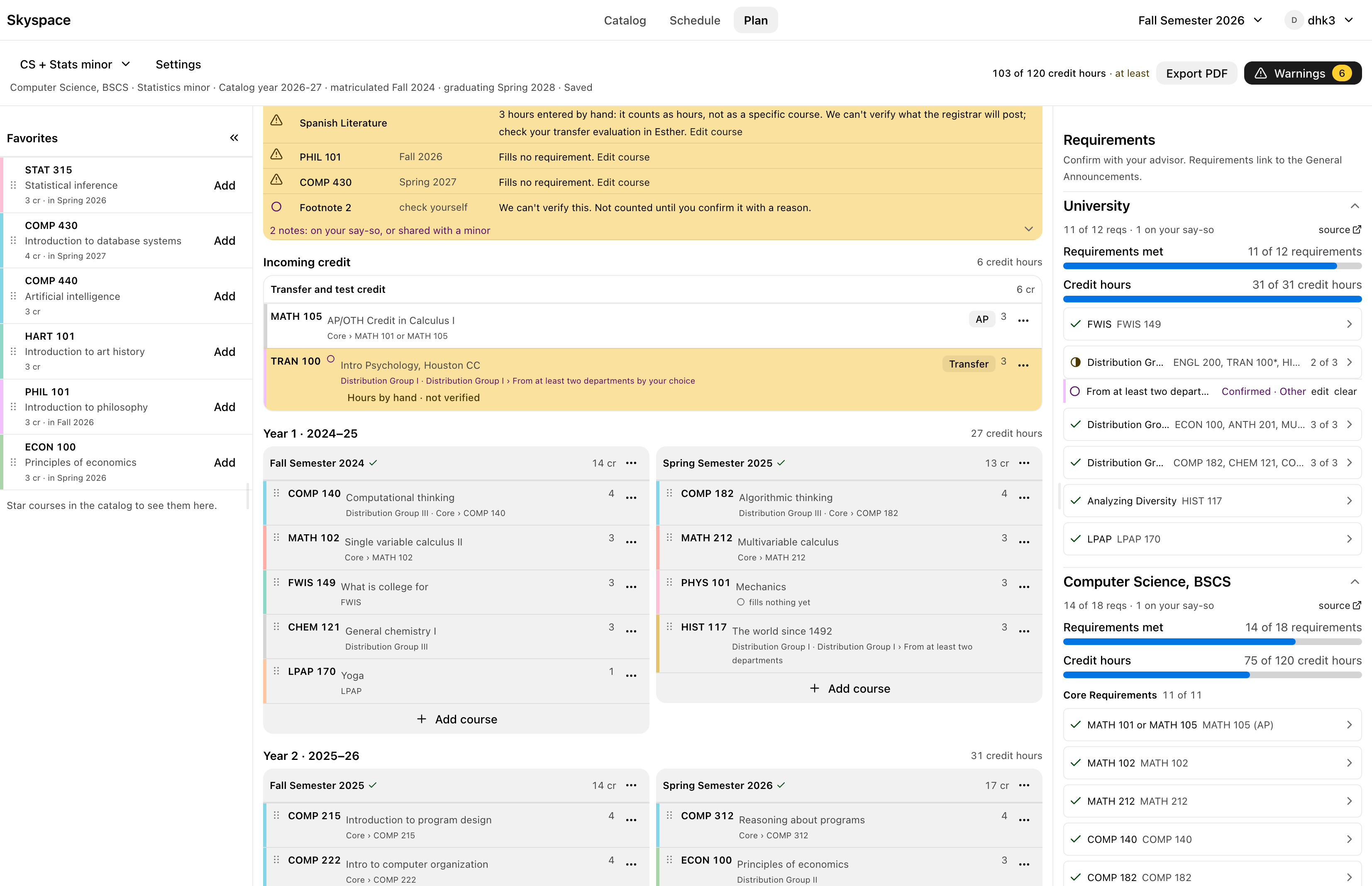
- Plan. Drag courses across terms. The engine checks every rule of your major and the university requirements. It warns; it never blocks. When it cannot verify a rule, it says so and asks you to check.
Sign in with a Rice email code. Work done before sign-in moves to your account.
How we built it
- Backend: seven Rust crates in one workspace.
skyspace-coreholds the rule engine and conflict detection. It is pure: no I/O, no clock, no randomness. The same crate compiles to WebAssembly, so the browser and the server run the same evaluation. - Data: scrapers pull the public Rice course pages on timers. They wait 150 ms between requests and archive every response. A replay command re-parses the archive after a parser fix.
- API: Axum over Postgres. The API only reads the database. It never calls Rice during a request.
- Frontend: React and the Astryx design system. A data-source layer lets the app run on a built-in demo fixture or on the live API.
- Deploy: one
docker compose upstarts Postgres, migrations, the API, the cron jobs, and Caddy with TLS.
Challenges we ran into
- Rice reuses CRNs across terms, so a CRN alone is not an identifier. Every lookup carries the term.
- 58 percent of sections have no meeting time. Hiding them by default would hide 90 percent of music courses, so the filter is subject-aware.
- Requirement text in the catalog contains rules a program cannot verify, such as "from at least two departments." We made these visible self-checks instead of silent passes.
Accomplishments that we're proud of
- The browser and the server cannot contradict each other about a plan. It is one function in one crate.
- A course moved before its prerequisite gets a warning within one frame of the drop.
- The system says "cannot verify" out loud. It never marks a rule met on a guess.
- A full stack, from scraper to TLS, in one compose file.
What we learned
- A pure core is not only good design. It is what makes the same code run in two places.
- Honest data is harder than fast data. "Not polled" and "zero seats" are different facts and must look different.
- Archive everything from day one. History cannot be added later.
What's next for Skyspace
- Encode and review more of the 351 programs.
- Live seat alerts during registration.
- Generate every valid schedule from a set of candidates.
- Use the archive to show "usually offered in spring" and enrollment history.

