-
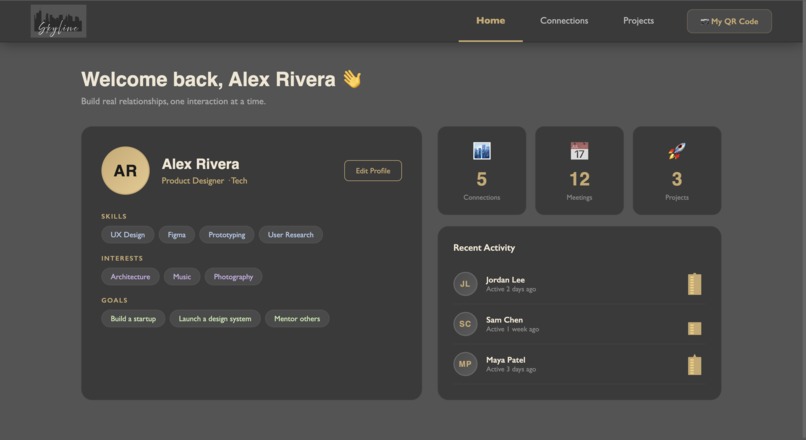
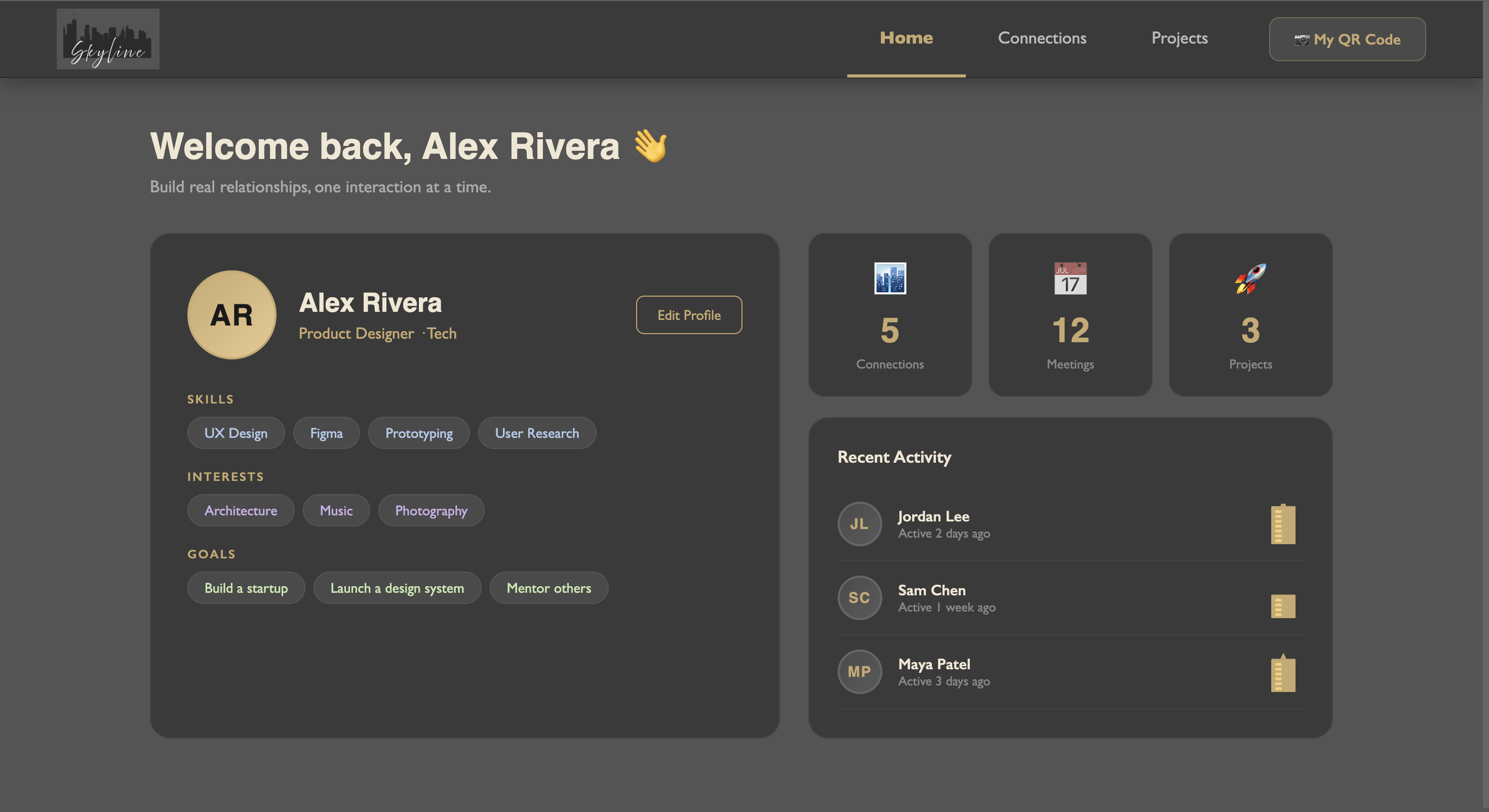
Homepage
-
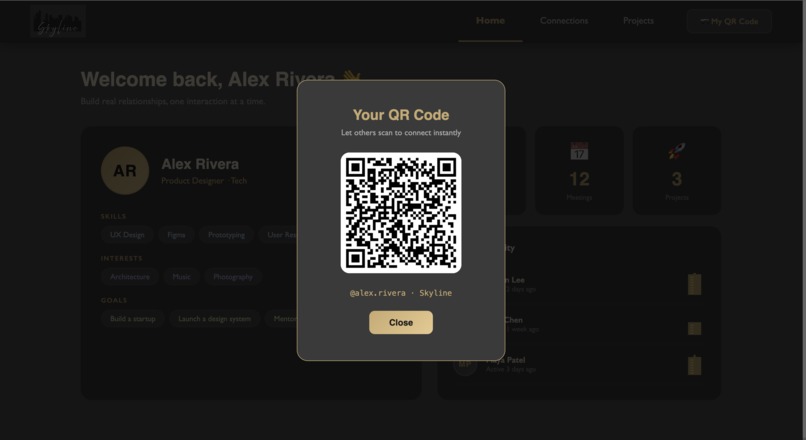
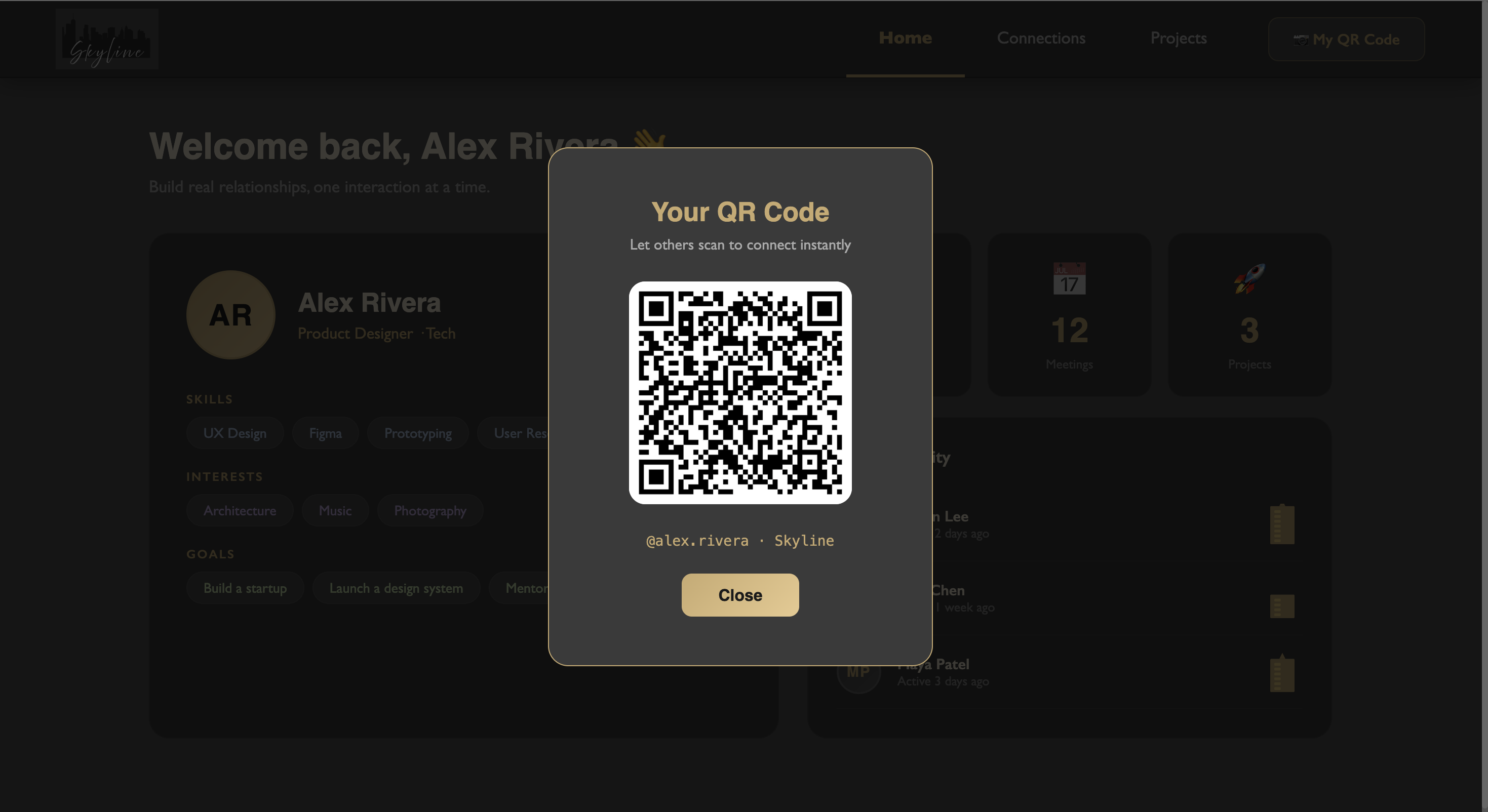
Your personalized QR Code
-
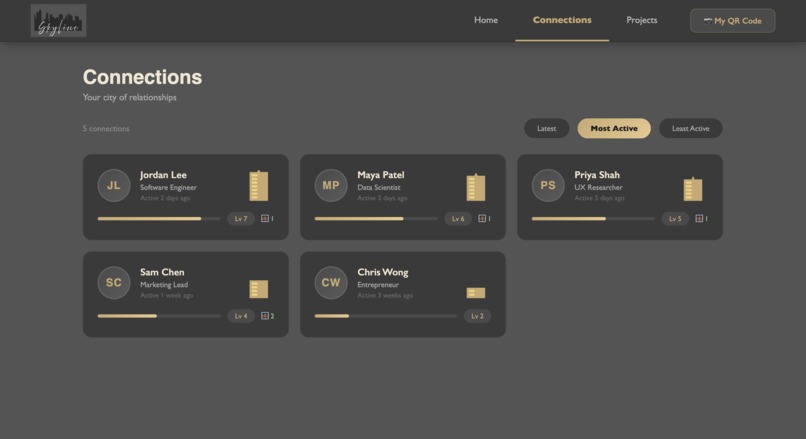
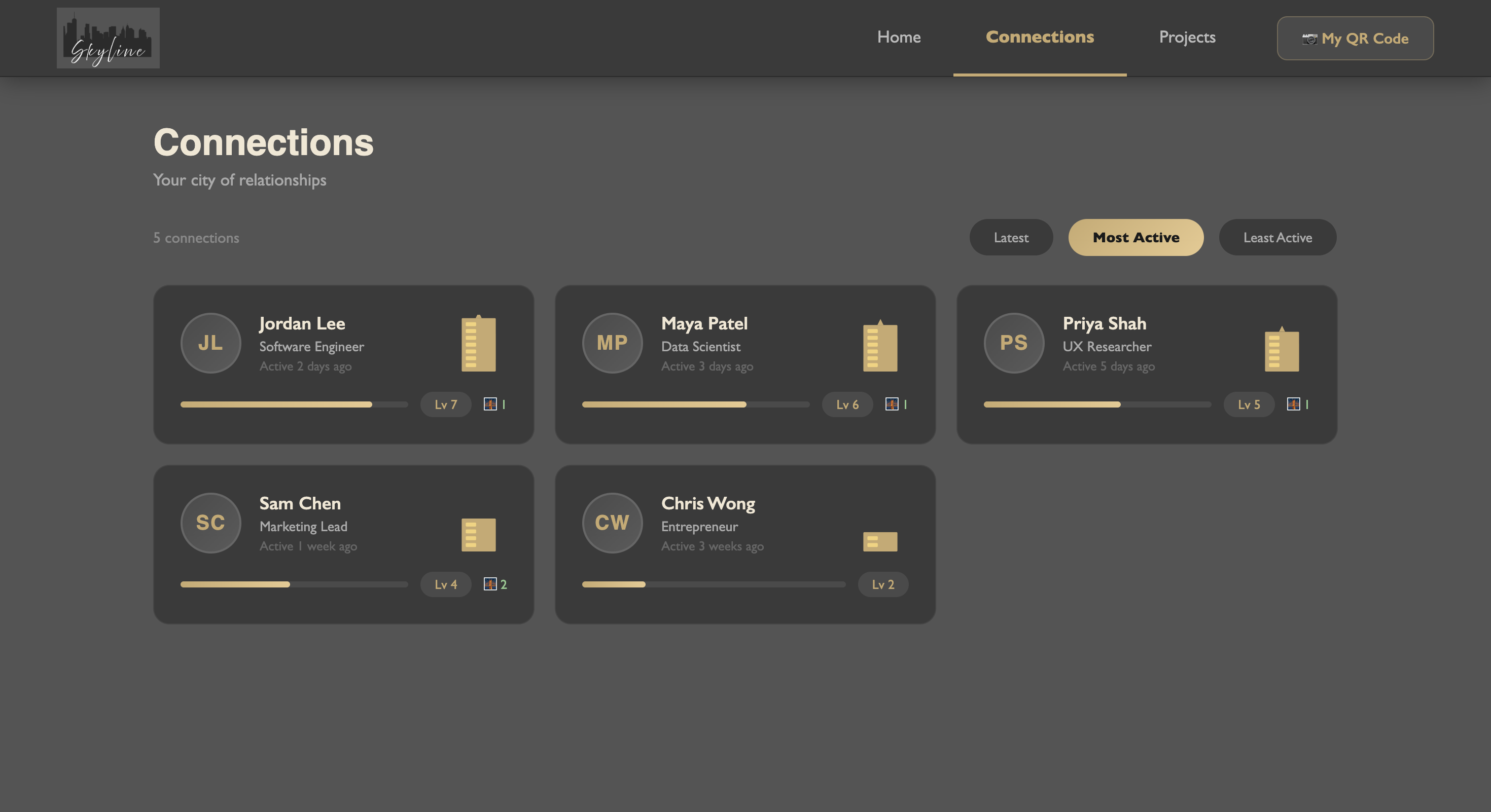
Connection tab - list view of your connections with filter
-
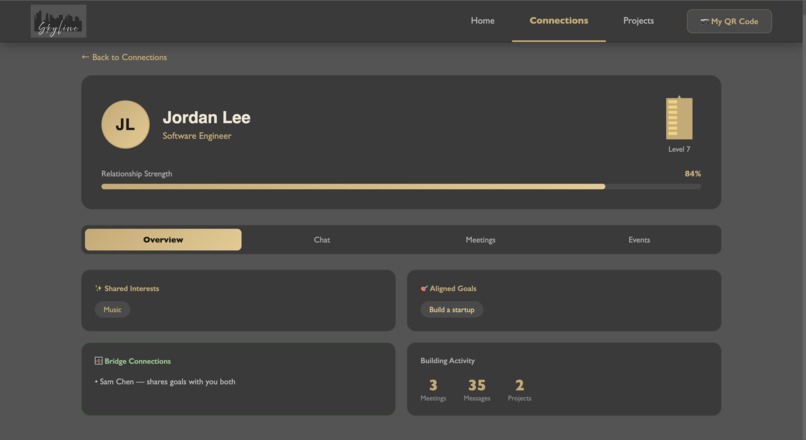
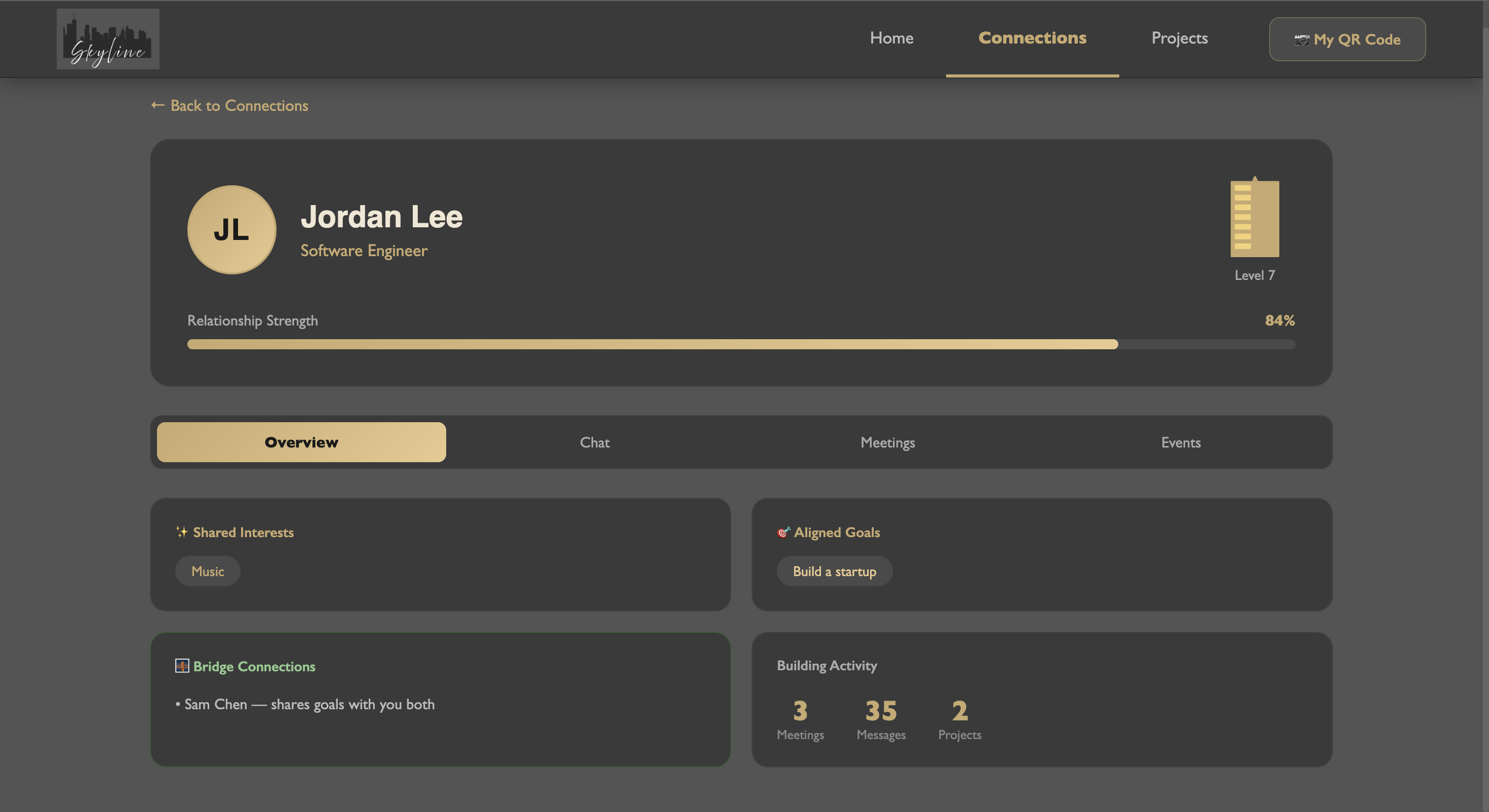
View of connection
-
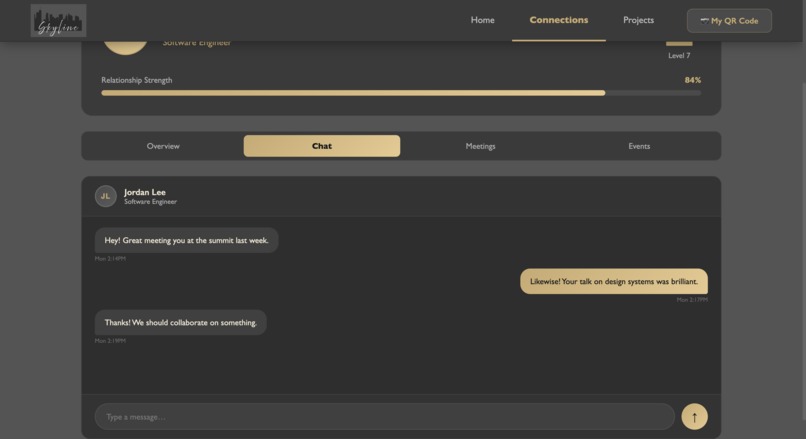
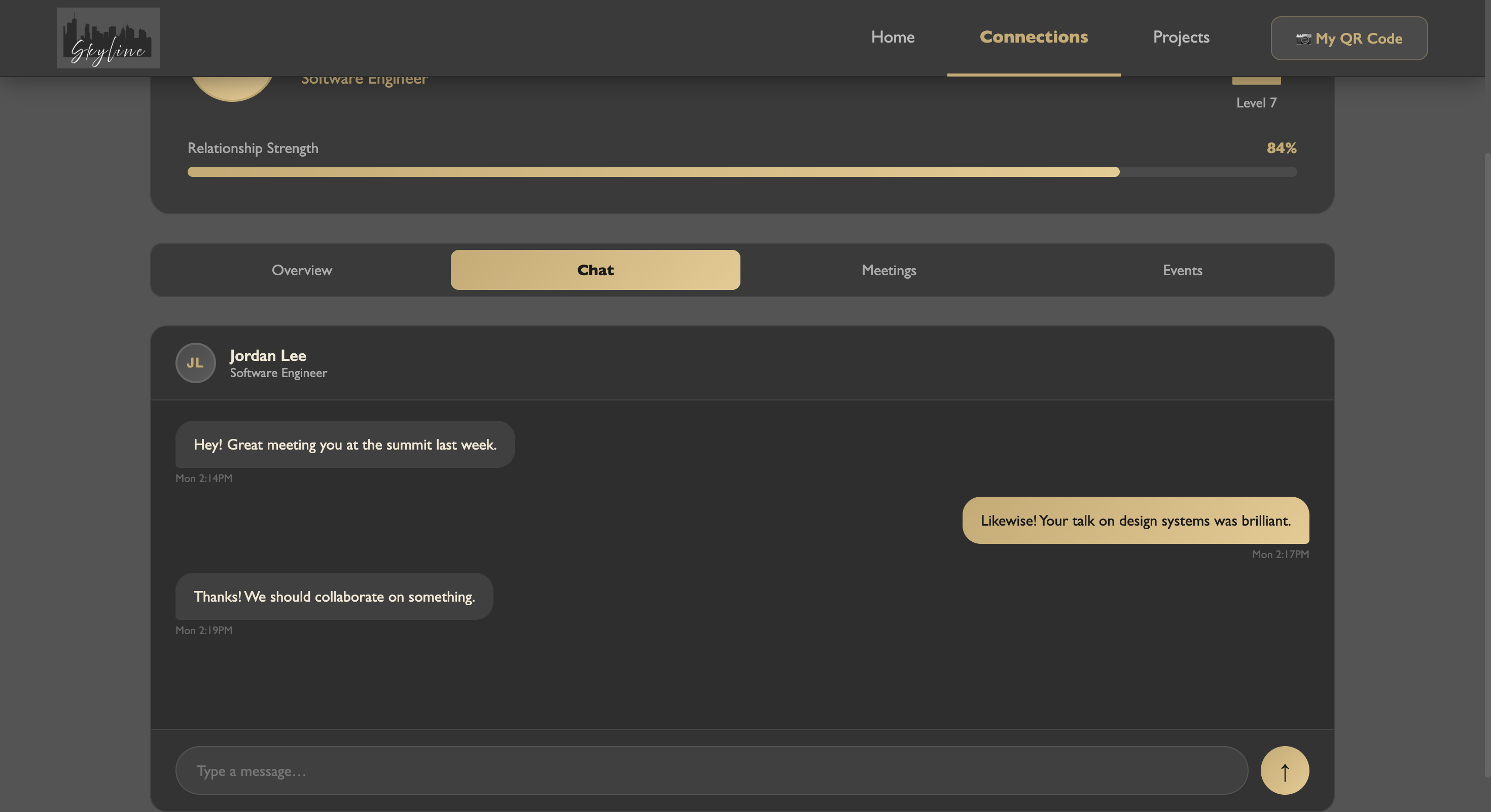
Conversation between connections
-
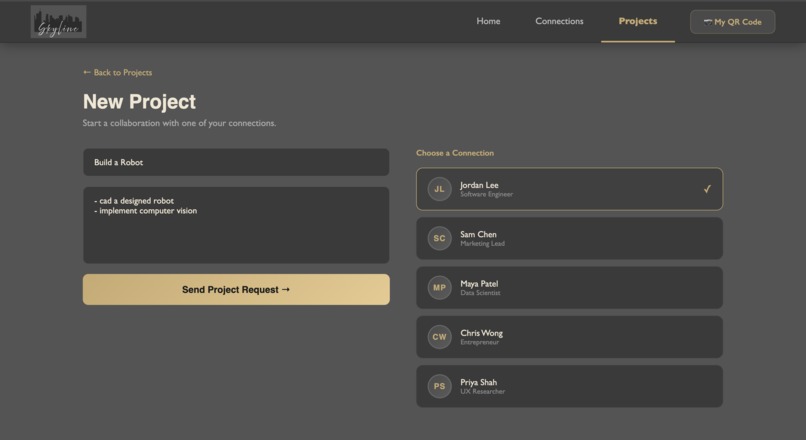
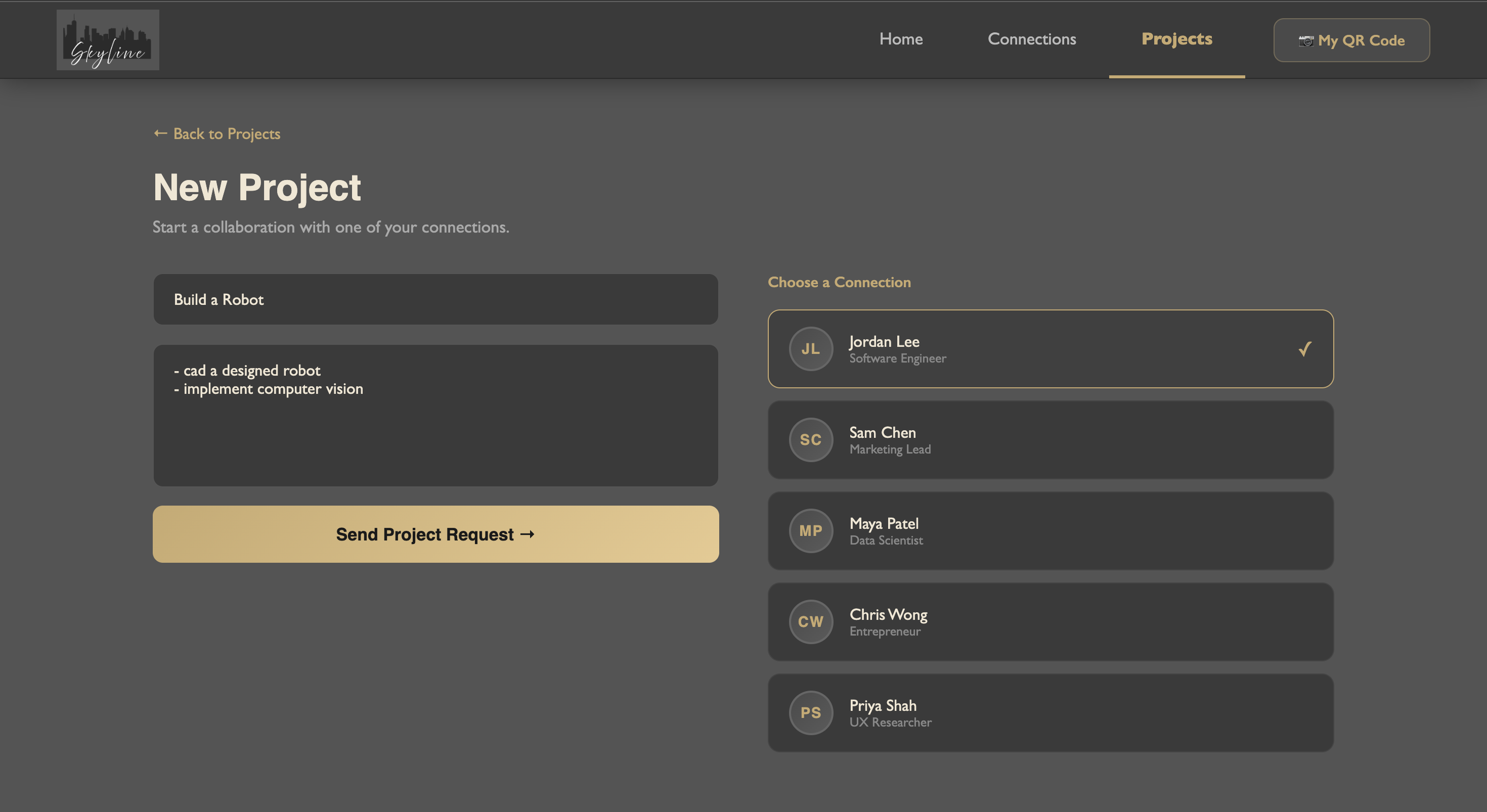
Send project request to your connections
Inspiration
Networking events often lead to many short conversations but very few long-term connections. People exchange contact information but rarely follow up, and meaningful relationships are difficult to maintain. Our team wanted to rethink networking by turning it into something more engaging and interactive. This led to the idea of Skyline, a platform that visualizes professional relationships as buildings that grow stronger through interaction.
What it does
Skyline is a networking platform that helps people build and maintain meaningful connections. When two users connect, a building is created between them. The more they interact through messages, meetings, or events, the more the building grows.
The platform includes:
- A profile dashboard showing interests, goals, projects, and total connections.
- A QR code feature for instantly connecting with others at events.
- A connections page where users can see their relationships visualized as buildings.
- A shared interests section that highlights similarities between users.
- Messaging and meeting scheduling tools to encourage continued interaction.
- An events page where users can discover and attend networking events.
- A projects page for showcasing work and collaboration opportunities.
These features transform networking from a one-time interaction into a continuous relationship-building experience.
How we built it
We developed a digital prototype that demonstrates the core functionality of Skyline. The interface focuses on a clean dashboard where users can easily access their connections, projects, and upcoming meetings.
The key innovation is the visual relationship system, where each connection is represented as a growing building. This creates a visual incentive for users to continue interacting with their network.
The prototype currently demonstrates:
- User profiles and dashboards
- Connection visualization through buildings
- Shared interest matching
- Messaging and meeting scheduling concepts
- Event recommendations
Challenges we ran into
One of the biggest challenges was designing a system that makes networking feel natural rather than forced. We needed to balance professional functionality with an engaging visual experience.
Another challenge was deciding how to represent relationships visually. Initially, we explored building an entire skyline, but we realized that focusing on individual buildings per connection made the system clearer and more meaningful.
Time constraints during development also meant we had to prioritize core features for the prototype rather than implementing every planned feature.
Accomplishments that we're proud of
We are proud of creating a concept that reimagines networking as an evolving relationship rather than a one-time exchange. The building visualization provides a unique way to represent connections and encourages users to stay engaged with their network.
Our team successfully built a working prototype that clearly demonstrates how Skyline could transform networking interactions.
What we learned
Through this project we learned how important user experience is when designing networking platforms. Simply providing tools to connect is not enough users need motivation to maintain relationships.
We also learned how visual design can influence user behavior. By turning connections into growing structures, we create a sense of progress and investment in professional relationships.
What's next for Skyline
In the future, we want to expand Skyline by introducing a full skyline visualization where all individual buildings combine into a city representing a user's entire network.
Additional future improvements include:
- AI-based networking recommendations
- Integration with LinkedIn and professional platforms
- Event-based networking maps
- Advanced relationship analytics
Ultimately, Skyline aims to make networking more meaningful, engaging, and long-lasting.

Log in or sign up for Devpost to join the conversation.