-
-
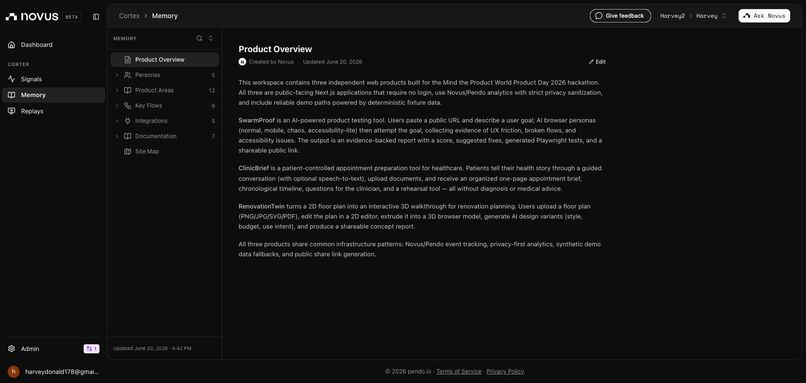
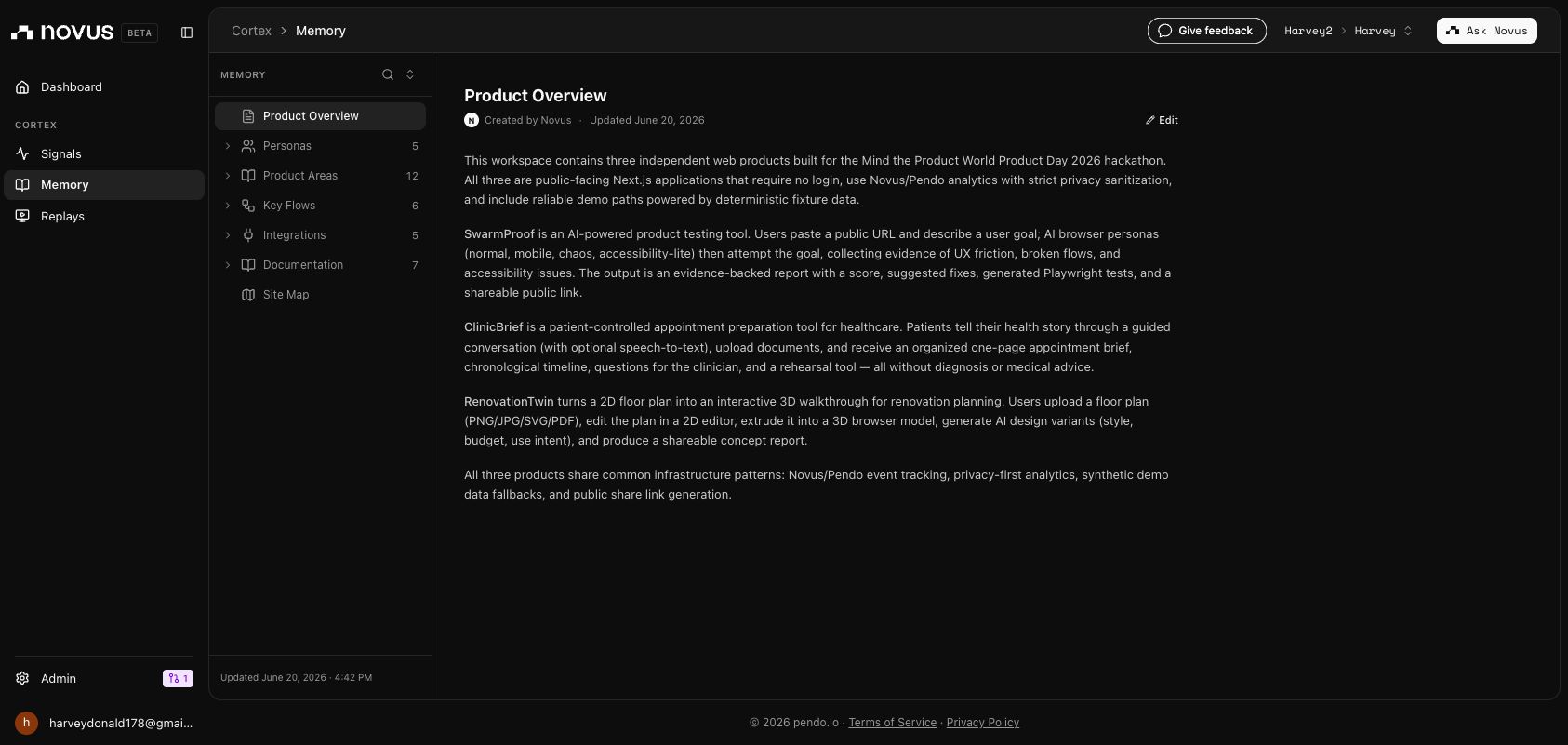
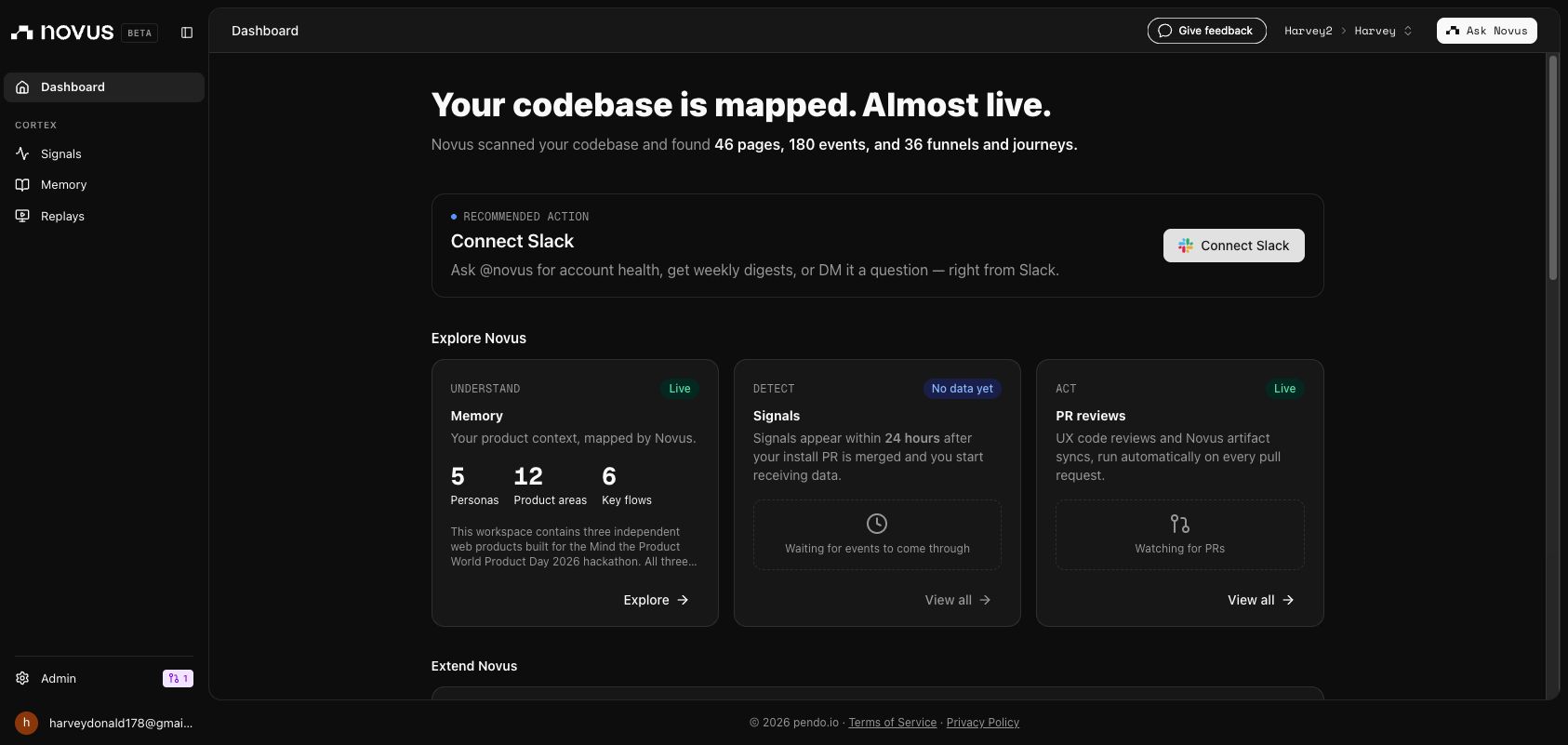
ClinicBrief mapped in Novus Memory
-
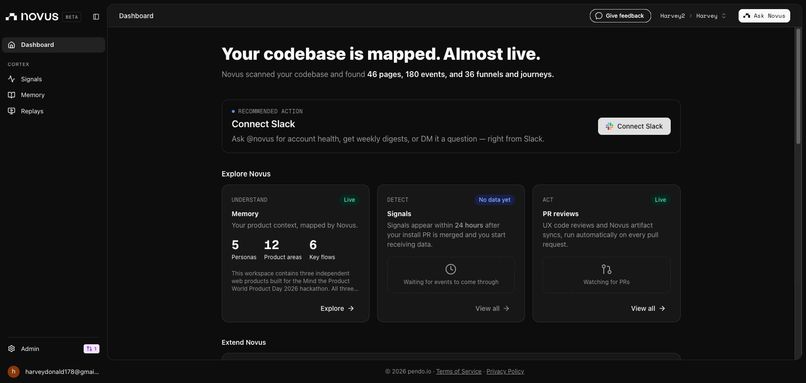
Novus dashboard showing all projects mapped
-
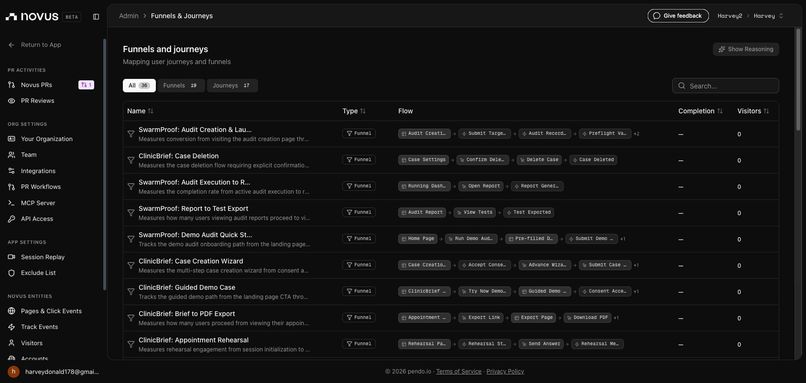
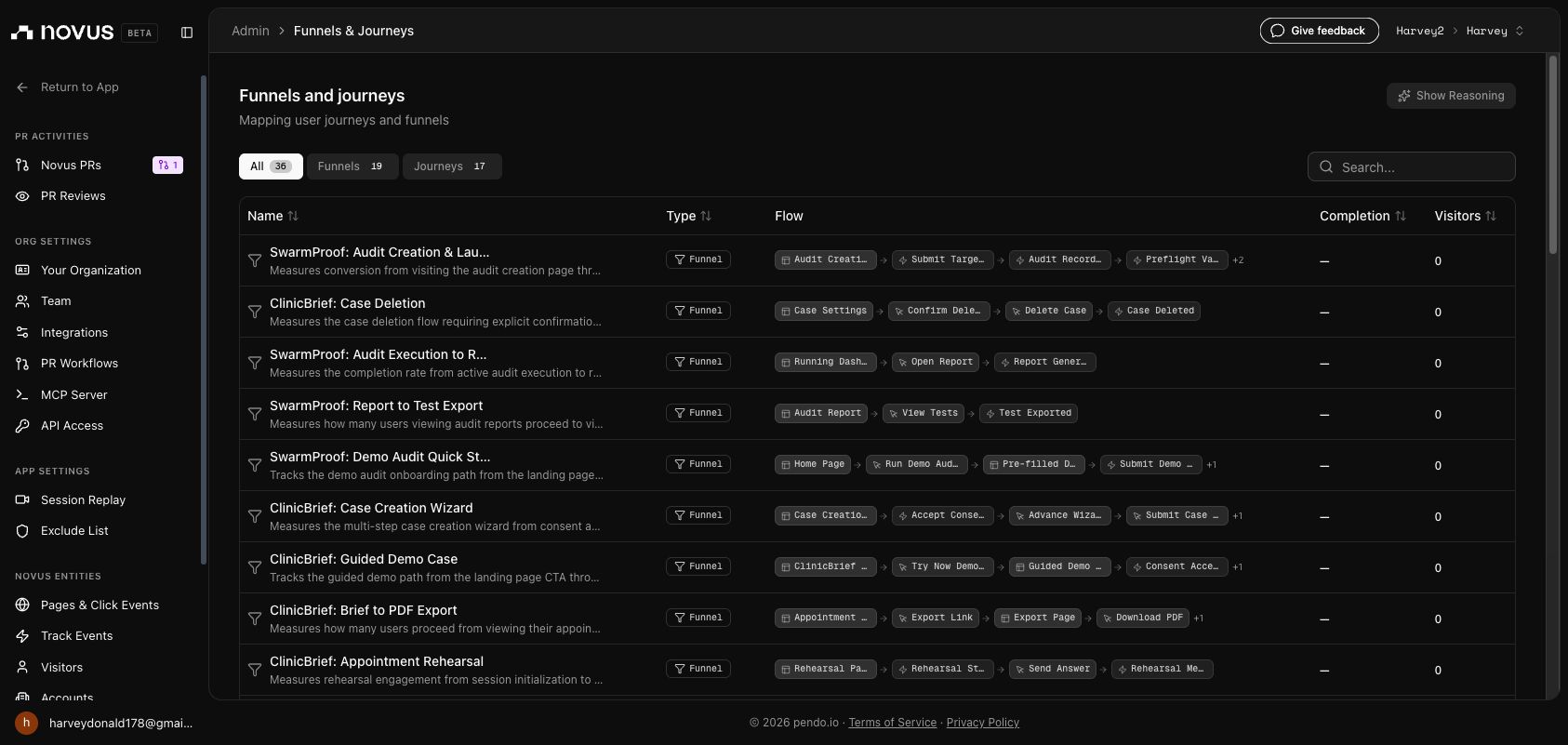
ClinicBrief funnels mapped in Novus
ClinicBrief
Tell your health story once. Bring the right version to every appointment.
Inspiration
The inspiration for ClinicBrief came from a familiar appointment moment: a patient or carer sits down with a GP, nurse, consultant, or pre-op team and has to retell a complicated health story from memory.
The information is usually scattered. A referral letter is in one place, medication notes are somewhere else, symptoms are in a phone note, and a carer may remember a detail the patient forgets. Under stress, dates blur. Important changes get skipped. The same person can end up telling a slightly different version of their story to every clinician they meet.
ClinicBrief is built for that gap: not to diagnose, not to replace a clinician, but to help people arrive organized, consistent, and in control.
What it does
ClinicBrief is an appointment-prep workspace for patients and carers. It turns messy health context into a reviewed, appointment-ready story.
A user can:
- Create a consented appointment case or try a sample pre-op case.
- Add health context through documents, pasted notes, manual entries, or optional speech-to-text.
- Review extracted facts with categories, confidence, and source references.
- Answer missing-context questions before the appointment.
- Build a chronological timeline of what happened and what changed.
- Generate a one-page appointment brief, family handoff card, or 90-second story.
- Rehearse the appointment through a safe chat flow.
- Export the result as PDF, print, or Markdown.
- Delete case data when finished.
- View privacy-safe Novus/Pendo analytics proof.
The value is simple: patients and carers should not have to rely on memory alone when the appointment matters.
The AI factor
The AI in ClinicBrief is not a medical oracle. It is an organizer.
ClinicBrief uses AI to:
- Extract structured facts from messy notes and documents.
- Preserve source references so users can see where facts came from.
- Identify missing appointment-prep questions.
- Draft appointment-specific briefs.
- Help users rehearse how to explain their history.
- Redirect unsafe requests away from diagnosis, treatment, medication changes, emergency triage, or clinical risk scoring.
The important product decision was to make AI reviewable, source-backed, and bounded. ClinicBrief does not hide behind a magic summary. It shows the user what it found, where it came from, what is uncertain, and what still needs review.
How we built it
| Layer | What we used | Why it matters |
|---|---|---|
| Frontend | Next.js App Router, React, TypeScript, Tailwind CSS, shadcn-style UI, Lucide icons | Creates a polished, responsive, appointment-prep workspace |
| Backend | Next.js API routes, TypeScript packages | Powers intake, extraction, review, timeline, brief, rehearsal, export, and events |
| AI | Fireworks-ready provider wrapper, Zod schemas, safe prompt boundaries | Keeps AI structured, validated, and aligned with the product's safety limits |
| Data | Prisma and Supabase-compatible Postgres boundary | Gives the product a real path toward persistent case storage |
| Storage | Supabase-compatible private storage abstraction | Supports private document handling for sensitive user-provided files |
| Export | PDF generation, browser print, Markdown fallback | Ensures users can leave with a usable appointment artifact |
| Voice | Web Speech API and SpeechSynthesis | Enables optional speech input and read-back without storing raw audio |
| Analytics | Novus/Pendo-safe event wrapper | Tracks product behavior without sending raw health content |
| Deployment | Vercel | Makes the app publicly usable by judges immediately |
Craft and experience
ClinicBrief is designed to feel like a calm appointment-prep workspace, not a generic AI dashboard.
The UI focuses on real product surfaces:
- Document cards
- Editable fact cards
- Source and confidence labels
- Timeline rows
- Missing-question panels
- Brief previews
- Rehearsal chat
- Export and delete states
- Privacy and safety copy
The experience is intentionally end to end. A stranger can land on the URL and understand the product without setup: messy context becomes reviewed facts, then a timeline, then a brief, then rehearsal, then export.
Challenges
Keeping the product safe. Healthcare-adjacent tools can become risky if they sound like diagnosis or treatment advice. ClinicBrief stays focused on organization and appointment preparation.
Making AI outputs trustworthy. A clean paragraph is not enough. The product needed source references, confidence, review states, and user control.
Designing for a stressful moment. The user may be anxious, tired, or preparing on behalf of someone else. The interface had to be calm, clear, and practical.
Shipping the whole loop. The challenge was not one impressive AI call. It was making intake, review, timeline, brief, rehearsal, export, deletion, and analytics work together as one coherent product.
Tracking behavior safely. Novus/Pendo integration had to prove product usage without exposing health text, document names, medication names, symptoms, prompts, transcripts, or identifiers.
Accomplishments
We are proud that ClinicBrief is real and usable, not just a concept.
It ships with:
- A public product URL.
- A sample pre-op path judges can try immediately.
- Consent-led intake.
- Source-backed fact review.
- Missing-context questions.
- Chronological timeline building.
- Appointment-specific brief generation.
- A 90-second story mode.
- Rehearsal chat.
- PDF, print, and Markdown export.
- Delete controls.
- Privacy-safe analytics proof.
We are also proud of the restraint. ClinicBrief is ambitious because it takes a specific, emotionally real problem and solves it without pretending to be a doctor.
What we learned
The biggest lesson was that AI product value comes from the workflow around the model, not just the model response.
ClinicBrief became stronger when the product focused on transformation:
scattered context → reviewed facts → timeline → brief → rehearsal → export
We also learned that safety can make a product better. The no-diagnosis boundary forced clearer copy, better review controls, stronger schemas, safer analytics, and a more honest user experience.
What's next
Next, ClinicBrief should grow into a private beta for patients and carers managing complex appointments.
Future improvements include:
- Production Supabase persistence and private storage.
- More appointment templates, including GP review, chronic follow-up, surgery prep, and carer handoff.
- Optional OCR for scanned documents.
- Stronger carer collaboration controls.
- Calendar-ready appointment packs.
- Better accessibility and mobile QA.
- Deeper privacy-safe Novus/Pendo funnel dashboards.
- More personalized rehearsal modes for different appointment types.
Safety and privacy
ClinicBrief organizes information users provide so they can prepare for appointments. It does not diagnose, recommend treatment, recommend medication changes, provide emergency triage, calculate clinical risk, or replace medical advice.
Required safety boundary:
ClinicBrief organizes information you provide so you can prepare for appointments. It does not diagnose, recommend treatment, or replace medical advice. Review everything before sharing it with a clinician.
Analytics are intentionally limited to product behavior: modes, counts, confidence bands, and brief types. Raw health content is not sent to analytics.
Why it matters
ClinicBrief is high-value because it solves a painful, specific, everyday problem: helping patients and carers explain the right information at the right time.
It is product-led, technically real, carefully crafted, measurable, and ambitious in a grounded way. It does not try to be a hospital system or a diagnostic engine. It tries to do one thing extremely well:
help people show up prepared for the conversations that shape their care.
Built With
- fireworks-ai
- lucide-react
- next.js
- next.js-api-routes
- novus/pendo
- pdf-export
- postgresql
- prisma
- react
- shadcn-style-components
- shadcn/ui
- speechsynthesis
- supabase
- tailwind-css
- typescript
- typescript-workspace-packages
- vercel
- web-speech-api
- zod

Log in or sign up for Devpost to join the conversation.