-
-
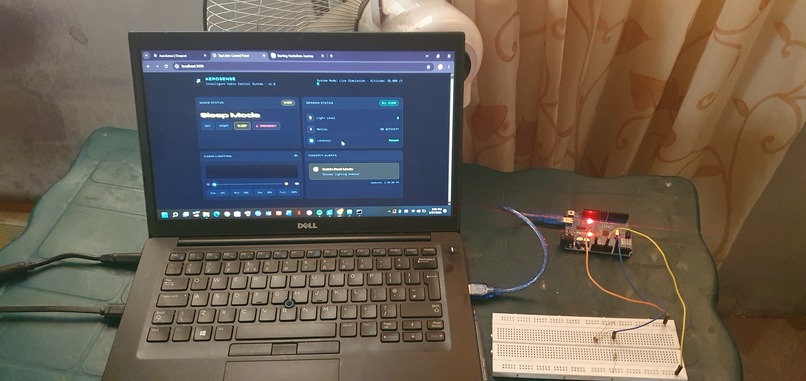
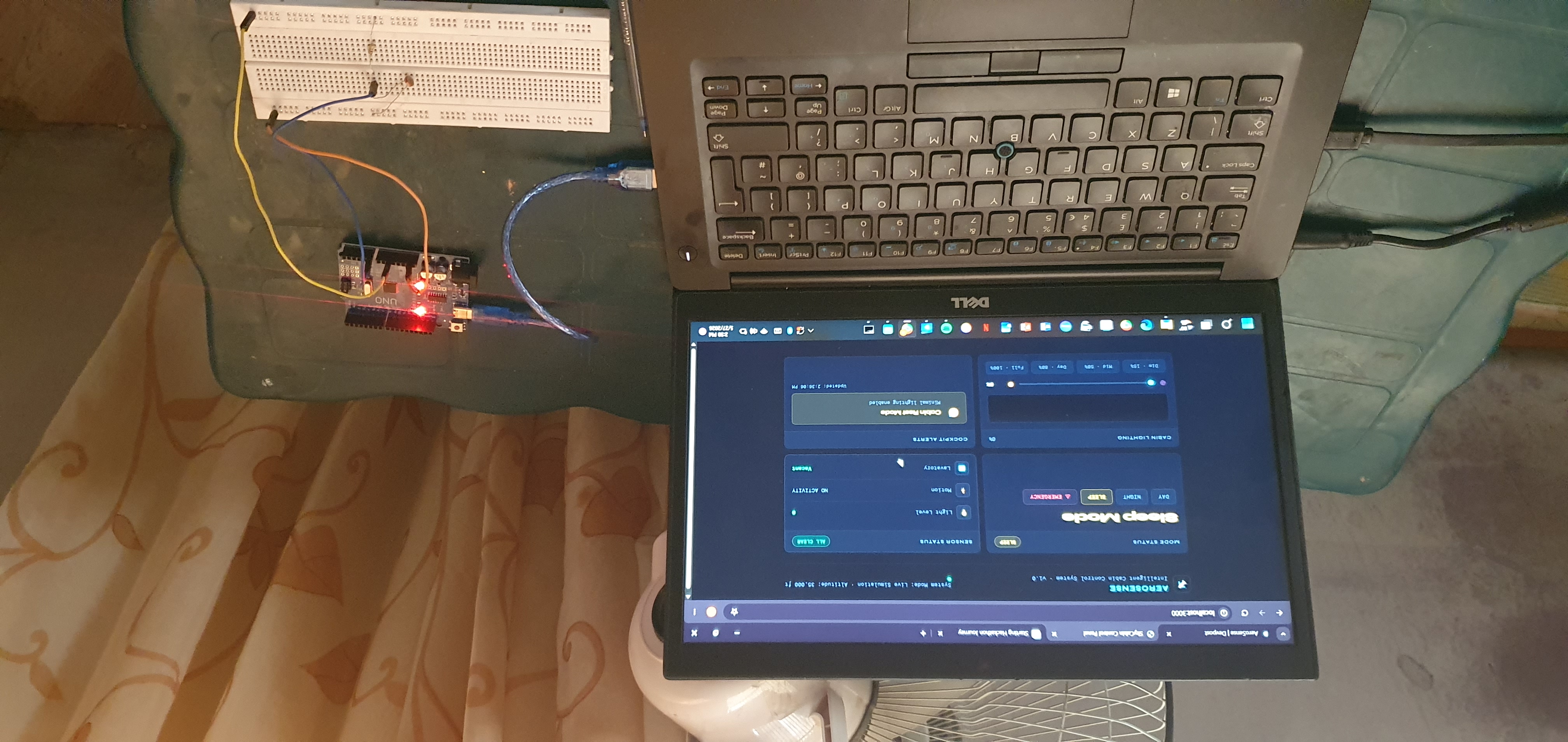
Hardware setup
-
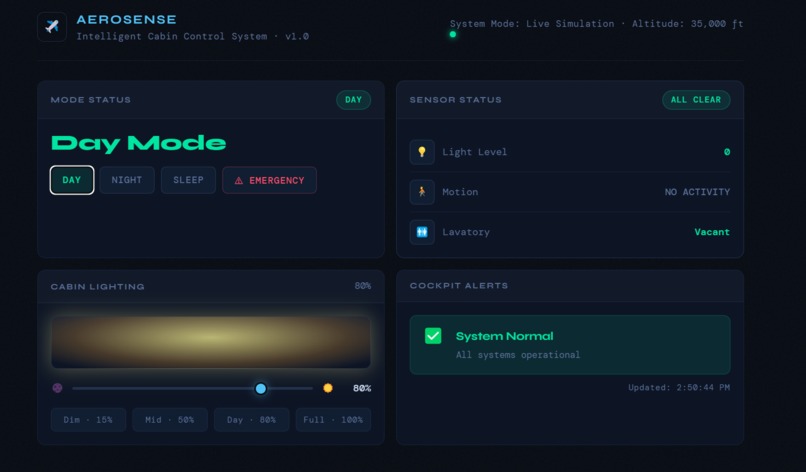
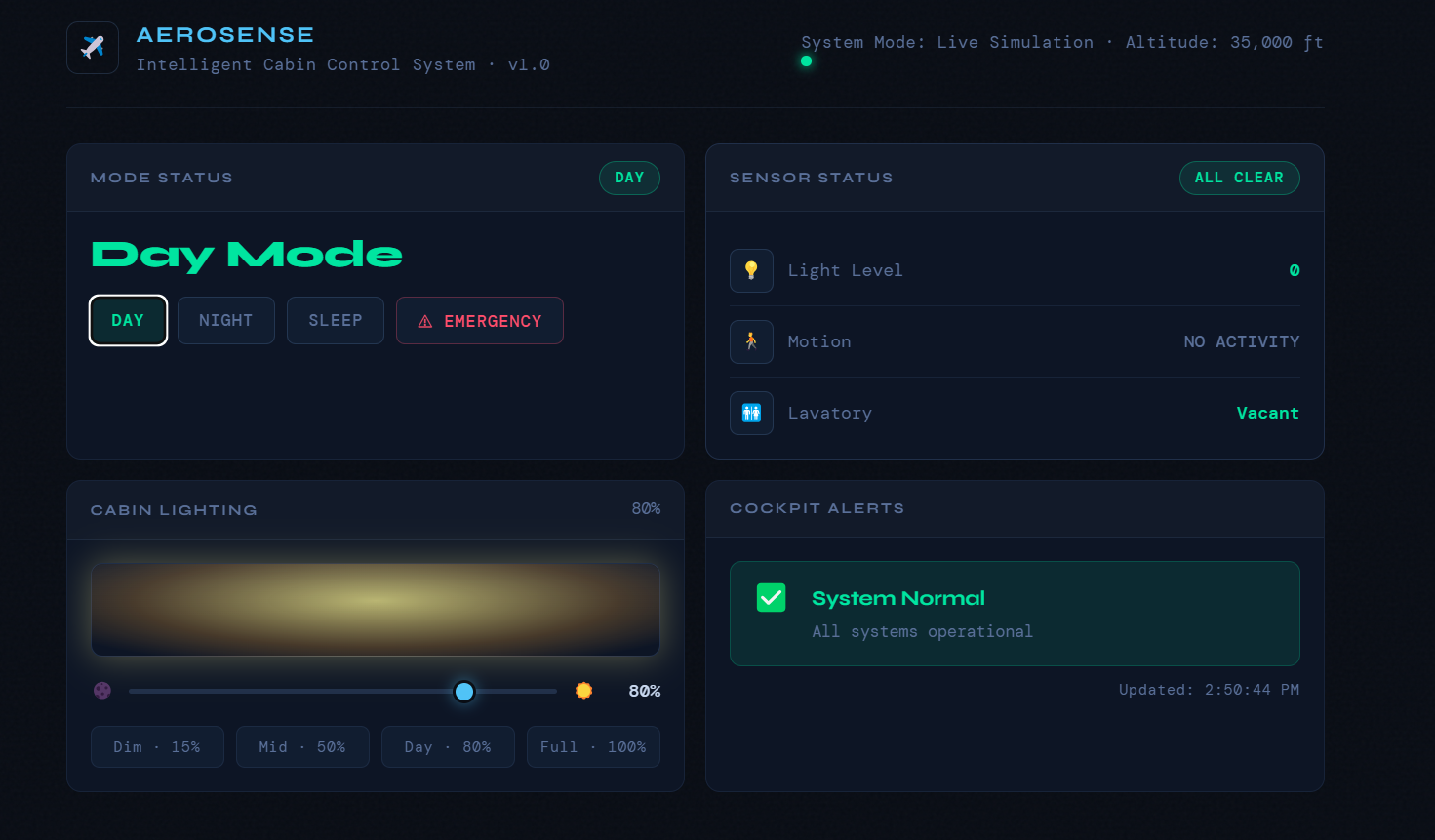
System is in day mode and lavatory reads vacant
-
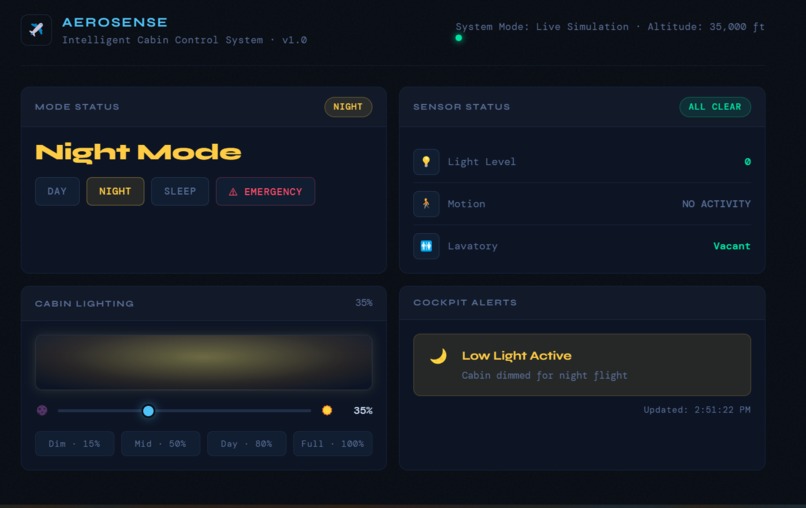
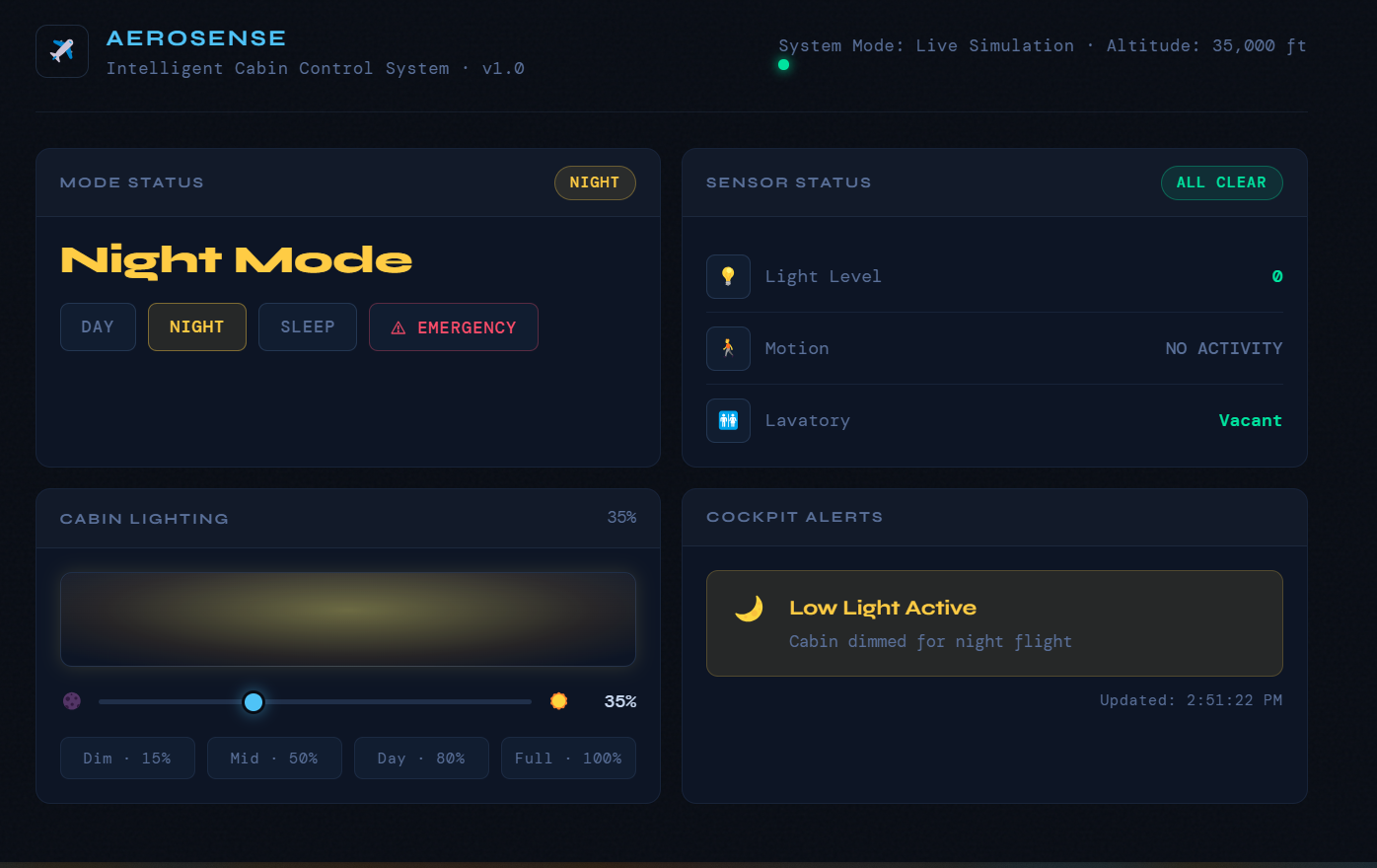
System is in night mode and cabin light is dimmed for night flight
-
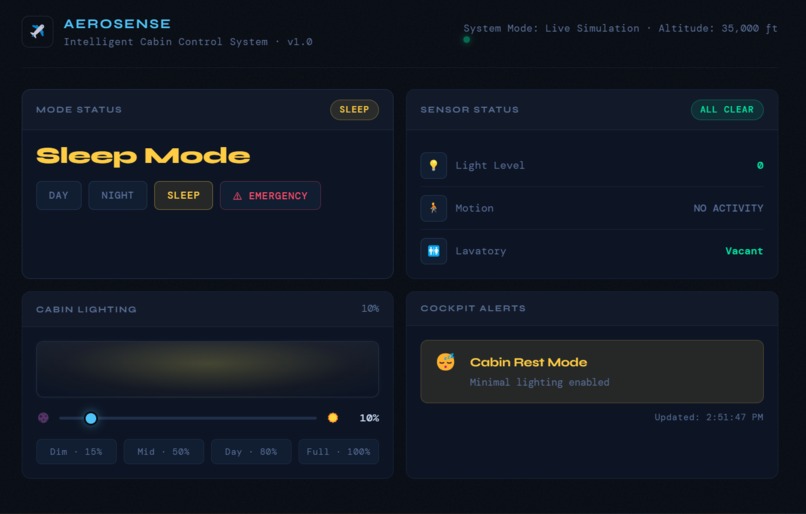
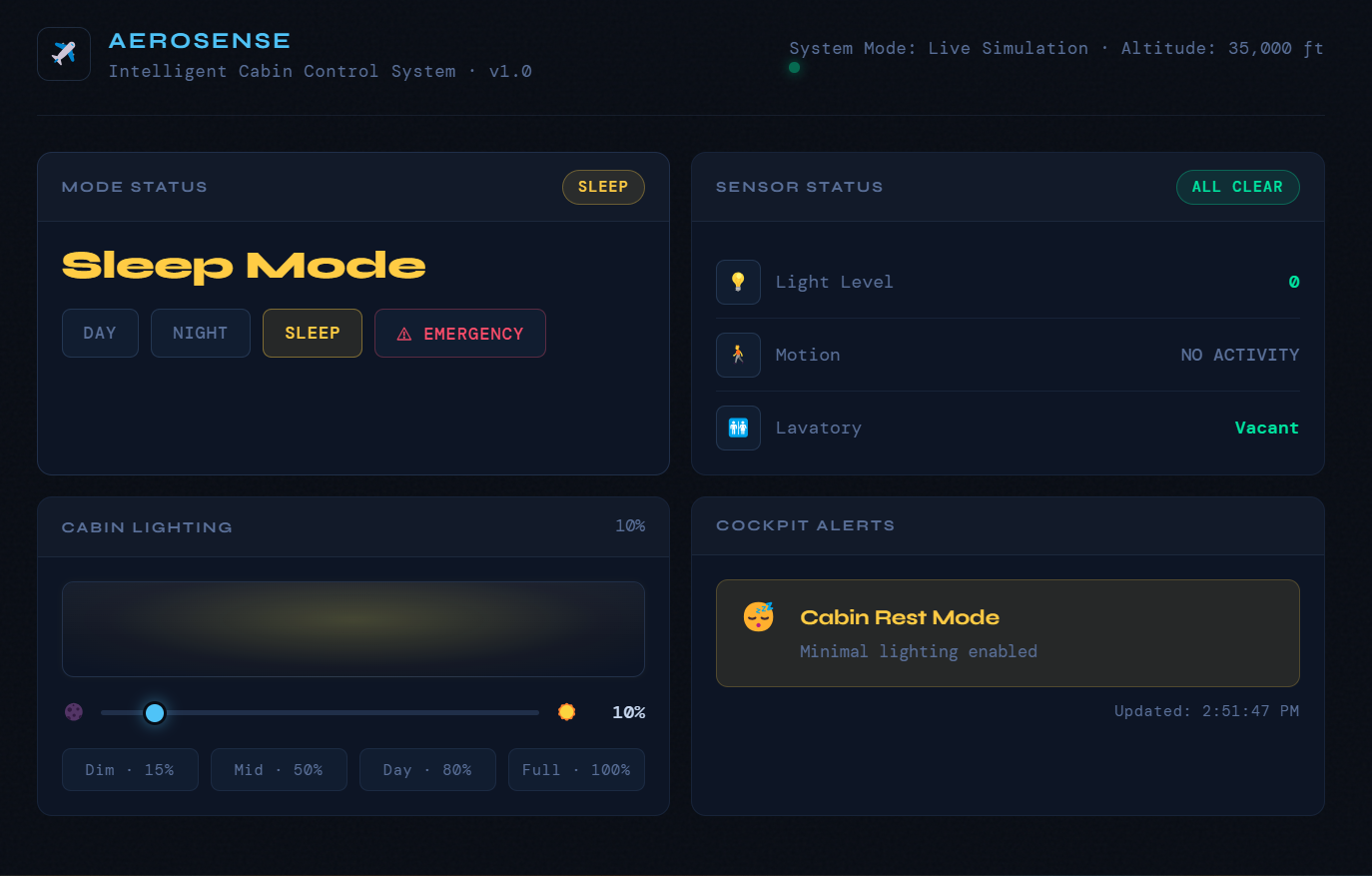
System is in sleep mode and cabin lights are in rest mode
Inspiration
Aircraft cabin systems are mostly static and manually controlled, despite changing environmental and passenger conditions. As an avionics student, I wanted to design a smarter, adaptive system that improves comfort, efficiency, and safety using real-time data.
What it does
AeroSense is a smart aircraft cabin system that monitors environmental conditions using sensors and automatically adjusts cabin lighting and modes.
It includes:
Adaptive lighting control via a web interface Sensor-based automation (light, motion, voltage) Energy-saving and emergency modes Real-time system monitoring dashboard
How we built it
We built AeroSense using a combination of hardware and software:
Hardware: Arduino Nano, light sensor, PIR motion sensor, voltage sensor Control Logic: Embedded C for sensor reading and automation Frontend: Web dashboard to monitor and manually control lighting Integration: Serial communication between hardware and web interface
Challenges we ran into
Integrating hardware with a web interface in real time Sensor calibration for accurate environmental detection Ensuring stable communication between Arduino and the dashboard Designing a system that balances automation with manual control
Accomplishments that we're proud of
Successfully built a working hardware + software integrated system Created a real-time responsive cabin lighting prototype Designed a system aligned with real aviation applications Demonstrated both technical depth and practical usability
What we learned
Through building AeroSense, we gained valuable experience in integrating hardware with software systems, particularly in establishing real-time communication between an Arduino-based sensor setup and a web application.
We also learned the importance of adaptability in engineering design, as hardware limitations required substituting components (such as using an LDR in place of a PIR sensor) while still maintaining system functionality.
Additionally, we developed a deeper understanding of real-time data handling and synchronization, ensuring that sensor inputs were accurately reflected on the frontend without delays or inconsistencies.
The project also strengthened our skills in full-stack development, including backend communication using Node.js and Socket.IO, as well as building responsive and interactive user interfaces.
Finally, we learned how to design with scalability and real-world application in mind, considering how a prototype system can evolve into an aviation-grade solution.
What's next for AeroSense
AeroSense will be further developed into an aviation-grade smart cabin management system capable of integration into real aircraft environments. Future work includes improving sensor accuracy, replacing prototype components with certified aviation sensors, and implementing redundant systems for safety and reliability.
The system can also be expanded to incorporate AI-driven behavior analysis, enabling predictive adjustments based on passenger activity, flight phases, and environmental conditions.
On the software side, AeroSense will evolve into a fully connected IoT platform, allowing remote monitoring, data logging, and integration with existing aircraft systems such as cabin management and energy control units.
Beyond aviation, the solution has potential applications in smart environments such as trains, buses, and buildings, where adaptive lighting and occupancy-based control can improve energy efficiency and user comfort.
Built With
- arduino-(c/c++)-frontend:-vanilla-javascript
- css
- css3-backend:-node.js
- express.js-real-time-communication:-socket.io-hardware-platform:-arduino-nano-(atmega328p)-sensors-&-components:-ldr-(light-dependent-resistor)
- html
- html5
- languages:-javascript
- netlify/github
- potentiometer-apis-&-libraries:-serialport-(for-arduino-communication)
- resistors
- socket.io-tools-&-platforms:-github-(version-control)
- voltage-sensor

Log in or sign up for Devpost to join the conversation.