-
-
-
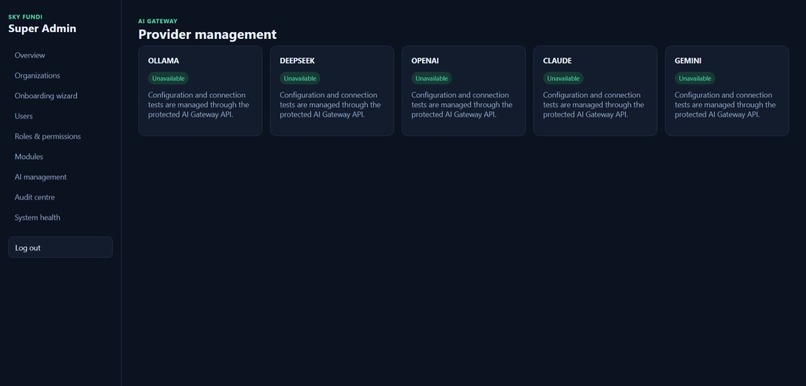
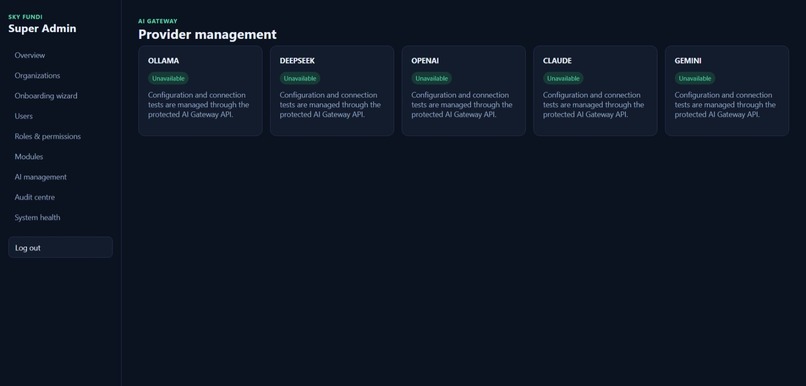
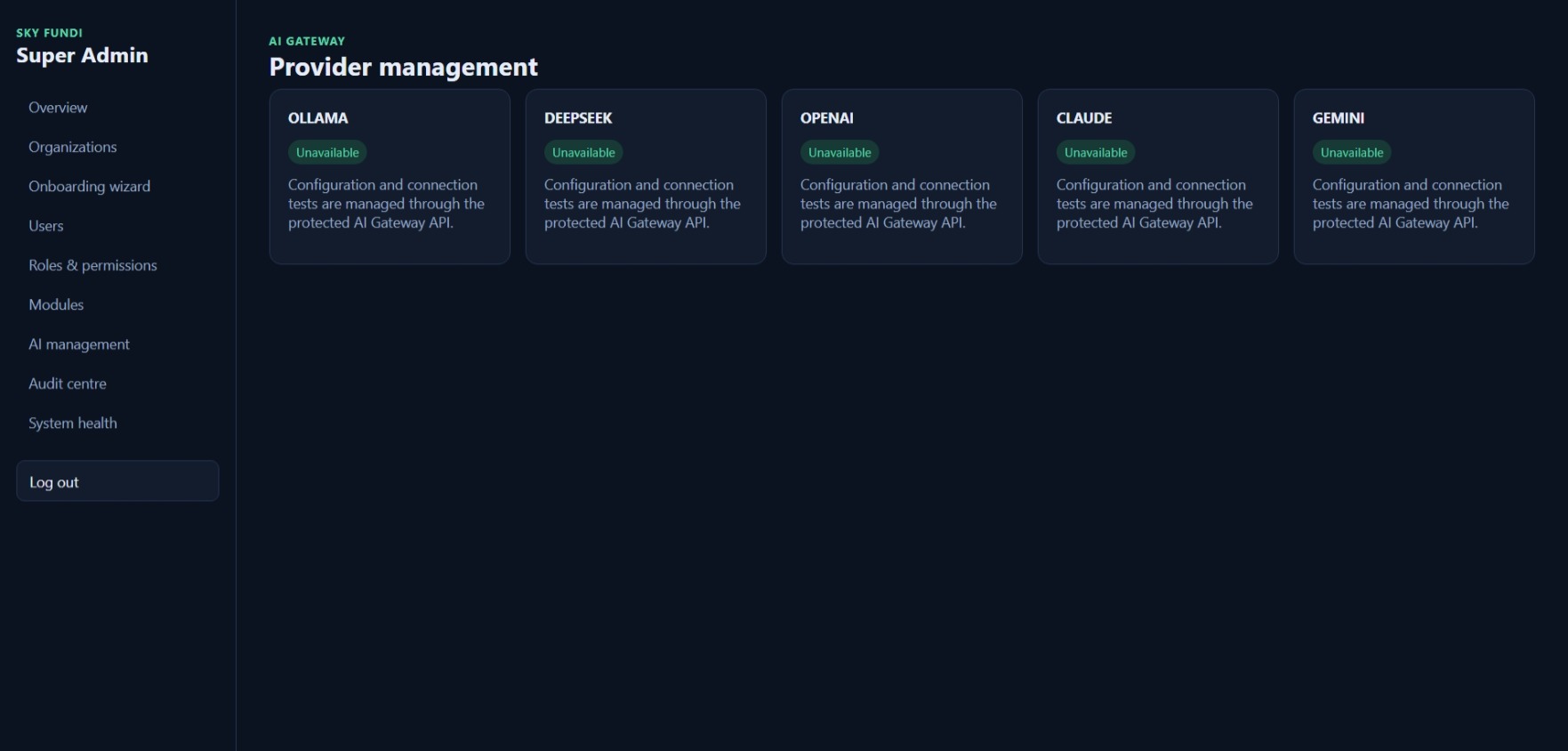
ai models
-
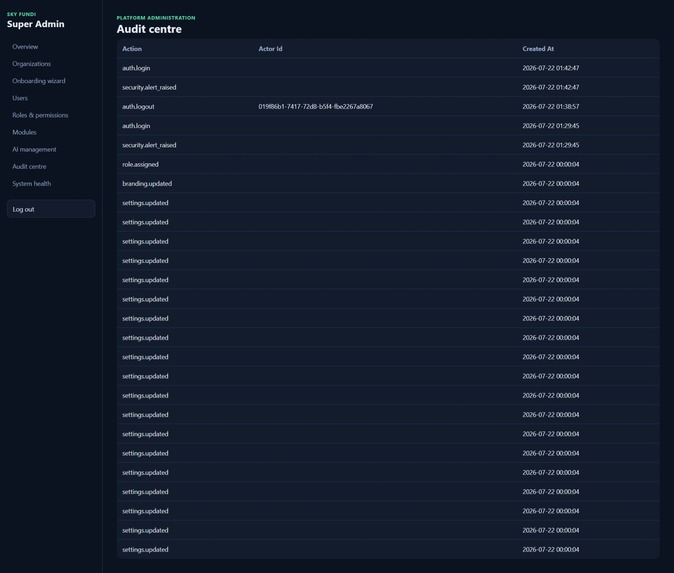
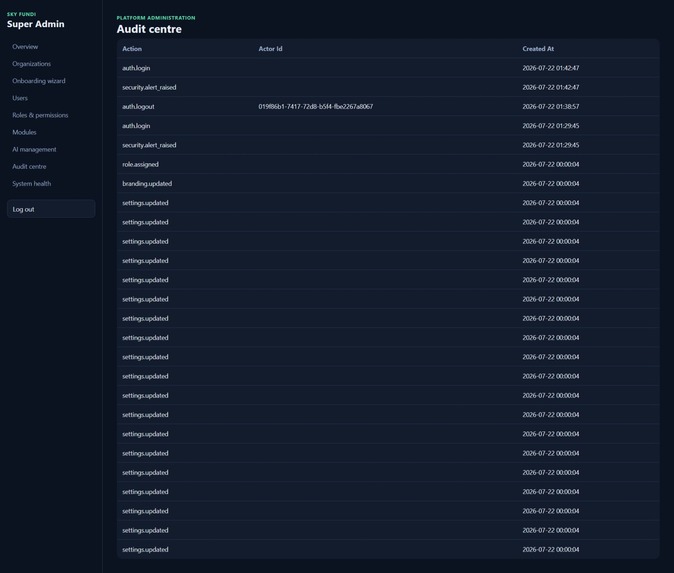
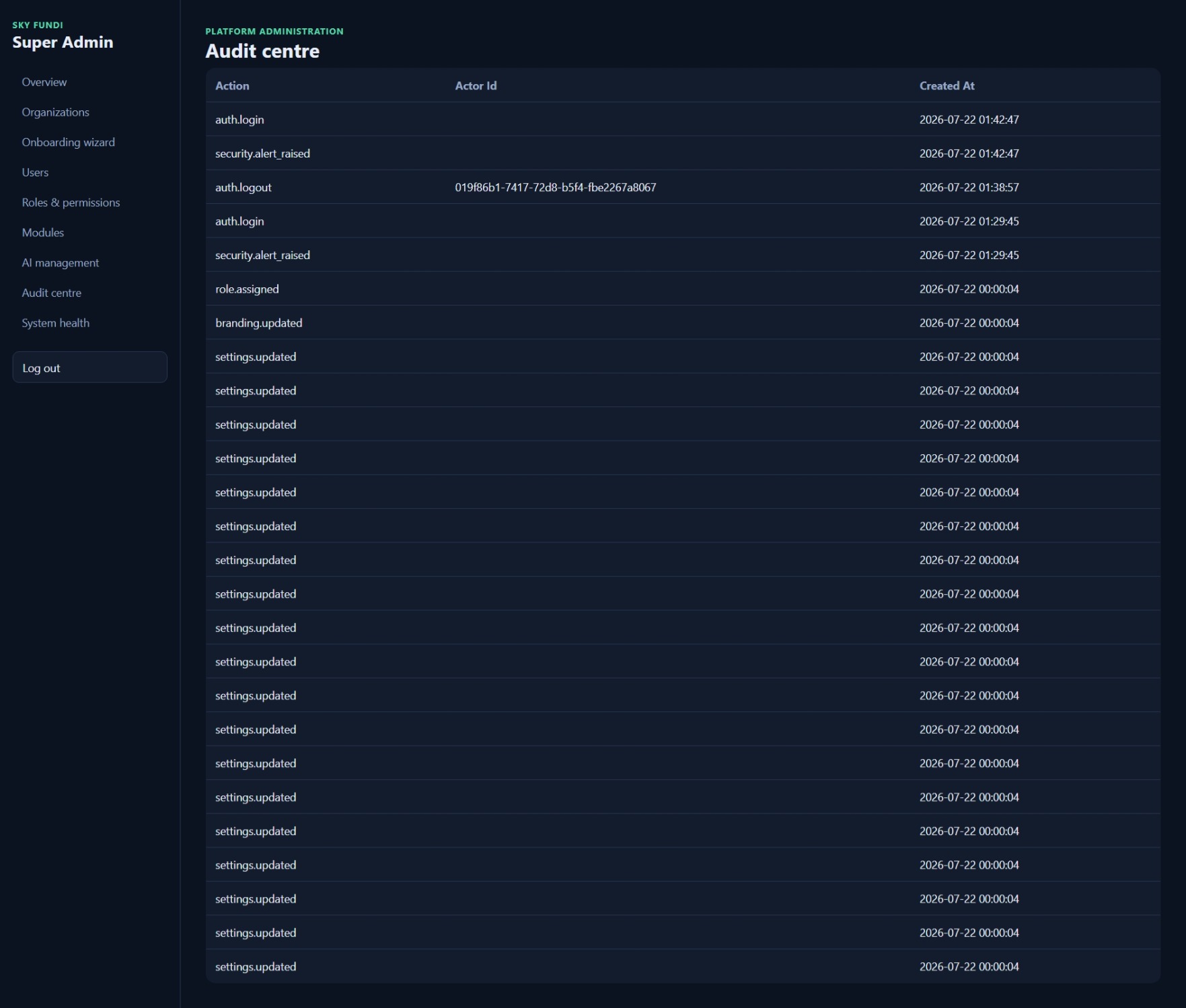
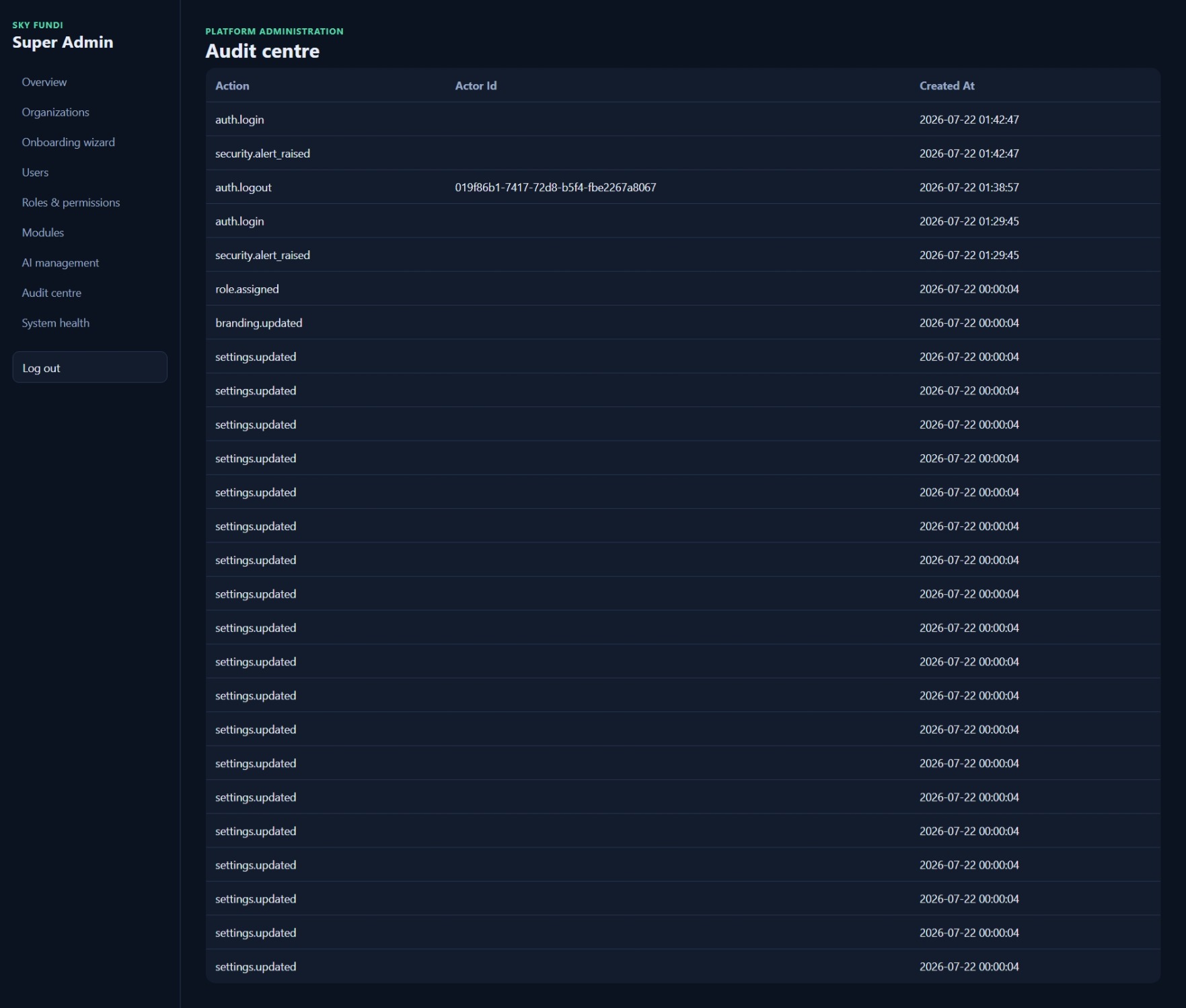
audit
-
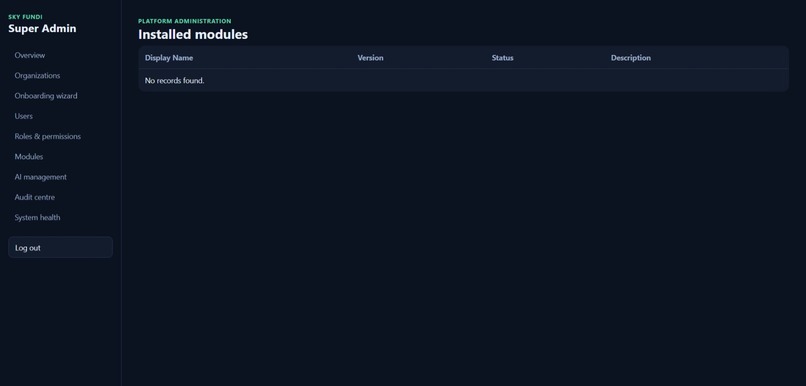
-
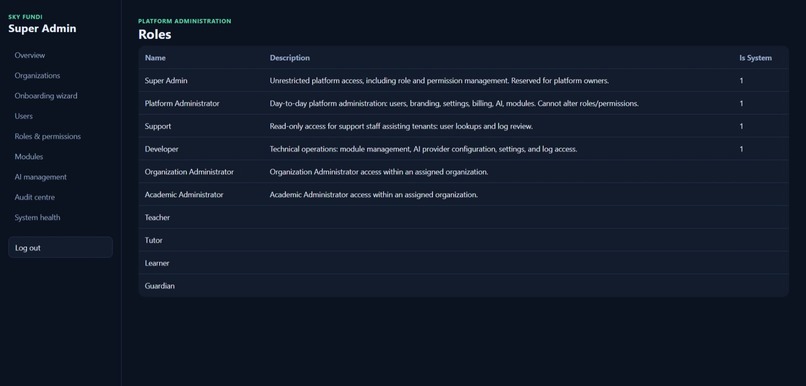
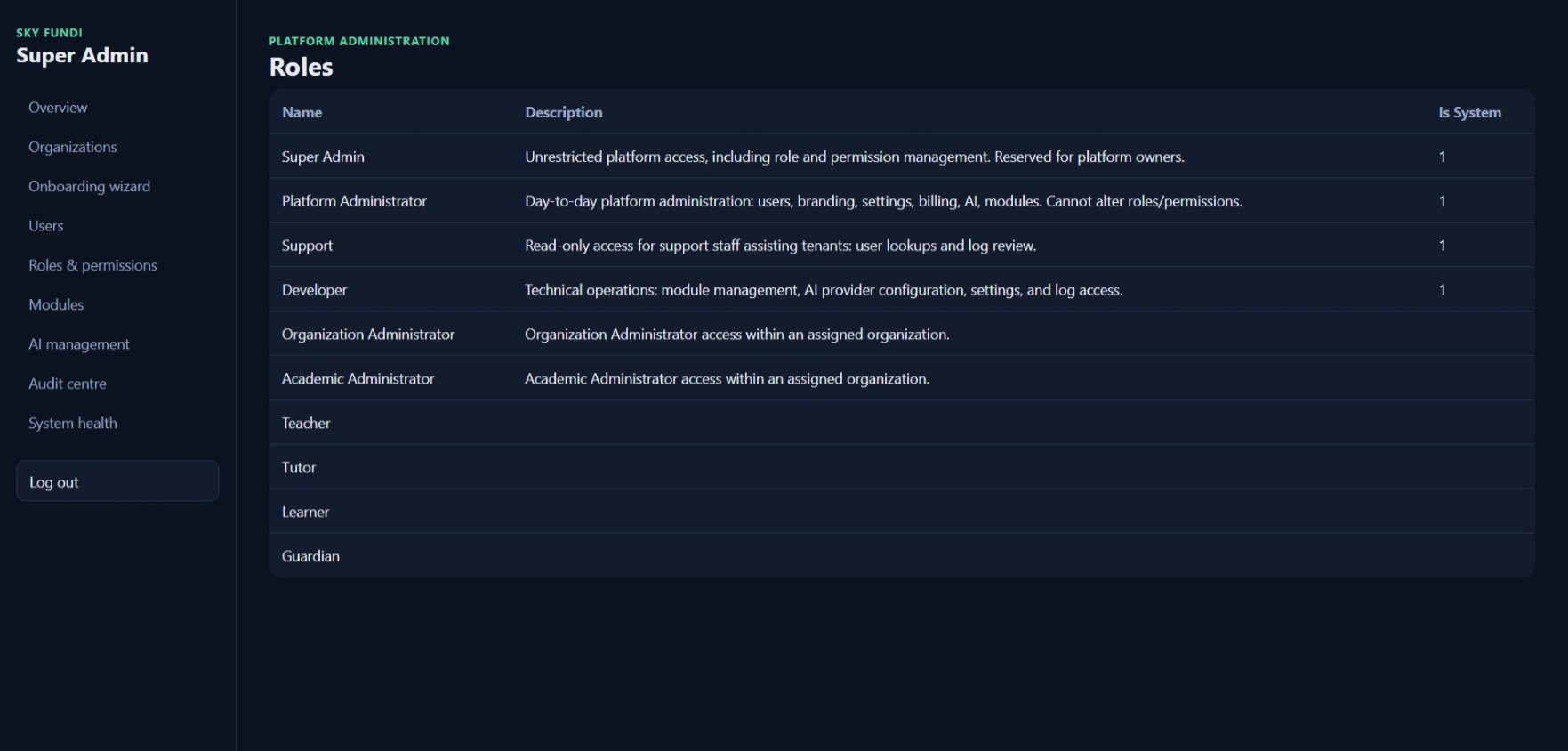
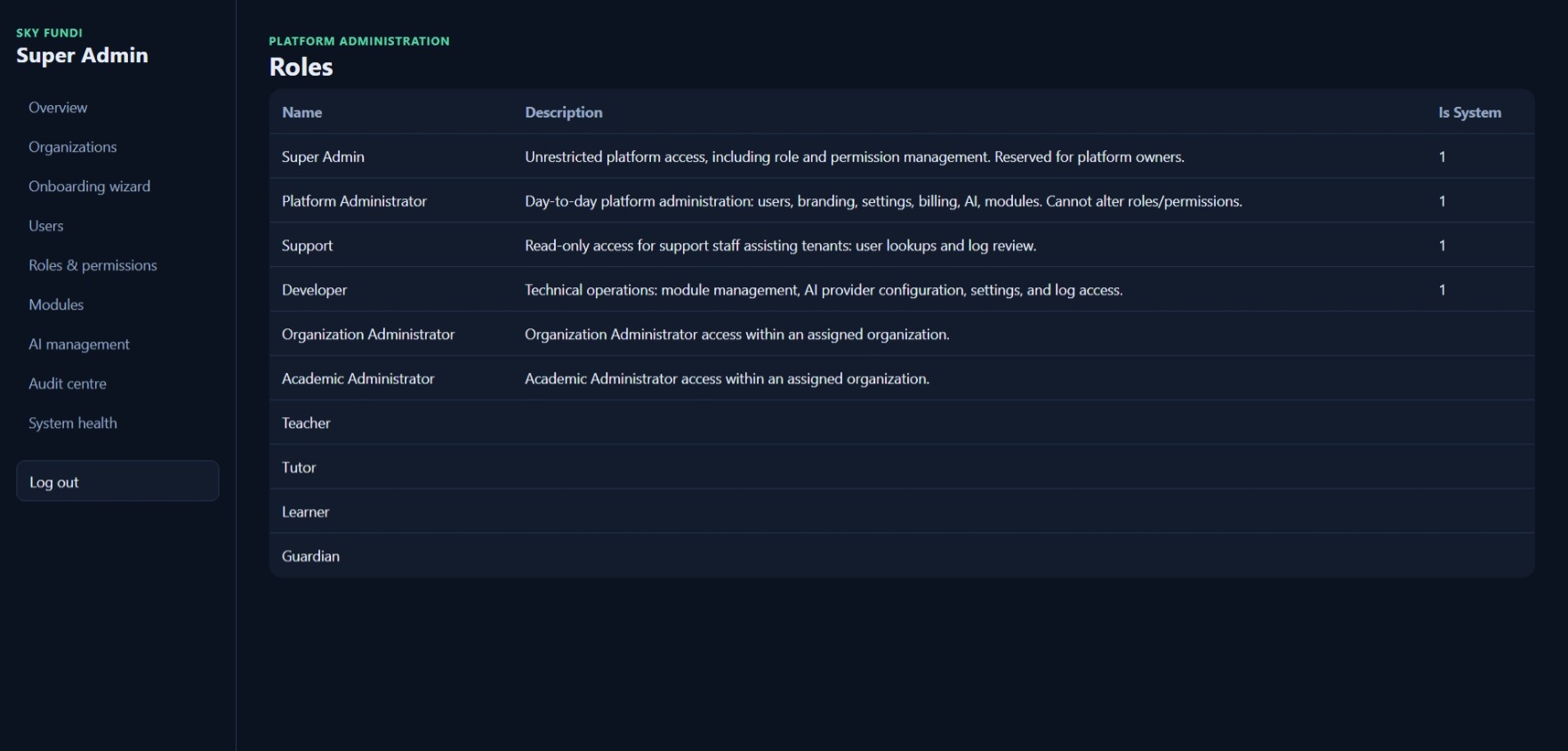
roles and permissions
-
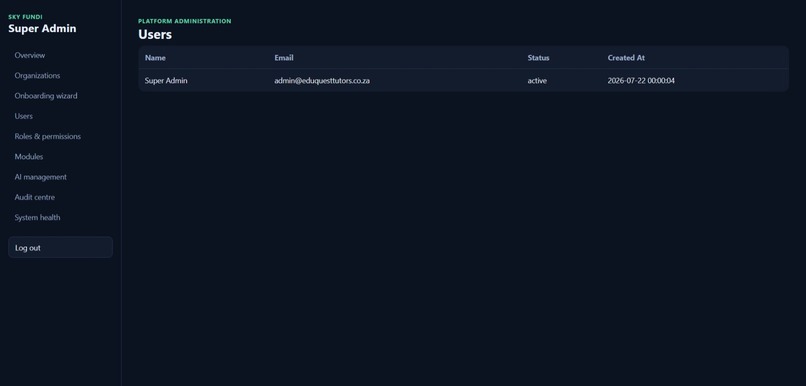
-
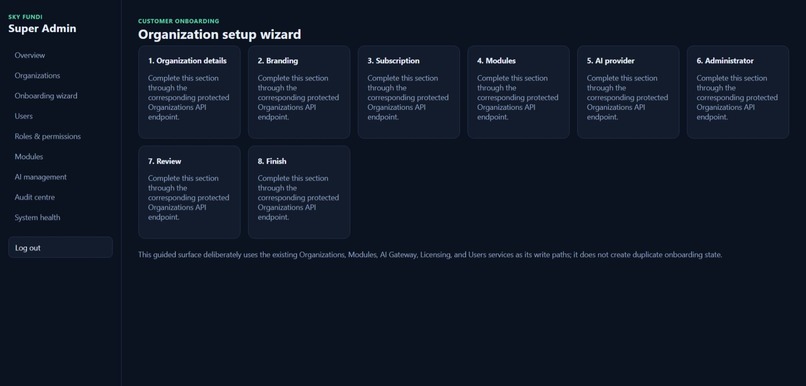
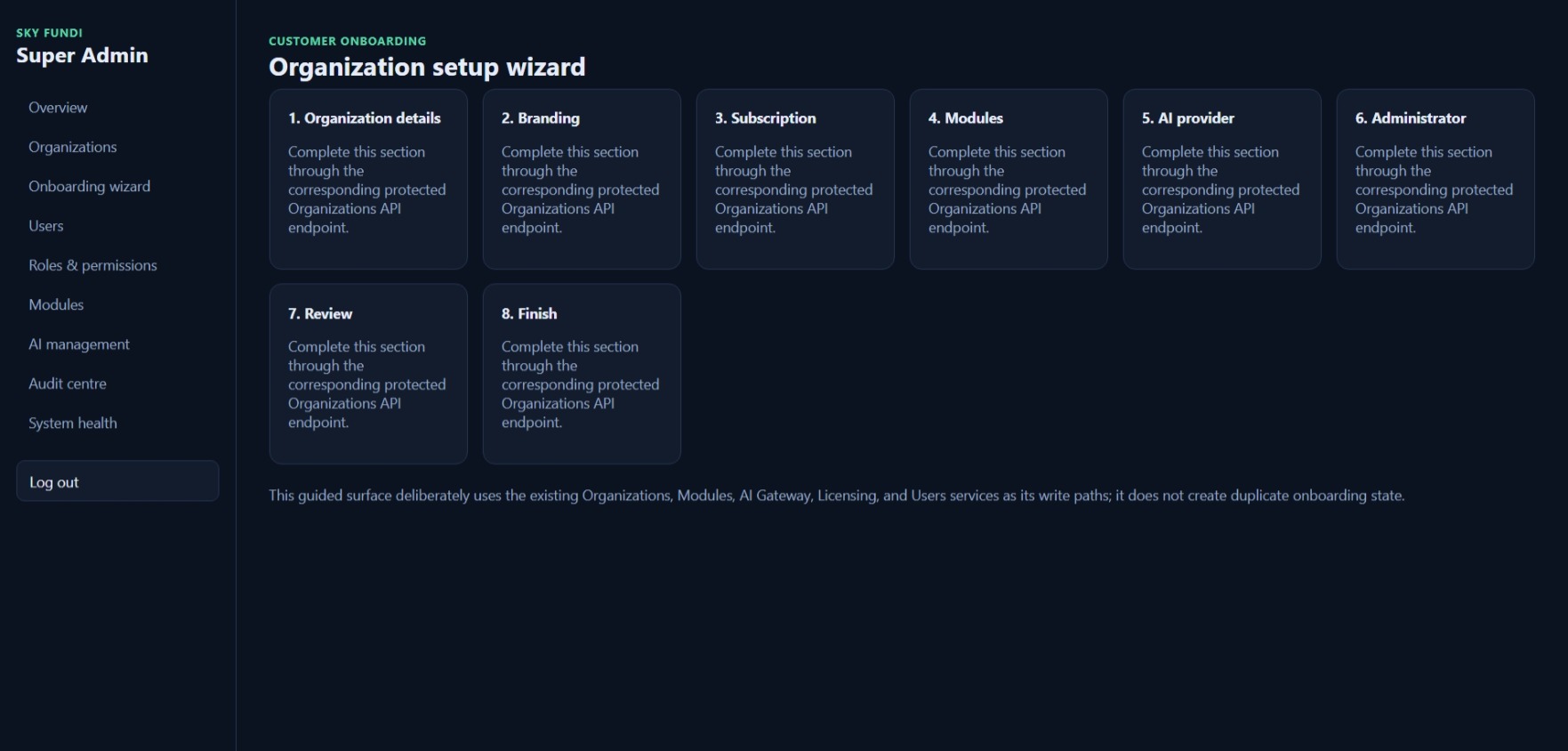
work flow and new organisationb
-
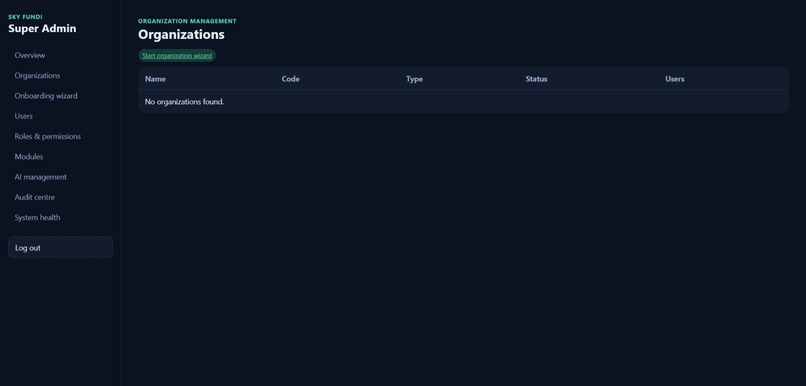
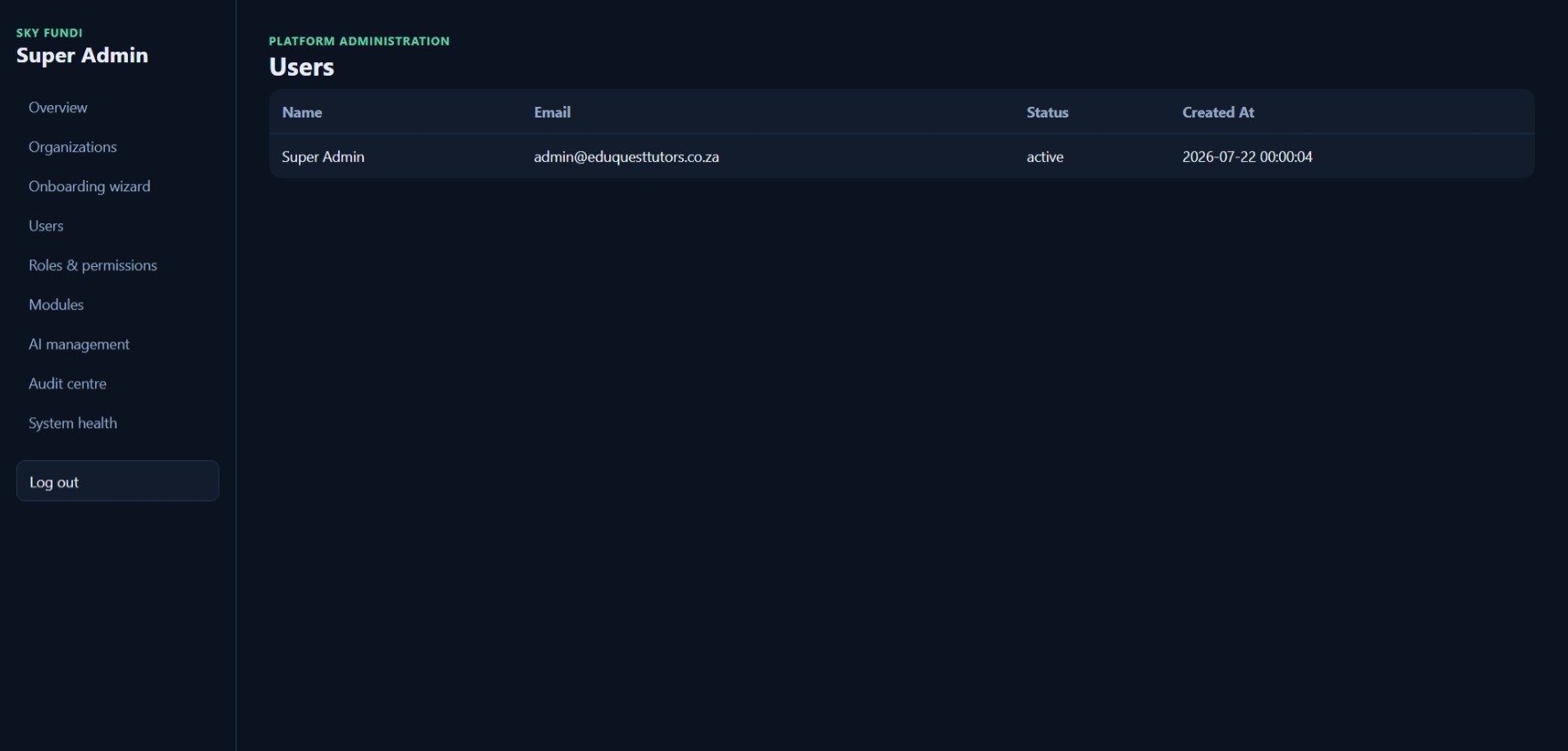
user
-
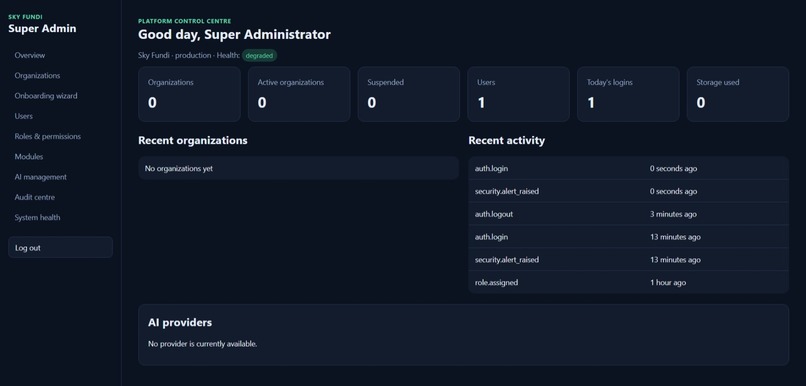
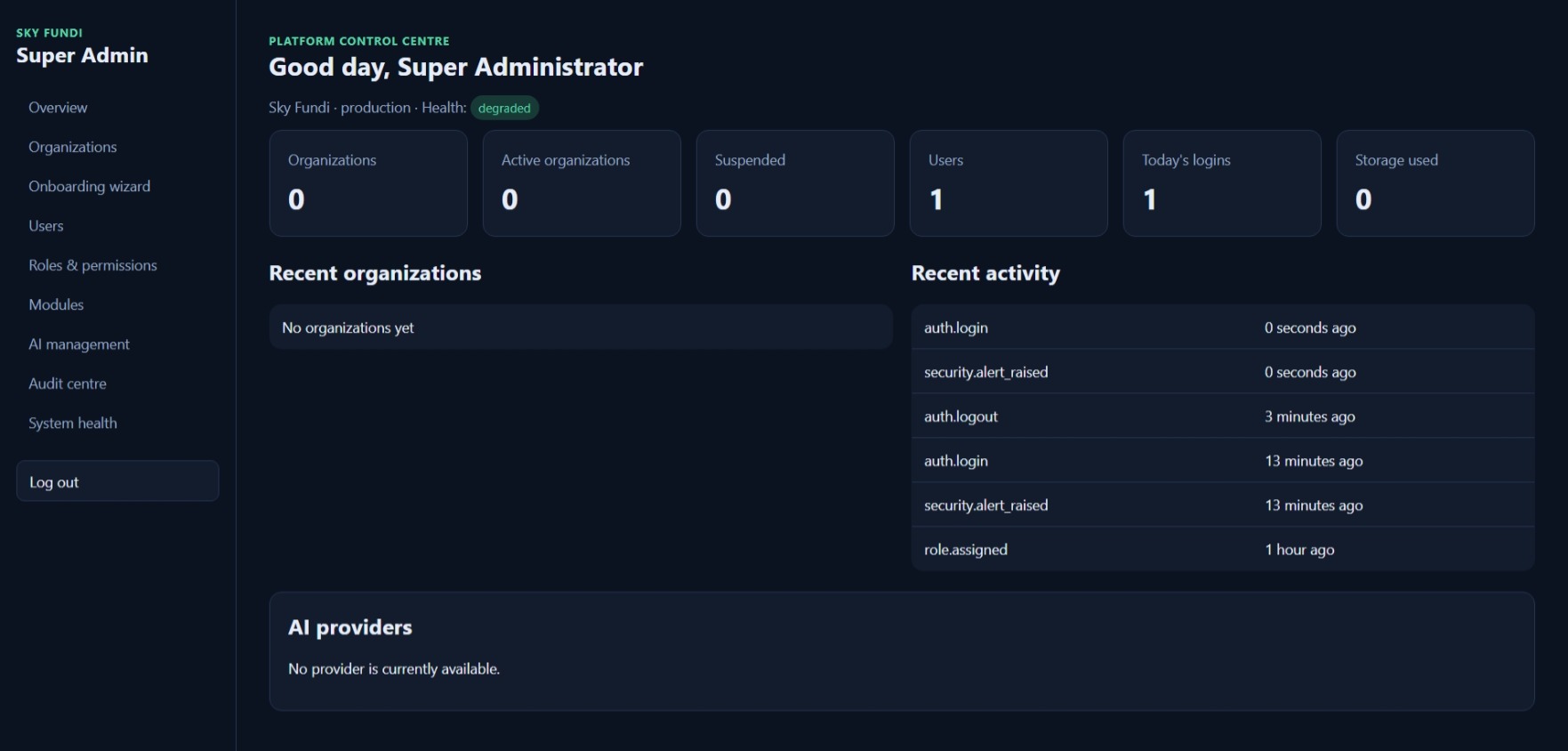
dashboard overview
-
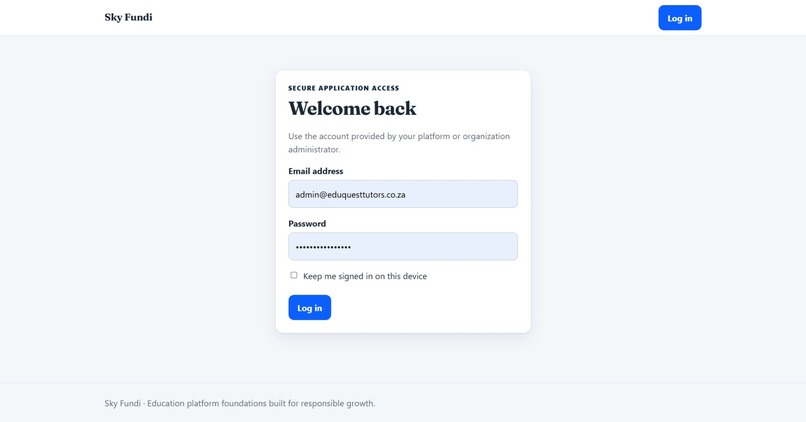
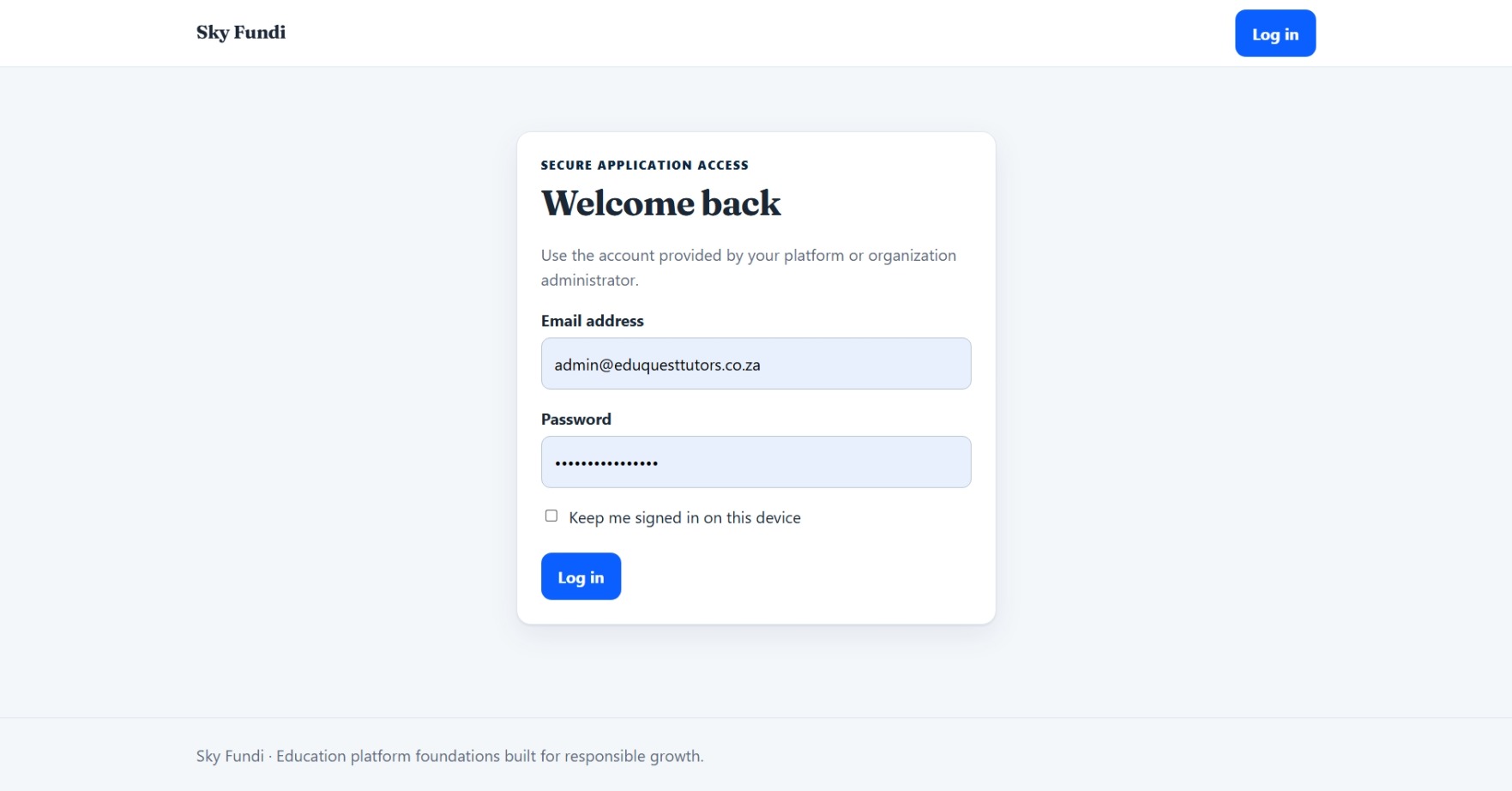
login
-
-
-
-
Inspiration
Sky Fundi LMS
Inspiration
Sky Fundi LMS was inspired by my experience as a private Mathematics and Physical Sciences tutor. Managing learners, parents, attendance, lesson schedules, invoices, academic results, learning materials, and communication through separate tools became difficult as the tutoring business grew.
I also noticed that many small tutoring businesses and schools cannot afford complex learning management systems. Some institutions have limited internet connectivity, while others need greater control over their learner information and educational content.
I wanted to build a platform that could simplify administration while still supporting teaching, learning, financial management, and artificial intelligence. The goal was to create a system that could serve an individual tutor today and expand to support schools and larger educational organisations in the future.
What Sky Fundi LMS Does
Sky Fundi LMS is a modular learning management system designed for tutors, schools, learners, parents, staff members, and administrators.
The platform is being designed around separate role-based portals:
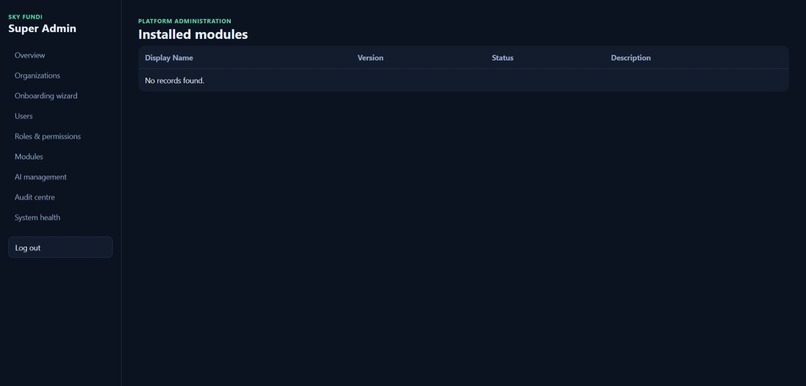
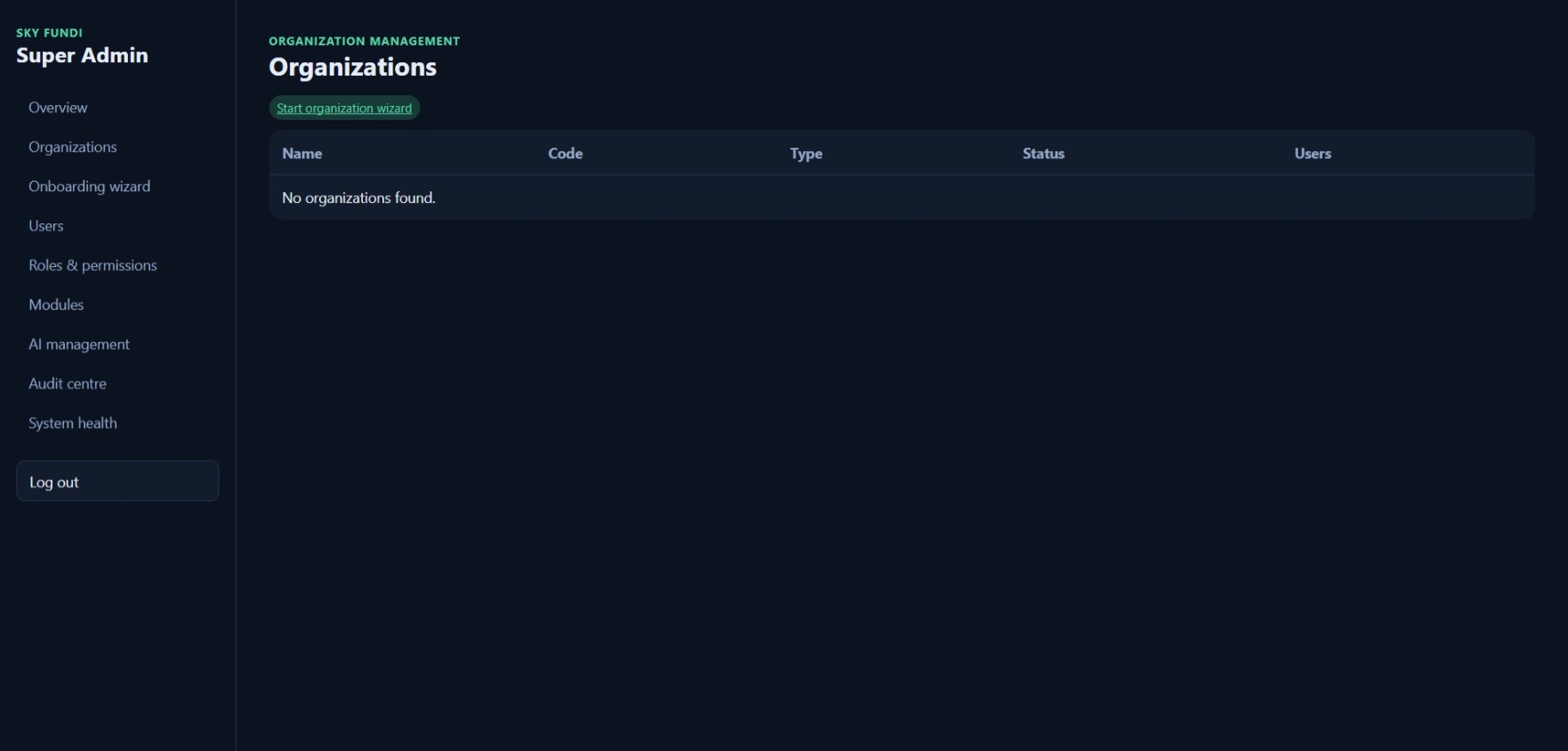
- Super administrators manage organisations, licences, platform settings, and system-wide oversight.
- School administrators manage their institution, staff members, learners, classes, subjects, and branding.
- Tutors manage their learners, lessons, attendance, resources, assessments, income, and expenses.
- Learners access lessons, learning materials, quizzes, results, and AI-assisted academic support.
- Parents and guardians monitor attendance, academic progress, invoices, and important updates.
The long-term goal is to maintain one reliable source of truth across the platform. For example, when a tutor records a payment or expense, that information should automatically update the relevant financial records, including the general ledger, trial balance, income statement, balance sheet, and cash-flow report.
How I Built It
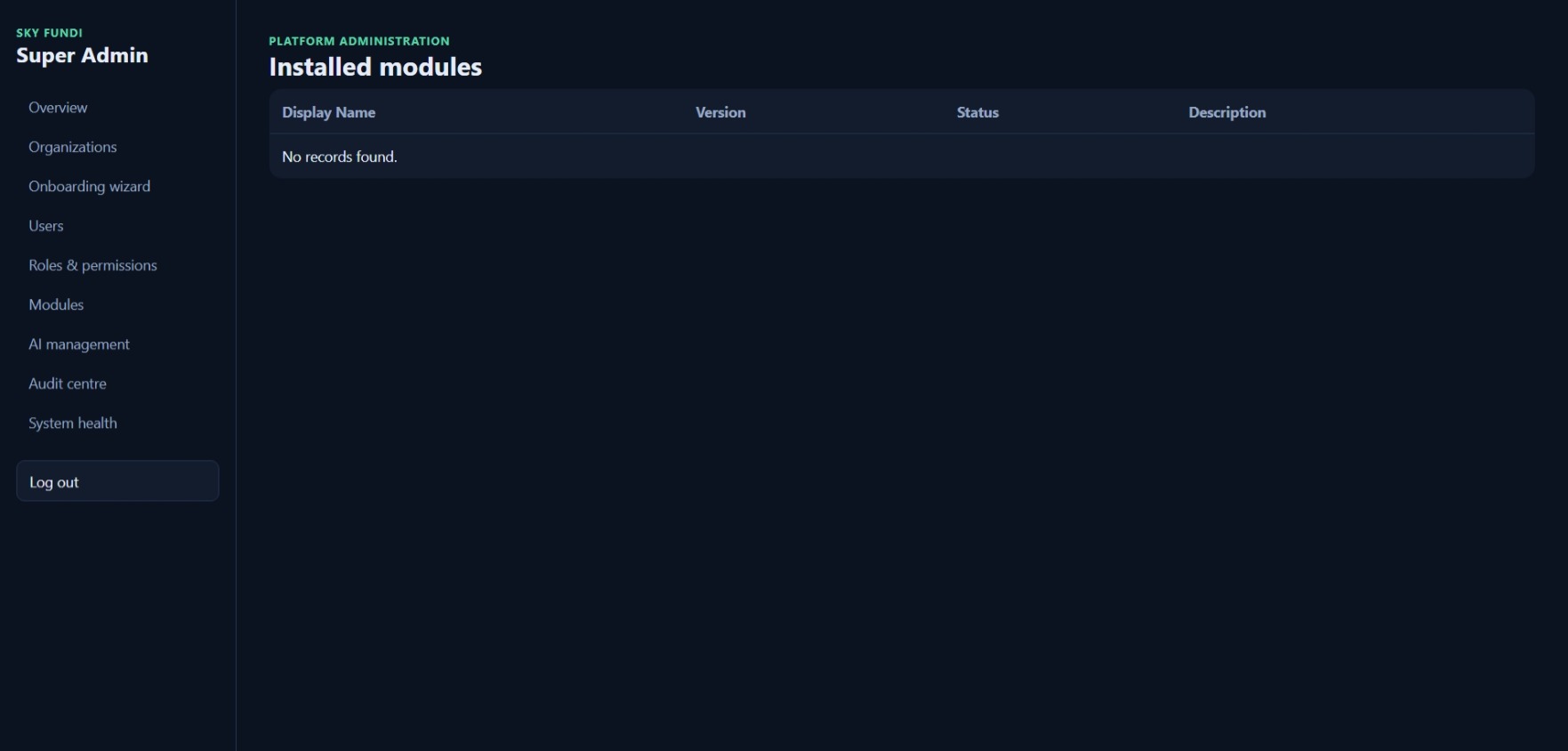
Sky Fundi LMS is being developed as a modular web application using a Git-based development workflow. Features are separated into modules so that each major area of the platform can grow independently without making the entire system difficult to maintain.
The development environment includes:
- PHP and a Laravel-based application structure
- A relational database for centralised and consistent data storage
- Docker for reproducible local development
- Git and GitHub for version control, feature branches, reviews, and documentation
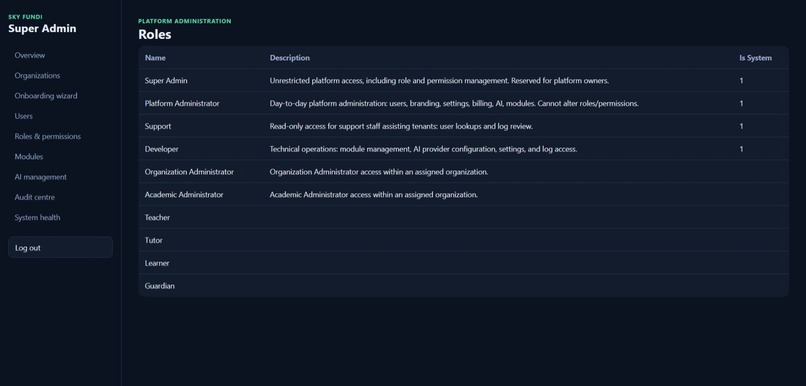
- Role-based access control for separating platform responsibilities
- Automated migrations, seeders, policies, and tests
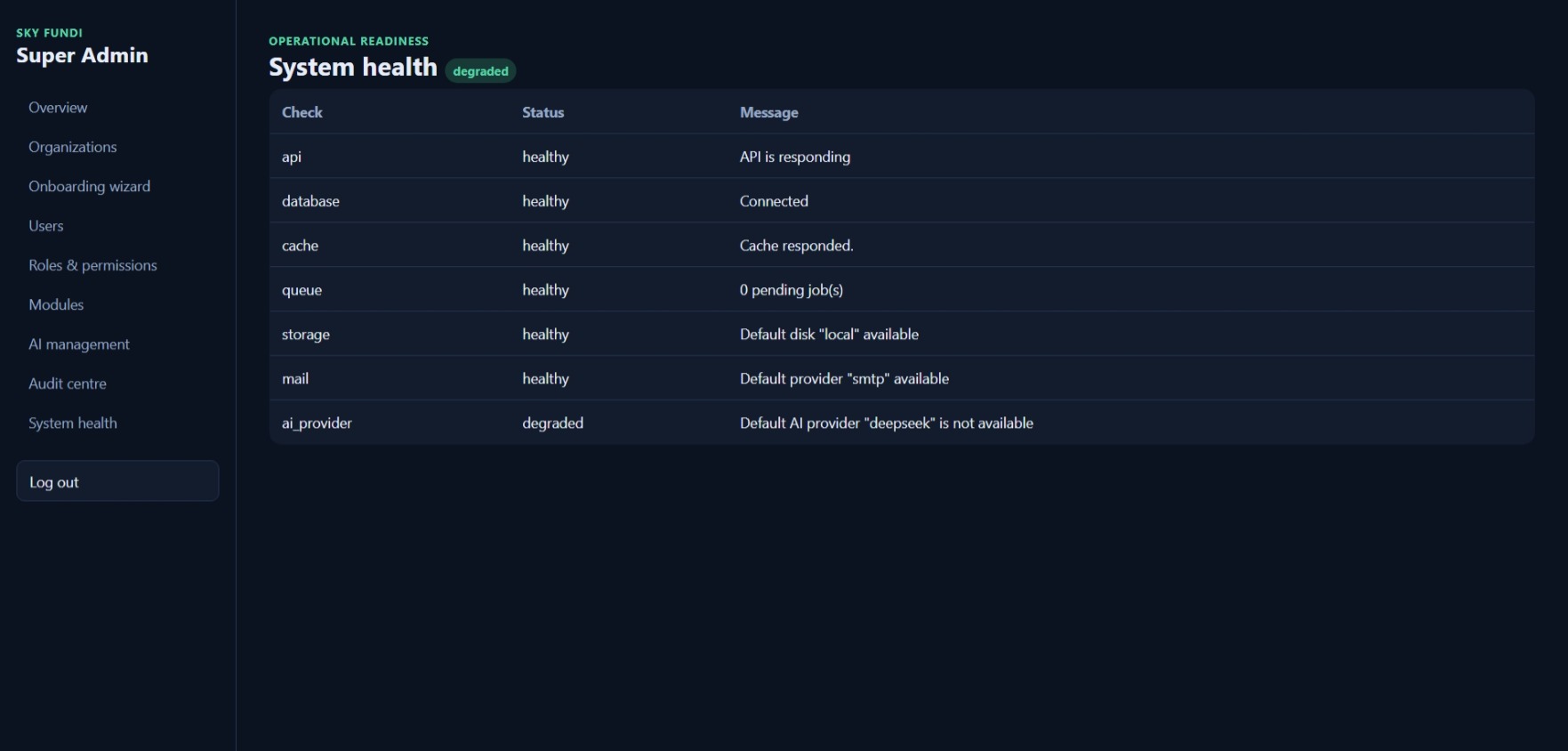
- Mailpit for testing email communication locally
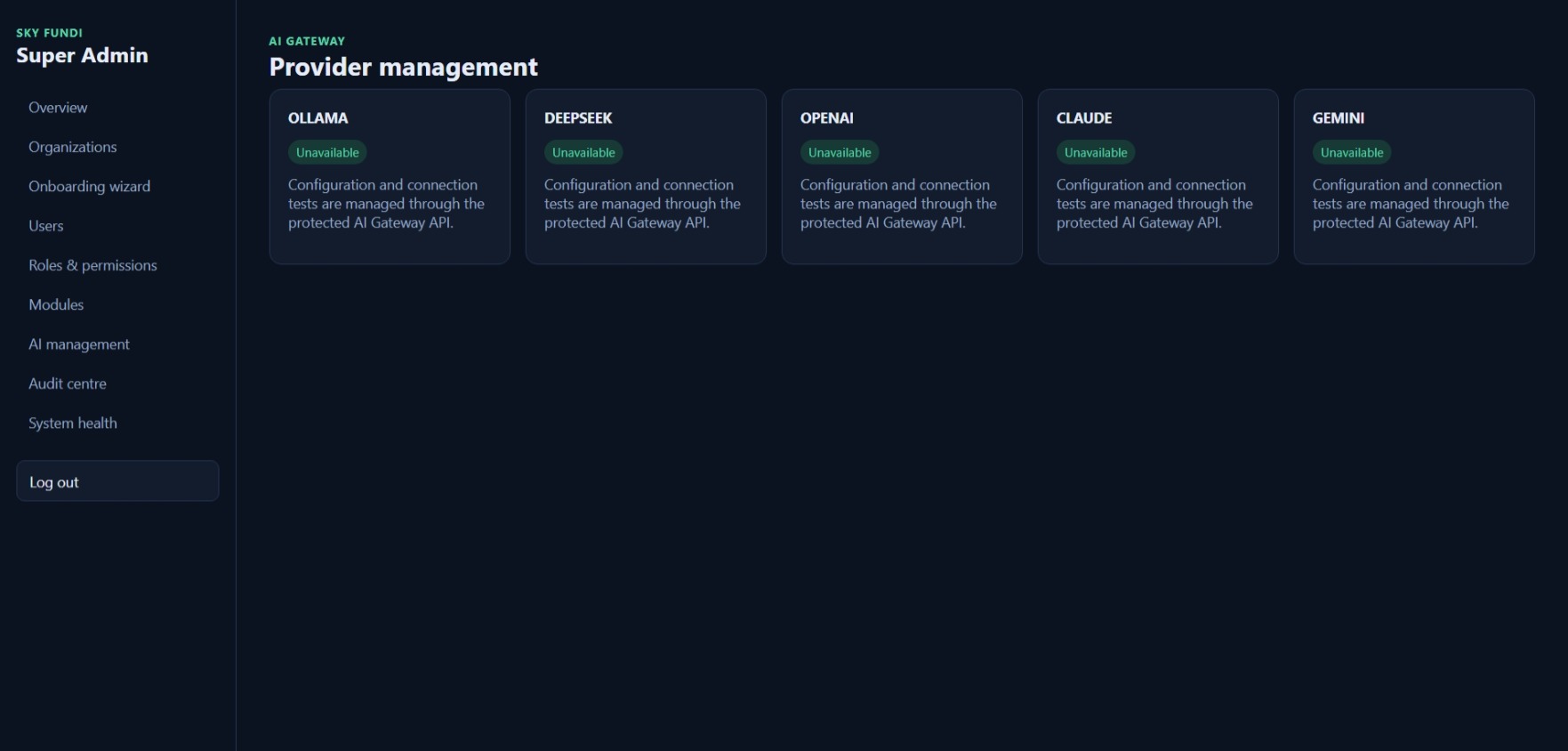
- Ollama for local artificial-intelligence models
- External AI support through services such as DeepSeek
The system is being designed as a multi-organisation platform. Data belonging to one school or tutoring business must remain isolated from other organisations. Within a school, learners can be organised by grade, class, and subject. For example, a Grade 10 Physical Sciences class can remain separate from another Grade 10 class even when both belong to the same school.
I also designed the AI functionality to support more than one deployment model. An organisation may use an online AI provider or run a local model through Ollama. Local AI can help schools maintain greater control over costs, connectivity, and private educational information.
The planned retrieval system will allow approved resources, such as textbooks, notes, past examination papers, and memoranda, to be used as trusted sources for AI-generated explanations and quizzes.
Challenges I Faced
One of the biggest challenges was designing the application for different types of users without creating duplicated or inconsistent information. A tutor, school administrator, learner, and parent may all interact with the same academic records, but each role requires different permissions and views.
Another challenge was creating a true multi-organisation architecture. The system must ensure that users can only access information belonging to their organisation. This required careful planning around organisation identifiers, database relationships, authorisation policies, invitations, and licensing rules.
Setting up a reliable development environment was also challenging. Early development was affected by missing PHP and Composer dependencies, Docker configuration problems, Linux permissions, bootstrap errors, and differences between Windows and WSL. Moving towards a Docker-based environment made the setup more predictable and easier to reproduce.
Integrating AI introduced additional challenges. Cloud AI services can become expensive, while local models require sufficient hardware and careful configuration. I therefore worked towards an approach where organisations can choose between local and hosted AI services.
The financial module also required detailed planning. Financial information must flow correctly from individual transactions into accounting reports without creating multiple conflicting versions of the same data.
What I Learned
Building Sky Fundi LMS taught me that software architecture is just as important as writing code. A feature may work correctly on its own but still create future problems if it is not designed around clear responsibilities, data ownership, permissions, and relationships.
I learned how to:
- Structure a large project into independent modules
- Design systems for multiple organisations and user roles
- Use Git branches and pull requests to manage development
- Build reproducible environments with Docker
- Improve application security through policies and access controls
- Design database migrations and relationships carefully
- Combine local and cloud-based AI services
- Plan features around a single source of truth
- Document technical decisions and implementation progress
- Test features before integrating them into the main application
I also learned the value of building software from a real problem. Because I personally manage learners, lessons, attendance, invoices, and educational resources, I can test the system against realistic situations instead of hypothetical requirements.
What I Am Proud Of
I am proud that Sky Fundi LMS is not being designed only as a classroom content platform. It brings together academic management, business administration, communication, financial reporting, learner support, and artificial intelligence.
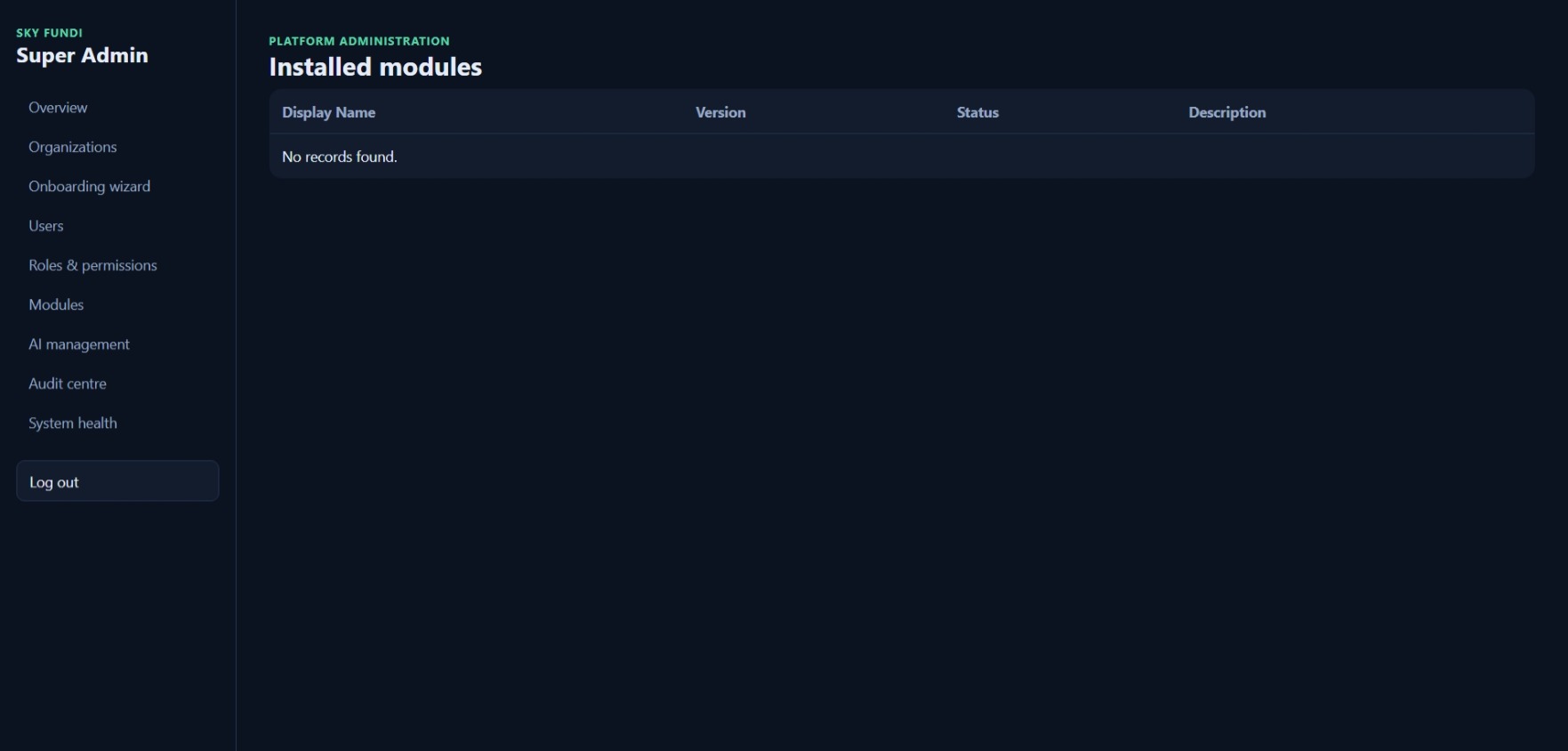
The modular architecture also gives the platform room to grow. Future modules may include:
- Libraries and digital resources
- School sports management
- Newsletters and announcements
- Automated academic reports
- Learner and guardian consent management
- Document storage
- Bulk learner imports
- Subscription and licensing management
- Advanced accounting reports
- AI-generated quizzes and personalised learning support
What Is Next
The next development priorities are to complete the learner and guardian management workflow, strengthen organisation-level data isolation, expand automated testing, and connect the academic modules to the reporting and financial systems.
Further work will also focus on improving the AI knowledge system, allowing institutions to control which educational resources the AI may use when answering questions.
My long-term vision is for Sky Fundi LMS to become an affordable, flexible, and locally relevant education platform that supports independent tutors, growing education businesses, and schools across South Africa and beyond.
Sky Fundi LMS is ultimately about helping educators spend less time managing disconnected systems and more time supporting learners.


Log in or sign up for Devpost to join the conversation.