-
-
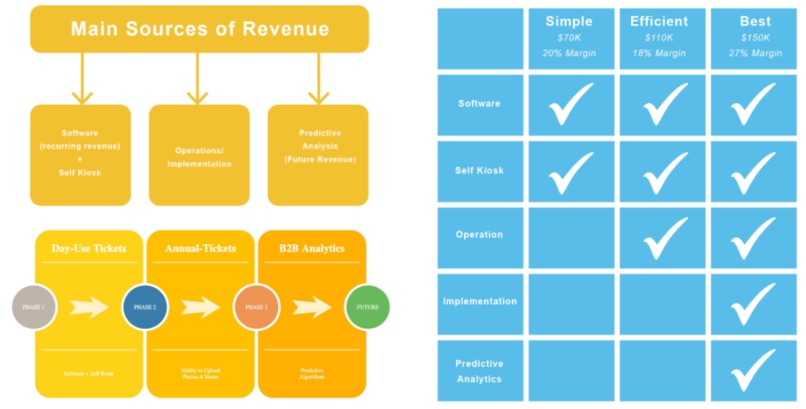
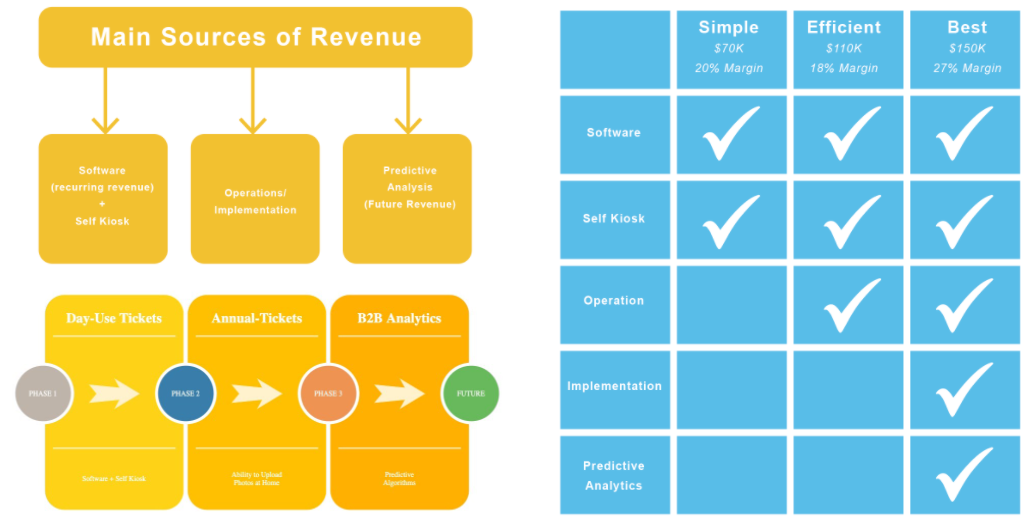
Business Model
-
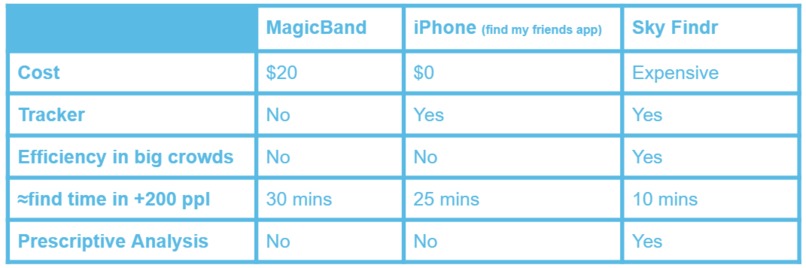
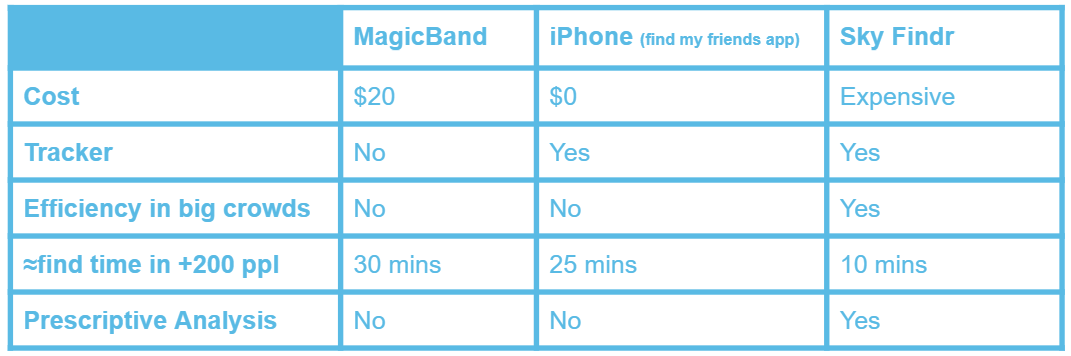
Competitors
-
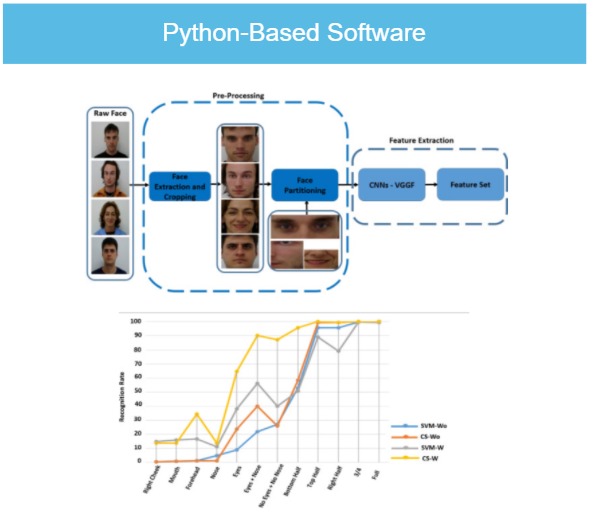
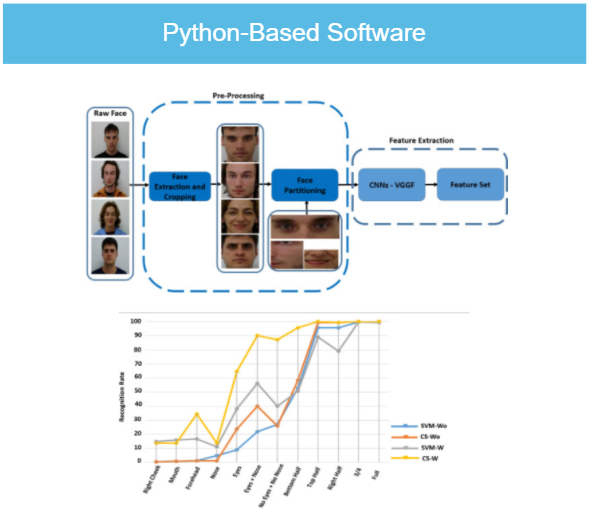
Facial Recognition AI Model
-
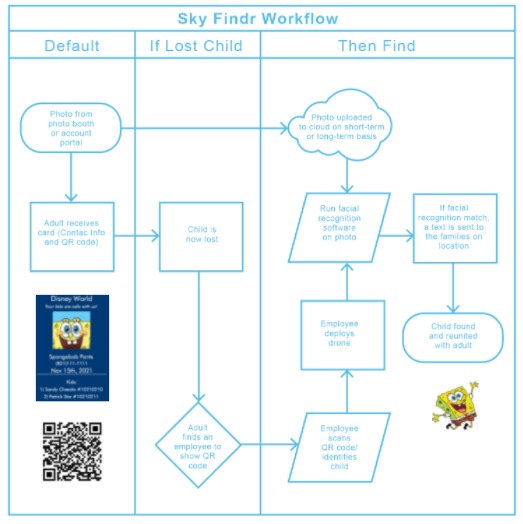
Workflow
-
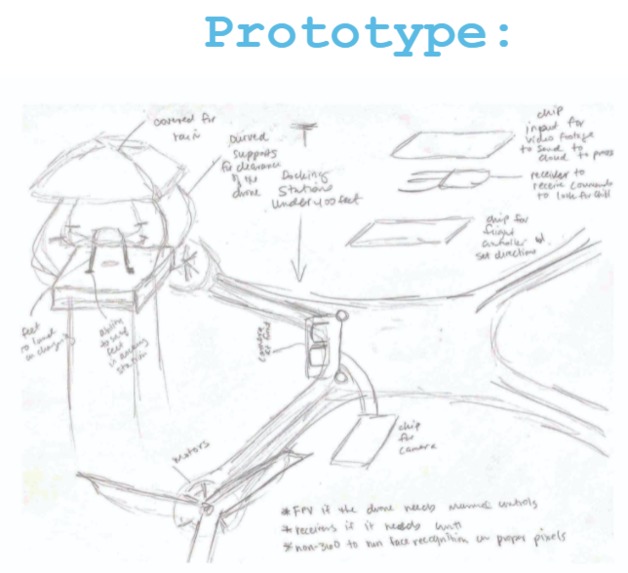
Prototype
Inspiration
Many people are a part of a family unit of some sort. We were the child of a family or we have younger relatives we want to protect. Empathizing with a family who has just misplaced their child is scary. It necessitates a solution. We wanted to find a way to use technology to help families during a time they should not have to worry about anything like at an entertainment venue.
Problem Statement
About 11 children go missing every day at theme parks, and it takes up to 30 minutes to find a missing child within a crowd. This can become a scary and frantic moment for any parent, grandparent, or family friend accompanying a child. We want to provide a solution for families to reconnect with their missing child, but also a product that can be implementable for various entertainment venues.
Proposed Solution
Our product, “Sky Findr,” consists of an affordable small-sized drone with an average battery life of around 30-15 minutes with custom Python-based facial recognition software.
In our plan, points of contact are broken up into three phases based on audience segments:
- [1] single-day ticket holders
- [2] annual pass holders
- [3] B2B analytics
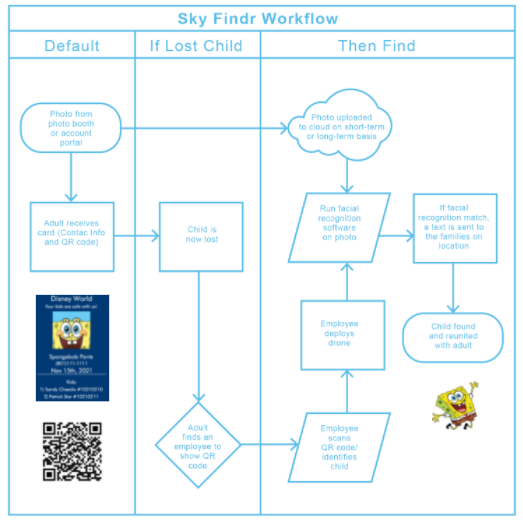
Phase 1: photo booths will be available for families entering an event space to take pictures. These photos will be uploaded and stored in the cloud on a short-term basis. The families will also receive a card with a unique customer identification and a QR code on the back if an emergency arises.
Phase 2: allows annual pass ticket holders to create a portal to upload family photos which will then be uploaded and stored on a long-term basis. For both the first and second phases, all photos uploaded will automatically get scanned through the custom facial recognition software. If a child goes missing, the accompanying adult will find an employee to scan the QR code. This employee will then deploy the drone to scan for the missing child. Several drones will be placed around an entertainment space so they can each focus on a specific, small area.
Drones
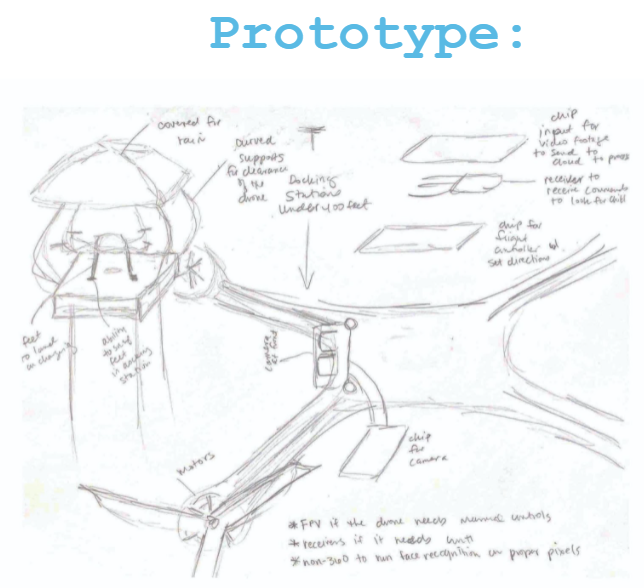
We looked at three different drones on the market and compared their selling points. The Ruko F-11 has aspects that would be desirable to incorporate. However, our drone needs a specific algorithm to find a child: receive information from the contacted employee, leave a docking port, systematically search a small area, take video input, create stills of the video based on various frame rates, scan the image stills with data recognition technology, output a match based on photos from already stored in the cloud, send a text alert with a location marker to a parent if the child is found, return to docking port to charge. However, if the original task takes longer than its battery life, the drone needs to be able to return to the docking port to charge with enough battery to reach it and will notify the employee of failure so they can actually send humans to find the child. Analytics need to be engaged to troubleshoot why the drone failed.
Our Value
Families go to entertainment venues to not only have fun but to create shared memories amongst each other. However, sometimes families can be separated in crowds. OUR value to our customers is being able to reunite loved ones and ensure family safety. Companies using our product can decrease search times for missing children by 50%, which improves customer satisfaction and customer retention (aka profitability).
Challenges
Project Challenges There are several components and challenges to our project. The algorithm needed to complete the coding needs to be meticulous. Users need to opt-in to have their photos scanned. Some users may be hesitant to provide their data. However, the hurdle would be to convince users of the cost-benefit of the added safety that would come by being able to find missing children. Considerations need to be made to prevent drones from being hacked and sensitive data leaked.
The docking and charging stations would be exposed to those elements. These stations would need to be in regulation with FAA guidelines. However, the drones need to be protected from rain, have a mechanism to secure the drones against the wind, and the clearance to get into a covered station.
Team Challenges Two challenging aspects of the project were scheduling and narrowing down a problem. It was challenging aligning all of our busy schedules from different time zones. In addition, during the ideate process, we came up with several problems that could have moved forward toward the final stages. However, it was rewarding seeing the final presentation, great when someone uncovered a clever solution and appreciated it when someone lightened the mood as we burnt the midnight oil.
Final Thoughts & Next Steps
After phases one and two are completed, Sky Findr can implement phase three. The drones should have operated in areas for a few years and should have collected data. This data would then be analyzed to provide predictive analysis on common pathways and trends of people observed in the past several years. Artificial Intelligence could then predict possible routes for missing kids thereby reducing the time to locate them. Big corporations like Disney World, Universal Studios, and Six Flags can make use of this idea and market their space as a more “kid-friendly” environment. Tickets sales and profits could increase through the use of our prototype.
We’re proud of the product we are presenting and hope that it can help families in need.
Built With
- ai
- analytics
- drone
- facial-recognition
- python


Log in or sign up for Devpost to join the conversation.