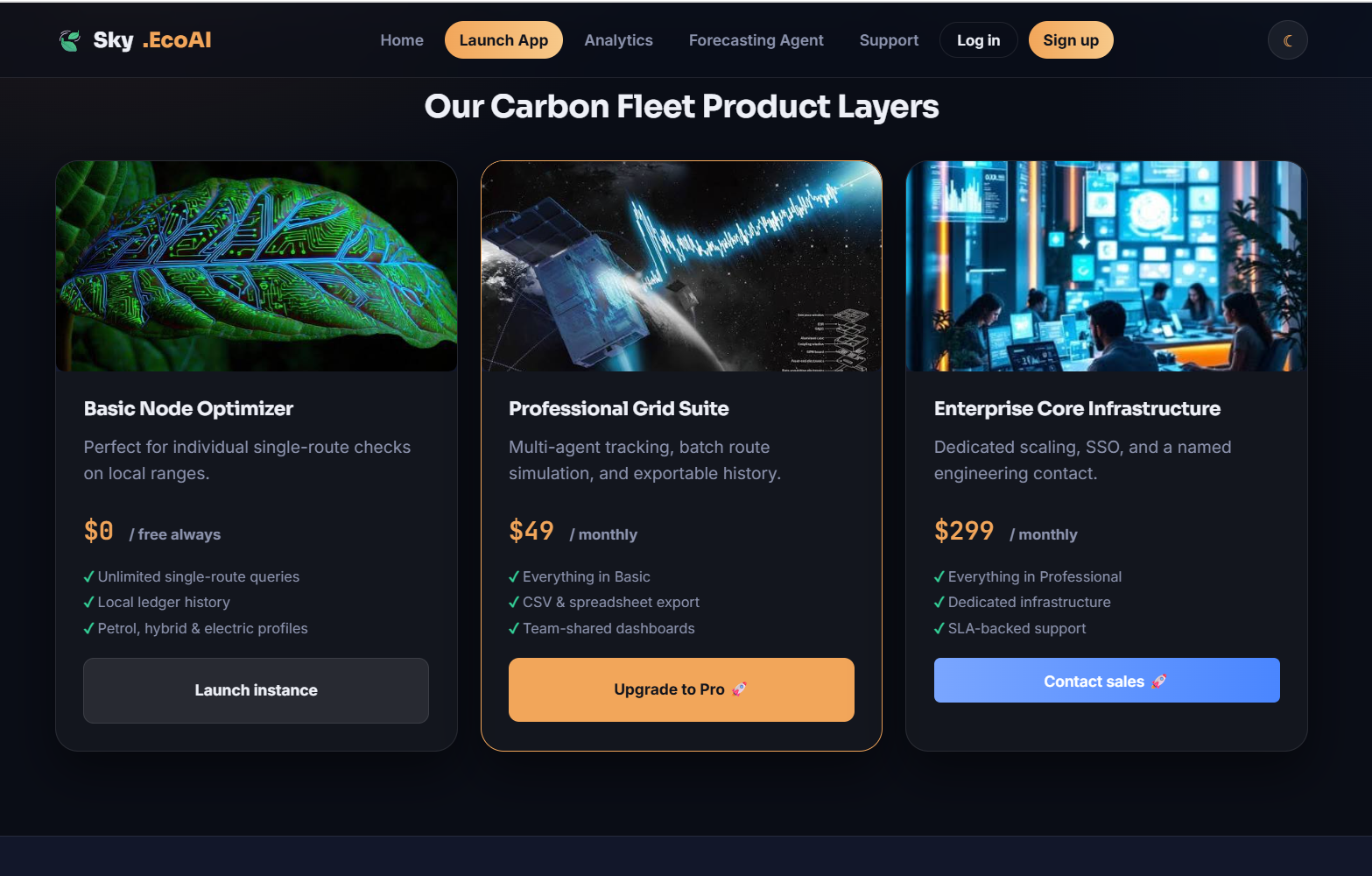
## 🚀 Project Title: Sky.EcoAI Autonomous Environmental Intelligence for a Sustainable Future.
💡 Inspiration
Climate change is a global crisis, but environmental data is often trapped in inaccessible, non-user-friendly formats. My inspiration for Sky.EcoAI was to democratize environmental intelligence. I aimed to bridge the gap between complex climate datasets and everyday decision-making by building an autonomous agent that doesn't just display data—it reasons about it.
🛠 What it does
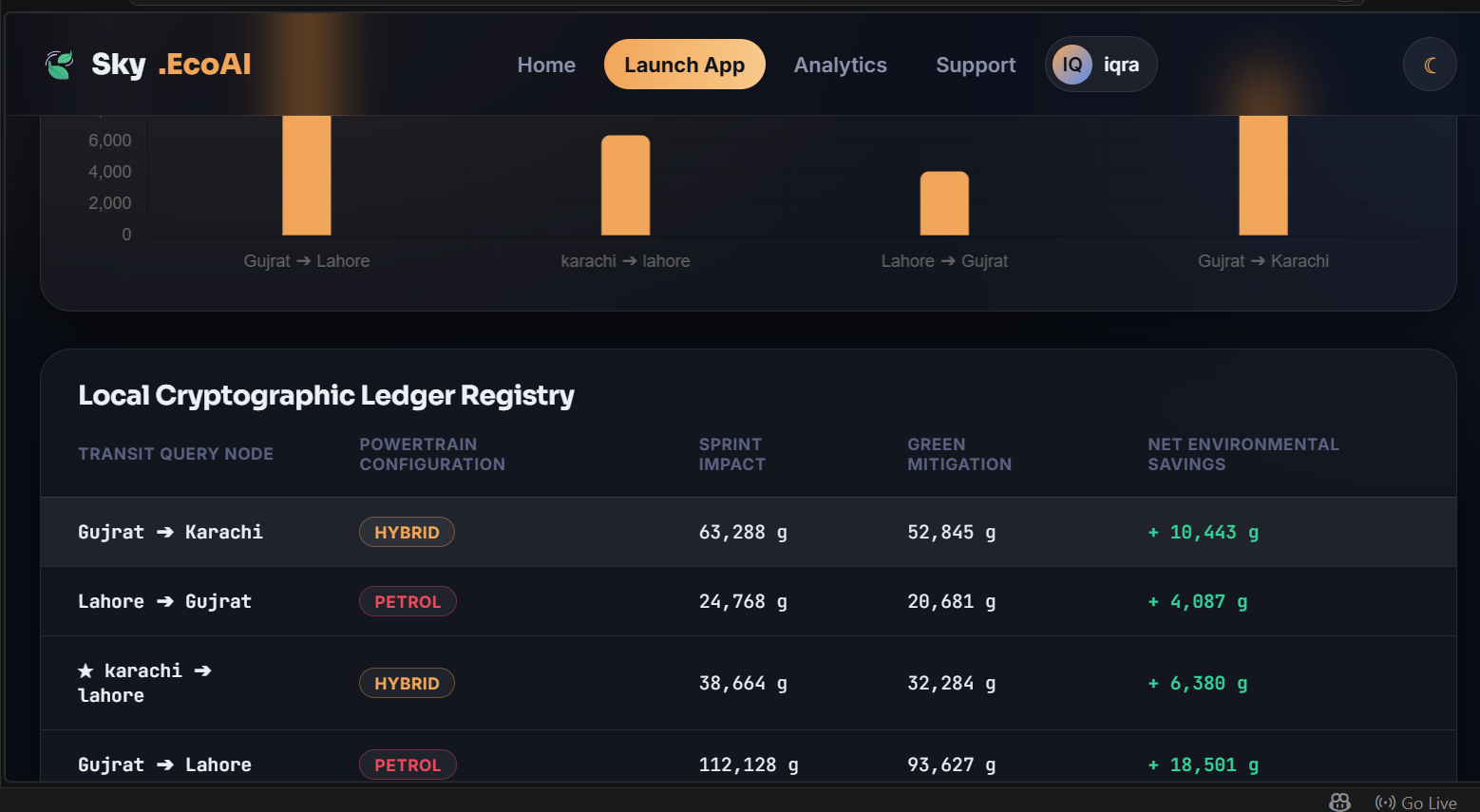
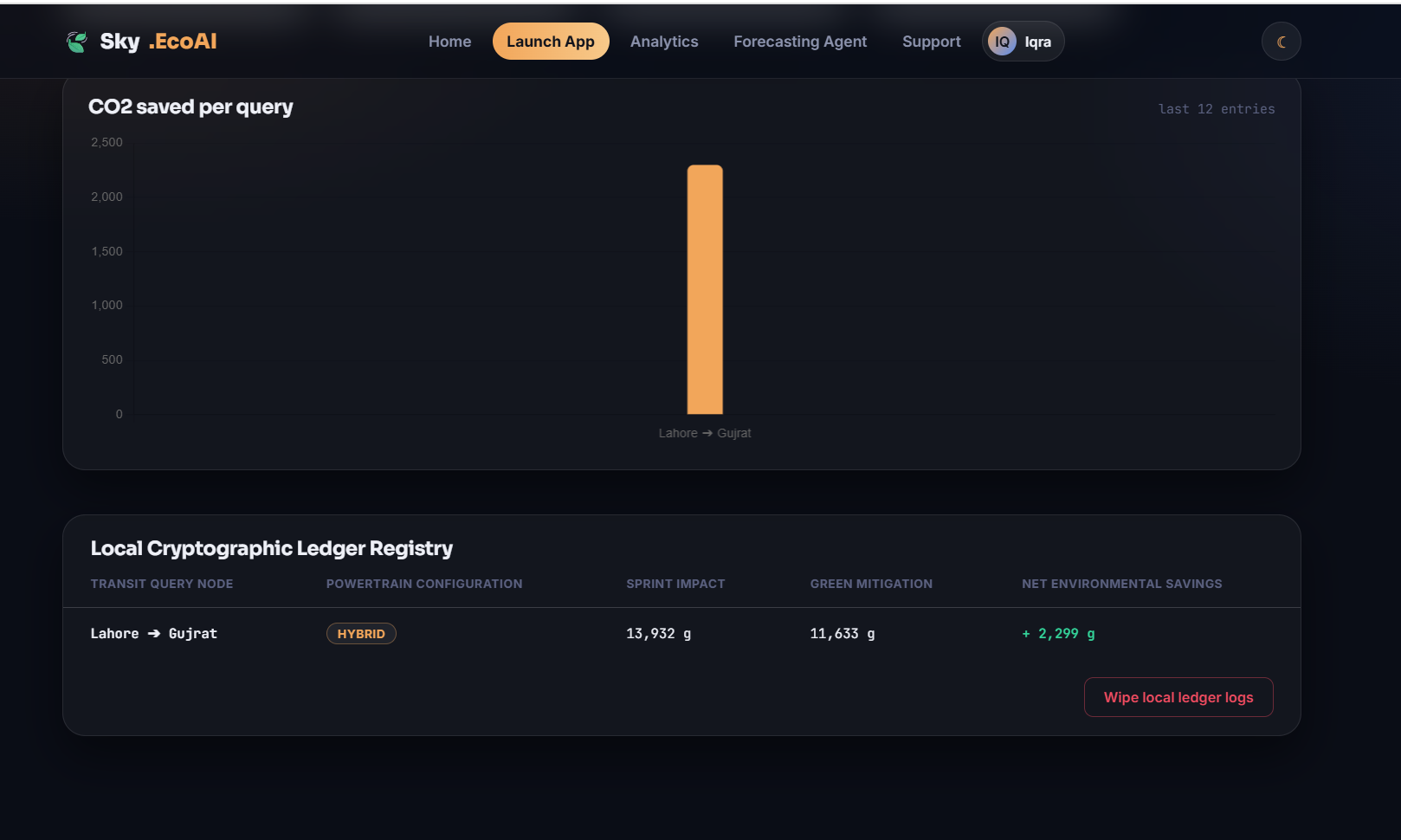
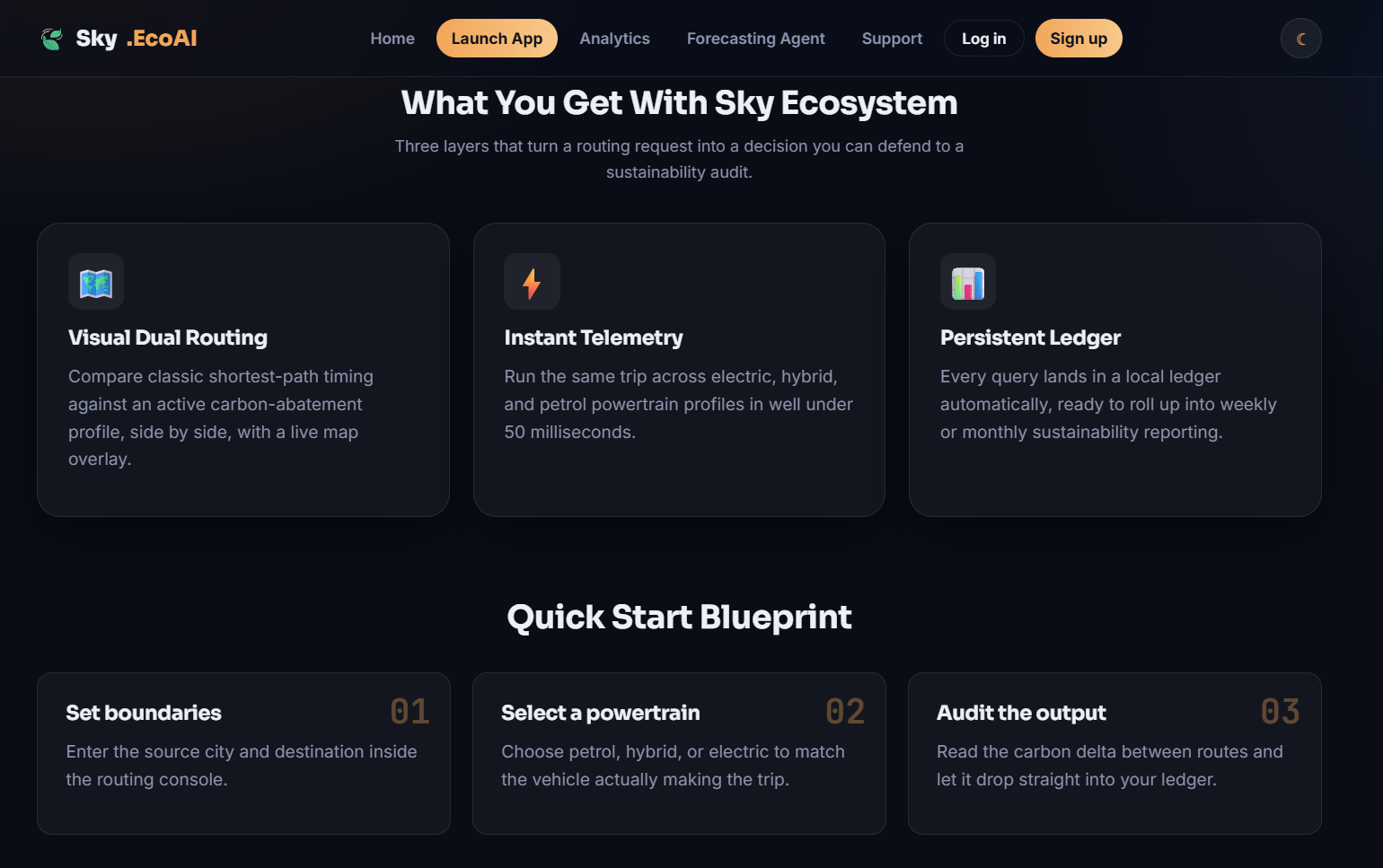
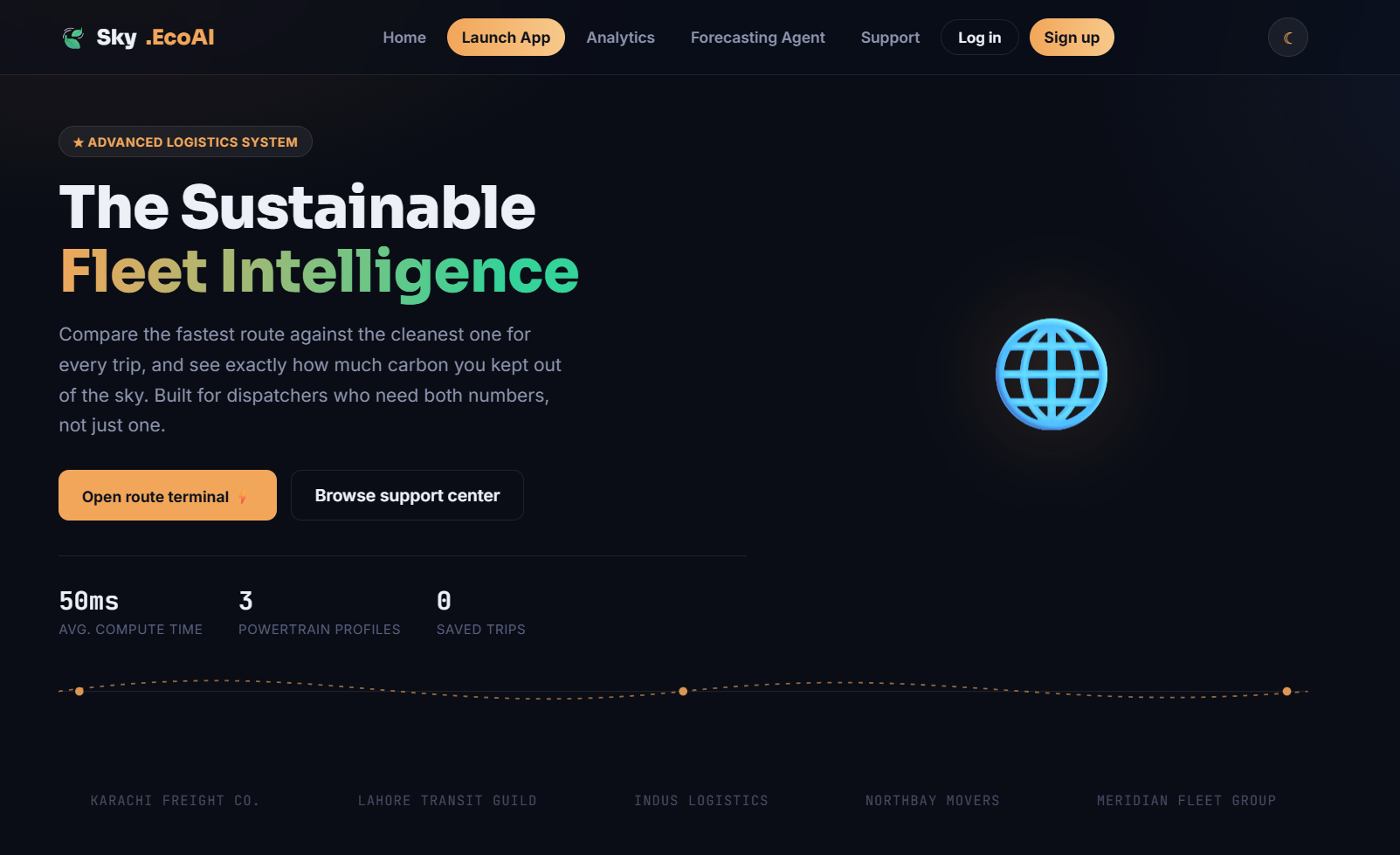
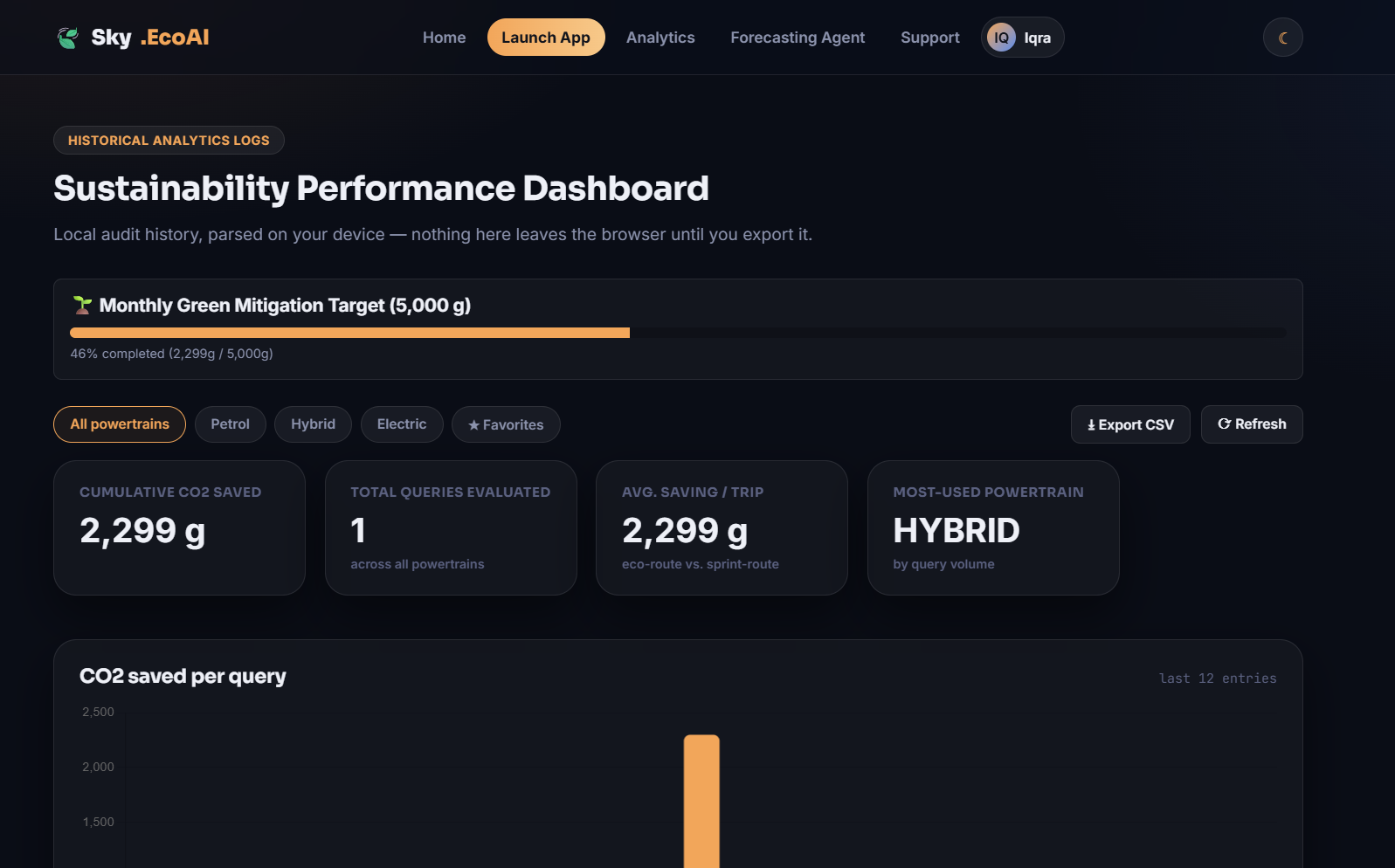
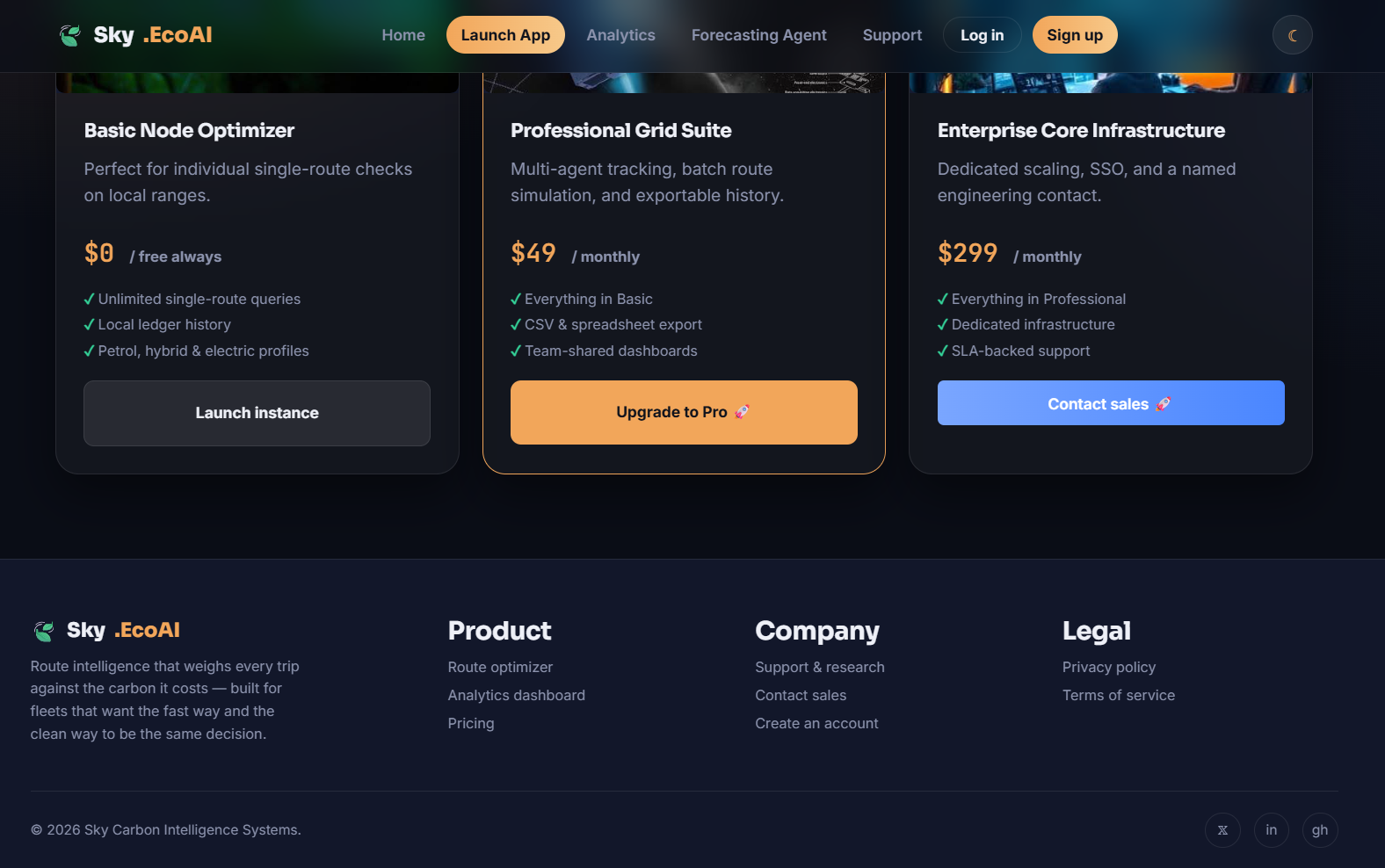
Sky.EcoAI is an agentic diagnostic platform that monitors fleet and environmental health parameters. Unlike static dashboards, it acts as an intelligent assistant, processing real-time signals to identify risks and suggest sustainable interventions. It empowers users to make data-backed, eco-conscious decisions through a seamless and intuitive web interface.
🧠 The Agentic Core (How it works)
Sky.EcoAI utilizes an agentic workflow that goes beyond simple automation:
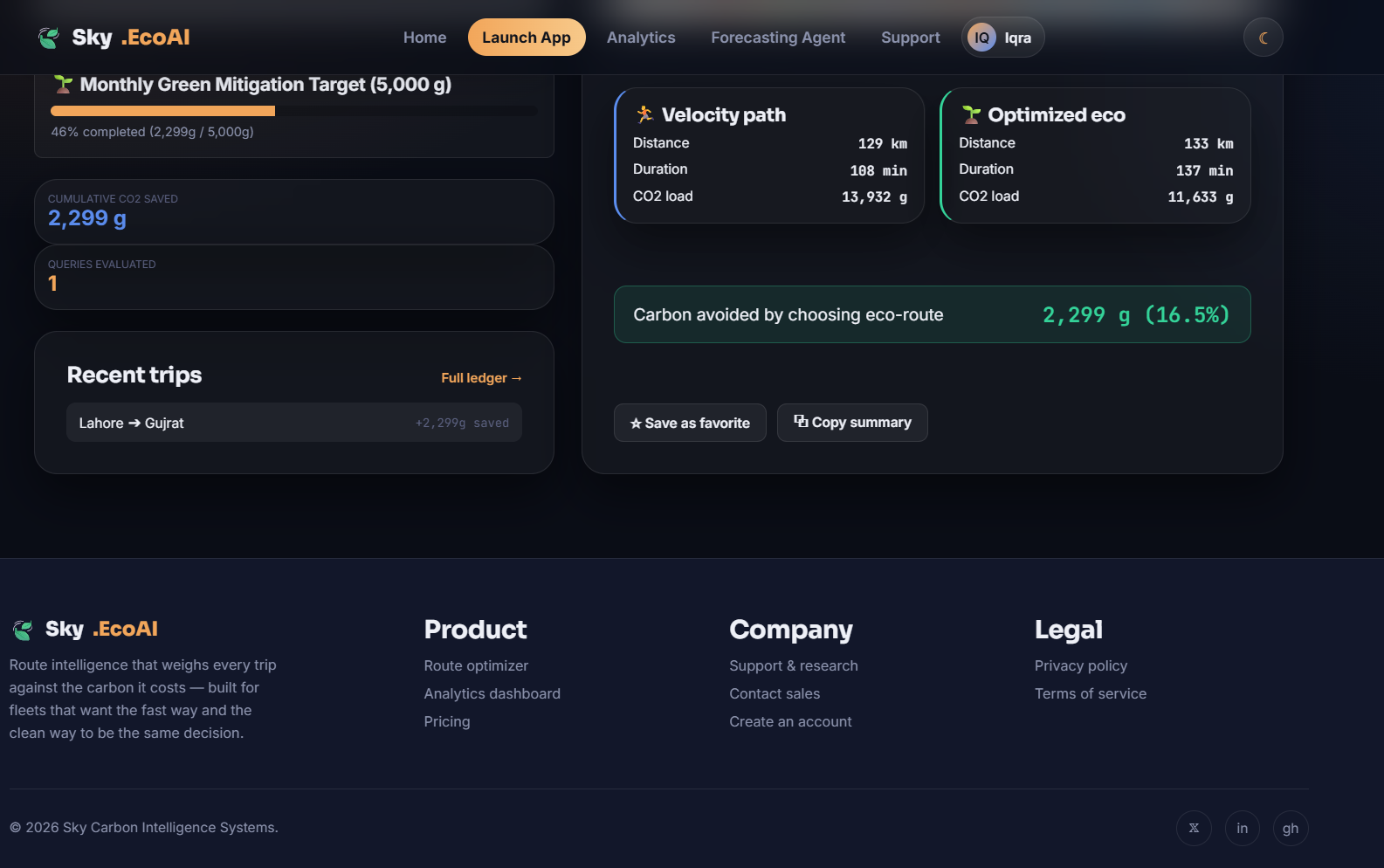
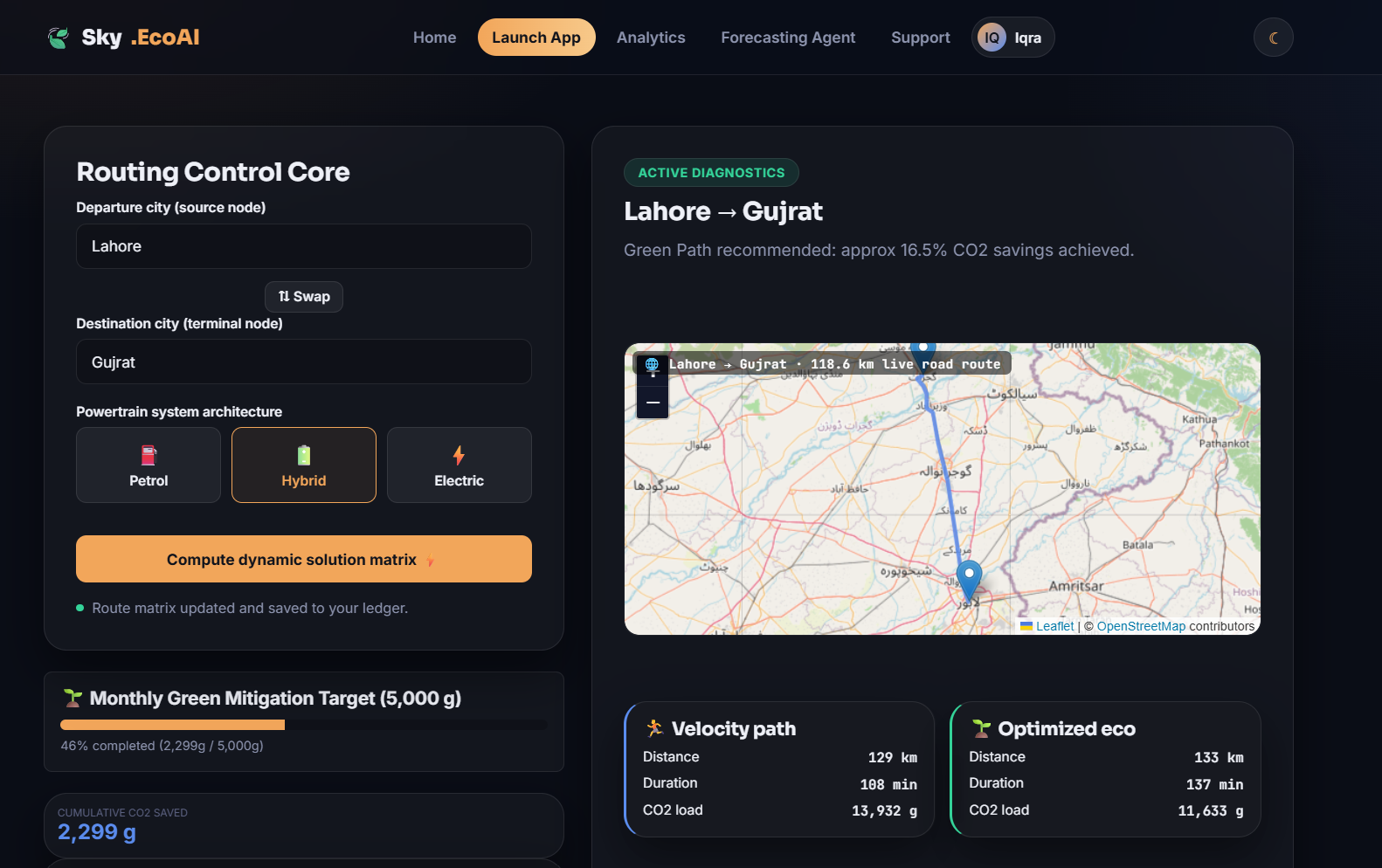
Contextual Reasoning: The agent receives raw inputs (like route details, vehicle efficiency, and fuel consumption) and interprets them within the context of environmental impact.
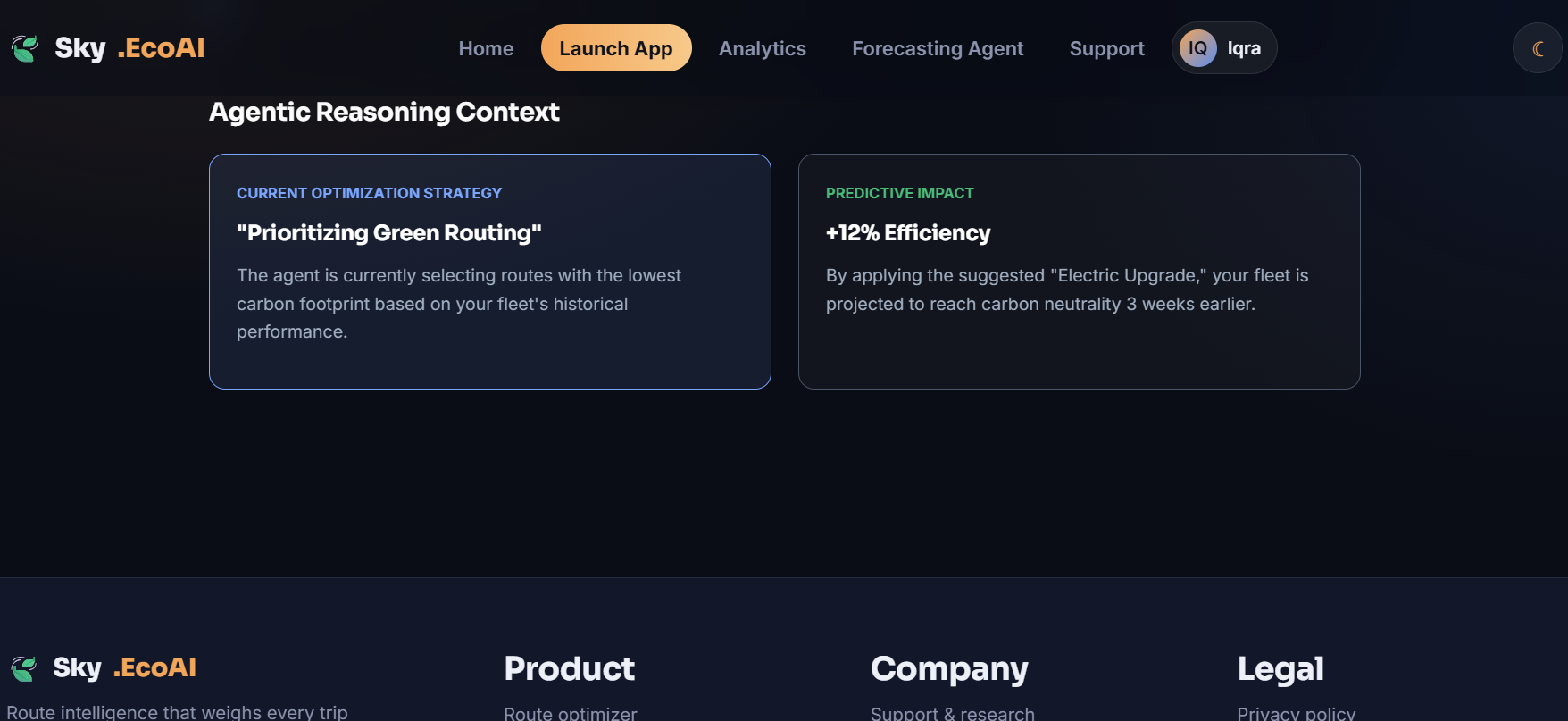
Autonomous Diagnostic: It identifies inefficiencies in real-time, functioning as an "Eco-Copilot" that proactively detects CO2 spikes or inefficient routing patterns.
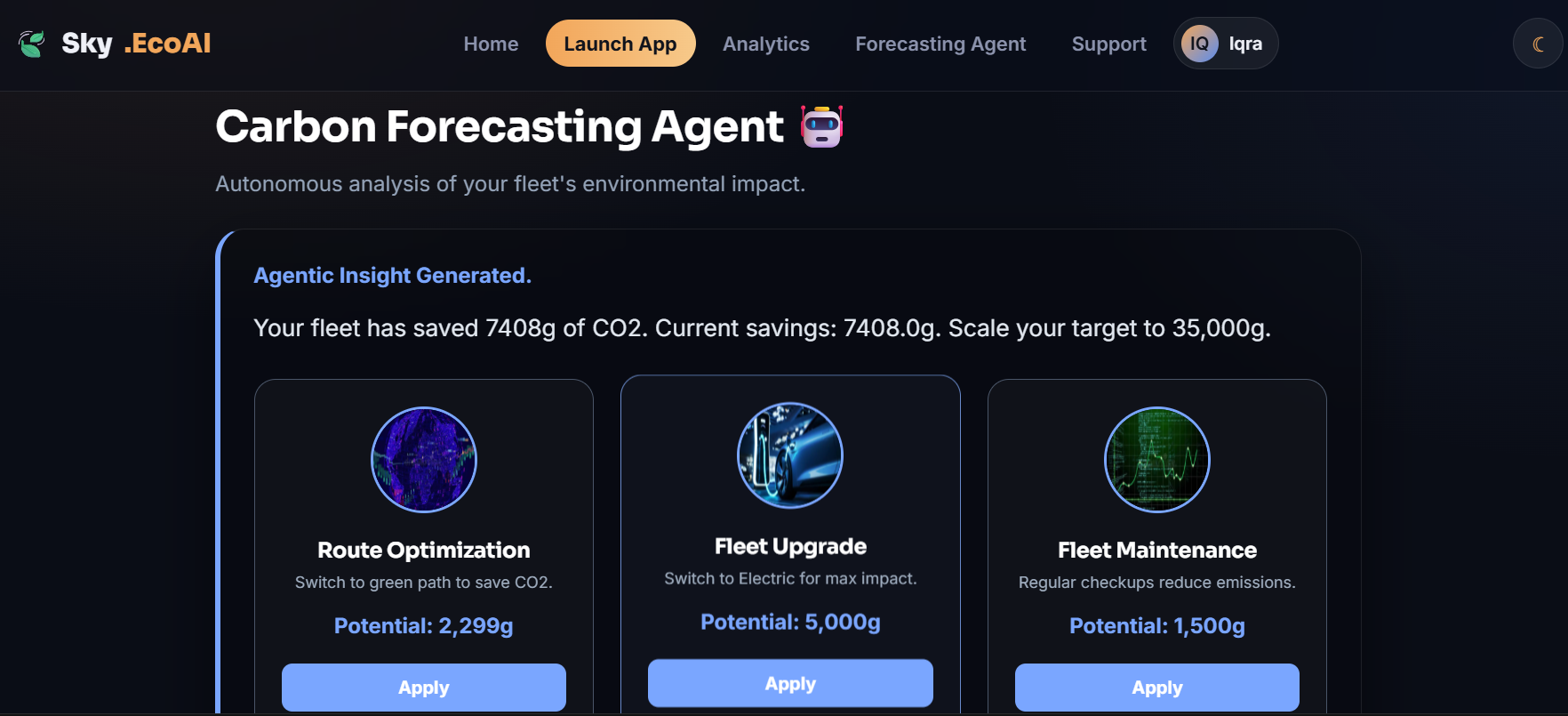
Actionable Synthesis: Instead of flooding the user with raw data, the agent distills information into high-value diagnostic reports, turning complex logistics into clear, sustainable strategy recommendations.
💻 How we built it
The project was engineered for performance and scalability:
Agentic Intelligence: Python-based logic core that simulates autonomous reasoning for environmental optimization.
Backend: Flask (Python) to manage server-side data processing and the agent’s execution environment. Frontend: Responsive HTML5, CSS3, and Vanilla JavaScript for a fast, zero-latency user interface.
Infrastructure: Deployed via Vercel, utilizing custom vercel.json configurations to bridge the gap between synchronous Python logic and serverless execution.
⚠️ Challenges We Overcame
The primary hurdle was reconciling Flask’s stateful server-side nature with the stateless, read-only constraints of a serverless cloud environment (Vercel).
The Problem: Vercel’s serverless functions clear the filesystem after execution, making session persistence and local file storage impossible.
*The Solution:*I implemented custom middleware and optimized routing within vercel.json to map requests correctly. By transitioning to a memory-efficient session handling approach and ensuring the agent logic remained modular, I successfully overcame deployment limitations.
Technical Breakdown: The Vercel Deployment Fix
To handle Flask in a stateless Vercel environment, I implemented a custom vercel.json configuration to ensure seamless serverless routing:
{
  "rewrites": [
    { "source": "/api/(.*)", "destination": "/api/index.py" },
    { "source": "/(.*)", "destination": "/app.py" }
  ]
}
## 🏆 Accomplishments
*Agentic Workflow*: Architecting a logic core that transforms disparate data points into a cohesive, readable diagnostic narrative.

*Cloud Resilience*: Delivering a fully functional, live-hosted web application that maintains performance despite serverless constraints.

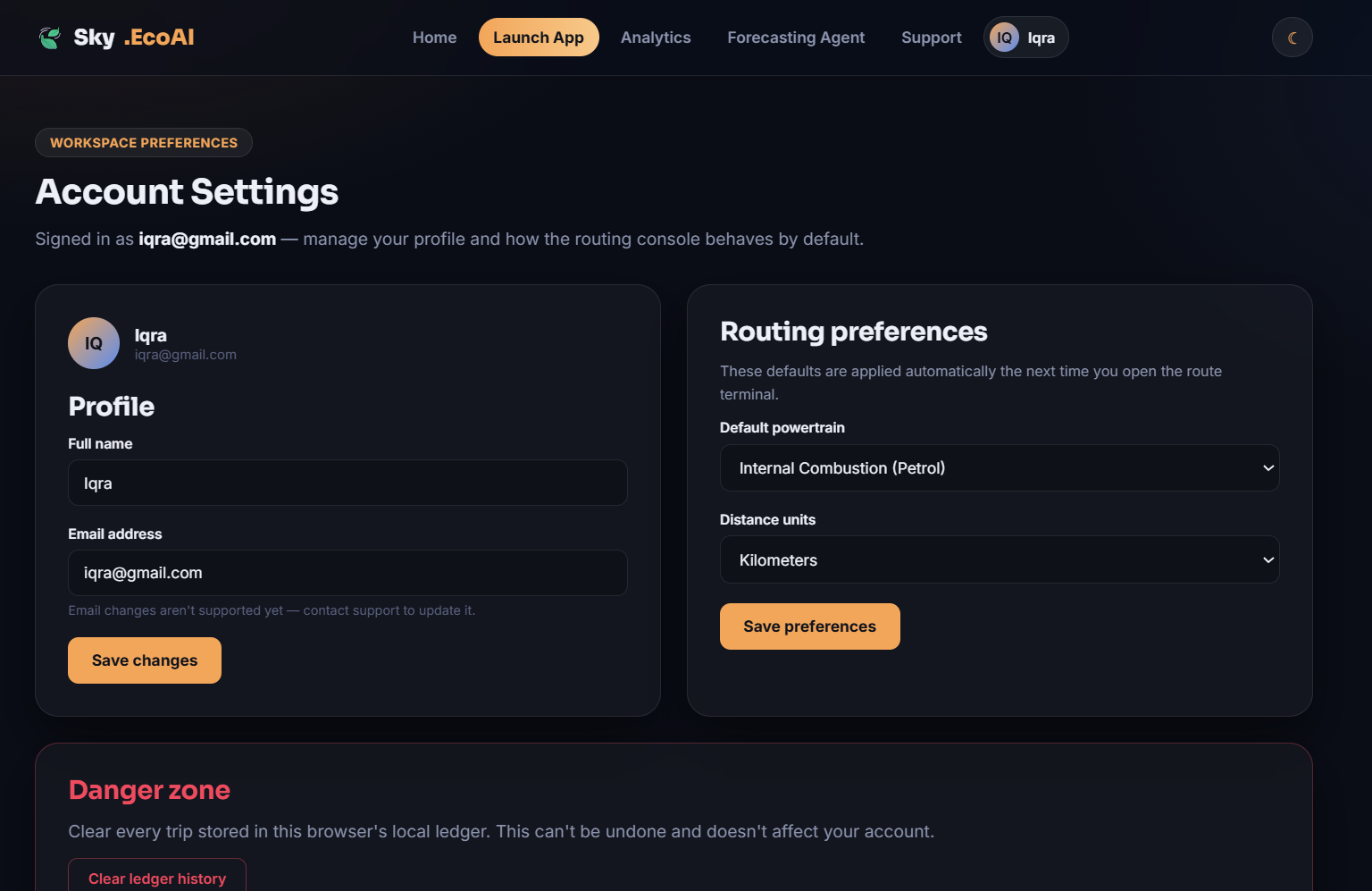
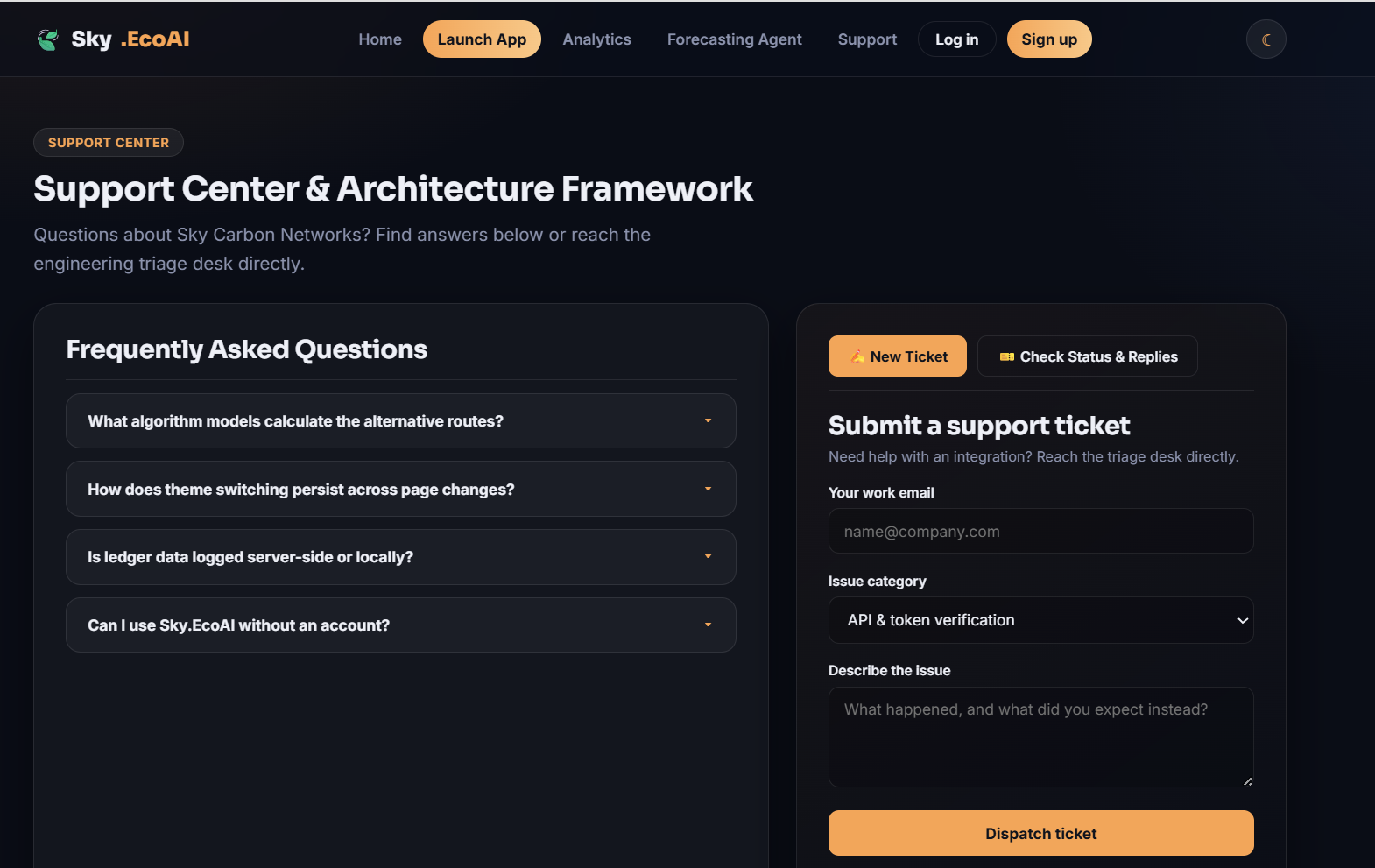
*Seamless UI/UX*: Creating a dashboard that makes complex "Agentic" reasoning feel approachable for non-technical users.

## 📈 What's Next
- *Live IoT Integration*: Connecting the agent to real-time sensor data for hyper-local environmental monitoring.
- *Predictive Analytics*: Incorporating ML models to forecast environmental changes before they impact fleet operations.
- *Global Scalability*: Expanding the dataset to cover diverse climate zones to offer localized, precision insights for international fleets.
Built With
- agentic-ai
- artificial-intelligence
- backend-development
- carbon-intelligence
- cloud-computing
- css3
- data-visualization
- flask
- html5
- javascript
- logistics
- python
- saas
- serverless
- vercel

Log in or sign up for Devpost to join the conversation.