What it is
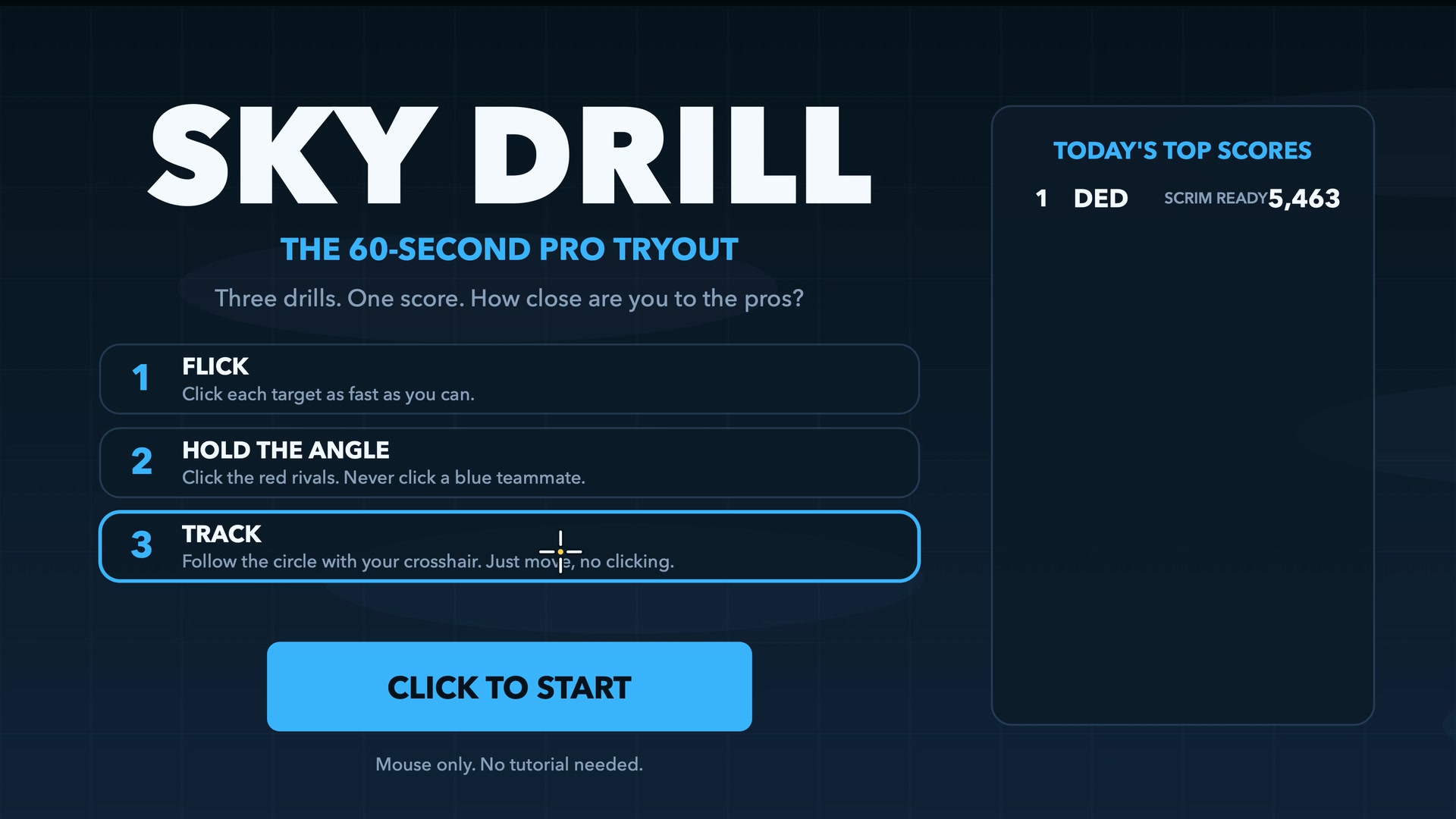
Sky Drill is a mini game for a Cloud9 booth. A fan walks up, clicks once and plays three short drills back to back. Each drill is a skill competitive players train every day:
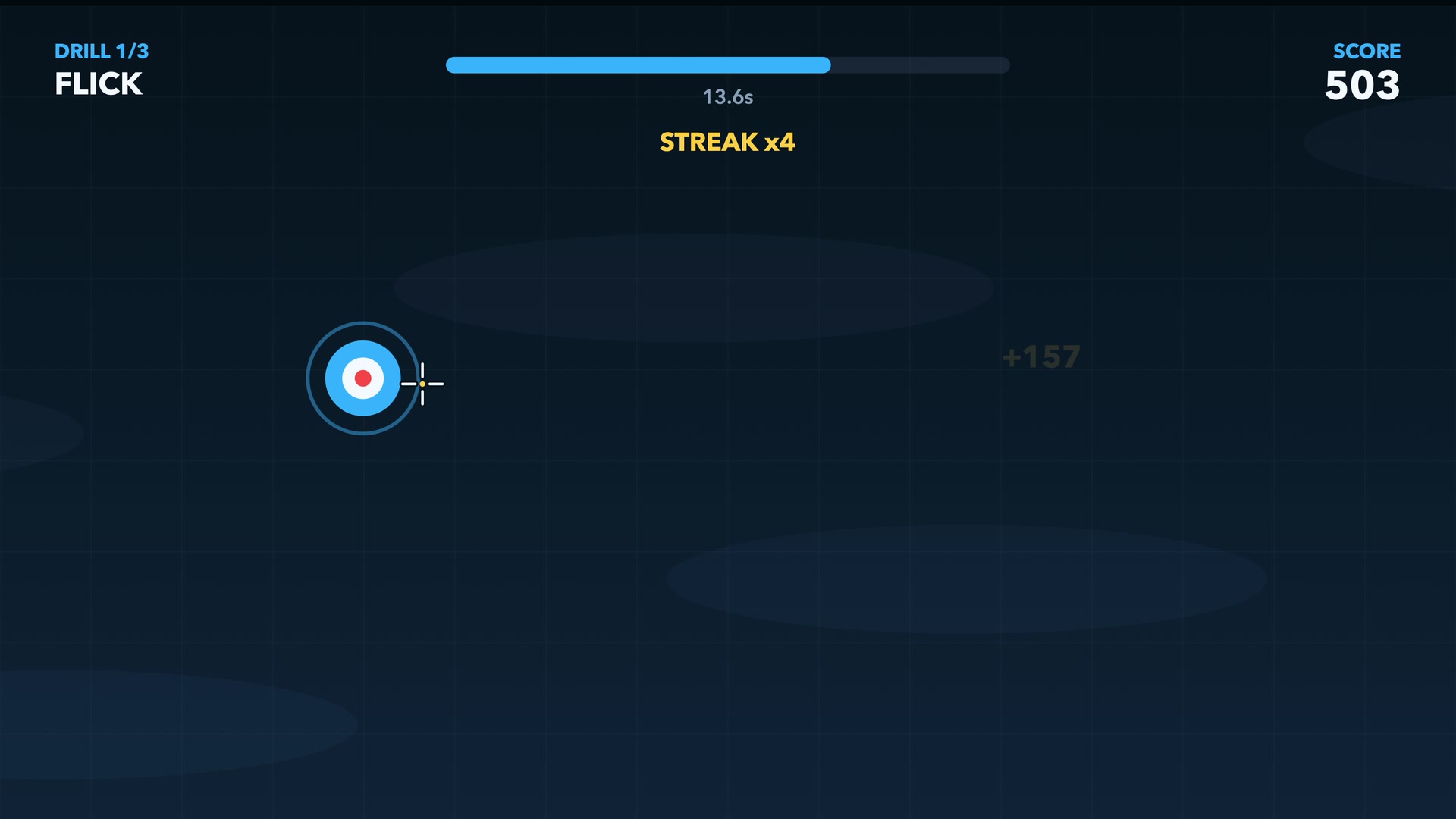
- Flick (20 s): one target at a time, each far from the last. Click it fast. Points for speed, for hitting near the centre, and for a streak.
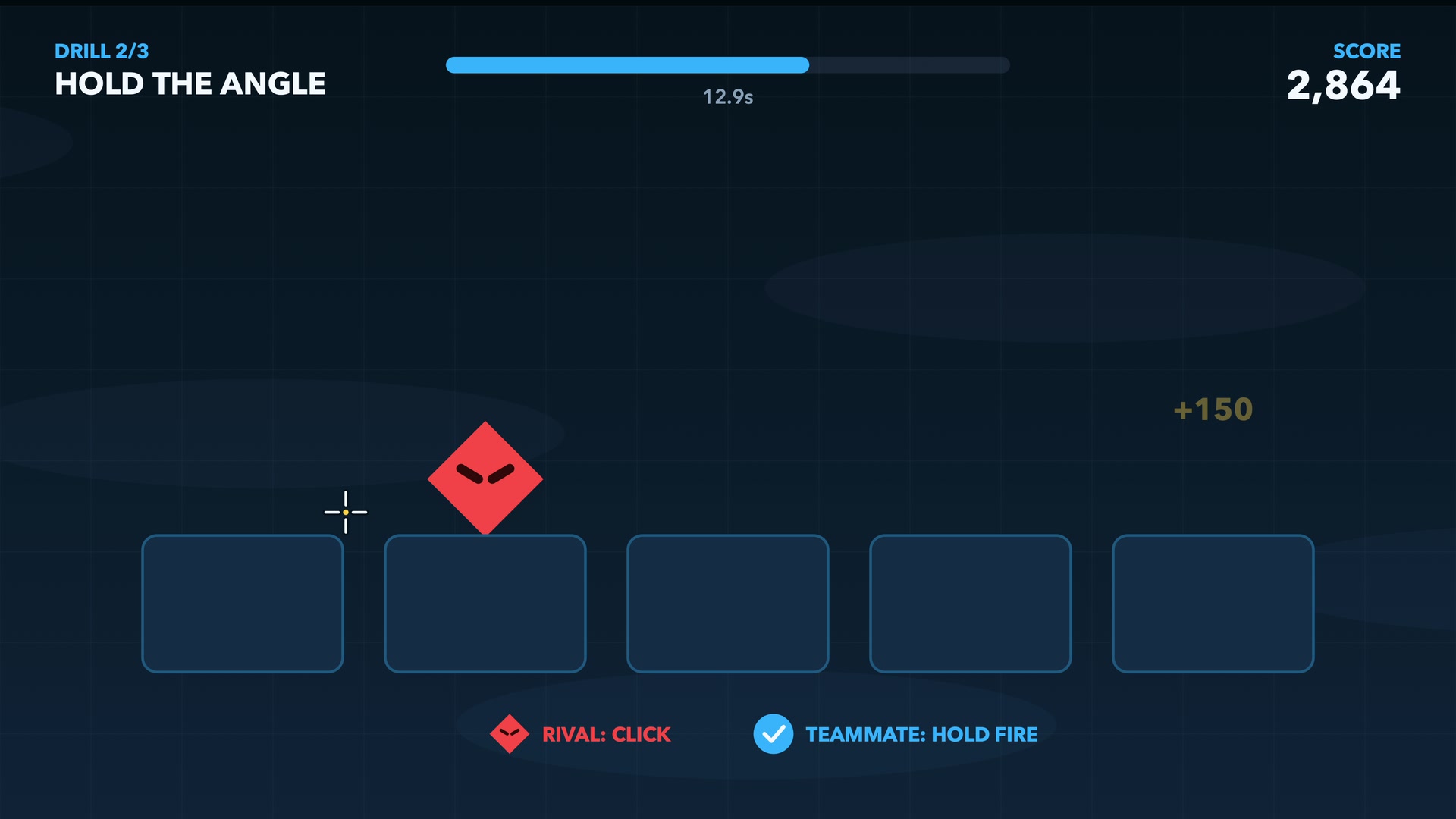
- Hold the Angle (20 s): shapes peek out from behind cover. Click the red rivals. Never click a blue teammate: that costs 300 points. It is a reaction test with trigger discipline.
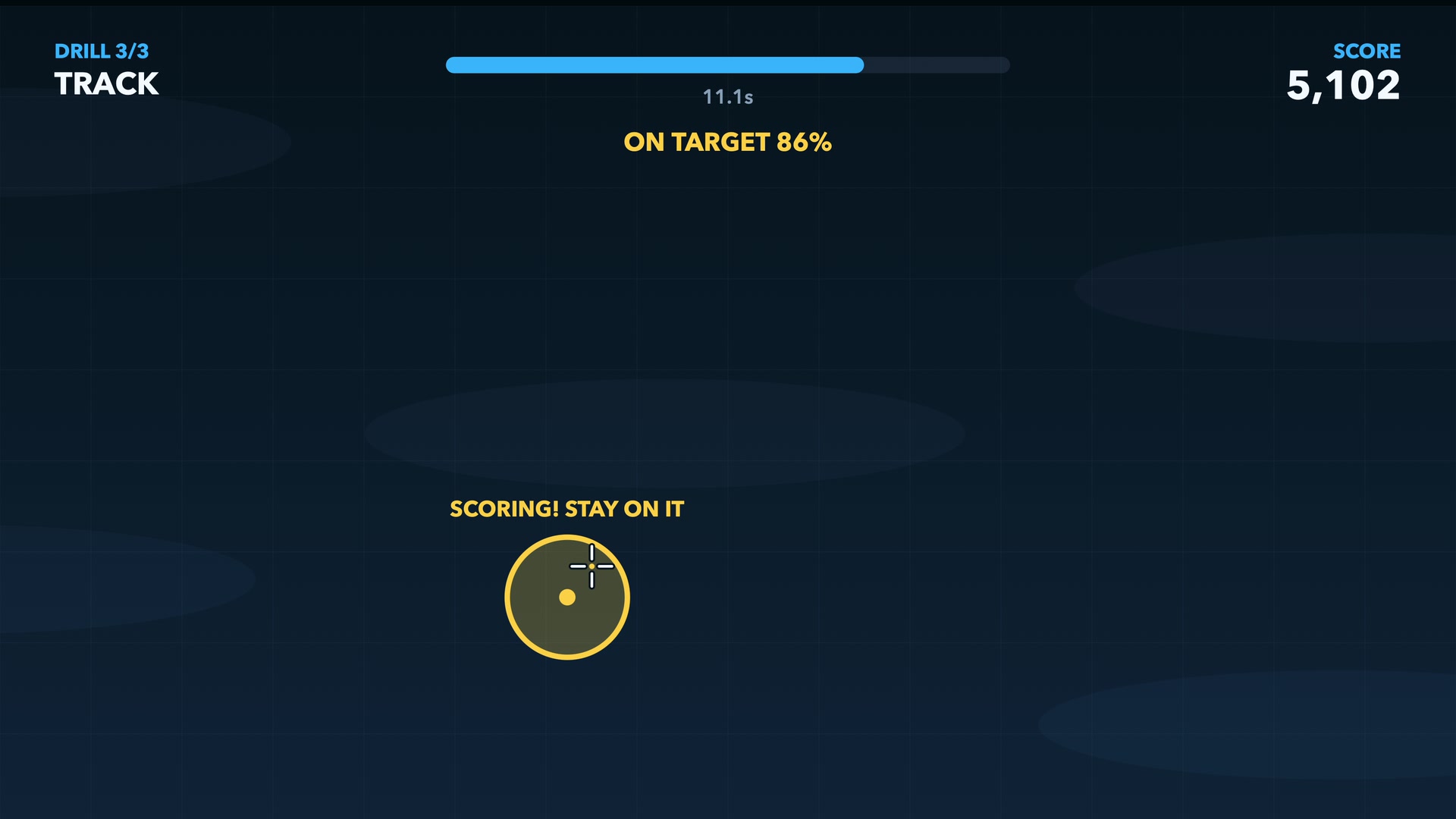
- Track (15 s): keep the crosshair inside a circle that drifts and speeds up. No clicking.
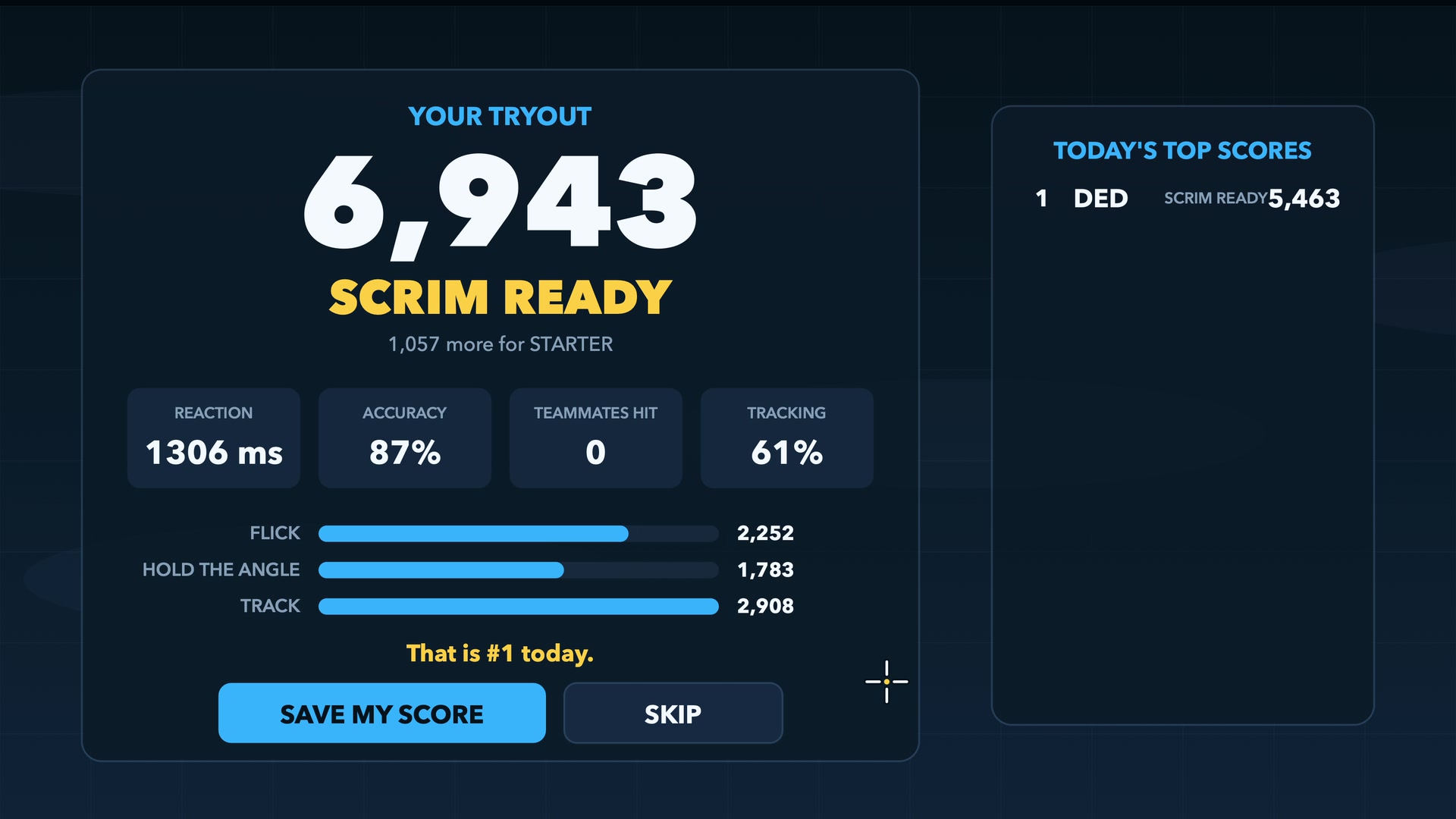
Then the player gets a result card: total score, a rank from WARM-UP to SKY HIGH, average reaction time, accuracy, teammates hit and tracking share, plus how many points they were from the next rank. They can save the score under a three-letter tag, arcade style. A whole turn takes about 70 seconds.
Why it fits a booth
- No tutorial. One sentence and a three-second countdown before each drill. The mouse is the only control. In the tracking drill the game itself shows what to do: a dashed line points from the crosshair to the target and the label switches between "MOVE YOUR CROSSHAIR HERE" and "SCORING! STAY ON IT".
- It resets itself. Every turn builds fresh state. If a player walks away, the game returns to the start screen after 12 seconds without input during a run, or 30 seconds on the result screens. Staff do not need to touch it.
- Local live leaderboard. Scores live in the browser's local storage on the booth machine.
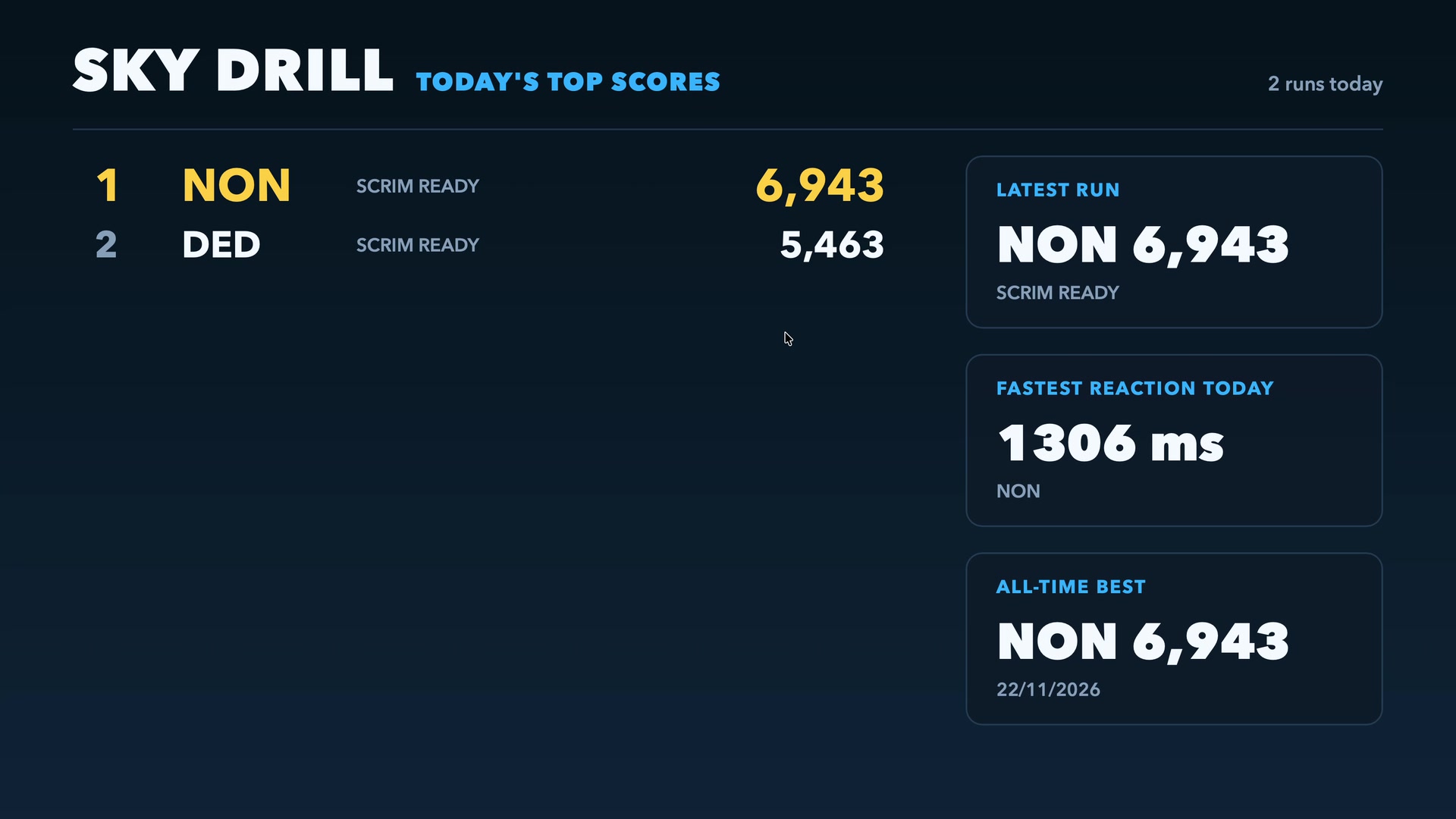
board.html, opened in a second window on a second monitor, shows today's top ten, the latest run, the fastest reaction and the all-time best, and updates the moment a score is saved. No account, no server, no Wi-Fi. - Nothing to license. All graphics are drawn in code and all sounds are generated with the Web Audio API. Names, shapes and sounds are original; nothing is taken from any existing game.
- Runs on what a booth has. A browser and one command (
npm run booth). The game scales to any screen. - Operator keys. F for full screen, M for mute, Esc to go back to the start screen, and Ctrl+Shift+X on the leaderboard to clear scores, with a confirmation.
Methodology
- Start from the booth, not from the game. The constraints came first: under three minutes, no explanation from staff, clean reset, works offline. Three drills of 15 to 20 seconds each fit them, and each one maps to a real skill (flick aim, reaction with discipline, tracking), so the score means something to a player.
- Keep the rules separate from the screen. Each drill is a small class that takes time steps and pointer events and exposes its state. It uses no browser API. That one decision made the rules testable three ways: by unit tests, by an automated player in a headless browser, and by people.
- Test with a bot, then distrust the bot. An automated player ran the whole loop, from the start screen to a saved score, and screenshots of every screen were checked. It found two bugs before any human played. But it scored 29,000, because it reacts in 350 ms every time.
- Tune on real hands. The first human run scored 6,376 with 19% on the tracking drill, and the player said the third drill was confusing. The target was slowed and enlarged, it now starts from a standstill, and the on-screen guidance was added. The next run scored 7,771 with 61% tracking. Rank thresholds were set so a first-timer lands in the second rank and sees how few points the next one needs.
- Make every score honest. A seeded random generator drives each run, scoring is a set of pure functions, and 80 unit tests cover the drills, the scoring and the leaderboard, including edge cases such as broken stored data and ties.
JetBrains tools used, and what each one did
- WebStorm 2026.3: the IDE for the project. The project settings (
.idea) are committed to the repository. - JetBrains Air (inside WebStorm): the place where agent tasks were given, watched and reviewed.
- Junie, run through Air:
- scaffolded the project (Vite, TypeScript, Vitest, licence, ignore file) in one task;
- wrote the unit tests for the game logic, 78 in one run;
- added the start-screen feature that highlights the three drill cards in turn.
A second coding agent, Claude Code, worked in the same project folder. It wrote most of the game code and
reviewed Junie's output. That review mattered: several of the generated tests could pass without testing
anything, and were rewritten. Each commit message says which tool produced the change, and the whole account,
including what went wrong, is in docs/AI_WORKFLOW.md.
What is next
- A printable or scannable result card, so a fan can take the score home.
- A fourth drill that rotates per event (for example a "first shot" timing drill).
- Daily and all-event leaderboards side by side, and an export of the day's scores for the booth team.
Built With
- canvas
- github
- jetbrains-air
- junie
- typescript
- vite
- vitest
- web-audio-api
- webstorm
