-
-
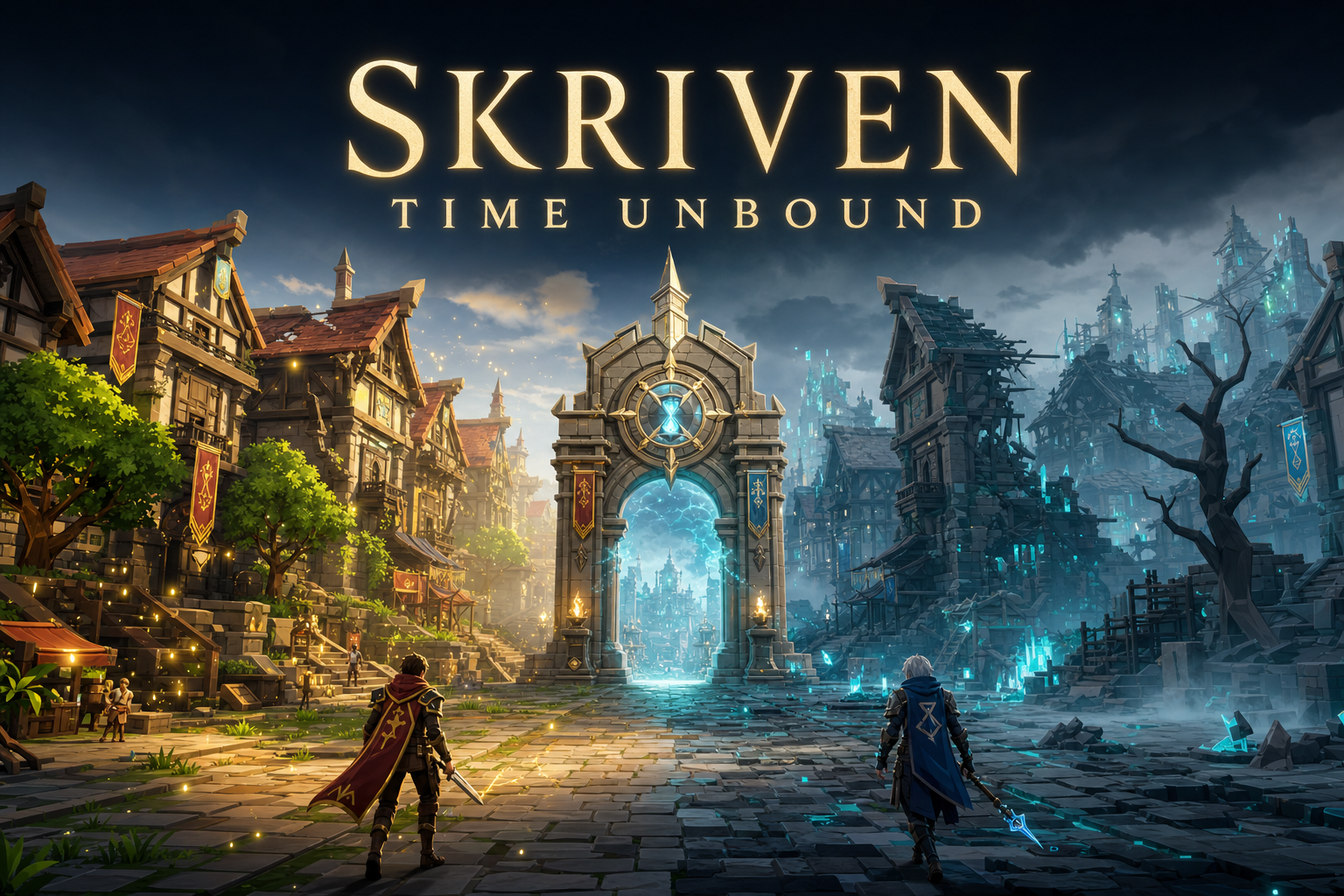
Skriven Splash
-
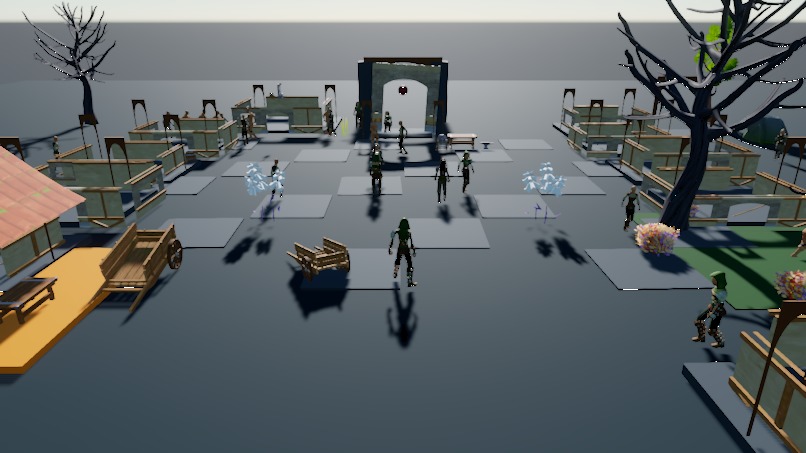
Erprolis, a major city in ruin
-
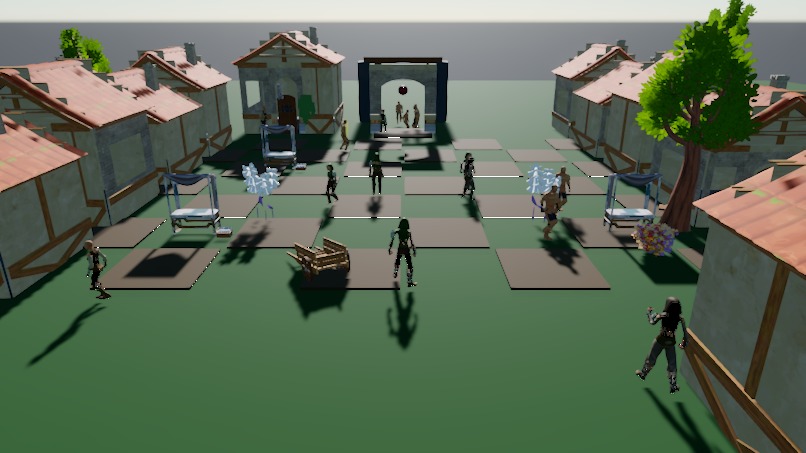
Erprolis, a major city alive and thriving
-
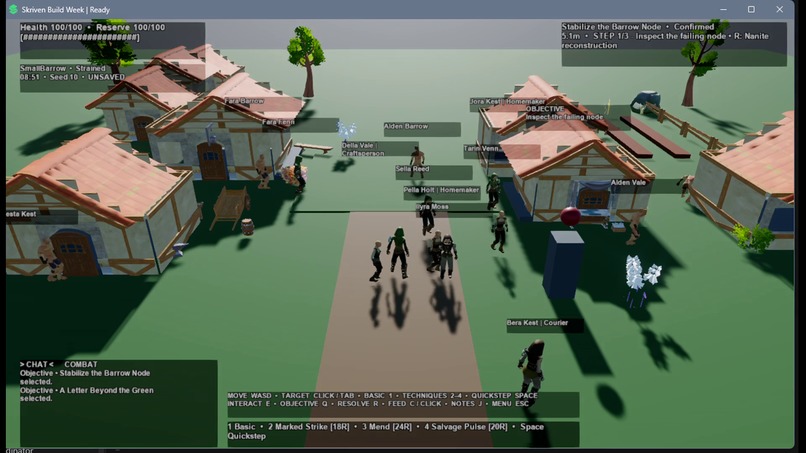
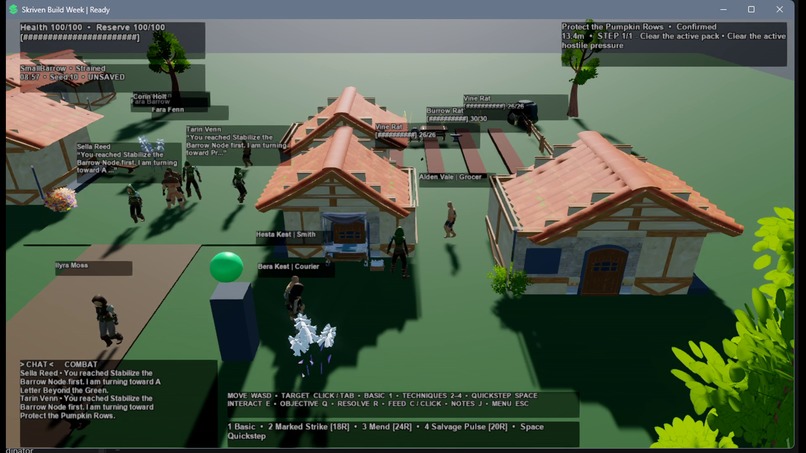
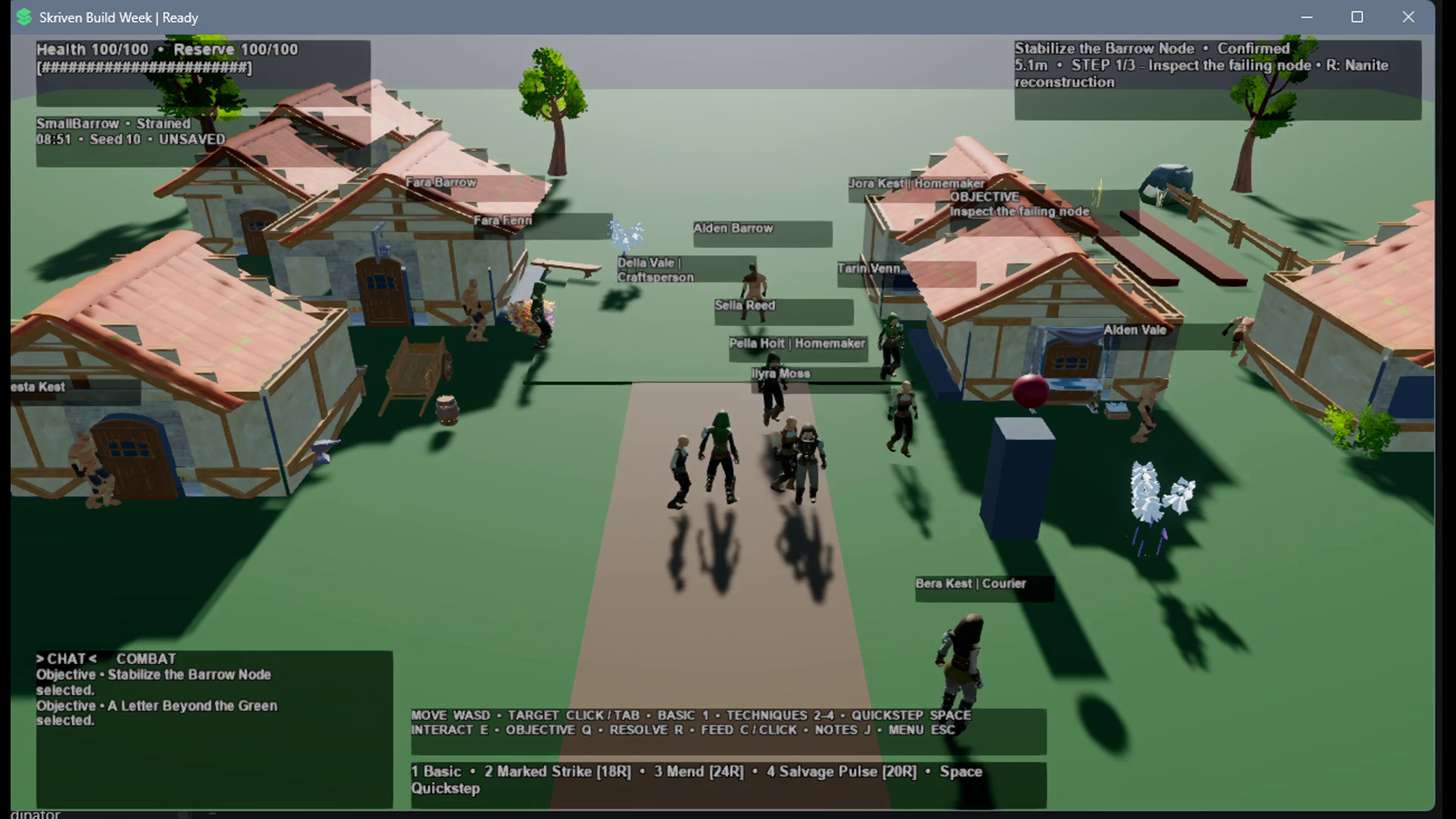
A living SmallBarrow: residents, heroes, needs, and an active objective.
-
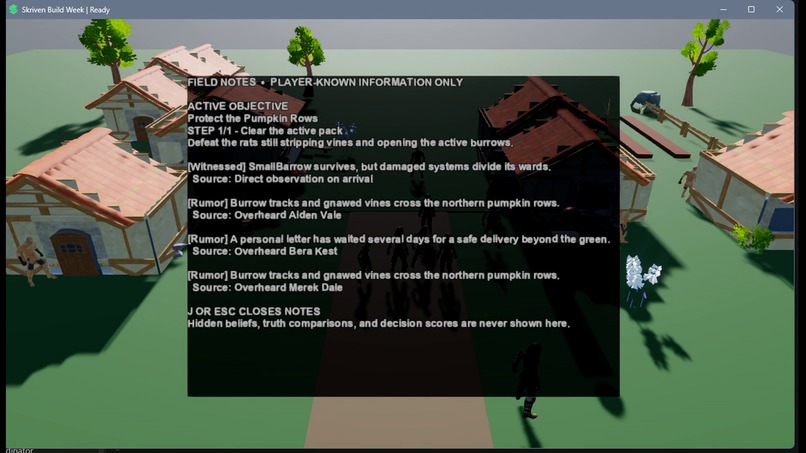
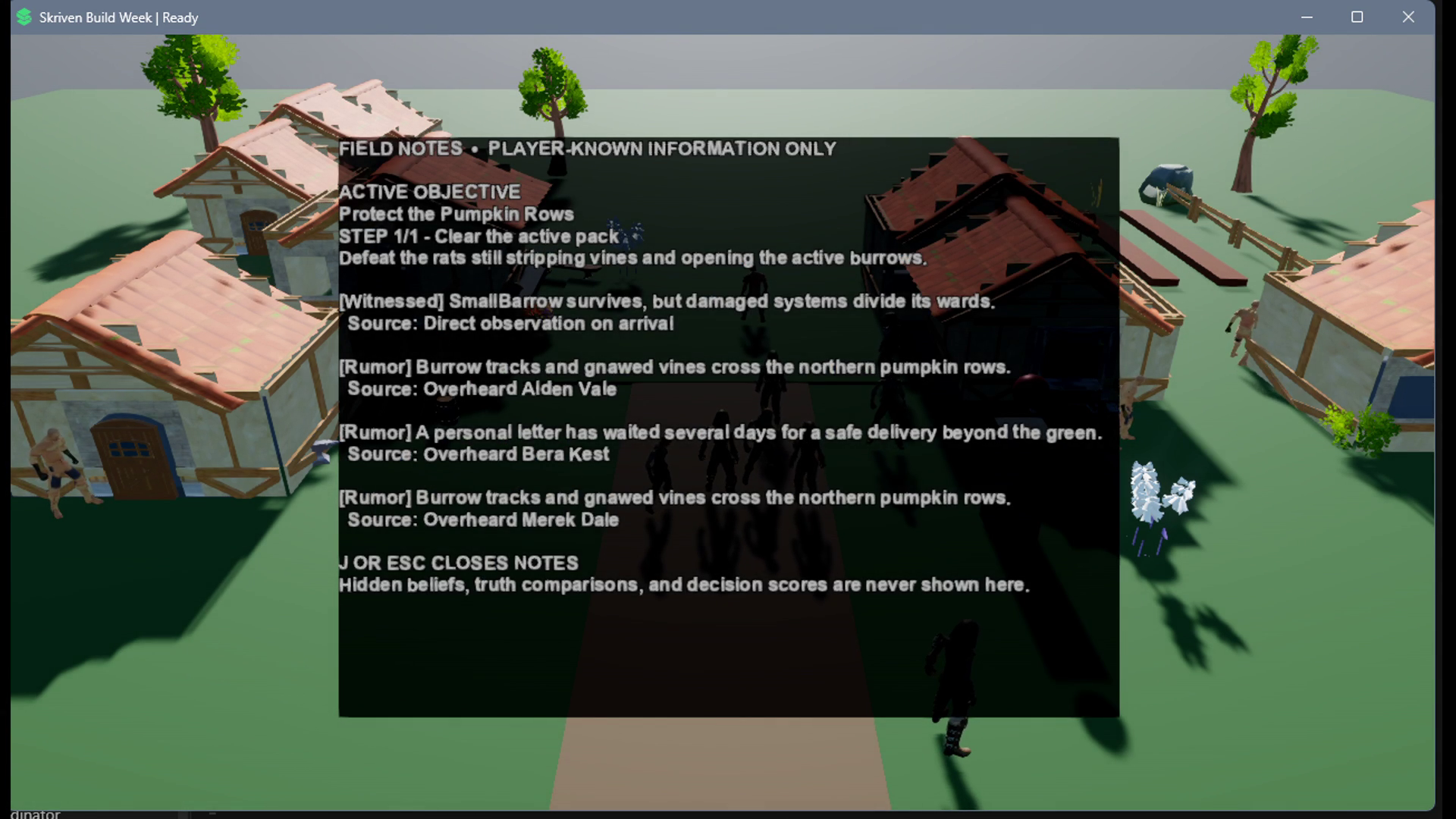
Field Notes show only what the player witnessed or heard, with sources and uncertainty.
-
Rival heroes react and replan after the player reaches the Barrow Node first.
-
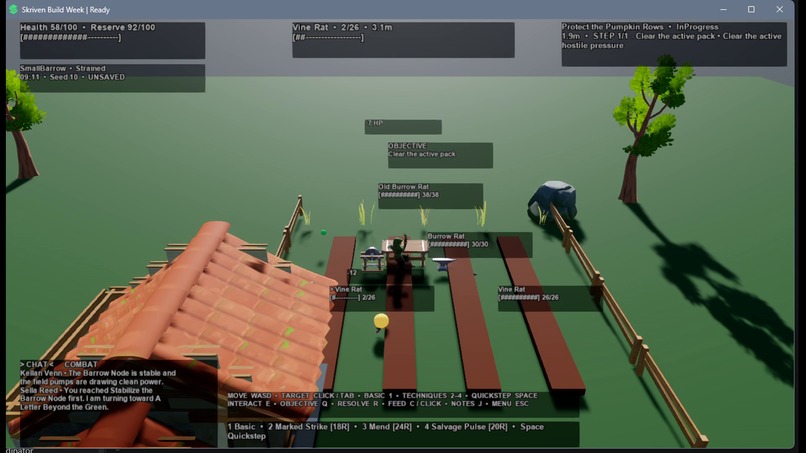
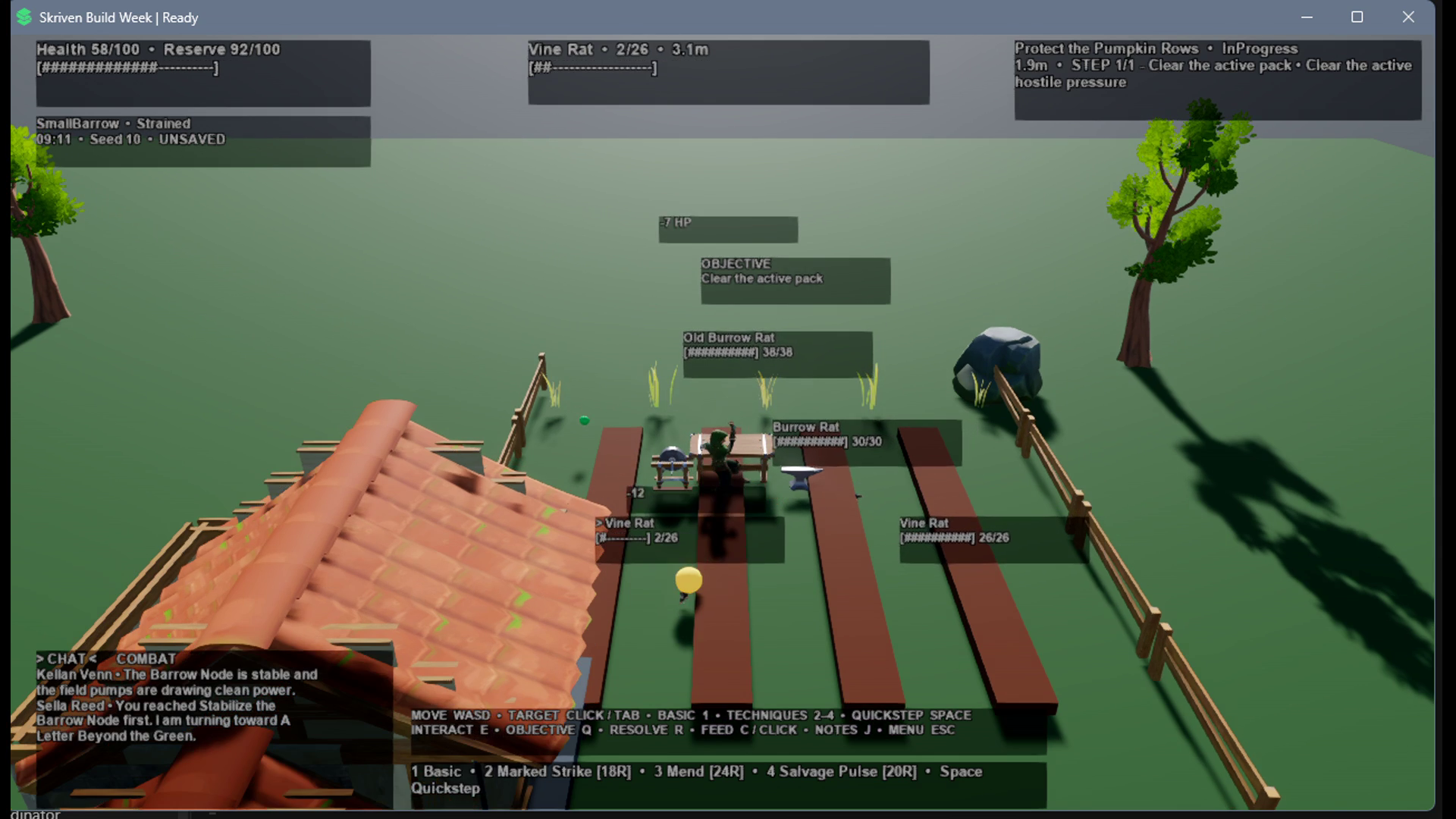
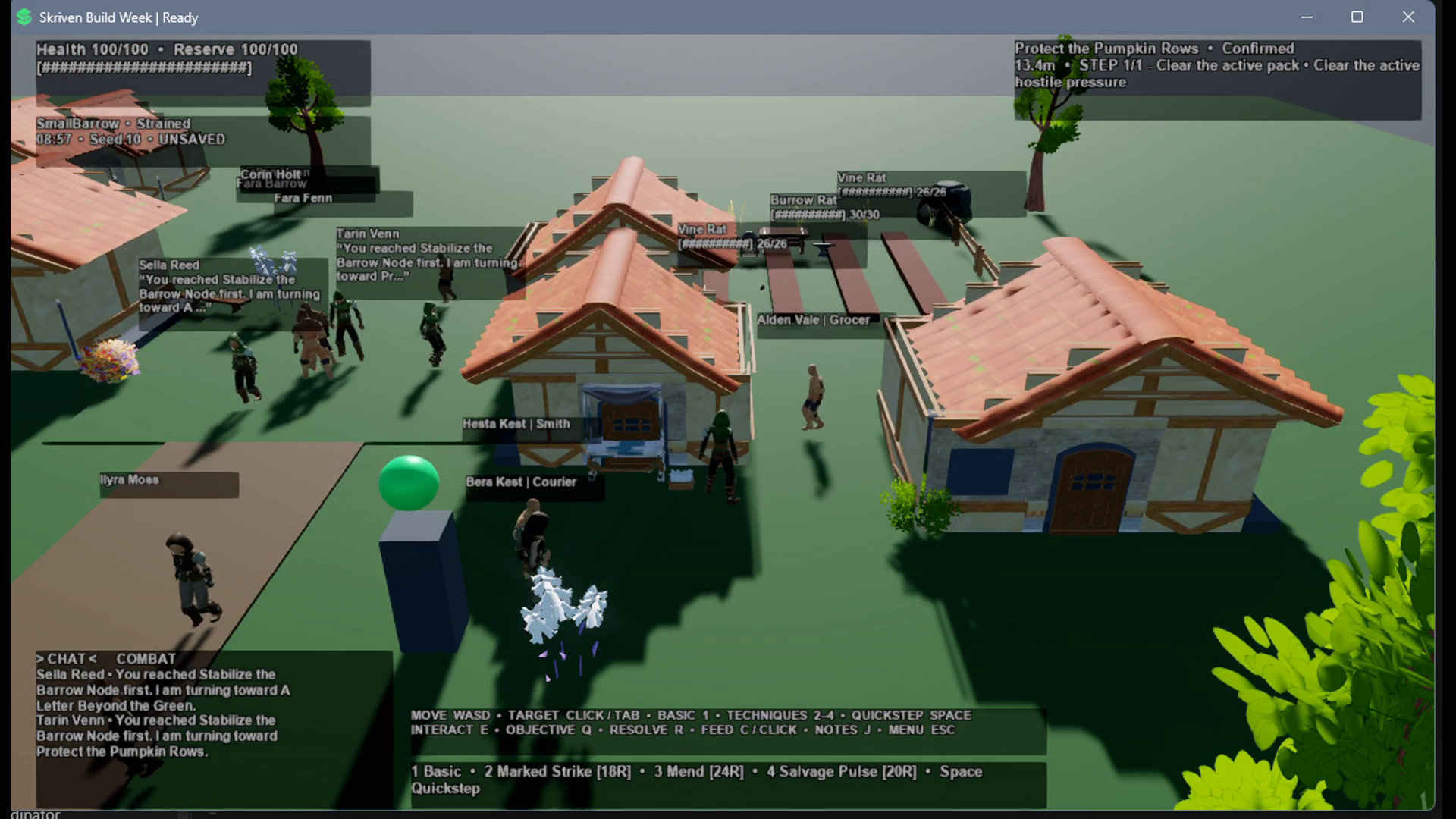
Classless combat against a rat pack threatening SmallBarrow's pumpkin rows.
-
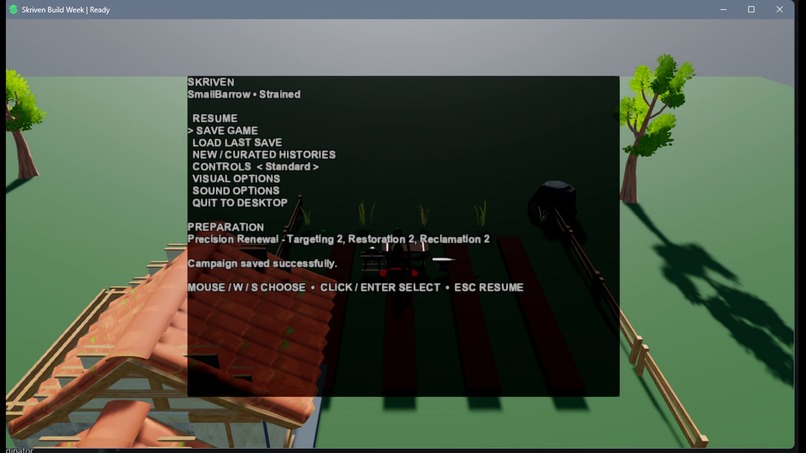
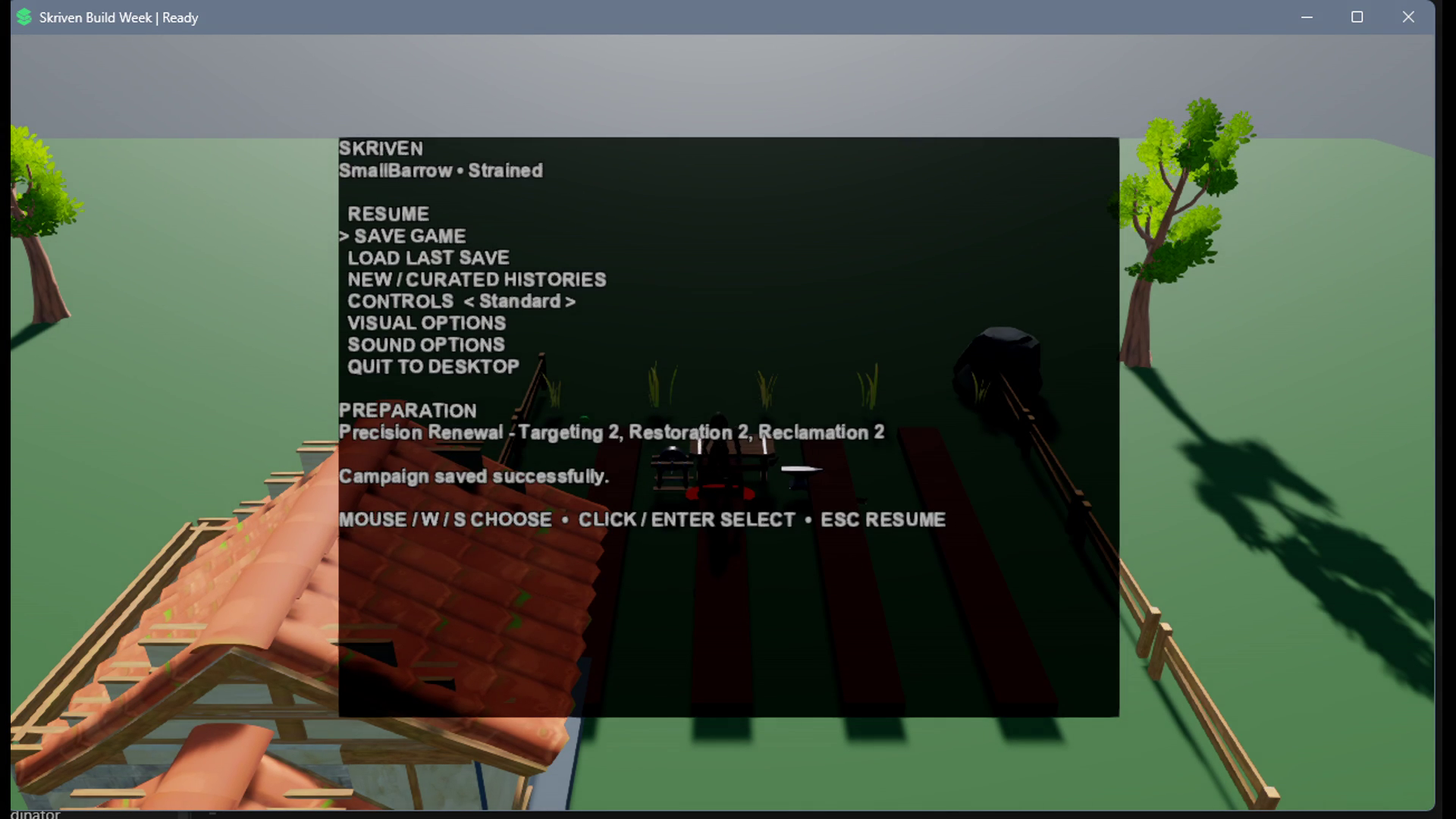
A saved world preserves history, heroes, knowledge, combat state, and the player's branch.
-
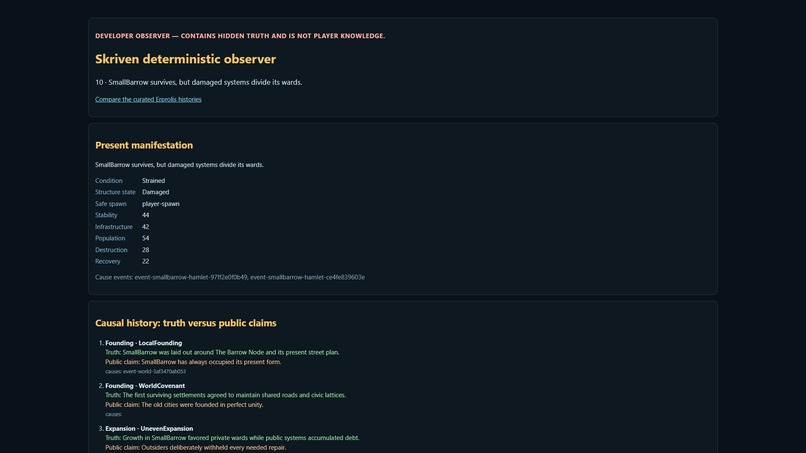
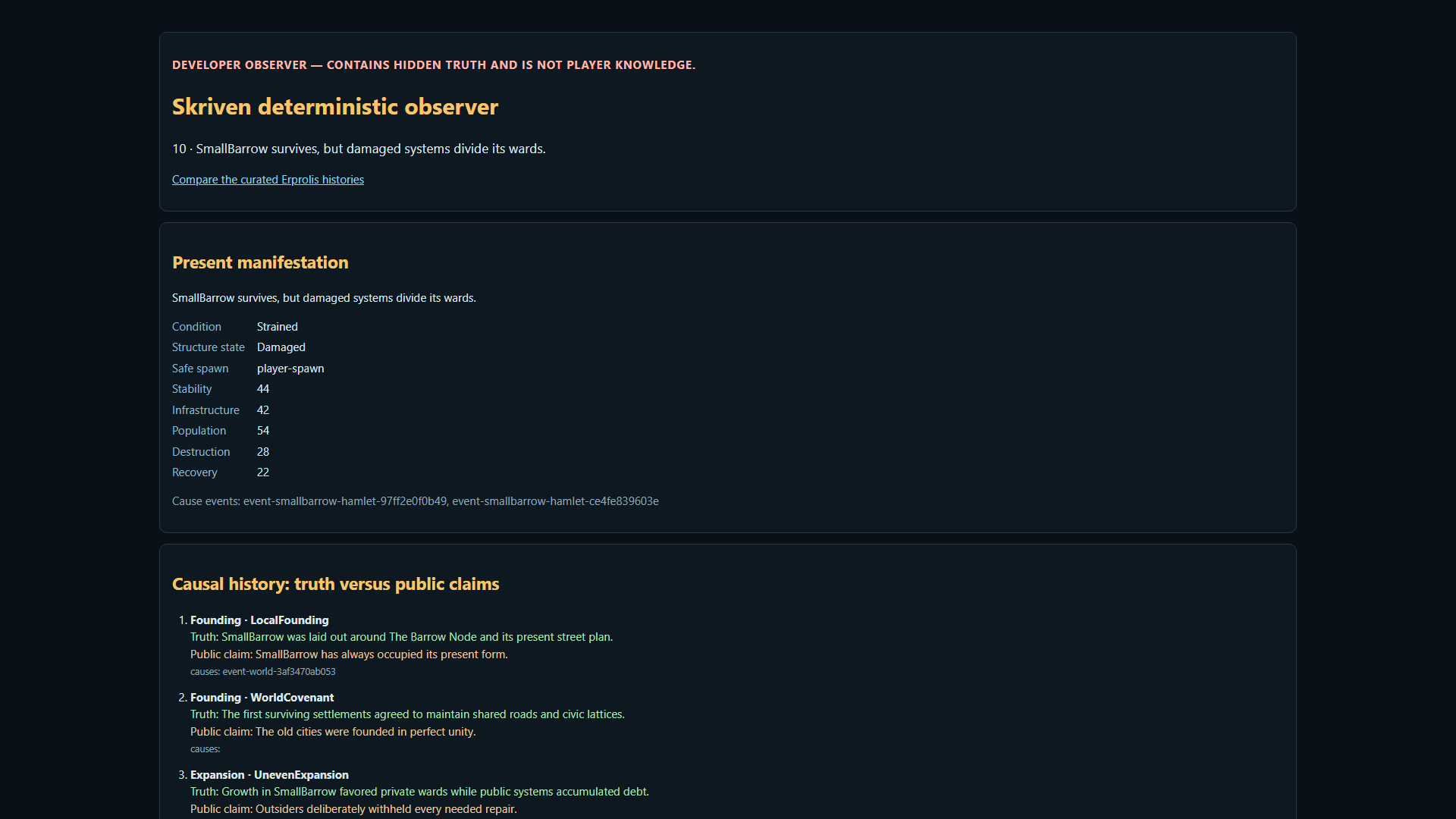
Developer observer: causal history, public claims, hidden beliefs, and deterministic decisions.
Inspiration
Skriven began with a question: what if the living world I tried to create as a DM could exist inside a solo RPG with the freedom of a classless build system and the sense that countless lives continue beyond the player?
I love the living world feeling of MMOs, but wanted it without dependence on servers, schedules, or other players. Skriven replaces them with persistent heroes who compete, cooperate, investigate, and sometimes reach an objective before you. They are inhabitants with limited knowledge, not quest dispensers or disposable mobs.
What it does
Every Skriven seed writes the history that produced its present. The same city might be prosperous in one world, ruins in another, or not even existing. Its inhabitants, opportunities, dangers, and available services emerge from that history.
Meaningful choices and opportunities the player ignores become part of the world’s continuing story. Information spreads through observation and conversation, so people only know what they have witnessed, discovered, or been told. Even rival heroes may not realize that the player has beaten them to an objective until they observe the result or hear about it.
There is no predetermined ultimate villain. Skriven is populated by people, cultures, monsters, and competing interests, all fighting, cooperating, and striving to build their own place in the world, or survive within somebody else’s.
Combined with classless character building and deterministic seeded simulation, this is designed to create near-infinite replay without relying on random encounters alone. The player is not the chosen center of a waiting world, but one hero among many inside a history already in motion.
The current vertical slice demonstrates this idea through counterfactual locations, persistent rival heroes, knowledge-driven conversations, classless abilities, combat, objectives, systemic consequences, and individually saved world branches.
How we built it
Skriven was built in Stride using C# and .NET. Its simulation runs deterministically, separating immutable geography from generated history and the lived history created after the player arrives. Actors make decisions through their own goals, capabilities, knowledge, and sometimes incorrect beliefs.
I provided the creative direction, worldbuilding, mechanics, acceptance criteria, and extensive hands-on testing. Codex/GPT-5.6 acted as the implementation lead and produced roughly 90% of the working code and technical iteration while I continuously tested the result, challenged assumptions, and supplied whatever strange ideas seemed worth trying.
The game itself requires no runtime LLM or network service. Codex helped build and validate the deterministic systems that operate locally inside the finished game.
Challenges and lessons learned
The greatest challenge was turning an enormous design into a legible, playable slice under a very short deadline. A living world can simulate countless details, but those details only matter when the player can observe and understand their consequences.
Visual production was another major obstacle. Importing, assembling, rigging, and animating modular characters consumed considerable iteration, and locating stylistically consistent assets proved harder than expected. Codex was highly effective at architecture, simulation, testing, and rapid code iteration, but visual model rework was significantly more expensive and unpredictable.
The clearest lesson is that this project needs a dedicated asset pipeline capable of producing fully rigged characters, occupation-specific clothing and accessories, environment pieces, animations, and consistent export-ready assets.
What's next for Skriven: Time Unbound
This is a very early vertical slice and still needs substantial work and polish, but I believe it demonstrates the promise of the underlying idea.
Next comes expanding the world, deepening its classless progression, improving combat and presentation, adding more occupations and daily lives, and building the character and environment pipeline the project needs. Most importantly, I want to put Skriven into actual players’ hands, learn from how they interact with its histories, and hopefully let others enjoy this strange living world as much as I already enjoy imagining it.

Log in or sign up for Devpost to join the conversation.