-
-
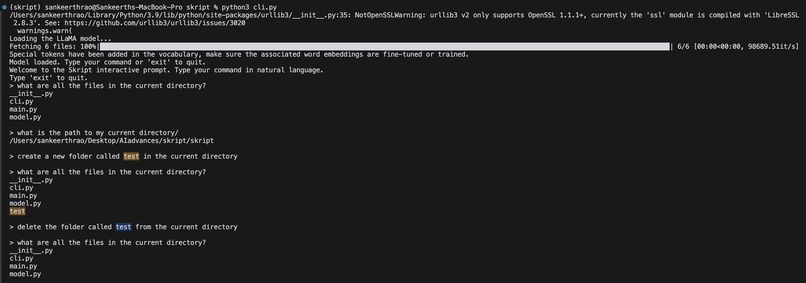
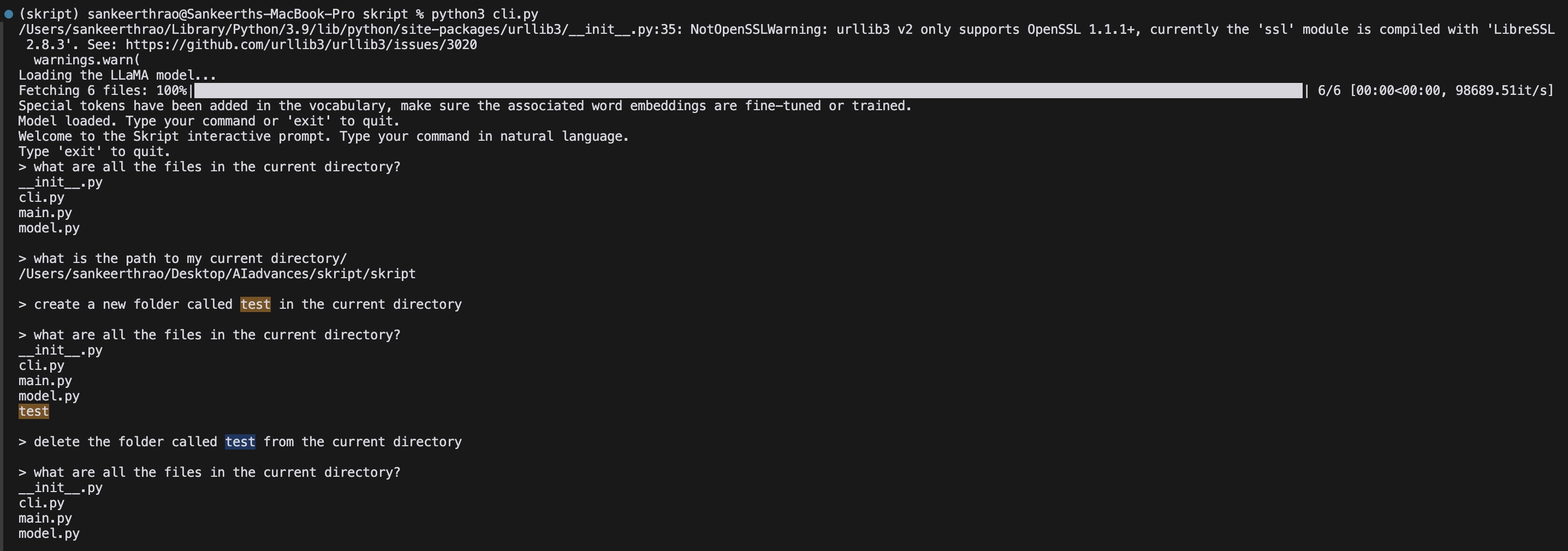
Examples of natural language interaction with skript to navigate files, know paths, create folders and delete them.
Inspiration
The journey of Skript began with a simple yet ambitious idea: to democratize shell scripting by making it accessible to everyone, regardless of their technical background. As avid advocates for efficient computing, we envisioned a tool that could translate natural language into complex shell commands, thus lowering the barrier to entry for automation and scripting tasks.
What We Learned
Throughout the development of Skript, we dove deep into the nuances of natural language processing, exploring various models and techniques to accurately interpret user commands. We refined our understanding of Python's powerful capabilities in handling text and integrating with system-level operations, which was crucial for the seamless execution of shell commands.
How We Built It
Skript was built using Python, leveraging the robustness of libraries like transformers for processing natural language and subprocess for executing shell commands. We designed a user-friendly CLI interface that guides users through executing their desired tasks without needing to know any script syntax.
Challenges We Faced
One of the main challenges was ensuring the accuracy and security of the commands generated from natural language inputs. We implemented several layers of validation to protect against malicious inputs and unintended operations, ensuring Skript is not only powerful but also safe for everyday use.
Built With
- llama3
- mlx-ml
- python-package-index


Log in or sign up for Devpost to join the conversation.