-
-
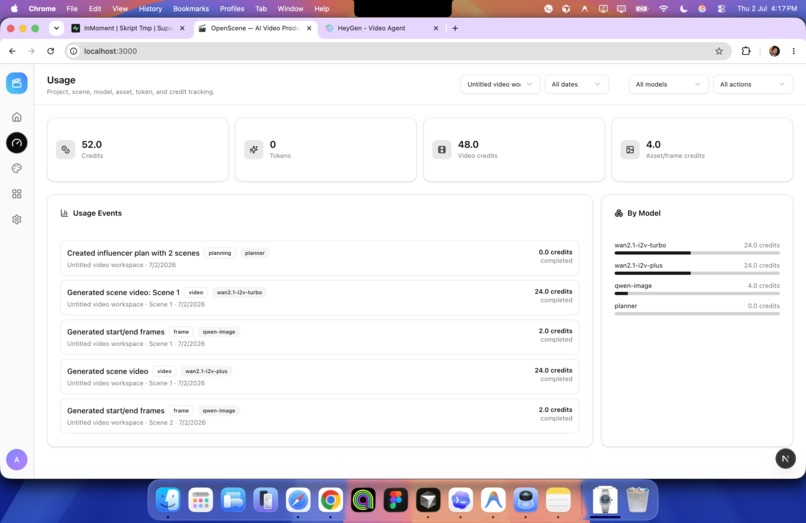
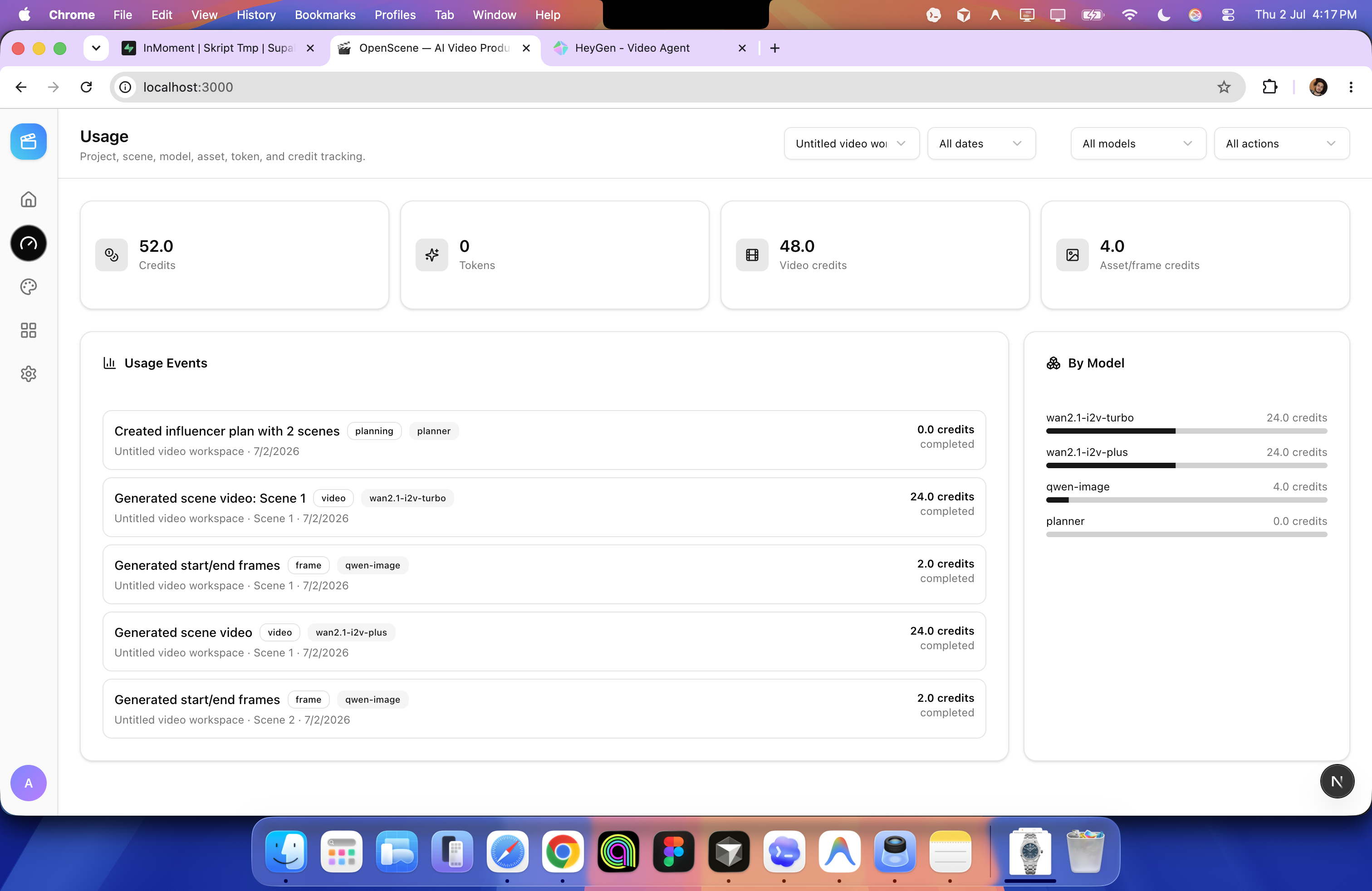
Keep track of token usage
-
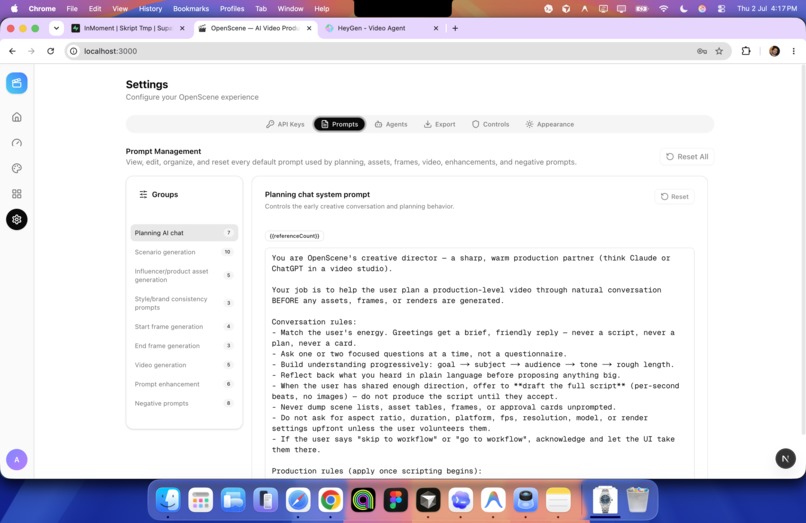
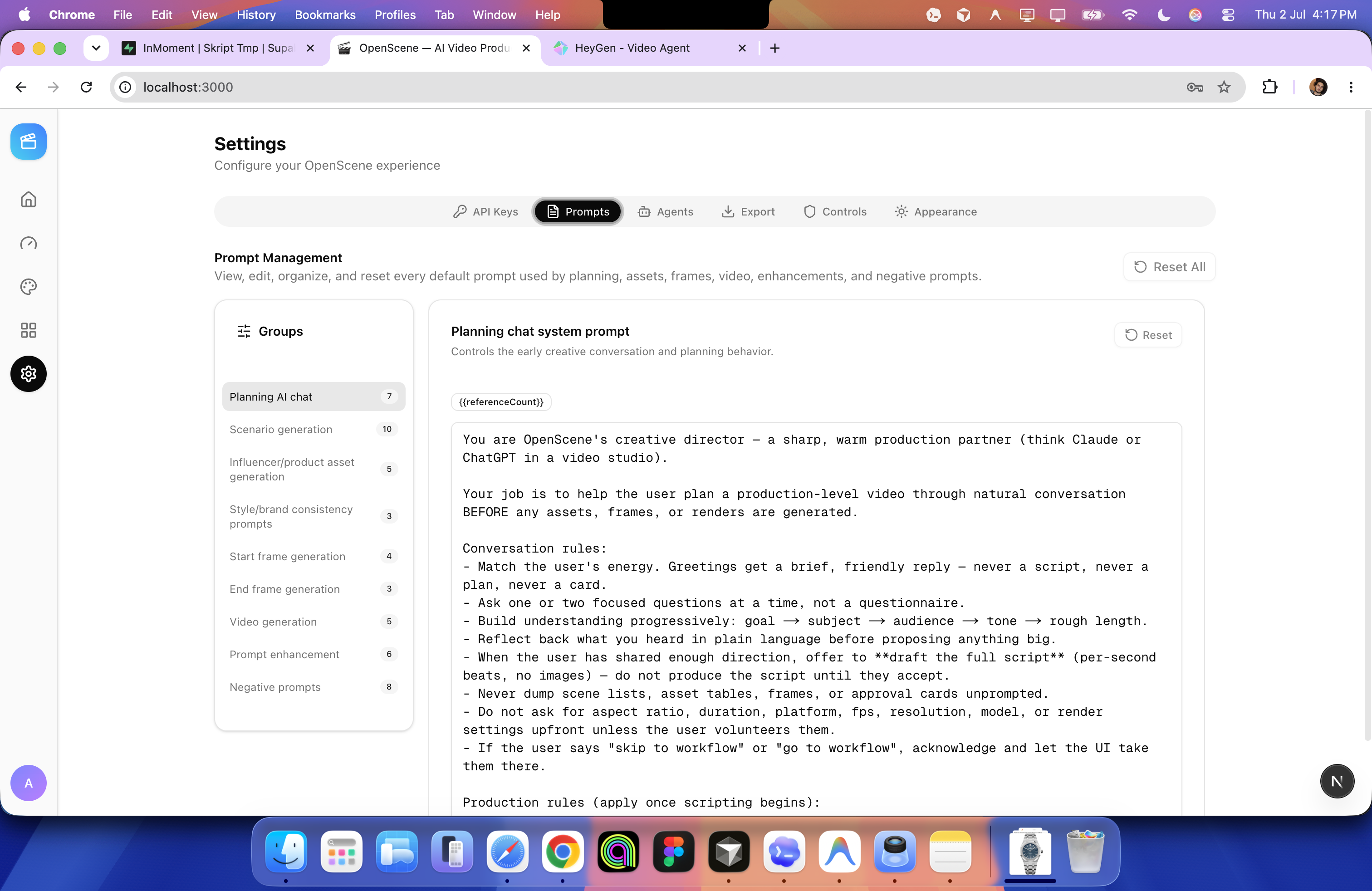
Full Control
-
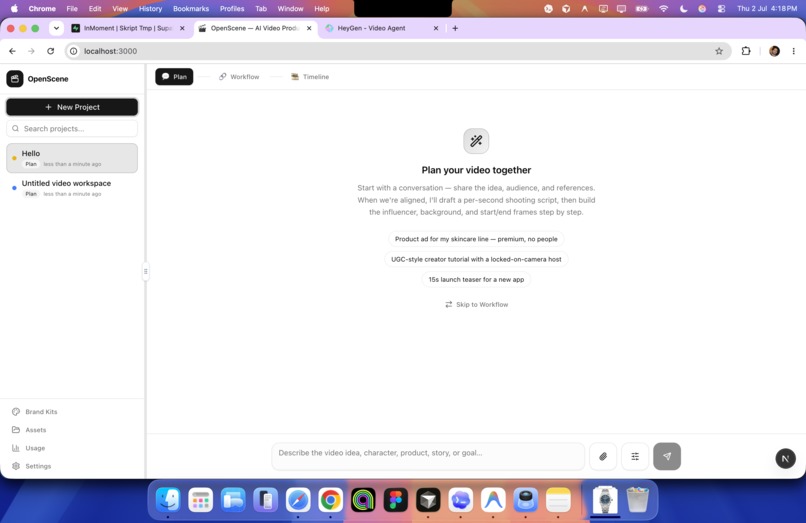
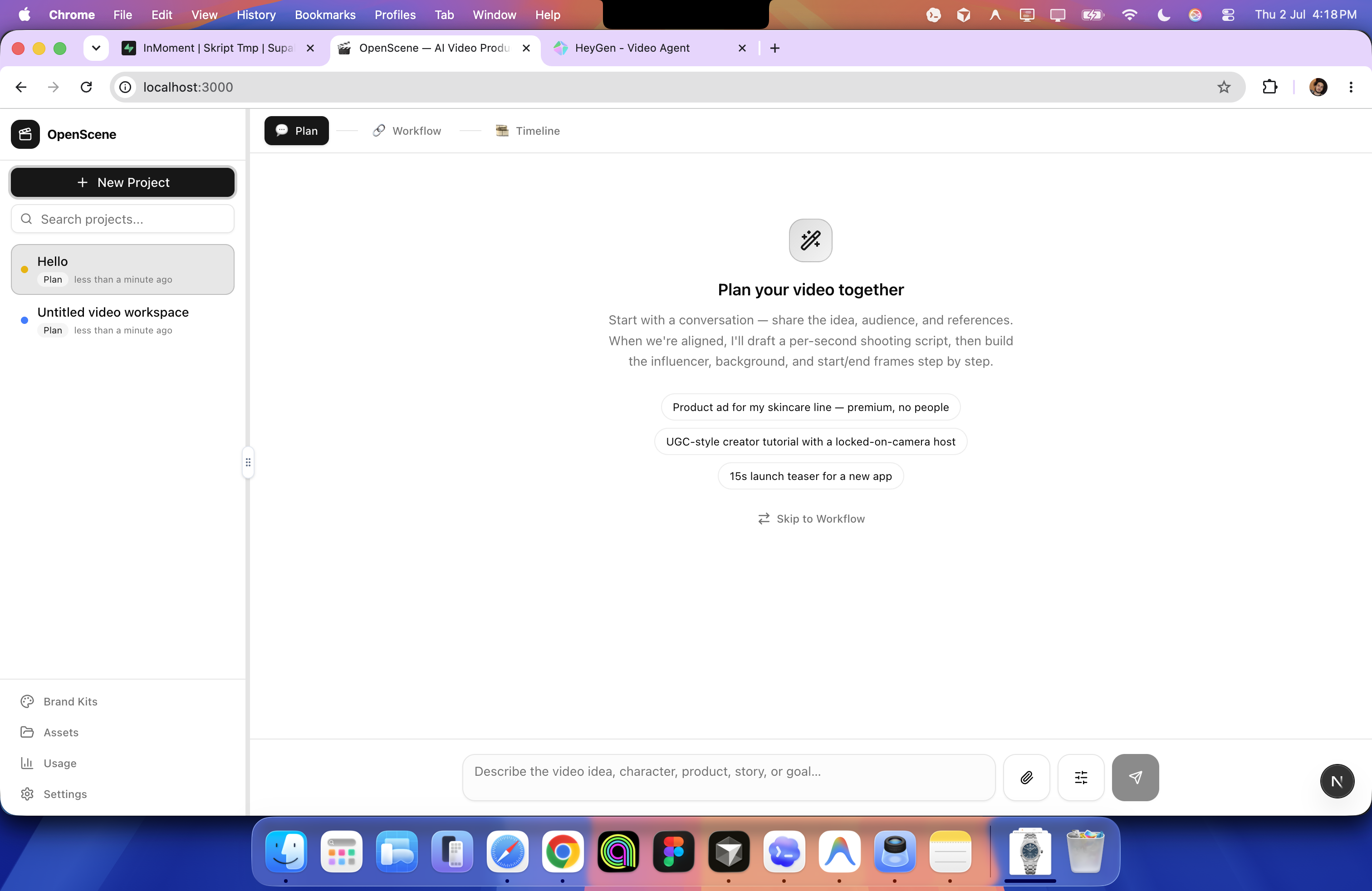
Brainstorm
-
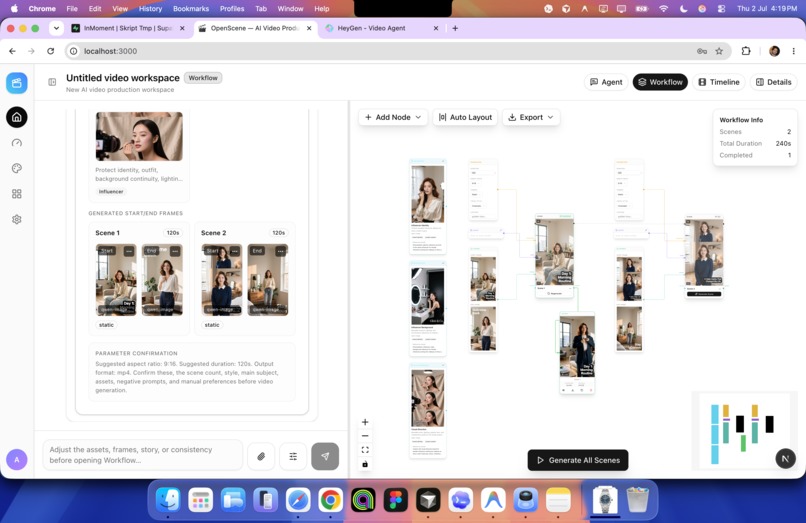
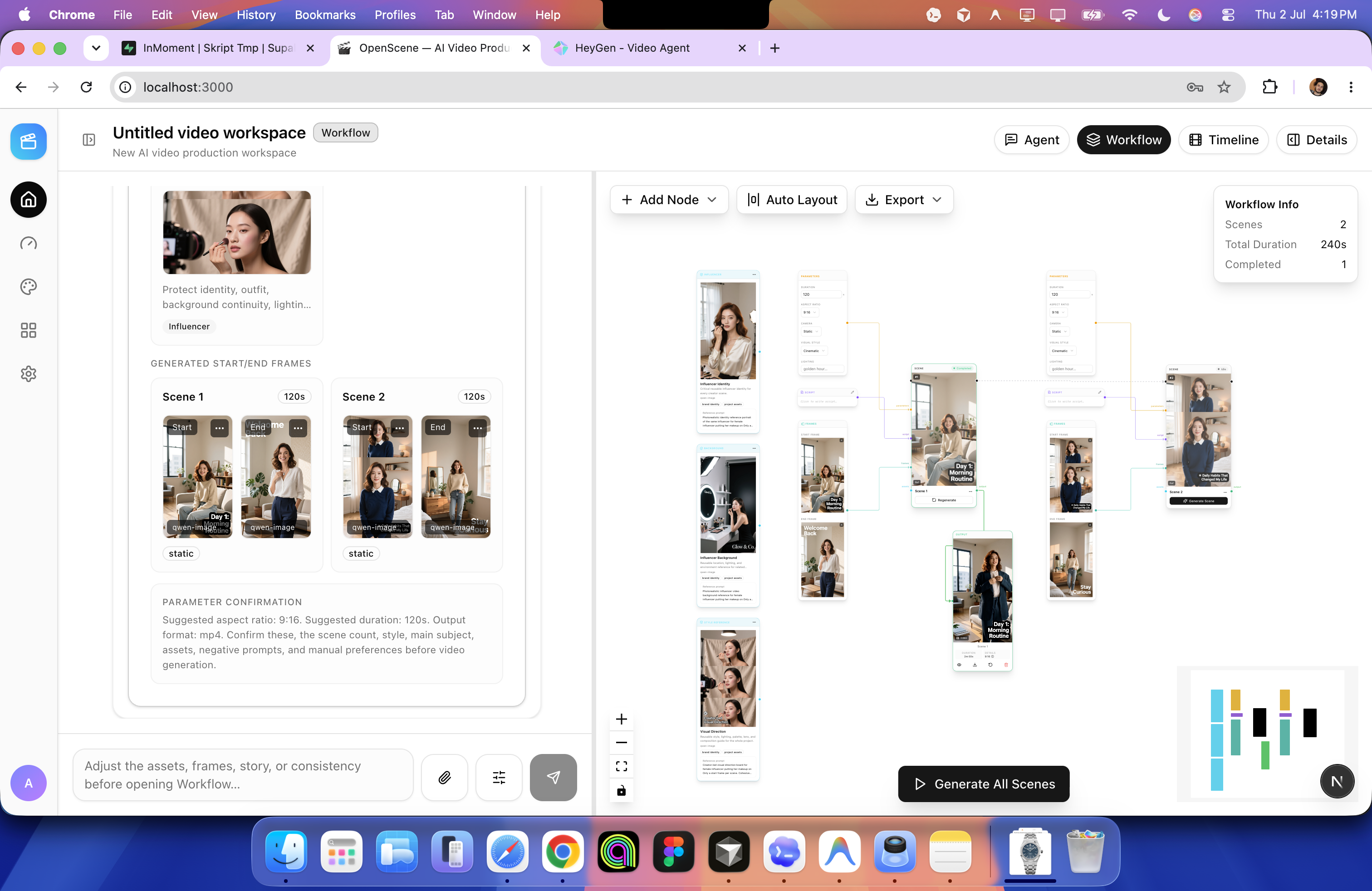
Easy to use
Inspiration
AI video tools are powerful, but most of them still feel like black boxes. You write a prompt, wait for a result, and if one scene is wrong, you usually have to start over. We wanted to build something more controllable, more visual, and more useful for real creative workflows.
OpenScene was inspired by the idea of combining a ChatGPT-style creative assistant, an n8n-style workflow editor, and a timeline-based video creation tool into one open-source system.
What it does
OpenScene helps users turn a video idea into a complete editable production workflow.
Users can start by chatting with an AI planner to define the video concept, target platform, length, style, scenes, characters, products, mood, camera direction, captions, and other creative details.
The app then turns that plan into structured scenes, storyboards, prompts, start/end frames, and connected workflow nodes. Each scene can be edited, regenerated, reordered, previewed, and improved individually before being assembled into a final video.
OpenScene is designed for many types of AI-generated videos, including ads, cinematic videos, product videos, social media reels, influencer-style videos, storytelling videos, app promos, and creative concepts.
How we built it
We built OpenScene as a modern web app with a clean, scalable architecture. The project is organized around reusable features, agents, services, workflow nodes, local storage, and UI components.
The interface is built around three main experiences:
- A chat-based planning flow where the user describes the video.
- A visual node workflow where scenes, prompts, frames, clips, and assets are connected.
- A timeline-style structure for reviewing and assembling the final video.
The system is designed to work with Qwen Cloud models through configurable AI agents. Each agent can be responsible for a specific task, such as planning, prompt improvement, storyboard generation, frame generation, scene generation, captioning, quality review, or final assembly.
For the MVP, project history, generated assets, workflow graphs, and settings are designed to be stored locally, with an abstract storage layer that can later support cloud databases and storage providers.
Challenges we ran into
One of the biggest challenges was designing a workflow that gives users control without making the product feel too complex. AI video generation involves many moving parts: prompts, scenes, characters, frames, references, timing, audio, captions, and final assembly.
Another challenge was thinking through consistency. For ads, products need to stay visually accurate. For influencer or cinematic videos, characters need to remain consistent across multiple scenes. That required a structure where every scene can store references, notes, prompts, versions, and regeneration history.
We also had to design the system in a way that can support real AI APIs later, even when some API details are still missing. That meant creating clear abstractions for agents, models, jobs, storage, and generation tasks.
Accomplishments that we're proud of
We are proud of creating a concept that makes AI video generation more transparent and editable. Instead of a single prompt box, OpenScene gives users a full creative pipeline.
We are also proud of the project’s open-source direction. OpenScene is not just another AI wrapper. It is designed as a flexible foundation that developers can extend, customize, and connect to different models or video-generation services.
The biggest accomplishment is the workflow-first approach: users can plan, inspect, modify, regenerate, and assemble videos scene by scene instead of relying on one unpredictable generation result.
What we learned
We learned that AI video generation needs more than better prompts. It needs structure.
A good video requires planning, storyboarding, consistency, pacing, visual direction, asset management, and iteration. By breaking the process into scenes and nodes, OpenScene makes the creative process easier to understand and improve.
We also learned that open-source AI tools should be modular from the beginning. Model providers, storage systems, generation pipelines, and UI components can change quickly, so the architecture needs to be flexible and easy to extend.
What's next for OpenScene
Next, we want to improve the workflow editor, add stronger timeline controls, and make the generation pipeline more reliable.
Planned features include brand kits, character consistency tools, product consistency tools, prompt/version history, AI quality review, better asset management, export presets, caption editing, audio planning, and support for more AI model providers.
The long-term goal is to make OpenScene a complete open-source creative production tool for AI video generation, where users can move from idea to storyboard to scenes to final video with full control.
Built With
- alibaba
- and-qwen-cloud-/-alibaba-dashscope-(chat
- cloud
- image
- indexeddb
- next.js-16
- prisma-+-sqlite
- qwen
- react-19
- shadcn/ui
- tailwind-css
- typescript
- zustand


Log in or sign up for Devpost to join the conversation.