-
-
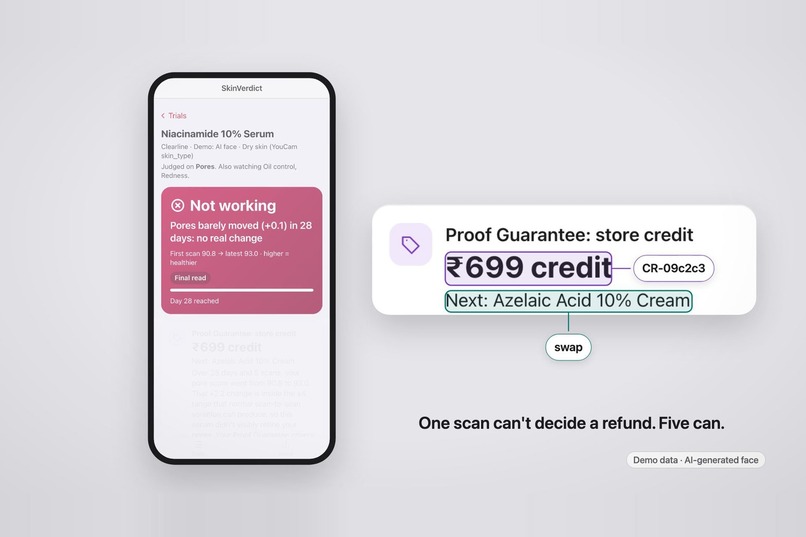
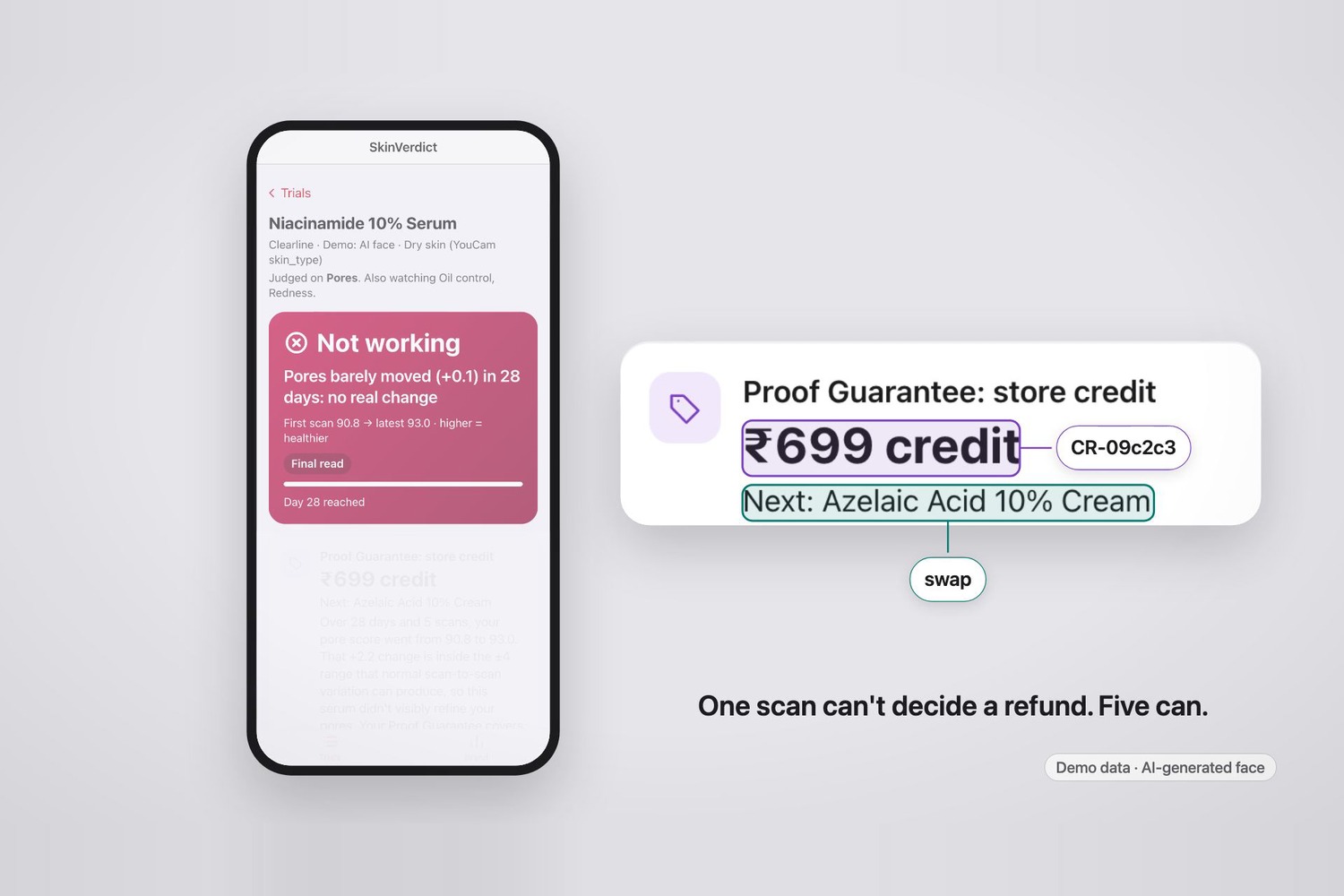
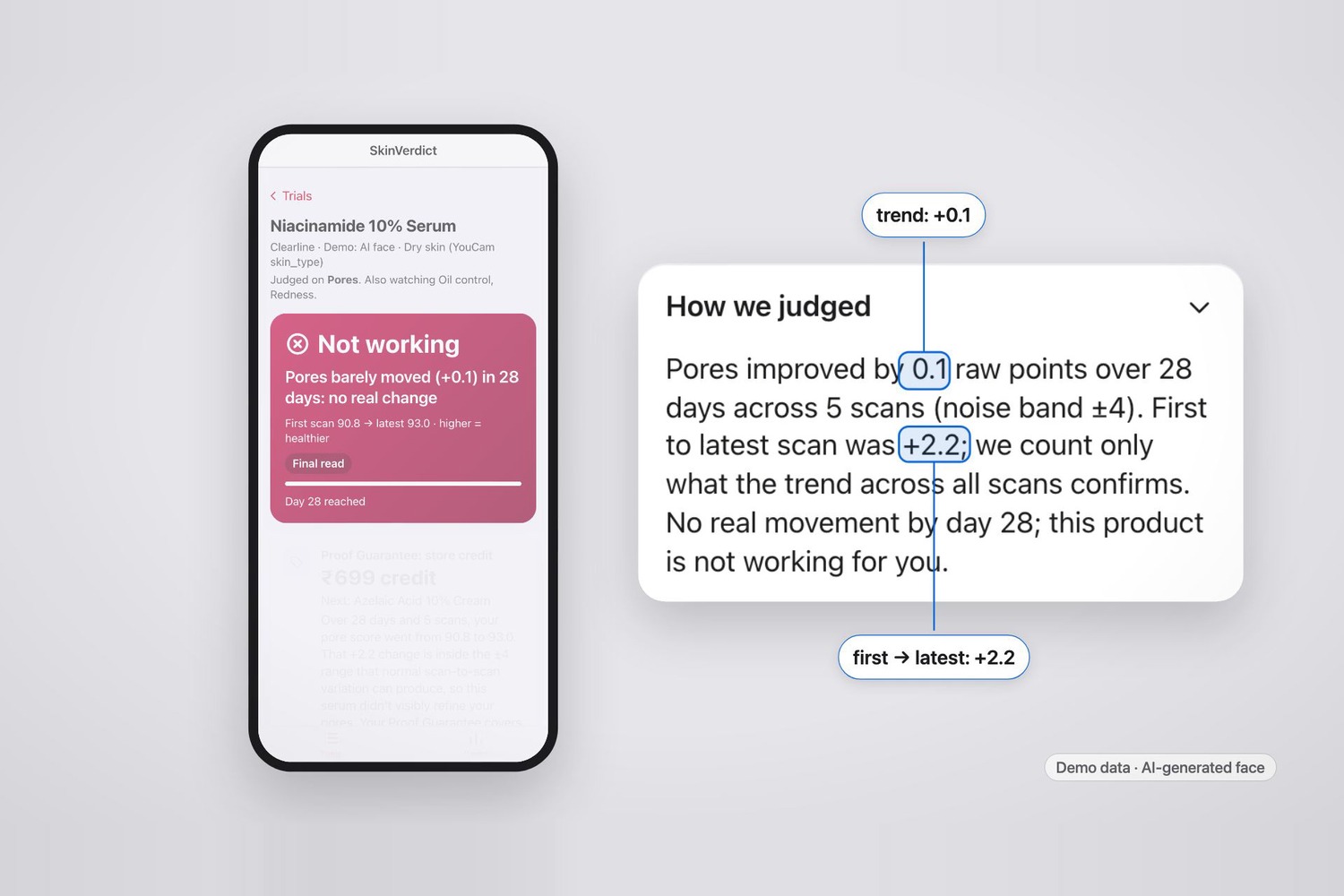
Not working after 28 days: the Proof Guarantee settles itself as ₹699 store credit and suggests a swap
-
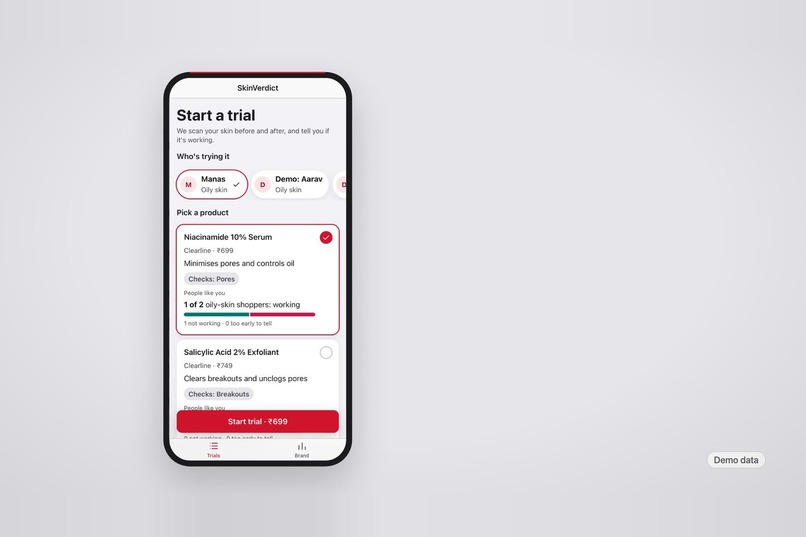
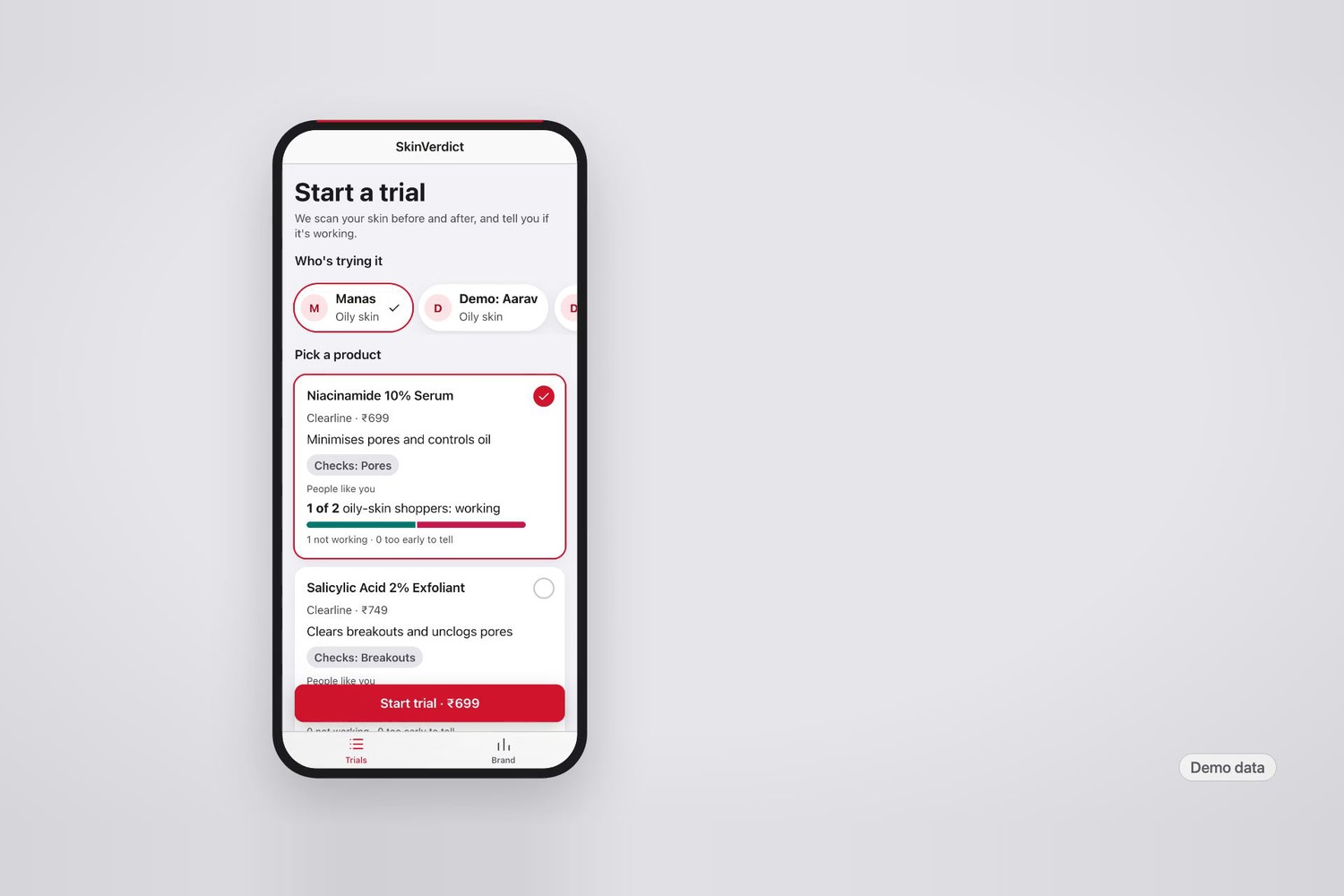
Pick a product and see how it worked for people with your skin type
-
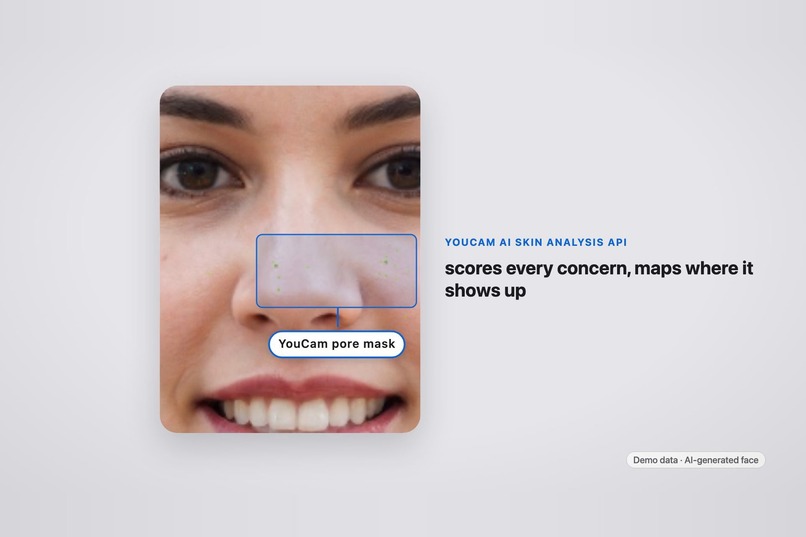
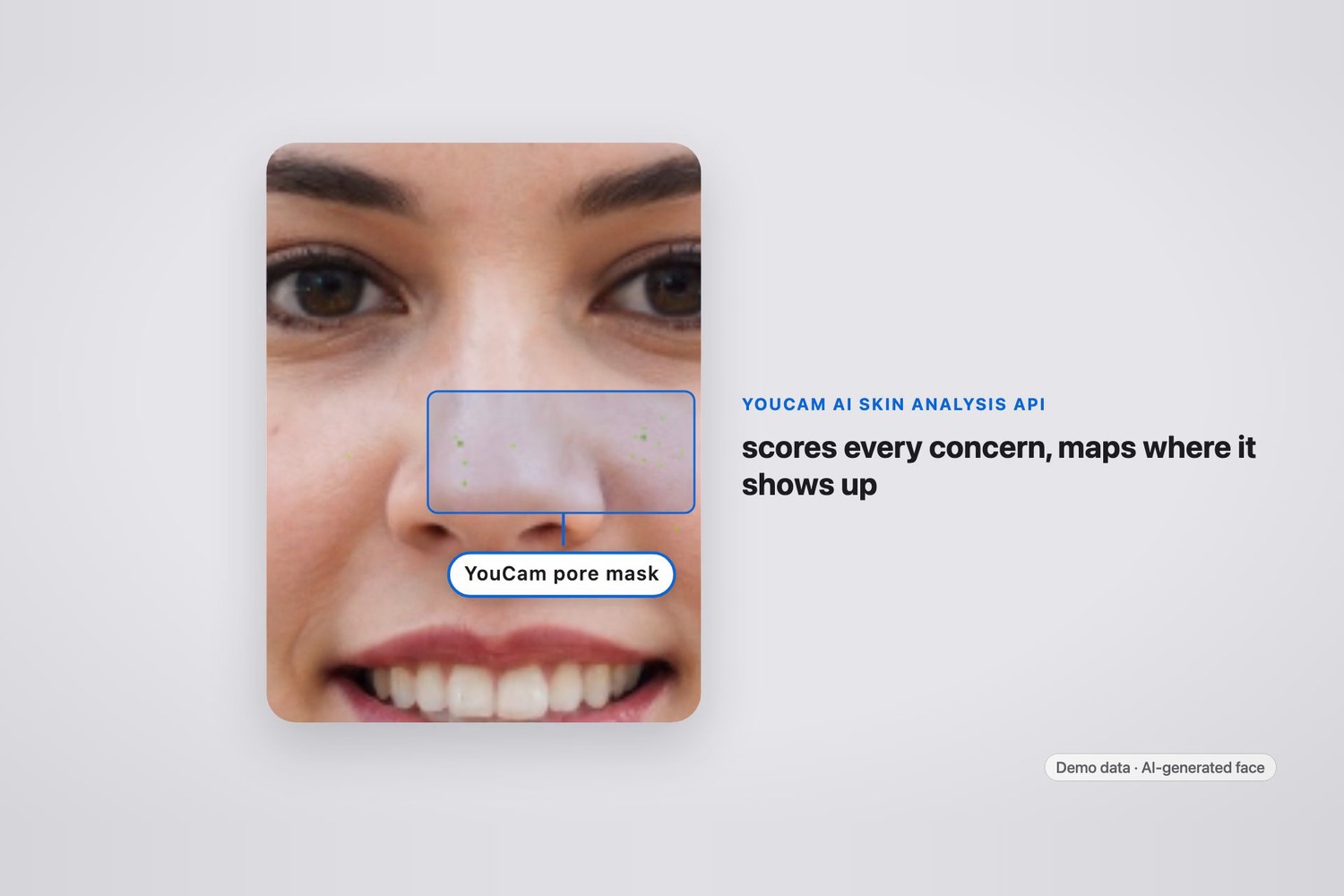
YouCam AI Skin Analysis scores each concern and maps where it shows up
-
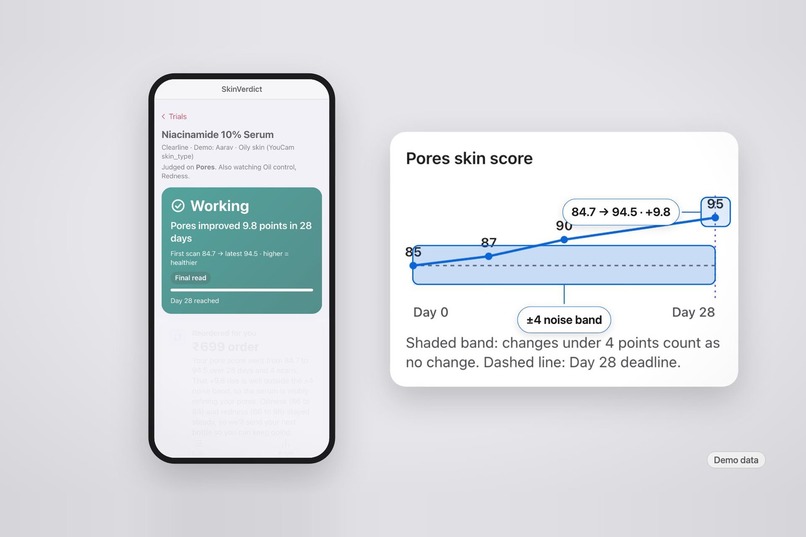
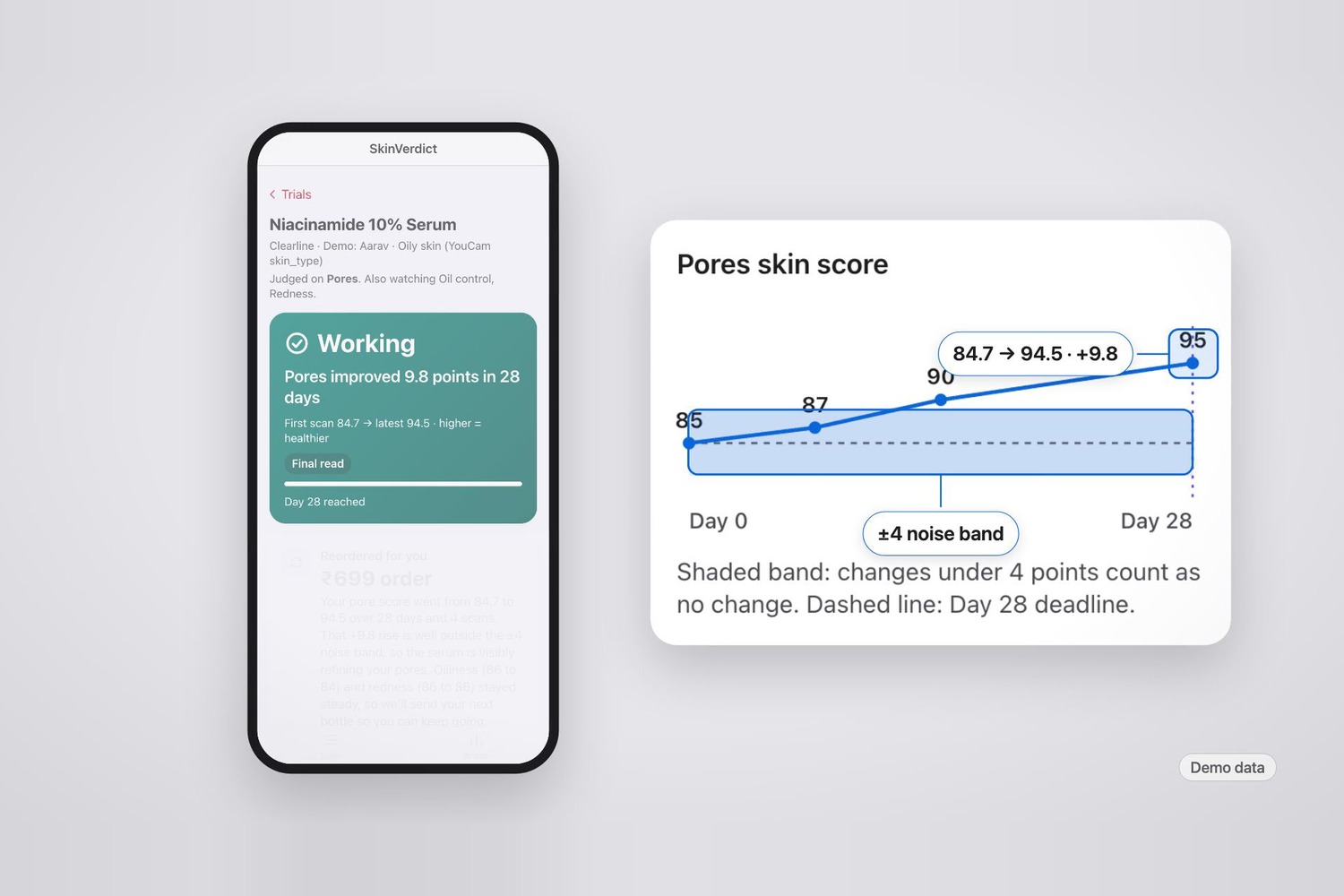
Working: pores up 9.8 points in 28 days, outside the ±4 noise band, so the agent reorders
-
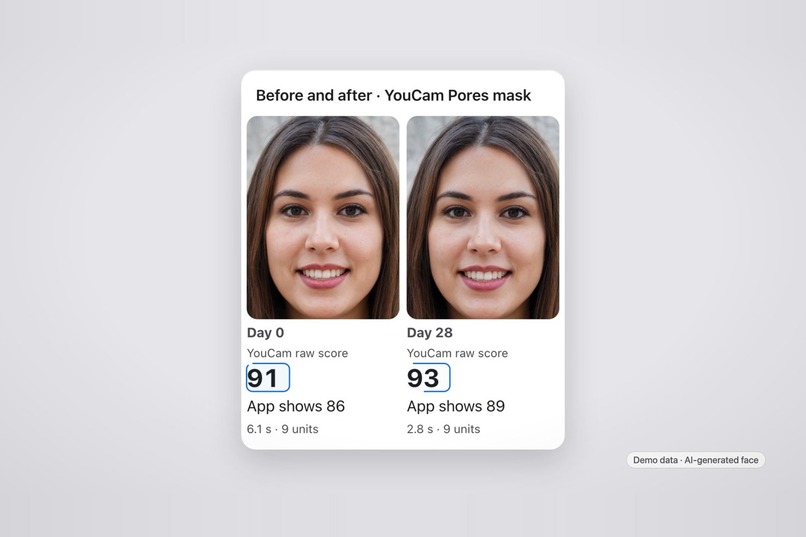
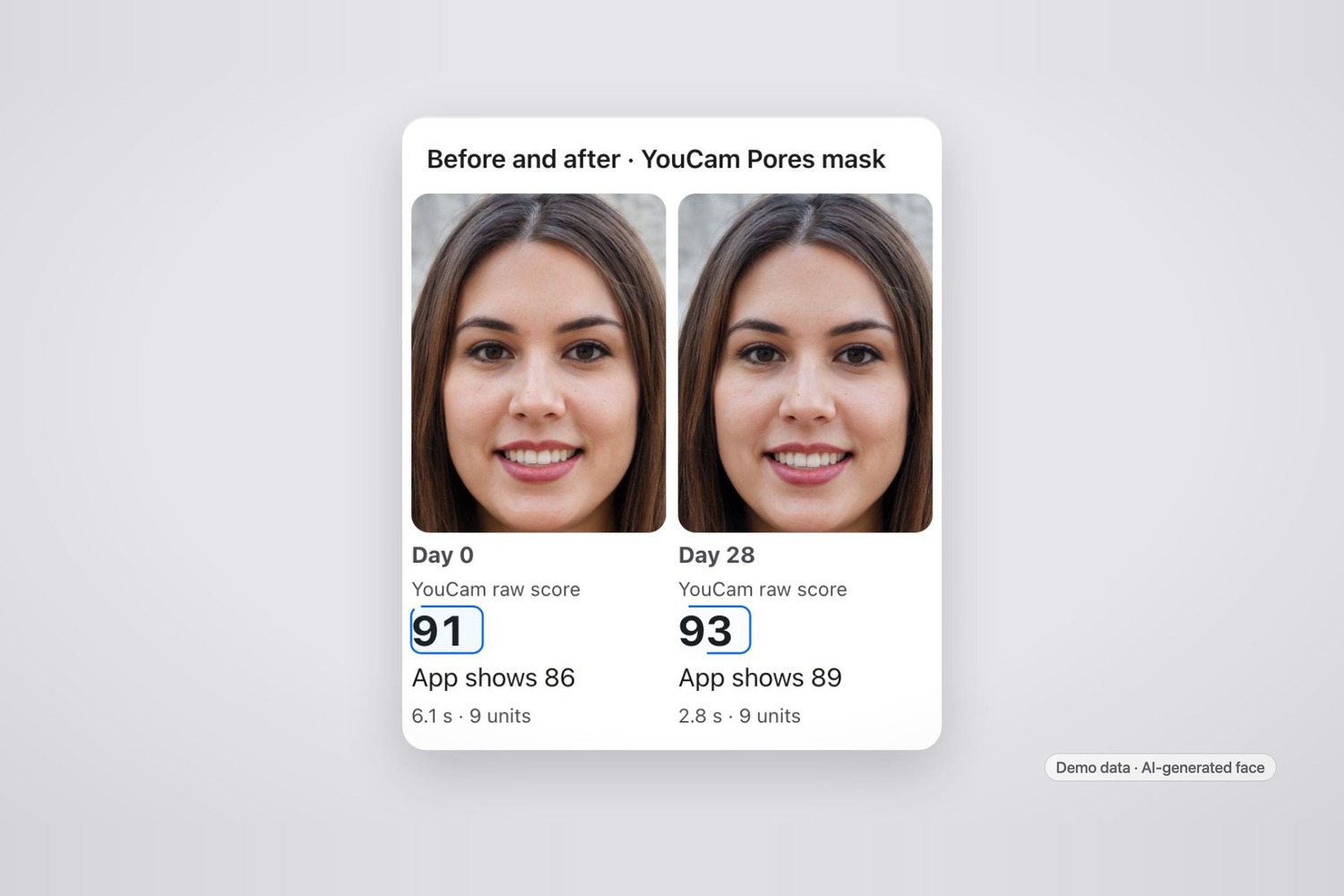
We judge YouCam's raw score and also show the friendlier app score
-
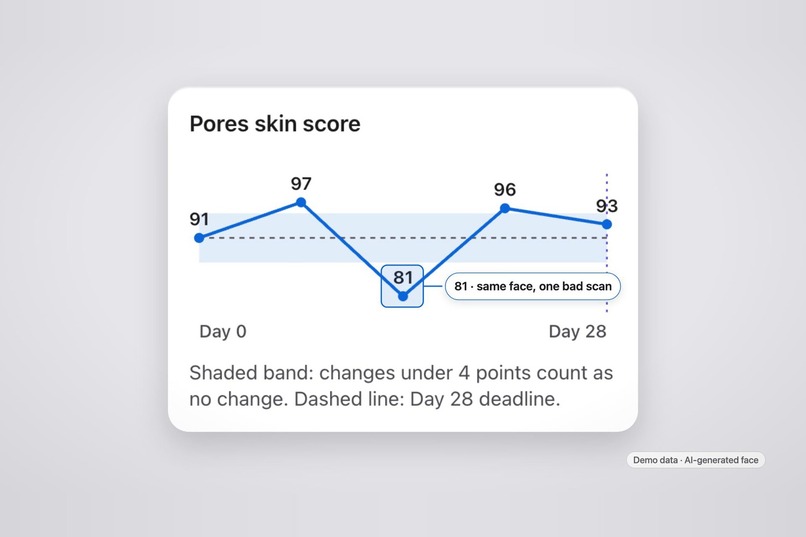
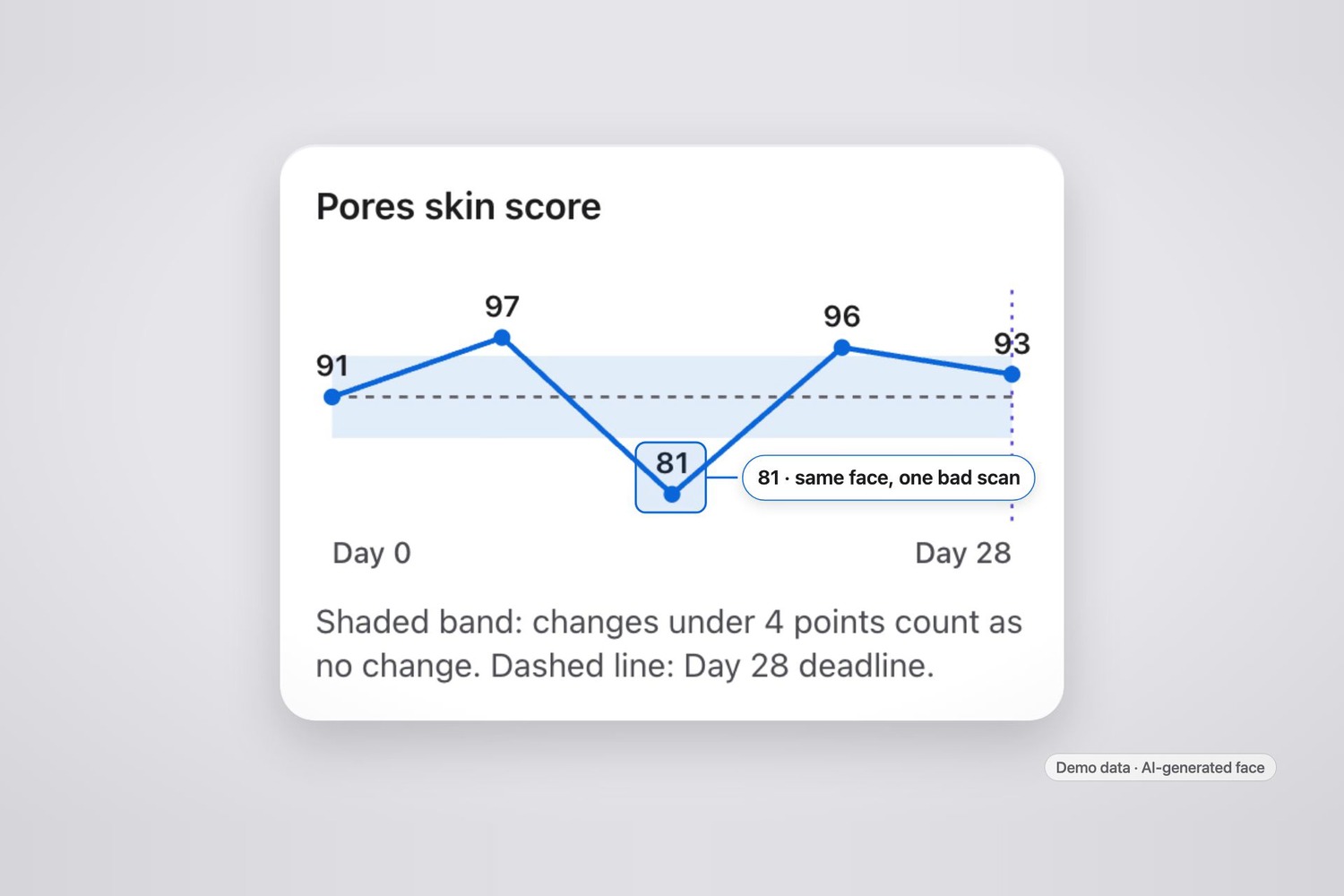
Same face, one bad scan: why a single score can't decide a refund
-
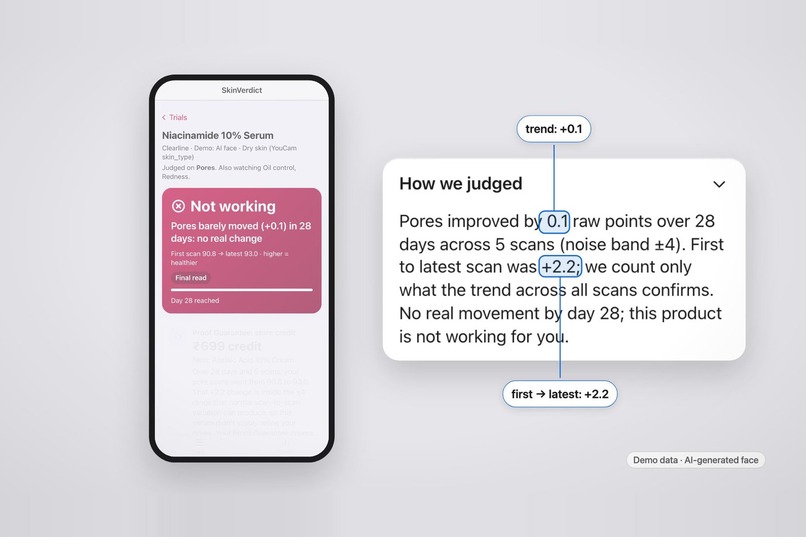
First to latest said +2.2, the robust trend said +0.1; we count only what both agree on
-
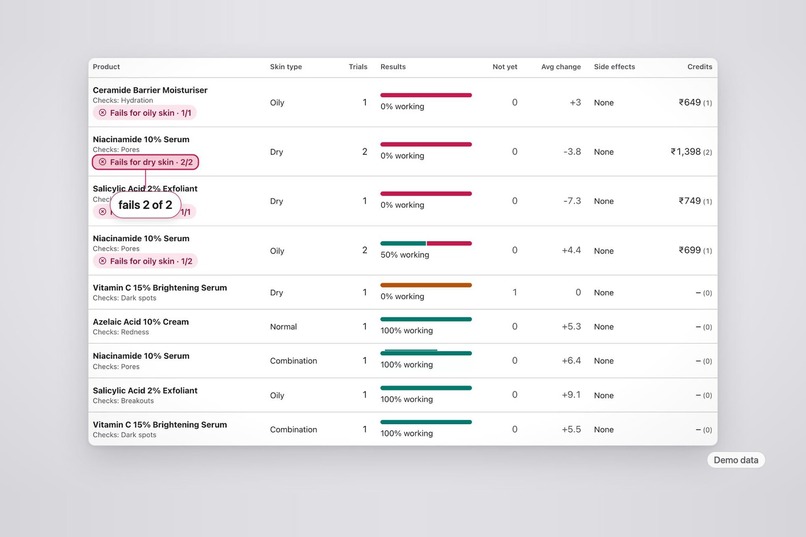
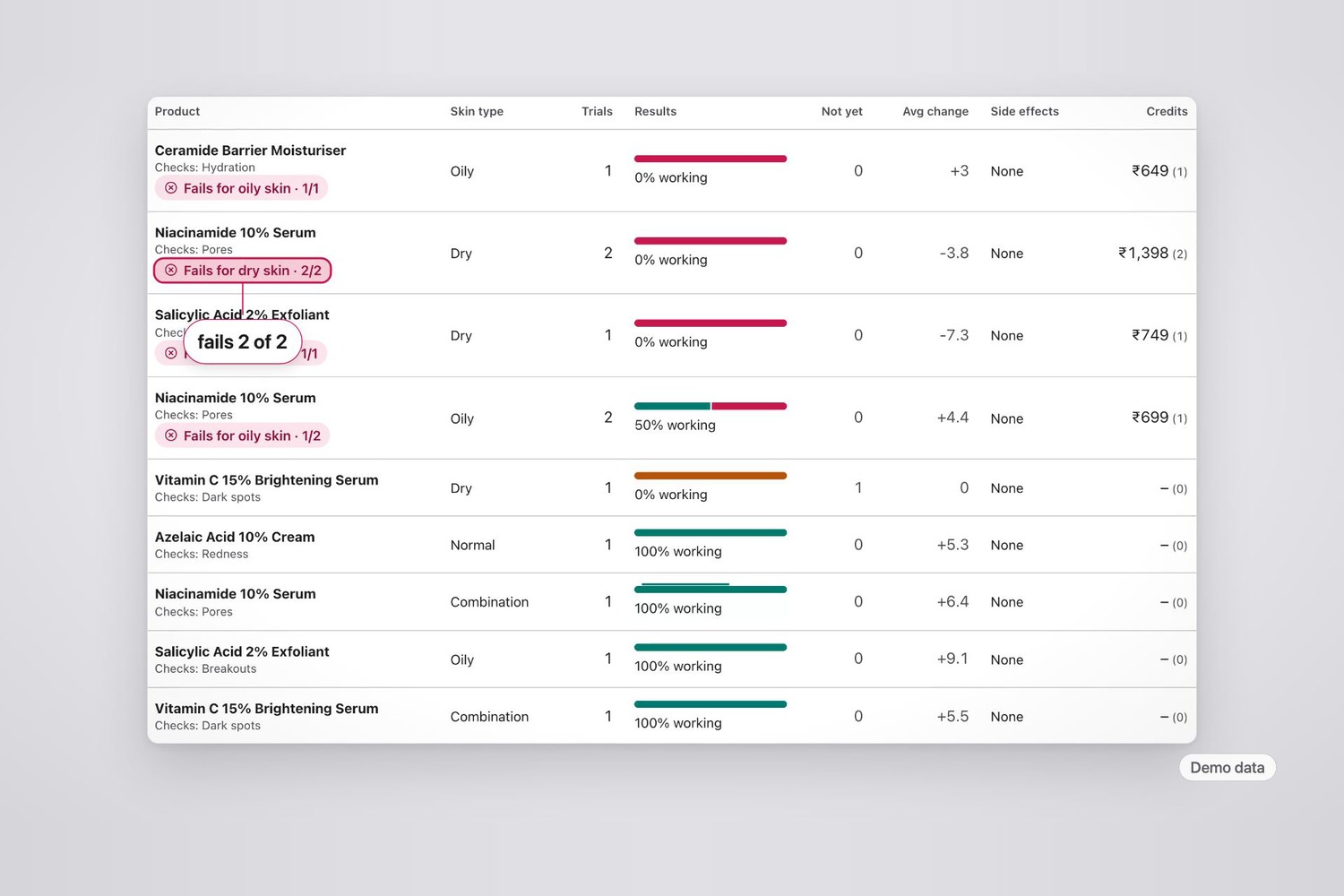
Brand view: Niacinamide fails for dry skin 2 of 2, and what it cost in credits
-
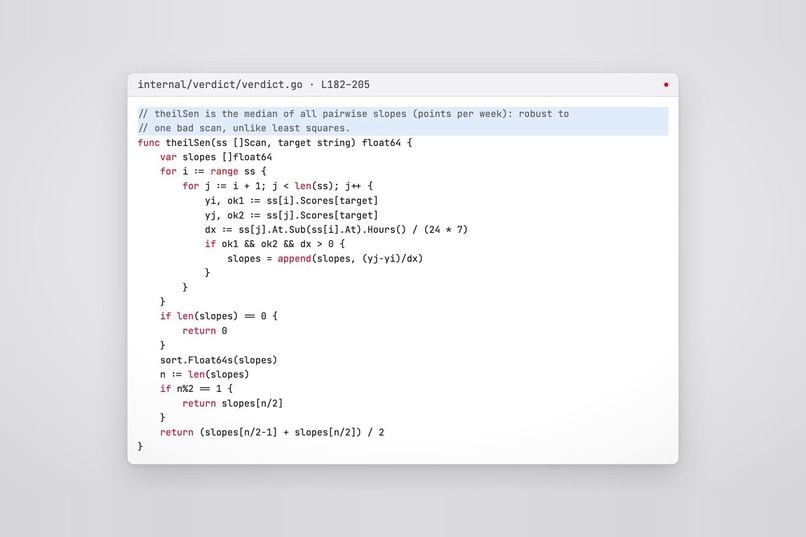
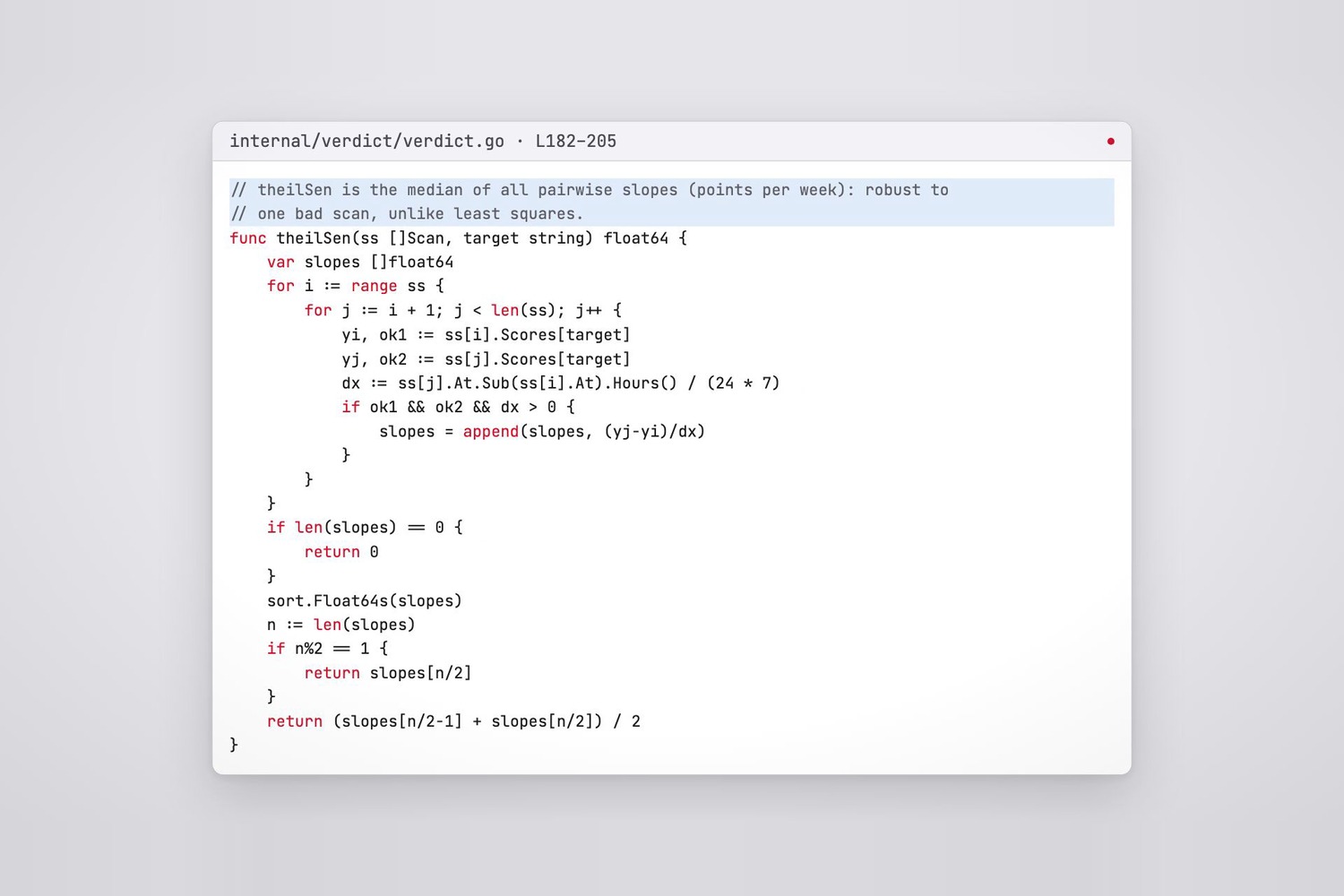
Real code: the Theil–Sen trend that keeps one outlier scan from deciding a refund
Inspiration
The hackathon brief names the moment exactly: standing in front of a mirror deciding whether a product is working. Every brand says it works; nobody measures it. Subscriptions churn on vibes, reviews are vibes, and even YouCam's consumer-facing ui_score is documented as "adjusted to produce more favorable results". We built the thing that tracks the number underneath.
What it does
SkinVerdict turns the YouCam AI Skin Analysis API into a post-purchase efficacy loop:
- Baseline scan when you start a product (YouCam JS Camera Kit gates pose, distance and lighting before capture).
- Check-ins at day 7 / 14 / 28 — same concerns, same
raw_scorescale, masks saved for before/after. - Verdict — Working / Not yet / Not working — from a published, deterministic rule set on the product's one claimed concern, with a ±4 noise band, a 28-day decision horizon, side-effect flags on guard concerns, and adherence (scans after skipped use don't count). With 3+ scans it counts only the change that both first-vs-latest and a robust Theil–Sen trend agree on, so one bad scan can't trigger (or block) a refund.
- Agent action — reorder, hold, swap, or the Proof Guarantee: a high-confidence not working settles the brand's money-back promise as store credit automatically. The scan is the arbitrator.
- "People like you" on the product page — verified outcomes among shoppers with the same skin profile — and a brand dashboard showing which SKU fails for which skin profile and what it cost in guarantee credits.
How we built it
- YouCam APIs:
skin-analysis(SD concerns incl.skin_type,enable_mask_overlay) and the JS Camera Kit (skincaremode) as the capture quality gate. One scan takes about 3–6 s and 9 units. - Go 1.24 stdlib server, SQLite (pure-Go driver, no cgo), single static binary with the Preact UI embedded; in-process scheduler for check-ins.
- Agent: the Claude Code CLI called headlessly. The verdict is computed first and is final; the model only chooses among the actions the verdict allows and writes the shopper-facing explanation. Off-policy answers or CLI failures fall back to a deterministic rule agent, so check-ins never block.
- Unit-tested verdict engine, store conformance tests against real SQLite, an integration test against a fake YouCam server that mirrors the live response shape, and agent tests against a fake
claudebinary.
Challenges
ui_scorevsraw_score: the flattering number moves less than the real one; we display one and judge on the other.- Longitudinal measurement needs consistent capture — hence Camera Kit as a hard gate, the noise band, and adherence tracking.
- Scan noise is real: five photos of one unchanged face, varying only crop and exposure, scored 81–97 on pores. That's why the verdict judges a robust trend instead of two endpoints.
- A 4-week product can't be demoed in 48 hours honestly, so we built an ingestion path for dated historical selfies and a labelled "simulate check-in" button rather than faking data.
Accomplishments
A complete loop — capture → analysis → verdict → agent action → brand analytics — on a stack that deploys as one 11 MB binary, with the scoring rules published in the repo.
What we learned
Judging a product on one claimed concern with guard concerns for side effects is what makes the verdict defensible. Everything else in beauty analytics is a vibe.
What's next
Claims-substantiation panels for D2C brands (50-person, 4-week cosmetic efficacy cohorts), sampling ROI measurement, routine attribution across multiple products, derm escalation after two failed swaps, and a Shopify app with "Start a verified trial" on the PDP.
