
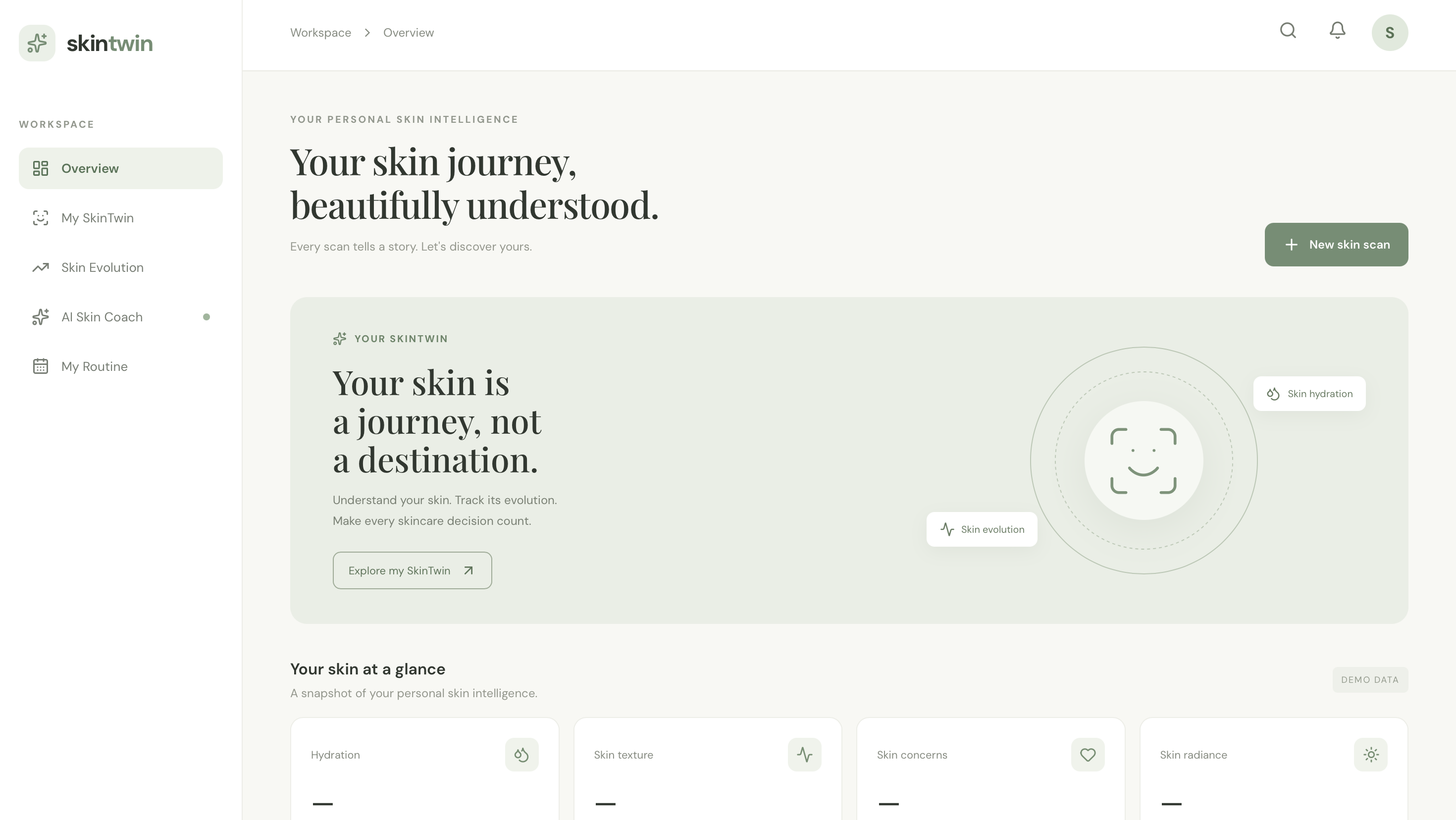
SkinTwin — Turning Skin Analysis into Actionable Skincare
Inspiration
Skincare can be confusing. People encounter countless ingredients, products and routines, but often struggle to understand what their own skin needs.
Skin analysis technologies can provide valuable insights, but knowing your skin type or seeing a collection of skin measurements is only the first step. The bigger question is: What should I do with this information?
That question inspired us to build SkinTwin.
We wanted to create an experience that connects skin analysis with practical skincare guidance. Instead of simply showing users their skin metrics, SkinTwin helps translate those insights into ingredient-based recommendations and everyday skincare routines.
What we built
SkinTwin is an AI-powered skin analysis and skincare guidance application built using the YouCam Skin Analysis API.
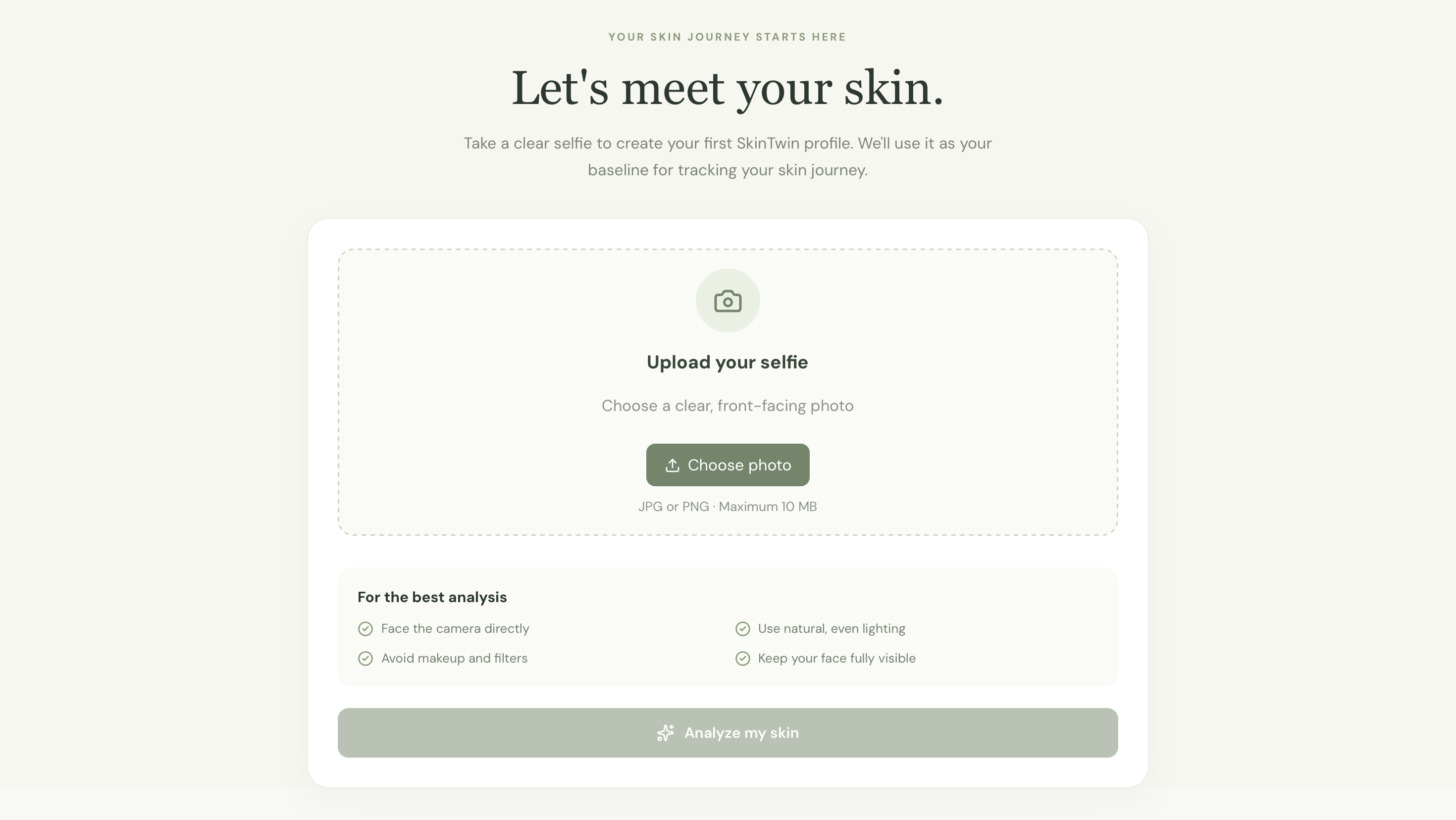
The experience begins when a user uploads a clear selfie. SkinTwin sends the image through its backend to the YouCam API and retrieves the skin analysis results.
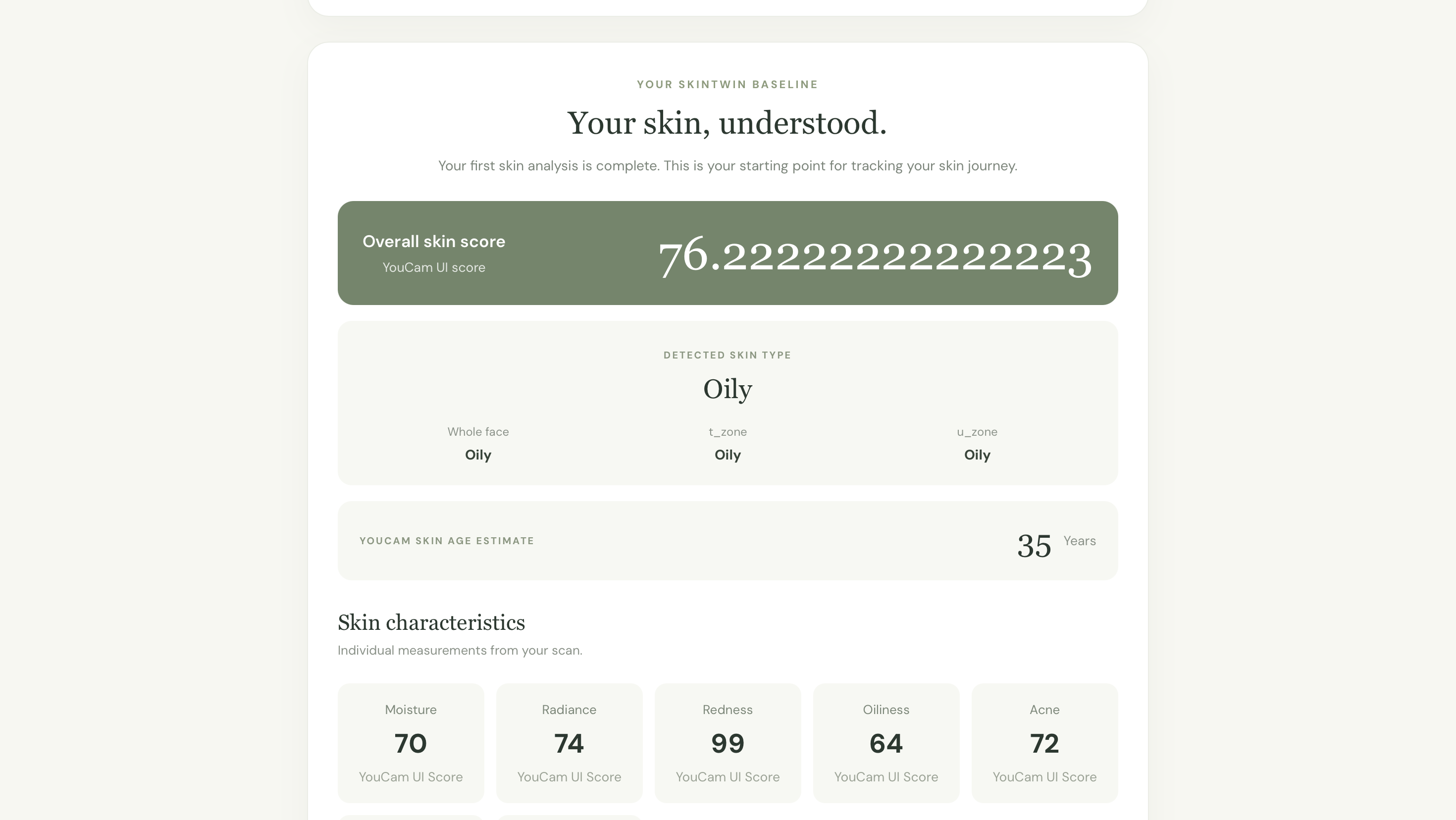
The application presents information such as:
- Detected skin type, including regional skin type information when available.
- Overall skin score.
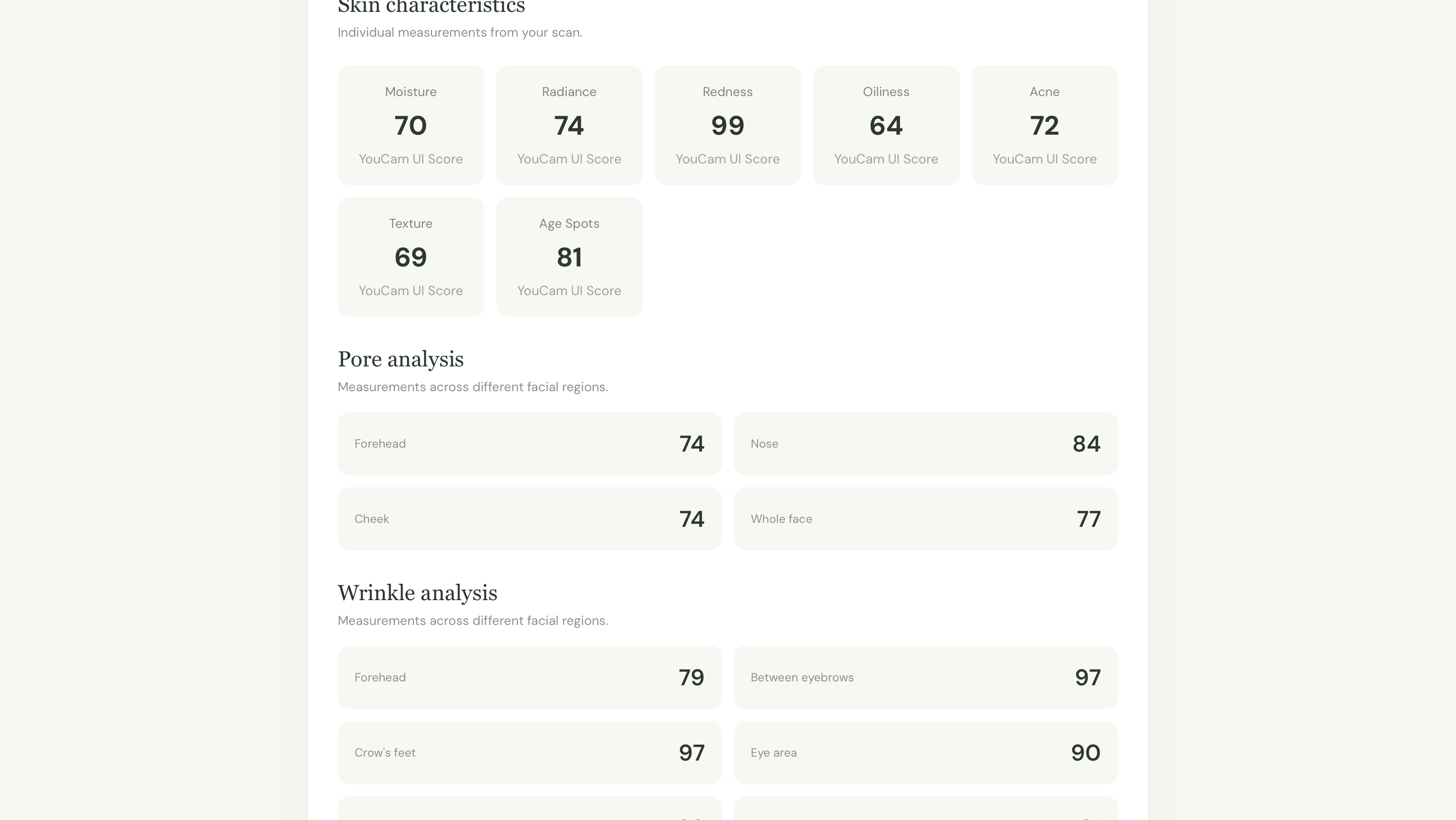
- Skin characteristics such as moisture, radiance, redness, oiliness, acne and texture.
- Additional measurements for pores and wrinkles across facial regions.
- Skin age estimate, when returned by the API.
But we wanted to go beyond analysis.
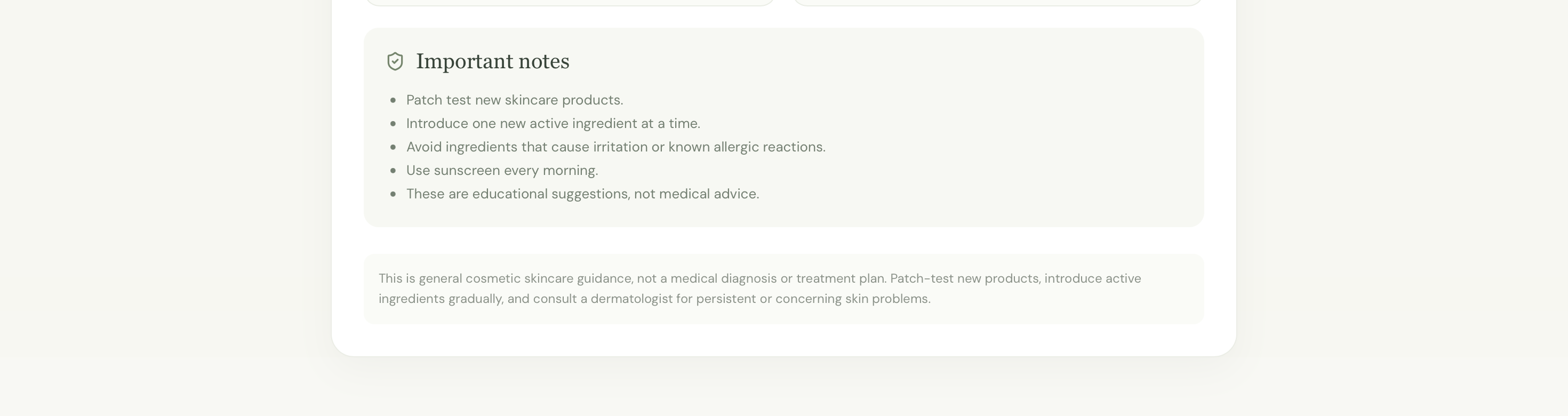
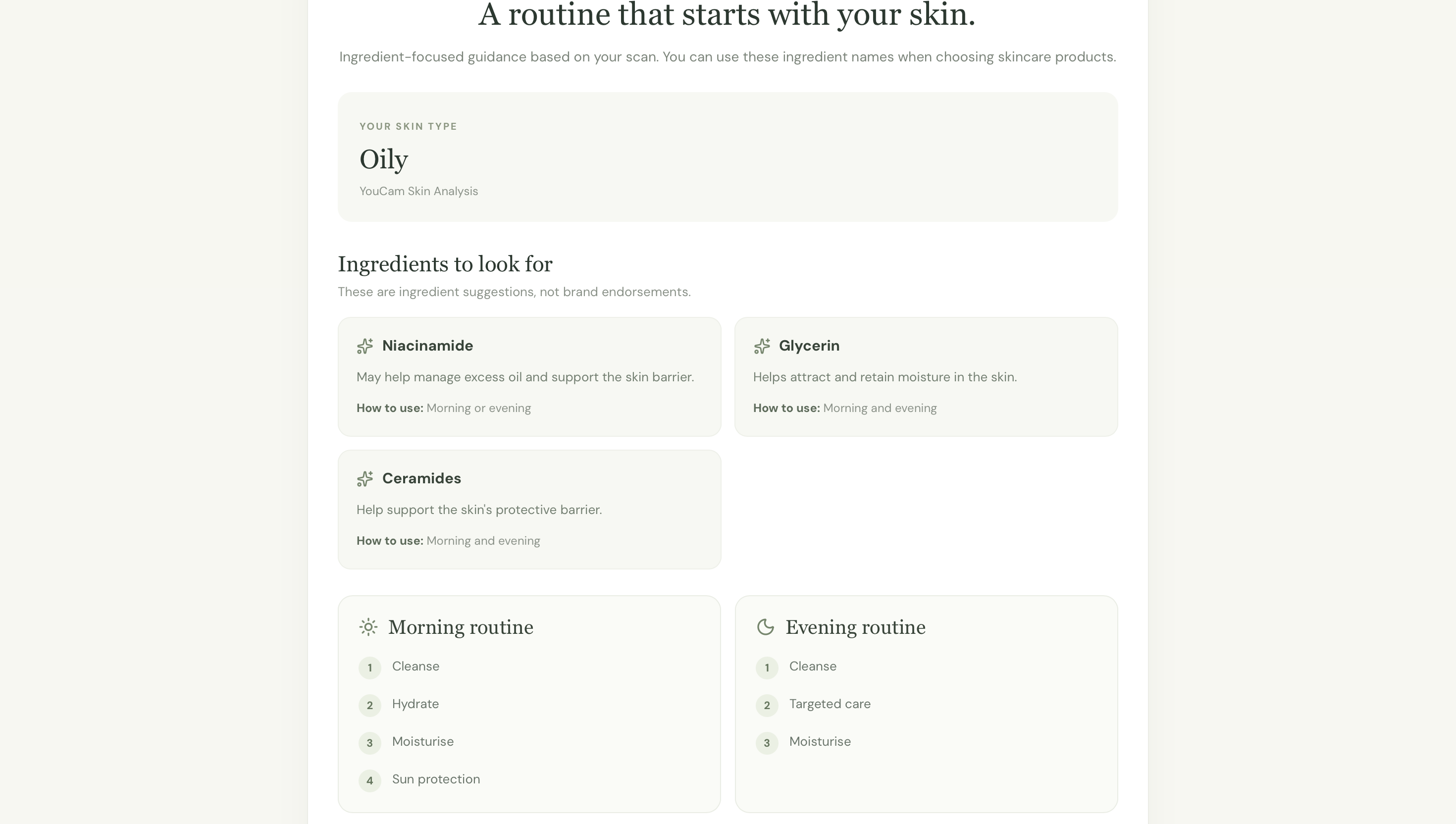
We built a separate Python-based recommendation engine that uses curated skincare ingredient rules and the detected skin type to generate ingredient suggestions and simple morning and evening routines.
For example, someone with oily skin may receive suggestions such as niacinamide, glycerin and ceramides, along with guidance on incorporating skincare steps into their daily routine.
Our goal is to make skin insights easier to understand and act upon, without overwhelming users with brand promotions or unnecessary product recommendations.
How we built it
We developed SkinTwin as a full-stack application.
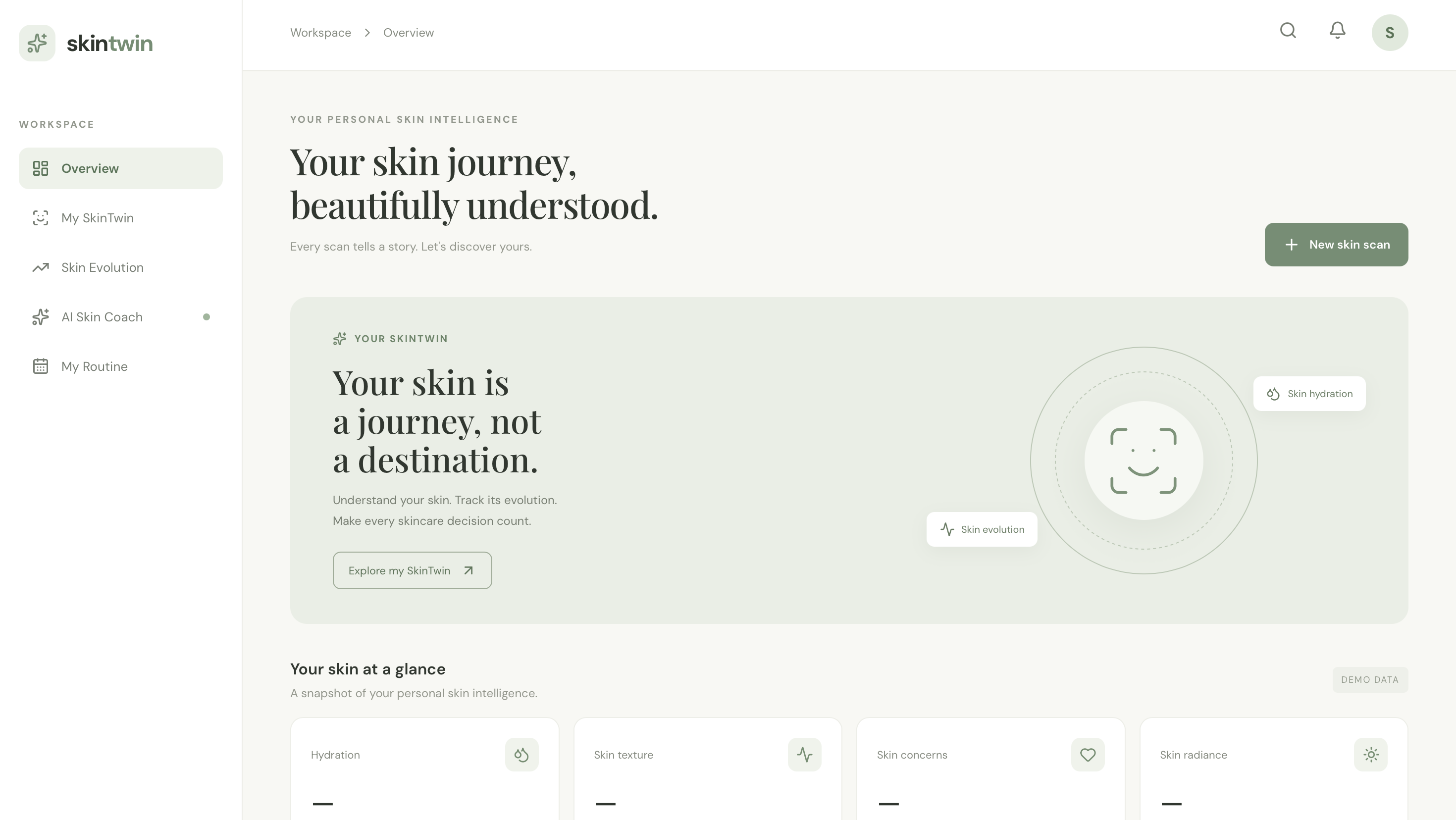
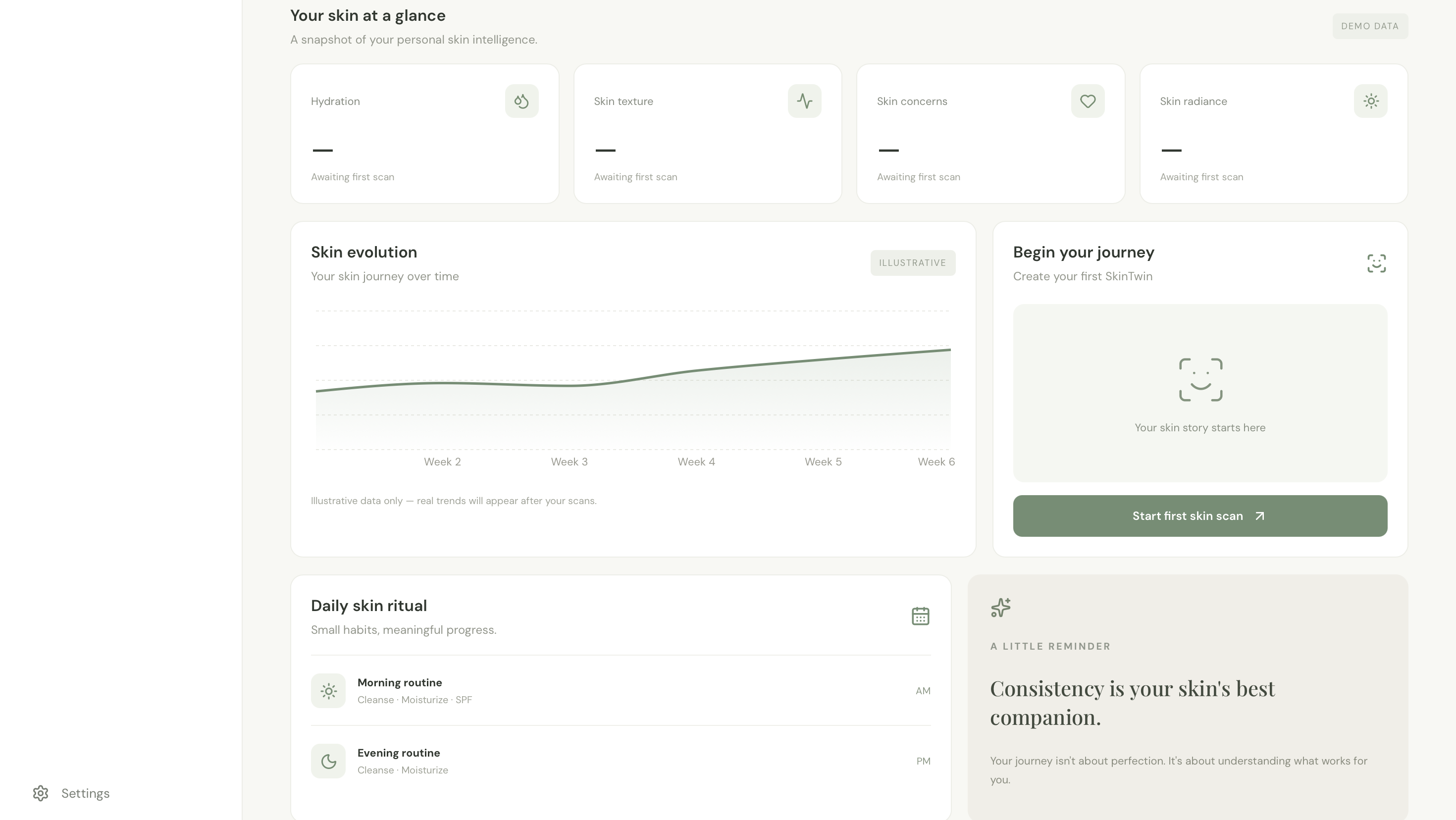
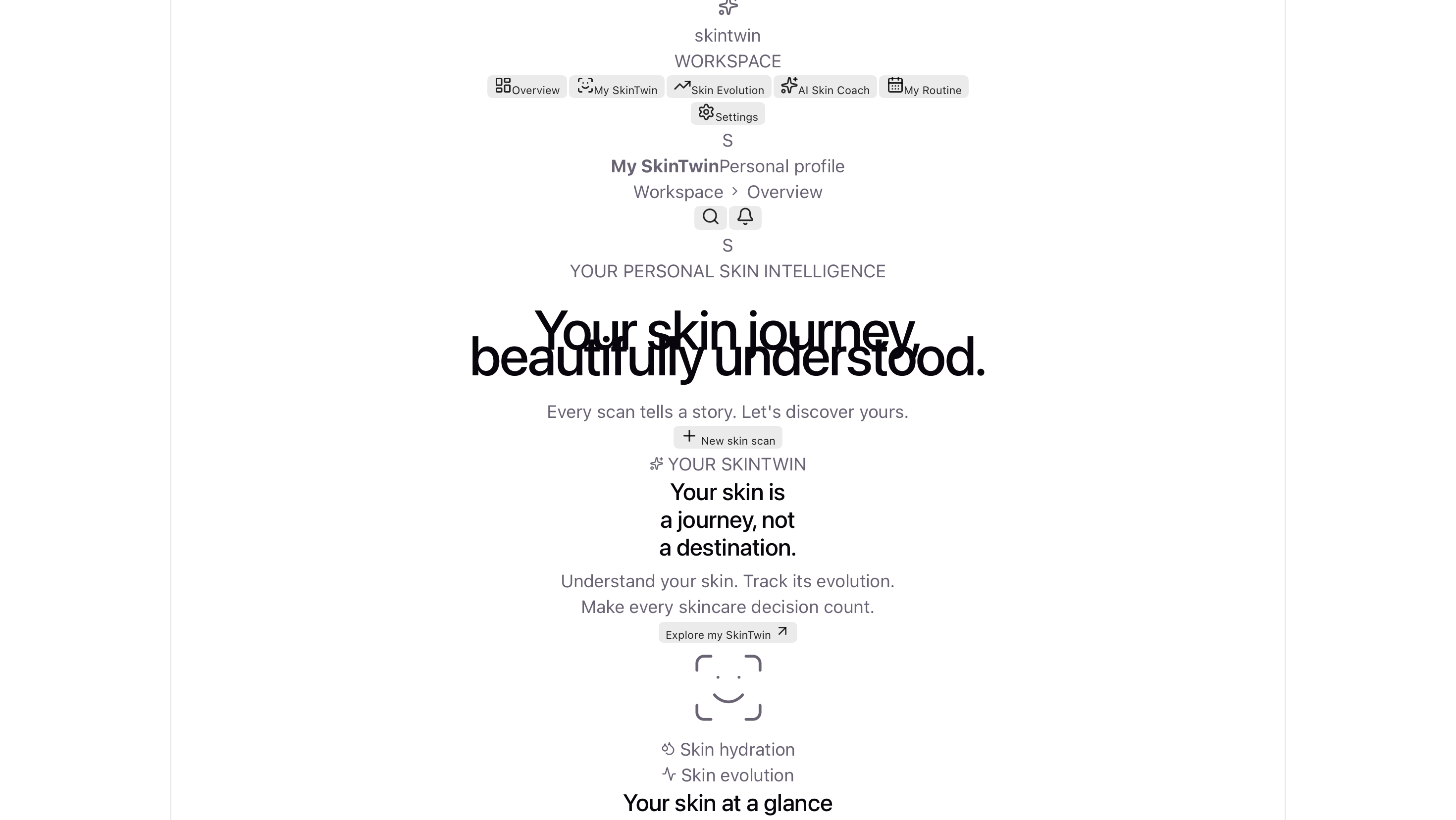
Frontend: React and Vite provide the user interface, including selfie upload, scan progress, skin analysis results and skincare recommendations.
Backend: Python and FastAPI handle image validation, communication with the YouCam API, asynchronous analysis tasks and recommendation requests.
Skin analysis: We integrated the YouCam Skin Analysis API to process facial images and retrieve detailed skin analysis results.
Recommendation engine: We developed our own Python rule-based engine to translate detected skin types and user concerns into ingredient suggestions and morning and evening skincare routines.
One important architectural decision was to keep skin analysis and recommendation generation separate. YouCam provides the skin analysis, while SkinTwin's own recommendation engine generates the skincare guidance.
This allowed us to build the recommendation experience without depending on an additional generative AI API.
Challenges we faced
One of our biggest challenges was integrating the YouCam API into a complete user experience.
The analysis process involves uploading an image, creating an analysis task and checking its status until the results are ready. We had to coordinate this asynchronous workflow between the FastAPI backend and React frontend.
Another challenge was understanding and structuring the API response. The analysis returned multiple measurements and regional results, so we had to organise the data into a readable interface rather than expose users to raw API output.
We also had to think carefully about how to translate skin analysis into useful recommendations. Rather than treating every measurement as a medical diagnosis or making unsupported assumptions about score severity, we chose a curated, rule-based approach focused on general cosmetic skincare ingredients.
Building the recommendation engine separately from the YouCam integration was another important learning experience. It helped us understand how specialised AI capabilities can be combined with transparent application logic to create a more useful consumer experience.
What we learned
Building SkinTwin taught us that a useful AI-powered product is not just about integrating an API. The real value comes from how effectively we turn the API's capabilities into an experience that solves a user problem.
We learned how to work with asynchronous API workflows, process structured skin analysis responses, build a full-stack application and design a recommendation engine around specialised AI output.
Most importantly, we learned to focus on the user's next step rather than simply presenting more information.
What's next
SkinTwin is an early working prototype, and we see opportunities to expand it with user-reported skin concerns, sensitivity-aware ingredient filtering, skin history and progress tracking, and more personalised skincare guidance.
Our long-term vision is to make skincare more understandable and accessible by connecting skin insights with practical everyday decisions.
SkinTwin — Understand your skin. Know what it needs. Build a routine around it.
SkinTwin provides general cosmetic skincare guidance and is not intended to diagnose or treat medical conditions.
Built With
- axios
- beautytechnology
- computer-vision
- css3
- fastapi
- health&wellness
- html
- httpx
- javascript
- lucide
- pydantic
- python
- react
- vite

Log in or sign up for Devpost to join the conversation.