Inspiration
Skin diseases are common, but many people ignore early symptoms or don't have easy access to a dermatologist. I wanted to see if AI could help — not to replace doctors, but to give people a quick, educational first check based on an image, and to learn how real-world medical imaging AI is built (including handling messy, imbalanced data).
What it does
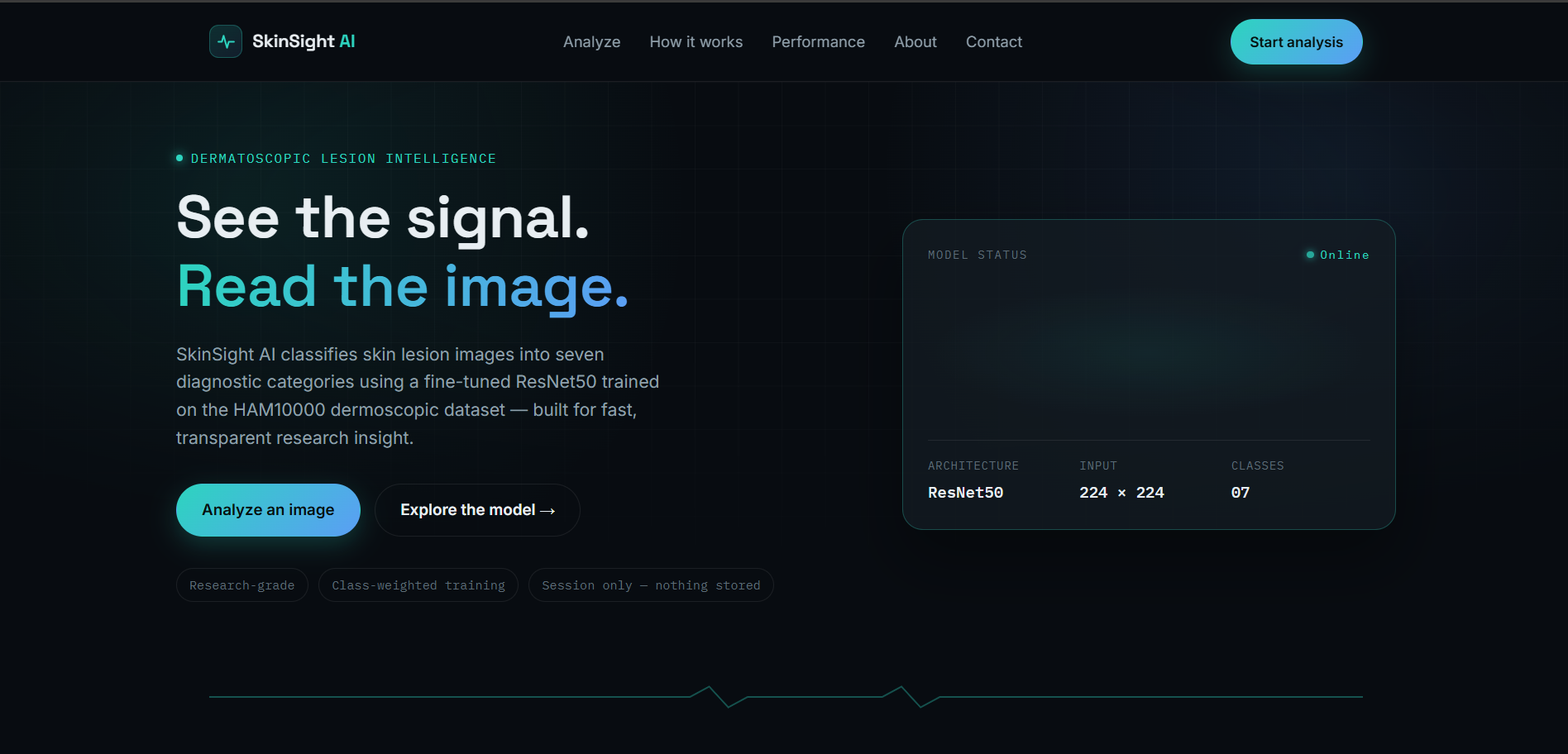
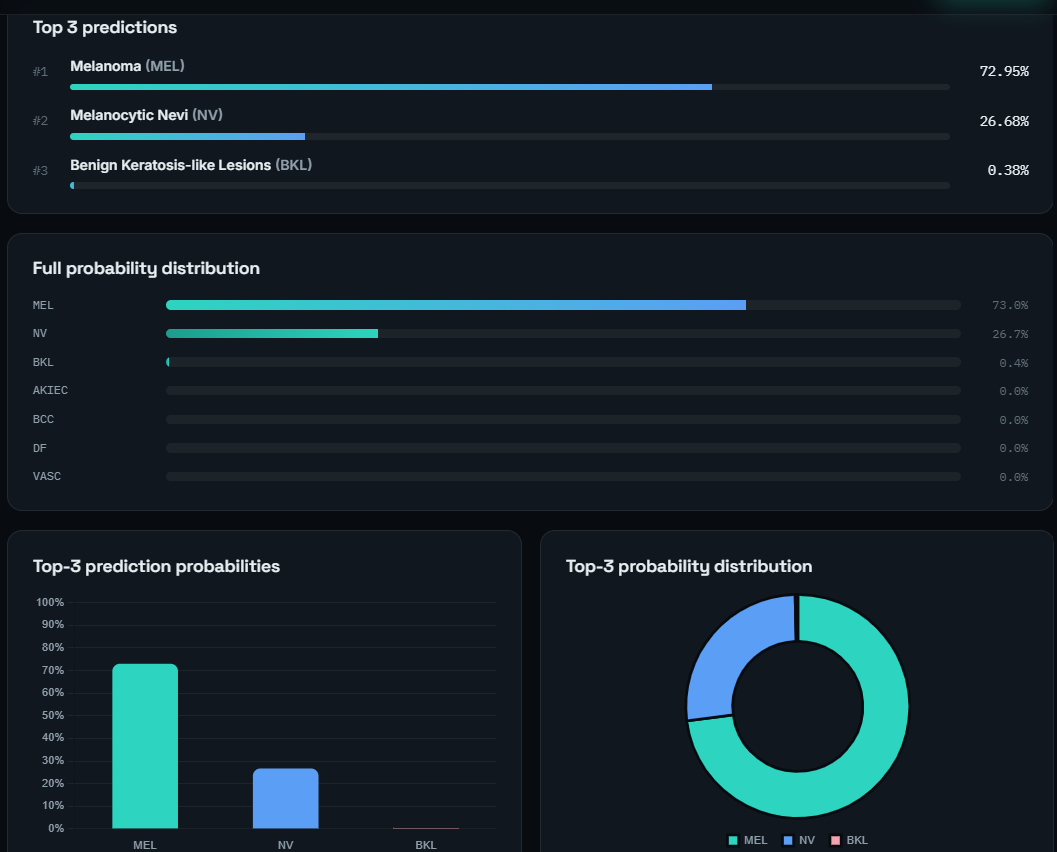
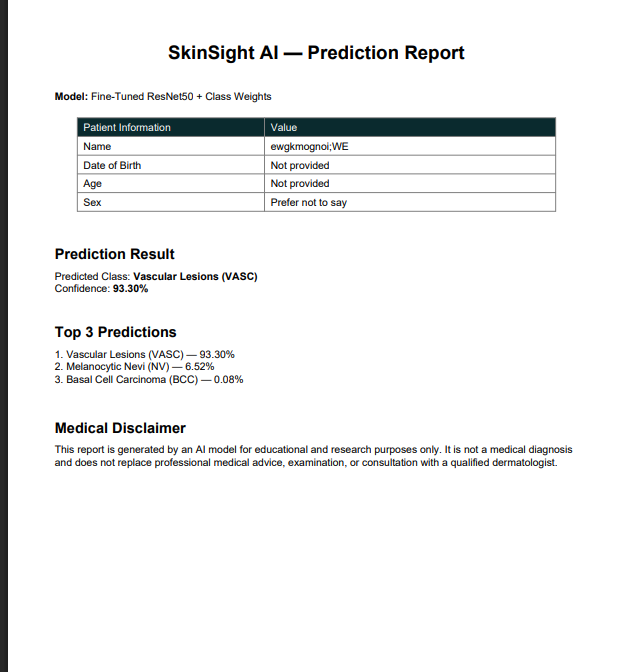
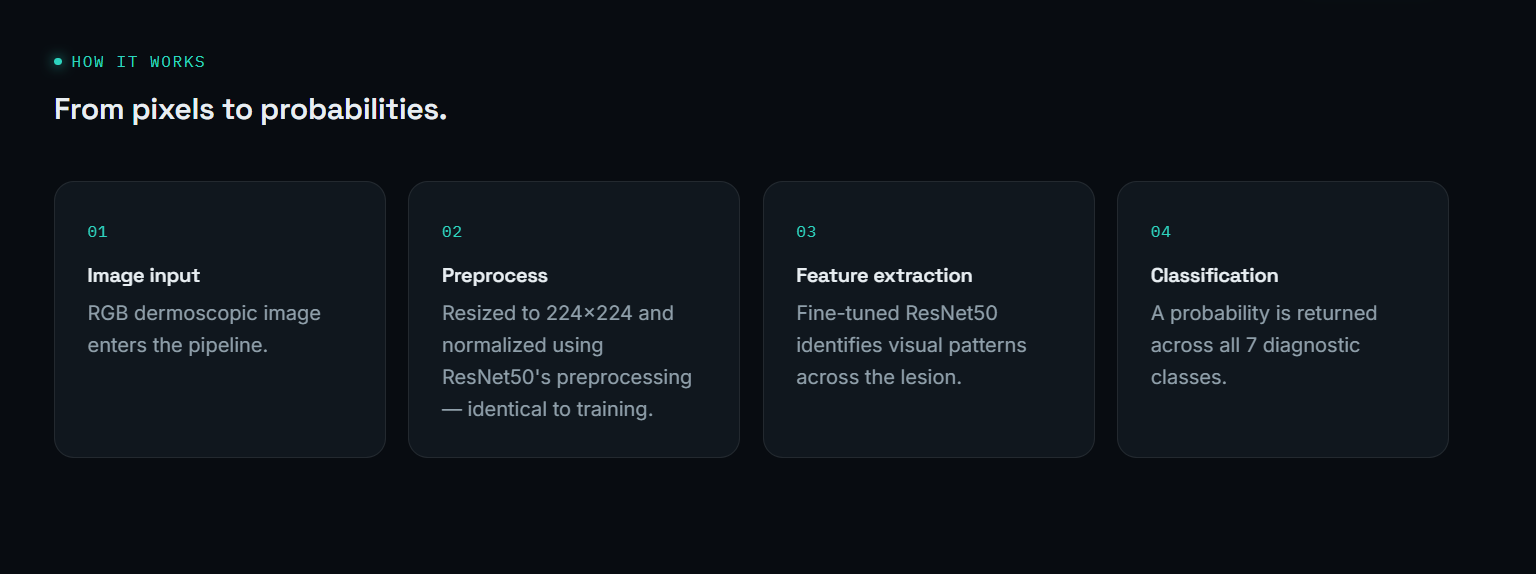
SkinSight AI takes a photo of a skin lesion and classifies it into 7 categories (like Melanoma, Basal Cell Carcinoma, Benign Keratosis, etc.) using a deep learning model. It shows the top-3 predicted conditions with confidence percentages, visualizes results with bar/pie charts, and can generate a downloadable PDF report. It's built as an educational/research tool with a clear medical disclaimer — not a diagnosis.
How we built it
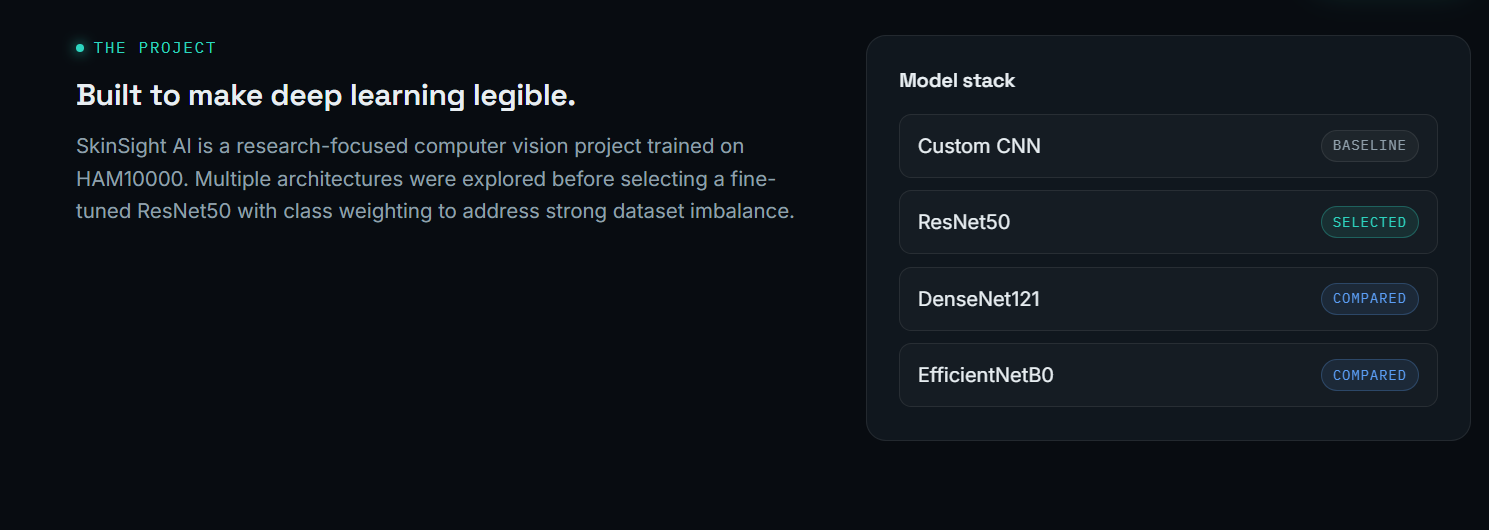
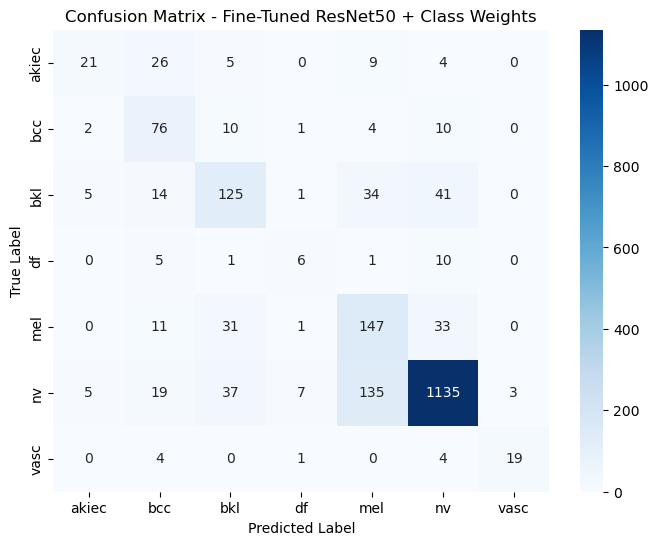
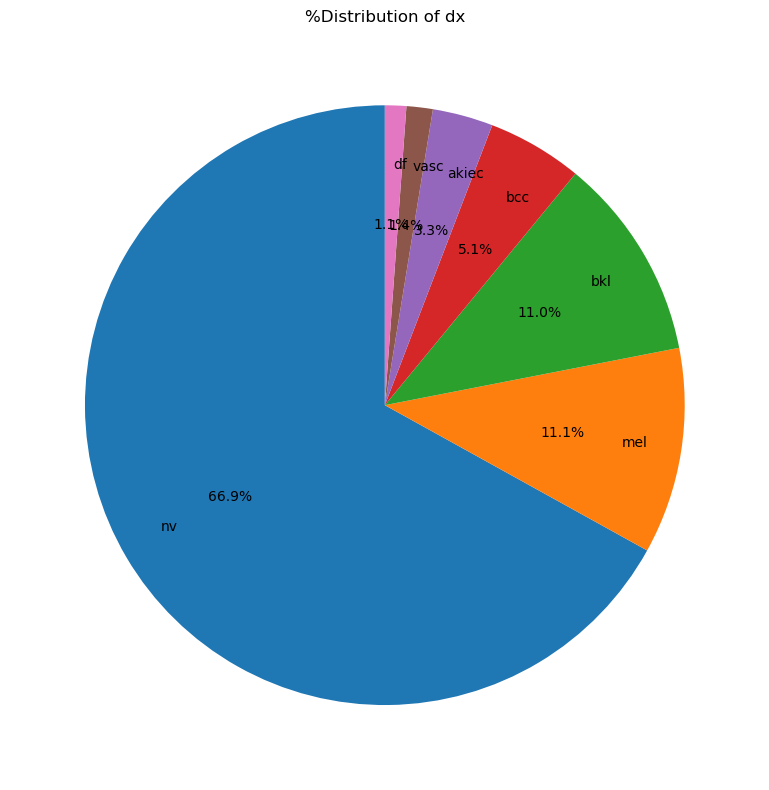
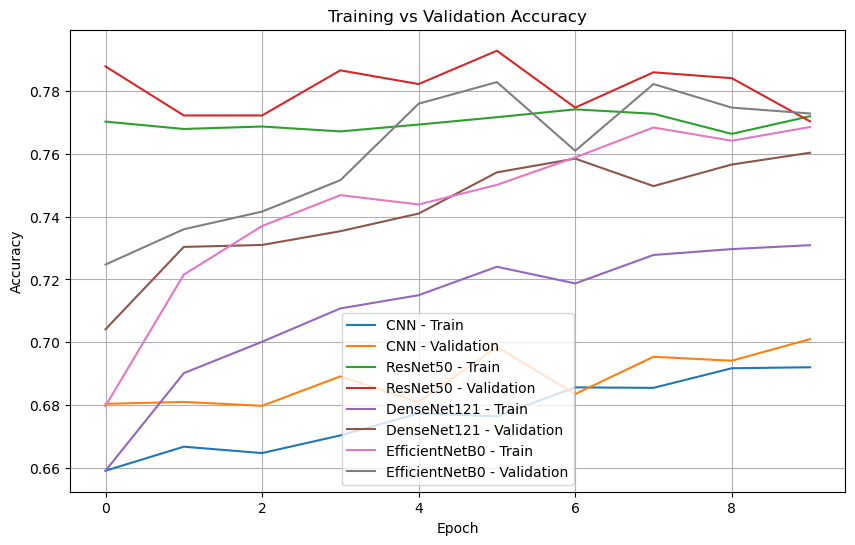
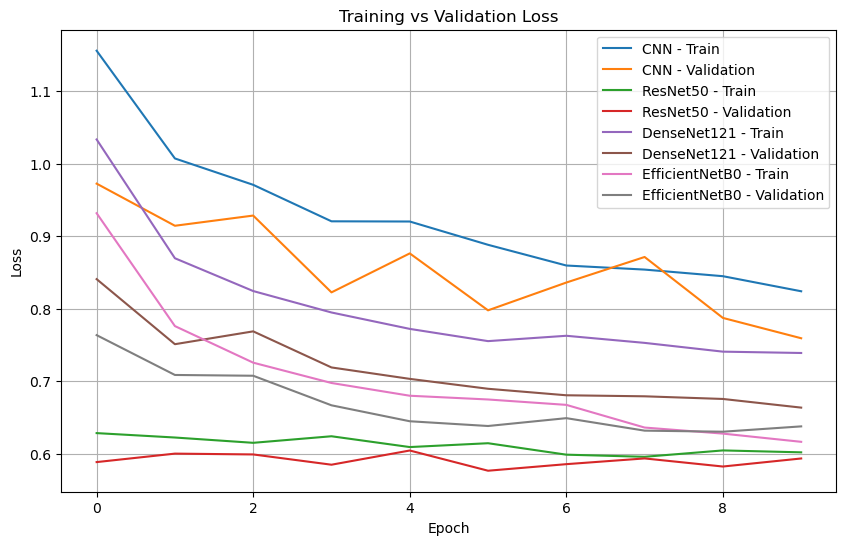
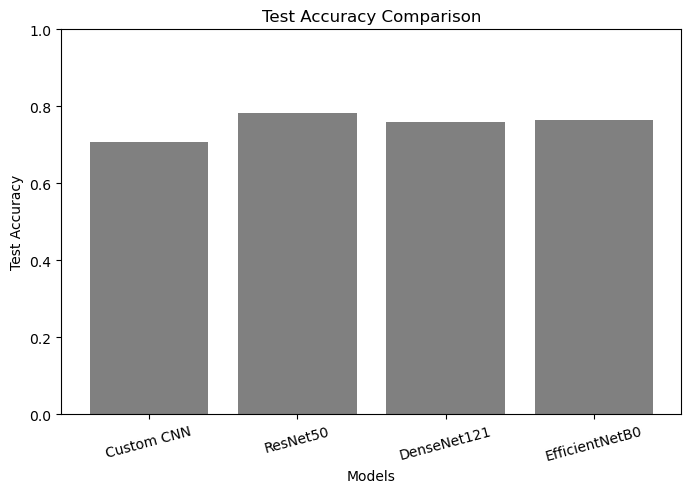
I used the HAM10000 dataset (10,015 dermoscopic images, 7 classes). After cleaning and preprocessing (resizing to 224×224, normalizing, augmenting), I trained and compared multiple models — a custom CNN, ResNet50, DenseNet121, and EfficientNetB0. ResNet50 performed best, so I fine-tuned it and added class weighting to fix the heavy class imbalance (one class, "nv," had way more images than the rest). The final model was wrapped in a Streamlit web app for image upload, prediction, visualization, and PDF reporting.
Challenges we ran into
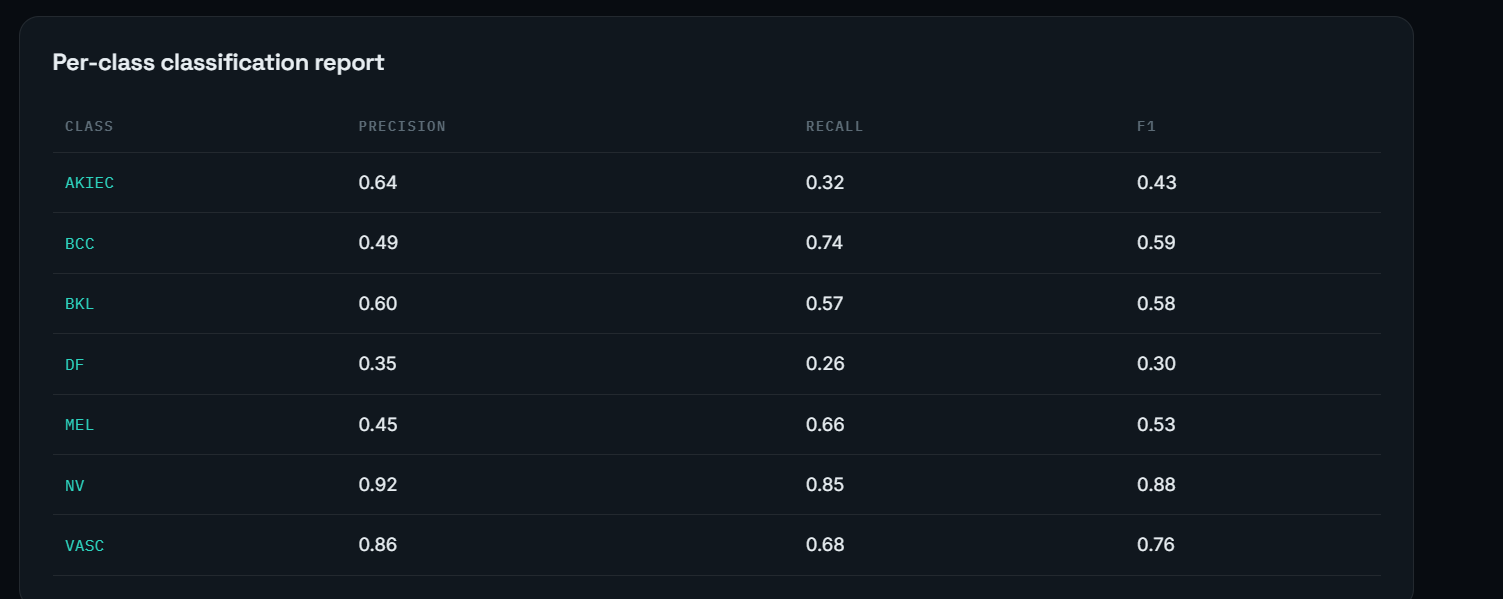
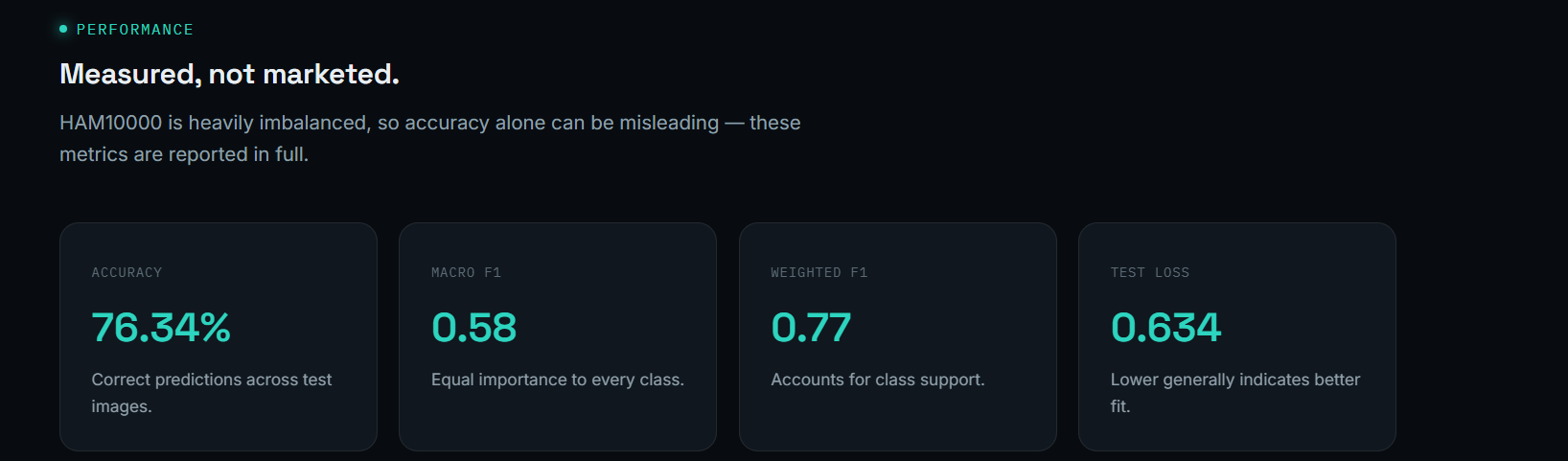
The biggest challenge was class imbalance — the model could get high accuracy just by favoring the majority class, so I had to track Macro F1 and per-class precision/recall instead of relying on accuracy alone, and use class weights during training to force the model to pay attention to rare classes.
Accomplishments that we're proud of
Getting a working end-to-end pipeline — from raw dataset to a deployed, interactive app with real predictions, visual explanations, and PDF reports — and achieving 76% test accuracy with a 0.77 weighted F1 despite heavy class imbalance.
What we learned
Practical deep learning skills: transfer learning, fine-tuning, data augmentation, handling imbalanced datasets, evaluating models beyond accuracy, and turning a trained model into a usable, user-facing application.
What's next for SkinSight AI
Adding explainability (Grad-CAM), better minority-class recall (e.g., focal loss), model ensembling, confidence calibration, and eventually cloud/API deployment.
Built With
- css
- html
- javascript
- keras
- matplotlib
- numpy
- pandas
- pil
- plotly
- python
- reportlab
- resnet50
- scikit-learn
- seaborn
- tensorflow

Log in or sign up for Devpost to join the conversation.