-
-
-
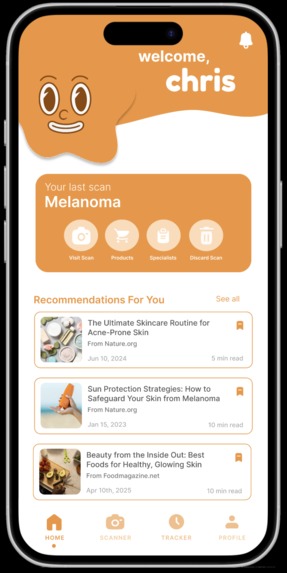
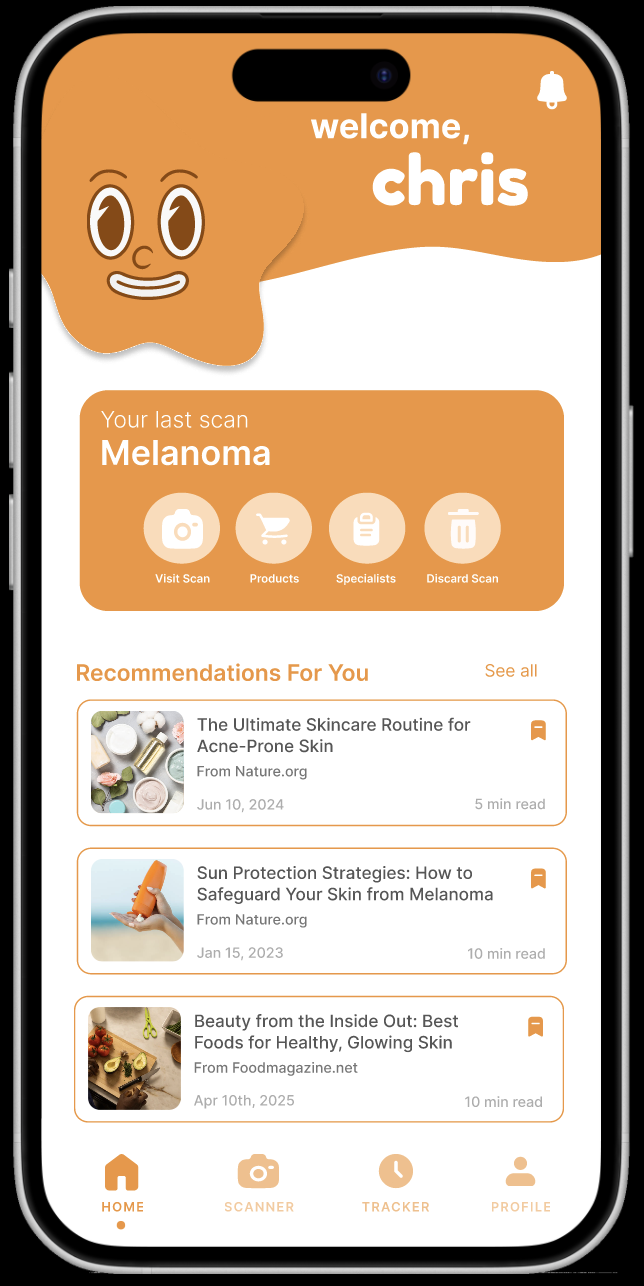
Home screen
-
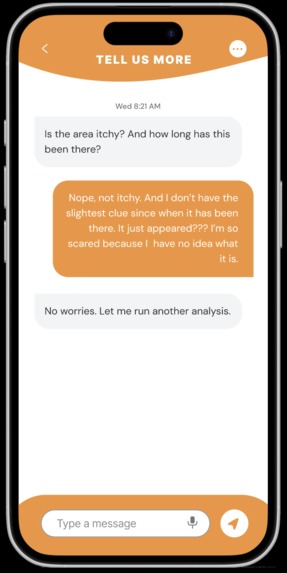
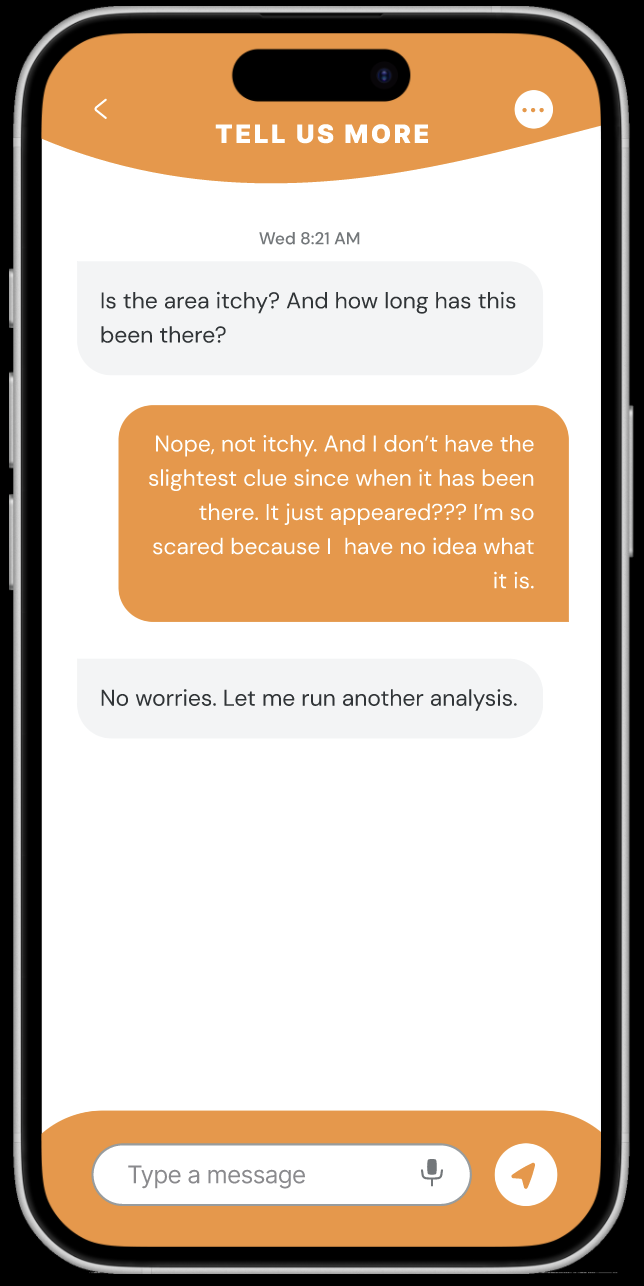
Chat with AI about additional symptoms to help it make a diagnosis
-
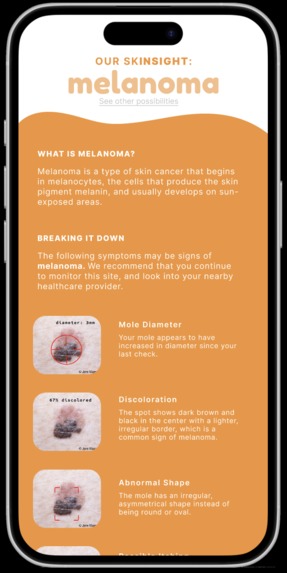
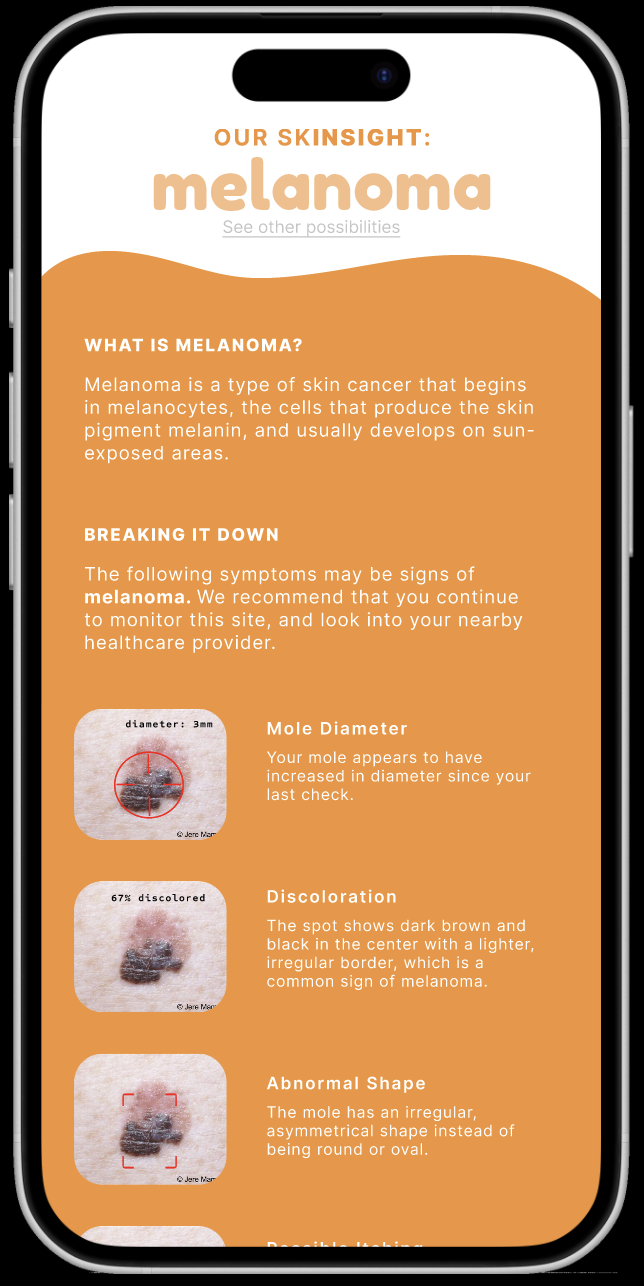
Final diagnosis based on the scan and additional symptoms.
Inspiration
It can be difficult, time-consuming, and expensive to secure medical appointments, particularly for dermatology. When dealing with a skin concern, it’s often hard to tell if the issue is serious enough to warrant the time and cost of seeing a healthcare professional, especially with the risk that it could resolve on its own. Skin issues impact everyone at different stages of life - from acne during puberty to more complex conditions and cancer risks with age - yet they are often hard to talk about and can deeply affect self esteem.
Recognizing these challenges, we wanted to create a tool that makes skin health more accessible, less intimidating, and easier to manage day-to-day. Skinsight is designed to be inclusive of all ages, genders, and backgrounds, with the goal of destigmatizing skin concerns and promoting confidence across all communities.
What it does
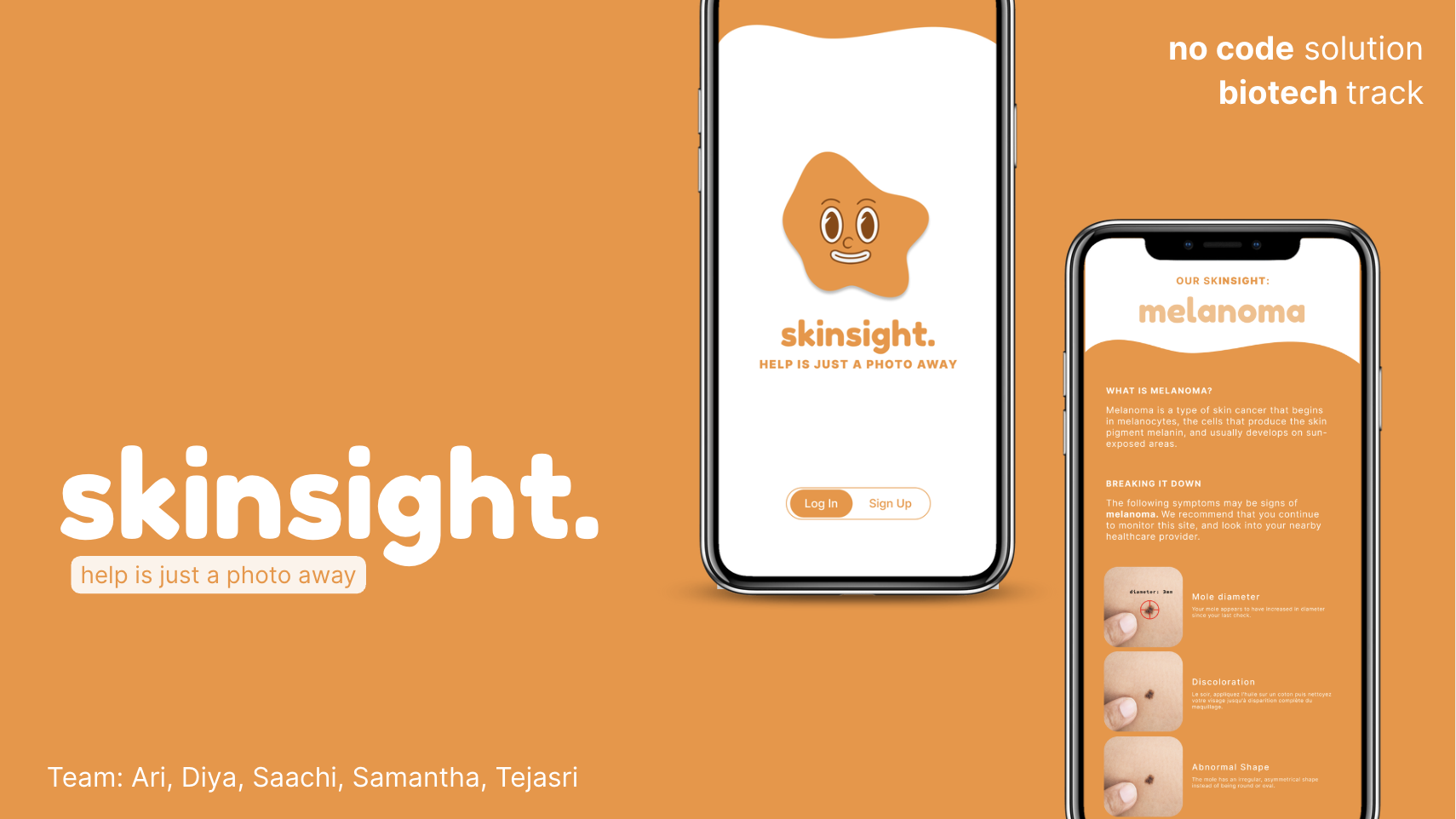
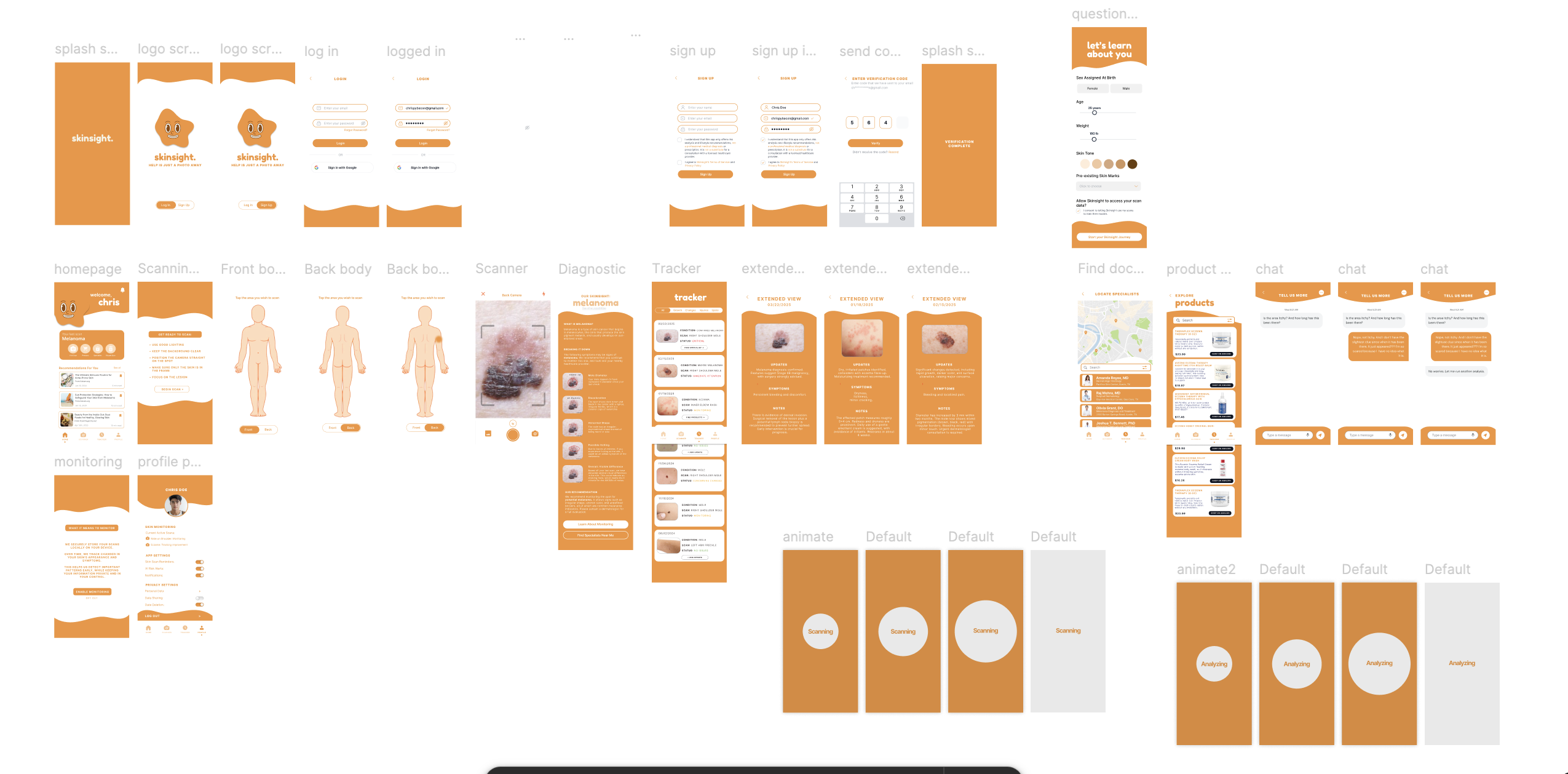
Skinsight is a preventative diagnostic tool designed for those who face long wait times, limited access to doctors, or live far from dermatology specialists. It helps users assess their skin concerns early, offering guidance on whether professional care is needed, and reducing the uncertainty, cost, and stress of seeking treatment. Skinsight can also be used for users to receive product recommendations according to their skin needs.
While Skinsight is not a replacement for a healthcare provider, it gives users a better understanding of the severity of their skin condition, providing helpful insights on when it might be necessary to seek professional care.
User Survey & Statistics
To better understand consumer needs and health patterns, we conducted a survey focused on common dermatological concerns and experiences with healthcare access.
Our findings revealed that 83% of participants are unlikely to see a healthcare professional when first encountering a skin concern. In dermatology, this hesitation can result in delayed diagnosis, missed opportunity for intervention, which both cause unnecessary stress.
Additionally, 41% of participants reported experiencing skin issues several times a year, while 31% indicated they experience skin issues chronically or very often. These insights highlight the ongoing need for accessible, supportive tools like Skinsight to help users manage their skin health proactively.
How we built it
To create the most user-friendly experience, we reflected on our personal struggles with skin issues and healthcare access, and reflected these challenges onto the features of Skinsight through intentional design.
Healthcare environments can often feel cold and sterile — we want to bring users the opposite of this feeling through a warm, inviting design. Our app uses friendly colors and approachable language to create a comforting experience. Skinsight is designed to feel less like a clinical tool and more like a companion, making users feel at ease while addressing their skin health needs.
Our user survey was integral in identifying the most important features to include. When drafting the key components of the app, we prioritized quality over quantity, carefully considering different edge cases and use scenarios.
Challenges we ran into
One of the biggest challenges we faced was the risk of misdiagnosis. While Skinsight provides users with insights and recommendations, we recognized that skin conditions can vary greatly from person to person. We made it a priority to clearly communicate that the app is not a substitute for professional medical advice, but rather a tool for early guidance. This way, users can make informed decisions about whether to seek further care.
Accomplishments that we're proud of
We're proud of the depth of technical and business knowledge we've gained while building Skinsight. On the technical side, we gained hands-on experience with cloud-based technologies, including leveraging Microsoft's Azure platform for machine learning and image classification in a healthcare context. We also refined our understanding of using large language models responsibly, particularly in sensitive fields like health, where privacy and ethical considerations are paramount.
On the business side, we learned key strategies for product development, building sustainable business models, and marketing a specialized service in a competitive industry. As a team of STEM-focused individuals, transitioning into business and entrepreneurship was a valuable and eye-opening process that gave us insights into how technology and business intersect to create impactful solutions.
What we learned
Throughout the development of Skinsight, we learned a tremendous amount about both technology and business. On the technical side, we explored Microsoft's Azure Cognitive Services (Health and Vision APIs) and Azure Custom Vision, gaining hands-on experience with training custom machine learning models for image classification in healthcare contexts. We also deepened our understanding of how large language models (LLMs) can be responsibly used in sensitive fields like health, especially when it comes to user privacy, consent, and model training with real-world medical data.
On the business side, we learned how to think more strategically about product development, sustainable revenue models, and marketing a health-focused service. Since our team comes entirely from STEM backgrounds, gaining real exposure to business planning and entrepreneurship was an especially valuable and eye-opening experience for us.
What's next for Skinsight?
- Global Expansion: Our goal is to expand Skinsight’s reach to a global market, tailoring the platform to meet the unique healthcare needs of various regions.
- Partnerships with Primary Care Providers: Seeking partnerships will help us improve education and research in skin health, contributing to a more informed healthcare community.
- Live-Chat with Healthcare Professionals: This allows users to connect with healthcare professionals remotely for consultations, advice, and follow-ups on their skin health. Through secure video consultations, we aim to provide personalized care that complements the technology
Built With
- figma


Log in or sign up for Devpost to join the conversation.