-
-
logo
-
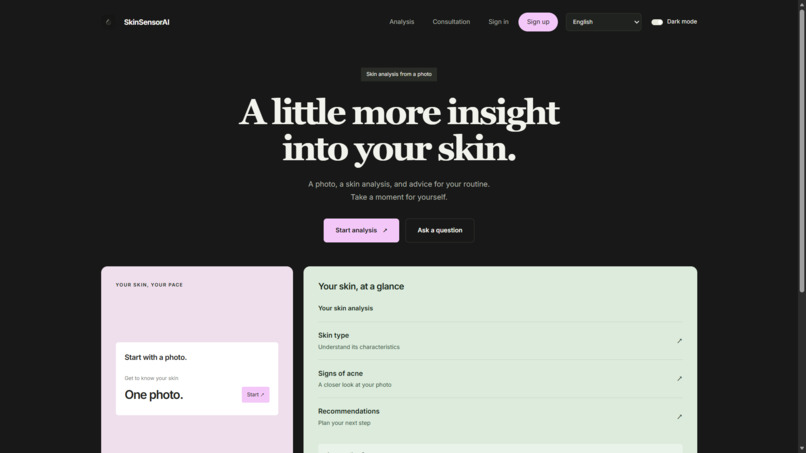
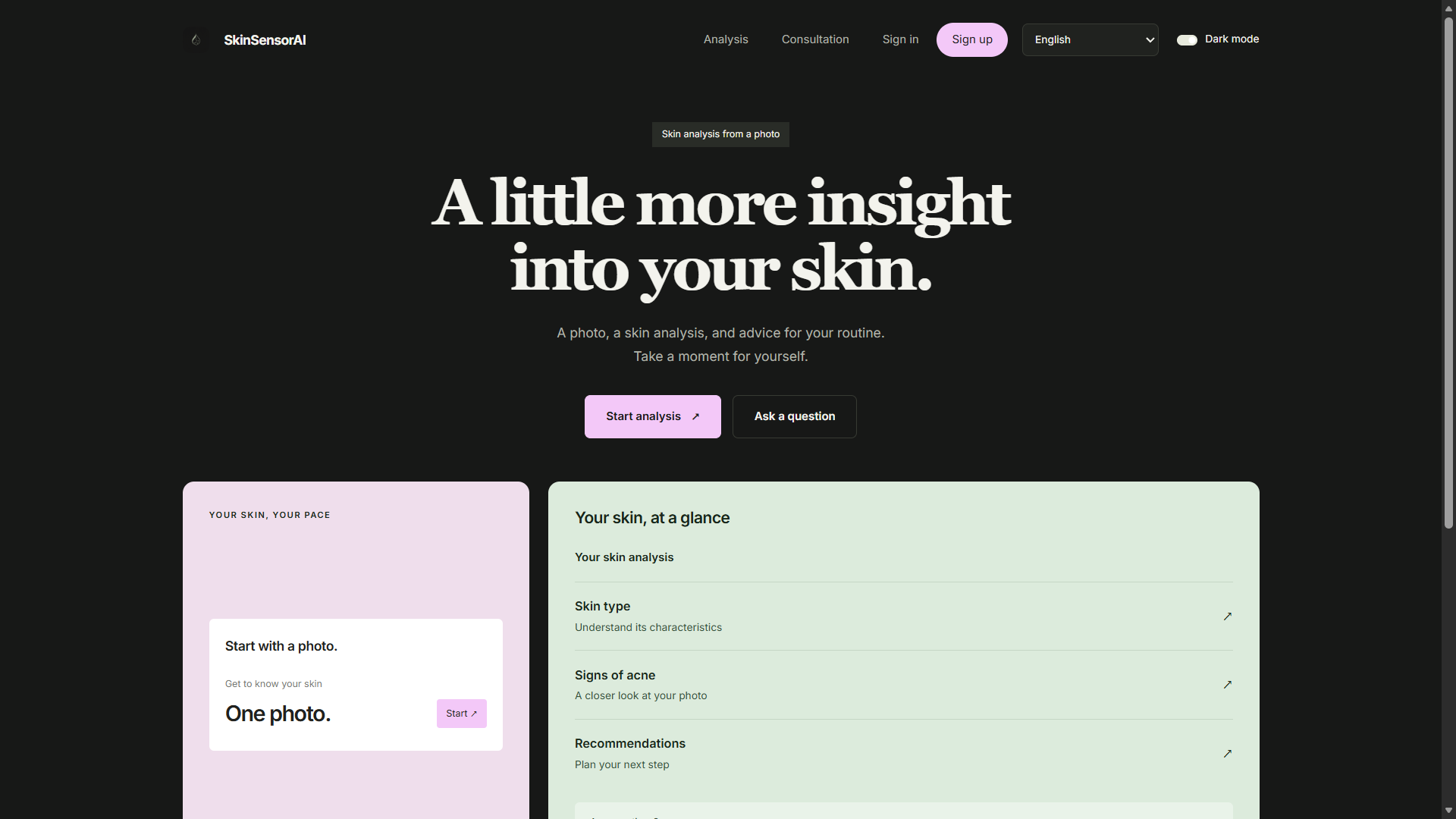
main page
-
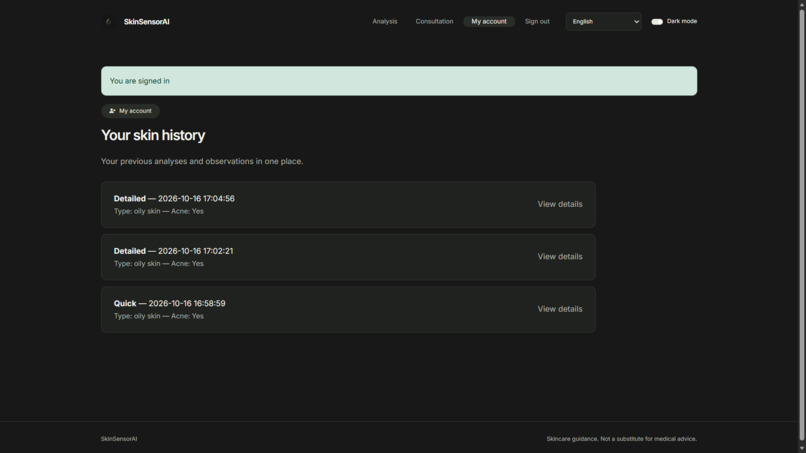
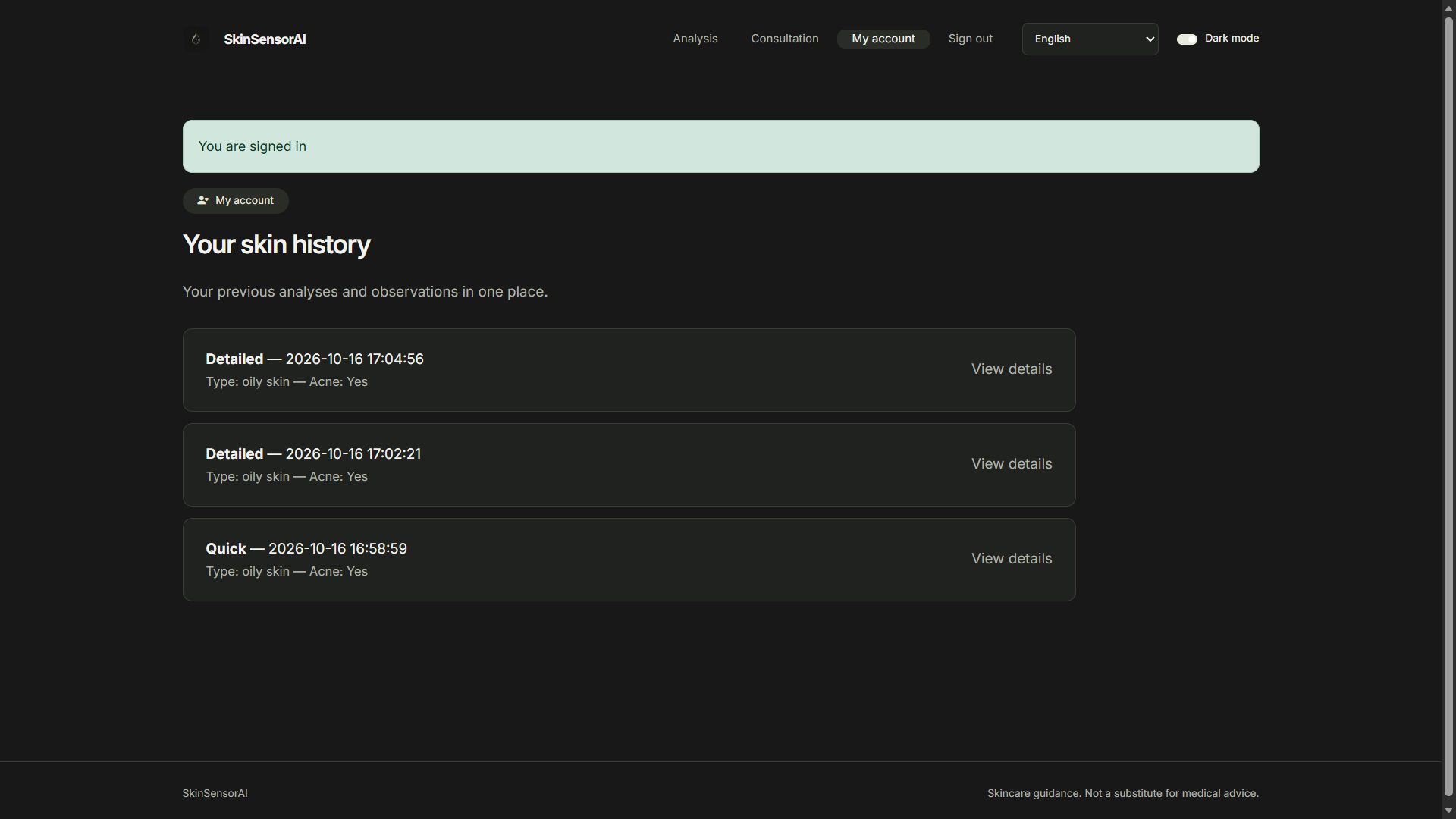
account page
-
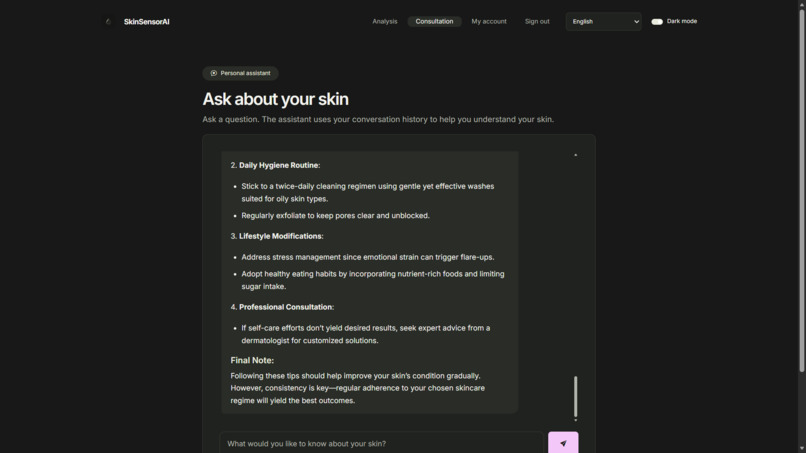
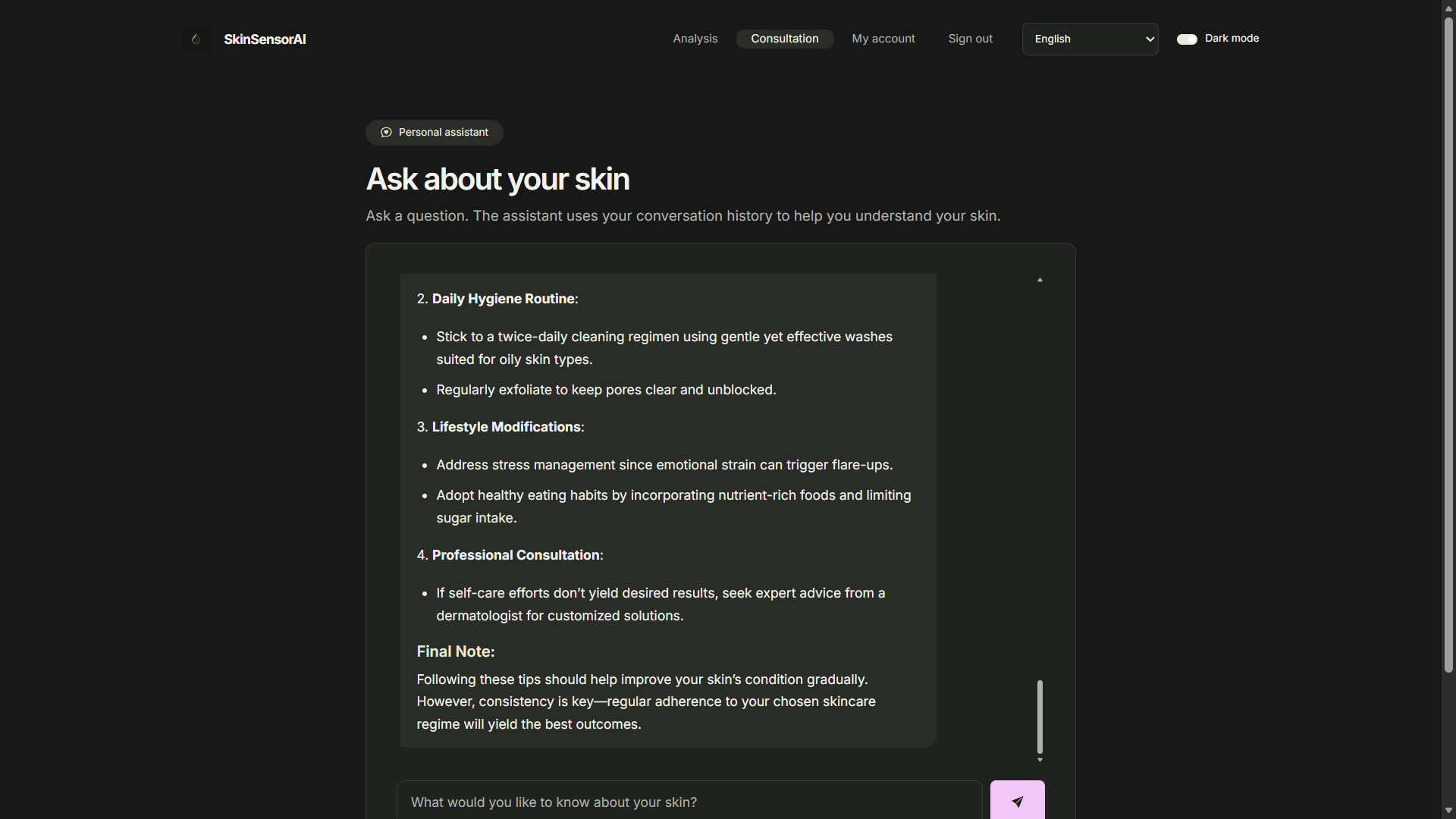
consultation
Inspiration
Skincare advice can be difficult to navigate when you are unsure about your skin type or what a product recommendation means for you. We wanted to create a simple way to explore these questions using a photo and ask follow-up questions about the results. That idea became SkinSensorAI.
What it does
SkinSensorAI is a web application that analyses skin photos to estimate skin type and identify signs of acne. Users can review their results, receive general skincare suggestions, and save previous analyses in their personal accounts.
The platform also includes an AI assistant powered by GigaChat. It uses recent analysis results and conversation history to provide relevant responses. The interface supports 11 languages, and the assistant responds in the selected language.
SkinSensorAI provides general skincare guidance and does not replace a dermatologist or a medical diagnosis.
How we built it
We began working on SkinSensorAI in April 2026. At that stage, we had trained the initial AI models, but there was no website around them.
During the summer, we built a web application that made the models accessible through a browser. We used Python and Flask for the backend, Keras and PyTorch for image analysis, and SQLite for storing account information and analysis history. We integrated the GigaChat API for consultations and deployed the website on PythonAnywhere.
Over the following months, we gradually improved both the website and the models. We added features to make the service more convenient, including saved results, contextual consultations, and language selection.
Our team consists of three people. All three of us contributed to the code, design, and presentation.
Challenges we ran into
One of our main challenges was turning the trained models into a complete application. We needed to connect image uploads, model predictions, saved results, and consultations so they worked together consistently.
Running models built with different frameworks also required careful integration. Deploying them within the hosting environment introduced additional constraints around dependencies and resources.
Privacy was another important concern because the application handles personal photos and conversations. We added account access checks, upload validation, and request protections, and kept private data and credentials outside the public repository.
Accomplishments that we're proud of
We are proud of taking SkinSensorAI from an initial set of trained models in April to a working online platform by October 2026.
The project now connects photo analysis with saved history and follow-up consultations. Its multilingual interface makes the core experience available in 11 languages.
We are also proud of the steady improvements made throughout development. Alongside new features and model updates, we added automated checks for security and localization to help keep the application reliable as it grows.
What we learned
We learned that a useful AI application depends on much more than its models. Uploading a photo, understanding a result, and asking a follow-up question all need to feel clear and connected.
We gained experience integrating different machine learning frameworks, managing account data, and deploying an application with limited hosting resources. We also learned to distinguish model confidence from demonstrated accuracy and to communicate the limitations of AI-generated guidance.
Working as a team of three helped us coordinate changes across the code, interface, and presentation while sharing responsibility for the final product.
What's next for SkinSensorAI
We plan to evaluate the models more thoroughly across different lighting conditions, image quality levels, and skin tones. We also want feedback from qualified dermatology professionals to improve the clarity and appropriateness of the guidance.
For the website, our priorities include a smoother mobile experience and easier comparison of saved analyses over time. We will continue improving language support and consultations while keeping privacy and usability central to the project.


Log in or sign up for Devpost to join the conversation.