-
-
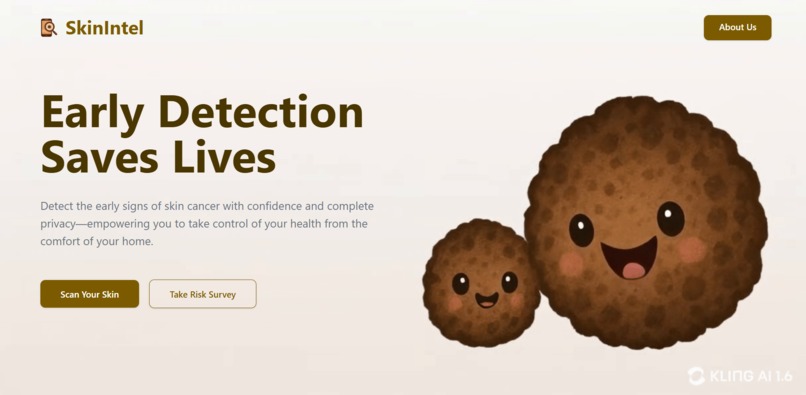
SkinIntel
-
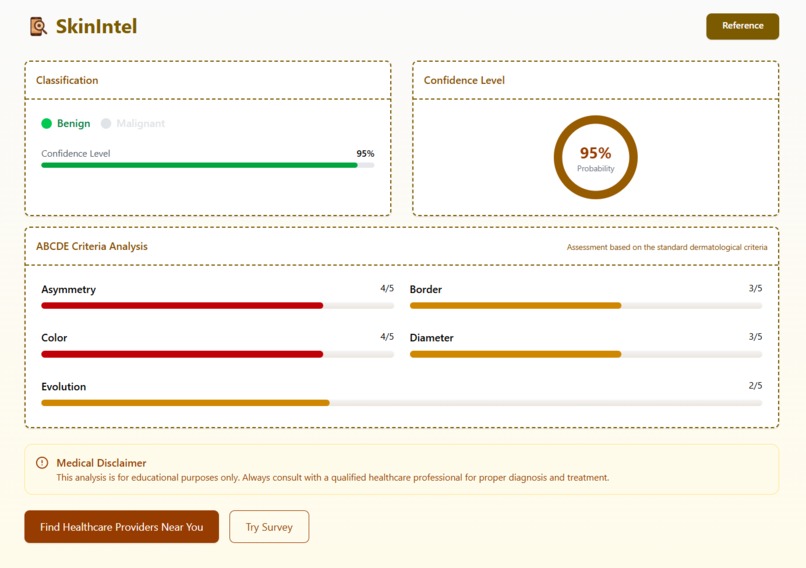
Result
-
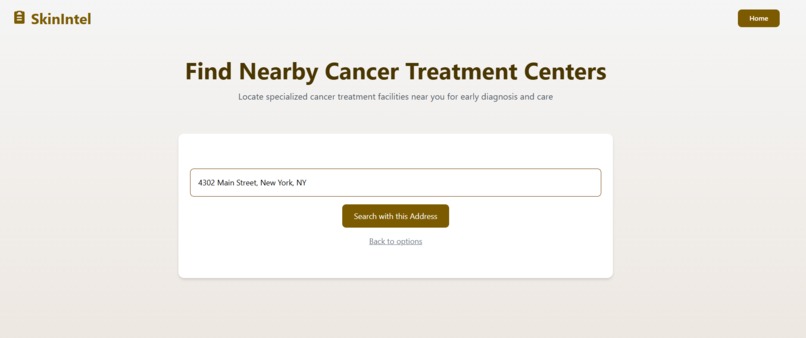
Search for Hospital and Cancer Center
-
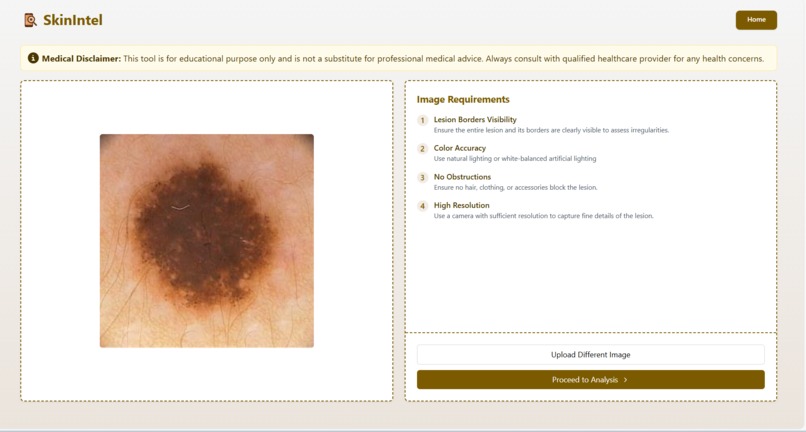
Upload Image
-
Overview
Inspiration
Skin cancer is one of the most common and yet highly treatable forms of cancer—if detected early. However, access to dermatologists is limited in many areas, and even when available, early warning signs can be overlooked. We wanted to bridge this gap by combining the power of AI with clinically proven diagnostic frameworks to provide accessible, accurate, and interpretable skin lesion analysis to anyone, anywhere.
What it does
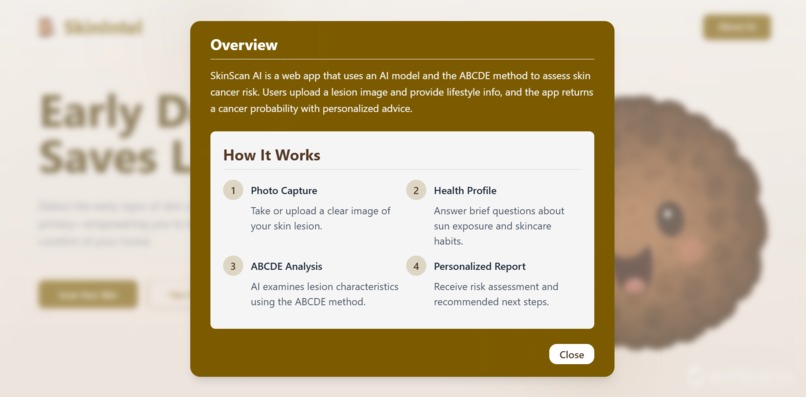
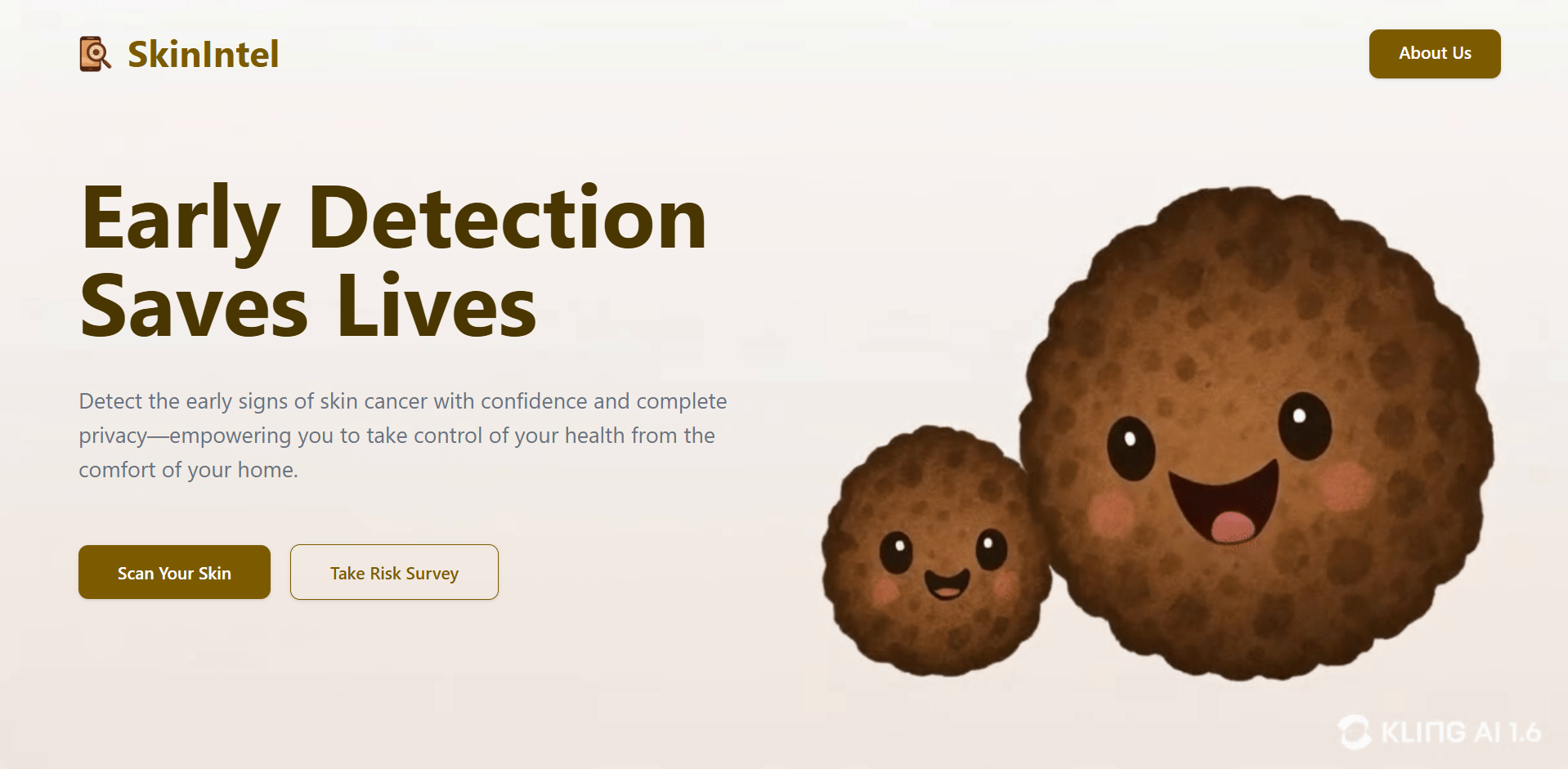
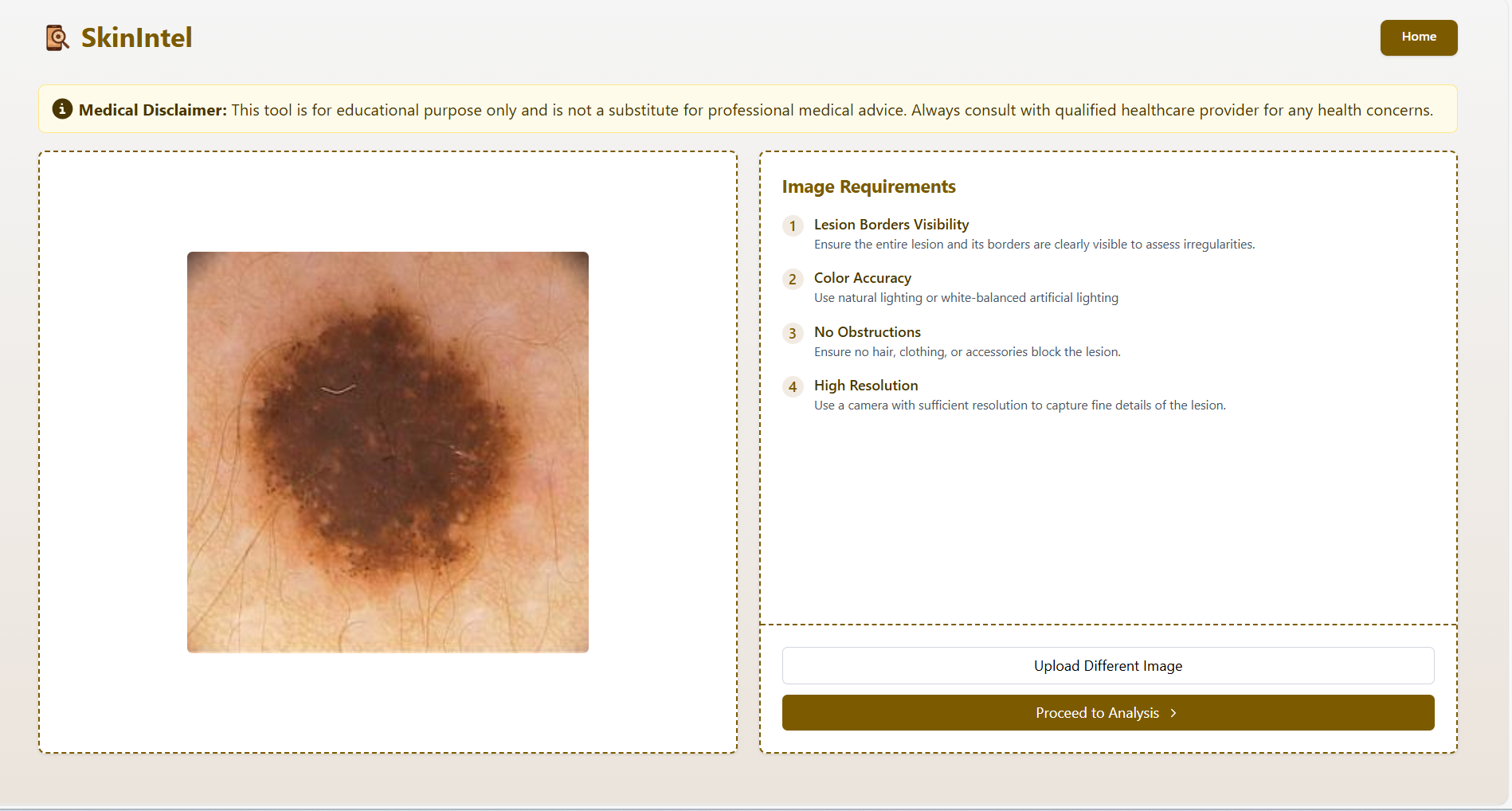
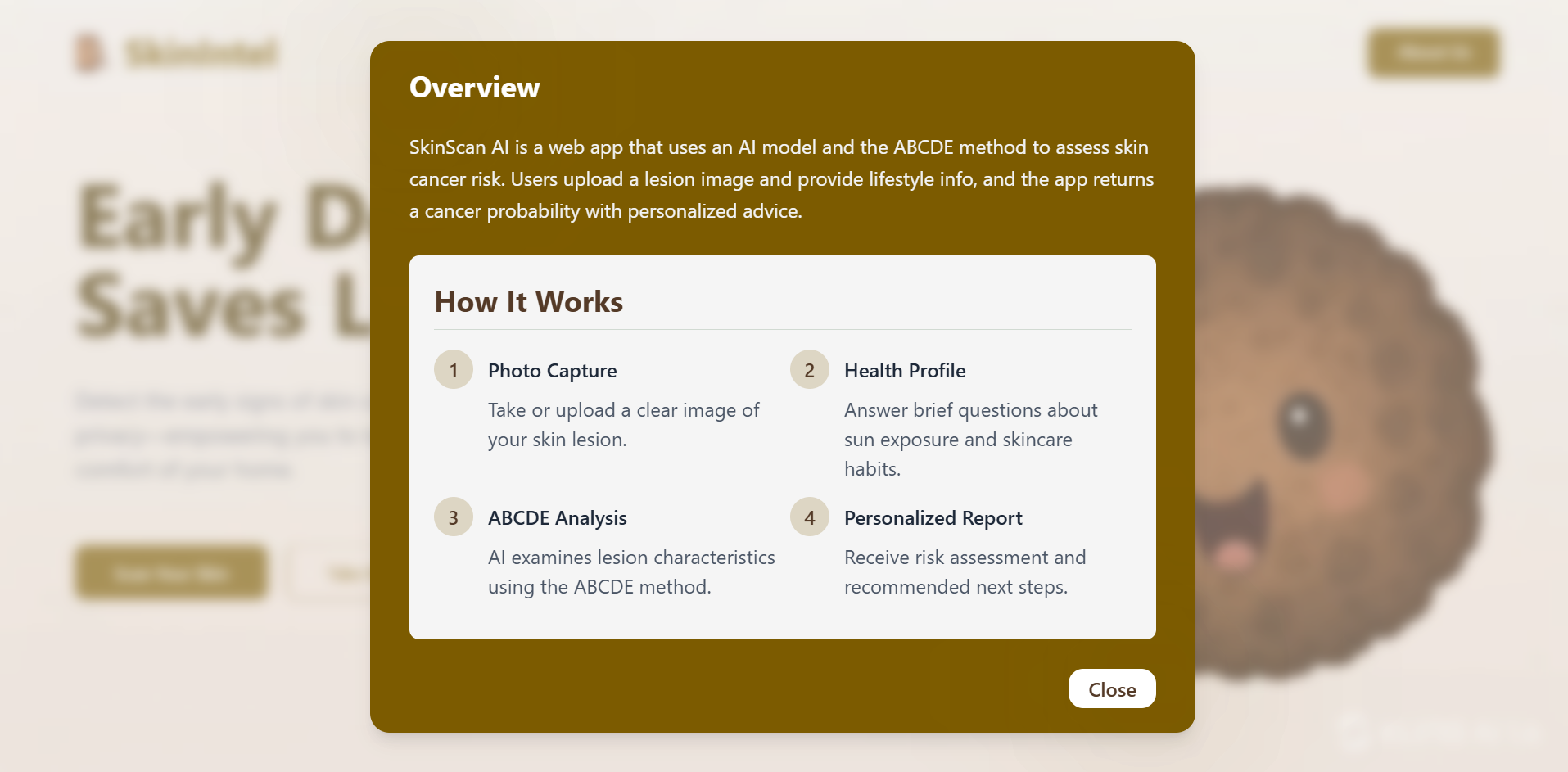
SkinIntel is an AI-powered platform designed to detect skin cancer from dermatoscopic images using advanced deep learning techniques integrated with the ABCDE rule of dermatology. It provides:
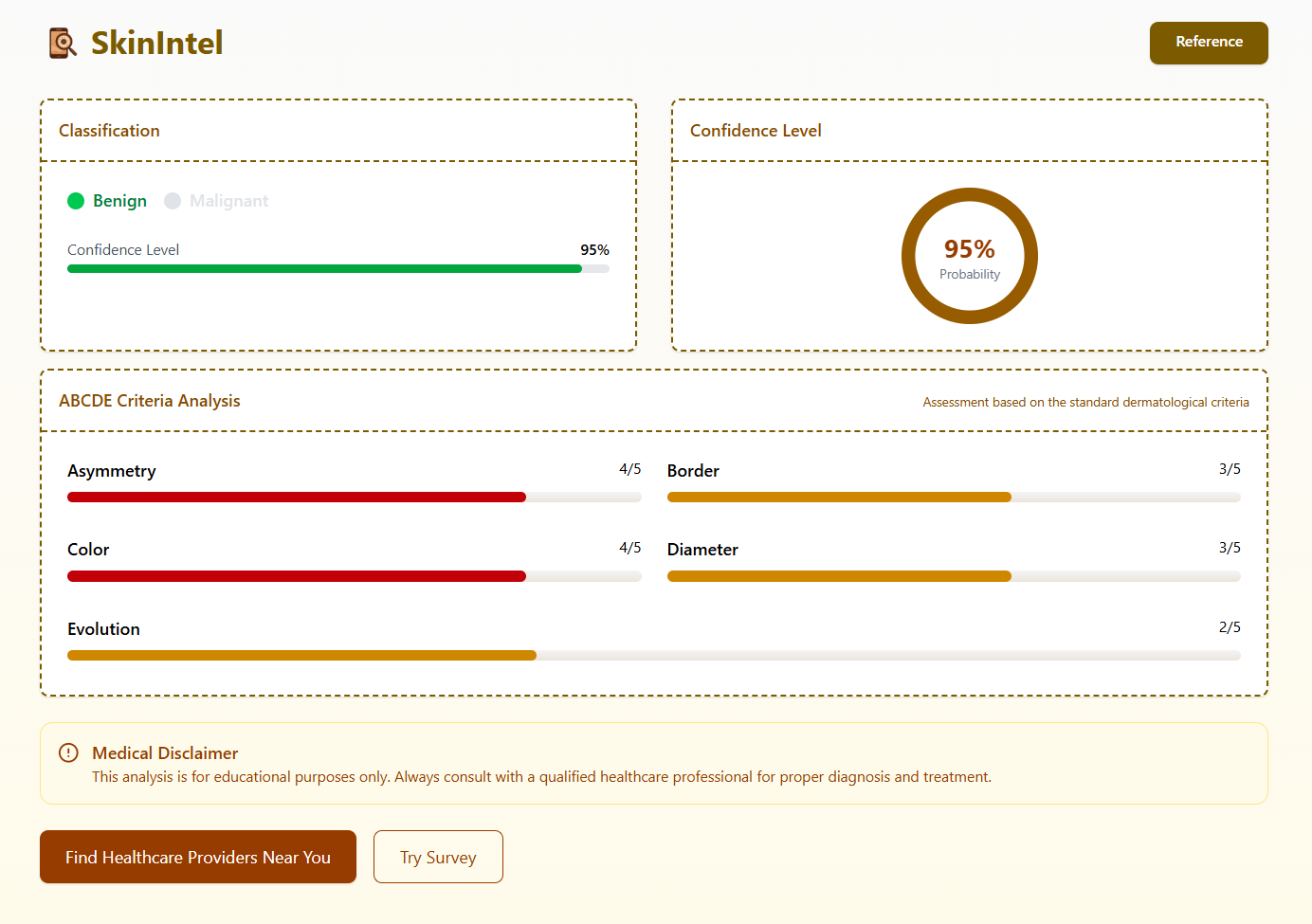
- Real-time skin lesion classification (benign vs. malignant)
- Detailed ABCDE breakdown for transparency
- Personalized risk assessment based on user data
- Recommendations for next steps
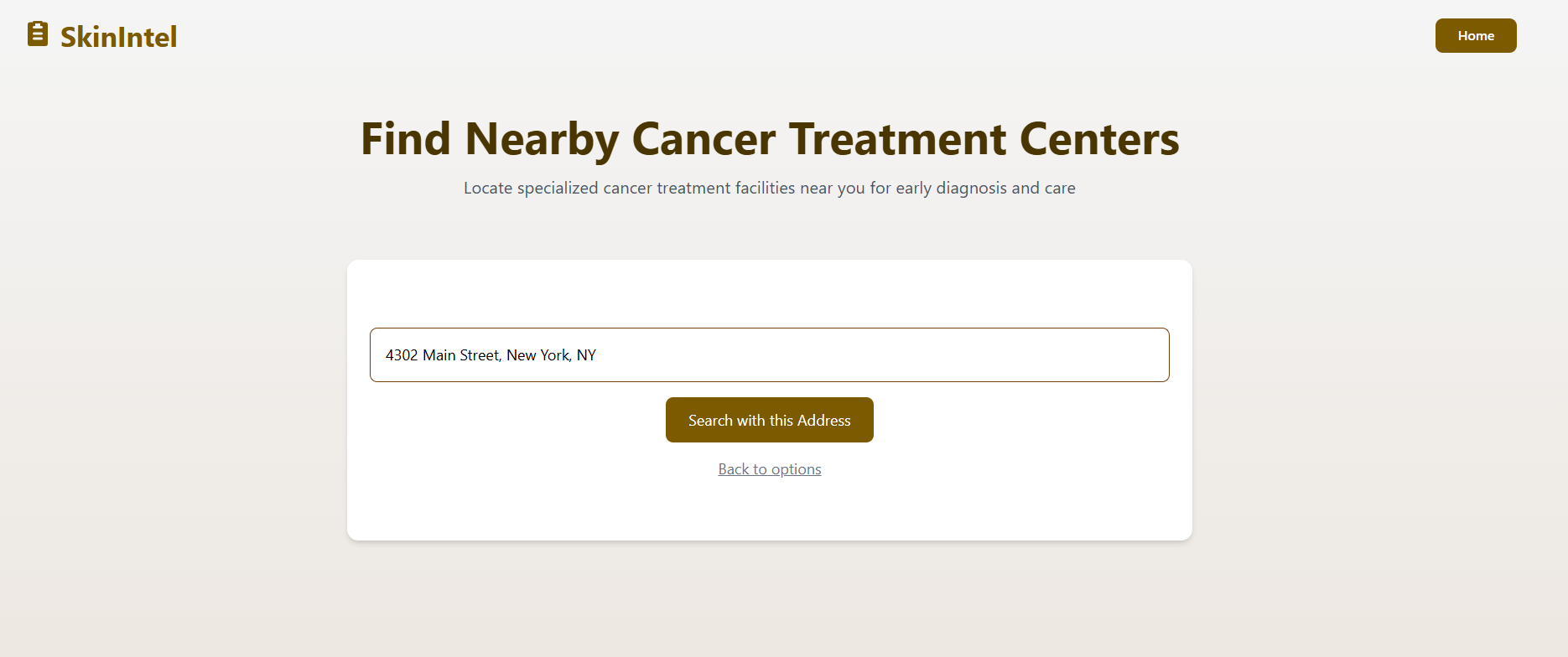
- A healthcare provider locator with optimized routing to the nearest dermatologists or cancer centers
How we built it
We built SkinIntel using a hybrid tech stack:
- Frontend: Vite + React + Tailwind CSS for a responsive, accessible UI
- Backend: FastAPI in Python to manage API endpoints and data flow
- AI/ML Models: PyTorch and TensorFlow to implement CNNs (ResNet-50, Inception-v3) and U-Net for segmentation
- Data: Trained on HAM10000, ISIC, NIH, and proprietary clinical images
- Integration: Google Maps API for real-time healthcare locator, Dijkstra's algorithm for routing
- Deployment: Dockerized for smooth local and cloud deployment
Challenges we ran into
- Data Quality & Balance: Managing class imbalance in skin lesion datasets required careful preprocessing and augmentation.
- Model Interpretability: Ensuring the AI's decisions were explainable to both clinicians and non-experts was a core focus that took extensive iteration.
- UI Accessibility: Meeting WCAG 2.1 standards while keeping the interface modern and intuitive was a delicate balance.
- Integration Complexity: Integrating various components like AI models, survey logic, Google Maps API, and healthcare routing was technically challenging but rewarding.
Accomplishments that we're proud of
- Achieving 91.3% accuracy, 93.2% specificity, and 0.944 AUC-ROC, outperforming industry benchmarks
- Successfully merging clinical heuristics (ABCDE) with deep learning for enhanced interpretability
- Designing a user-friendly interface that works seamlessly across all devices
- Developing a fully working prototype with real-time lesion analysis and specialist locator
What we learned
- AI alone is not enough—interpretability, accessibility, and user trust are equally important in healthcare applications
- Real-world datasets present real-world challenges—messy, imbalanced, and varied—but they also lead to more robust models
- Cross-disciplinary collaboration between AI developers, UX designers, and medical professionals yields more meaningful and usable solutions
What's next for SkinIntel
Roadmap
Mobile App Launch: Develop native iOS and Android versions to increase accessibility EHR Integration: Enable direct integration with electronic health records for seamless clinical workflows Global Reach: Add multi-language support and regional skin type calibration for broader usability Time-Series Analysis: Track lesion evolution over time for enhanced diagnostic insights Telehealth Features: Connect users directly with dermatologists for virtual consultations Privacy-First Learning: Implement federated learning to improve model accuracy while preserving user privacy Expand Use Cases: Extend AI support to detect other dermatological conditions like psoriasis, eczema, and acne API Marketplace: Launch a developer API ecosystem to support third-party healthcare and research integration
Features
AI-Powered Analysis
- Multi-model ensemble approach for maximum accuracy
- Segmentation + classification pipeline
- Clinically-validated against dermatologist diagnoses
ABCDE Framework Integration
- Asymmetry detection using contour analysis
- Border irregularity measurement
- Color variation quantification
- Diameter and size estimation
- Evolution tracking capabilities
User Experience
- Intuitive upload and analysis flow
- Clear visualization of results
- Personalized recommendations
- Mobile-first responsive design
Healthcare Integration
- Provider locator with distance calculation
- Direct referral capabilities
- Secure medical data handling (HIPAA compliant)
Team

Thuy Trang Ta Member 1 |

Xuan Gia Han Nguyen Member 2 |

Tuan Khang Phan Member 3 |

Tan Hoang Khoa Nguyen Member 4 |
Built With
- fastapi
- google-maps
- html
- javascript
- numpy
- onnx
- opencv
- python
- pytorch
- react.js
- scikit-learn
- tailwindcss
- tensorflow
- vite


Log in or sign up for Devpost to join the conversation.