-
-
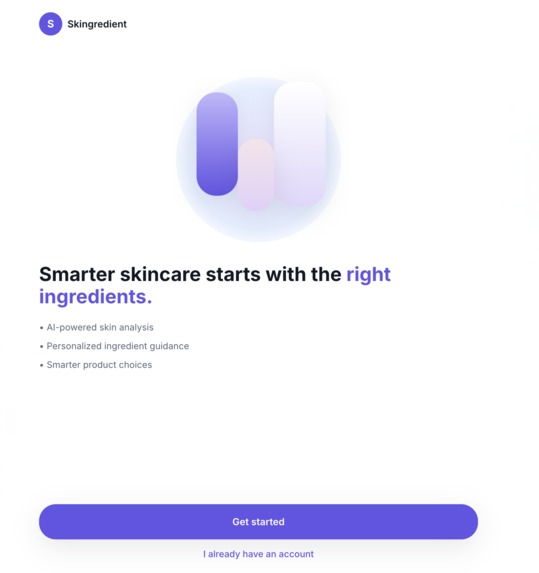
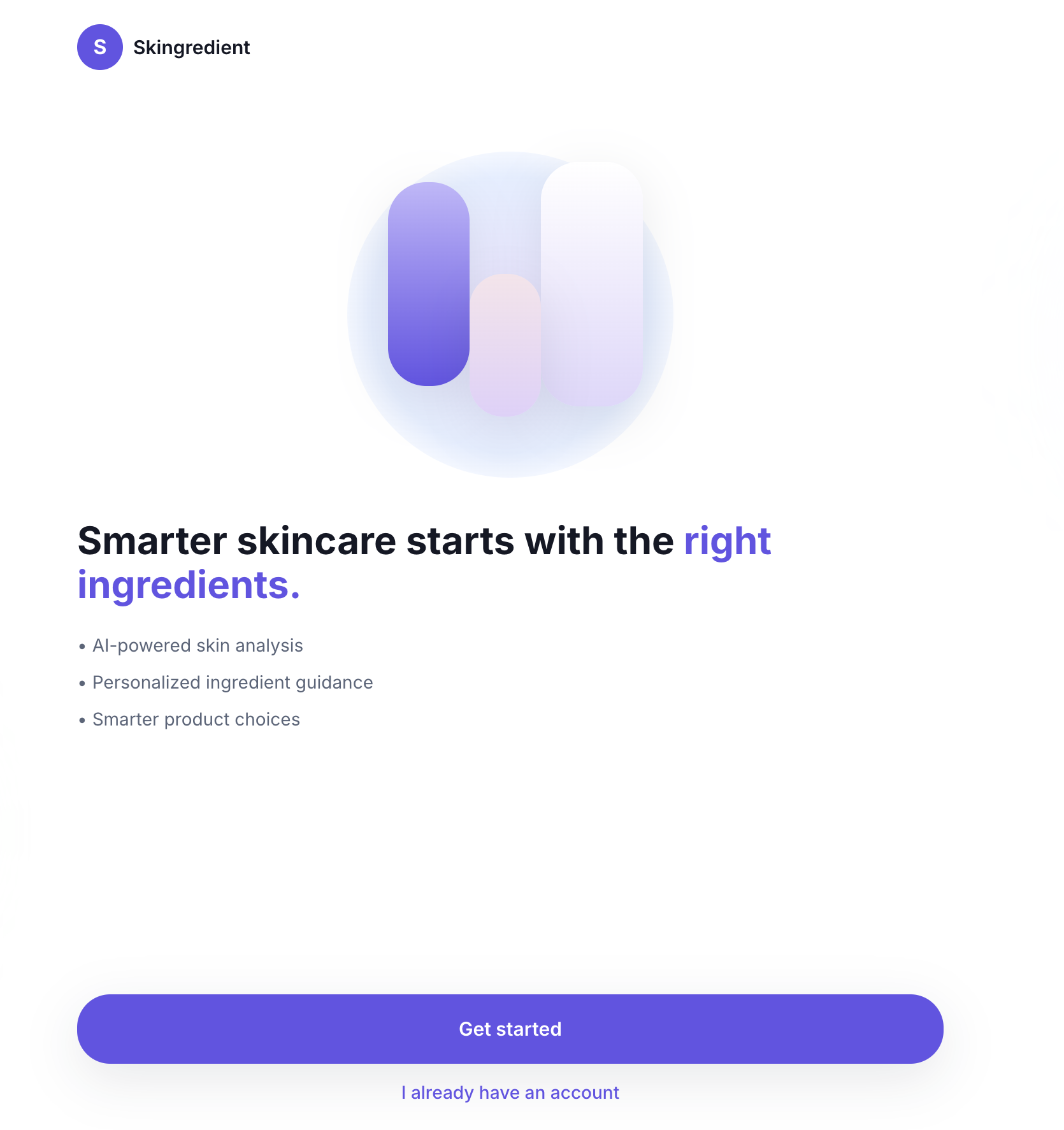
Welcome Page
-
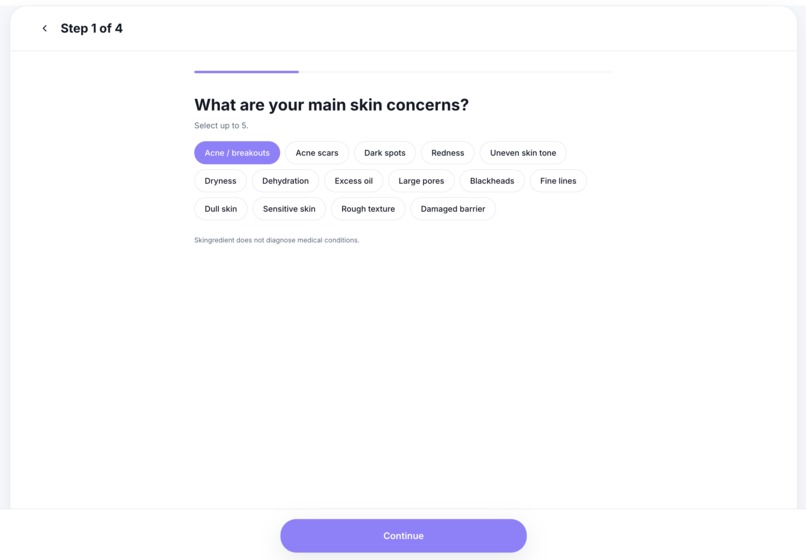
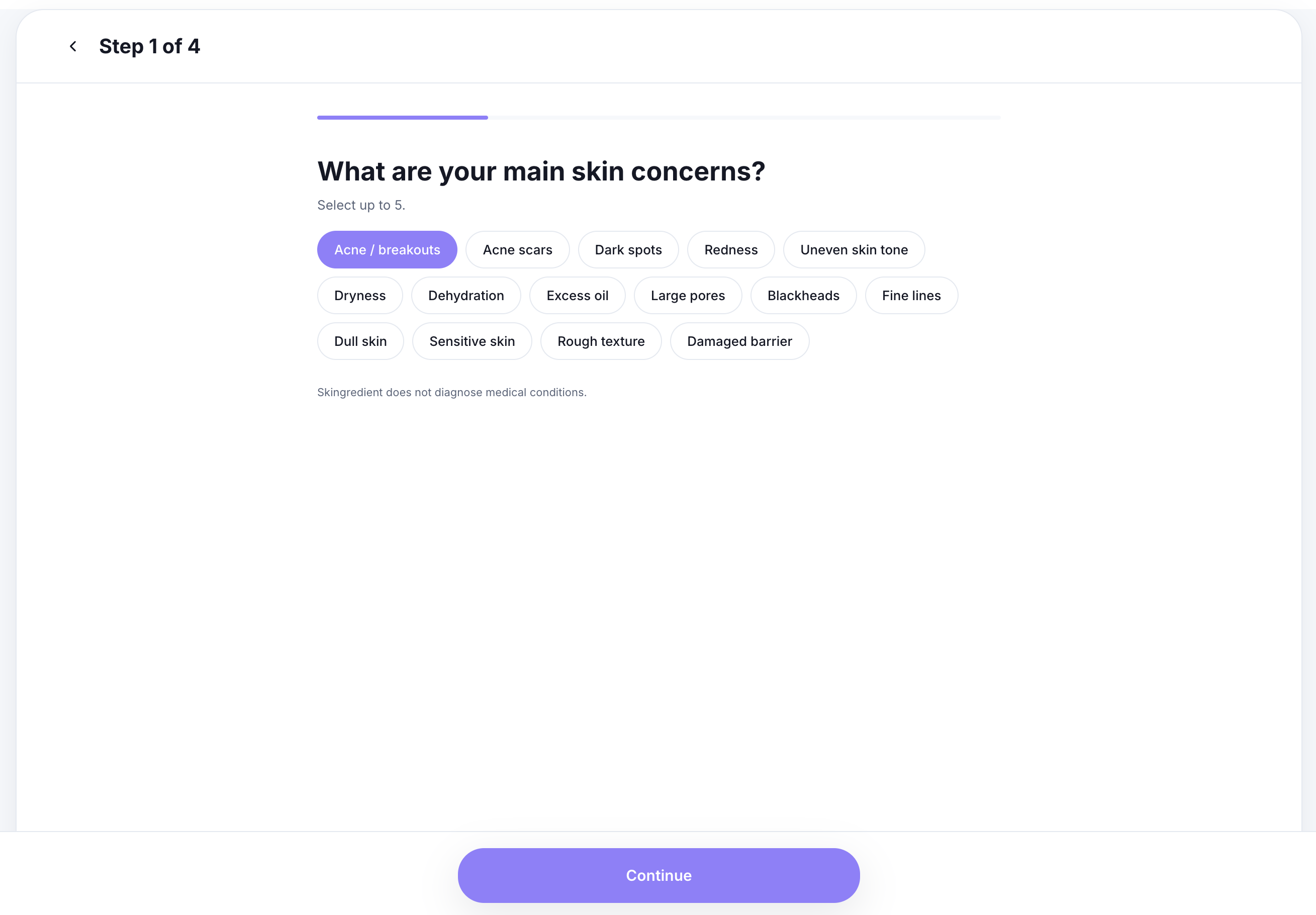
Onboarding Survey
-
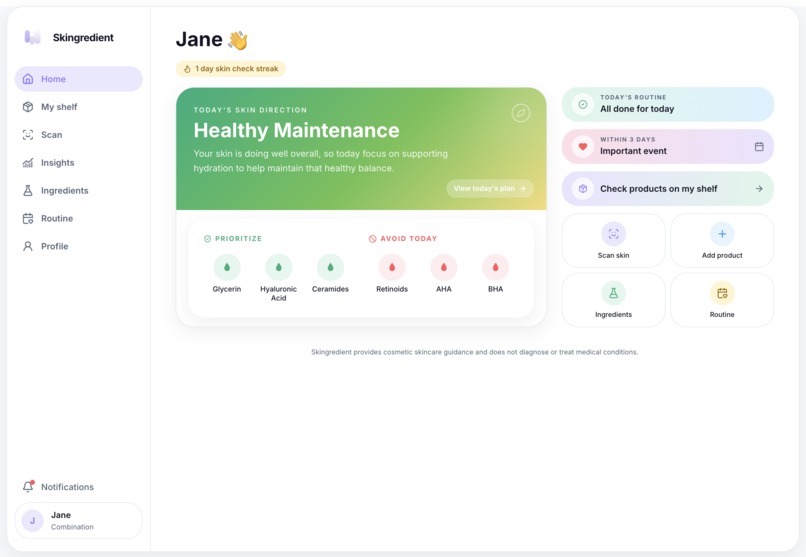
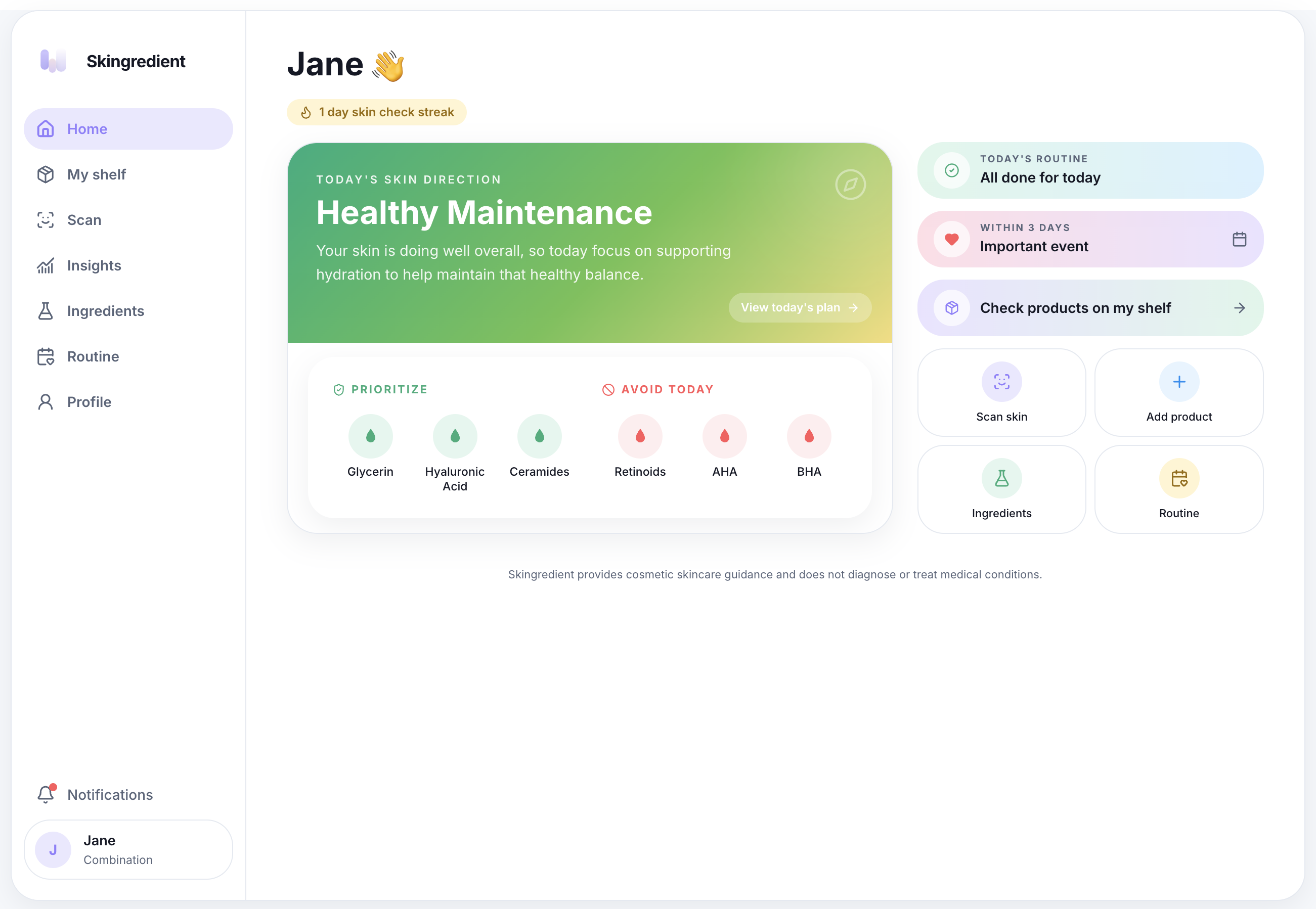
Home
-
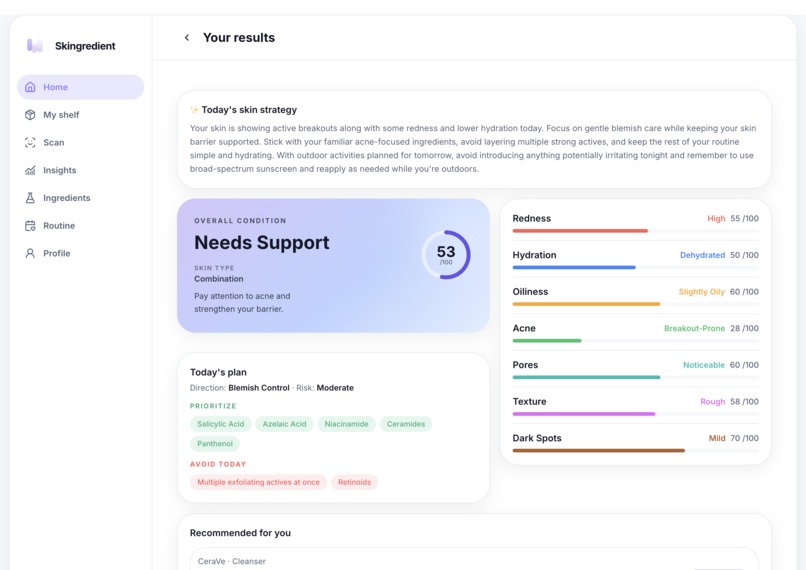
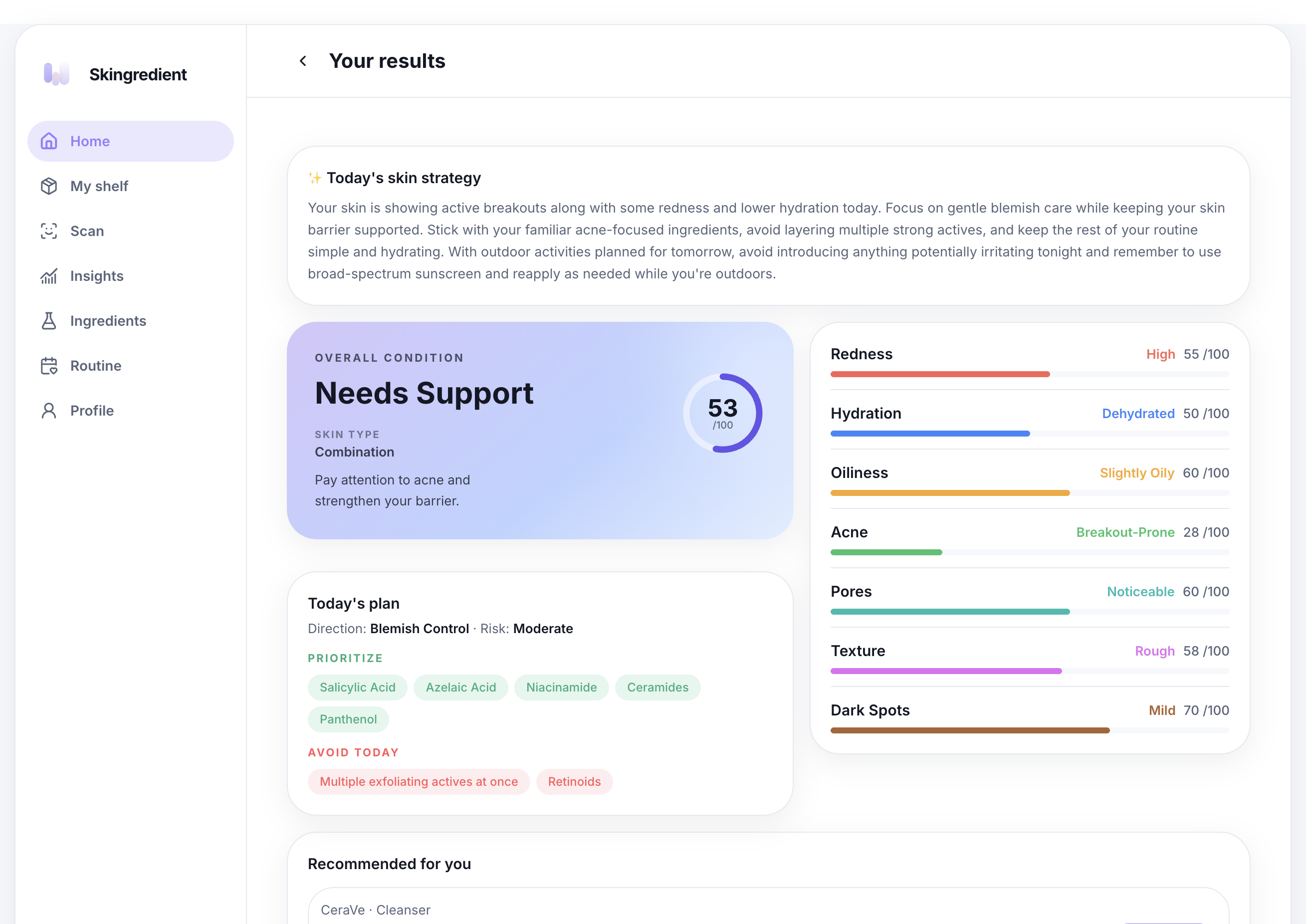
Result
-
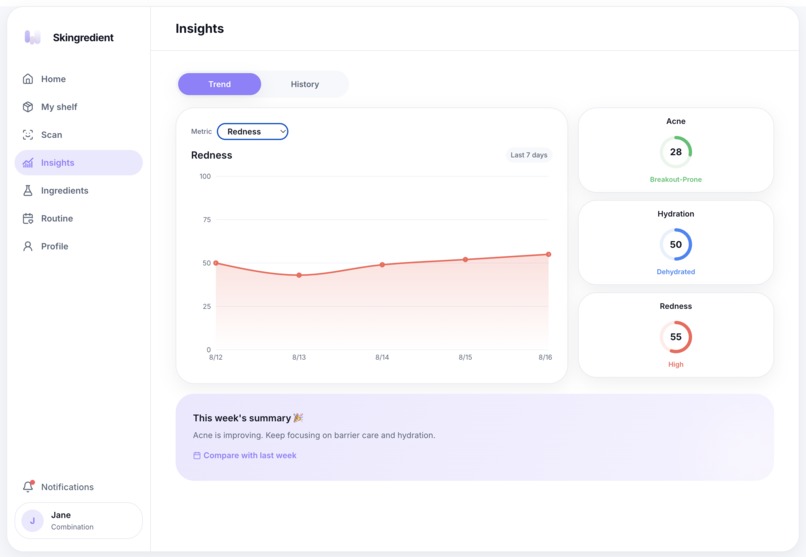
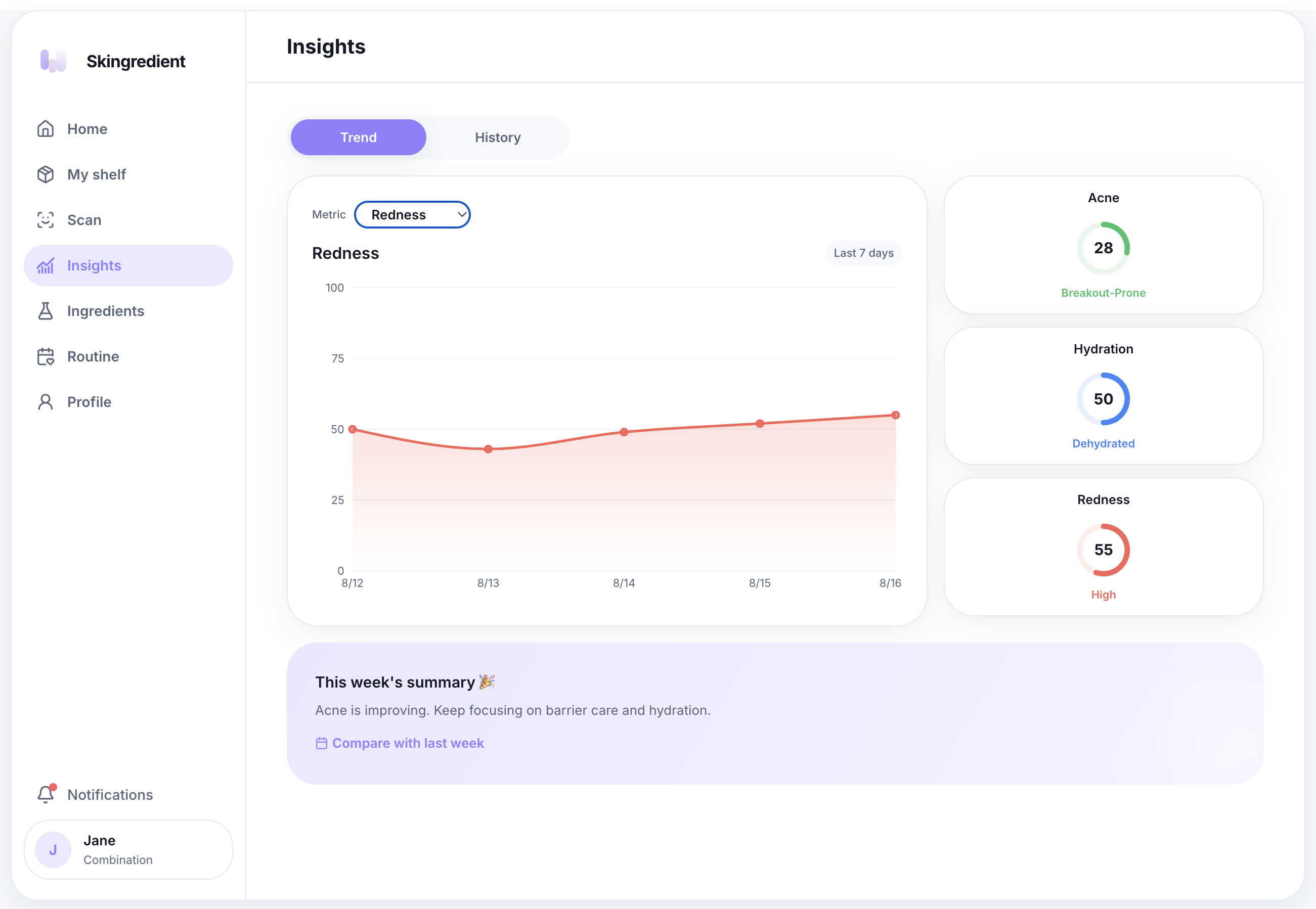
Metrics
-
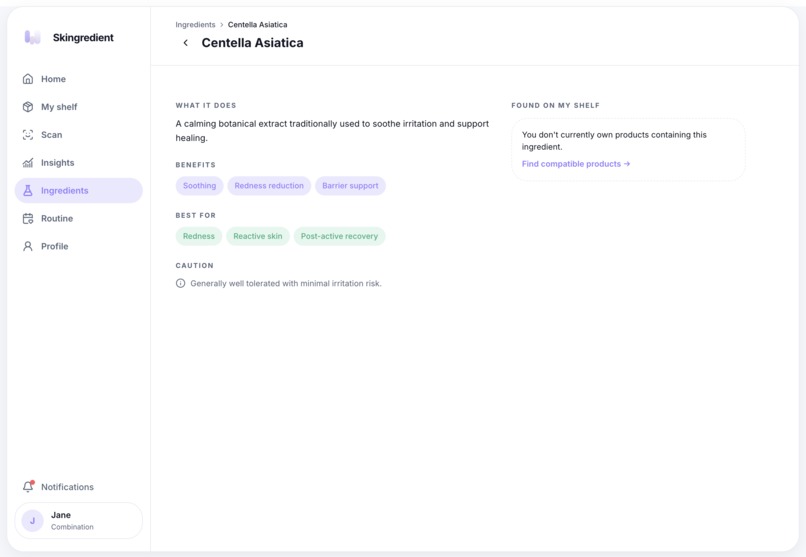
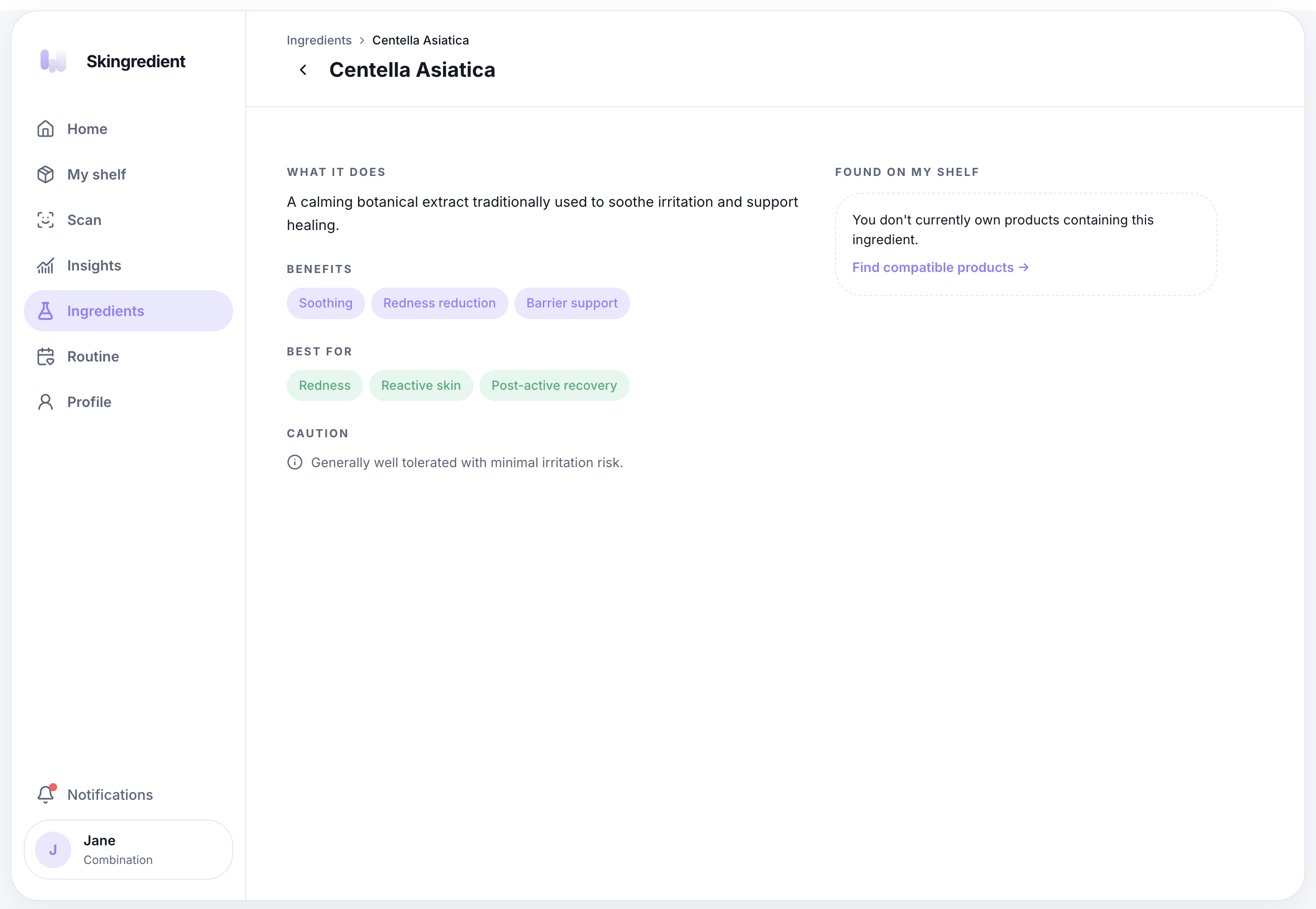
Ingredient Detail
Inspiration
For many years, I struggled with severe acne and seborrheic dermatitis. Like many people searching for better skin, I kept buying skincare products that were highly recommended online, had great reviews, or were from popular brands. I assumed that if a product worked for thousands of people, it would work for me too.
Unfortunately, that wasn't true.
Only after spending thousands of dollars on products that either didn't help or made my skin worse did I realize something important: skincare isn't about finding the "best" product. It's about finding the right ingredients for your skin.
That experience completely changed how I approached skincare. Instead of looking at brand names or marketing, I started reading ingredient lists and learning how different ingredients affect different skin conditions.
I also realized that the right ingredients change depending on your skin's condition and even your schedule. For example, the skincare routine that works before an important date is very different from the one you might use before a relaxing weekend at home or a beach vacation.
That realization inspired me to build Skingredient.
What it does
Skingredient analyzes a user's skin using AI and recommends the ingredients that best match their current skin condition — instead of simply recommending popular products.
The app also analyzes the skincare products the user already owns, identifies which beneficial ingredients are present or missing, and recommends whether those products are suitable for today's skin condition.
To make skincare even more personalized, Skingredient also considers the user's upcoming schedule:
- If the user has an important event tomorrow, the app recommends ingredients that help calm and strengthen the skin, while flagging ingredients or products to avoid to reduce the risk of irritation.
- If the user is preparing for a vacation, outdoor activities, or a cosmetic procedure, the recommendations automatically adapt to those situations.
The goal is to help users make smarter skincare decisions, avoid unnecessary purchases, and get more value from the products they already own.
How we built it
We combined AI skin analysis with ingredient-based recommendation logic to create a personalized skincare planning experience.
Rather than asking "What product should I buy?", the system asks:
- What does your skin need today?
- Which ingredients can address those needs?
- Do your current products already contain those ingredients?
- Are there ingredients you should avoid based on your schedule?
By combining skin analysis, ingredient intelligence, product analysis, and contextual recommendations, Skingredient delivers skincare advice that is personalized rather than one-size-fits-all.
Challenges we ran into
Skin analysis results can vary with lighting, image quality, and how skin conditions present, so we couldn't just trust a single score at face value. We had to design our recommendation engine to be resilient to that natural variance — building deterministic, rule-based logic on top of the AI scores (rather than treating the AI output as gospel) so that "use today / optional / skip today" recommendations stayed consistent and explainable even when input conditions weren't perfectly clean.
Balancing all the layers of personalization was also harder than we expected. Skin condition, upcoming schedule, ingredient sensitivities, and product reactions all need to influence the recommendation at once, without contradicting each other or overwhelming the user with reasoning. Getting the "why" behind a recommendation to feel simple on the surface while staying accurate underneath took a lot of iteration.
Accomplishments that we're proud of
- A complete loop, not just a demo. Scan → ingredient-level direction → shelf matching against products the user already owns → an AM/PM routine built from that → reaction tracking that feeds back into future recommendations. Every piece connects to the next.
- An explainable recommendation engine. It's deterministic, not a black box — a "skip today" recommendation always comes with a clear, ingredient-level reason tied to real skin data and schedule context.
- A genuinely accessible app. Anyone can try the full experience with zero setup and zero cost, which felt important for something meant to help people avoid wasting money on products that aren't right for them.
What we learned
The biggest thing we learned is that this personal belief — that skincare is an ingredient problem, not a brand problem — holds up technically too. Once we started building around ingredients as the core unit instead of products, features like schedule-aware recommendations and shelf matching fell into place naturally.
We also learned how much trust in an AI-powered recommendation depends on explainability. Users are far more willing to follow a "skip today" suggestion when they can see the specific ingredient and the specific reason behind it, rather than just a score.
Finally, we learned that accessibility is a design constraint worth building for from the start, not bolting on later. Making sure the app could run entirely offline/local pushed us to cleanly separate our data layer in a way that ended up making the whole codebase easier to reason about — not just the demo path.
What's next for Skingredient
Our next step is to make Skingredient even more flexible and adaptive to each user's everyday skincare needs.
- Routine customization. Users will be able to swap products based on their preferences, prioritize products they already own on their shelf, and personalize their AI-generated routine while still keeping the same skincare goals.
- Context-aware recommendations. Incorporating real-time factors such as weather, UV index, seasonal changes, travel plans, and upcoming cosmetic treatments, so Skingredient adapts not only to a user's current skin condition but to what their skin may be exposed to next.
- Learning from history. As users build more history through skin scans, routines, products, and reaction reports, we want Skingredient to identify patterns in which products and ingredients work best for each individual, and use those insights to improve recommendations over time.
- Retail integration. Connecting with online retailers so users can discover and purchase products that match their recommended ingredients — while keeping recommendations ingredient-first, never popularity- or sponsorship-driven.
Ultimately, our goal is to help people spend less on products they don't need, make better skincare decisions, and build confidence through personalized, science-informed skincare.
Built With
- chatgpt
- claude
- lovable
- lucide
- react
- recharts
- supabase
- tailwind
- tanstack
- typescript
- vite
- youcam
- zod


Log in or sign up for Devpost to join the conversation.