
Inspiration
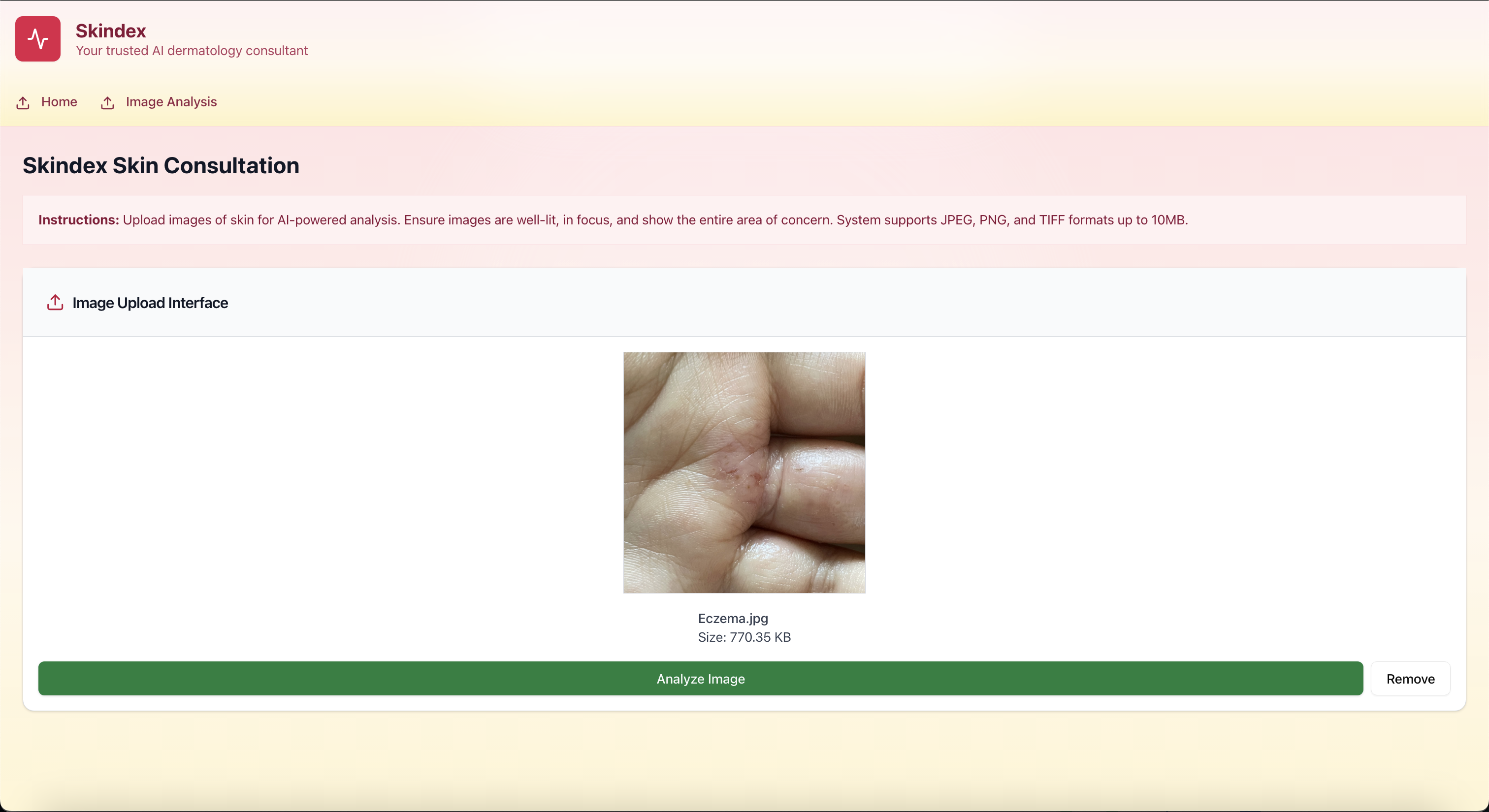
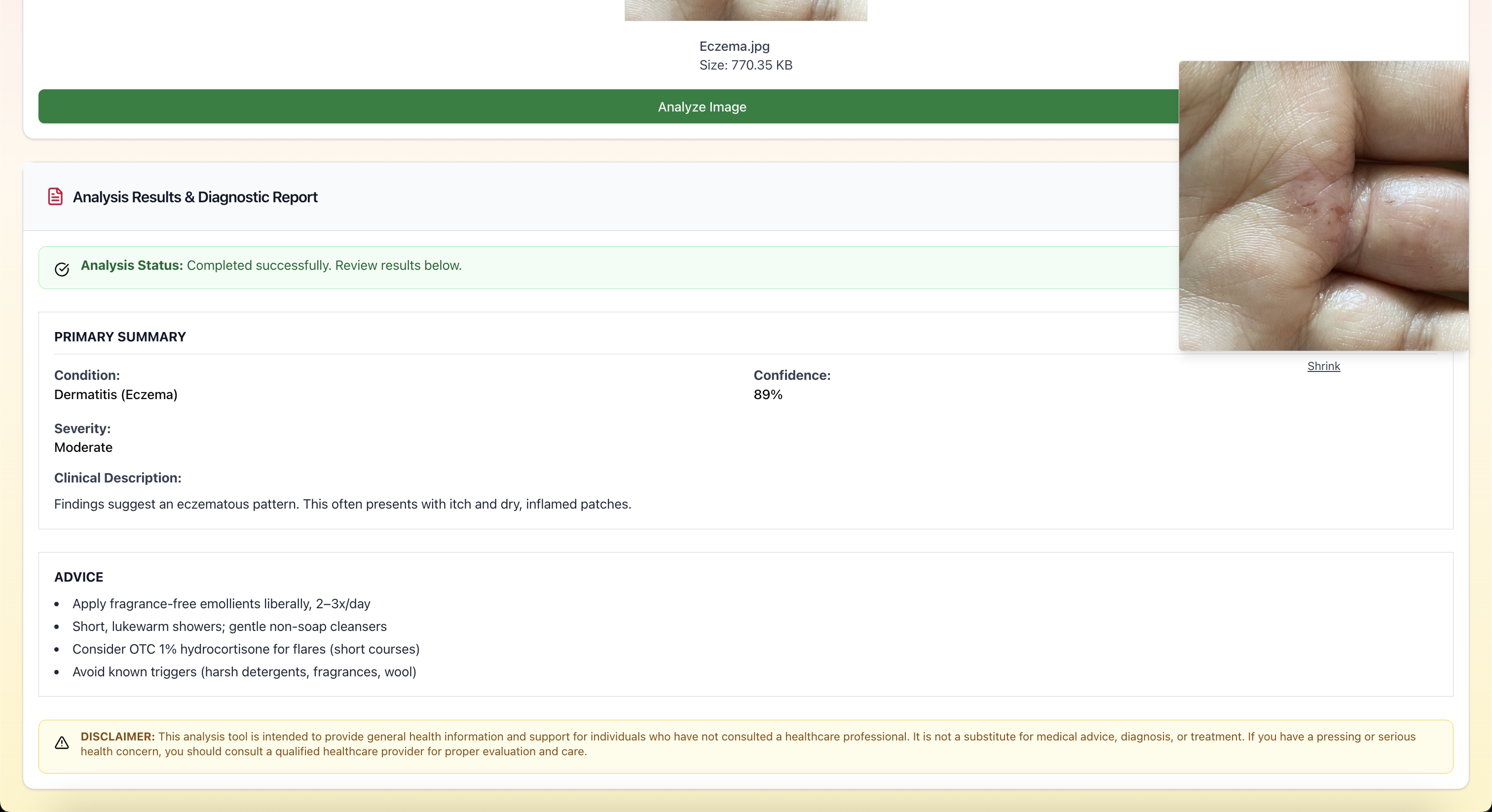
Studies have found that 80% of adults experience skin concerns, with one-third citing an inability to afford dermatological care. For many, visiting a dermatologist feels unnecessary for the cost or inconvenience. But what looks harmless isn’t always safe, and knowing when to seek help can make all the difference; So we wanted to revolutionize the age-old process of googling your symptoms and seeing unclear results on Mayo Clinic by turning it into a simple photo upload that assesses your skin. That’s why we’re building an accessible, user-friendly app that empowers people to take control of their skin health. With just a photo, users receive an instant analysis and guidance on whether their condition is likely benign or worth medical follow-up. It’s simple, affordable, and reliable. Because everyone deserves peace of mind when it comes to their skin.
What it does
- With 85% accuracy, Skindex is able to look at pictures of your skin and identify what condition you have using trained machine learning models.
- Allows for integrated frontend-backend communication through REST API’s. Users can seamlessly upload a picture of their skin and receive an analysis in seconds.
- Stores ML models in the application to prevent having to retrain data yourself.
How we built it
- We used Pytorch to train multiple different neural networks and were able to choose the best performing model.
- We used a Flask backend, with a Vite frontend, using REST API’s in order to communicate between the two.
- We used React in conjunction with HTML/CSS for frontend interactivity.
- ONNX to store our neural networks that we pretrained for our application.
Challenges we ran into
- We struggled with finding a valid data set to train our data with as we didn’t have access to modern medical datasets.
- We ended up training with various datasets and models to see which gave the most accurate results.
- Training models took a significant amount of time, so we had to be intentional with every tweak to the models.
Accomplishments that we're proud of
- 85% Accuracy on ML-trained Skin Model
- Training and developing our first ML models
- We were able to develop a full-stack application that allowed for user file upload and interaction.
- Successful backend integration
What we learned
- How to work and collaborate as a team.
- How to develop Pytorch models
- How to train a neural network for image classification.
- How to store machine learning models using ONNX.
- How to create modern and interactive UIs
What's next for Skindex
- Working with medical institutions in order to gain access to clinincal databases for better training
- Integrating AI into diagnoses
- Implementing Computer Vision to identify areas of interest so users can follow along with our models
Built With
- flask
- html/css
- javascript
- kaggle
- onnx
- python
- pytorch
- react
- rest-apis
- vite


Log in or sign up for Devpost to join the conversation.