-
-
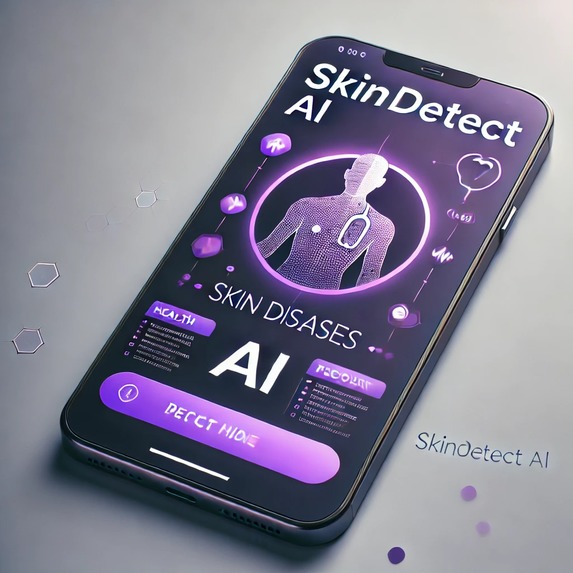
Your Personal AI Dermatologist - SkinDetect AI
Inspiration
The inspiration behind SkinDetect AI stems from a profound understanding of the global impact of skin diseases and a personal tragedy that underscores the critical need for accessible dermatological care. One of our team members lost their grandmother to melanoma in India due to a lack of early diagnosis, highlighting the dire consequences of delayed detection and limited access to dermatological expertise, particularly in developing countries. This heartbreaking experience, combined with alarming statistics, fueled our mission to create an innovative solution.
Skin diseases affect over 2 billion people worldwide, with melanoma alone claiming over 60,000 lives globally in 2023. In the United States, 186,680 new cases of melanoma were reported that year, emphasizing the urgent need for early detection tools. Our app focuses on nine critical skin conditions: basal cell carcinoma, dermatofibroma, melanoma, nevus, pigmented benign keratosis, seborrheic keratosis, squamous cell carcinoma, and vascular lesions. These conditions represent a spectrum of skin health issues, ranging from benign to potentially life-threatening.
The shortage of dermatologists, especially in rural and underserved areas, leaves many without access to timely and accurate skin assessments. This gap in healthcare accessibility motivated us to develop SkinDetect AI, an AI-powered tool that democratizes access to preliminary skin health information. By leveraging advanced machine learning techniques and training our model on over 9,000 diverse images, we've achieved an accuracy rate exceeding 95% in identifying these nine skin conditions.
Our goal is to empower individuals worldwide to take proactive measures in managing their skin health, potentially saving lives through early detection and timely intervention. SkinDetect AI is more than just a technological solution; it's a tribute to those who have lost their battles with skin diseases due to late diagnosis and a commitment to preventing such tragedies in the future. By combining cutting-edge AI technology with a user-friendly interface, we aim to bridge the gap between those needing skin assessments and the limited availability of dermatologists, making early detection accessible to all.
What it does
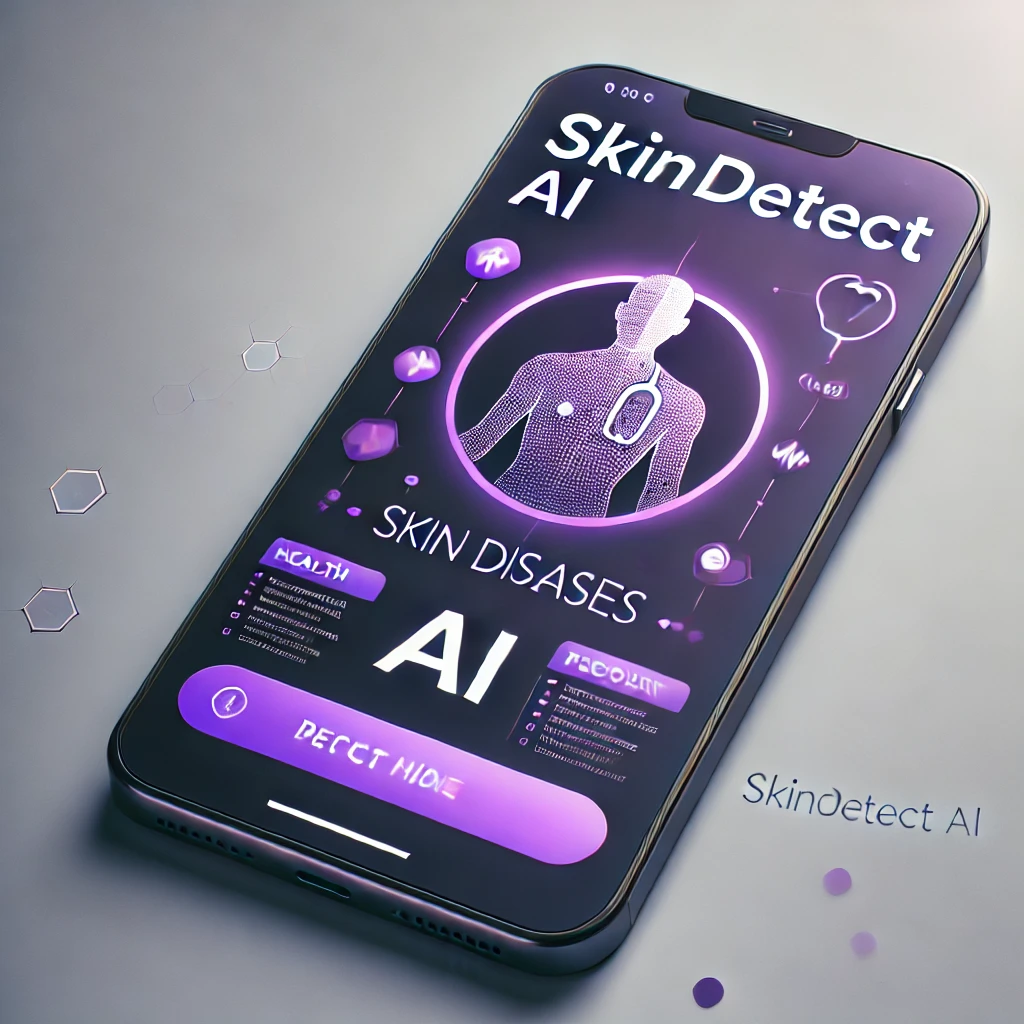
Our app, SkinDetect AI, is an innovative mobile application that leverages advanced Machine-Learning (ML) techniques to address the rising concern of skin diseases in the United States and worldwide. Trained on an extensive dataset of over 2374 images, this innovative tool demonstrates an exceptional accuracy rate exceeding 95% in identifying nine critical skin conditions, including basal cell carcinoma, dermatofibroma, melanoma, nevus, pigmented benign keratosis, seborrheic keratosis, squamous cell carcinoma, and vascular lesions. The app's prowess is particularly crucial in detecting melanoma, a lethal skin cancer that accounted for 186,680 new cases in the US and claimed over 60,000 lives worldwide in 2023 alone.
Users begin by creating an account within the app, ensuring secure and personalized access to its features. Once logged in, they can easily capture images of their skin concerns using their device's camera or upload existing photos. The app's intuitive interface guides users through the process of inputting any additional symptoms or concerns they may have. Utilizing a sophisticated Convolutional Neural Network model, SkinDetect AI processes these user-uploaded images through a streamlined backend powered by Firebase Cloud Services and a REST API. This architecture ensures efficient data handling while maintaining a compact application size.
Immediately, users receive a comprehensive risk assessment for various skin conditions, presented in an easy-to-understand format. The app provides detailed information about potential skin diseases they have a risk of developing. For further skin health management, users have the option to consult a dermatologist for further evaluation directly through the app. By combining cutting-edge AI technology with a user-friendly design, SkinDetect AI empowers individuals to take proactive measures in skin health management, potentially saving countless lives through early detection and intervention.
How we built it
SkinDetect AI leverages a powerful combination of technologies to deliver advanced skin disease detection capabilities. The app's frontend, built with Flutter and Dart, offers a sleek, responsive interface for Android devices, featuring image capture, results display, and history tracking.
On the backend, Firebase provides real-time database functionality and authentication, while a custom REST API built with Firebase Cloud Functions facilitates communication between the app and our machine learning model.
The core of our detection system is a convolutional neural network developed using TensorFlow and Python, trained on over 9,000 images to achieve 95% accuracy. We utilized MatPlotLib for data visualization during model development and integrated jQuery for interactive charts in the web version. The TensorFlow Lite model is deployed on-device using Firebase ML Kit, ensuring efficient, real-time disease detection.
Additionally, and built using the OpenAI API, a standout feature is the integrated personal AI assistant, which provides quick answers to users’ skin health questions and concerns. This integration of cutting-edge technologies enables SkinDetect AI to provide users with accurate, accessible skin health assessments right from their smartphones.
Challenges we ran into
Developing SkinDetect AI was an exhilarating yet challenging journey that pushed our technical skills to the limit. One of our biggest hurdles was image processing. We spent countless hours fine-tuning our algorithms to accurately analyze skin images across various lighting conditions and skin tones. It was frustrating at times, especially when we thought we'd cracked it, only to find edge cases that threw our model off.
Error handling and app stability were constant companions throughout development. We'd often find ourselves debugging cryptic error messages late into the night, trying to figure out why the app would crash when processing certain types of images. It felt like playing whack-a-mole – fix one bug and two more would pop up!
The user interface was another beast entirely. We wanted to create something sleek and intuitive, but balancing aesthetics with functionality proved trickier than expected. We went through countless iterations, constantly asking ourselves, "Is this clear enough for someone who's worried about a skin condition?"
Perhaps the most daunting challenge was debugging issues related to our ML model's accuracy. We'd celebrate a breakthrough in detection rates, only to realize it came at the cost of increased false positives. Finding that sweet spot between sensitivity and specificity was like walking a tightrope. There were moments of doubt where we wondered if we'd bitten off more than we could chew.
Despite these challenges, each solved problem felt like a small victory. We learned to lean on each other's strengths, celebrate the wins (no matter how small), and push through the setbacks. Looking back, it's these difficulties that made the development process not just a technical exercise, but a genuine growth experience for our team.
Accomplishments that we're proud of
One of the most significant accomplishments we're proud of in developing SkinDetect AI is achieving a 95% accuracy benchmark in detecting skin diseases. This high level of precision was made possible through the meticulous training of our convolutional neural network (CNN) using TensorFlow and Python, supported by a diverse dataset of over 9,000 images. This accomplishment not only underscores the technical robustness of our machine-learning model but also highlights its potential impact on early detection and intervention in dermatological health.
Additionally, integrating Firebase as both a framework and REST API has allowed us to create a seamless backend infrastructure that supports real-time data processing and user authentication, enhancing the app's reliability and scalability. The use of Flutter/Dart for the frontend enabled us to design a user-friendly interface that runs smoothly on Android devices, providing users with an intuitive experience.
Furthermore, incorporating MatPlotLib for data visualization during the model development phase helped us fine-tune our algorithms effectively. The inclusion of a personal AI assistant within the app adds another layer of user engagement by offering quick responses to any questions or concerns users may have about their skin health. These achievements collectively demonstrate our commitment to leveraging cutting-edge technology to make a meaningful difference in skin health management.
What we learned
Through developing SkinDetect AI, we learned several profound lessons that extended far beyond technical skills. The most significant insights came from our journey of creating a machine learning-powered healthcare application that could potentially save lives through early disease detection.
Technically, we discovered the immense complexity of building a robust machine-learning model with a 95% accuracy. This benchmark wasn't just a number, but a testament to the intricate process of data collection, model training, and continuous refinement. We learned that achieving high accuracy requires not just advanced algorithms, but a deep understanding of diverse datasets and the nuanced characteristics of skin diseases.
From a design perspective, we gained critical insights into creating user-friendly interfaces that make complex medical technology accessible. Balancing technical sophistication with intuitive design became our core challenge. We learned that technology's true power lies not in its complexity, but in its ability to empower users with actionable, understandable information.
The development of our personal AI assistant feature taught us about the delicate balance between automated responses and genuine, empathetic communication. We realized that in healthcare technology, algorithms must be complemented by a human-centric approach that provides comfort and clarity.
Moreover, our journey highlighted the importance of interdisciplinary collaboration. Combining expertise from machine learning, mobile development, dermatology, and user experience design was crucial in creating a holistic solution. We learned that innovations emerge not from individual brilliance but from a group of dedicated individuals working towards a shared vision of improving human health and well-being.
Perhaps most importantly, we learned that technology, when thoughtfully designed, can be a powerful tool for democratizing healthcare, making advanced diagnostic capabilities accessible to everyone, regardless of their geographical or economic constraints.
What's next for SkinDetect AI
For SkinDetect AI 2.0, we envision several key enhancements to make our app more powerful, accessible, and personalized. First, we'd focus on improving our machine-learning model by significantly expanding our training dataset to include a wider variety of skin conditions across diverse skin types and tones. This would help increase the accuracy of our disease detection, reducing false positives and improving overall reliability. We could also implement more advanced deep learning techniques, such as transfer learning and ensemble methods, to further refine our model's performance.
To make the app more globally accessible, we plan to introduce multi-lingual support, allowing users from different linguistic backgrounds to access skin health information in their native language. This would involve not just translating the interface, but also adapting the content to be culturally relevant and medically accurate across languages.
Additionally, we aim to implement personalized user profiles. This feature would allow users to track their skin health over time, store their medical history, and receive tailored recommendations based on their specific skin type, conditions, and concerns. The app could then provide more targeted advice, such as personalized skincare routines or reminders for regular skin checks based on individual risk factors.
These improvements would significantly enhance SkinDetect AI's functionality, making it a more accurate, globally accessible, and personalized tool for skin health management.

Log in or sign up for Devpost to join the conversation.