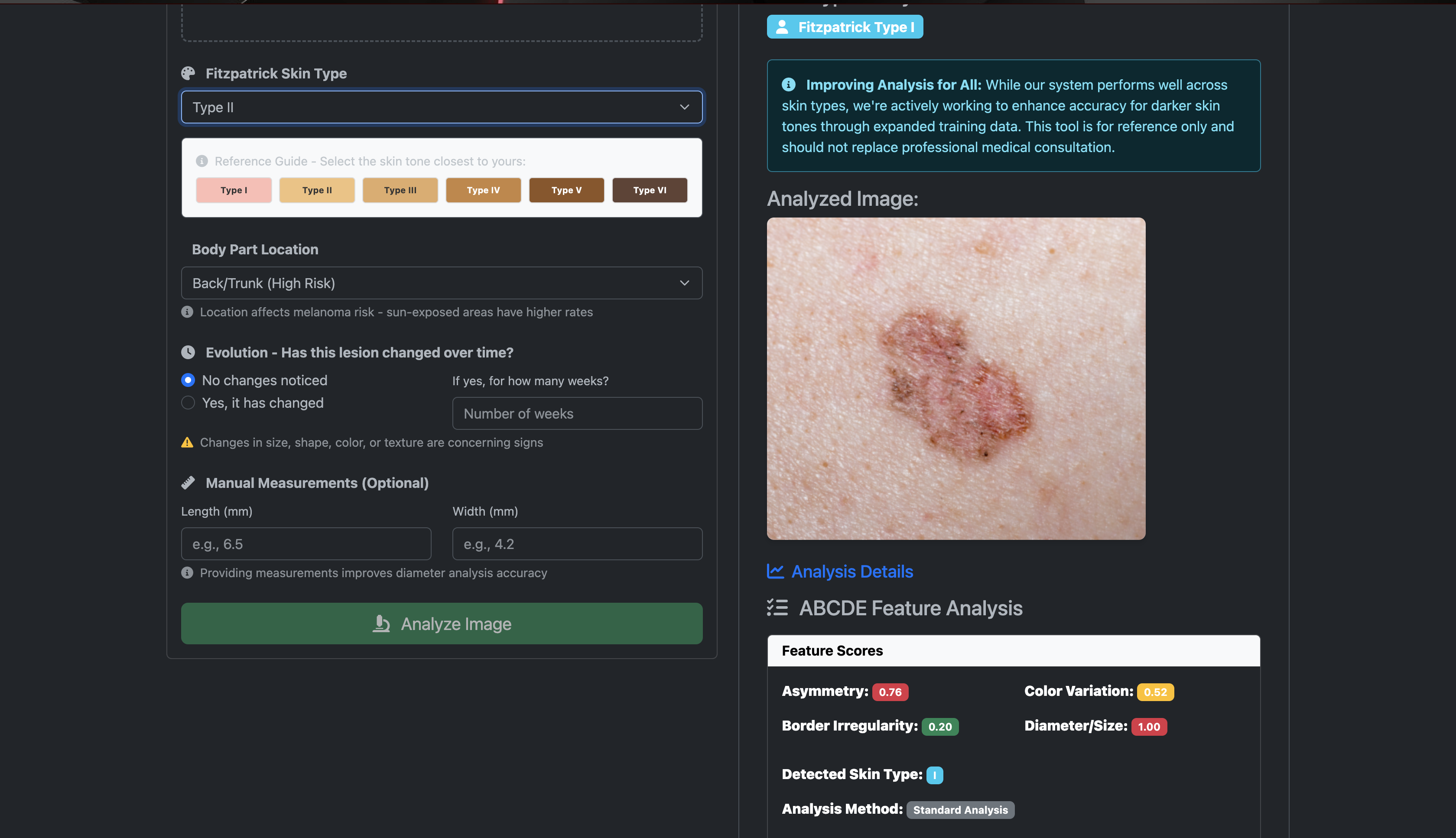
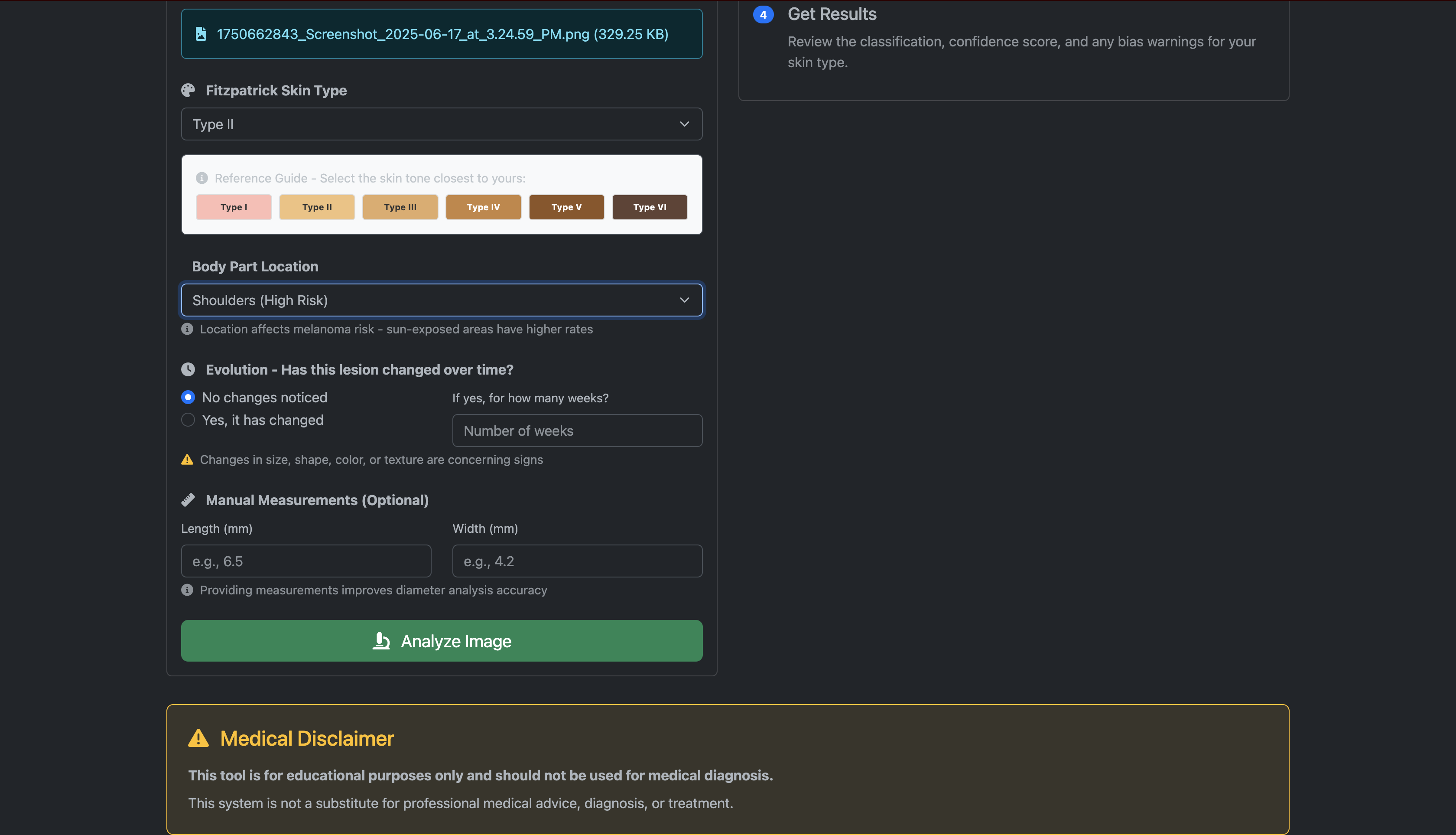
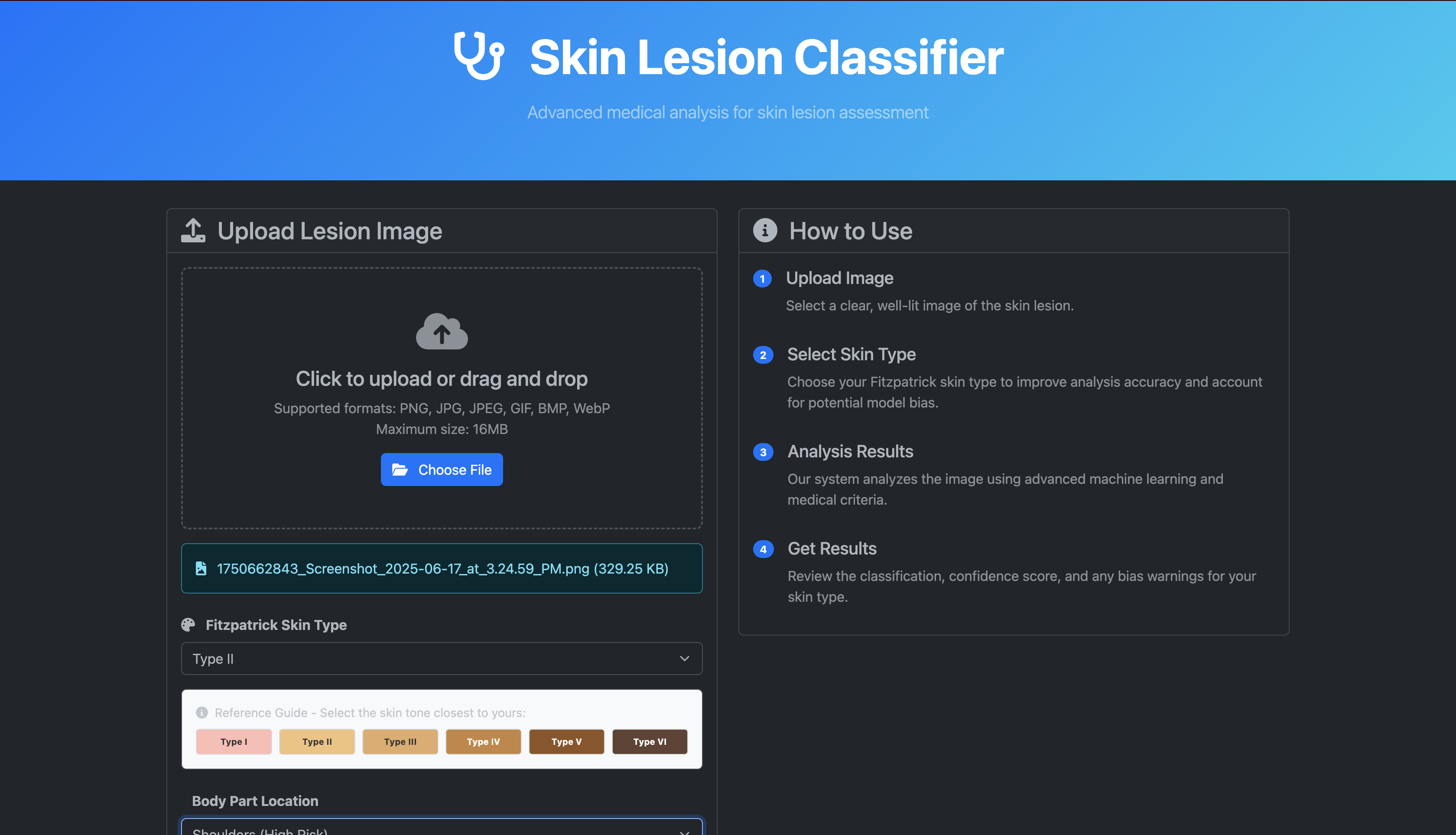
Inspiration Skin cancer is one of the most common and treatable cancers if detected early, yet many people lack access to timely screening. We were inspired to create a tool that empowers anyone, anywhere, to assess their skin health using just a smartphone or computer bridging the gap between technology and early cancer detection. What it does Skin Lesion Classifier is a web application that allows users to upload images of skin lesions. It analyzes these images using advanced computer vision and the ABCDE medical criteria (Asymmetry, Border, Color, Diameter, Evolution), provides a risk assessment, and offers educational feedback. The tool personalizes analysis based on skin type and lesion location, helping users make informed decisions about seeking medical care. How we built it We built the backend with Python’s Flask framework to handle web requests and image uploads. Image processing and feature extraction are performed using OpenCV and PIL, while machine learning models built with PyTorch and scikit-learn interpret the lesion features. The frontend uses modern web technologies for a user-friendly experience. For deployment, we configured the project for Vercel, allowing seamless cloud hosting and public accessibility by simply connecting our code repository. Challenges we ran into Ensuring accurate analysis across diverse skin tones and lesion types. Integrating medical guidelines into algorithmic logic while keeping the tool user-friendly. Managing dependencies and compatibility for both local and cloud deployment. Balancing privacy, security, and accessibility for sensitive medical images. Accomplishments that we're proud of Creating a tool that democratizes access to early skin cancer screening. Successfully integrating medical best practices with AI and computer vision. Deploying the app to the cloud, making it accessible to anyone with an internet connection. Building a user interface that is both informative and easy to use. What we learned The importance of considering diversity in medical AI, especially for skin tone and lesion presentation. How to bridge the gap between technical implementation and real-world medical guidelines. Best practices for deploying Python web apps to modern cloud platforms like Vercel. The value of clear, educational feedback in health-focused applications. What's next for Skin Lesion Classifier Expanding the dataset and improving model accuracy, especially for underrepresented skin types. Adding multilingual support to reach a broader audience. Integrating with telemedicine platforms for direct referrals to dermatologists. Enhancing privacy features and user data protection. Conducting user studies and collaborating with medical professionals for further validation and improvement.
Skin Lesion Classifier
Skin Lesion Classifier is a web app that analyzes skin lesion images using AI and medical criteria, providing instant risk assessment and educational feedback accessible locally or on the cloud.


Updates

Leave feedback in the comments!
Log in or sign up for Devpost to join the conversation.