-
-
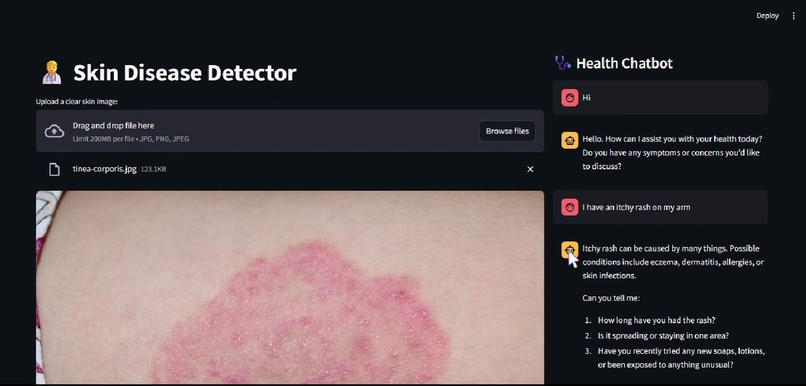
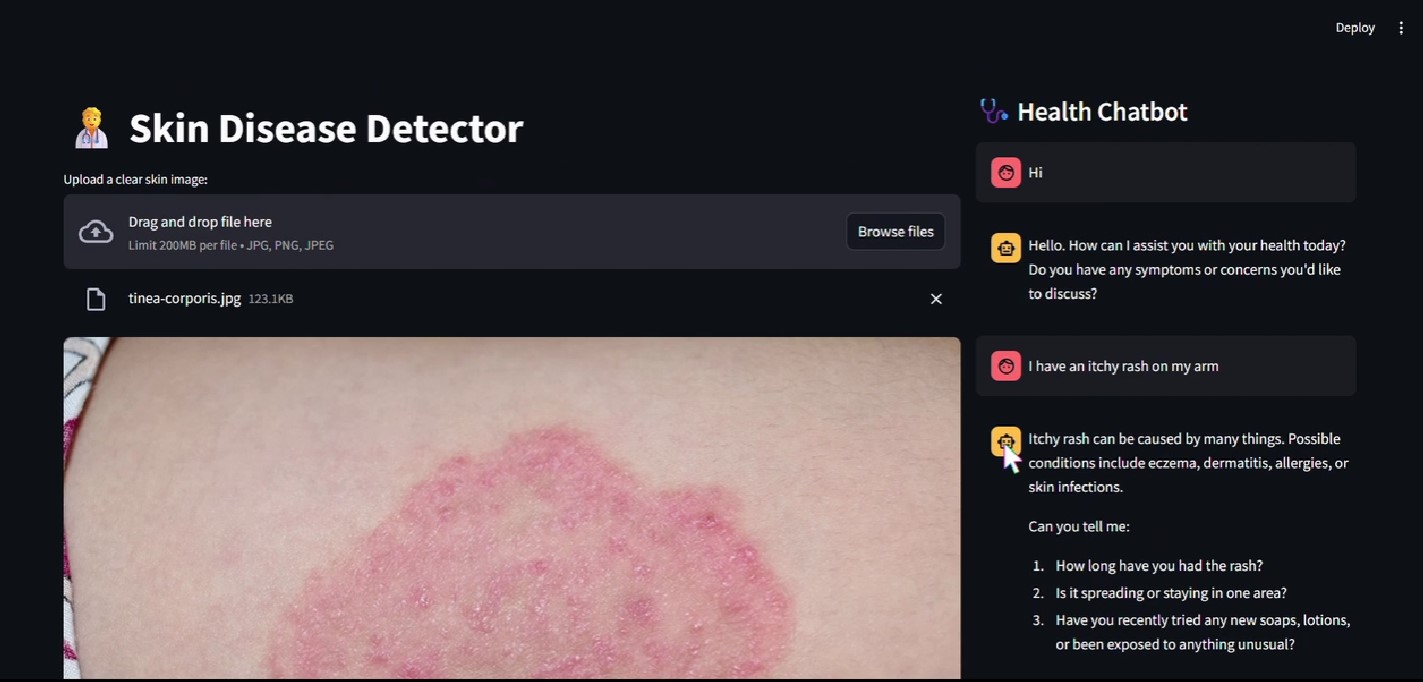
The website while functioning
Inspiration
Our inspiration were the real doctors - the protocol they use to first observe the patient visually, then ask about symptoms, and finally narrow down the diagnosis through thoughtful questioning. The same thing we have tried to implement in a website. As number of doctors are always less that patients, this would try to complete the supply demand gap.
What it does
Our system mirrors this approach: the image-based model acts as the doctor’s eyes, making an initial assessment, while the chatbot continues the conversation, asking questions and analyzing symptoms to refine the diagnosis.
How we built it
We used a pre-trained vision transformer for skin disease classification, integrated it with a Streamlit frontend, and connected a symptom-checking chatbot using OpenAI’s API for a conversational interface.
Challenges we ran into
We faced little challenges integrating multiple components smoothly and managing API keys securely without exposing them in the codebase.
Accomplishments that we're proud of
While we could not implement all the features some of which we also planned, we successfully designed and built several key components within a short timeframe. As newcomers to hackathons, this experience itself is a significant achievement for us.
What we learned
Through this project, we learned how to use pre-trained transformer-based vision models for targeted use cases like skin disease detection, build an interactive healthcare chatbot using large language models with streamed responses for more natural interaction and integrate both in Streamlit.
What's next for Skin Disease Detector & Health Chatbot
While the current version of our app demonstrates the potential of AI in healthcare, we aim to expand it further for:
- Real-time Consultation Matching
Connect users to connected with telemedicine platforms for verified doctor consultations. - Multilingual Chatbot
Support regional languages for broader accessibility.


Log in or sign up for Devpost to join the conversation.