-
-
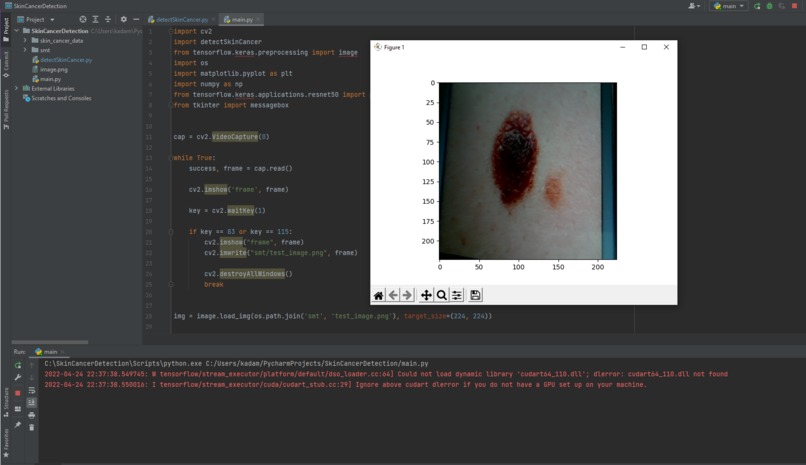
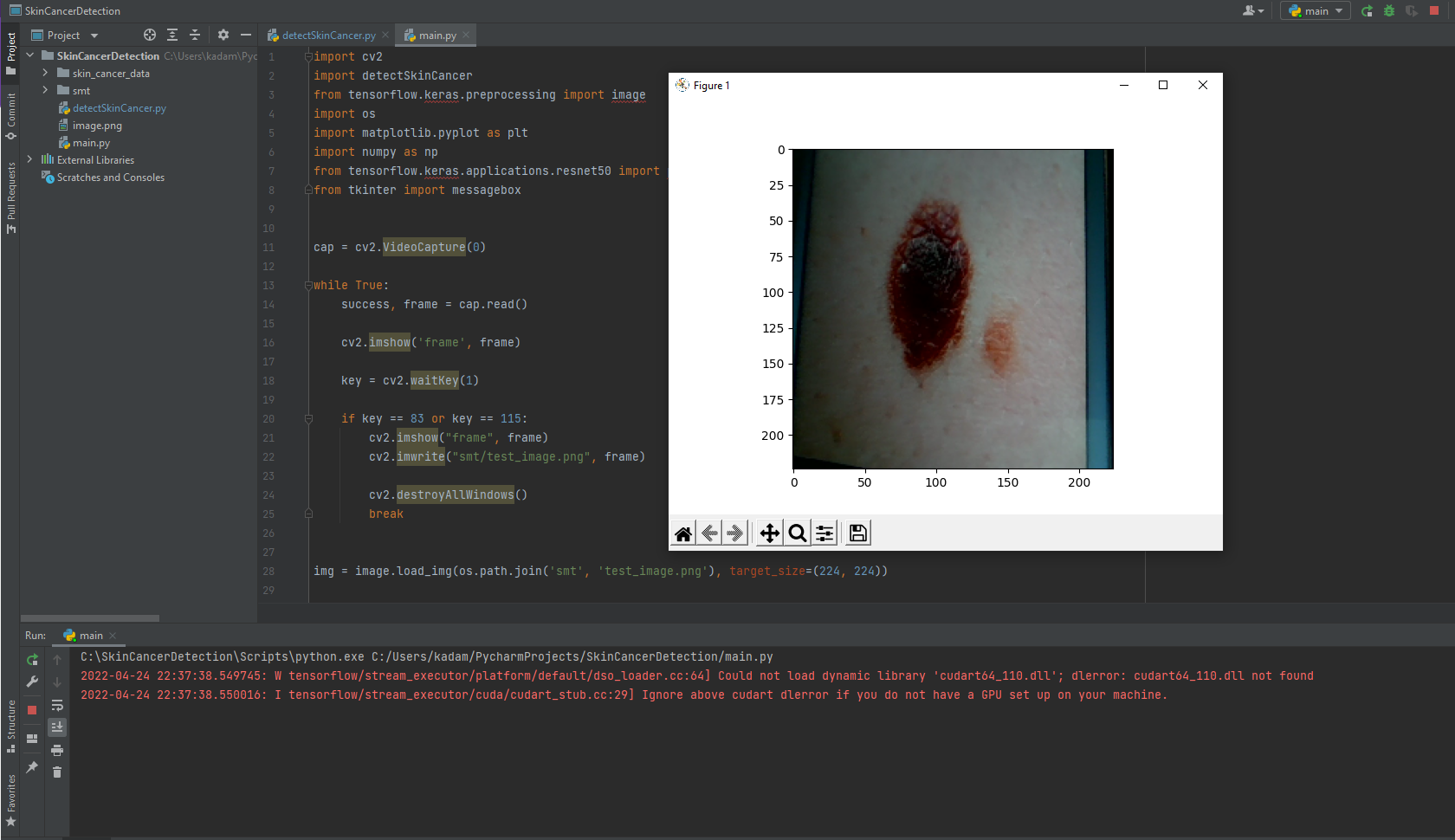
image of skin-cancer detector running
Inspiration
I was inspired to develop this project as I always thought an at-home detector for skin wounds would make life easier for many people. For instance, people would easily be able to detect what type of mark is on their skin by simply taking an image of it. To get started on this idea, I first began with skin-cancer detection as that is the most dangerous type of skin lesion.
What it does
This project allows the user to take an image of their skin mark in real-time. After this image is captured, the image is then passed into a Convolutional Neural Network (one that I trained and created myself). The neural network then returns whether the image of the skin is cancerous or not with around 70% accuracy.
How we built it
I built this project using python so that I could use computer vision and machine learning easily. I used OpenCV to access my webcam and take an image of the frame running in real-time. I also used TensorFlow to create a Convolutional Neural Network (CNN) that would determine whether the image was of skin cancer or not.
Challenges we ran into
Some challenges I ran into included connecting the neural network to OpenCV so that real-time detection could be performed. I also spent a long time increasing the accuracy of the model, as I was fairly new to machine learning.
Accomplishments that we're proud of
I'm especially proud of creating a model with approximately 70% accuracy and using TensorFlow for the first time to create a Convolutional Neural Network.
What we learned
I learned how Convolutional Neural Networks work and how to use TensorFlow to create machine learning models for images.
What's next for Skin-Cancer Detector
The next thing for this skin cancer detector would be to train it with more skin marks so that the detector could have more than 2 possible outcomes, along with creating a user interface.


Log in or sign up for Devpost to join the conversation.