

Inspiration
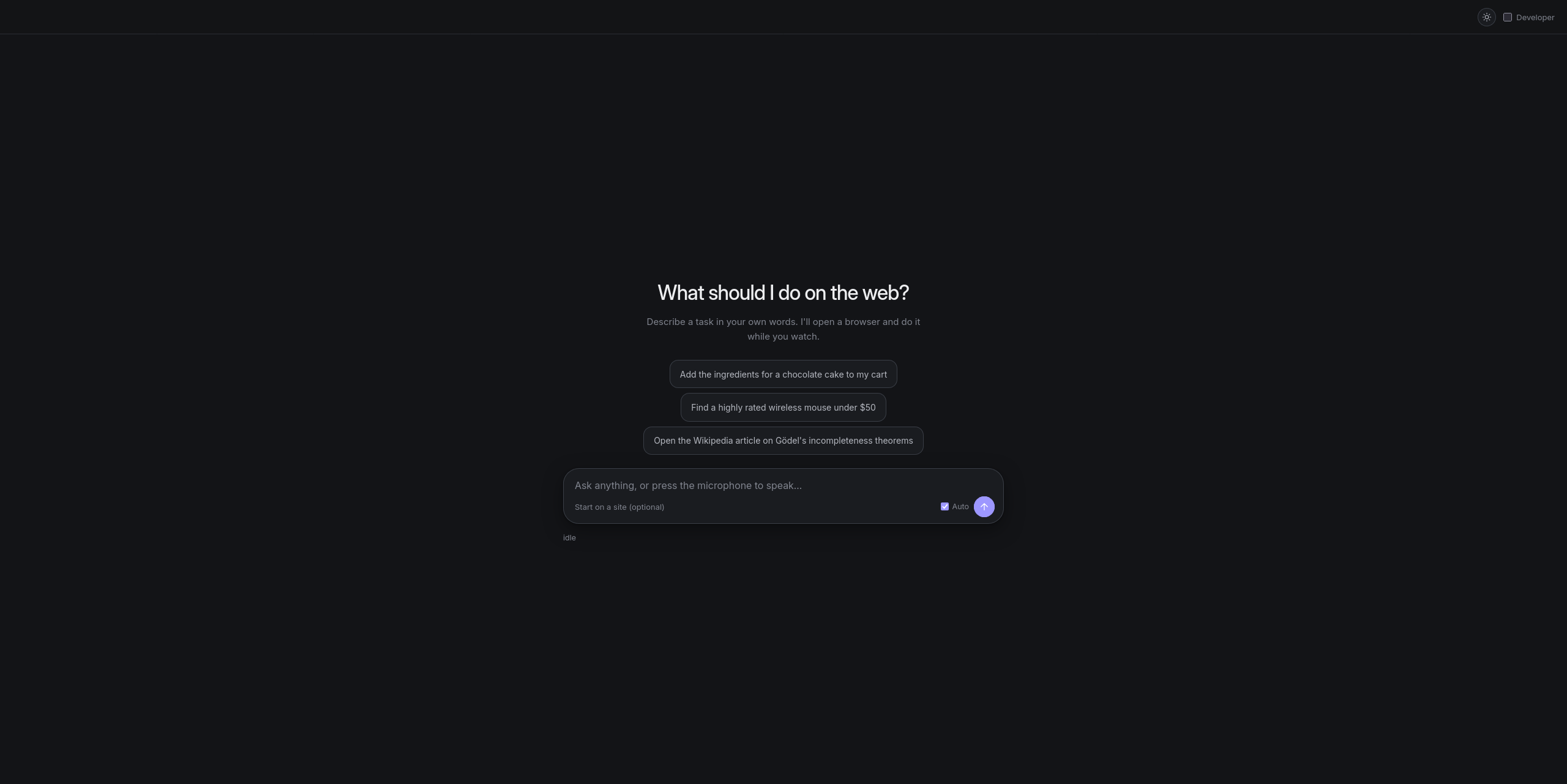
Browser agents re-think the same task every time you ask: every click is a fresh model call, so the hundredth grocery order costs as much and takes as long as the first. People don't work that way. We learn an errand once and then just do it. We wanted an agent that gets permanently faster at the things you repeat.
What it does
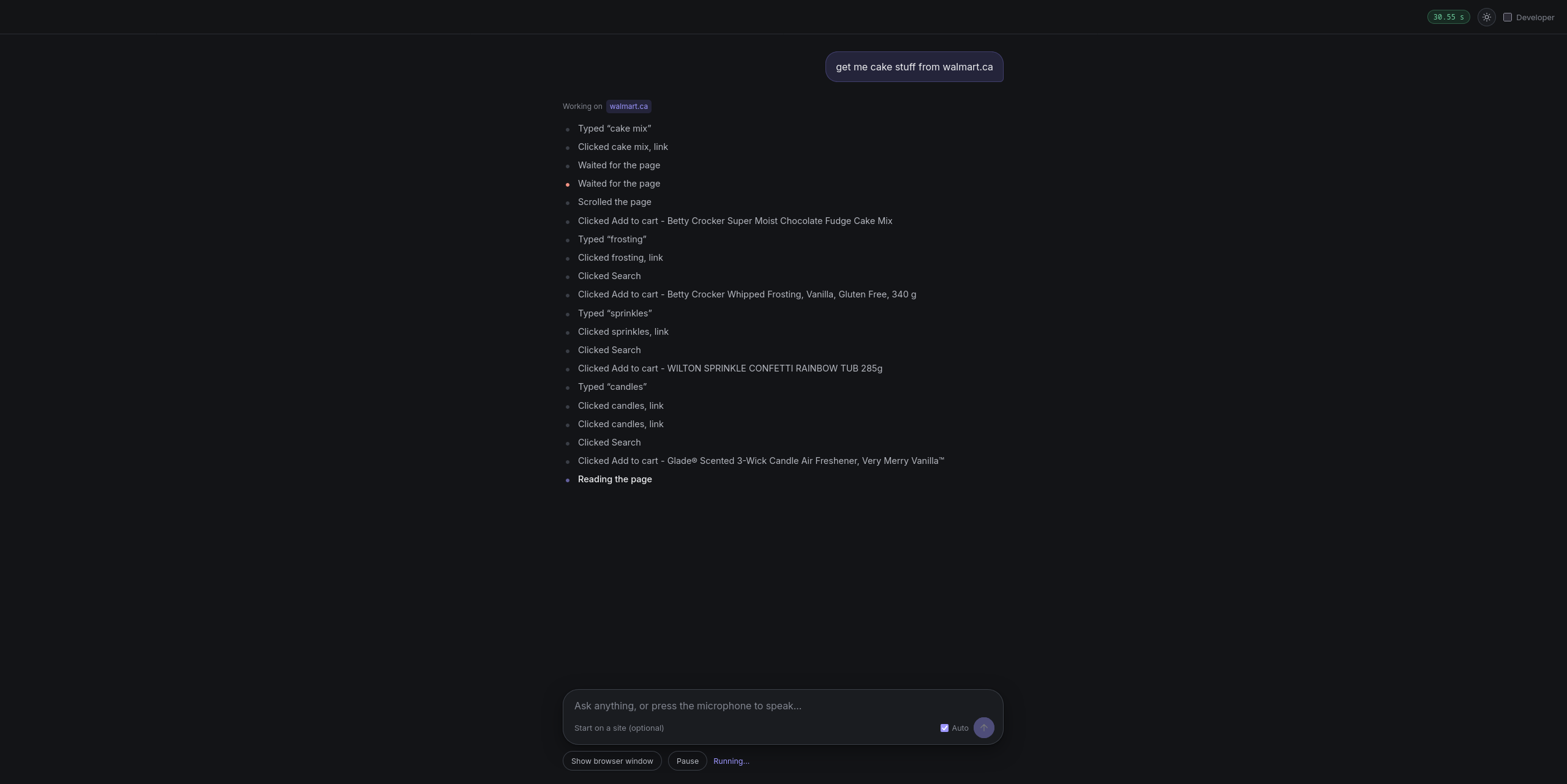
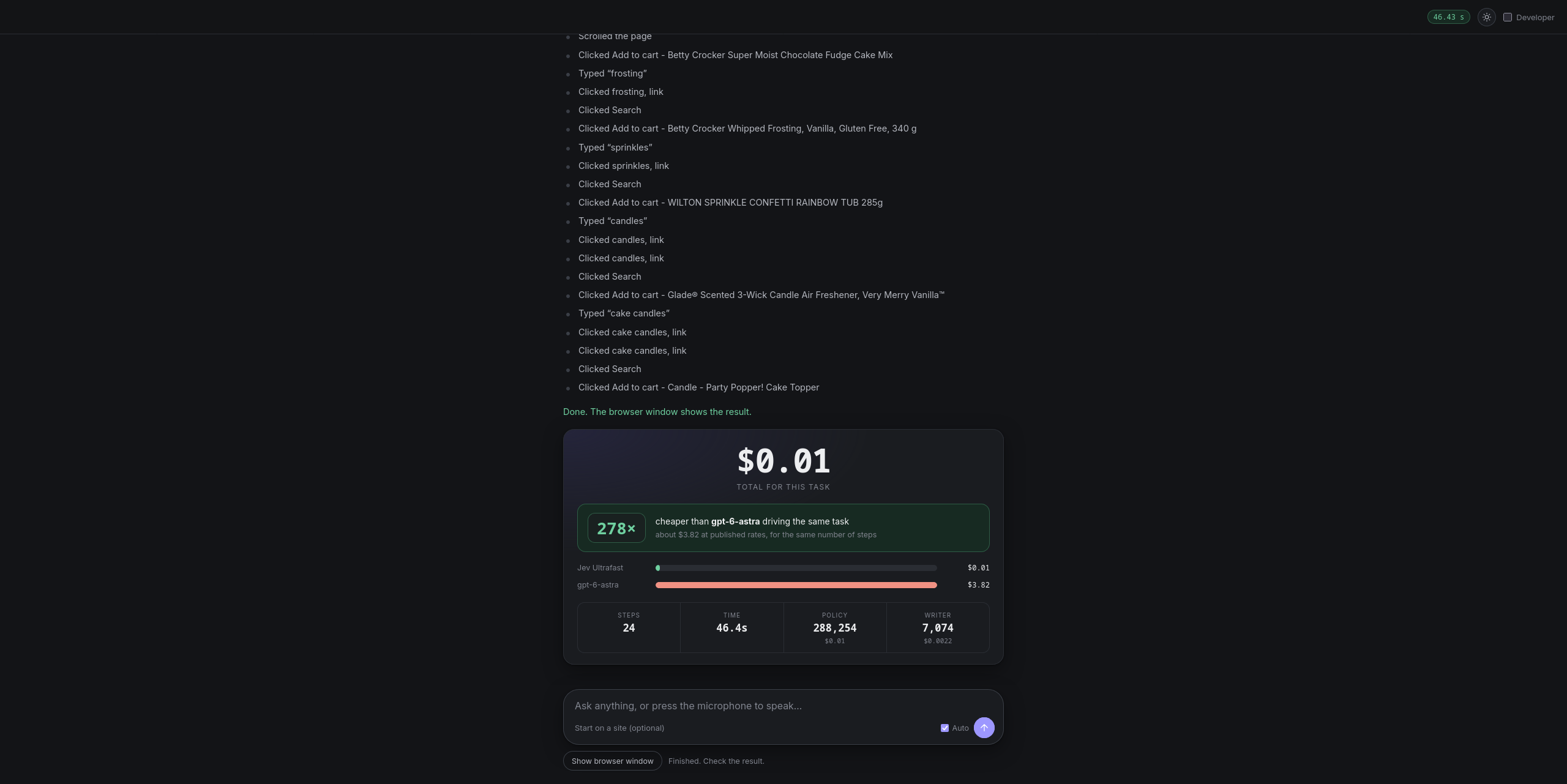
Jevis drives your own Chrome to do a task you type or speak, such as "add bread and mayonnaise to my Walmart cart". The first time, it explores the site step by step. It then turns what worked into a small reusable program, a skill, and re-runs that skill to prove it before saving it. The next time you ask, it replays the skill with zero model calls. On Wikipedia search that was 40s and 7 model calls cold versus 4.5s and 0 calls warm. A web UI launches runs from one text box, a phone page lets you start one by voice, and an inspector steps the agent one move at a time.
How we built it
It is Python on top of raw Chrome DevTools calls into the browser you already have open, with no fresh profile and no spoofing. The agent reads the page's own controls from the DOM, a fast action-choosing model (TypeSafe's Jev) picks each move, and a small text model writes what gets typed. Claude synthesizes the skill code from the recorded run. An admission gate re-runs every new skill three times from its start screen and rejects any verifier that would also pass before the task was done. Skills, a per-site action graph and run recordings all persist on disk.
Challenges we ran into
Real websites broke almost everything that worked on our demo site. A live page never fingerprints the same way twice. It answers a click in phases, so code-speed replay outran Walmart's "Add" button by 0.6s. Some sites refuse a browser that an automation framework launched. The nastiest bug was a skill whose verifier matched a word in the site's nav bar. It "succeeded" 14 runs out of 14 while the cart stayed empty. Our own final check also called a full Walmart cart a failure, because it only read the text visible in the window.
Accomplishments that we're proud of
Warm replays that cost no model calls on live sites, not a sandbox: about 1.4s on Wikipedia and 5.5 to 6.9s per item on a real shop, with the cart confirmed through the shop's own cart API. We never computed a speedup without ground truth beside it, and a wrong answer is never counted as a fast one. We deleted our whole test tree and proved every change with a real end-to-end run instead.
What we learned
The cheapest answer this architecture can give is a wrong one, so every efficiency number needs correctness checked next to it. Wait for a thing, not for a time. A ranking always has a winner even when nothing fits, so "closest match" is not the same as "runnable". And measure on the real target: nearly every threshold we tuned on our demo site was wrong on the open web.
What's next for Jevis
A final check that reads the whole page instead of just the visible window, so long carts verify correctly. Binding arguments out of plain sentences, so differently worded repeats still hit a stored skill. Multi-item errands composed from single-item skills. And the same learn-once-replay-forever loop on desktop apps, not just the browser.
Built With
- chrome
- jev
- openai


Log in or sign up for Devpost to join the conversation.