-
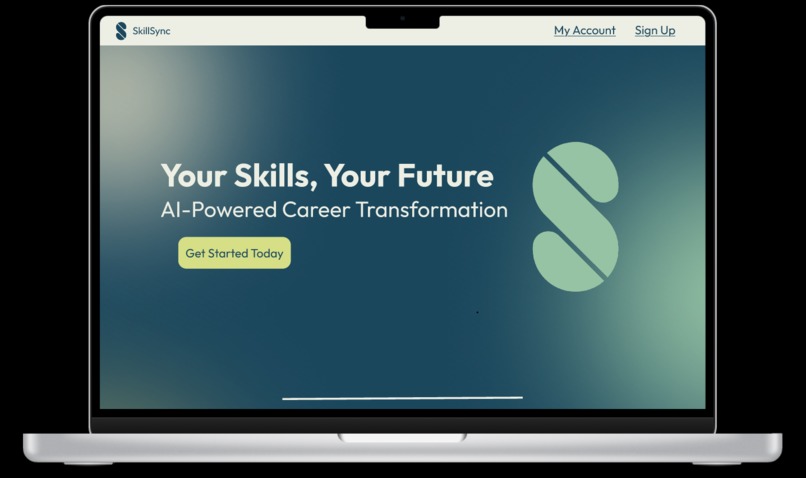
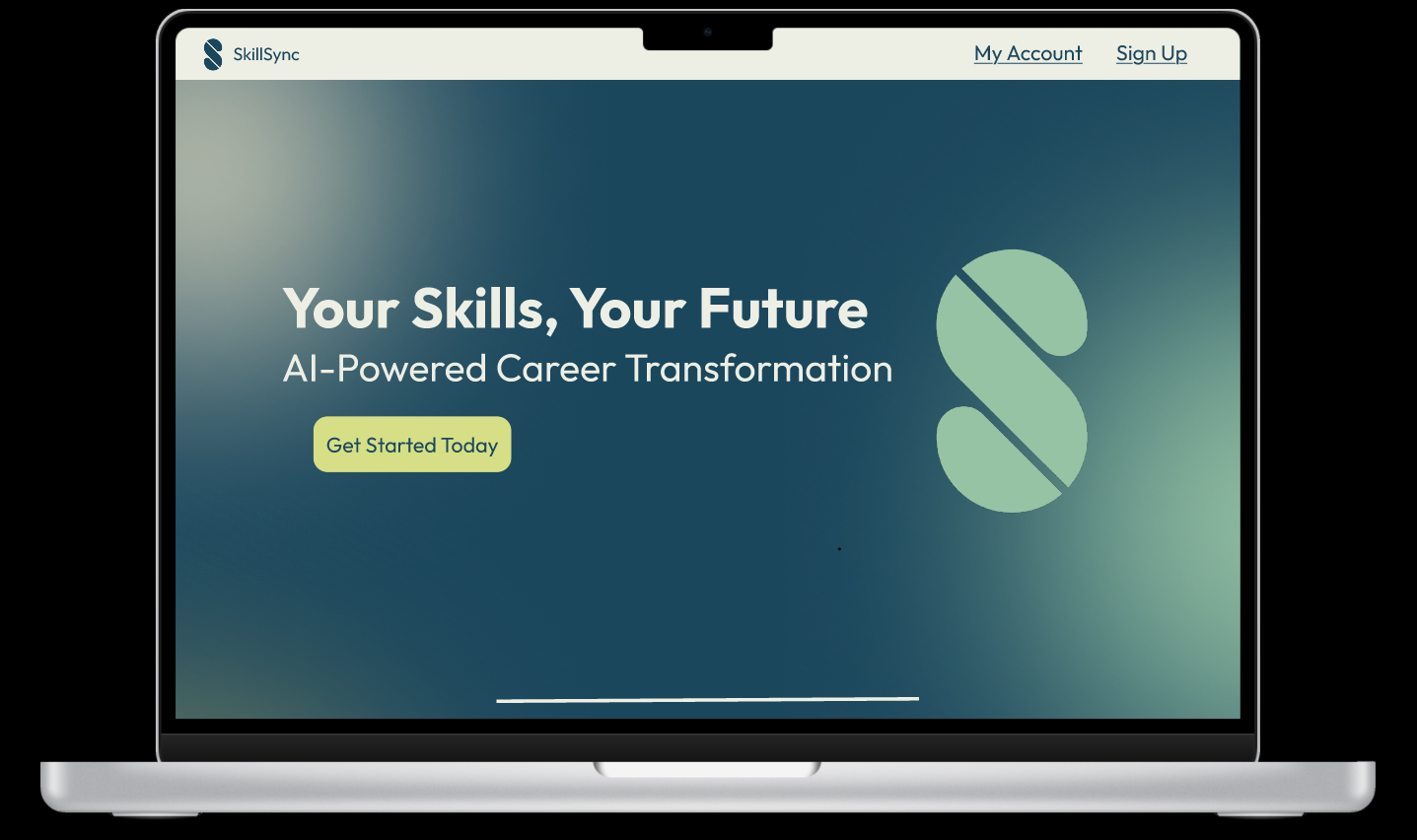
Landing Page
-
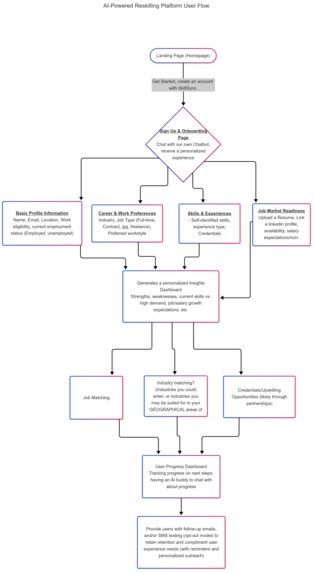
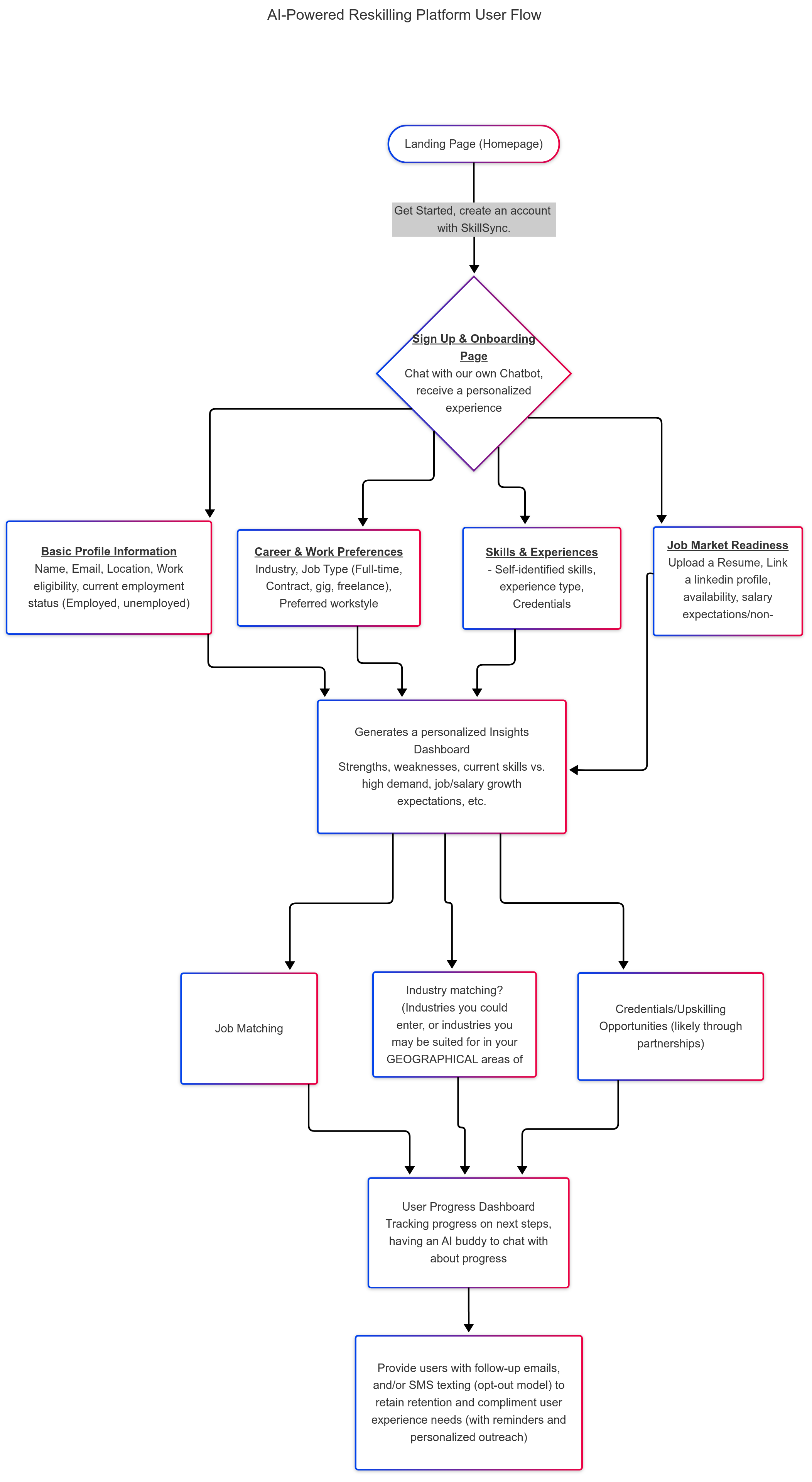
Website Mock-up user flow
Inspiration
TLDR: Within today’s current economic conditions and technological advancements, job insecurity growth has been on the rise. Not only have we seen it impact economies, but also personal economic empowerment. Our group—through SkillSync—aimed to explore the skills mismatch gap found in the labour market, acting as one of many issues in populational employment. Our goal throughout this challenge was to empower a population to be agile in the employment market, equipping them with skills and opportunities to adapt and thrive in a dynamic economy.
Focus: UN Sustainable Development Goal #8 - Decent Work and Economic Growth.
Our inspiration comes from the challenges we’ve seen firsthand—immigrants struggling to integrate into the workforce and workers displaced by economic shifts. Many have valuable skills but lack a clear path to apply them in new industries. With automation, trade wars, and job insecurities on the rise, finding stability has never been harder.
We built this platform to bridge that gap, helping people map their skills and navigate career transitions. Whether it’s immigrants adapting to a new job market or displaced workers seeking fresh opportunities, our goal is to empower everyone with the tools to move forward.
What it does
Our AI-powered reskilling platform helps displaced workers, immigrants, and job seekers transition into new career opportunities by providing personalized career pathways, AI-driven skills assessments, and tailored reskilling recommendations. At the core of our platform is the AI Skills Mapping system. The platform uses AI algorithms to analyze users' previous job experience and identify transferable skills to suggest relevant career paths. It then cross-references these skills with market demands to offer the most in-demand career opportunities.
Our platform also offer personalized learning pathways, recommending online courses, vocational training, and certifications that align with users' career goals. The job matching component utilizes geospatial AI to recommend jobs based on location, availability, and remote work options. Additionally, it provides insights into fast-growing industries in different regions of Canada. The platform is designed to be user-friendly and accessible, ensuring that users of all skill levels can easily navigate through career assessments, training programs, and job searches. This is especially crucial for workers who might not have much experience with technology.
Our solution not only addresses the personal goals of workers but also aligns with SDG 8: Decent Work & Economic Growth, contributing to an inclusive and sustainable workforce development strategy. We aim to empower marginalized groups, boost economic mobility, and provide a smoother integration process for skilled immigrants into the Canadian workforce.
How we built it
As a product of this project, our group designed a prototype of SkillSync utilizing Figma to showcase user experience and the core high level idea. Our process focused on designing a user-friendly and intuitive platform that (when created) could produce personalized insights and support through AI integration.
Our Development Process: Research & Problem Definition: We analyzed labour market trends, user testimony, industry needs, etc, to define the skills mismatch problem and key pain points for job seekers and existing infrastructure.
User Flow Mapping: Utilizing Mermaid, we mapped out a high-level view of the end-to-end user journey that a user would take when experiencing our platform for the first time.
Prototyping in Figma: Using Figma, we designed a landing page that would be found on the internet, which is the user’s first interaction to SkillSync. The prototype included a streamlined sign-up process and targeted survey formats to ensure effective data collection for AI understanding and insights. Once users create an account, they gain access to a personalized dashboard, where AI dynamically generates various job search and labour market insights/recommendations tailored to user questions/goals. This dashboard aims to provide dynamic information of changing priorities, through understanding user needs from chatbot interactions. There is also a chatbot feature integrated into the UI for users to engage in active conversations with an AI support bot. To enhance user engagement, our chatbot interface (as outlined in the prototype) simulates a human-AI interaction that gathers information and updates the user’s current dashboard with new information linked to their profile. The idea of this feature was also to be hosted via a web chat bot on the SkillSync website and integrated into SMS Texting support.
Challenges we ran into
One of the significant challenges we encountered was navigating the steep learning curve of new tools and technologies. While we were excited to use AI to power career recommendations, we initially struggled with training the models and ensuring they generated accurate results. Fine-tuning the AI’s ability to understand transferable skills from resumes and work history took longer than expected.
Additionally, we had to learn how to integrate third-party tools. Using job aggregator APIs (like LinkedIn and Glassdoor) for real-time job listings was challenging, especially when dealing with different data formats and API limitations. We had to get creative with workarounds to ensure smooth integration.
Another challenge we faced was designing for platform accessibility. We had to ensure that the interface was simple enough for non-tech-savvy users while offering advanced features for those more familiar with tech. Balancing user-friendliness with functionality took iterative design and frequent testing with real users.
Finally, pitching to seek funding for a social impact platform was another challenge. We had to explore various funding sources, such as grants, partnerships, and sponsorships, to ensure we could bring the project to life while keeping it accessible to users.
Accomplishments that we're proud of
We’re incredibly proud of what we’ve built, especially as many of us came from non-technical backgrounds. Despite the steep learning curve, we successfully leveraged AI to personalize career pathways, analyze transferable skills, and recommend relevant learning resources.
Throughout the process, we sought guidance from mentors, users, and industry experts, ensuring our platform directly addresses the real challenges of career transitions. We focused on accessibility, making sure that even those with minimal technical experience could navigate and benefit from AI-powered insights.
More than just a technical solution, we're proud to have created a platform (idea) that empowers individuals—helping them take control of their careers and bridge learning curves no matter their background.
What we learned
Throughout this project, we gained significant insights into the technical and creative aspects of building an AI-powered platform. One of the first things we learned was how to use Figma to design website mockups. This was crucial in visualizing the user experience and ensuring the platform was intuitive and accessible, especially for users with limited tech experience. Creating and refining mockups gave us a deeper understanding of how design impacts user engagement.
We also explored Mermaid, which allowed us to create flowcharts and diagrams to map the user journey and visualize the platform’s structure. This helped us align our development goals and maintain a focus on creating a seamless and user-friendly experience.
Working with AI agents was another eye-opening experience. We dove into leveraging AI to analyze user data, recommend career pathways, and map skills. Learning about training AI to match users with relevant opportunities was complex, but it showed us the incredible potential of AI to empower people during career transitions.
What's next for SkillSync
In the short-term, SkillSync's adoption could have been supported with more members of technical expertise. This would help us in developing and implementing the software integration that we envisioned. As our platform is currently a prototype/design, we want to be able to build out the technical component of the project for users to use and interact with. Additionally, UX/UI changes could have been refined to the prototype after increased understanding and time of Figma's capabilities.
In the long-term, SkillSync would likely explore ways to increase scalability and user adoption by addressing gaps in financial feasibility. We hope to be able to find a revenue model or establish long-lasting partnerships with organizations to receive funding for functionality. Additionally, SkillSync would likely work to expand and adopt functionalities that hope to improve user experience. This can include further technology advancements, both in database and software, as well as conducting more through R&D to support additional independent/dependent barriers faced by our target market. By focusing on some of these initial ideas, we hope to create a more adaptable and scalable platform that will be valuable to a wider range of users.
Built With
- figma

Log in or sign up for Devpost to join the conversation.