-
-
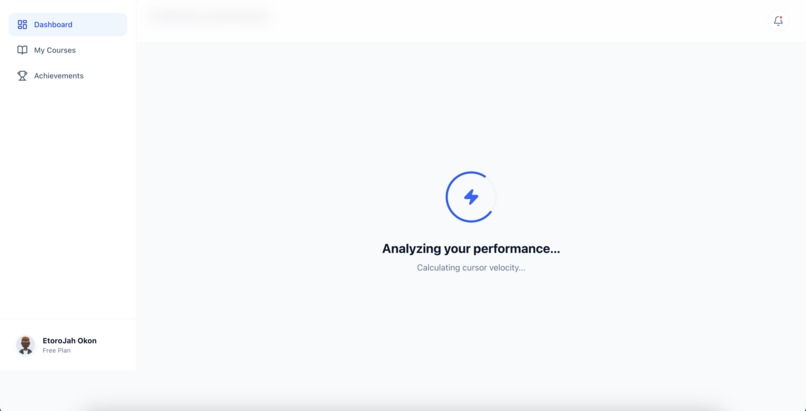
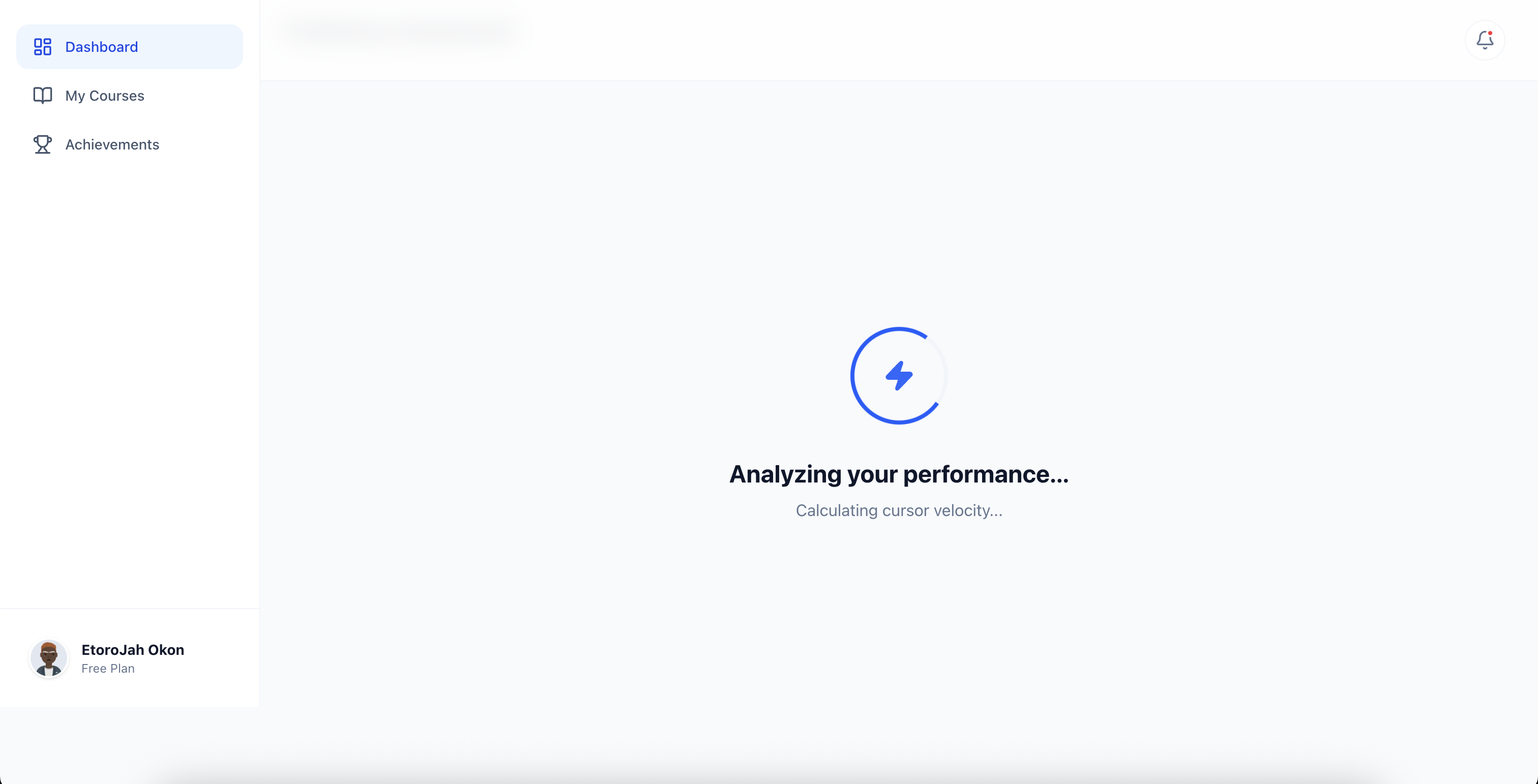
Proficiency Analysis
-
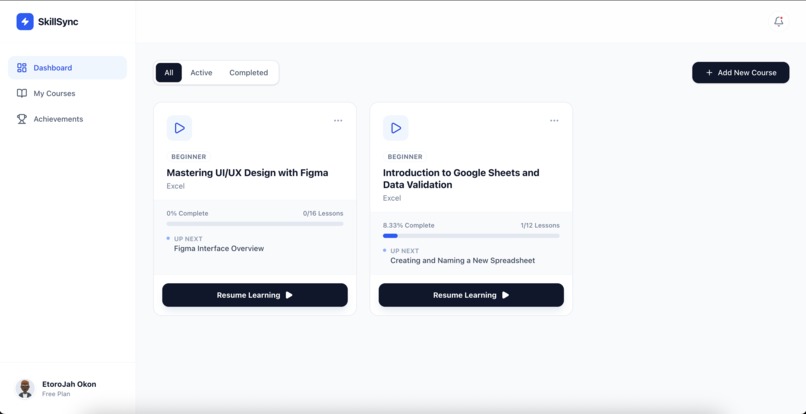
Courses
-
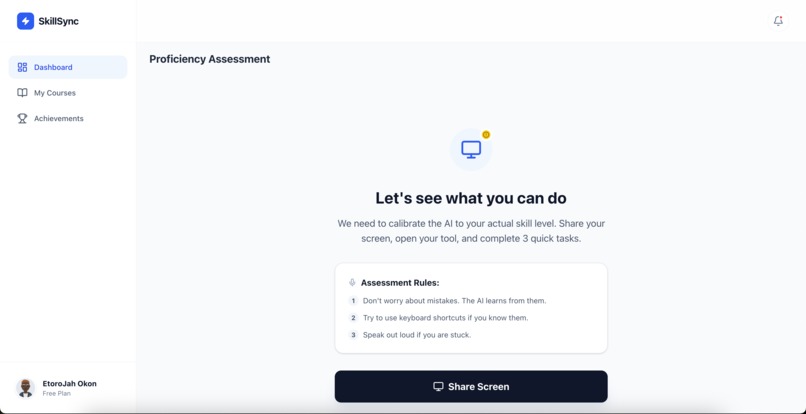
Instructions
-
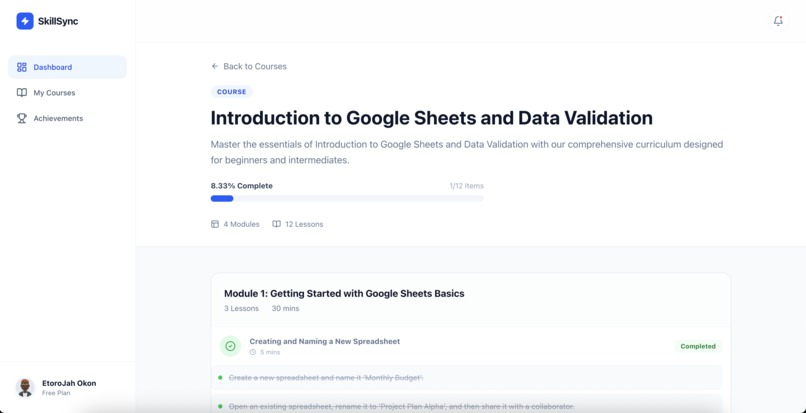
Course Details
-
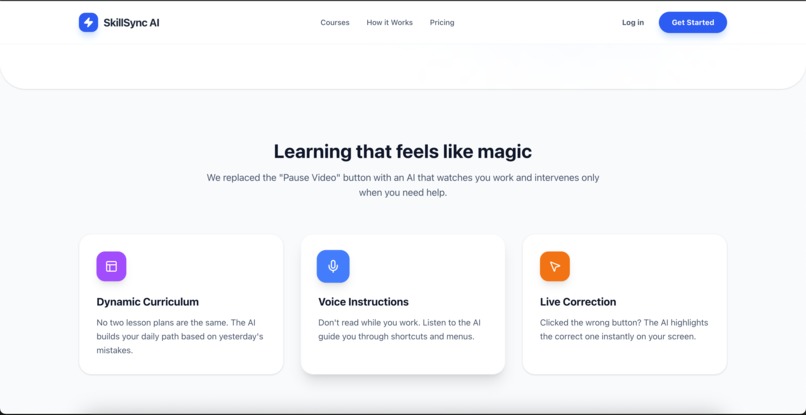
About SkillSync
-
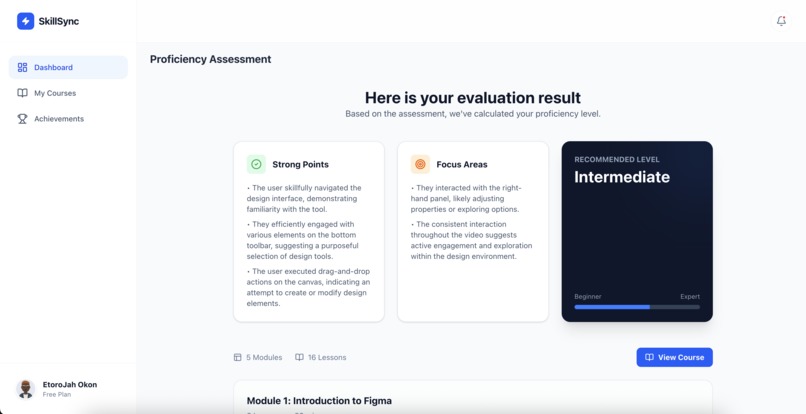
Proficiency Result
-
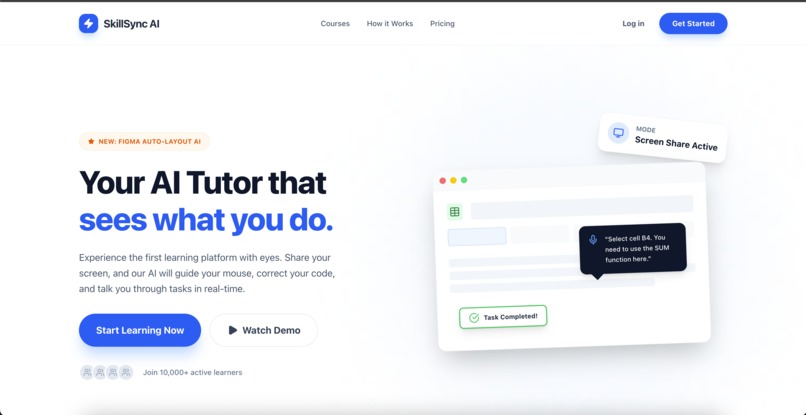
SkillSync
Project Story
A few months ago, I decided it was time to stop dabbling in Figma and actually learn it properly. Not just clicking around or copying designs, but truly understanding how to build clean and functional interfaces.
So I did what most people do. I watched tutorials, enrolled in courses, followed walkthroughs, and reused templates. At first it felt like progress. I would finish a lesson on Auto Layout and think I finally understood it. Then I opened my own file and everything fell apart.
Components broke. Variants behaved strangely. Constraints felt random. I spent more time undoing mistakes than designing. The issue was not a lack of information. It was that none of these courses ever looked at my actual work. There was no feedback on what I was doing wrong and no clear signal of whether I was improving or just guessing.
That frustration kept building. Hours disappeared into trial and error. Motivation dropped because progress felt invisible. That is when it clicked. This problem is not unique to Figma. Anyone learning tools like Excel, Photoshop, or Canva runs into the same wall. Watching lessons is passive. Skill comes from doing, being evaluated, and adjusting.
Inspiration
SkillSync came from wanting learning to feel more like being guided than being lectured.
I wanted something that could watch me work, understand what I was trying to do, tell me how well I was doing it, and then guide me forward. Something closer to a mentor than a course library.
What it does
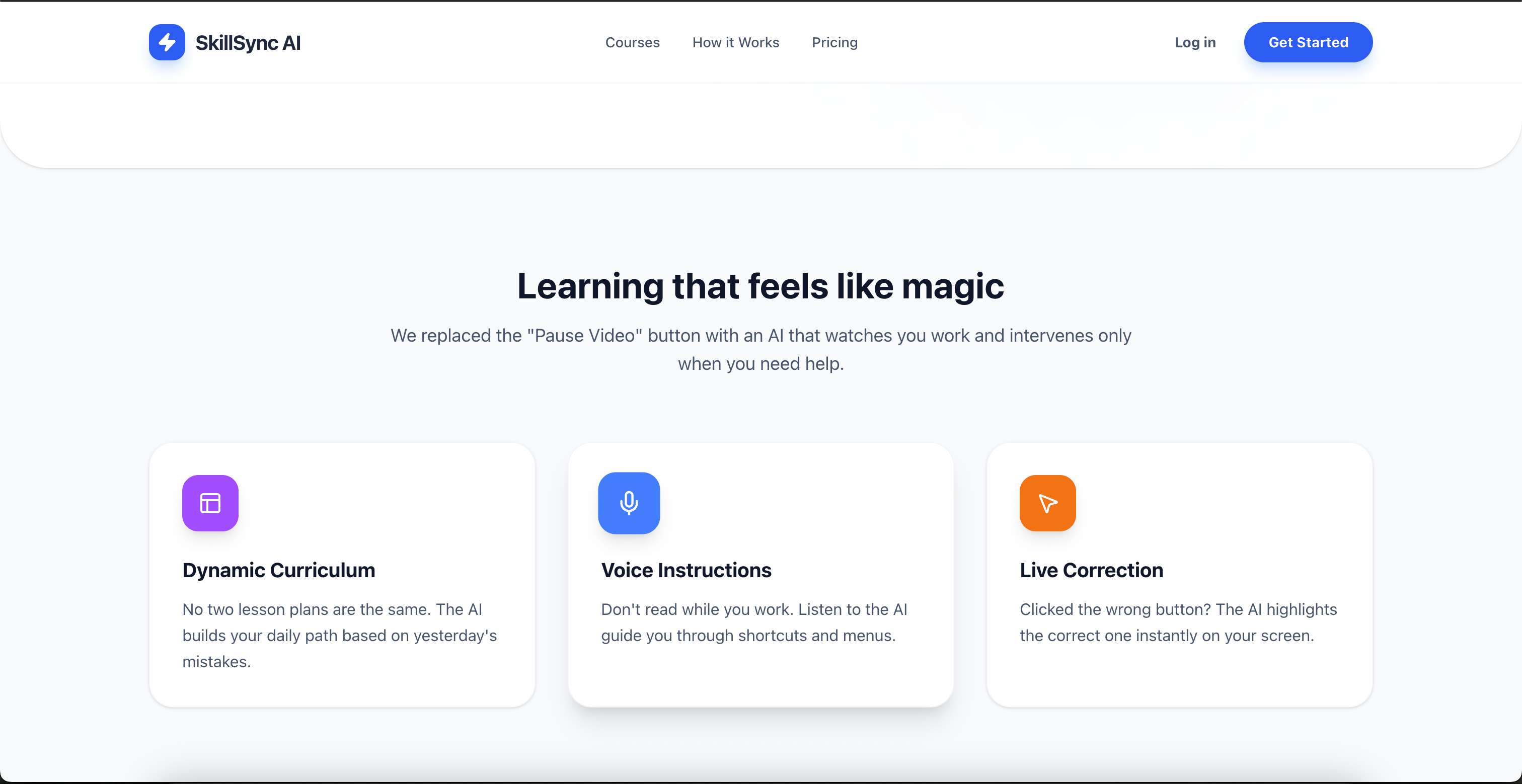
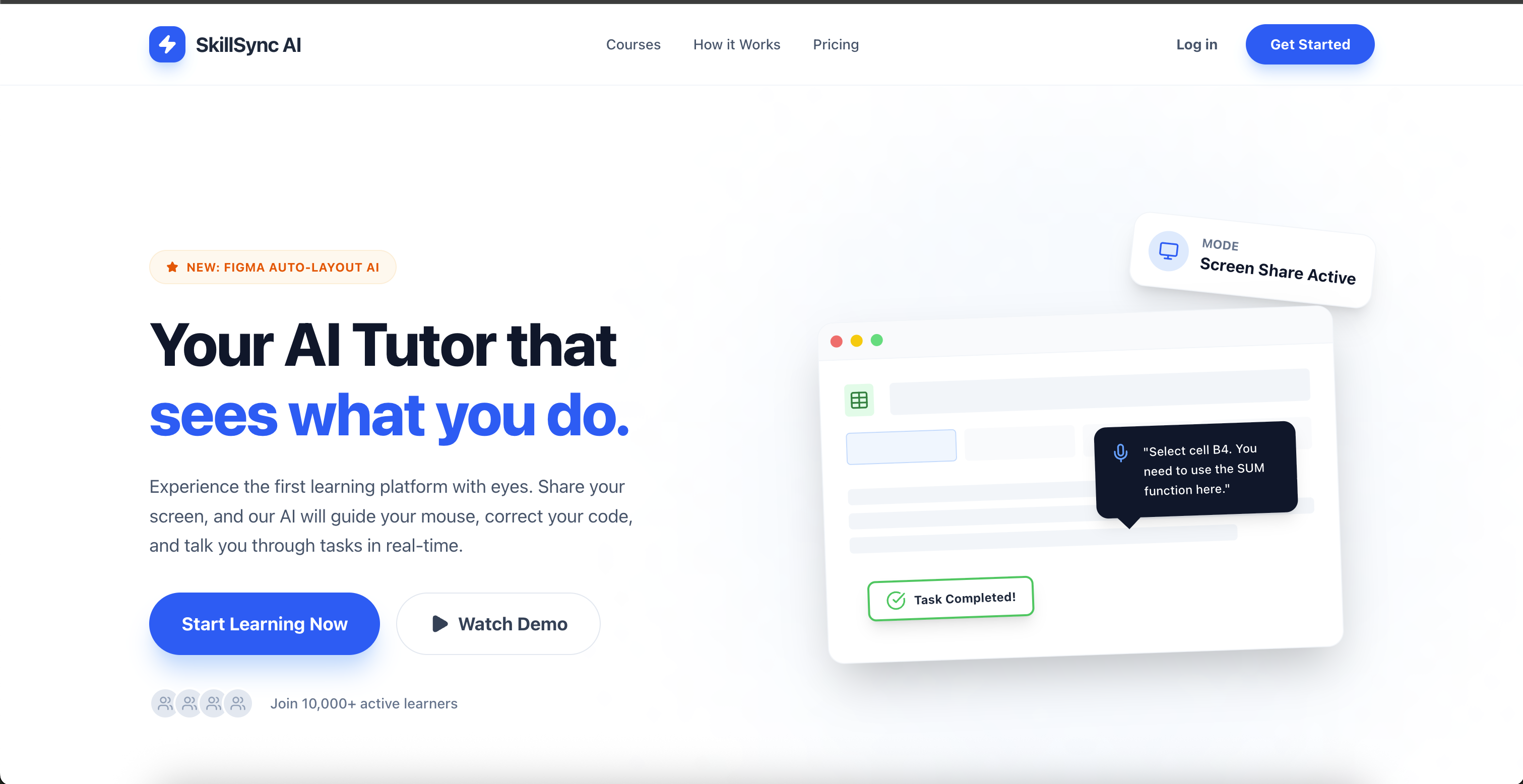
SkillSync AI is a live and adaptive learning system for mastering professional tools.
Instead of starting with lessons, it starts with action.
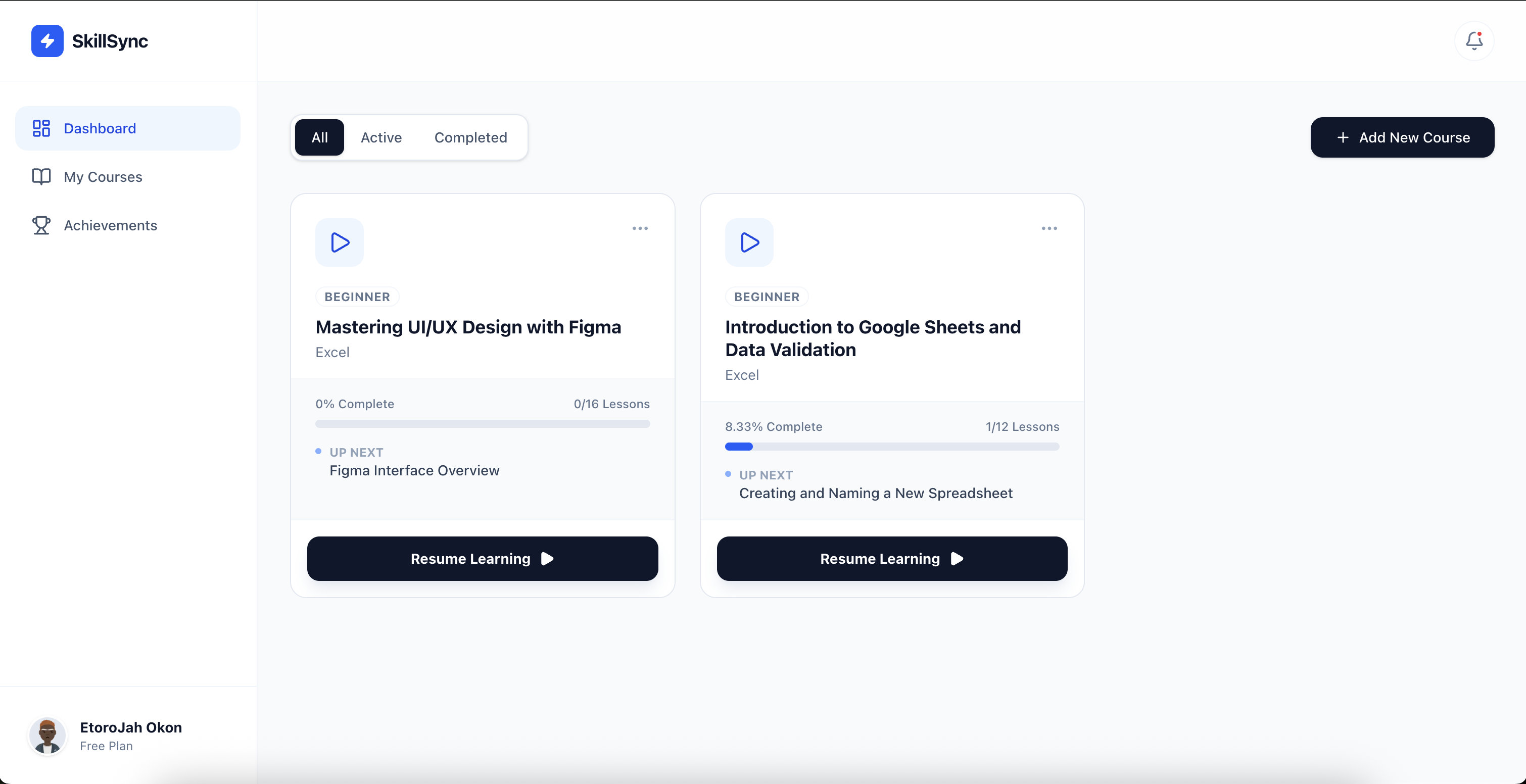
- A user signs in and selects a platform.
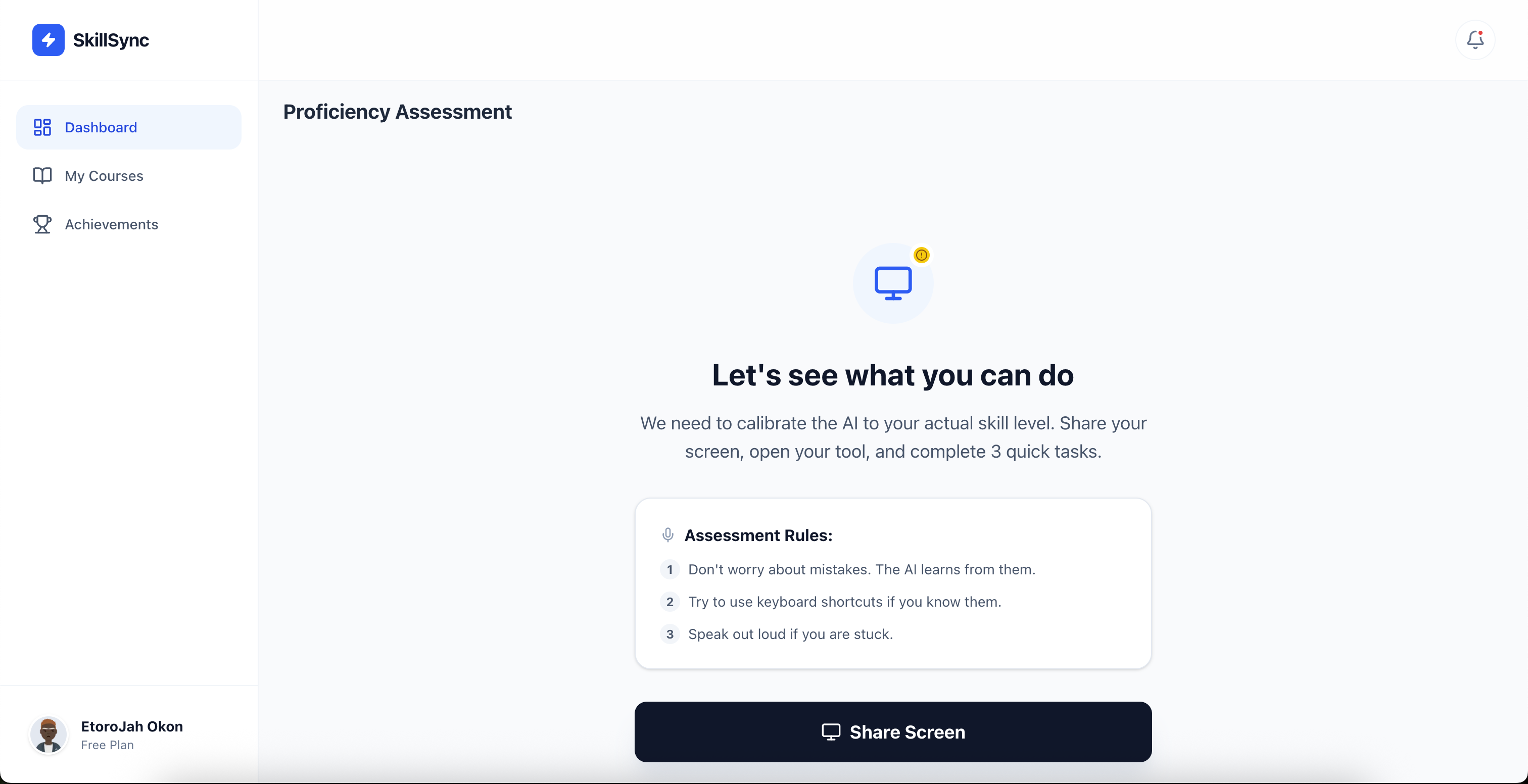
- The user shares their screen and performs a real task live.
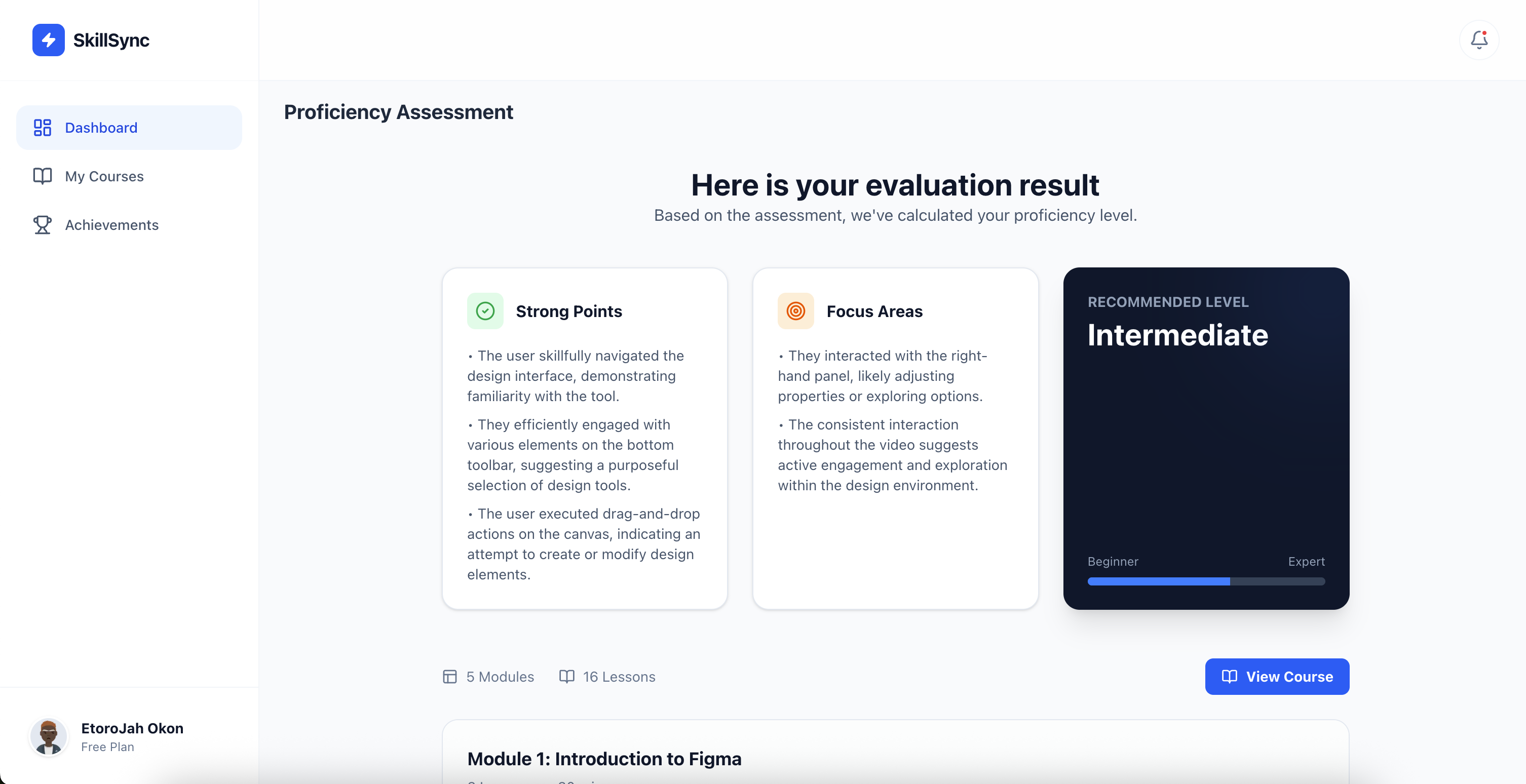
- SkillSync evaluates what the user does and determines their proficiency.
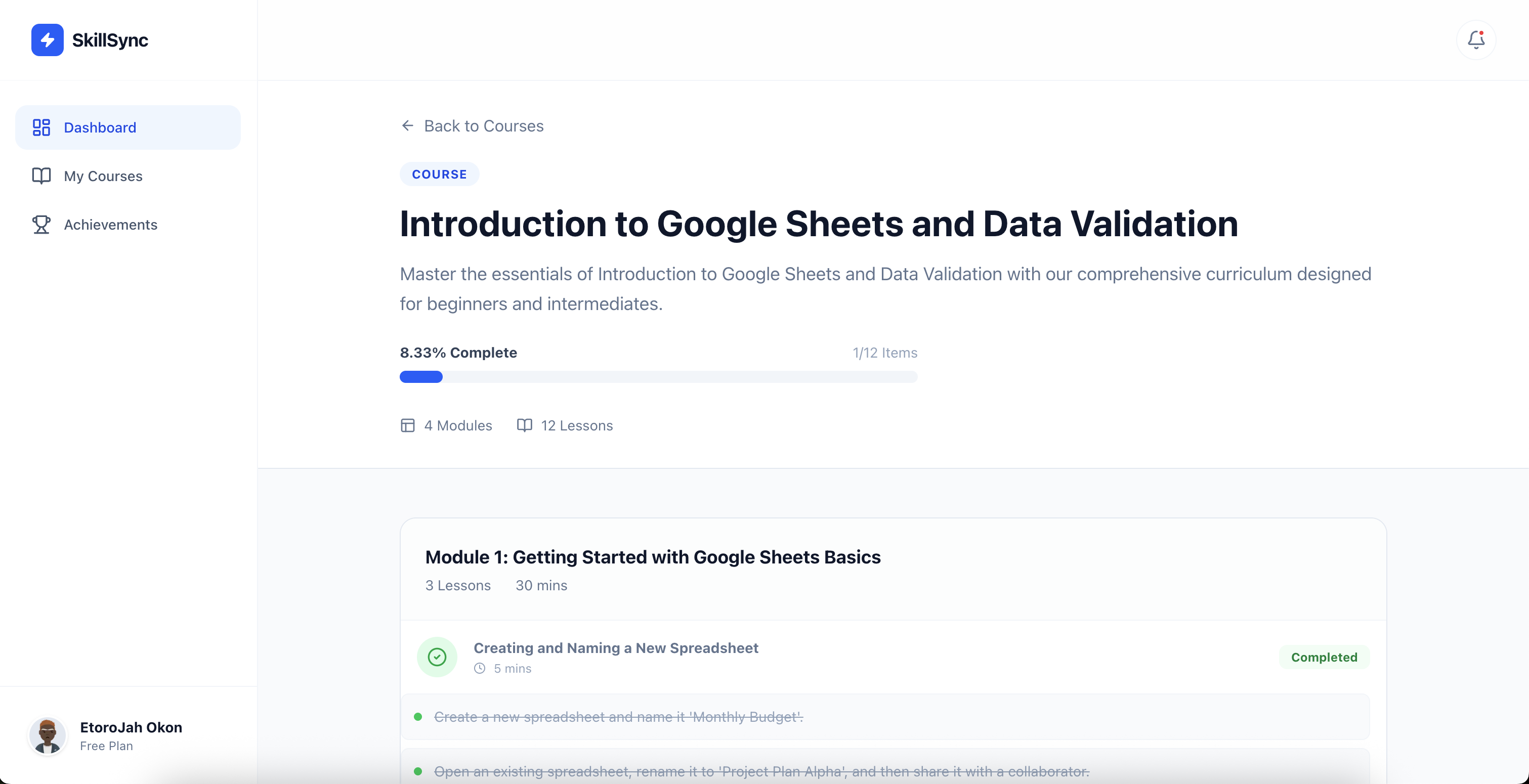
- Based on that evaluation, SkillSync generates a personalized course made up of modules and lessons.
- Each lesson assigns a practical task.
- The user performs the task live.
- Lessons are marked complete only after the task is successfully evaluated.
- As the user improves, the course adapts to match their growth.
Progress only happens when understanding is demonstrated.
How I built it
I built SkillSync around one core idea. Learning should begin with evaluation, not instruction.
The system uses Gemini 3 and its advanced reasoning and multimodal understanding to interpret live user actions during screen sharing sessions. It understands intent, evaluates how tasks are performed, identifies gaps in proficiency, and generates learning paths that fit the user instead of forcing the user to fit the content.
The entire experience is built as a continuous loop. The user performs a task. The system evaluates it. A course is generated or updated. The user practices again. The system adapts.
Challenges I ran into
The hardest problem was evaluating real skill accurately. Teaching concepts is easy. Judging whether someone truly understands them is much harder.
I had to make sure feedback felt fair, clear, and helpful instead of robotic or discouraging. Another challenge was pacing. The system needed to know when to slow a learner down and when to push them forward without frustration.
Accomplishments that I am proud of
I am proud of building a system that evaluates real performance instead of relying on quizzes or passive completion. I am proud of creating adaptive courses that change as the learner improves. Most of all, I am proud that SkillSync makes learning feel honest and earned.
What I learned
I learned that most people do not struggle because they are bad at tools. They struggle because they are learning without feedback.
When learners can clearly see what they are good at and what they need to improve, confidence grows naturally. Motivation follows clarity.
What is next for SkillSync
Next, I plan to expand SkillSync to support more tools and more complex workflows. I am also working on deeper proficiency measurement, better realtime feedback, and smoother live task evaluation.
The goal remains simple. Make learning practical tools feel guided, personal, and genuinely effective.

Log in or sign up for Devpost to join the conversation.