Inspiration
The idea came from watching how learning actually happens around me. My roommate and friends constantly help each other with coding, math, design, or interview prep — but it’s informal, uneven, and often one-sided. Some people keep giving, others keep taking, and there’s no structure to make it fair. SkillSwap was inspired by this imbalance. I wanted a system where learning stays accessible, but contribution is encouraged naturally, without money or pressure.
What it does
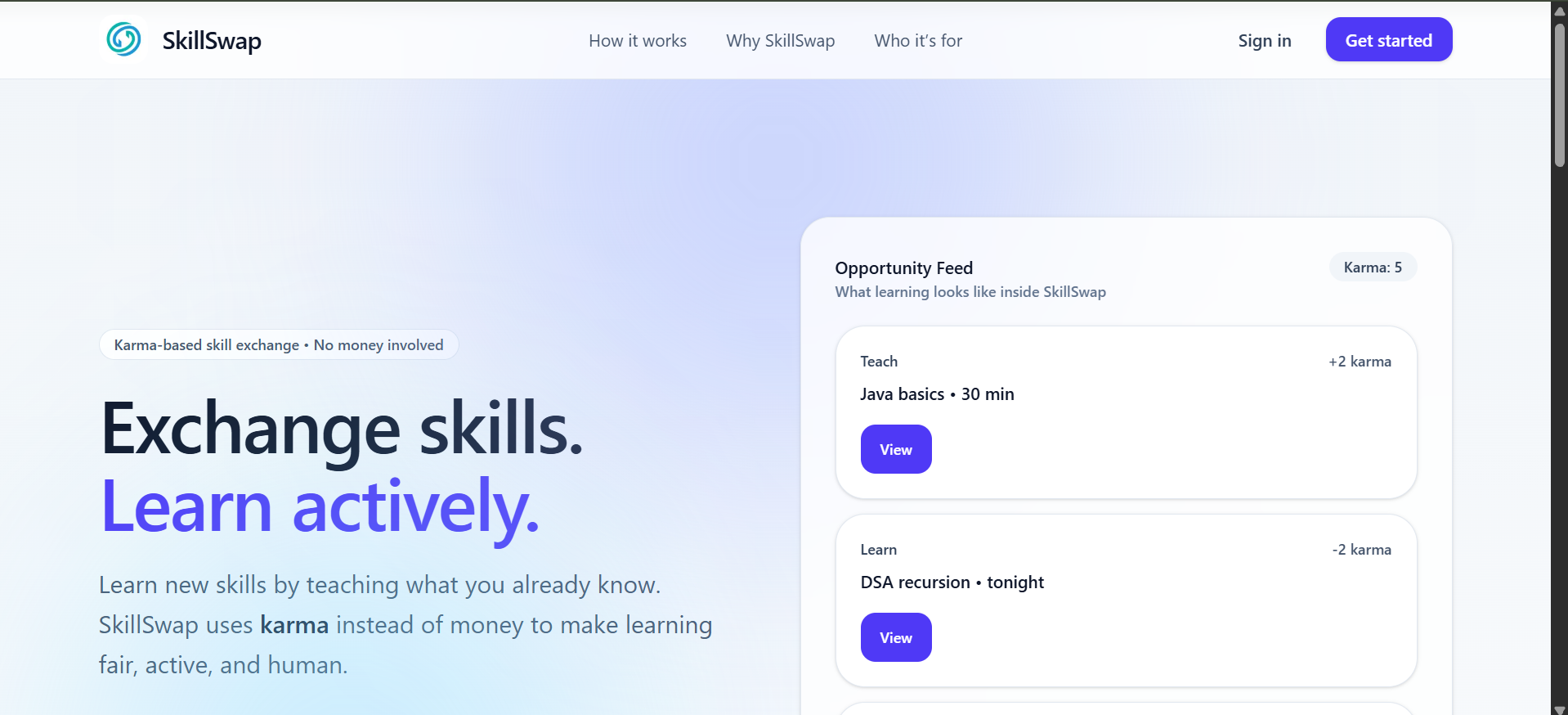
SkillSwap is a karma-based skill exchange platform. Users can post what they want to teach or what they want to learn. Teaching earns karma. Learning spends karma. Karma is applied only when a session is completed, not when it’s requested. This creates a simple loop: post → respond → session → completion → karma → ledger. Reputation is built through actions, not claims.
How we built it
SkillSwap is built as a frontend-first product using Next.js, TypeScript, and Tailwind. Authentication is handled through Google login for the demo. The focus was on system design: fixed karma rules, clear state transitions, and a transparent ledger that records every meaningful action. Global state is managed consistently so the feed, swaps, and karma balance always stay in sync. We intentionally avoided backend complexity to keep the core idea clear and deterministic for judging.
Challenges we ran into
The biggest challenge was restraint. It was tempting to add more features — chat systems, complex reputation scores, flexible pricing — but most of those would weaken trust instead of strengthening it. Another challenge was designing a karma system that couldn’t be easily gamed. This led to fixed rules based on session duration and applying karma only on completion.
Accomplishments that we're proud of
Designing a closed-loop system that feels fair without using money Enforcing karma rules through UI, not just explanations Keeping the product minimal, readable, and judge-friendly Making the demo feel like a real product instead of a prototype
What we learned
Good systems don’t need complexity — they need clarity. We learned that trust comes from rules being visible and enforced, not from long explanations. We also learned that focusing on the core loop early leads to better product decisions later.
What's next for SkillSwap
The next steps would be adding a backend to support multi-user persistence, verified karma ledgers, and messaging between users. Beyond that, SkillSwap could expand into structured communities where skills circulate sustainably, without turning learning into a marketplace.
Built With
- next.js
- react
- tailwindcss
- typescript
- vercel


Log in or sign up for Devpost to join the conversation.