Project Story: SkillSwap - CollegeNetwork
Inspiration
The inspiration behind SkillSwap stemmed from a common challenge faced by college students: the difficulty in connecting with peers and mentors for skill development, project collaboration, and knowledge exchange outside of formal academic structures. We observed that while universities offer numerous resources, there often isn't a centralized, intuitive platform where students can easily find someone to teach them a specific skill, collaborate on a side project, or get mentorship from experienced individuals within their own college community. We envisioned a platform that would break down these silos, fostering a vibrant ecosystem of learning and collaboration, making practical skills more accessible and networking more organic.
What it does
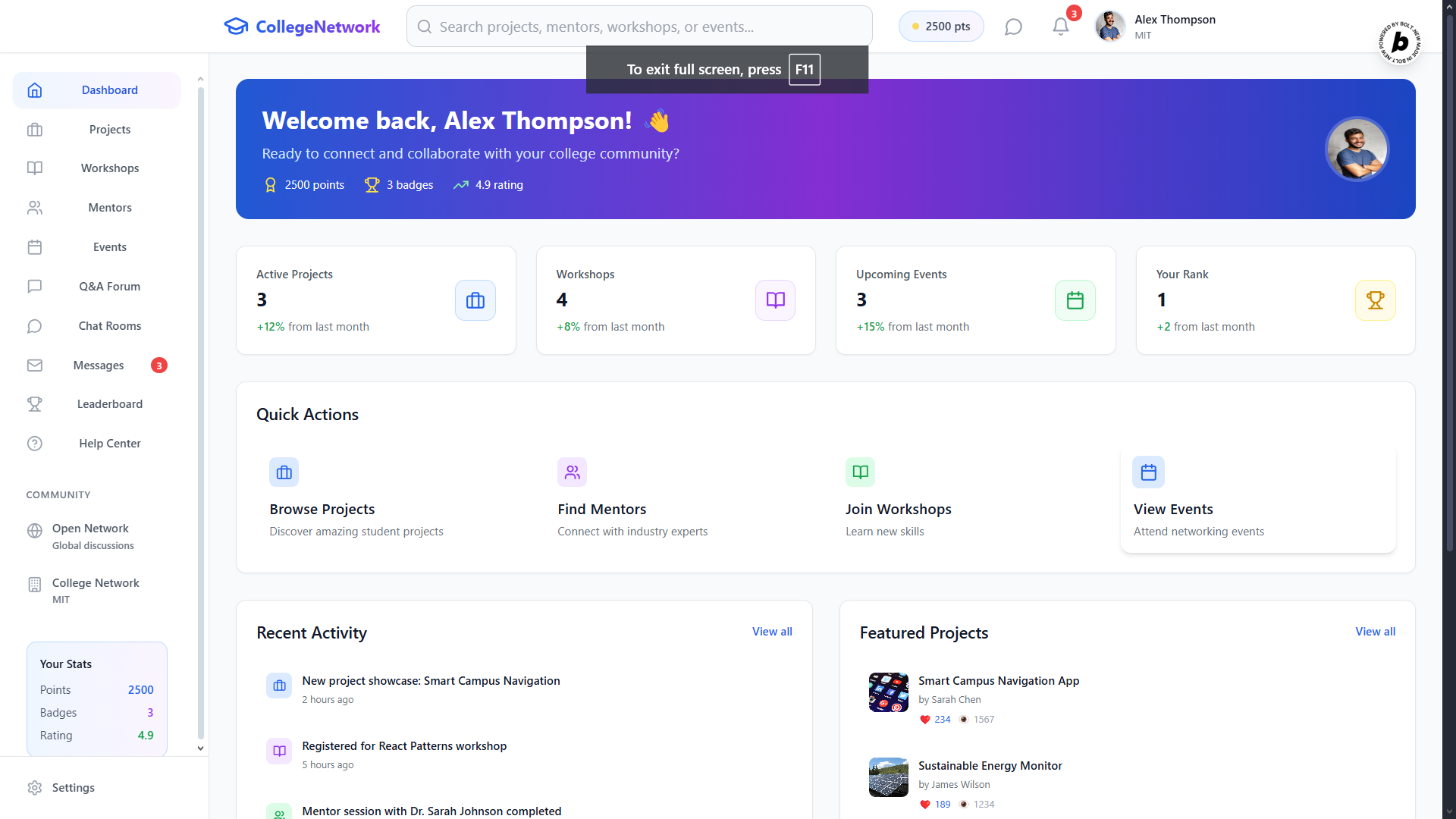
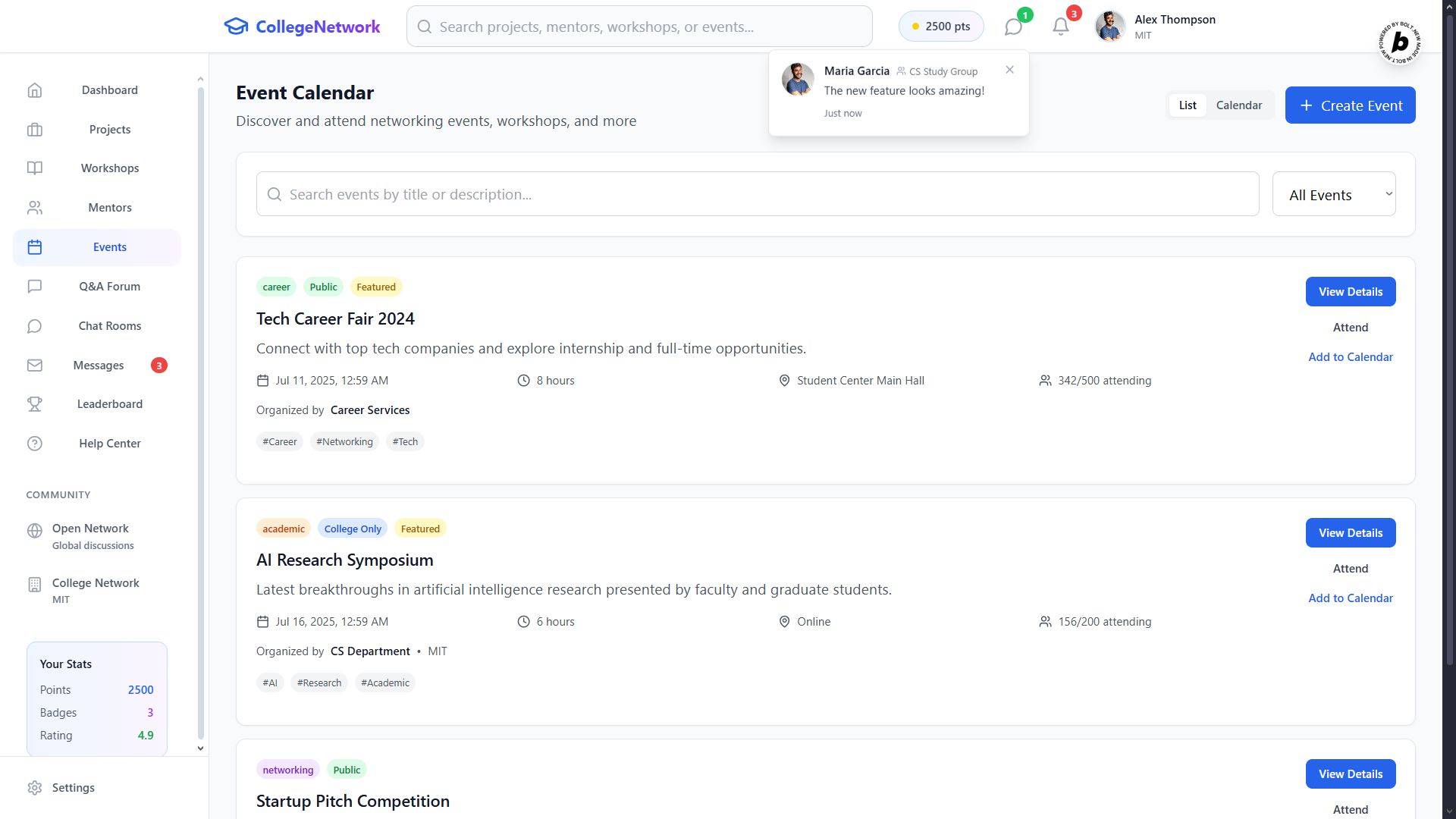
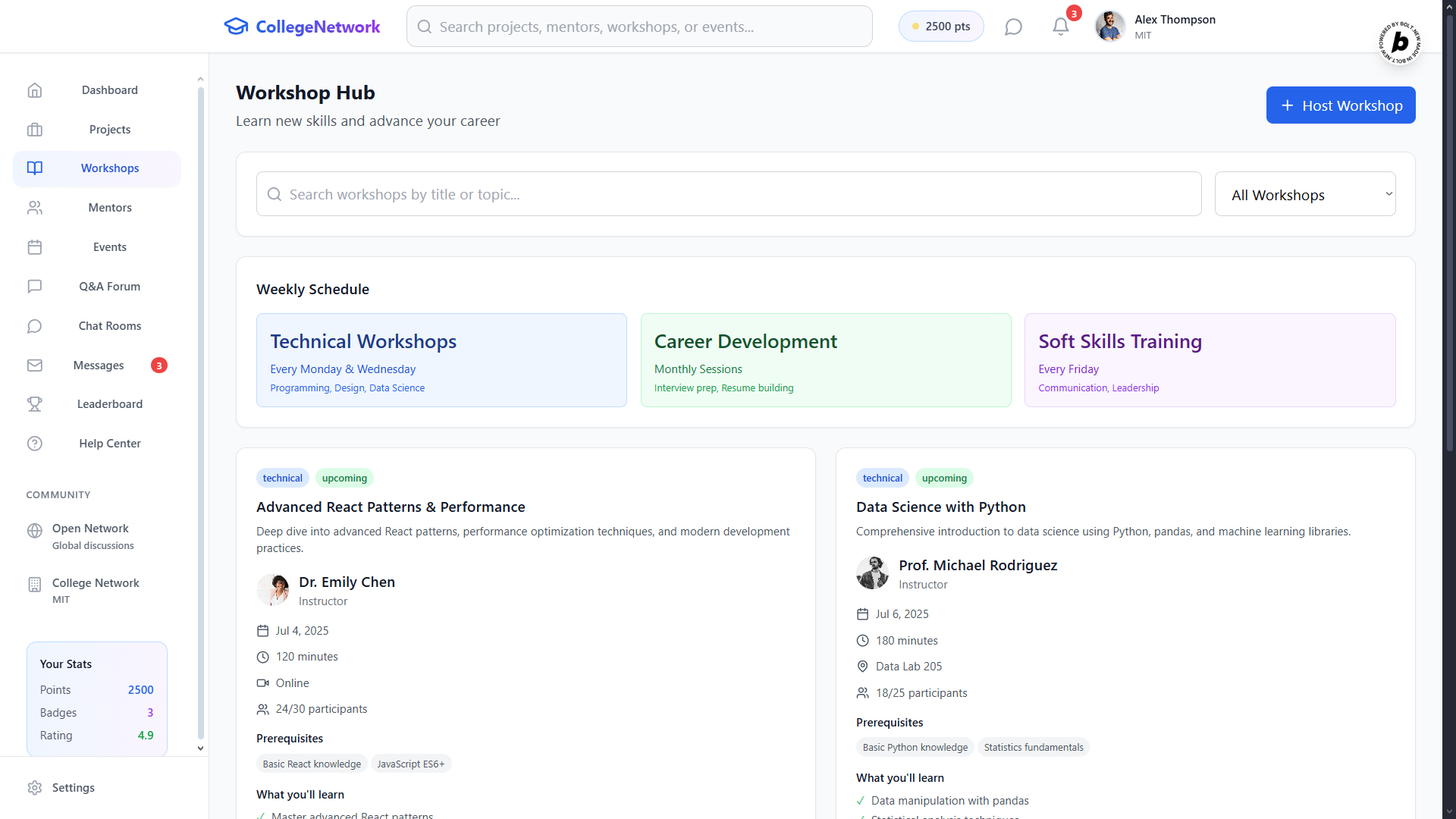
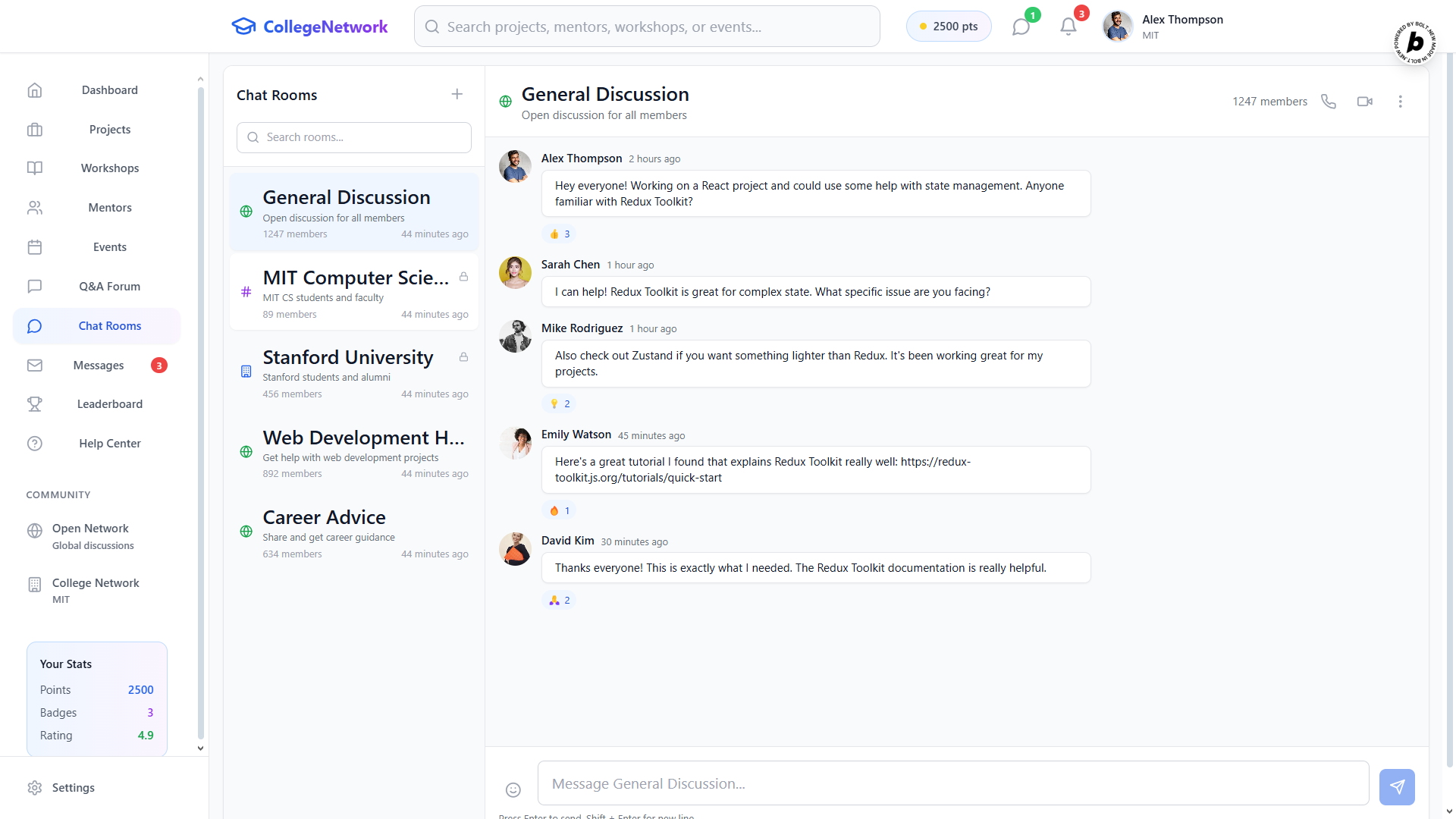
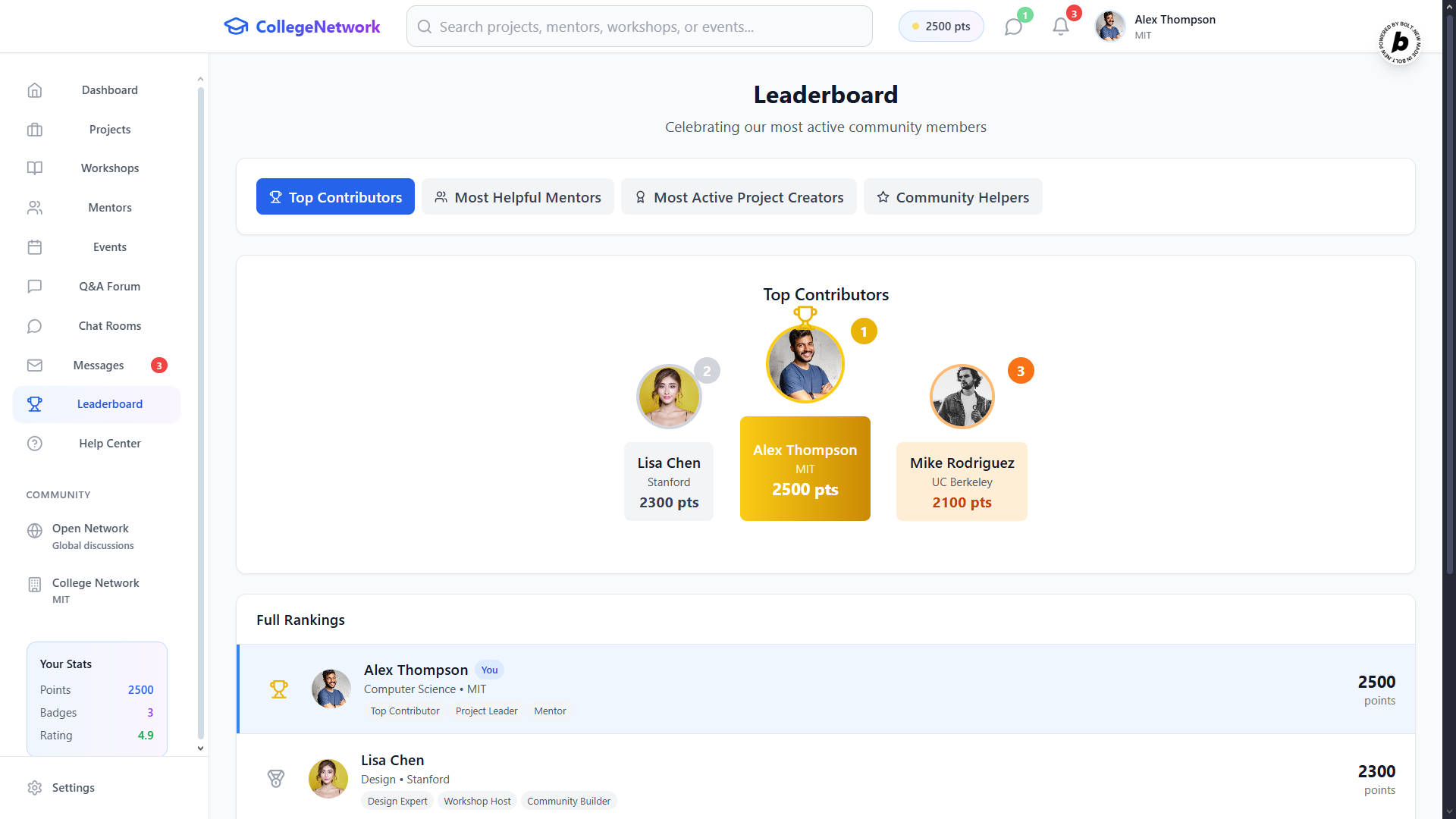
SkillSwap is a comprehensive college skill exchange platform designed to empower students to connect, collaborate, and grow. It provides a multi-faceted environment where users can:
- Manage Profiles: Create detailed profiles showcasing their skills, interests, and social links.
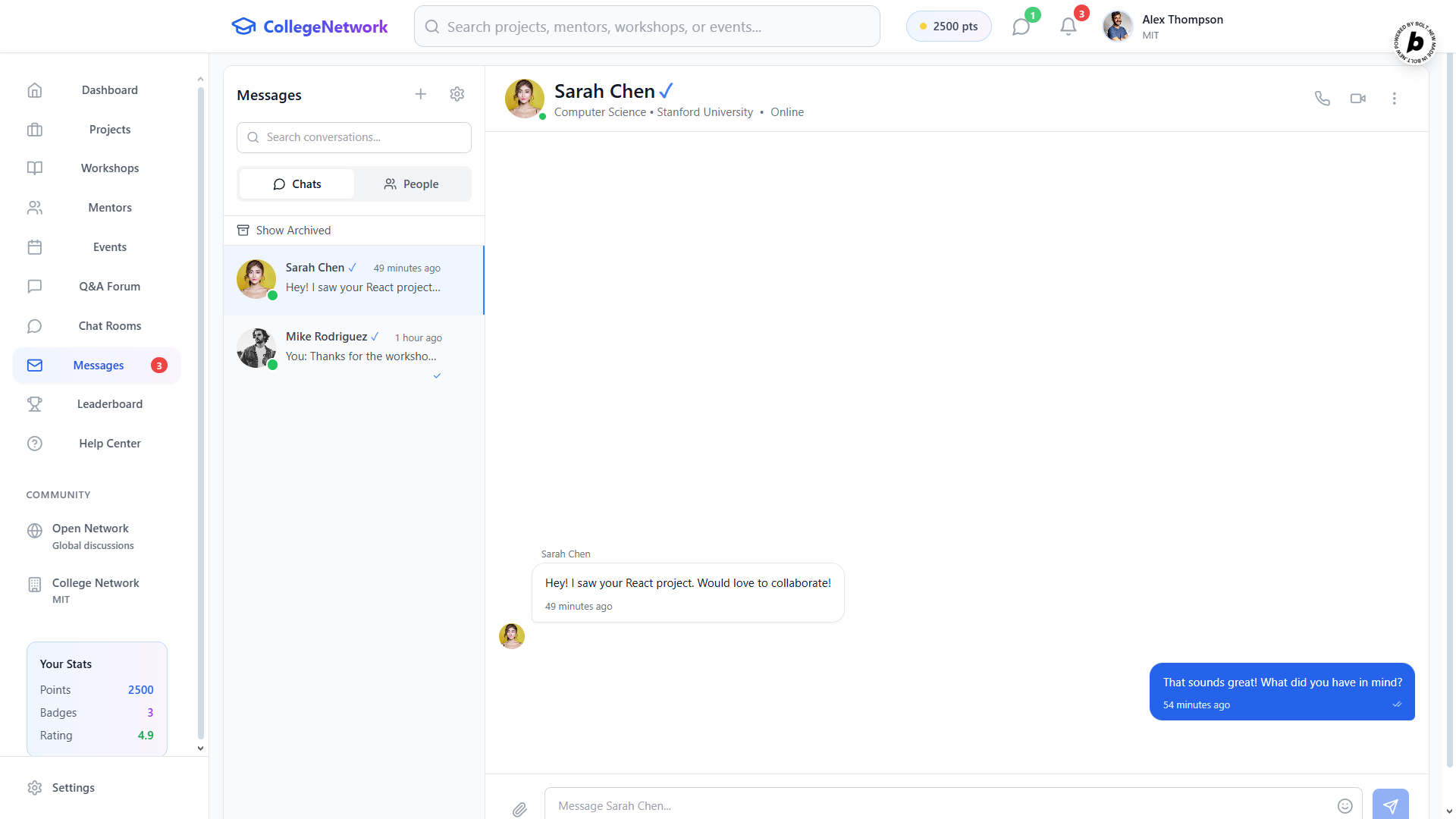
- Engage in Real-time Communication: Utilize chat rooms for group discussions and private messaging for one-on-one conversations, complete with typing indicators and notifications.
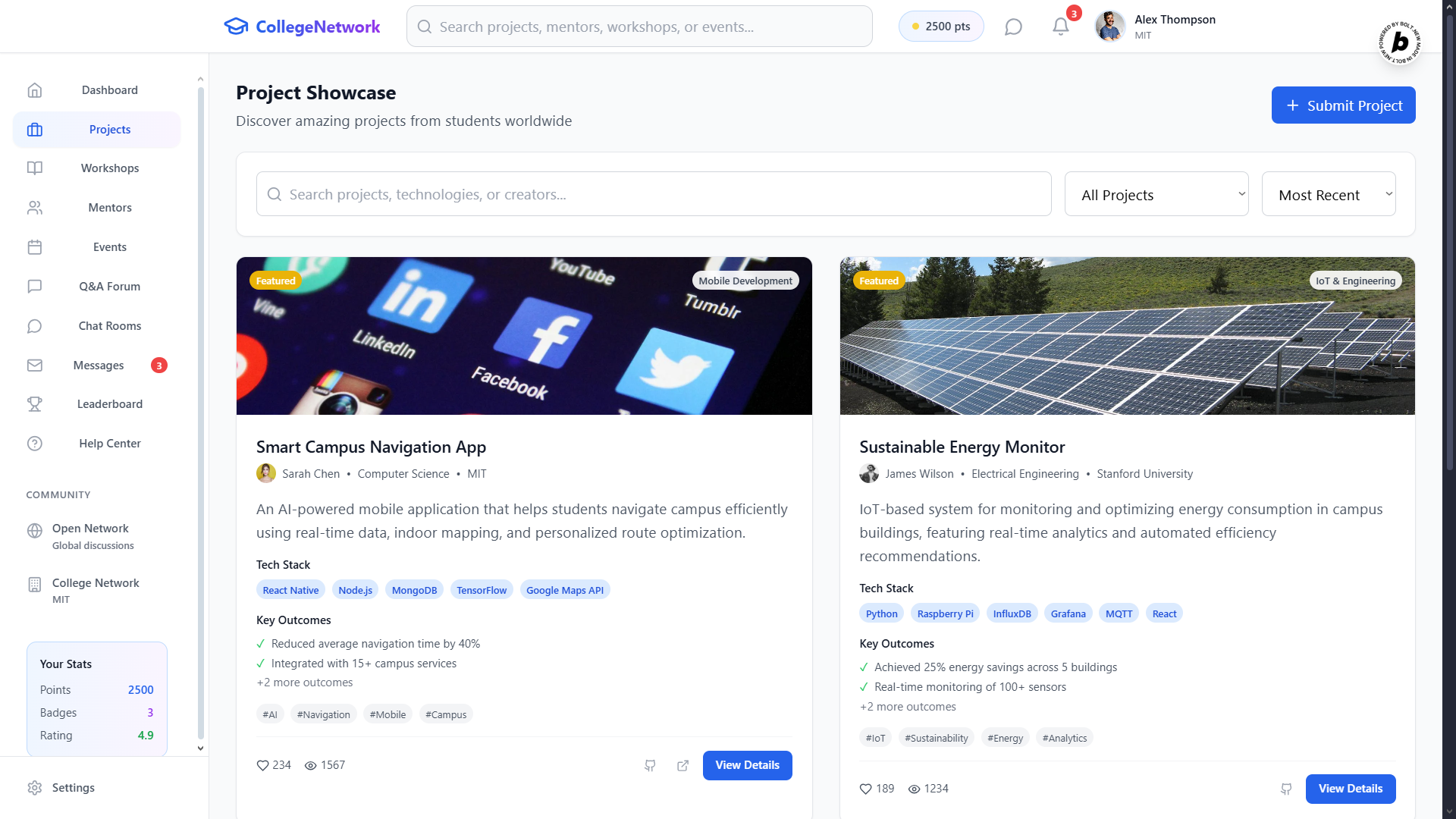
- Showcase Projects: Discover and share innovative projects, fostering collaboration and inspiration.
- Participate in Workshops: Find and register for workshops to learn new skills or host their own to share expertise.
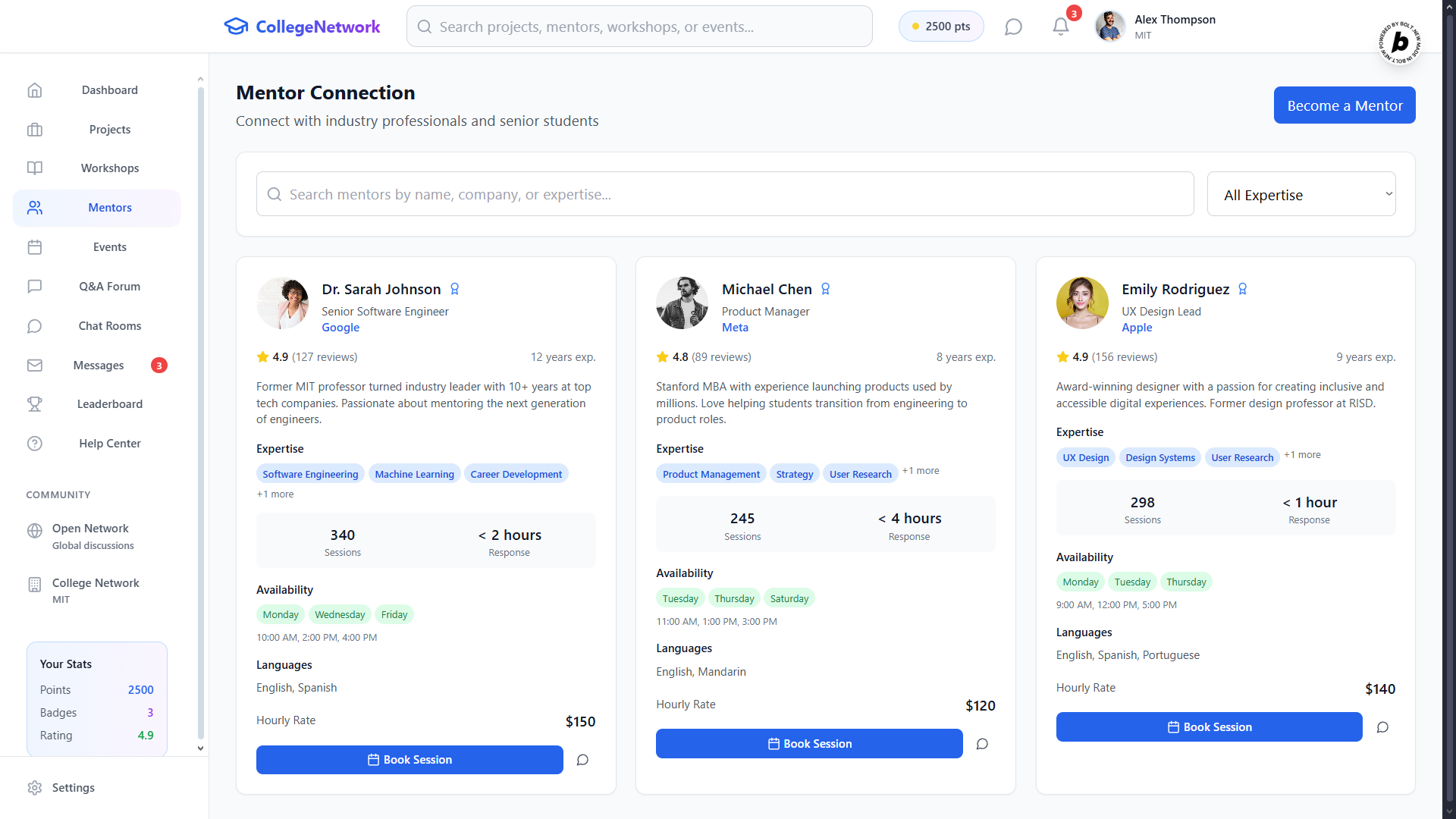
- Connect with Mentors: Discover and book sessions with industry professionals and senior students for guidance and career development.
- Attend Events: Stay updated on and attend various campus and community events.
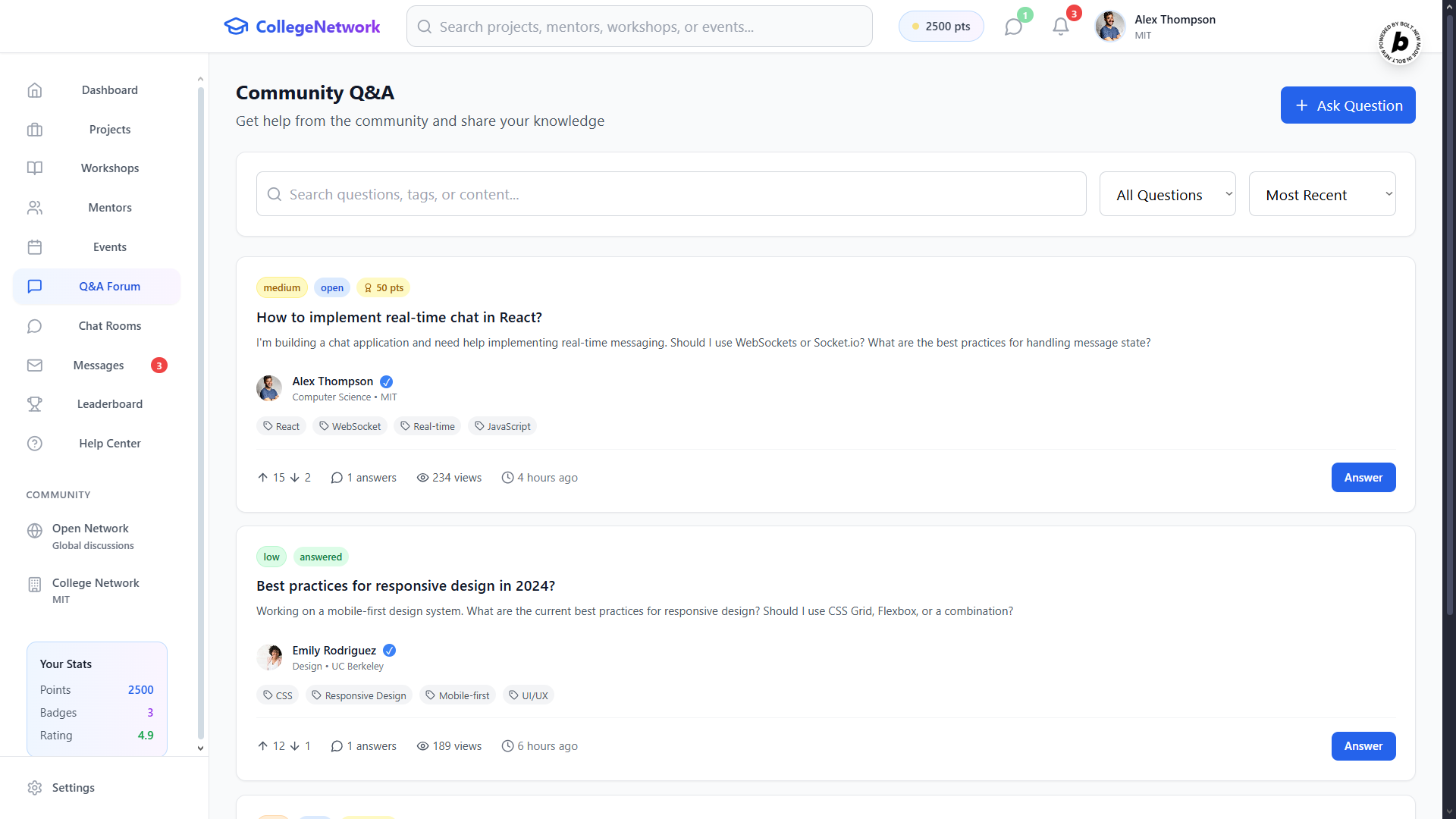
- Utilize a Q&A Forum: Ask questions and provide answers, building a collective knowledge base.
- Track Progress: View a leaderboard and earn points and badges for their contributions.
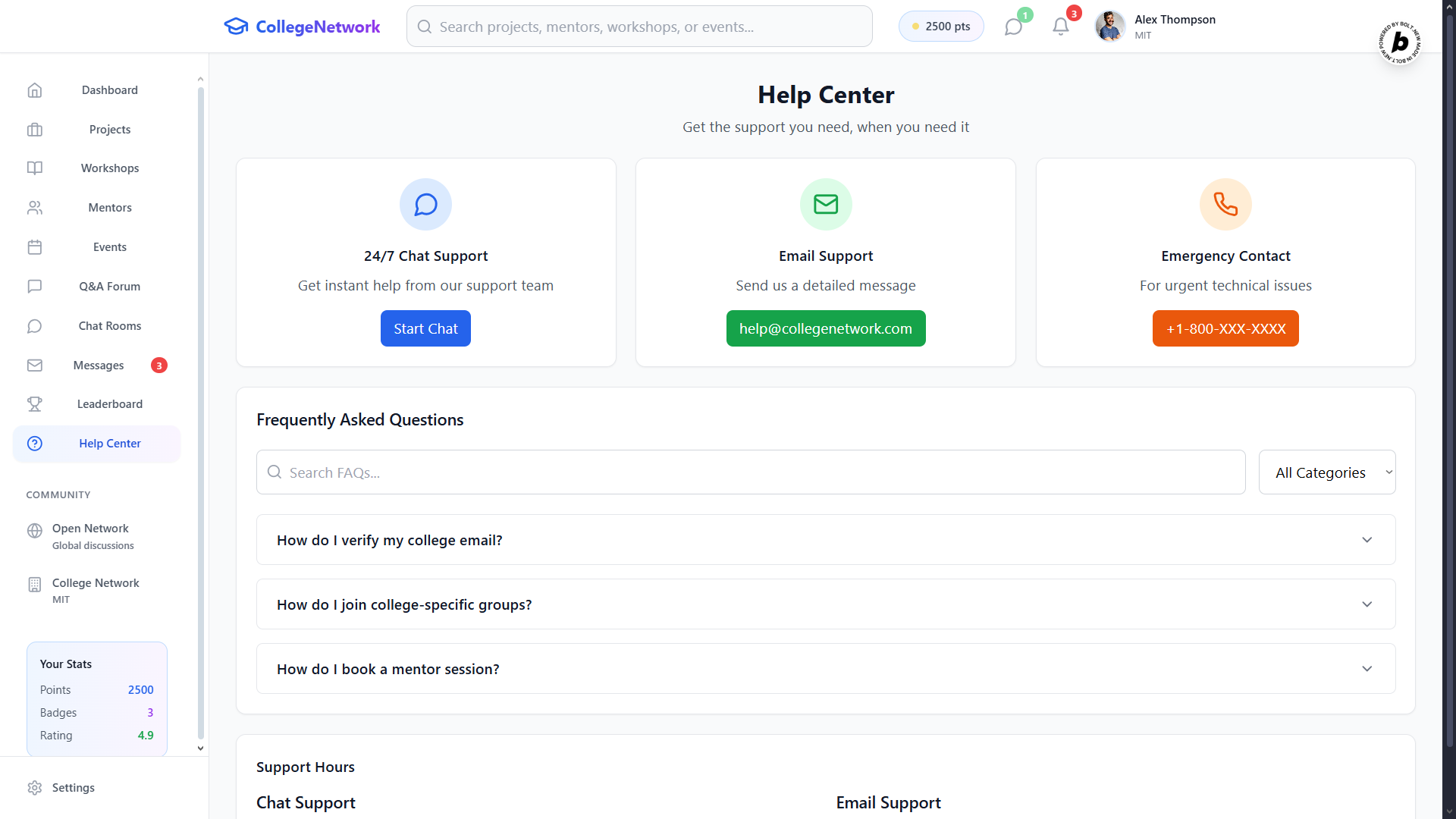
- Access Support: Navigate a help center for FAQs and direct support.
Ultimately, SkillSwap aims to be the go-to digital hub for college students seeking to enhance their practical skills, expand their network, and contribute to a thriving academic community.
How we built it
SkillSwap was built with a strong focus on modern web technologies and best practices to ensure a robust, scalable, and user-friendly application.
The frontend is developed using React and TypeScript, providing a strong type-safe foundation and leveraging React's component-based architecture for modularity and reusability. Tailwind CSS was chosen for styling, enabling rapid UI development with a utility-first approach, ensuring a consistent and responsive design across all devices. Lucide React provides a clean and customizable icon set, seamlessly integrating with the design system.
For state management, we utilized React's Context API (AuthContext, AppContext, ChatContext, MessagingContext) to manage global application state, user authentication, and real-time communication data. React Router DOM handles client-side routing, providing a smooth single-page application experience.
The project uses Vite as its build tool, offering a fast development server and optimized production builds. We implemented Progressive Web App (PWA) capabilities using a Service Worker and a Web Manifest to provide an app-like experience, including offline access and installability.
Responsive design was a core consideration from the outset, implemented using custom React hooks (useMediaQuery, useViewport) alongside Tailwind CSS's responsive utilities to ensure optimal viewing and interaction across mobile, tablet, and desktop screens.
For code quality, ESLint with TypeScript and React hooks plugins was configured to maintain consistent coding standards and catch potential issues early in the development cycle.
Challenges we ran into
Developing SkillSwap presented several interesting challenges:
- Real-time Communication Complexity: Implementing the chat and private messaging features, including typing indicators, read receipts, and dynamic message updates, required careful thought, even with mocked data. Ensuring a smooth, responsive experience for these real-time elements was a significant hurdle.
- Comprehensive Responsive Design: Adapting the diverse range of features—from complex forms and data grids to interactive modals and sidebars—to look and function flawlessly across a wide array of screen sizes and device orientations proved to be intricate. This involved meticulous planning of layouts and component behaviors.
- Data Structure and Management: Even with mock data, designing and managing the interconnected data structures for users, projects, workshops, mentors, events, and messages, along with their various relationships and filtering options, was a complex task. Ensuring data consistency and efficient retrieval was crucial.
- User Onboarding and Profile Completion: Creating an intuitive and engaging profile setup flow, especially for new users, to encourage comprehensive profile completion (skills, interests, social links) was a design challenge.
- Performance Optimization: With a rich feature set and dynamic content, maintaining fast loading times and smooth animations required continuous optimization efforts, including code splitting, image optimization strategies, and efficient rendering techniques.
Accomplishments that we're proud of
Despite the challenges, we are incredibly proud of several key accomplishments:
- A Feature-Rich and Intuitive Platform: We successfully built a comprehensive application that integrates diverse functionalities like chat, project showcases, mentorship, and Q&A into a cohesive and user-friendly experience.
- Robust and Responsive UI/UX: The application boasts a modern, clean, and highly responsive user interface that adapts beautifully to any device, providing an impressive and consistent user experience.
- Modular and Maintainable Codebase: By adhering to modern React practices, TypeScript, and a well-structured component architecture, we've created a codebase that is easy to understand, maintain, and extend for future development.
- PWA Capabilities: Successfully implementing PWA features means SkillSwap can be installed on devices and offers an app-like experience, enhancing accessibility and user engagement.
- Effective Use of Modern Frontend Stack: We effectively leveraged the power of React, TypeScript, and Tailwind CSS to build a performant and visually appealing application efficiently.
What we learned
This project was a tremendous learning experience, deepening our understanding in several areas:
- Advanced React Patterns: We gained practical experience with advanced React concepts, including the effective use of the Context API for global state management, custom hooks for reusable logic, and optimizing component rendering.
- Responsive Design Mastery: We learned the intricacies of building truly responsive web applications, going beyond basic media queries to consider user preferences (e.g., reduced motion) and device-specific behaviors.
- Frontend Architecture Best Practices: The importance of a well-thought-out project structure, component reusability, and clear separation of concerns became evident, contributing to a more maintainable and scalable application.
- Simulating Real-time Interactions: Even without a live backend, the process of structuring the frontend to handle real-time data flows for chat and notifications provided valuable insights into the complexities of such systems.
- Performance Optimization Techniques: We explored and applied various techniques to optimize application performance, from build-time optimizations with Vite to runtime rendering efficiencies.
What's next for SkillSwap - CollegeNetwork
The future of SkillSwap is exciting, with many potential avenues for growth and enhancement:
- Backend Integration: The immediate next step is to integrate with a robust backend solution (e.g., Supabase, Firebase, or a custom Node.js API) to enable persistent data storage, real-time database updates, and full-fledged user authentication.
- Live Real-time Communication: Transitioning from mocked data to actual real-time communication using WebSockets or a service like Socket.io for chat, notifications, and live activity feeds.
- Enhanced Skill Matching: Developing more sophisticated algorithms for skill matching and personalized recommendations for projects, mentors, and workshops.
- User-Generated Content Features: Implementing full CRUD (Create, Read, Update, Delete) operations for projects, workshops, and events, allowing users to submit and manage their own content.
- Advanced Search and Filtering: Building a powerful search engine to allow users to easily find specific skills, projects, or people.
- Monetization Opportunities: Exploring potential monetization strategies, such as premium mentor sessions or sponsored workshops, while maintaining core free features.
- Mobile Application Development: Developing native mobile applications using React Native or Expo to provide an even more seamless experience for users on iOS and Android.
- Community Moderation Tools: Implementing tools for community moderation to ensure a safe and positive environment for all users.
Built With
- bolt.new
- netlify
- supabase


Log in or sign up for Devpost to join the conversation.