-
-
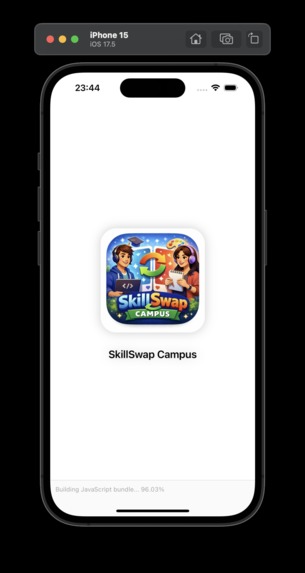
Splash Screen
-
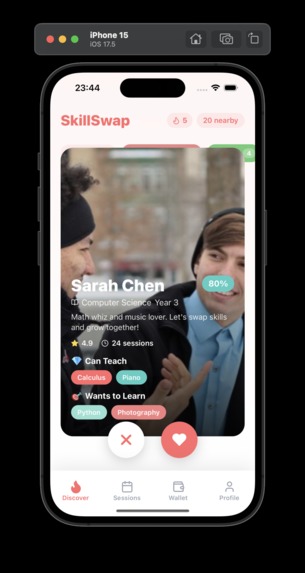
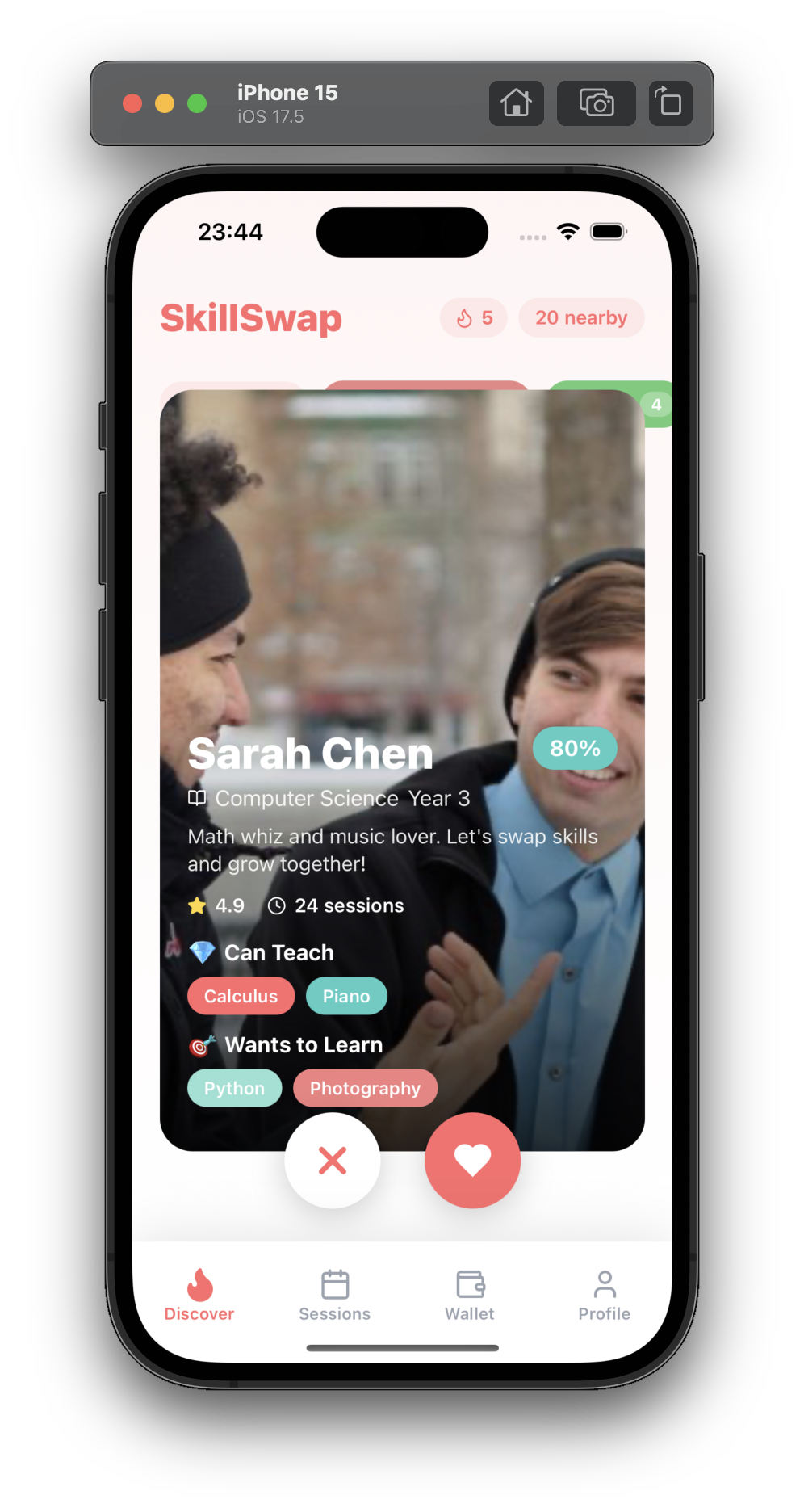
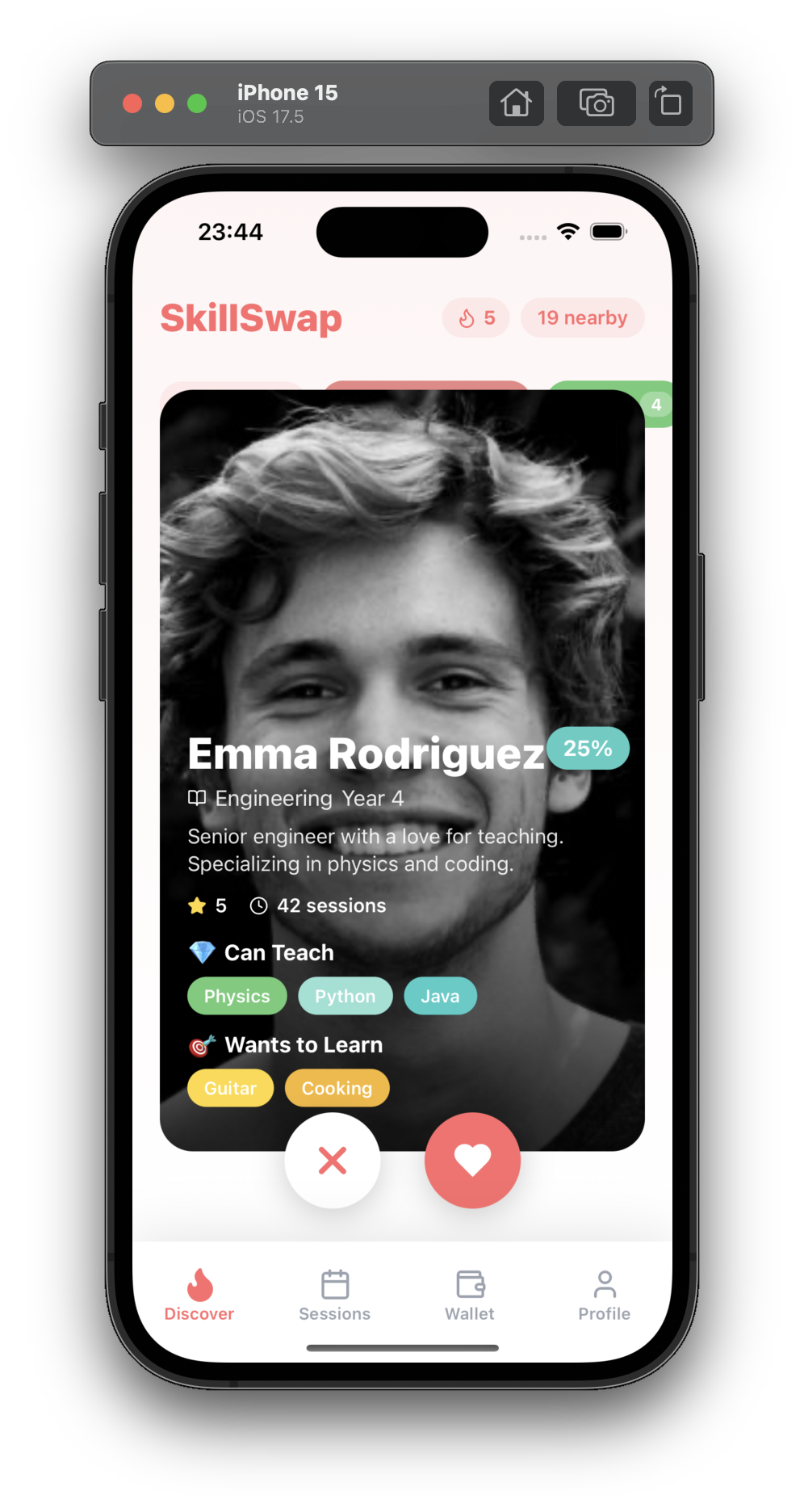
Discover Screen
-
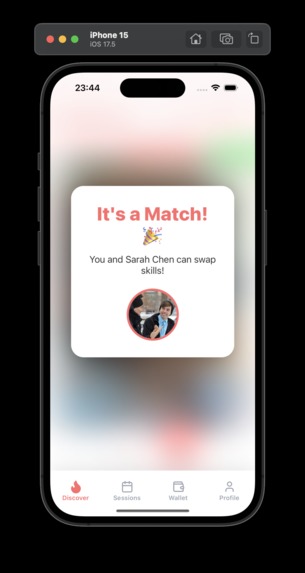
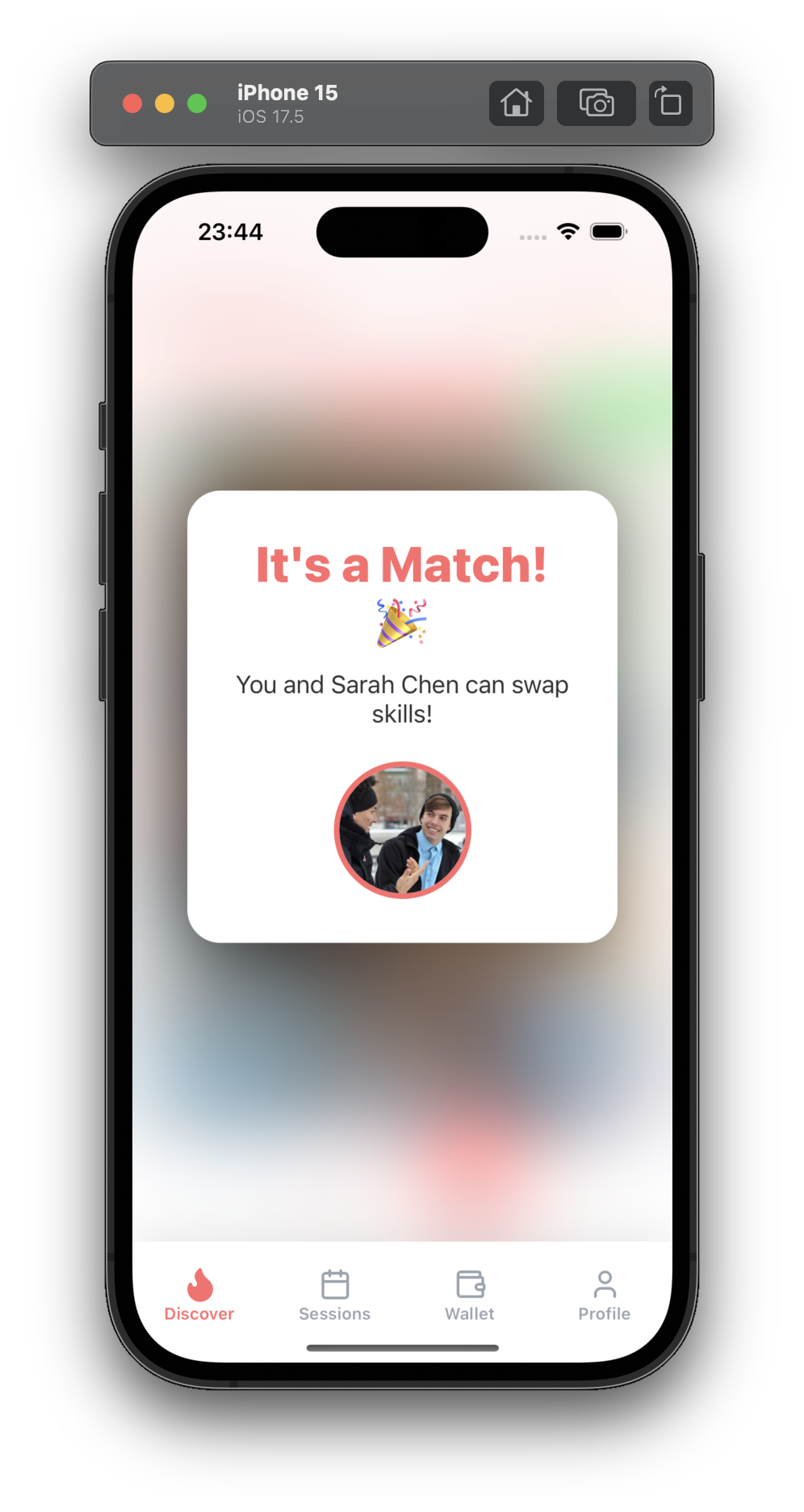
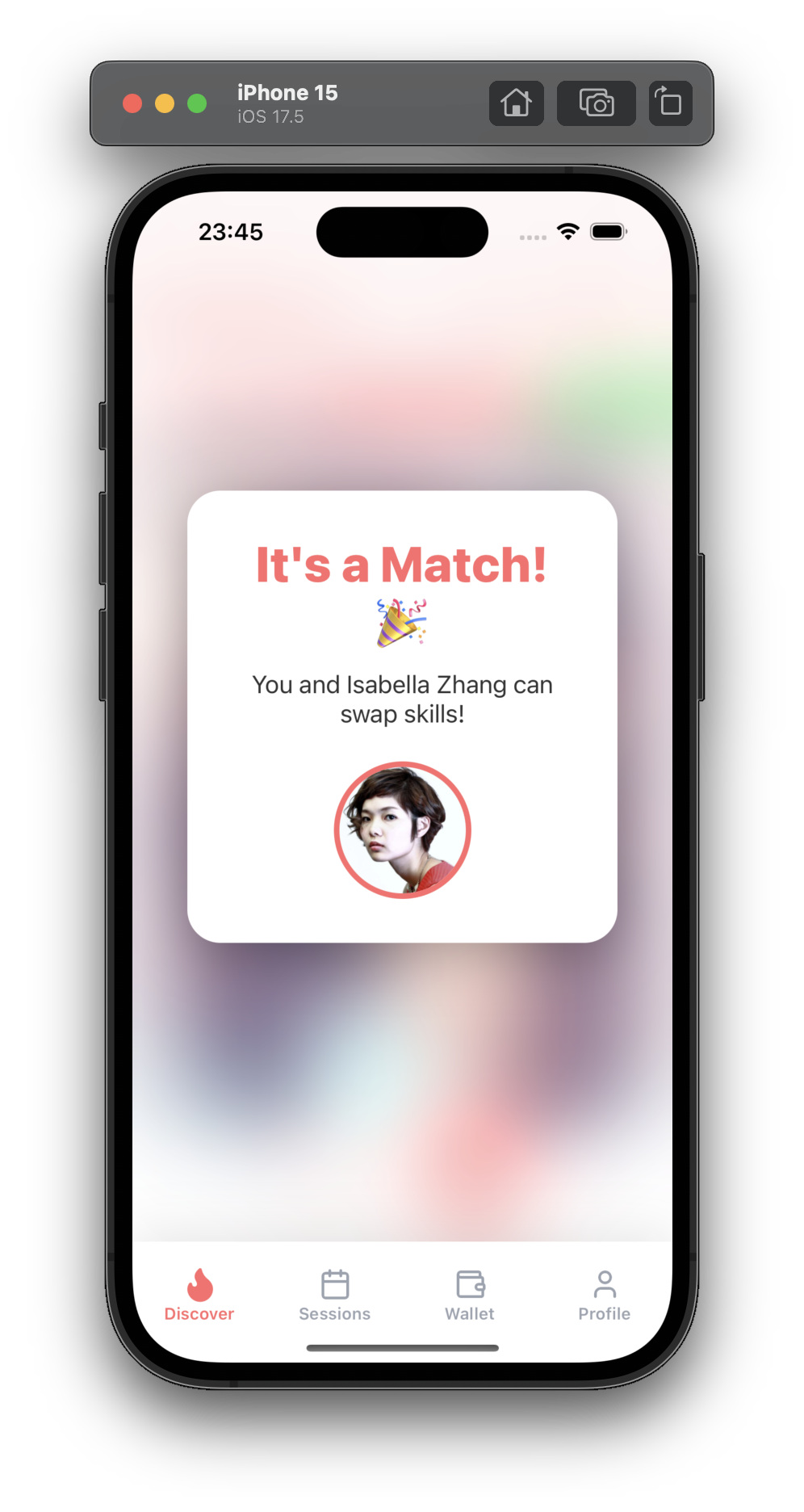
Match success
-
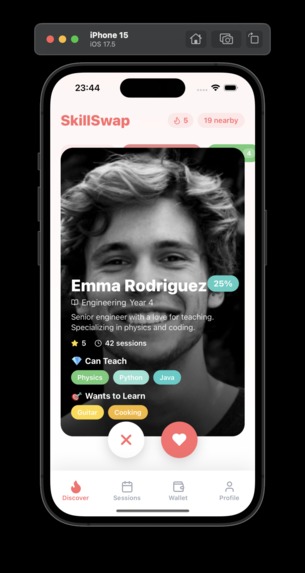
Another Match
-
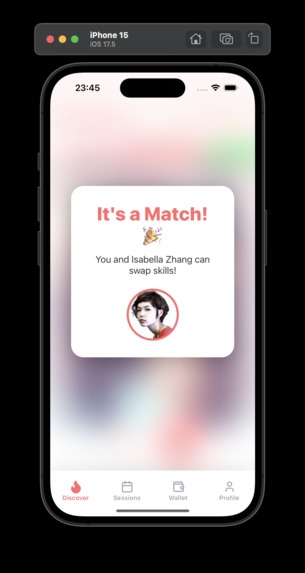
Different Match Success
-
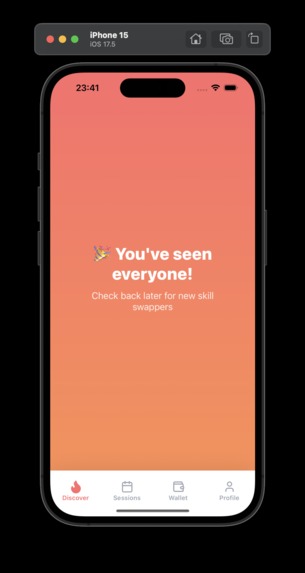
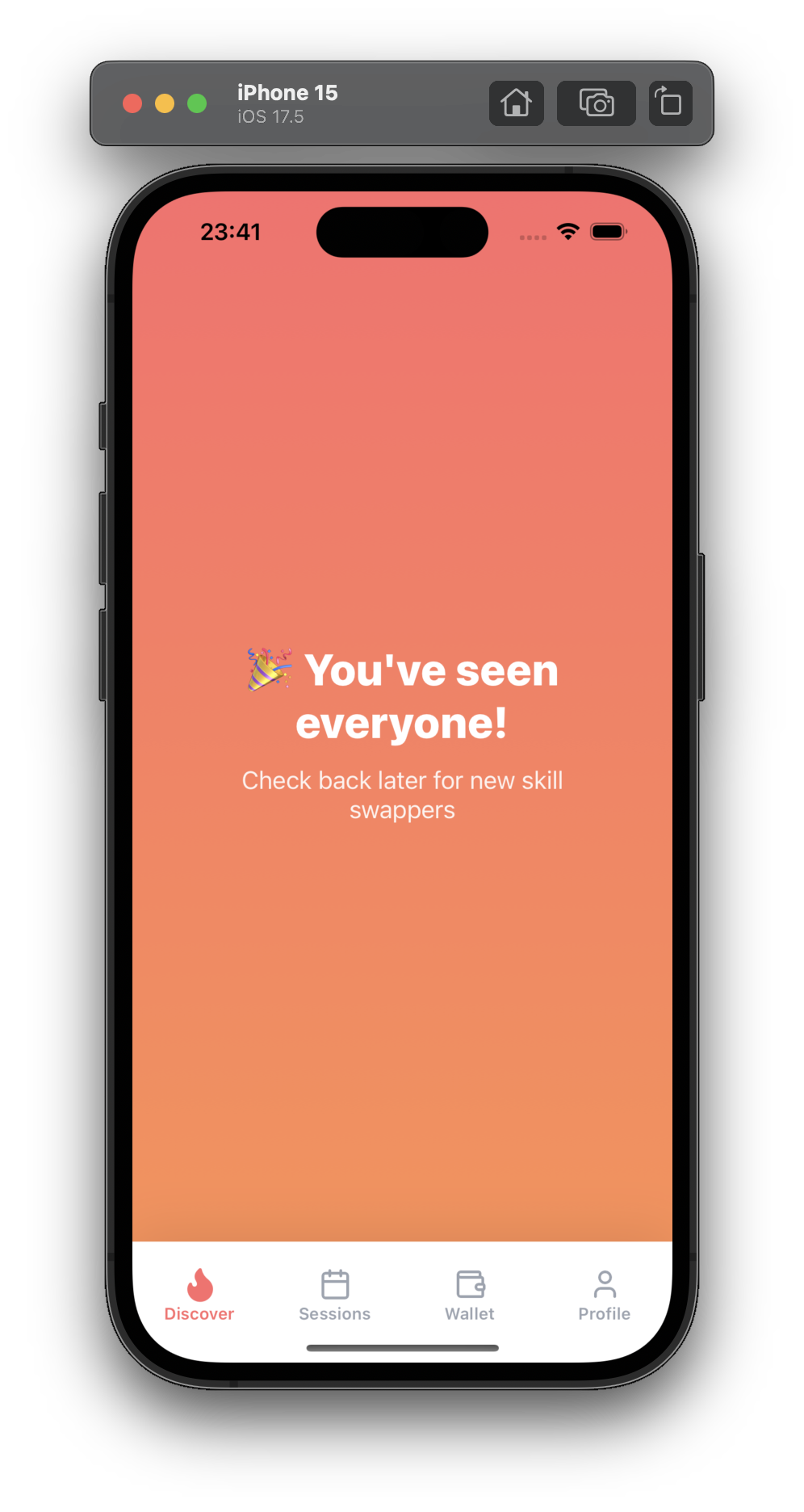
End Explore
-
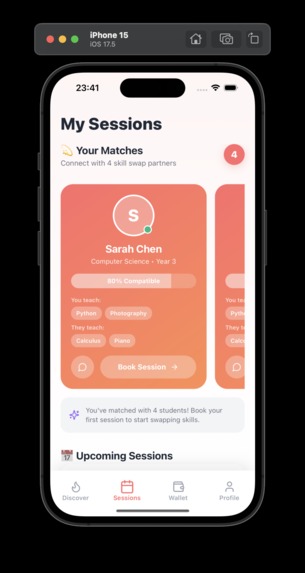
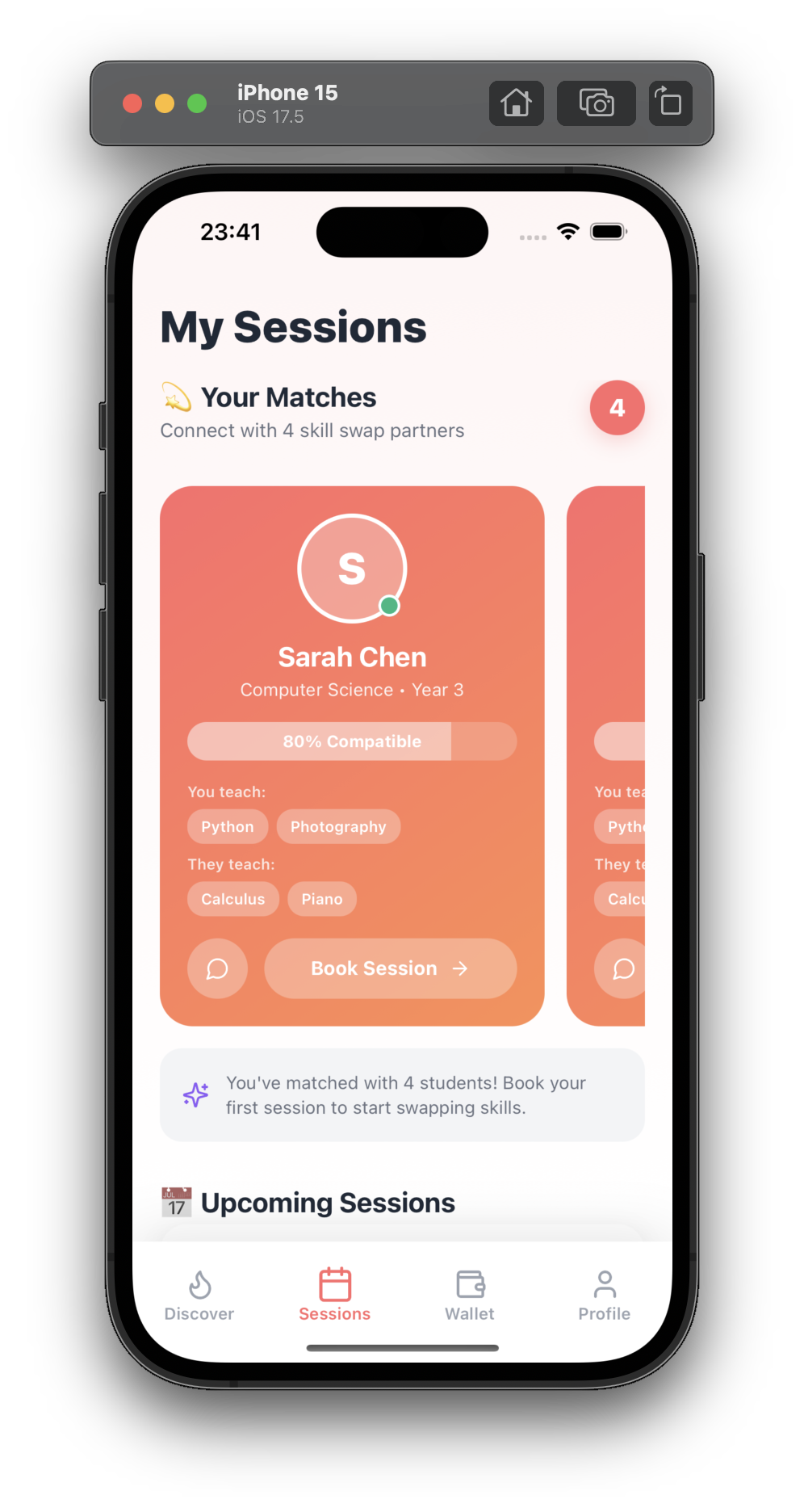
Session
-
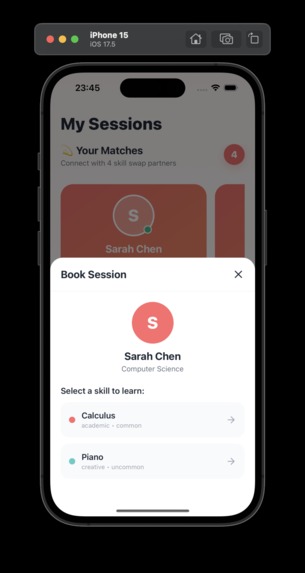
Chat
-
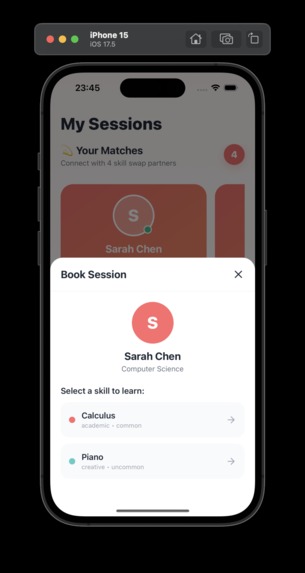
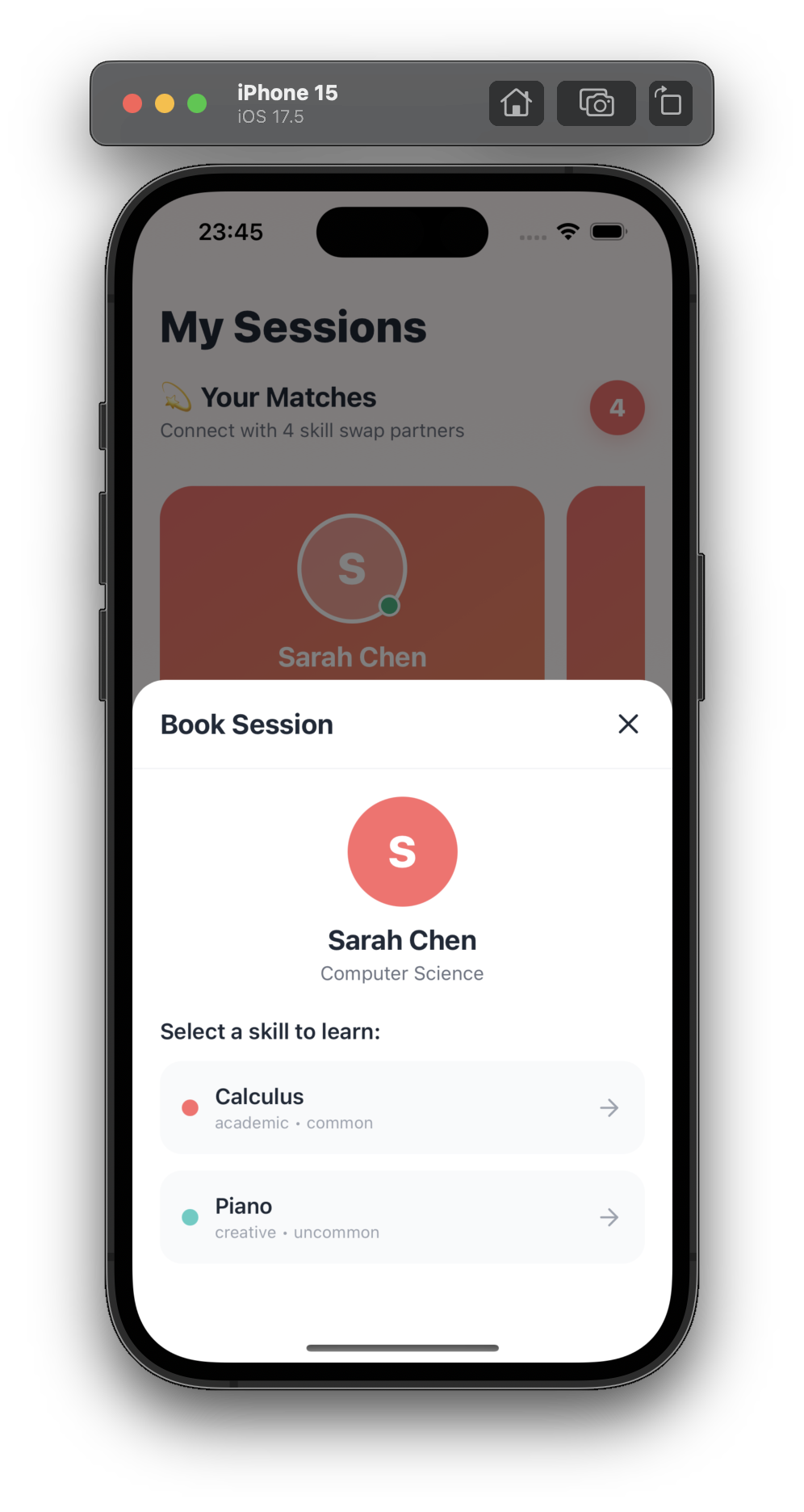
Book Session
-
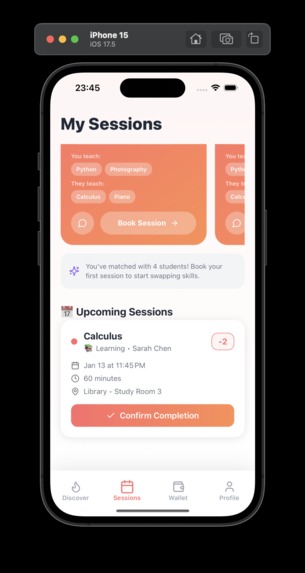
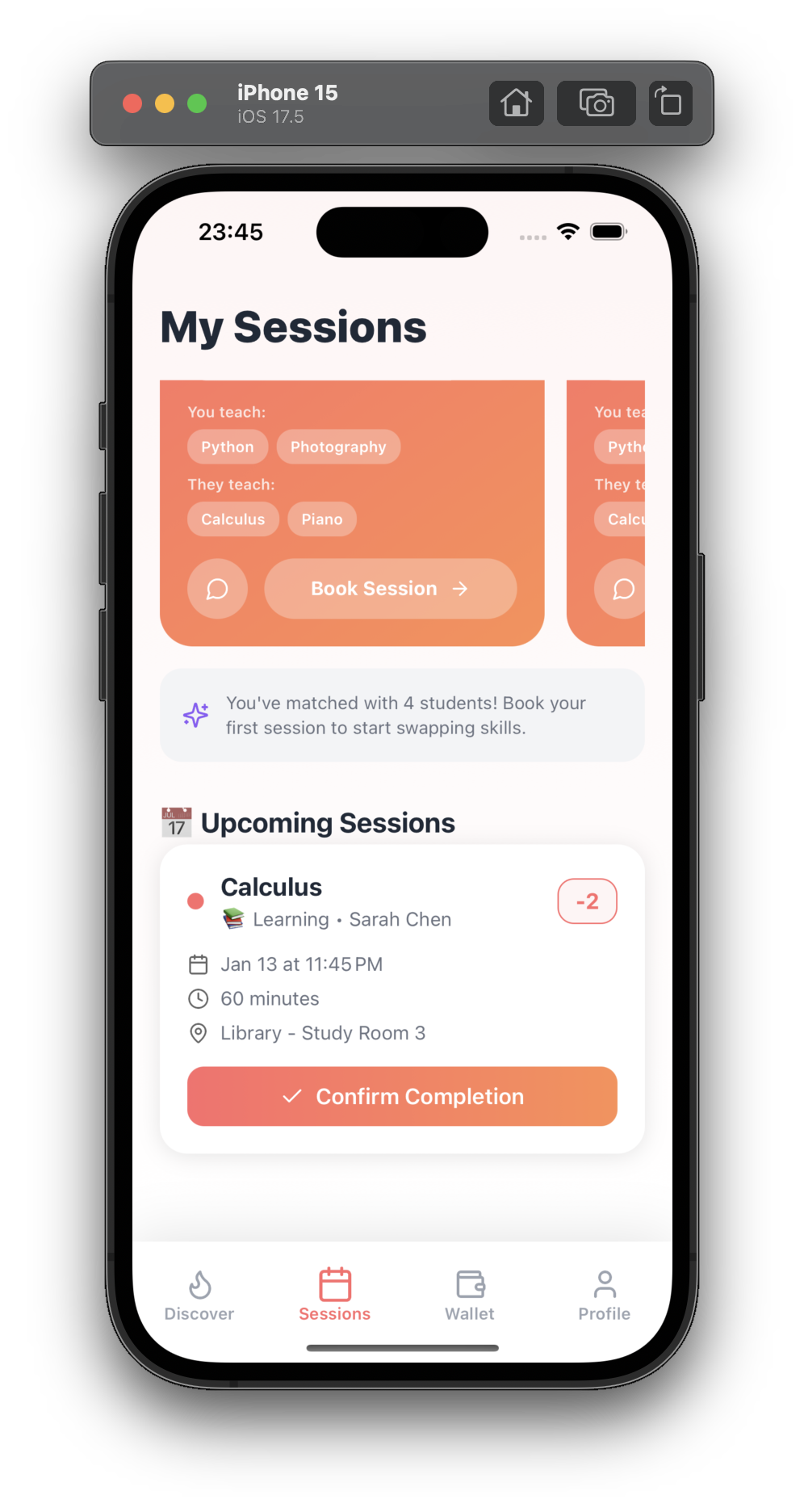
Upcoming Session
-
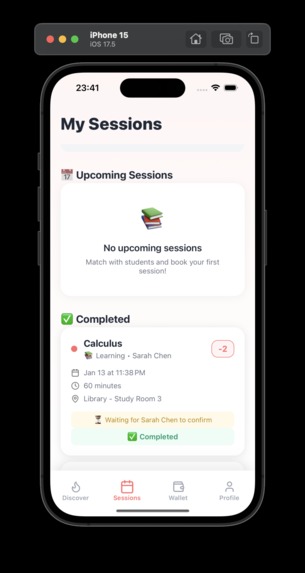
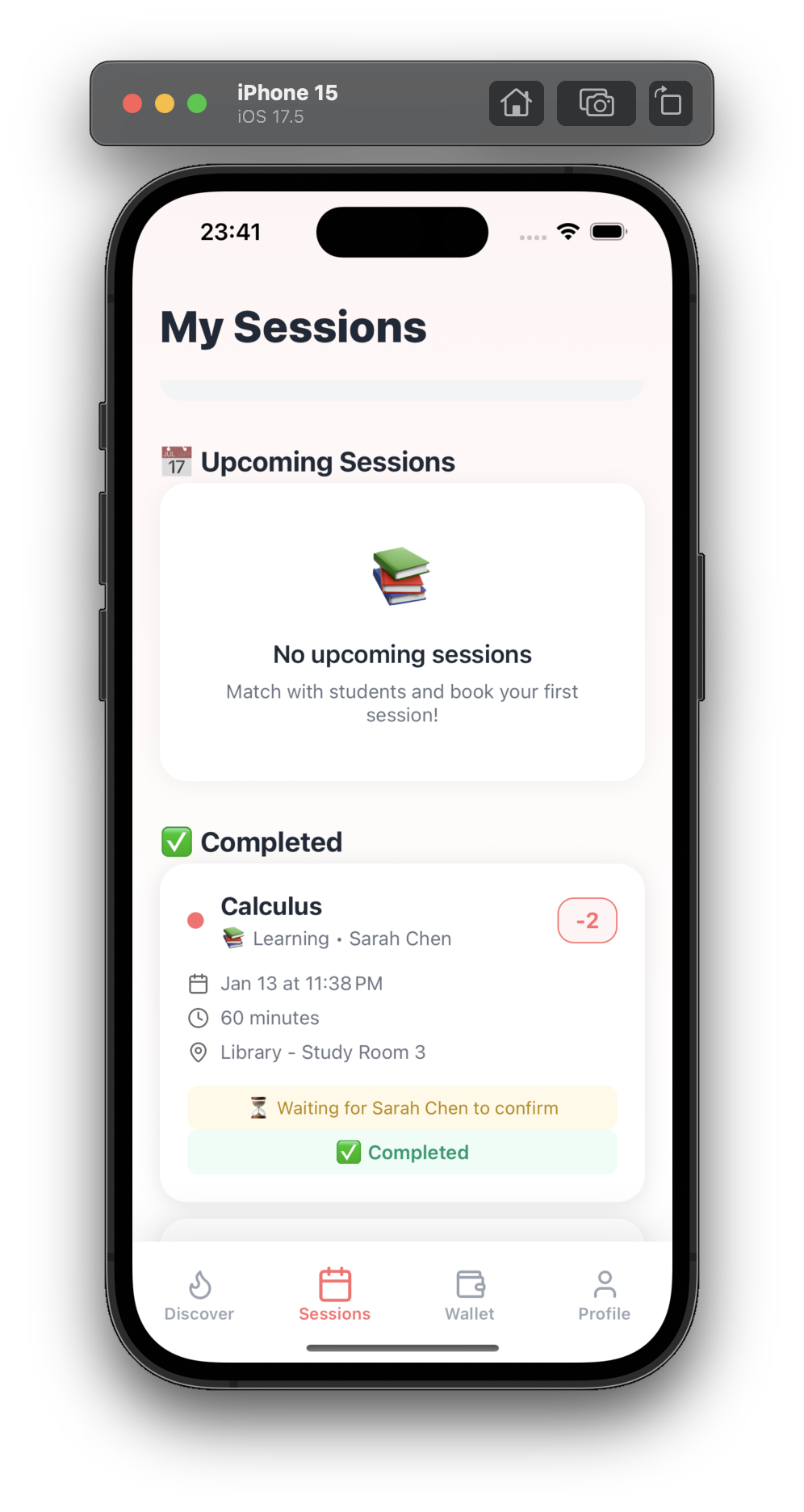
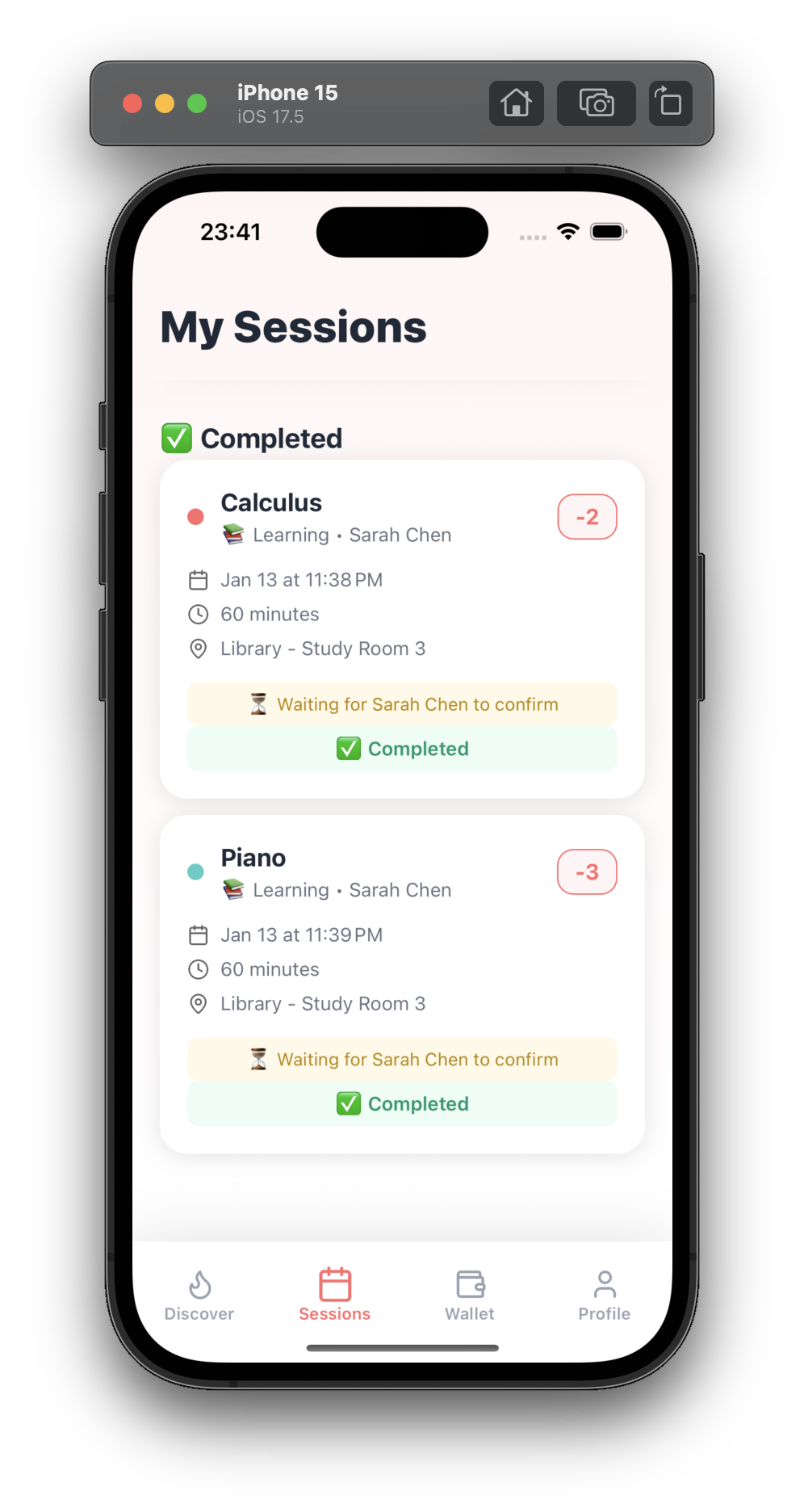
Completed session
-
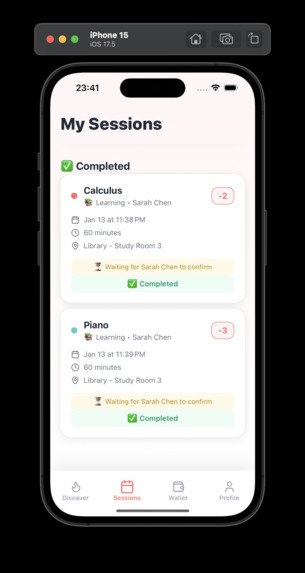
More Completed Session
-
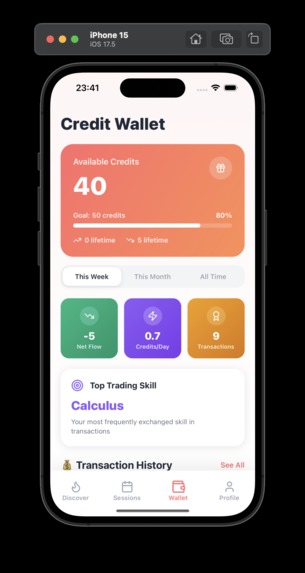
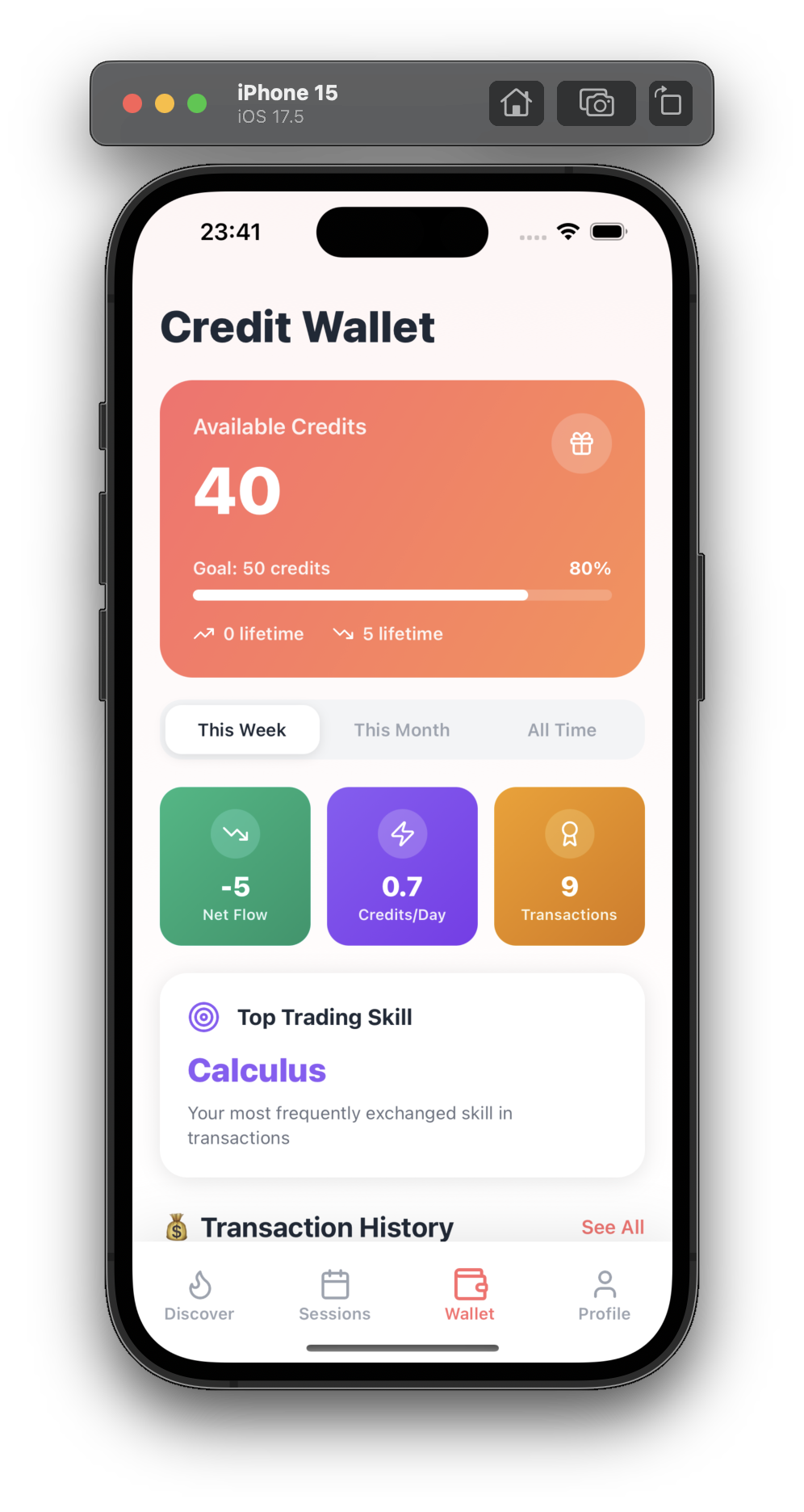
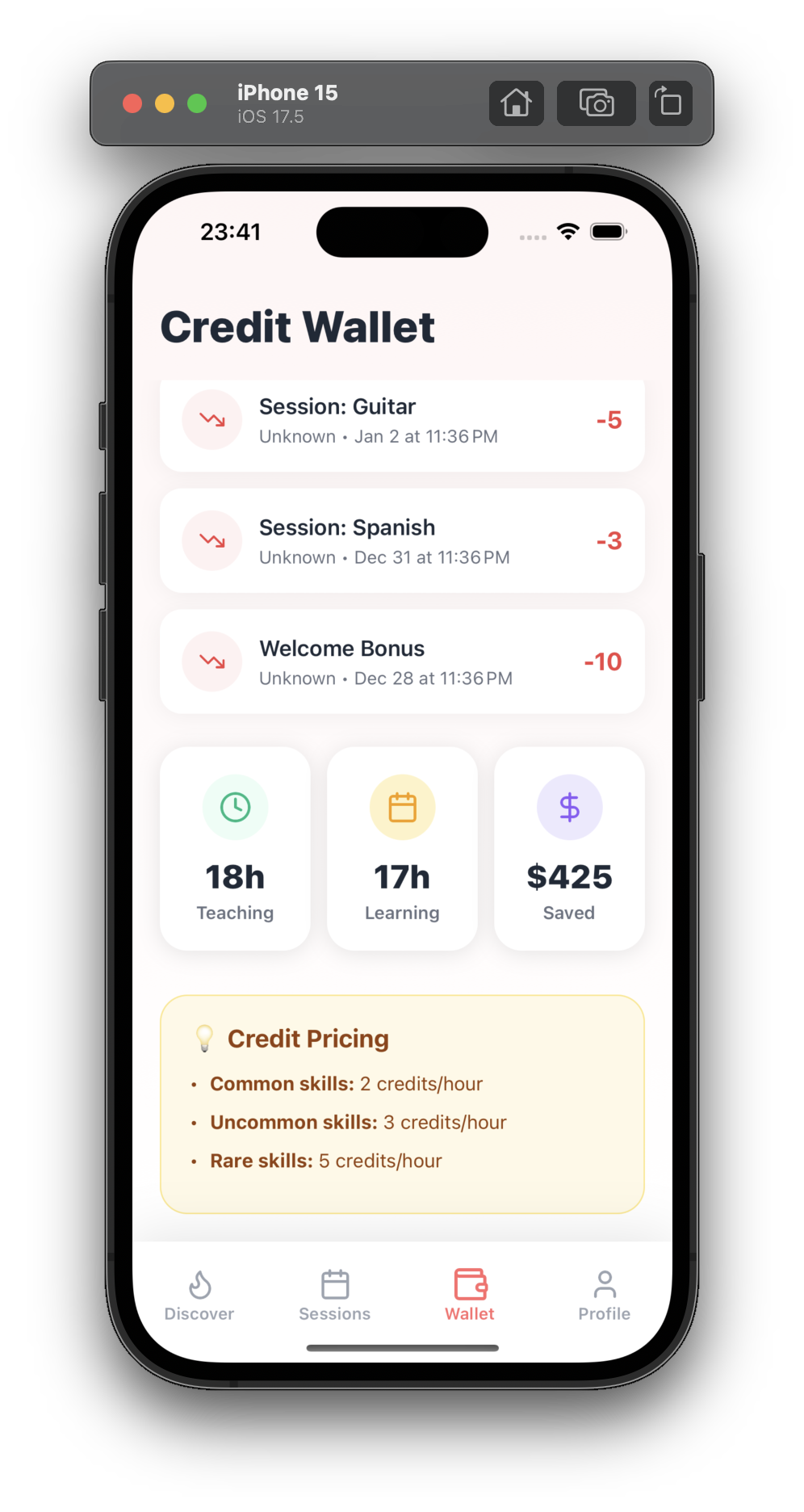
Wallet - This Week
-
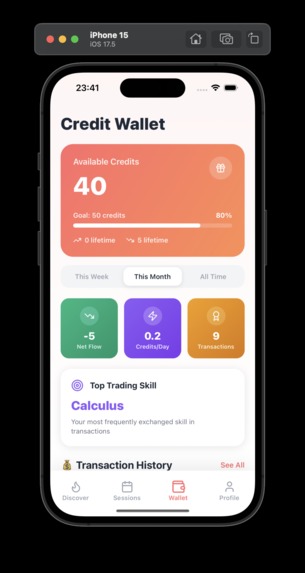
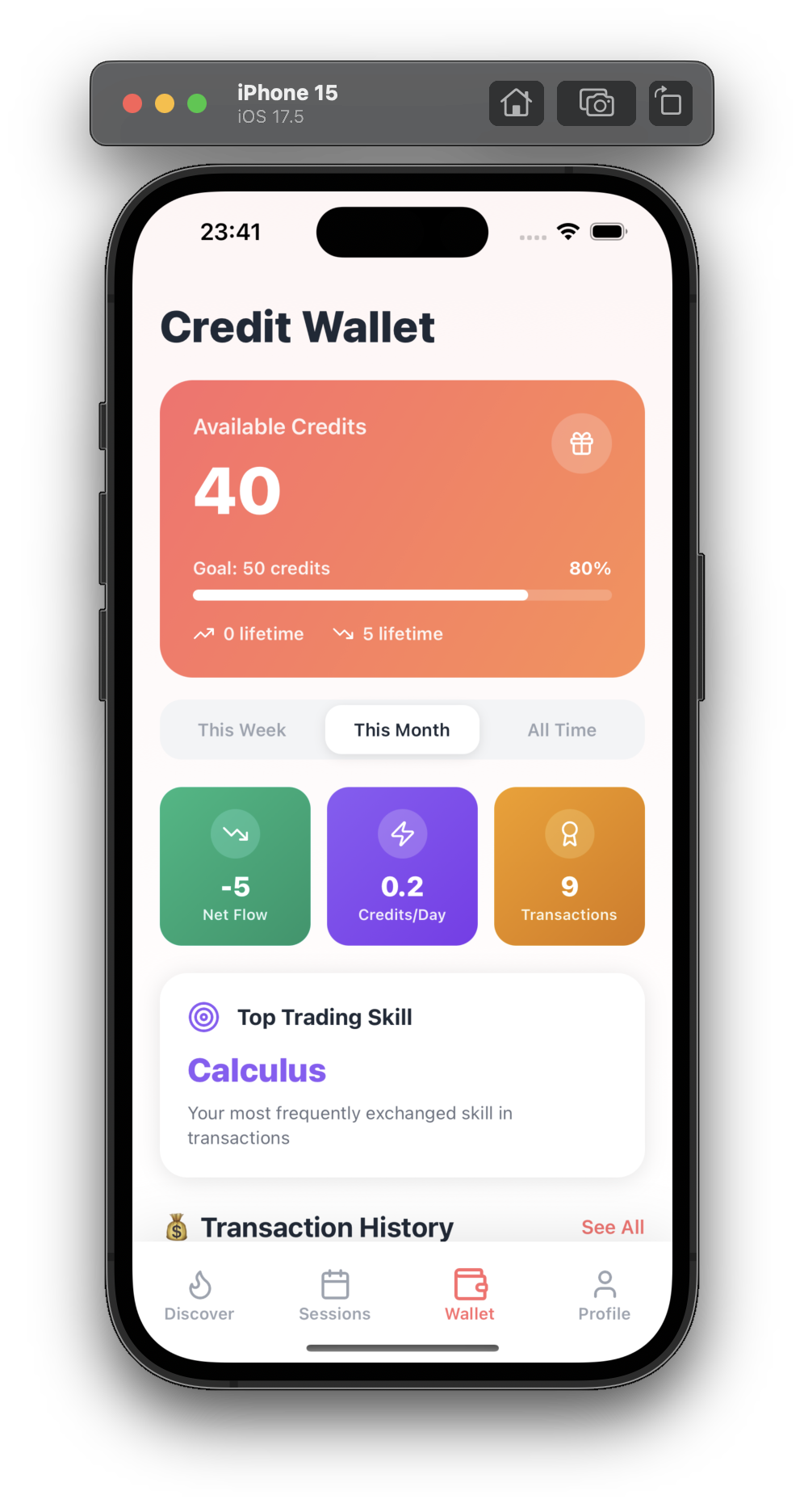
Wallet -This Month
-
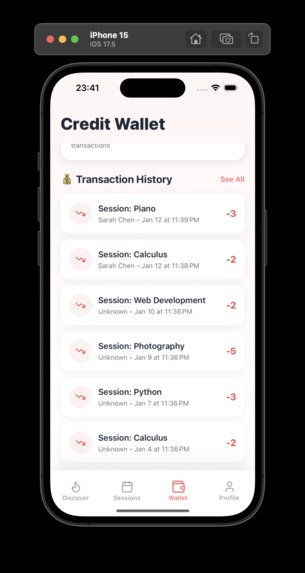
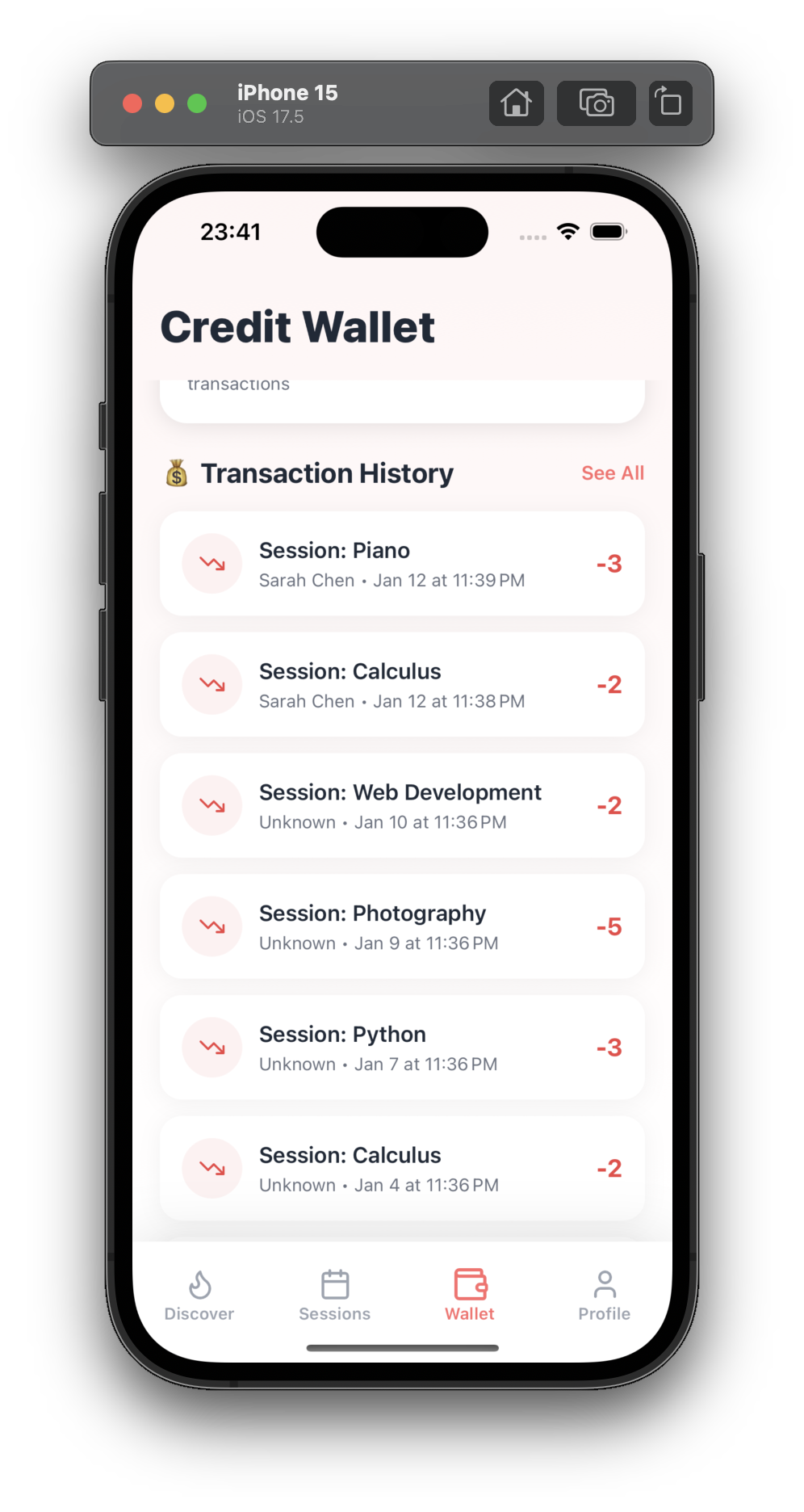
All Transactions
-
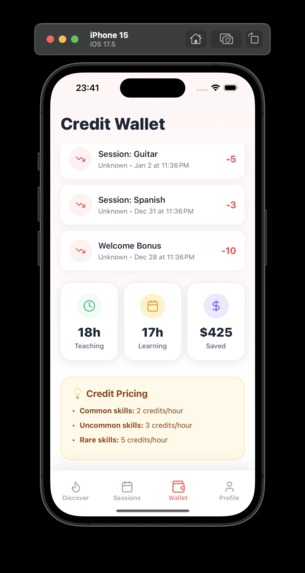
Wallet Stats
-
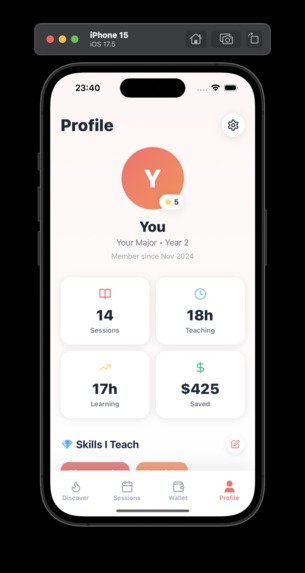
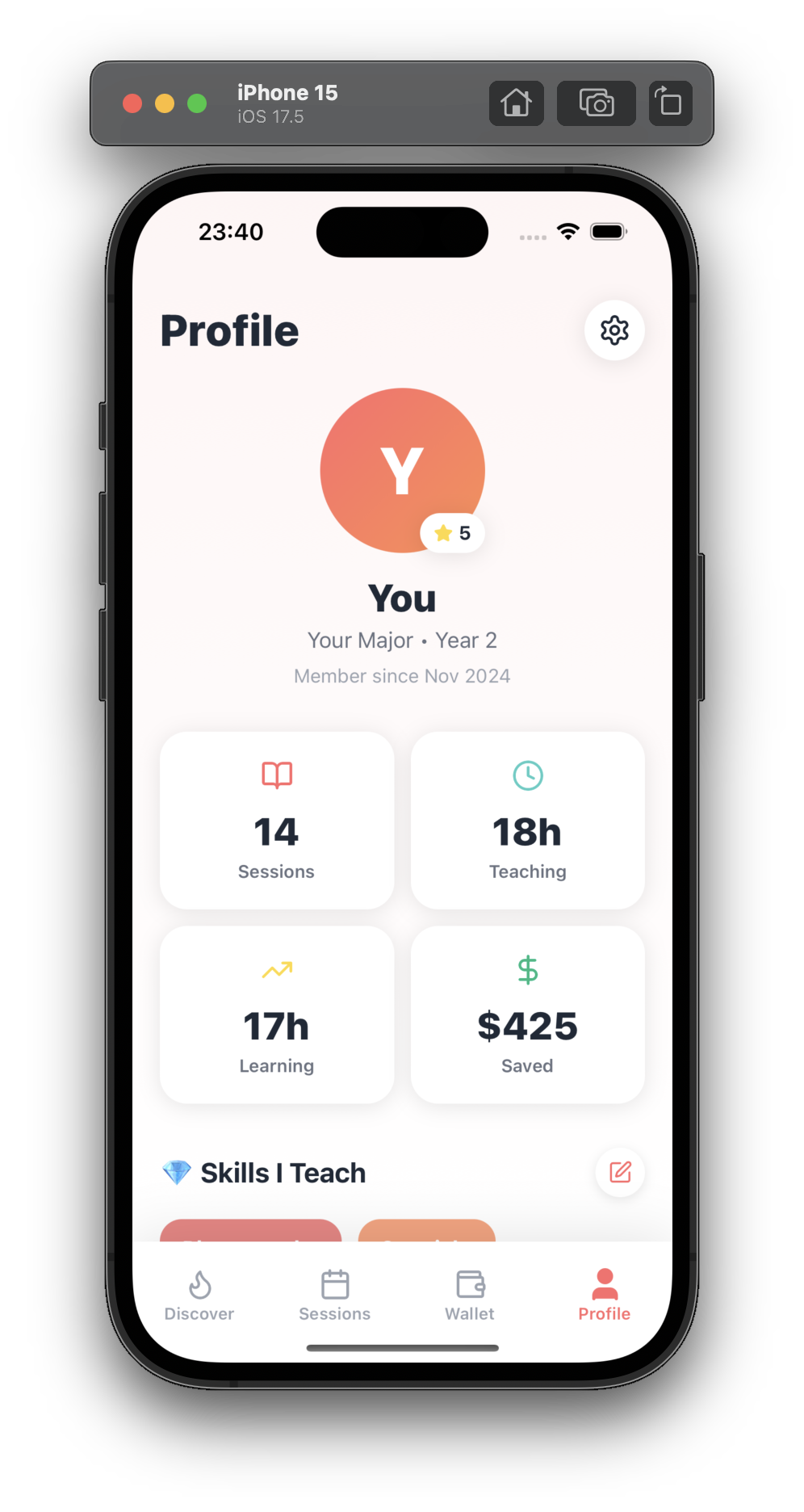
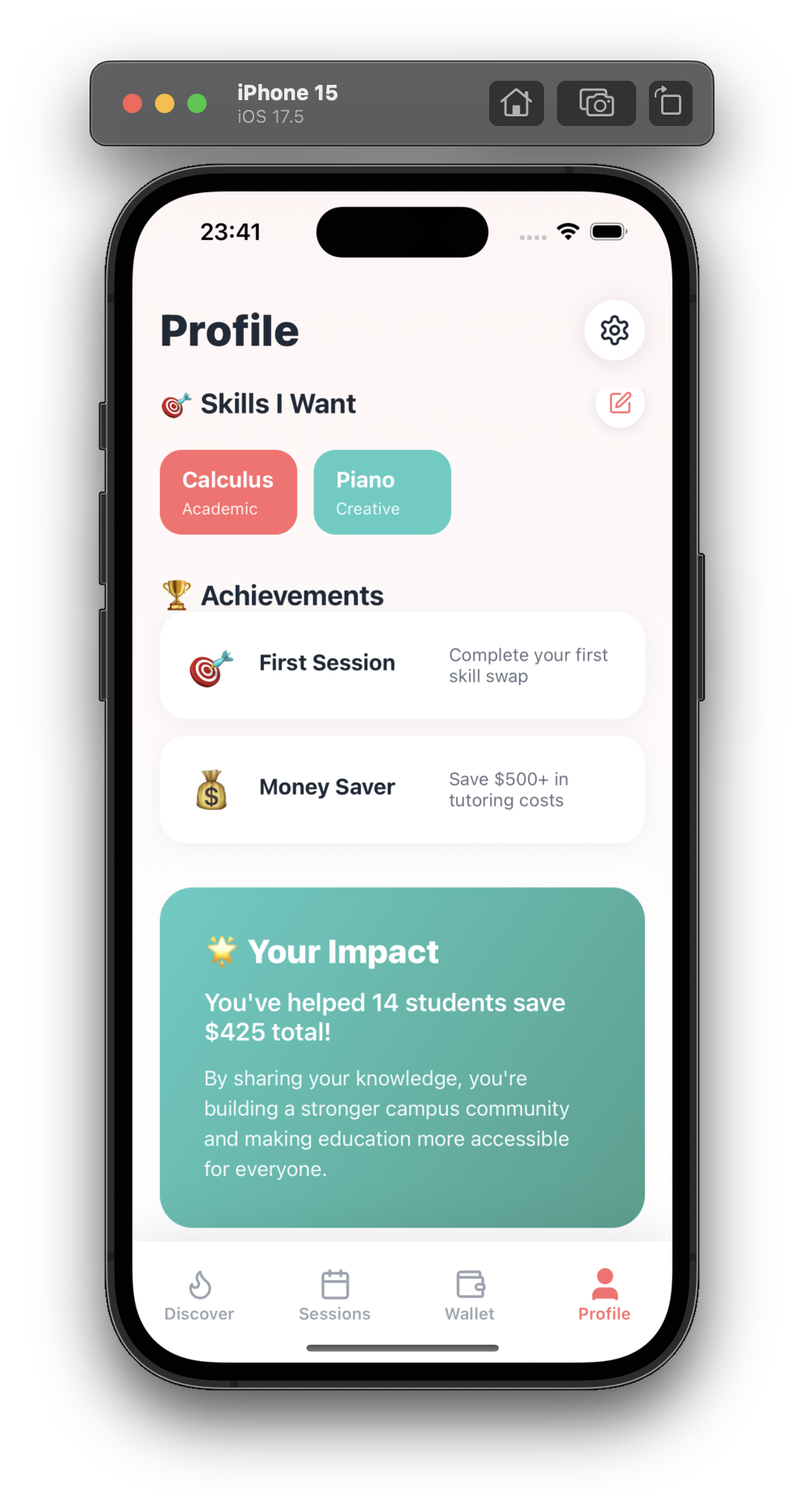
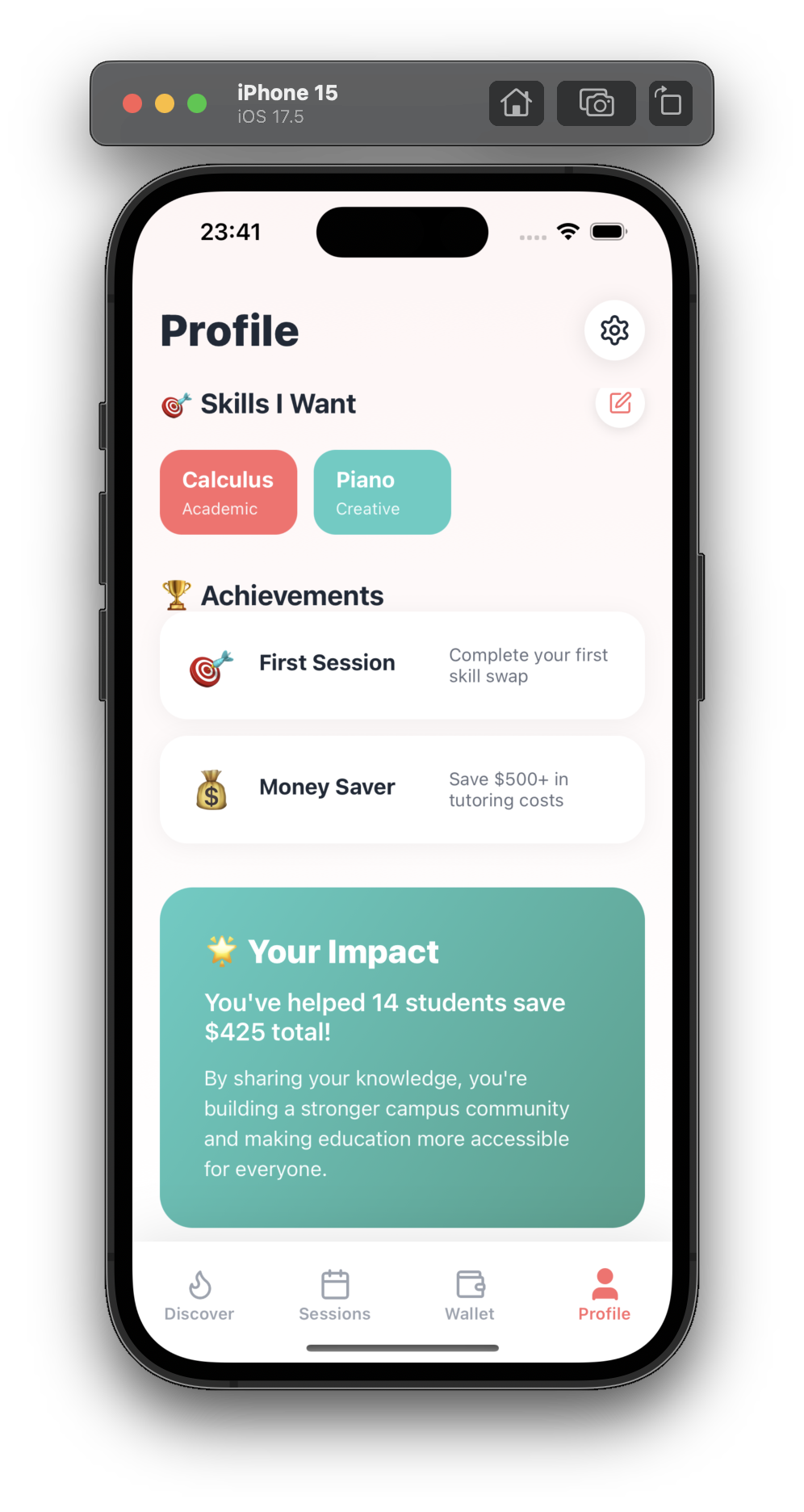
Profile
-
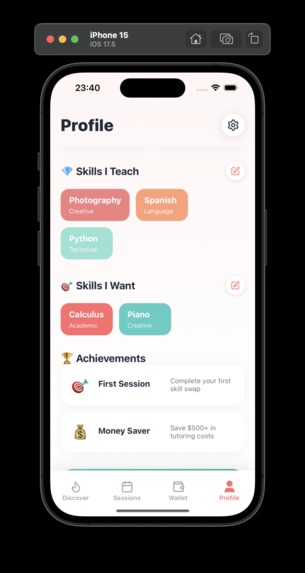
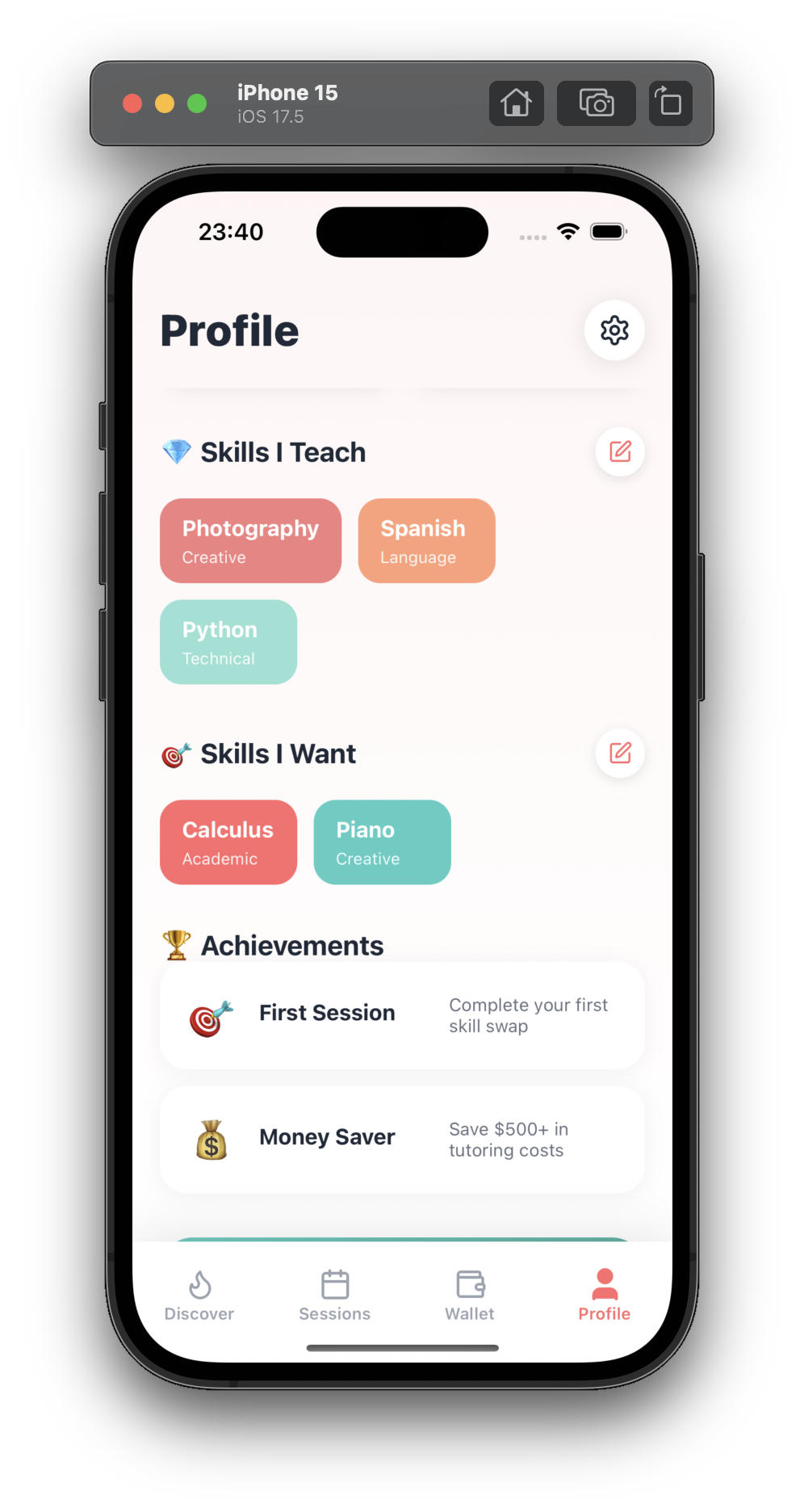
Skills
-
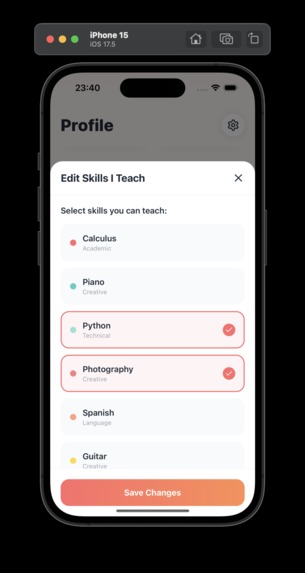
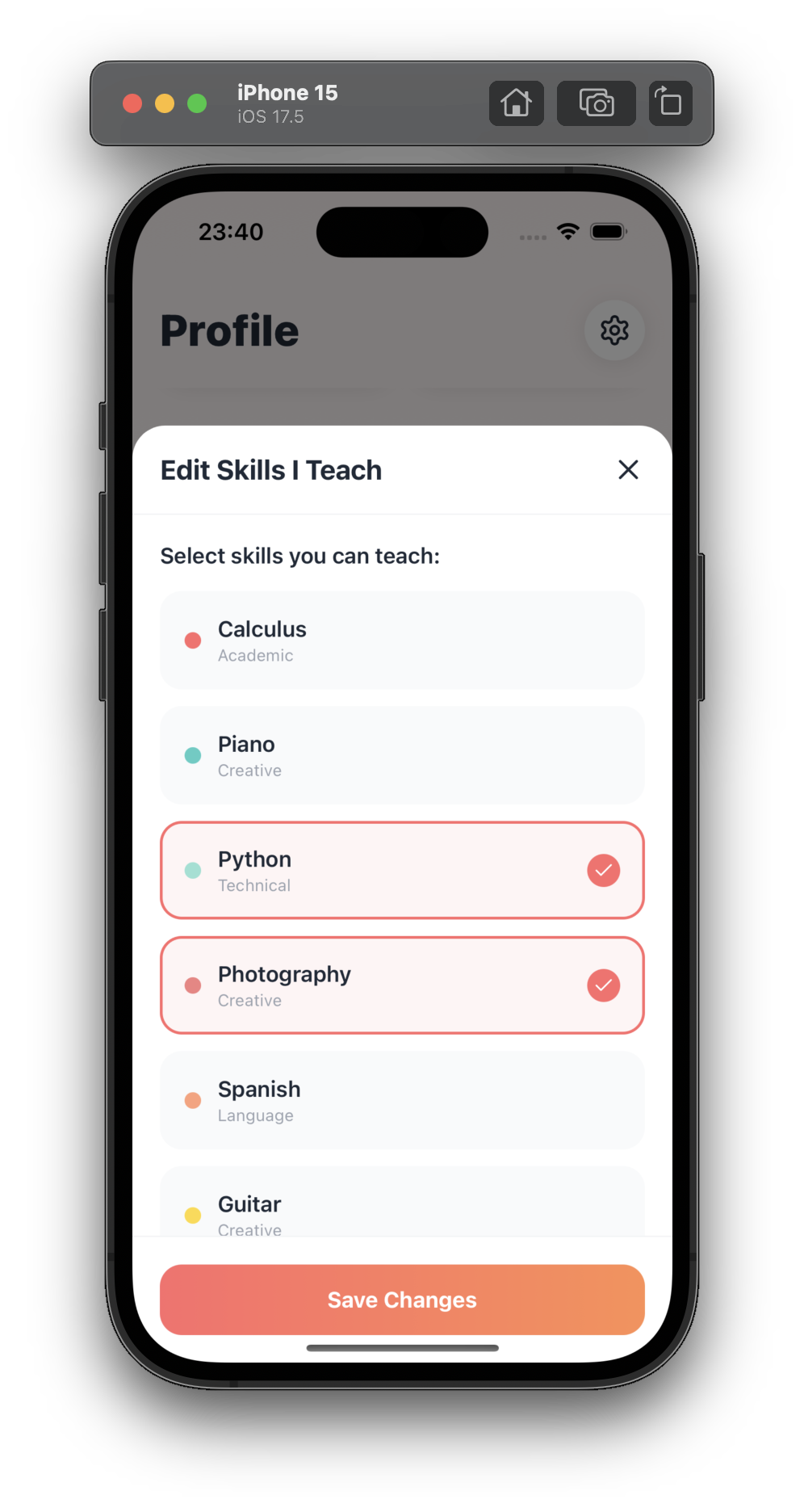
Update Skills
-
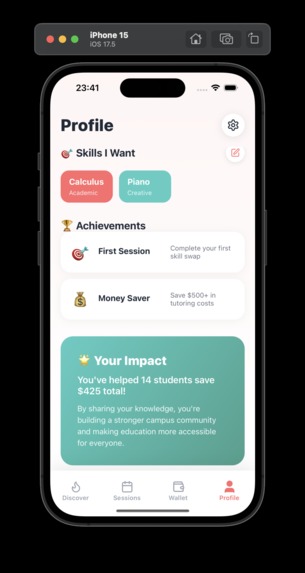
Updates Skills
-
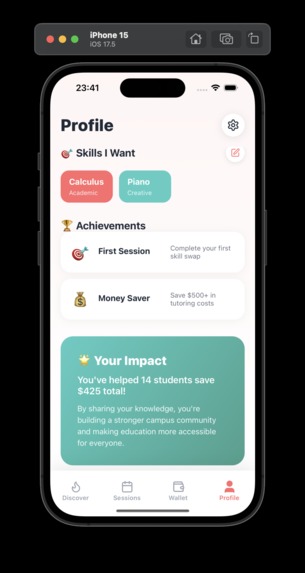
Profile Achievements
Inspiration
It was 2 AM on a Tuesday, and I was staring at a calculus problem that might as well have been written in ancient hieroglyphics. I couldn't afford the $60/hour tutor my professor recommended, and YouTube tutorials weren't cutting it. Meanwhile, my roommate "a math genius" was teaching calculus on the side for extra cash, completely unaware I was struggling three doors down.
That's when it hit me: what if knowledge itself could be currency?
As college students, we're surrounded by untapped expertise. The CS major down the hall could teach me Python. The music student upstairs could finally help me learn guitar. I could teach them photography and video editing in return. But there was no system connecting us, no way to fairly exchange our skills without awkward monetary transactions between friends.
SkillSwap Campus was born from a simple question: What if every student could access world-class tutoring by simply sharing what they already know?
We wanted to solve three problems simultaneously:
- Financial barrier to learning - Students spend $1000+ annually on tutoring
- Untapped expertise - Talented students have skills that go unused
- Fragmented communities - Students barely know their neighbours, missing connection opportunities
The vision became clear: create a platform where knowledge flows freely, where your expertise is valued as currency, and where every student is both a teacher and a learner.
What it does
SkillSwap Campus is a mobile app where college students exchange skills using credits instead of money.
Users create profiles listing:
- Skills they offer (coding, tutoring, music, design, etc.)
- Skills they want to learn
- Availability and location on campus
A Tinder-style swipe interface matches students with complementary skill needs using an AI-driven scoring system that considers:
- Skill compatibility
- Schedule overlap
- Location proximity
Students start with 10 free credits, earn credits by teaching, and spend credits to learn. Credits are dynamically priced based on campus supply and demand, ensuring fairness and preventing inflation.
The app includes:
- Real-time chat for coordination
- Calendar-based session booking
- Two-party session verification before credit transfer
- Ratings, reviews, and achievement badges
- Leaderboards and contribution stats
- Impact metrics showing money saved through skill exchange
How we built it
Frontend
We built the mobile app using React Native, focusing heavily on performance and polish:
- Tinder-style swipe cards with gesture handlers
- 60fps animations using React Native Reanimated
- Glassmorphism UI with gradient overlays (purple-to-blue palette)
- Haptic feedback, confetti animations on matches, and skeleton loaders
- Animated tab navigation, parallax profile screens, and circular stat visualizations
We implemented optimistic UI updates so actions feel instant, with rollback on failure.
Backend
We used Firebase as a scalable, serverless backend:
- Firebase Auth with
.eduemail verification for campus-only access - Cloud Firestore for users, matches, sessions, and transactions
- Firestore transactions to process credits atomically and prevent race conditions
- Firebase Realtime Database for low-latency chat
- Cloud Functions for:
- Matching algorithm computation
- Dynamic credit pricing
- Fraud detection
- Session verification logic
Matching Algorithm
To avoid an (O(n^2)) matching problem, we used:
- Inverted skill indexes (skill → users)
- Geohashing to filter users within a 1km radius
- Weighted scoring based on skill match, availability overlap, and proximity
Compatibility scores are precomputed nightly and stored in a separate collection.
Credit Economy
We designed a dynamic pricing model:
[ \text{Price} = \text{BasePrice} \times \left(1 + 0.5 \times \frac{\text{Demand} - \text{Supply}}{\text{Supply} + 10}\right) \times \text{ComplexityFactor} ]
Anti-inflation measures include:
- Credit expiration after 6 months
- Maximum balance cap of 50 credits
- Penalties for no-shows
- Fraud detection for suspicious confirmations
Challenges we ran into
- Preventing credit inflation while keeping the economy fair and rewarding
- Optimizing matching performance, reducing computation time from ~30 seconds to ~0.2 seconds
- Handling real-time updates safely without race conditions using Firestore transactions
- Maintaining smooth animations on older devices while rendering complex UI
- Detecting fraud such as fake sessions, repeated IP confirmations, or unusually fast completions
- Designing a system that feels social and fun without being gamed
Accomplishments that we're proud of
- Built a fully functional credit-based skill economy with real safeguards
- Designed a matching algorithm that scales efficiently
- Achieved smooth, polished UI with consistent 60fps animations
- Implemented fraud detection using behavioral and statistical signals
- Created meaningful impact metrics showing real money saved
- Delivered a product that feels App Store–ready, not just a hackathon demo
What we learned
- Economic systems need constraints, not just incentives
- Precomputation and indexing can dramatically improve real-time performance
- UI polish and micro-interactions significantly affect perceived quality
- Trust mechanisms (verification, ratings, penalties) are essential in peer-to-peer platforms
- Optimistic UI must always be paired with strong rollback and error handling
What's next for SkillSwap Campus
- Group learning sessions and workshops
- AI-powered personalized learning paths
- Multi-campus expansion with campus-specific economies
- Corporate sponsorships where companies provide credits for career-relevant skills
- Long-term impact tracking for student learning and community growth
SkillSwap Campus aims to become the default way students learn from each other, turning campuses into collaborative, credit-powered learning ecosystems.

Log in or sign up for Devpost to join the conversation.