
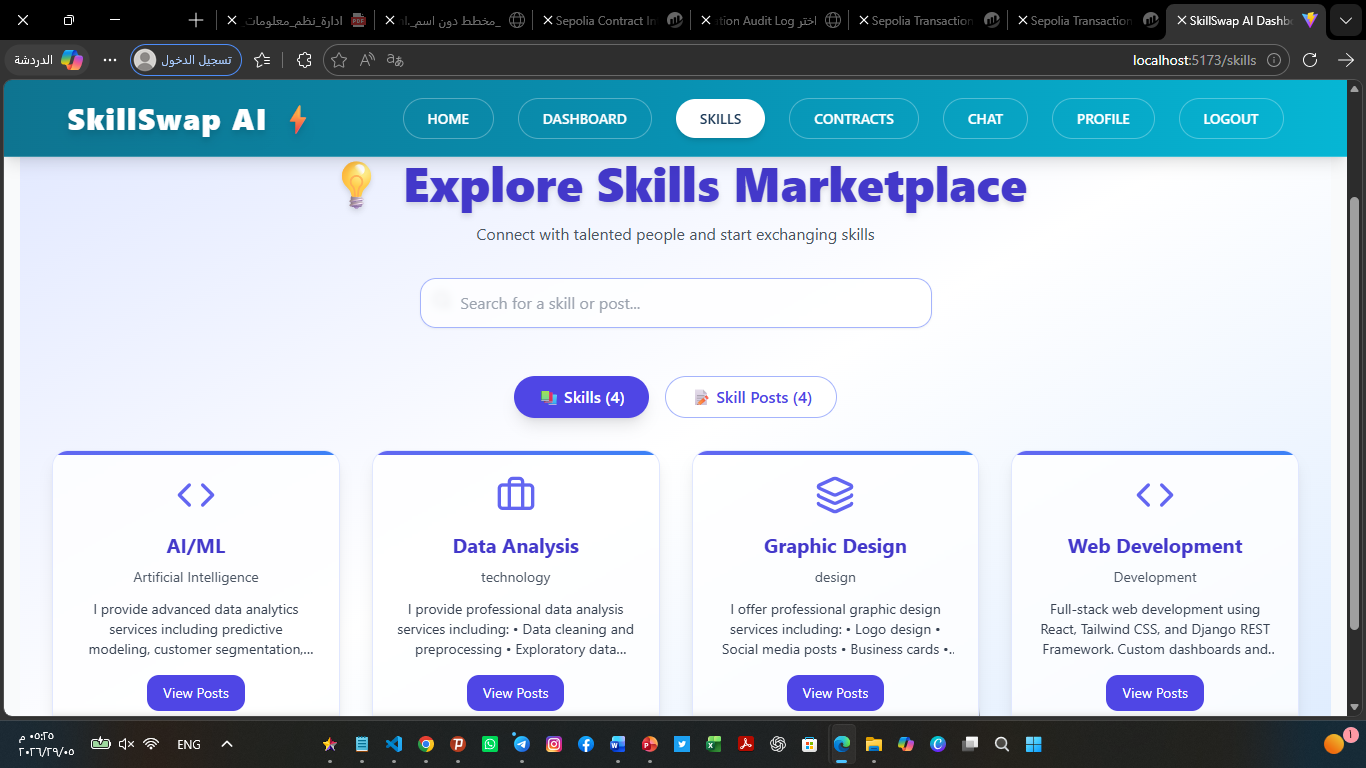
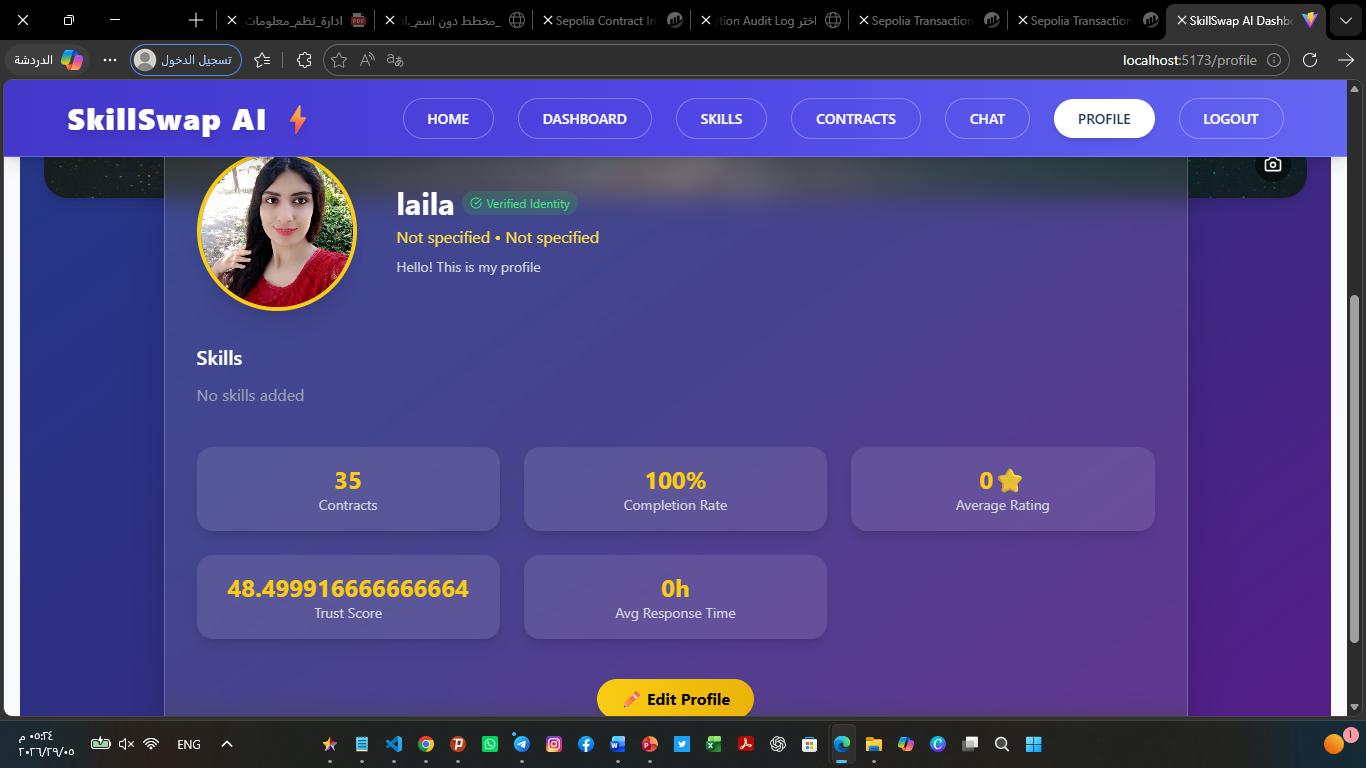
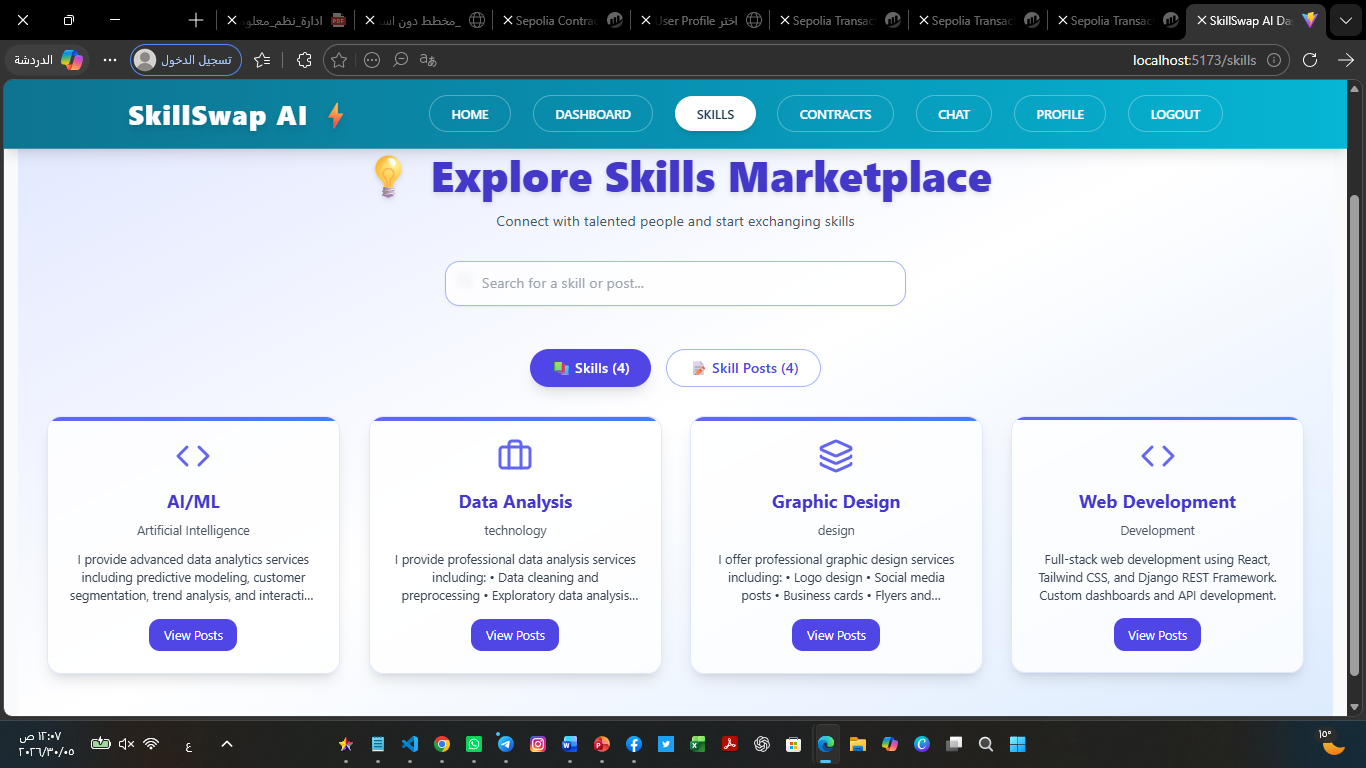
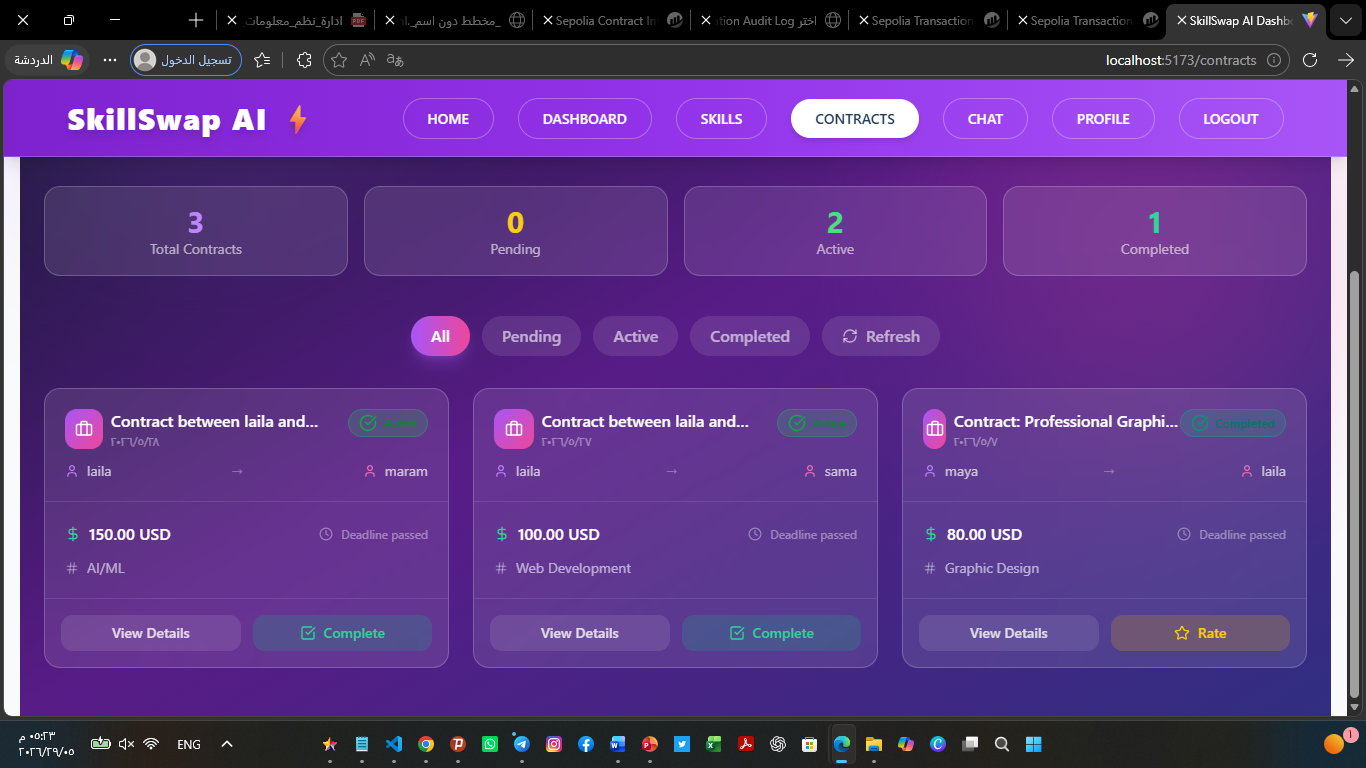



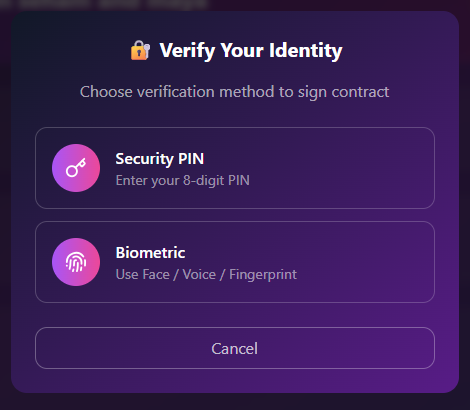
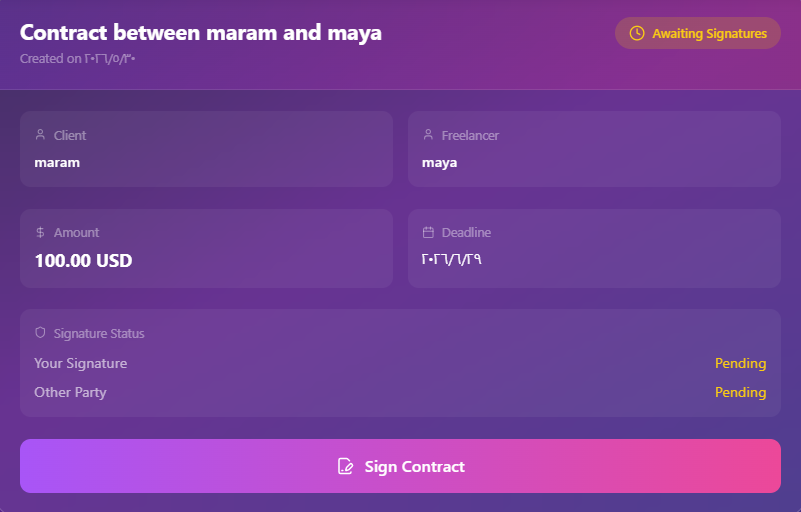
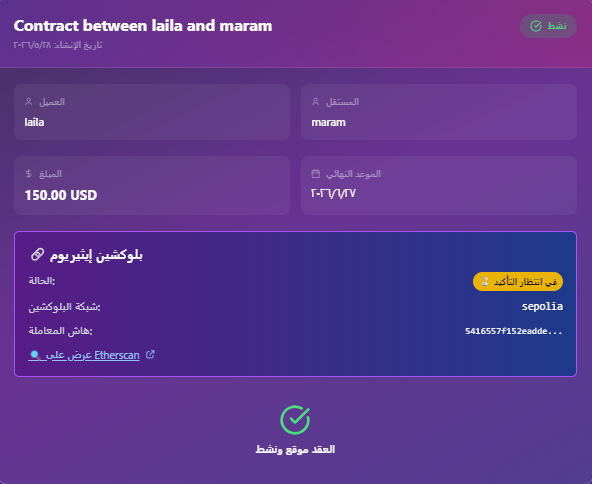

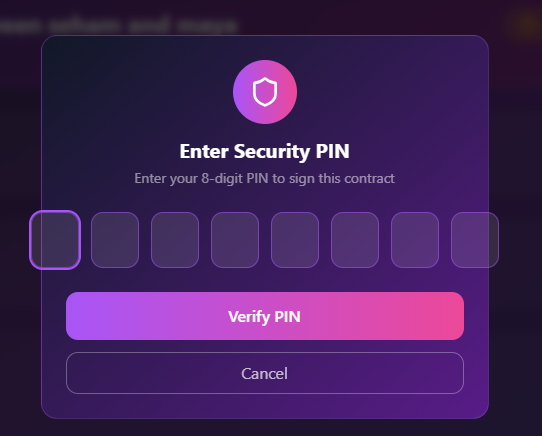
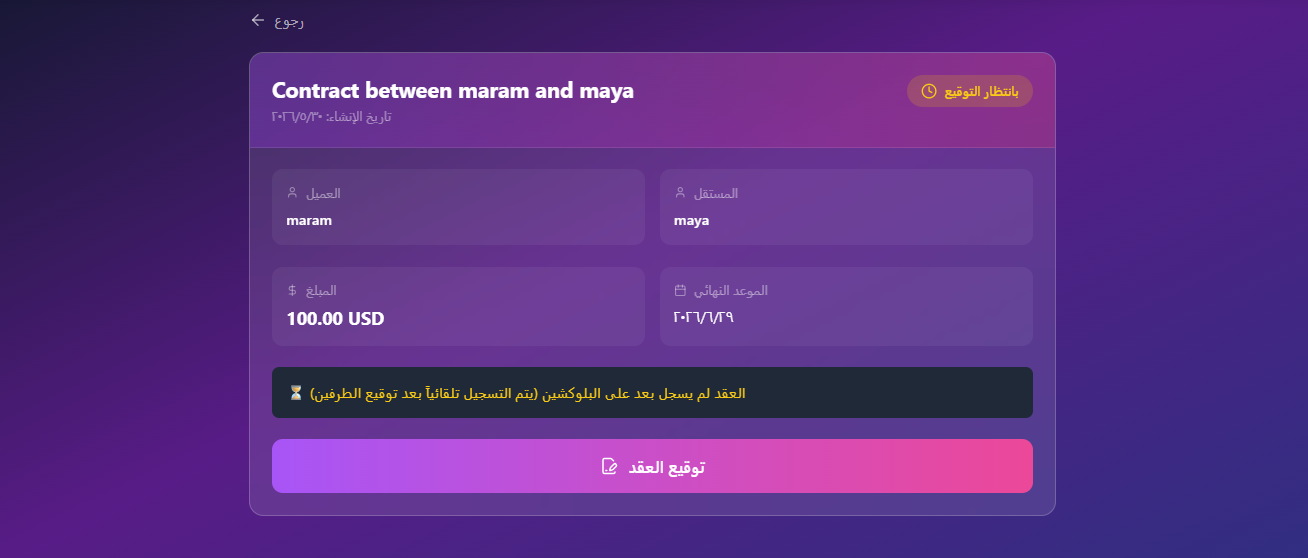
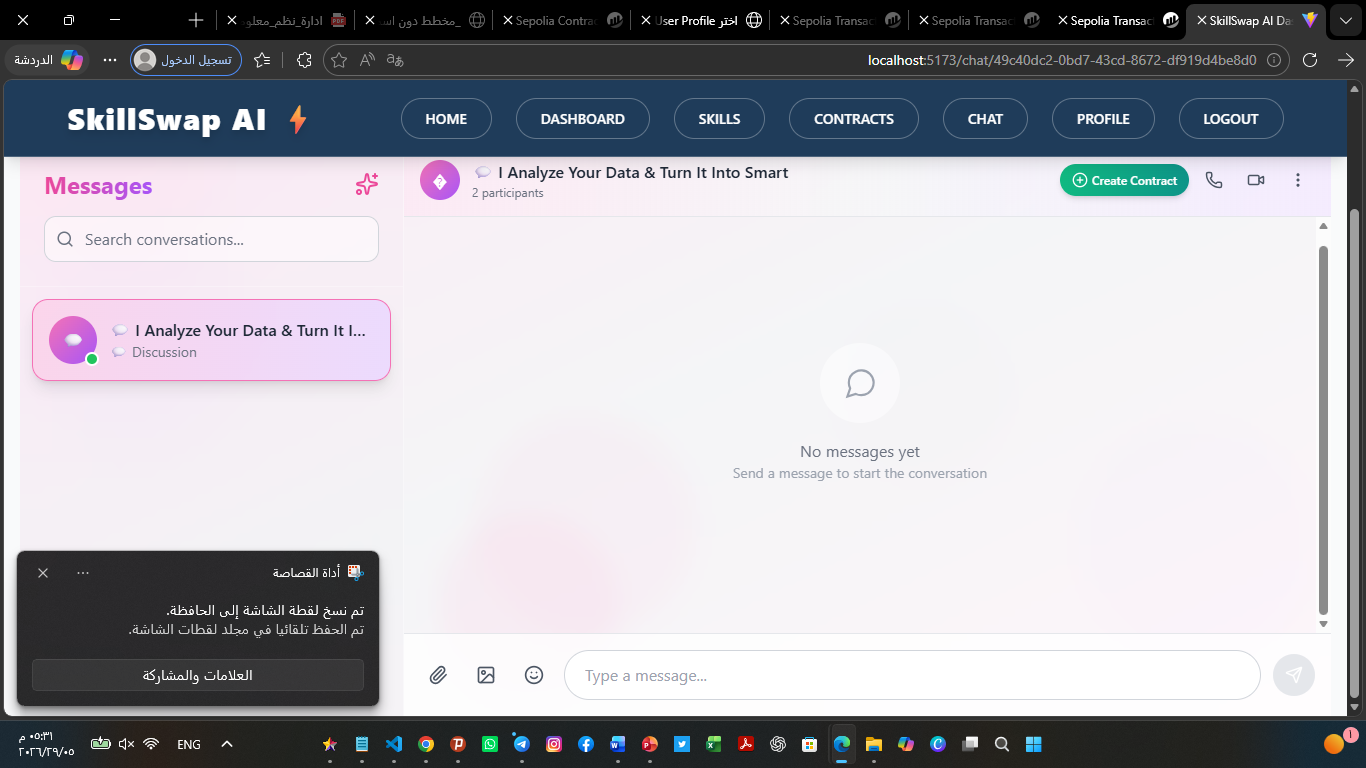
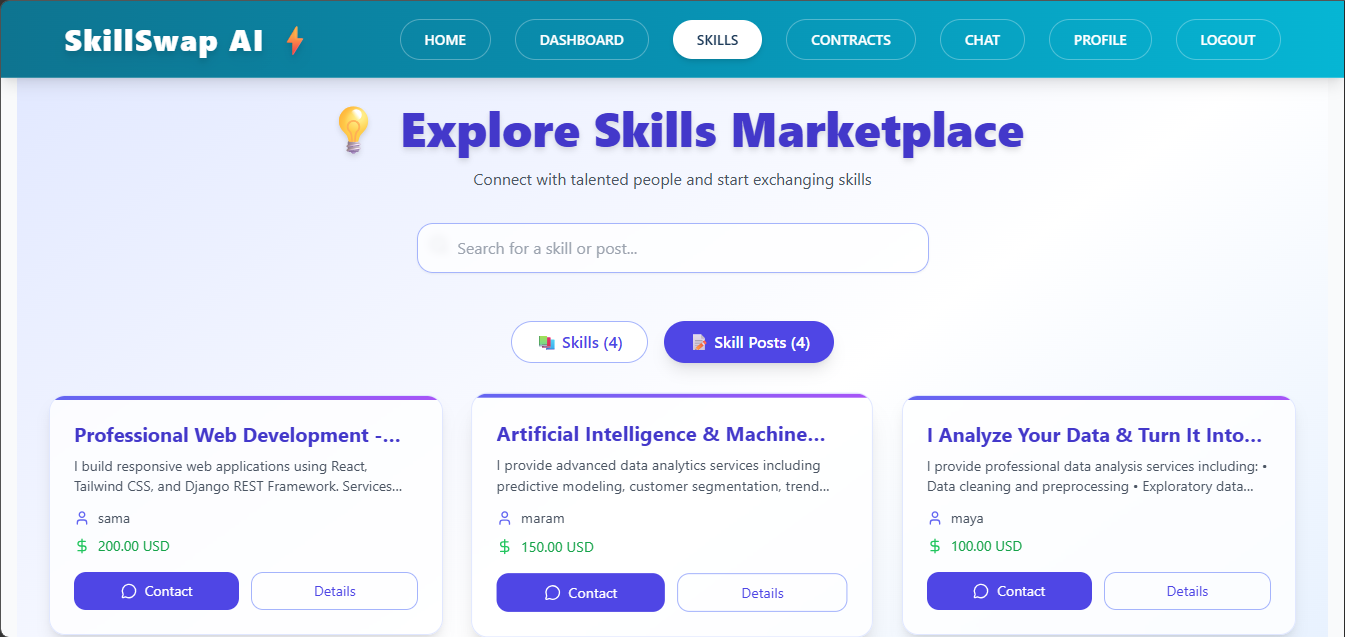
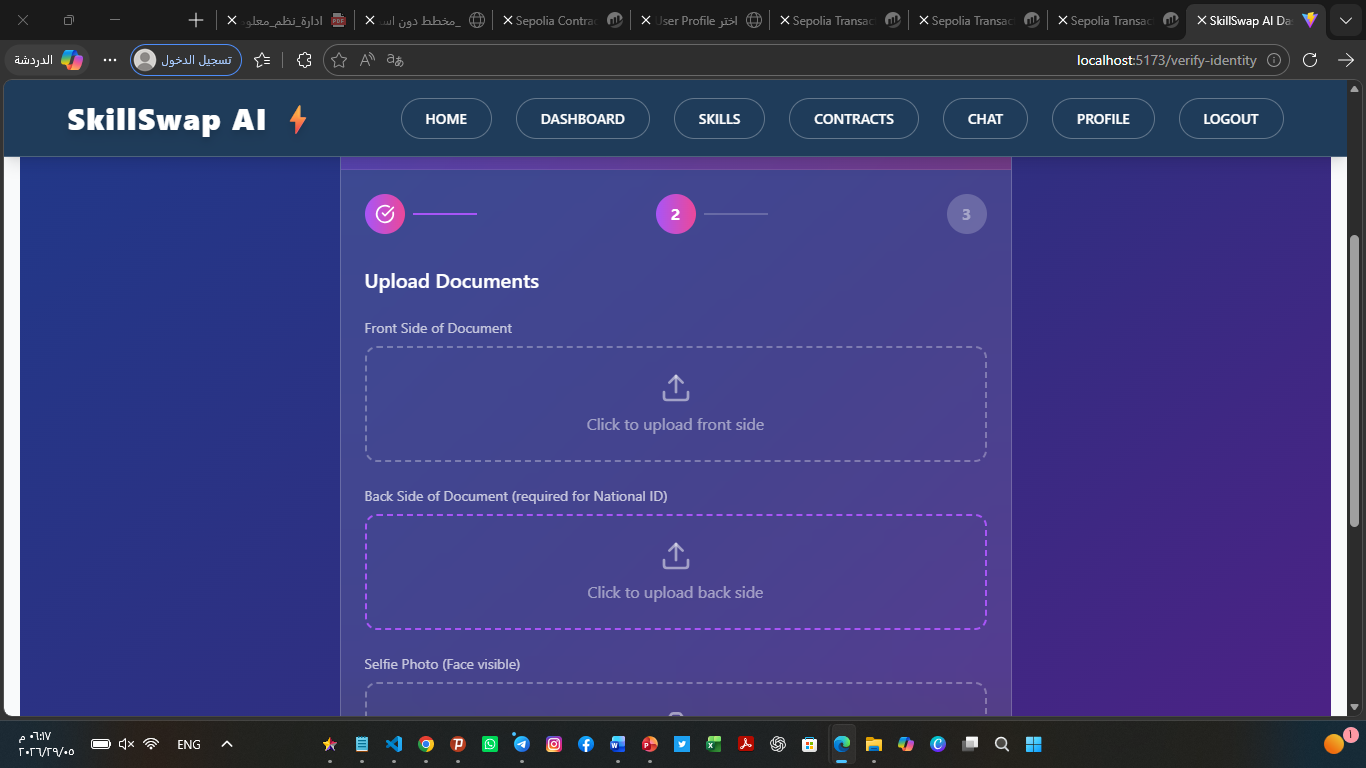
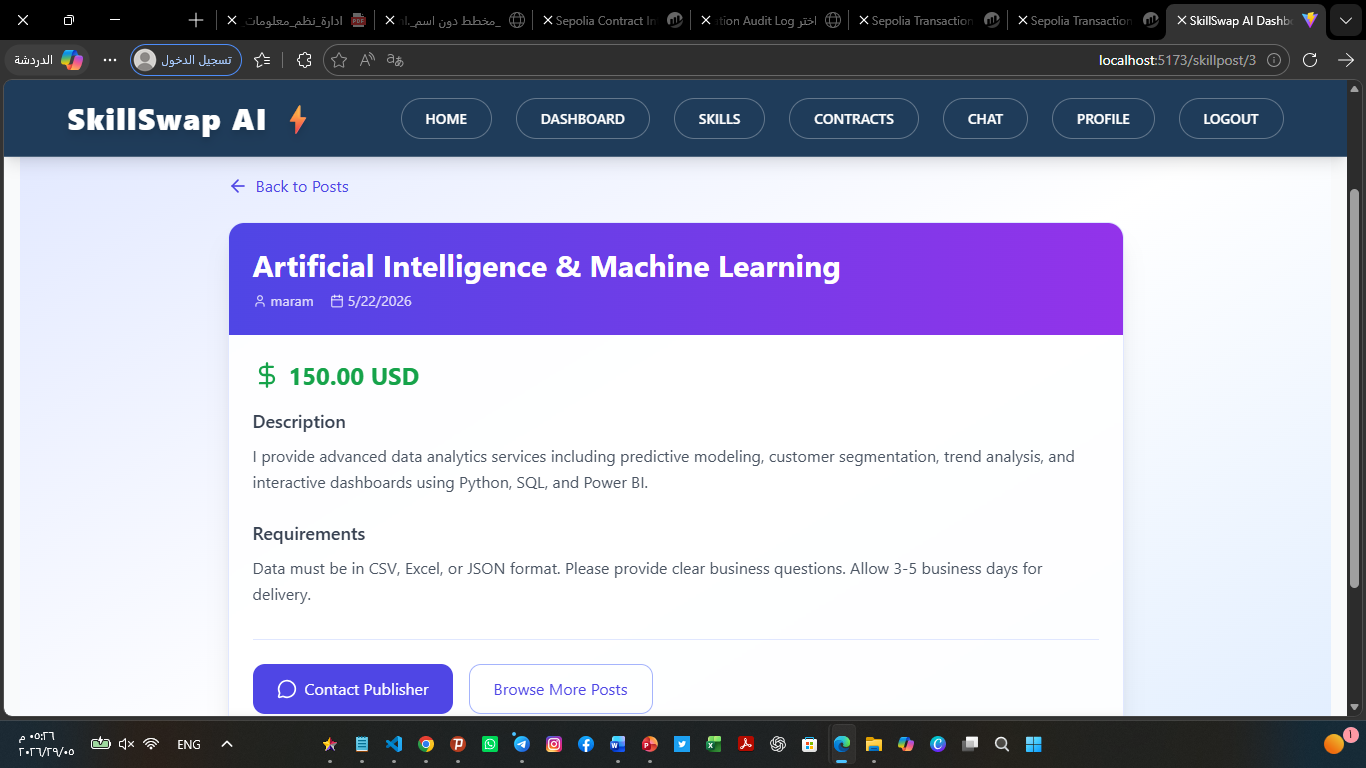
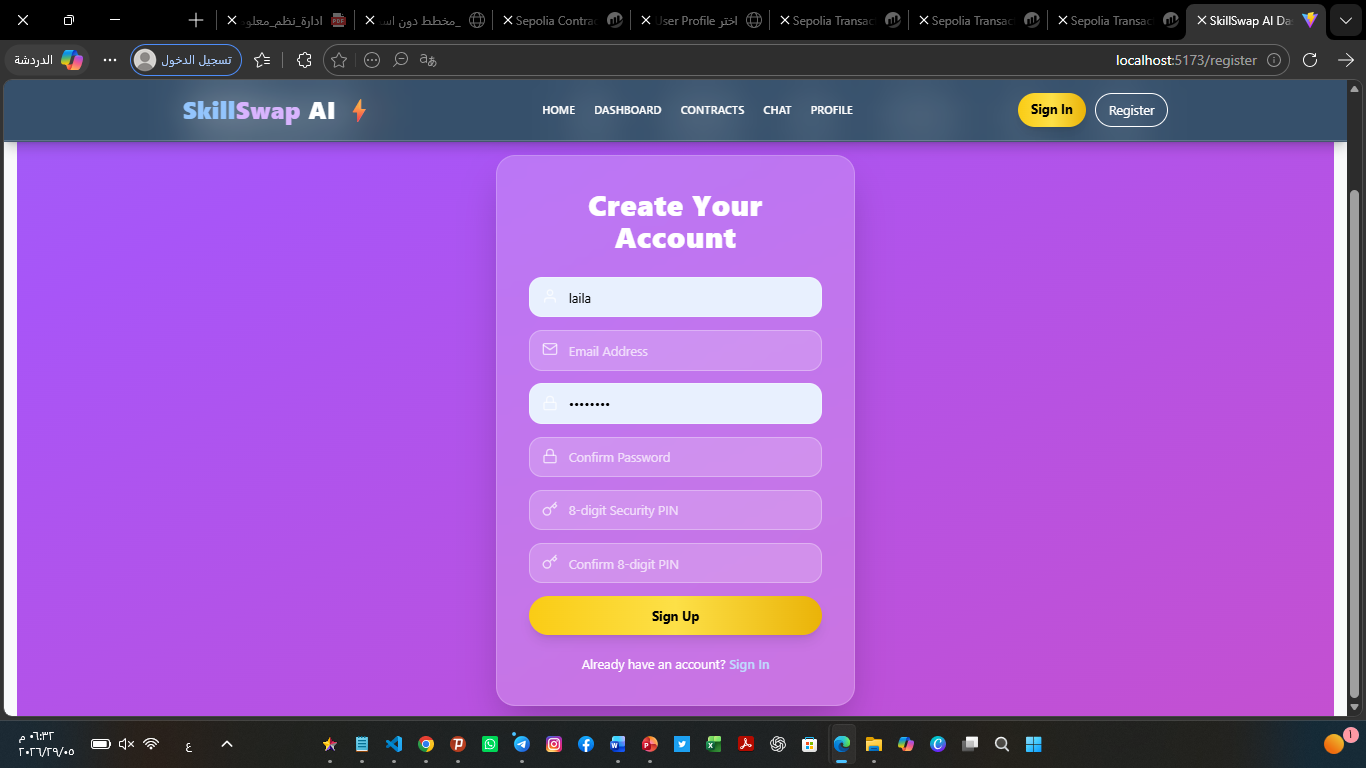
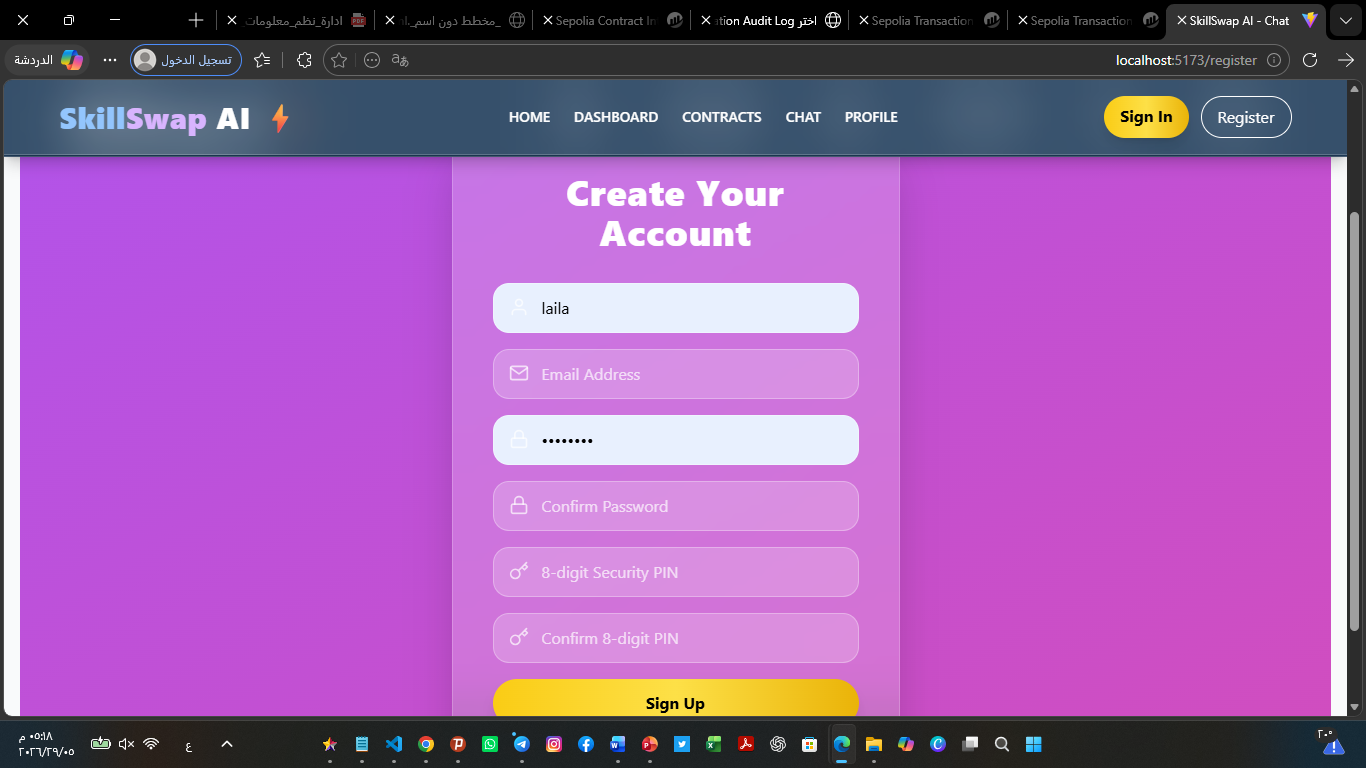
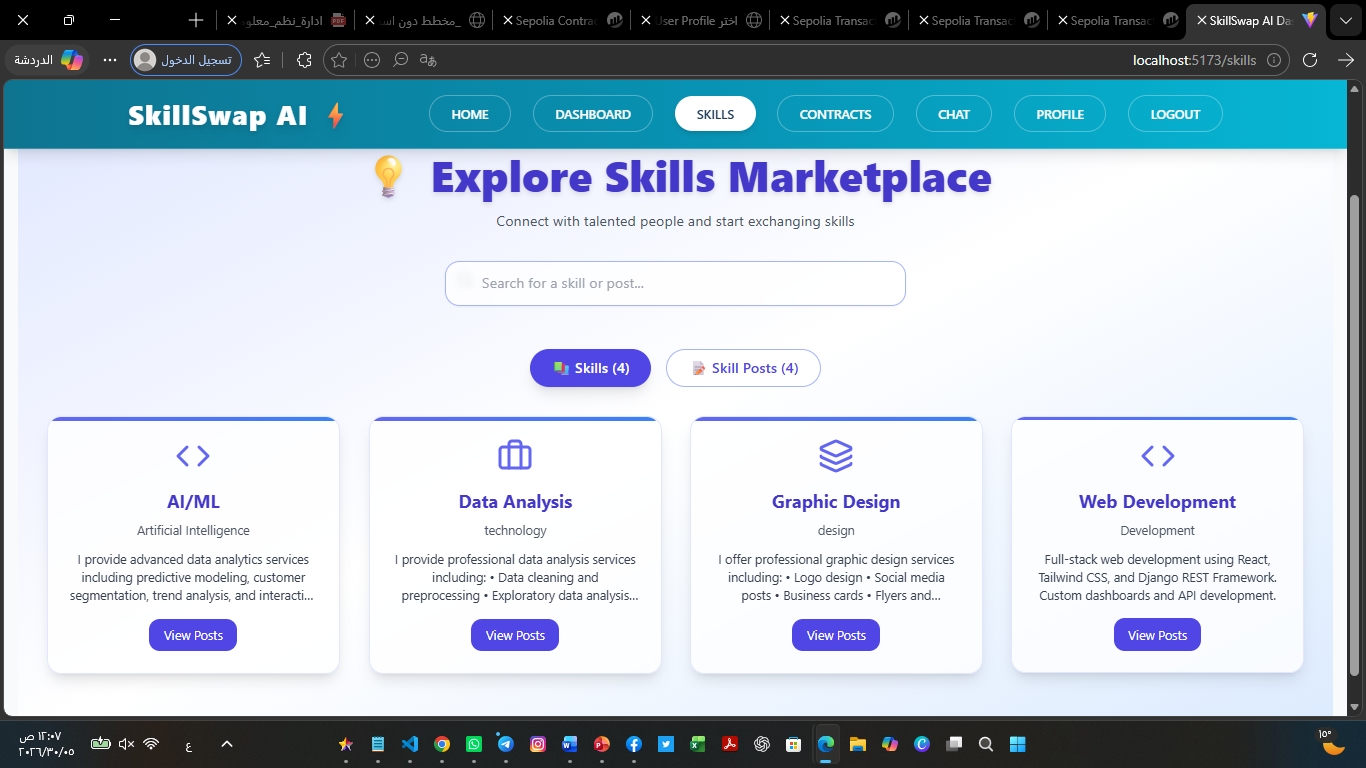
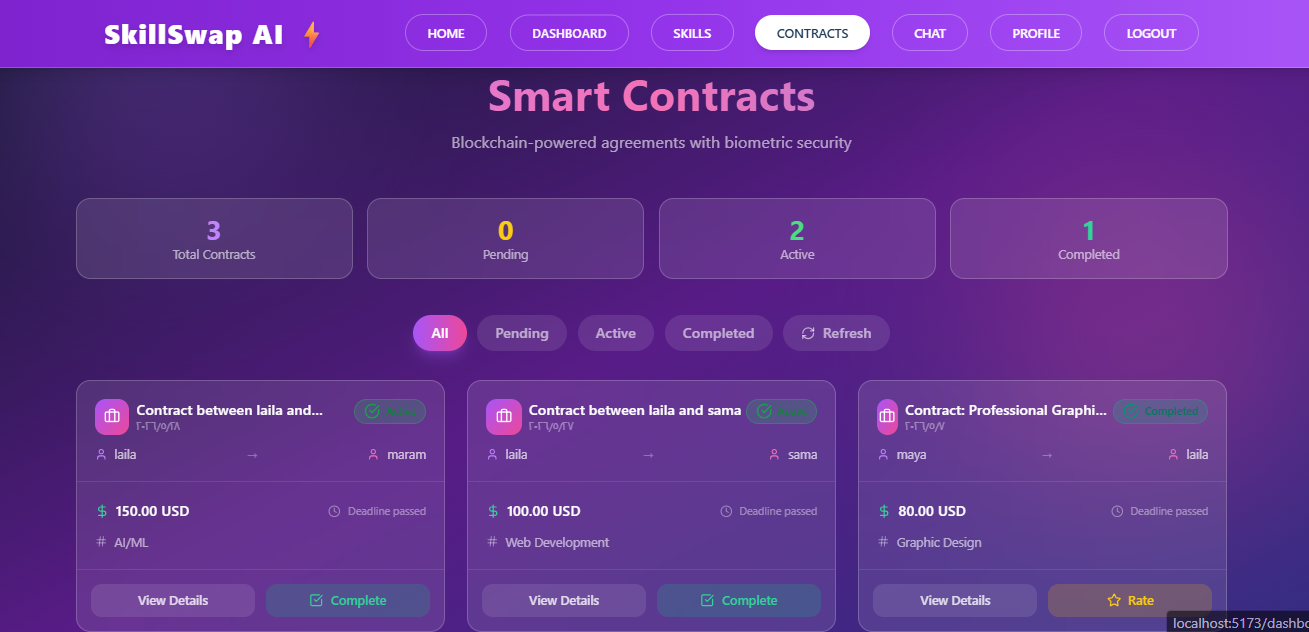
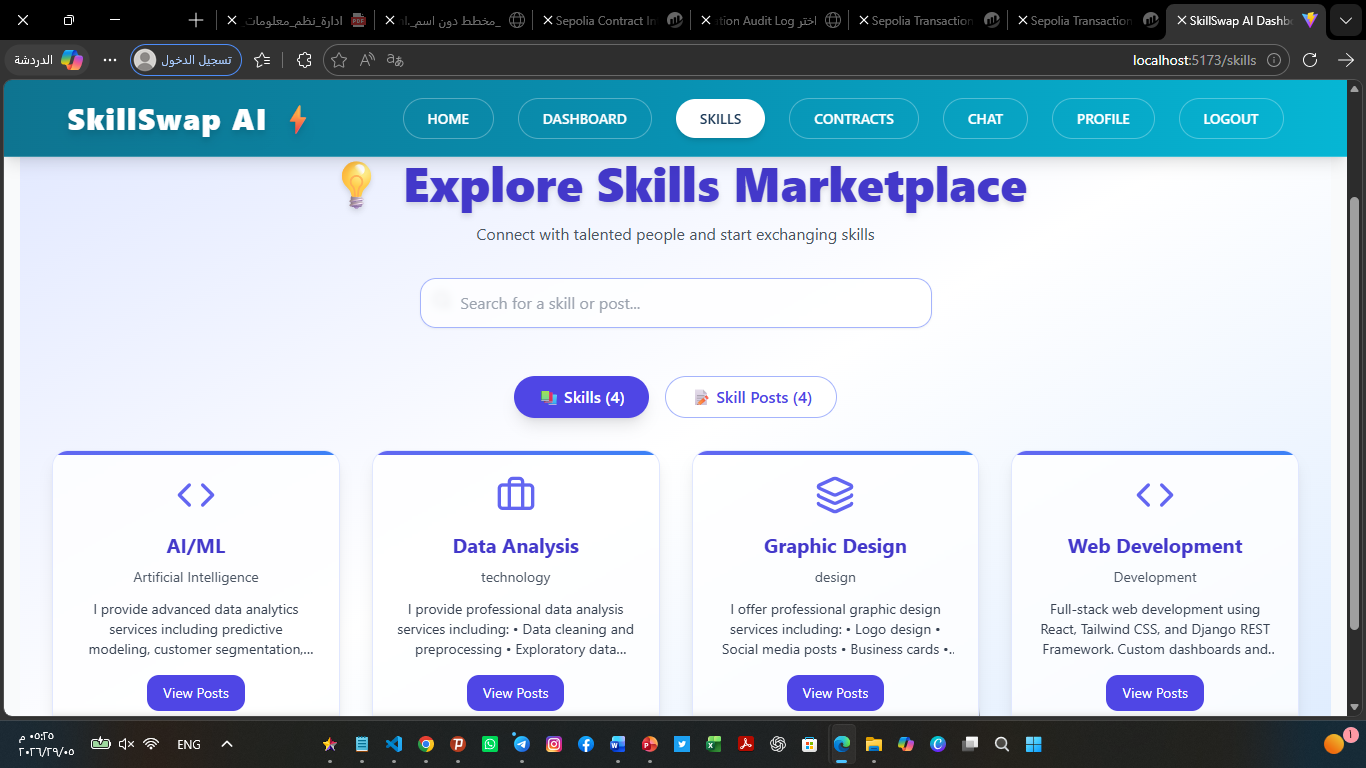
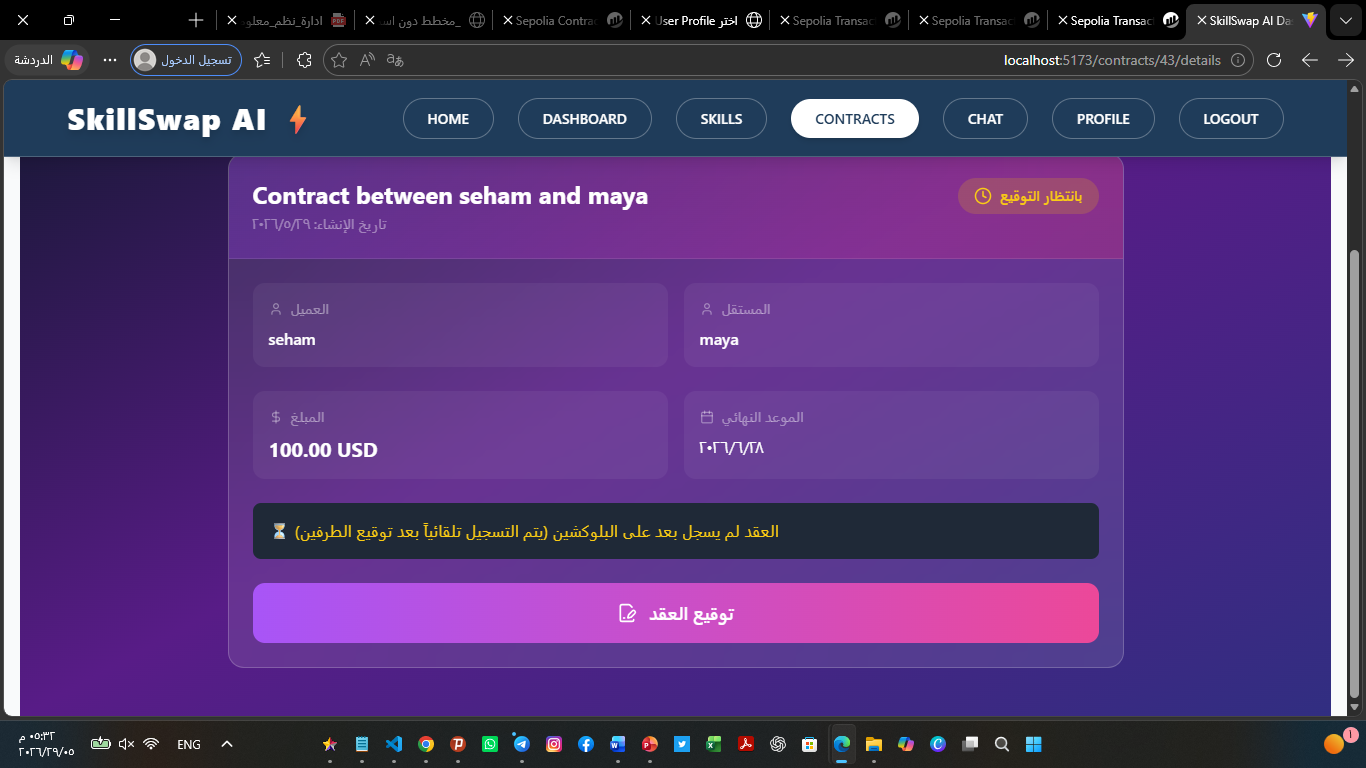
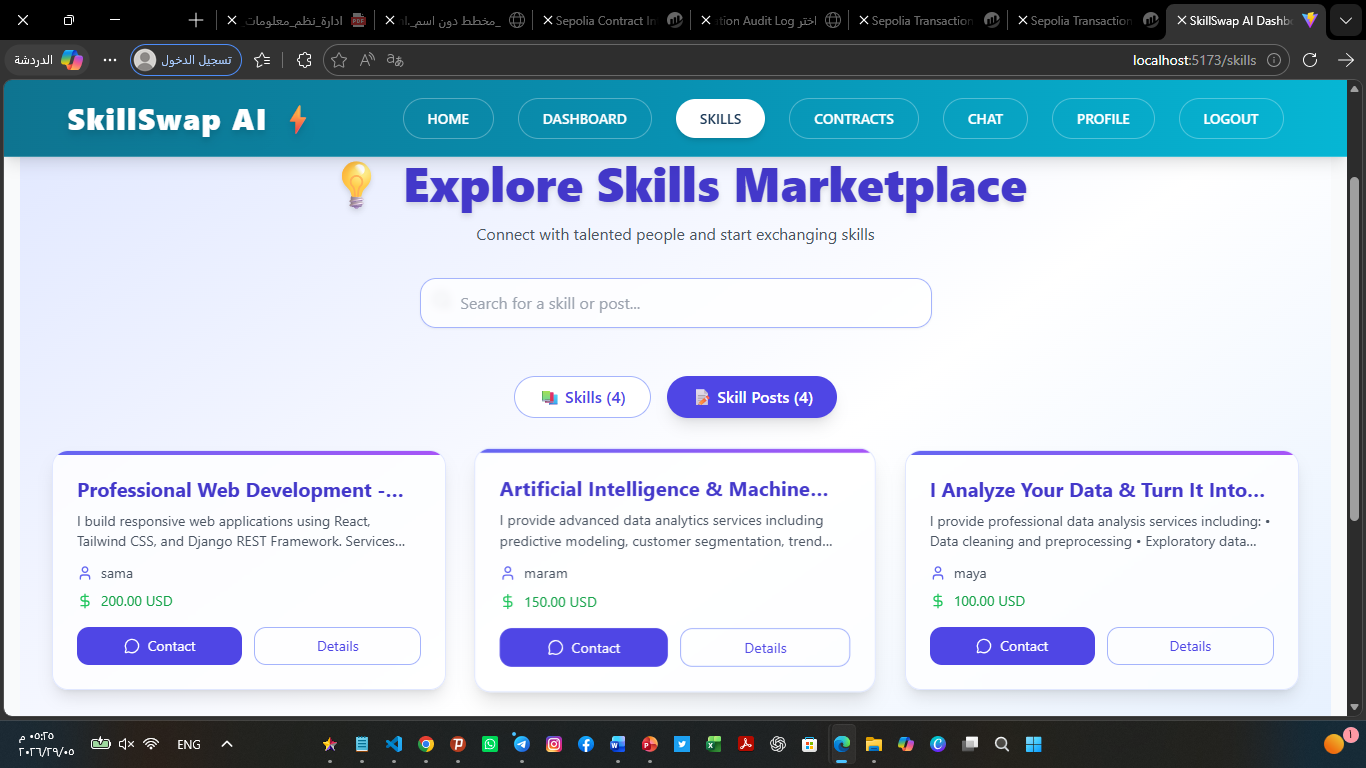
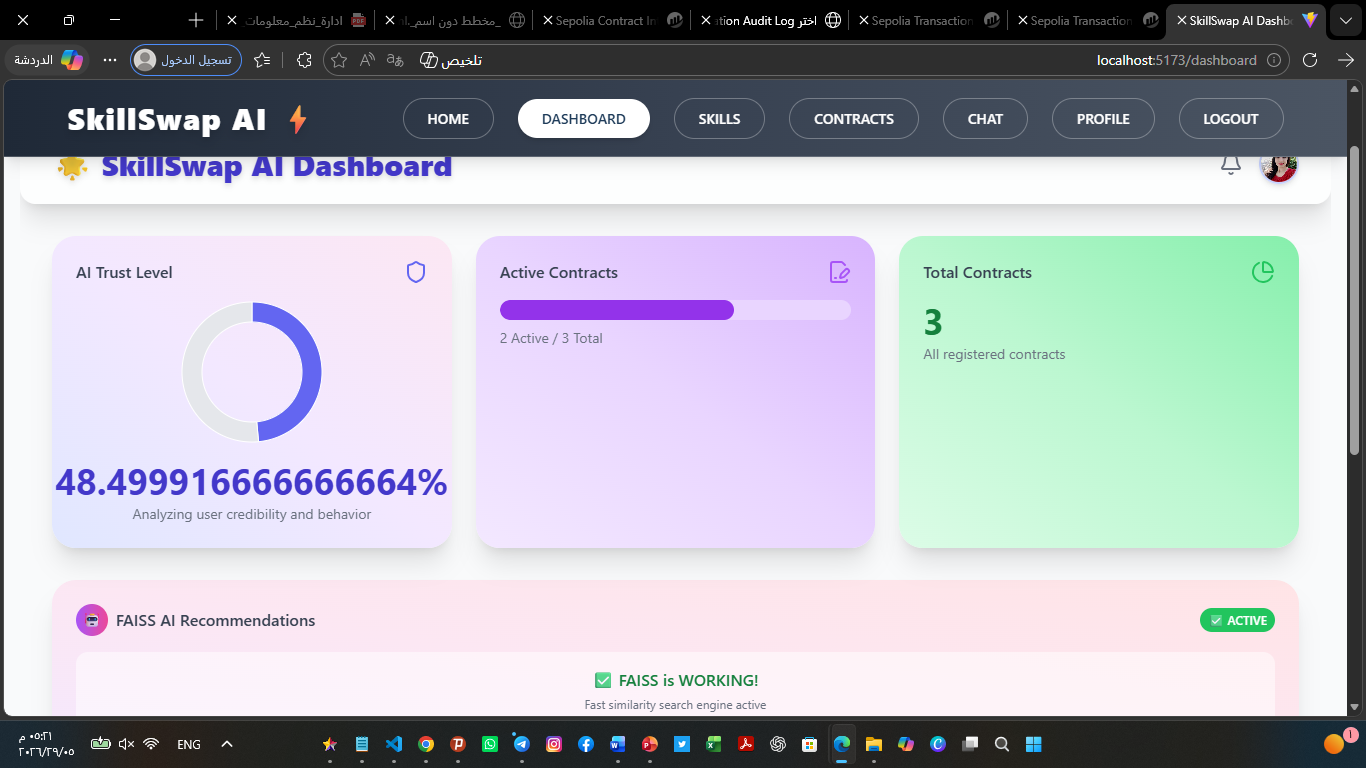
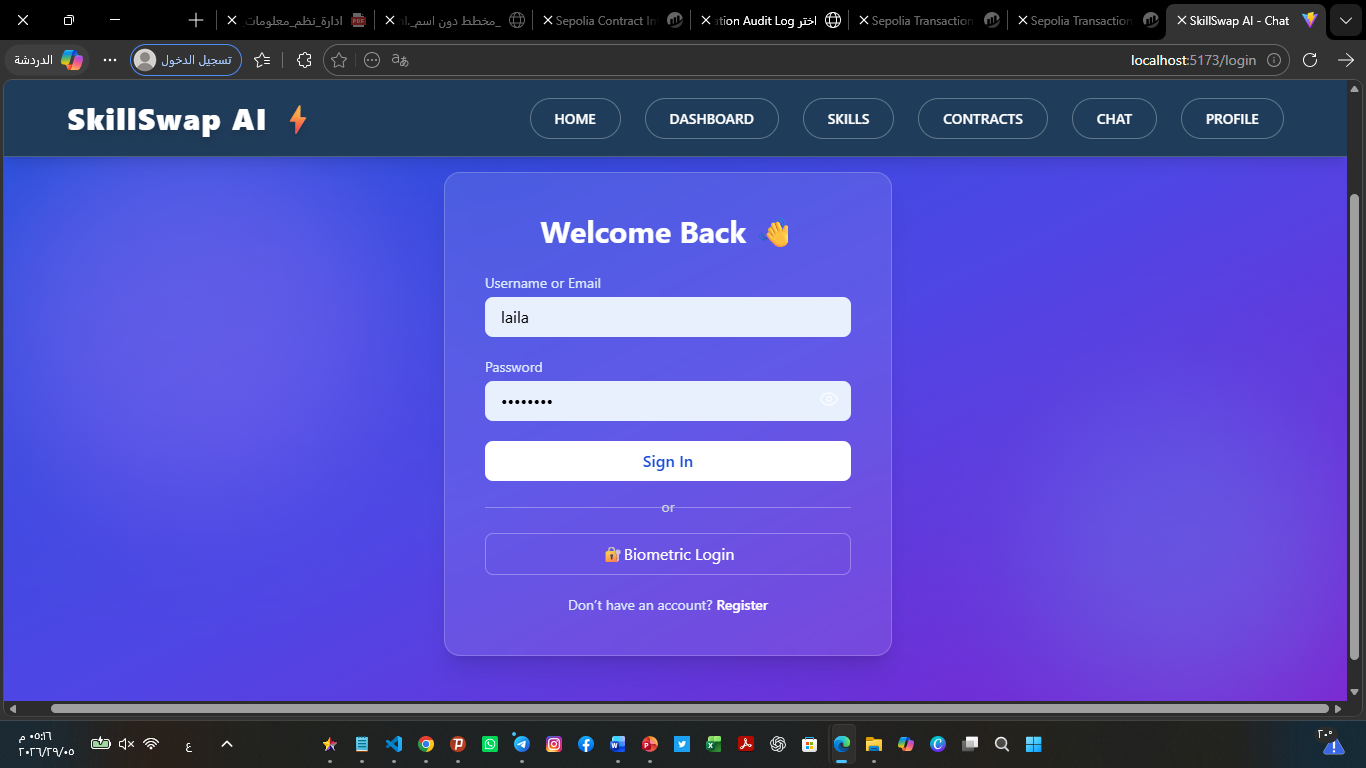
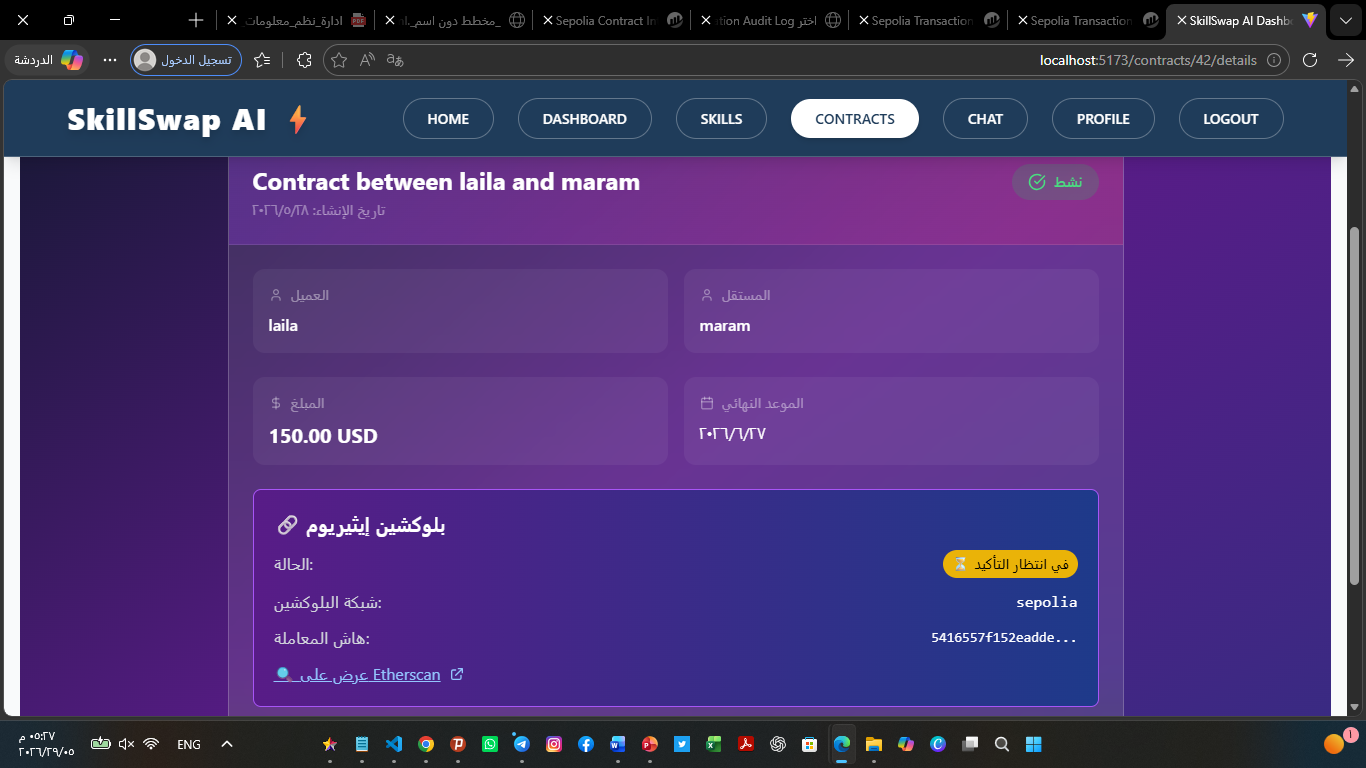
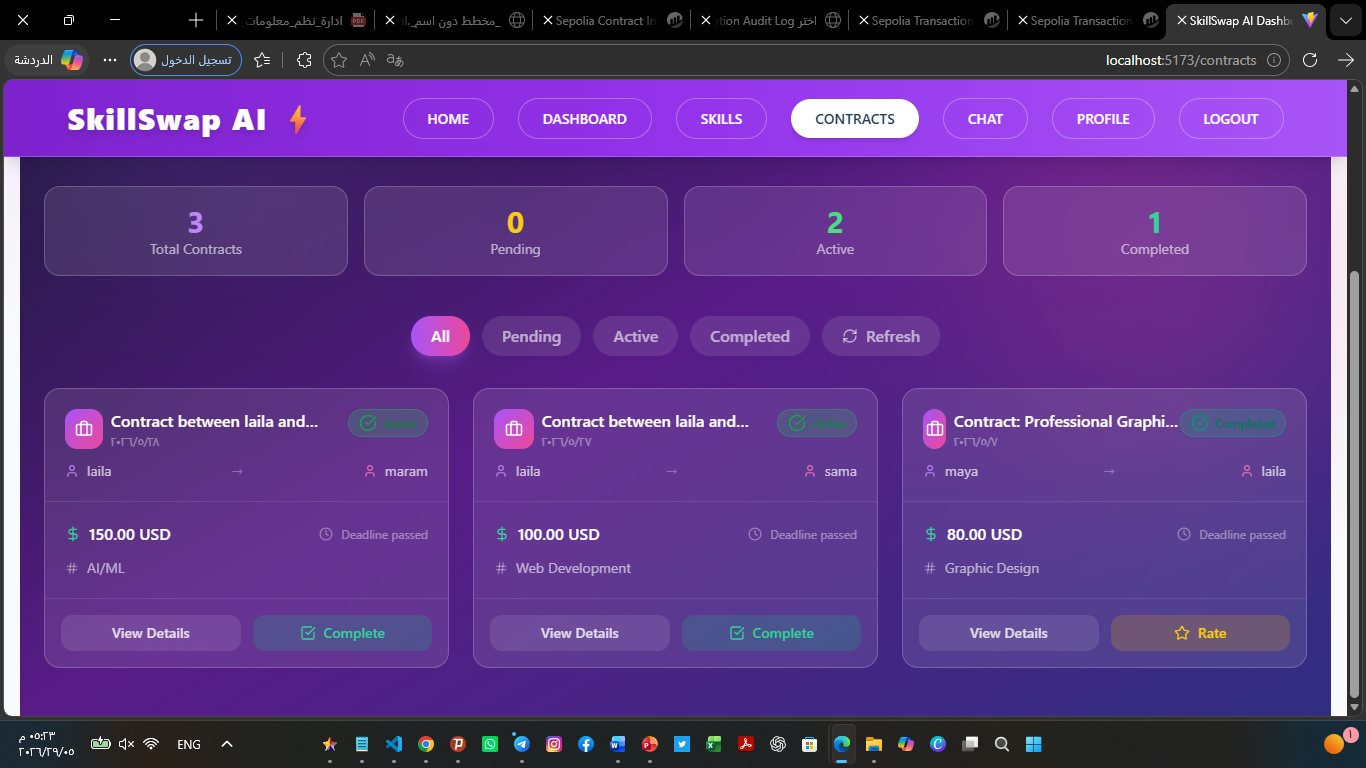
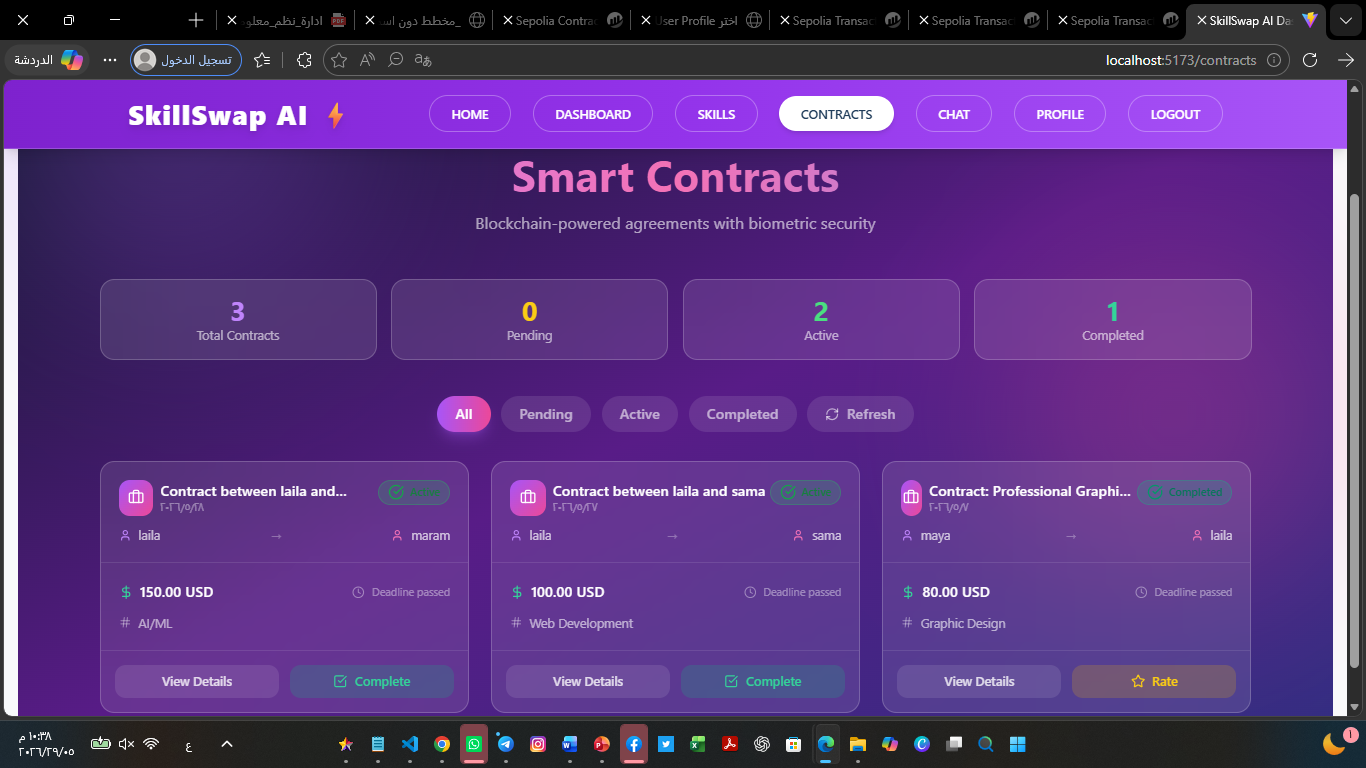
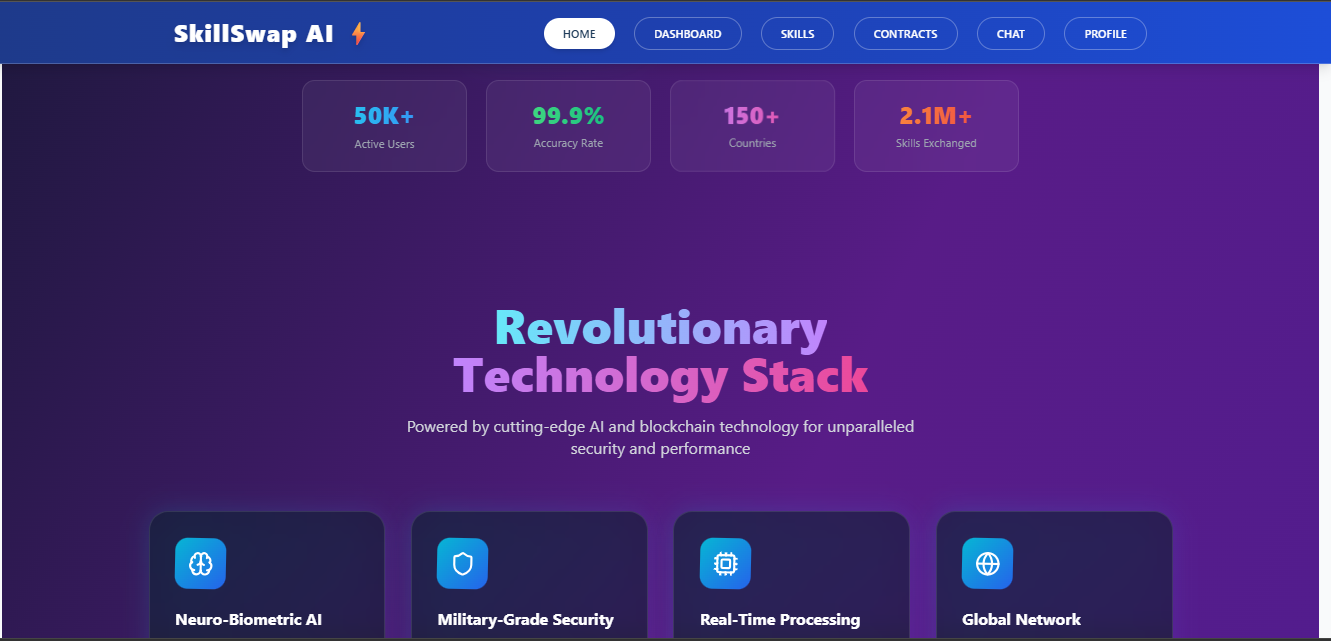
What inspired you? The idea for SkillSwap AI was born from a real problem I faced as a university student in Syria. I wanted to offer my programming skills online, but freelancing platforms like Upwork and Fiverr are blocked, require international payment methods I don't have, and most importantly - lack real identity verification. Fake accounts, contract disputes, and payment issues are everywhere. I asked myself: Can we build a freelancing platform that doesn't require trust between strangers? A platform where the technology guarantees fairness?
That question became the starting point of SkillSwap AI.
What did you learn? Building this project taught me technologies I never imagined learning as an undergraduate:
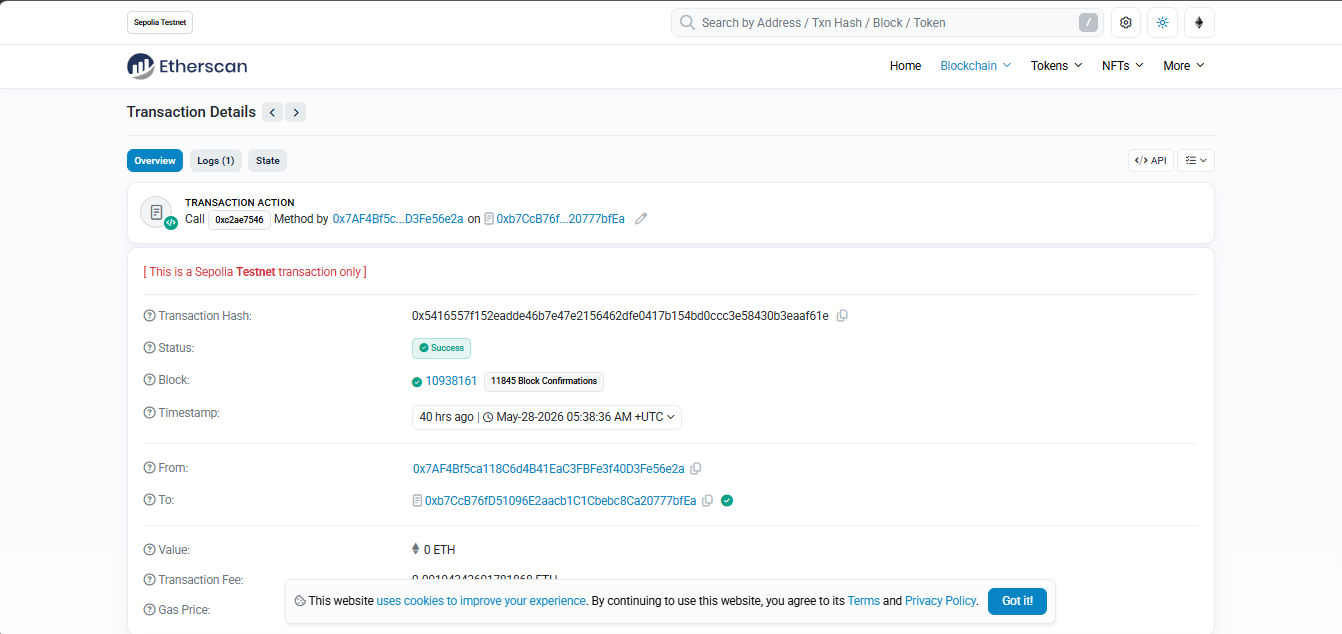
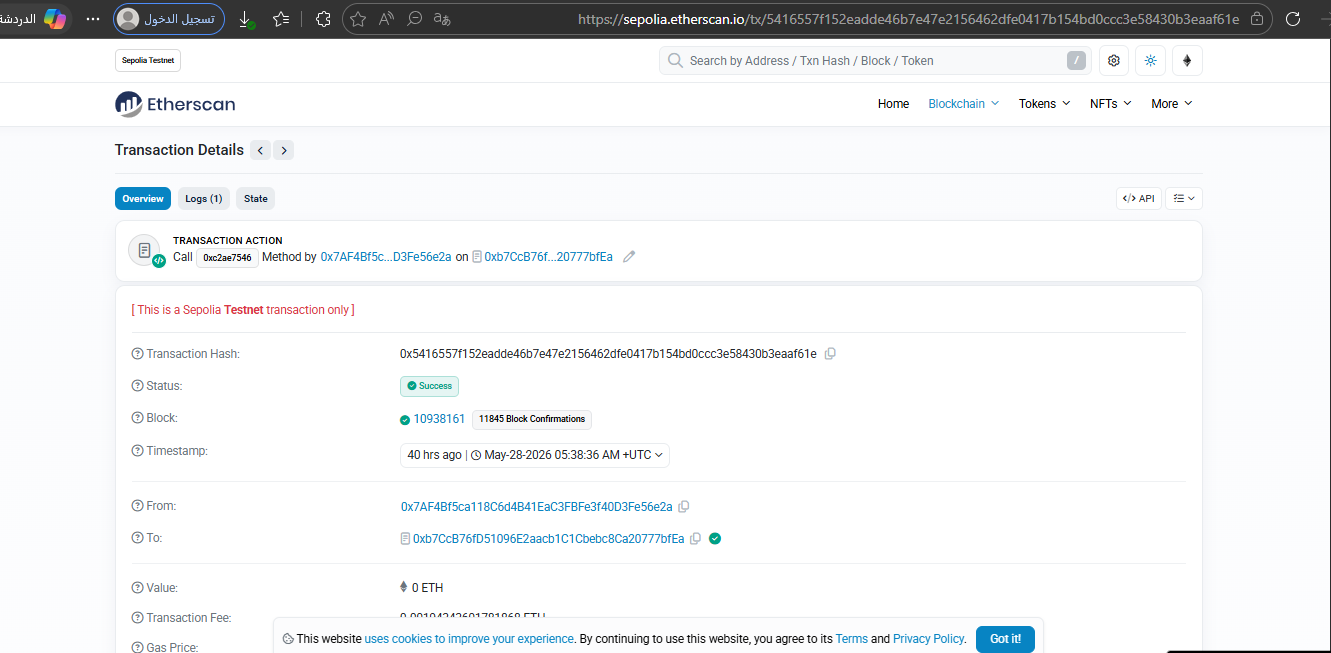
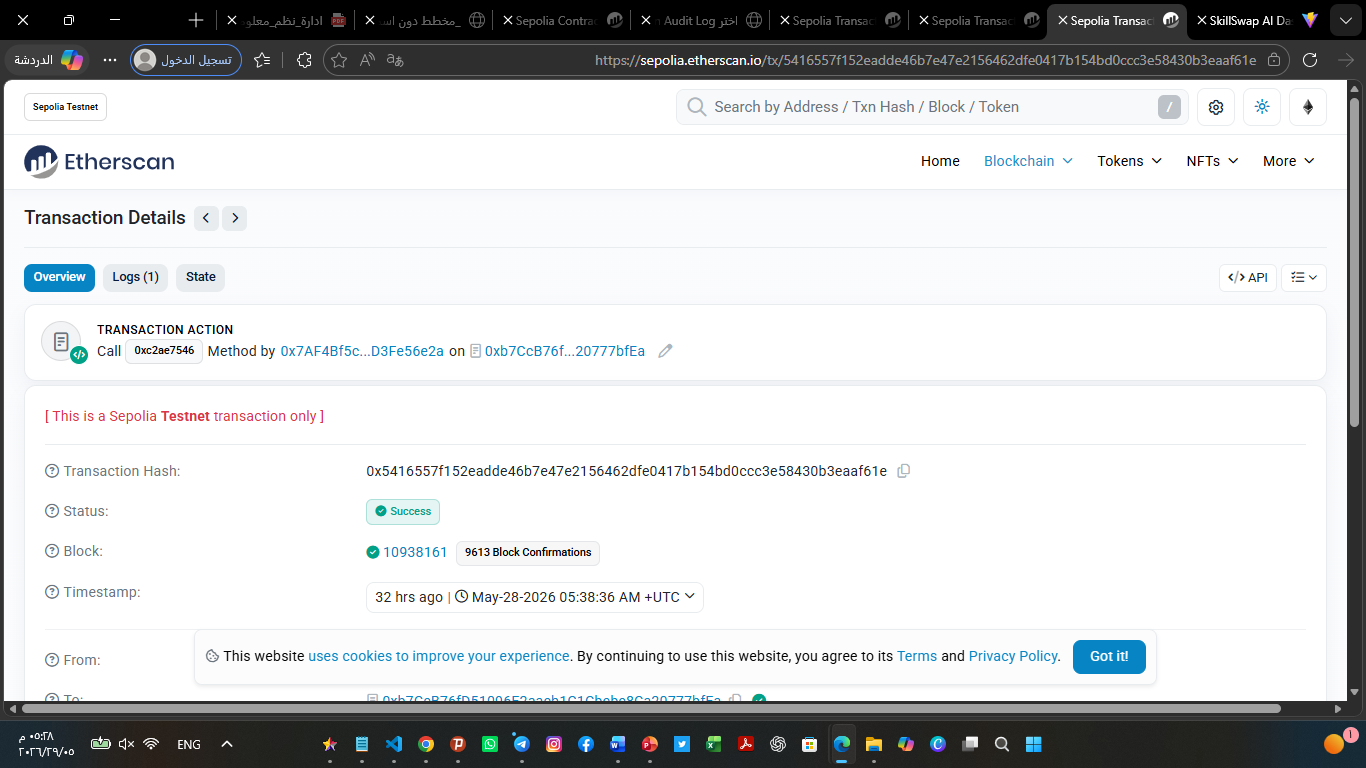
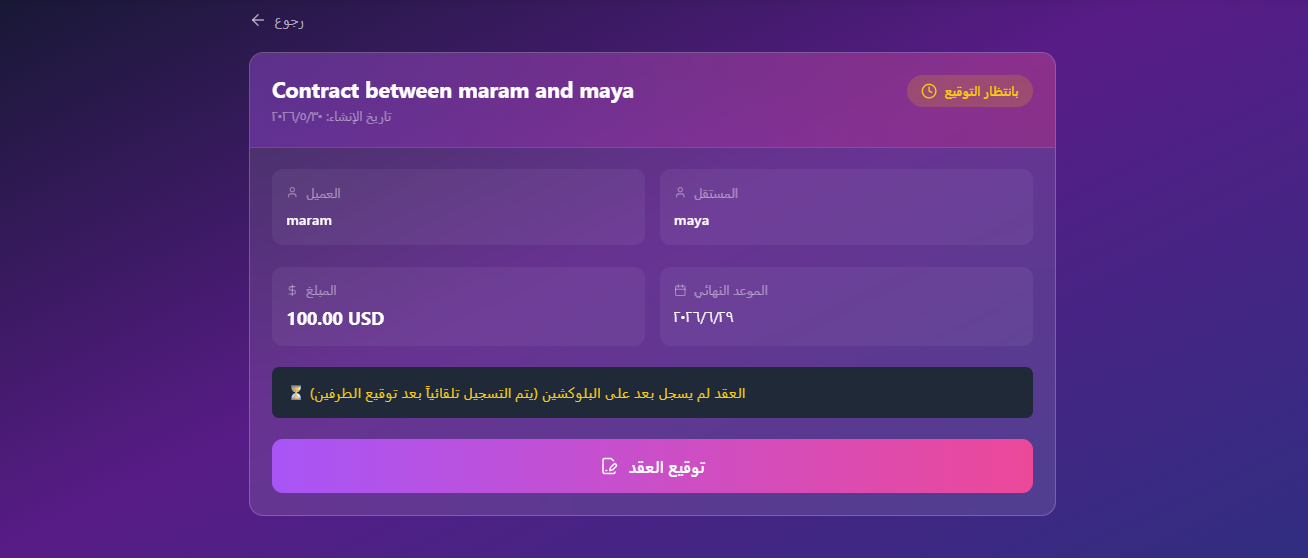
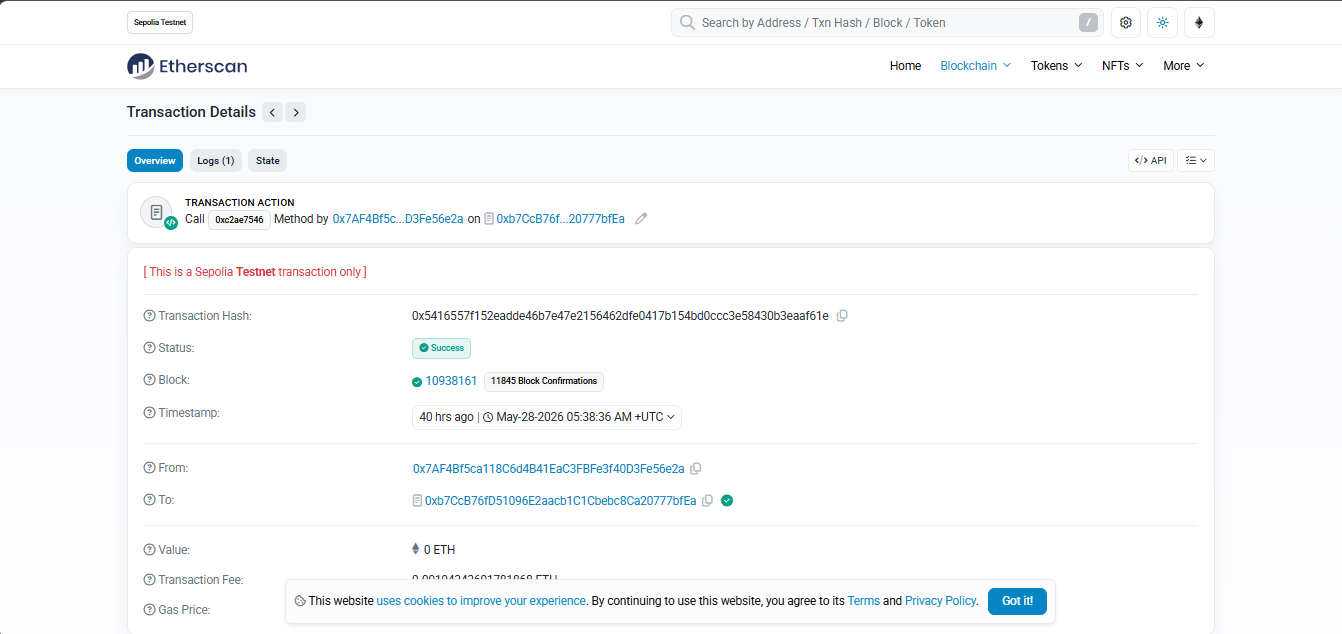
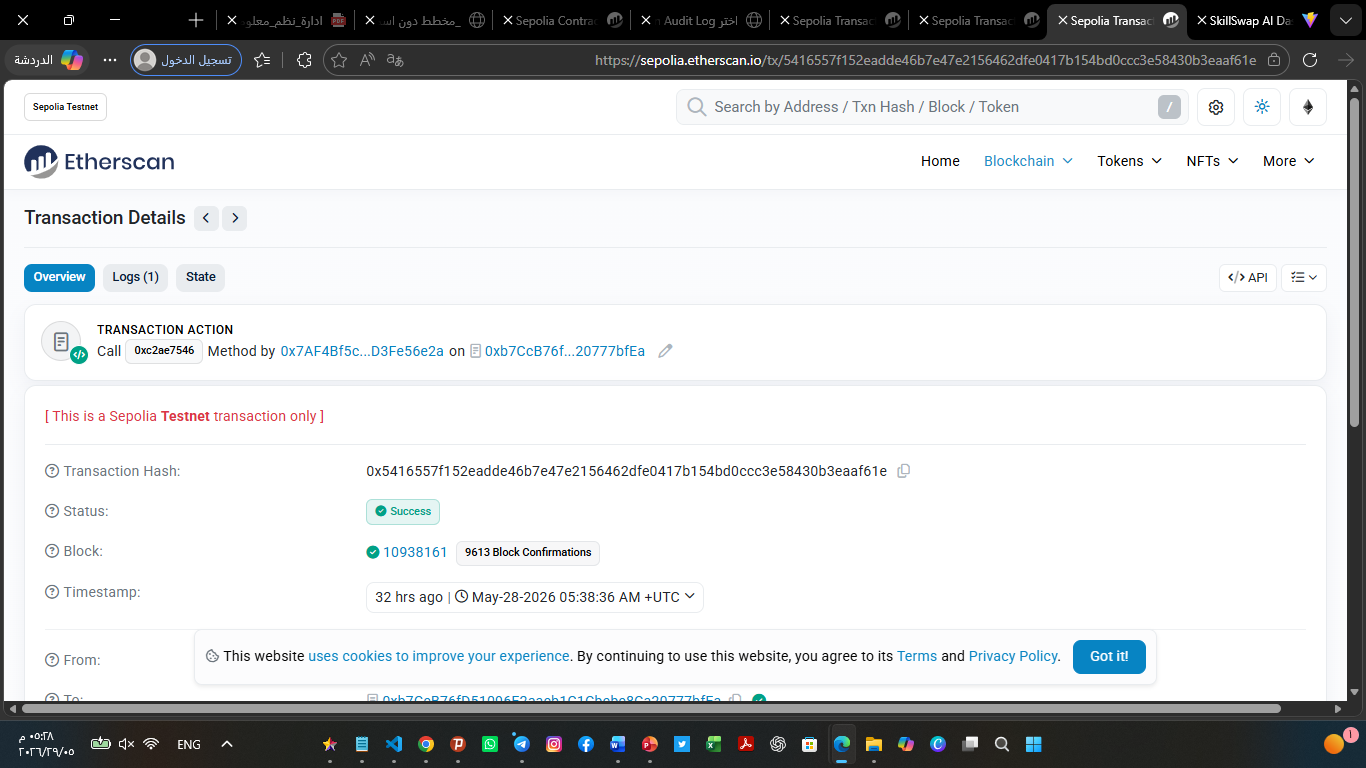
Blockchain & Smart Contracts (Web3.py, Ethereum Sepolia): How to deploy contracts, manage gas fees, and handle transactions.
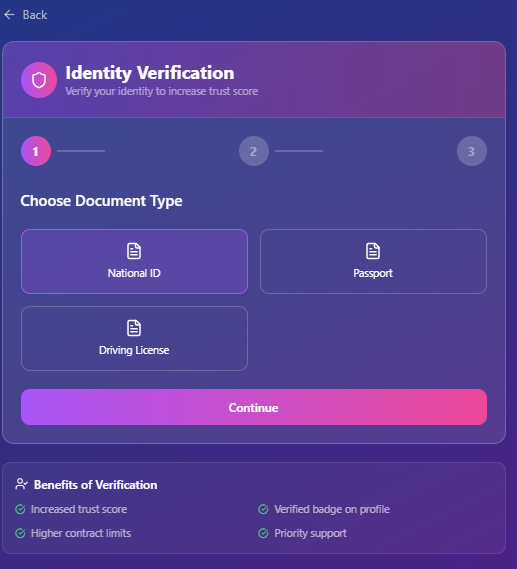
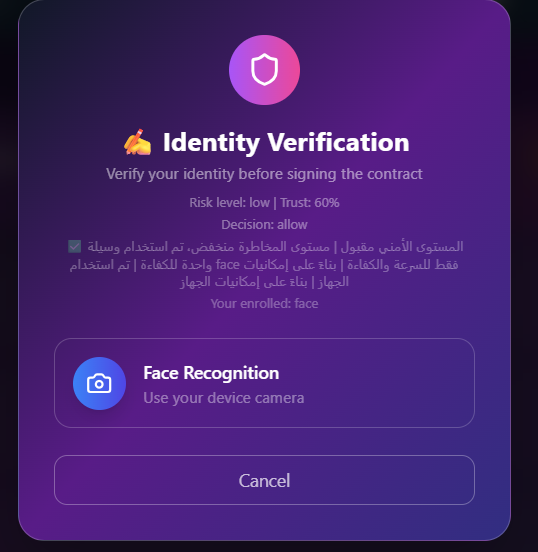
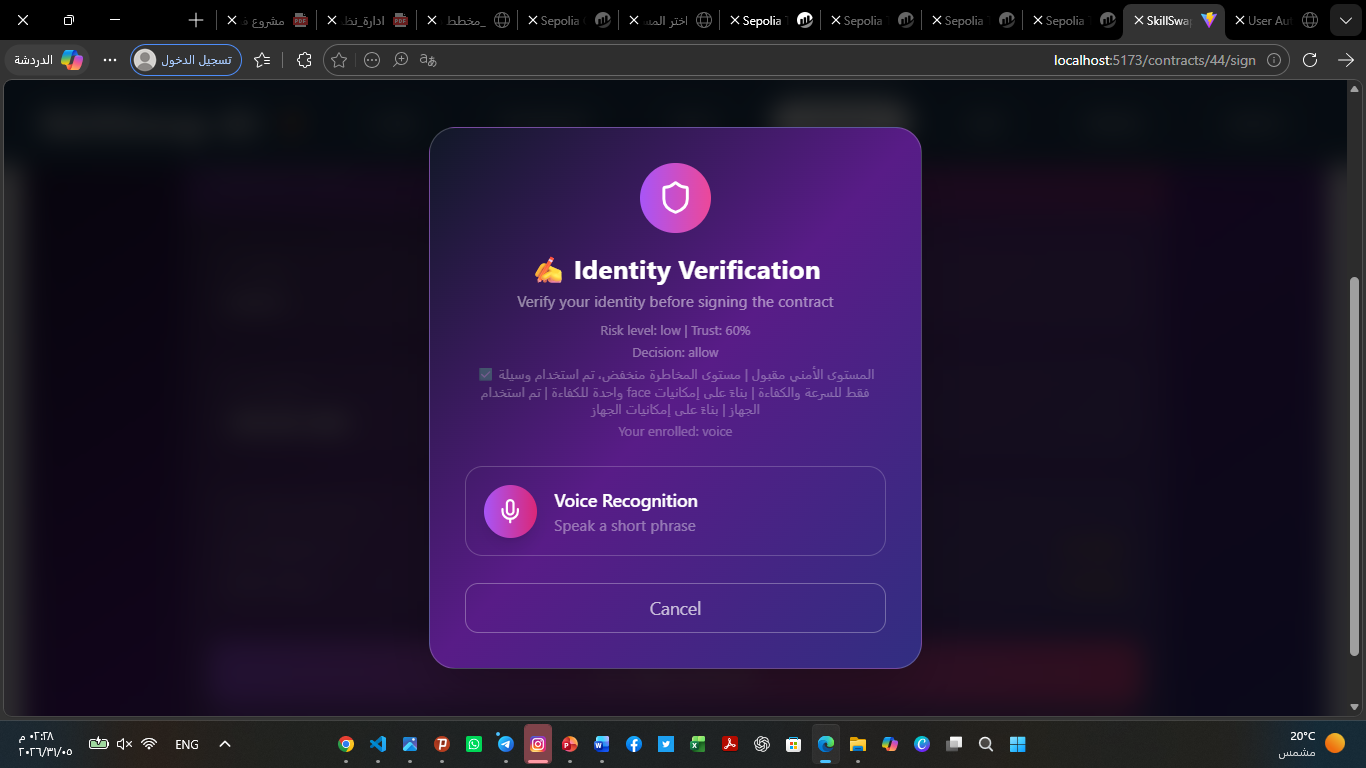
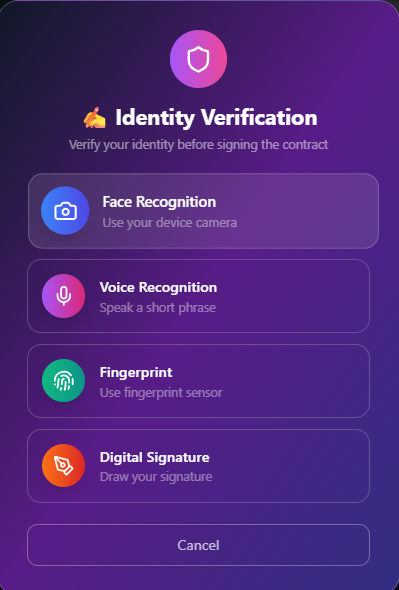
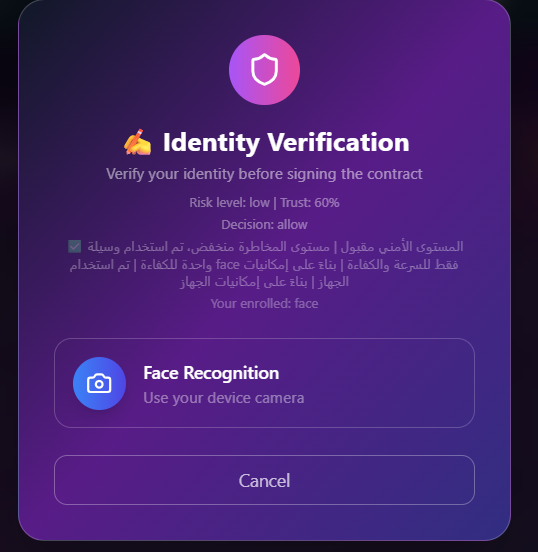
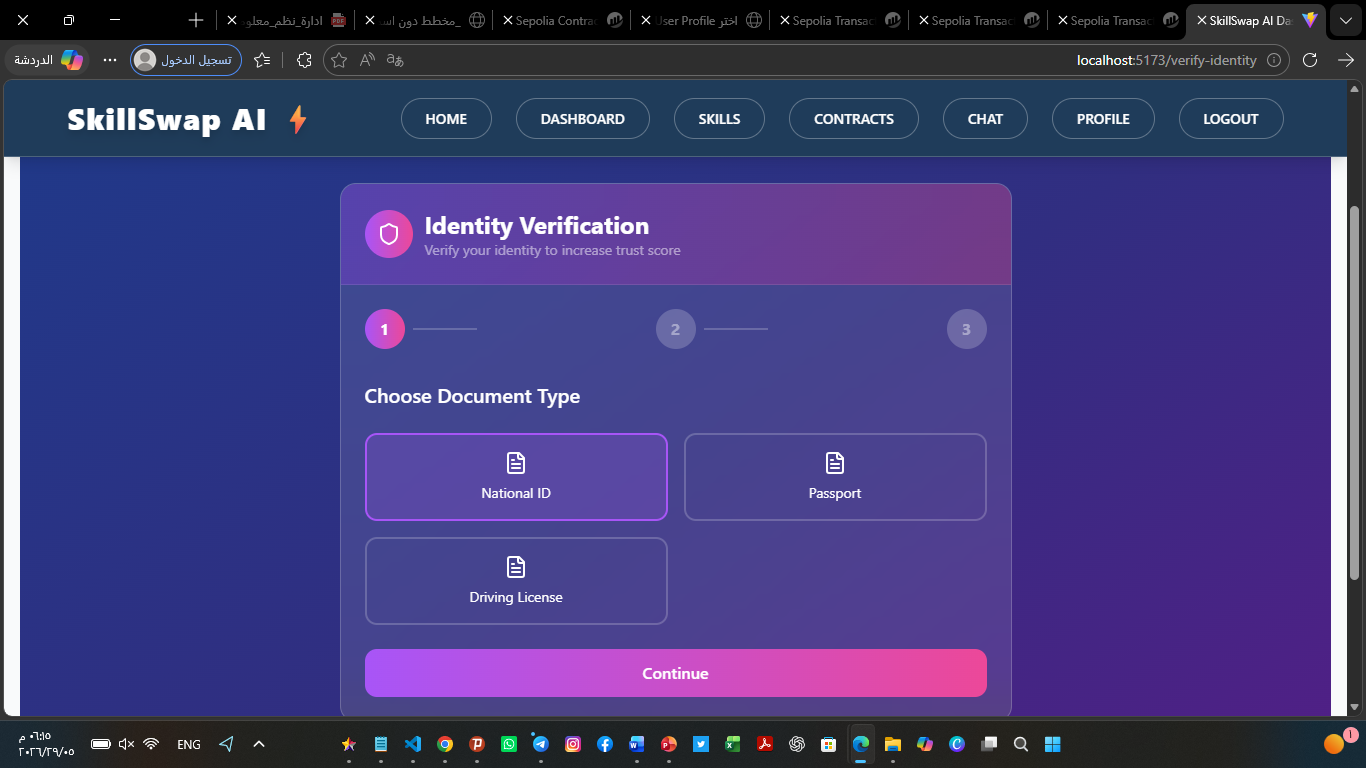
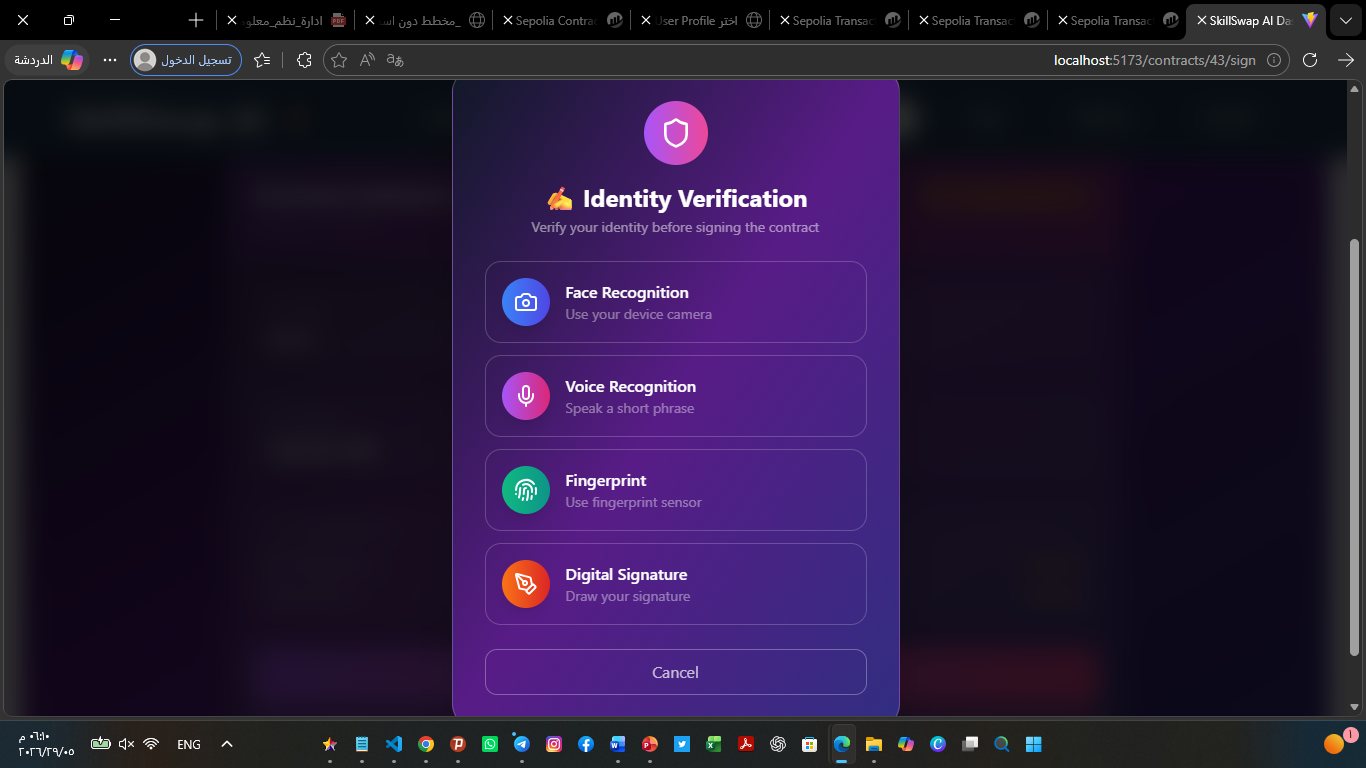
Biometric Authentication (DeepFace, SpeechBrain, MTCNN): How face, voice, and fingerprint recognition actually work behind the scenes.
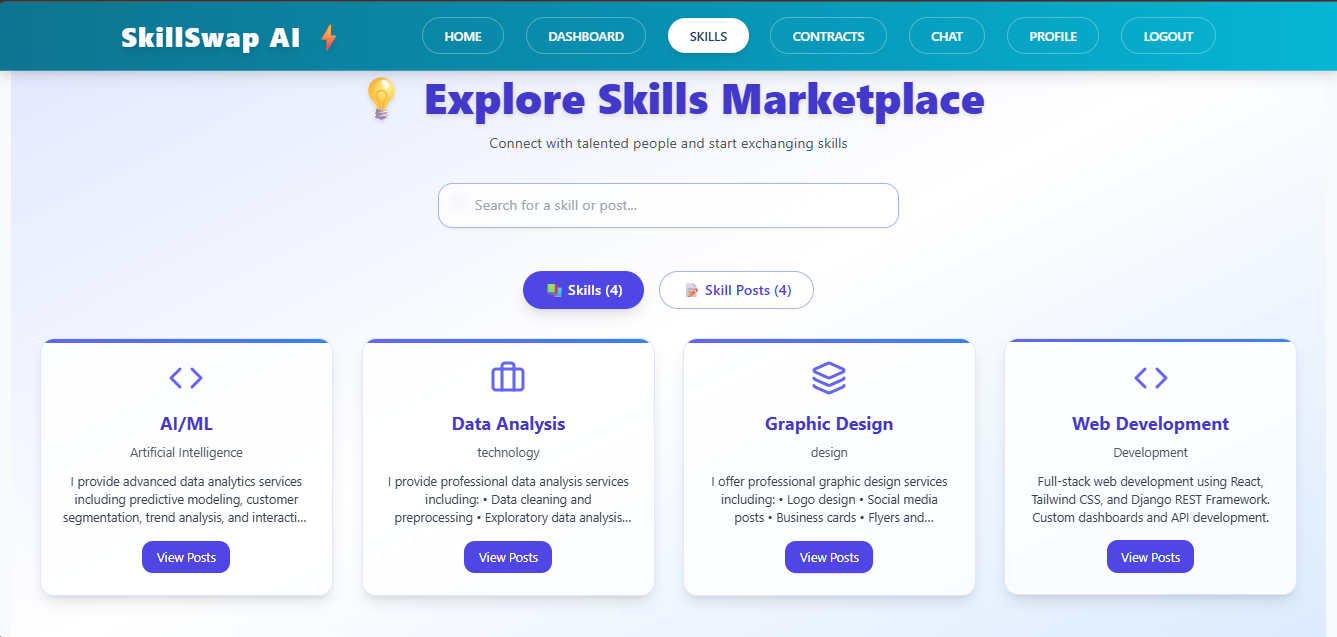
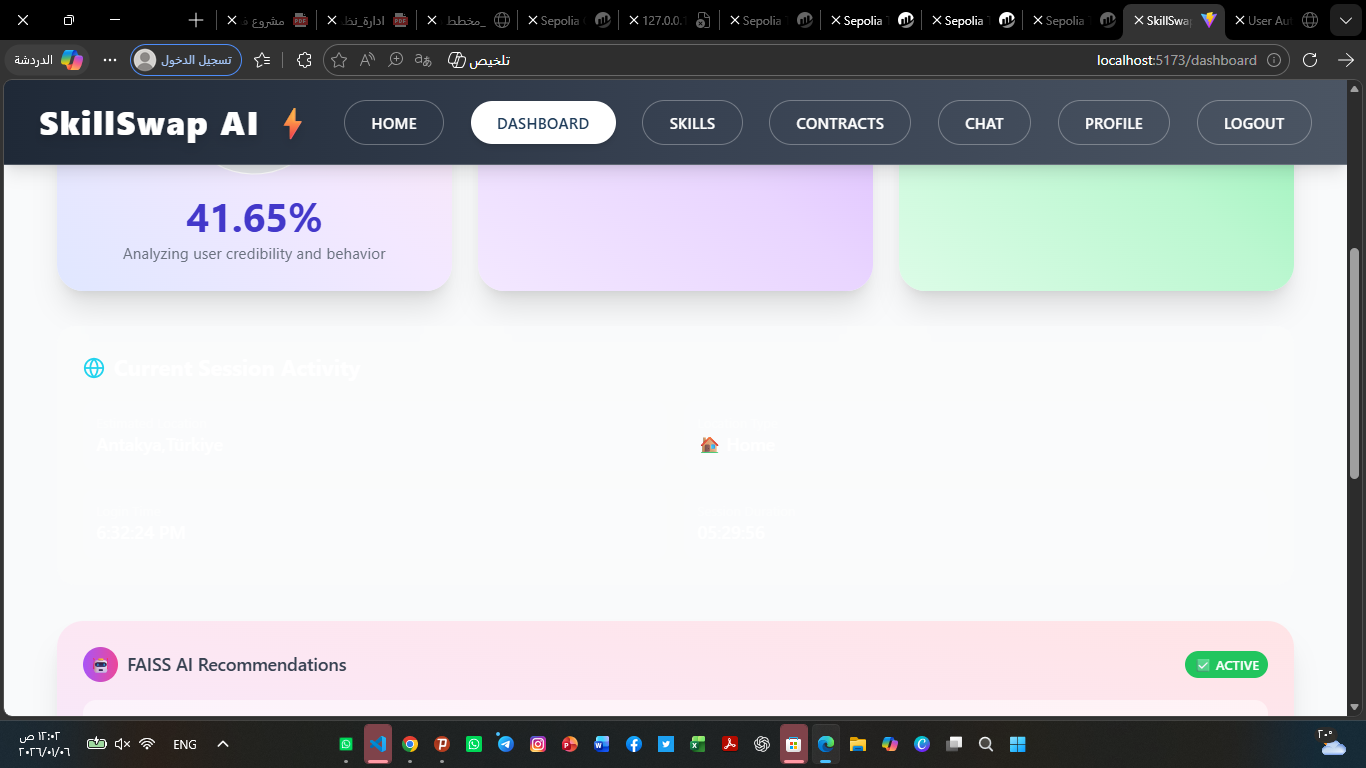
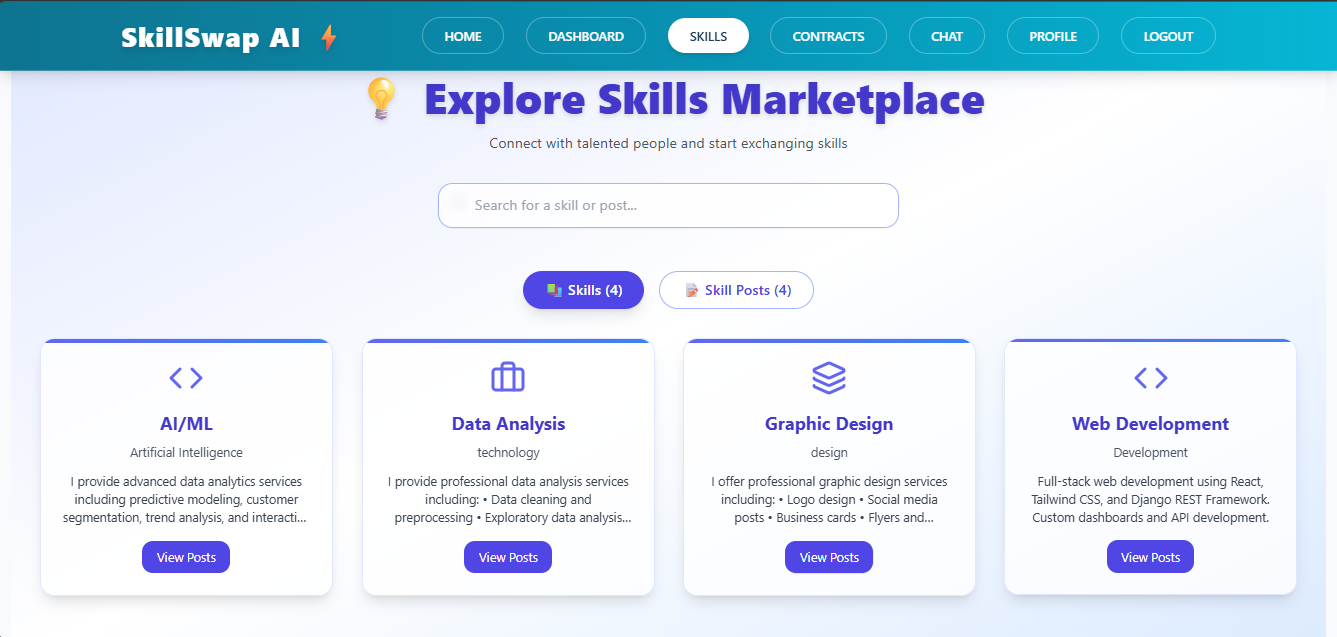
Vector Search with FAISS: How to build ultra-fast recommendation systems that understand context, not just keywords.
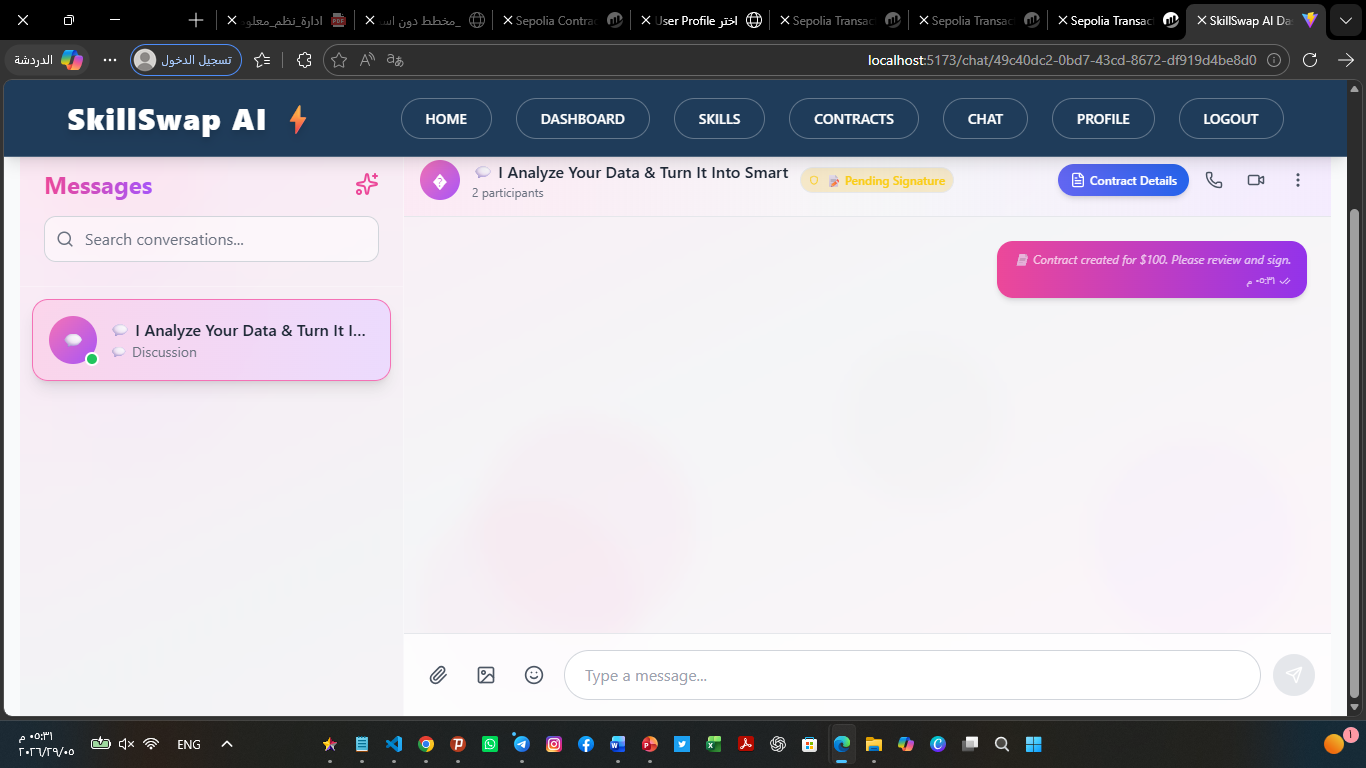
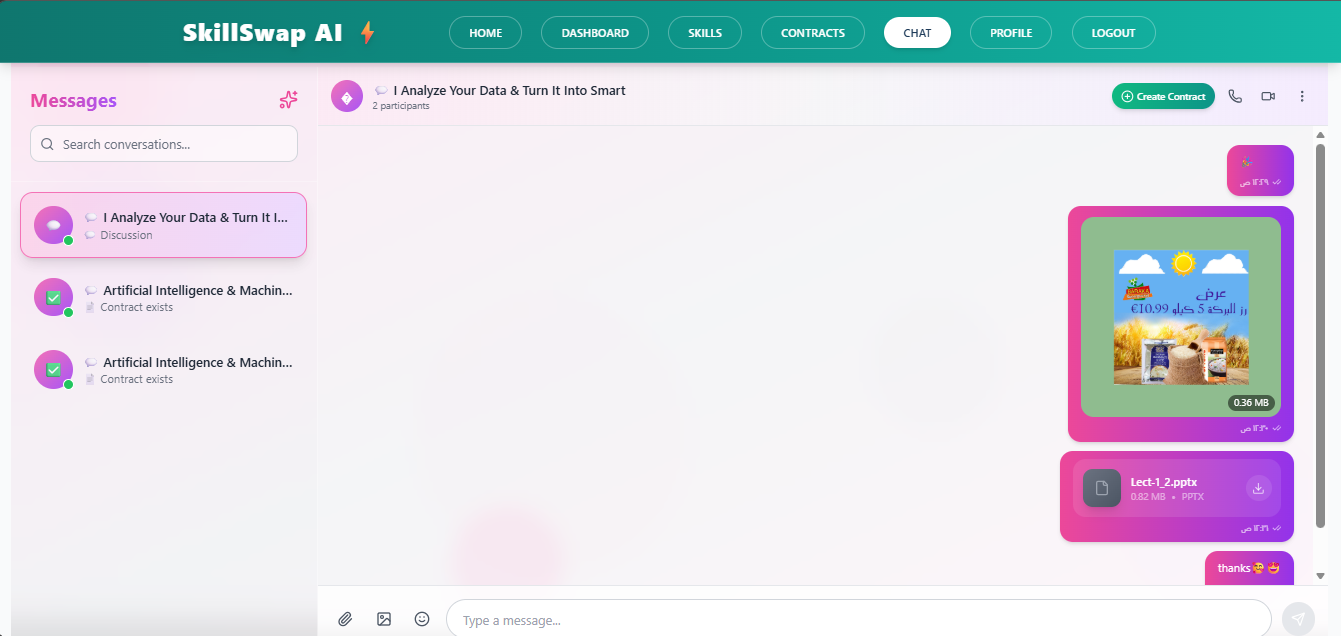
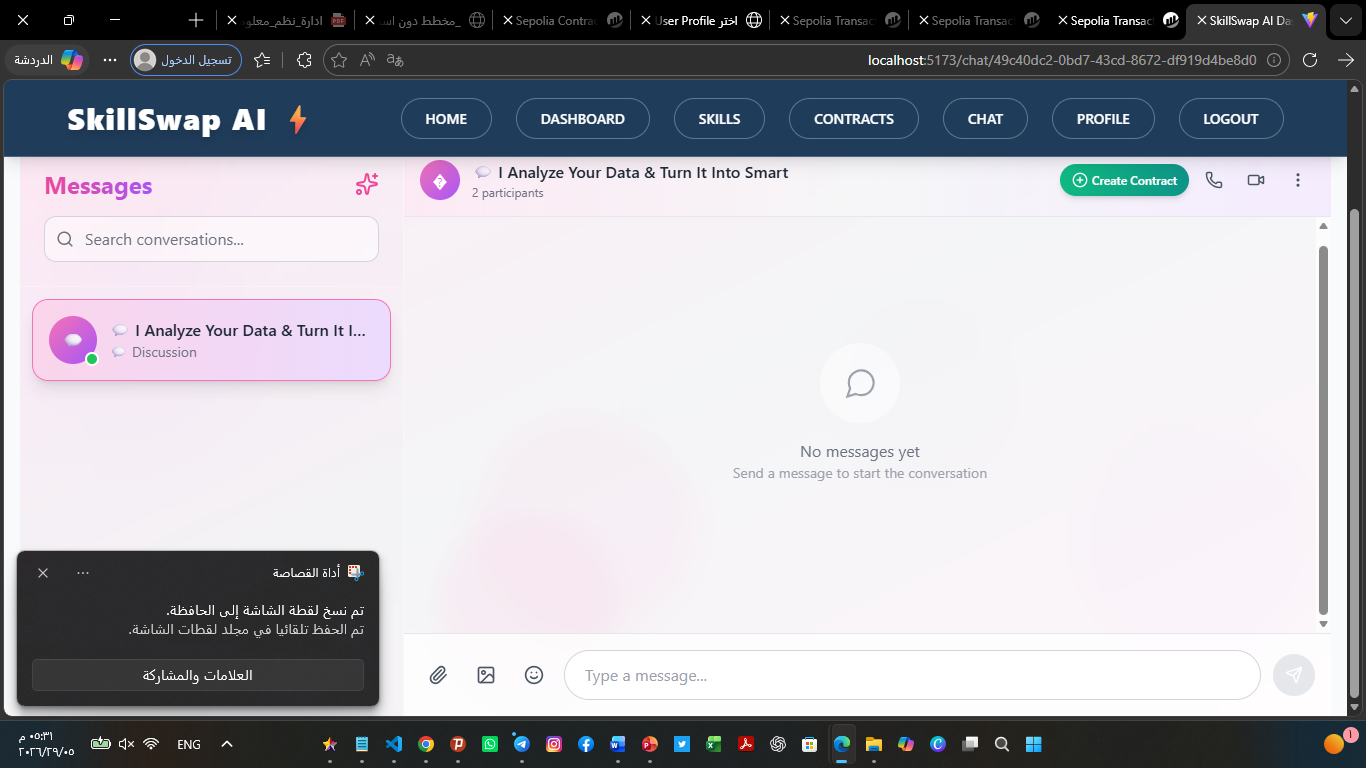
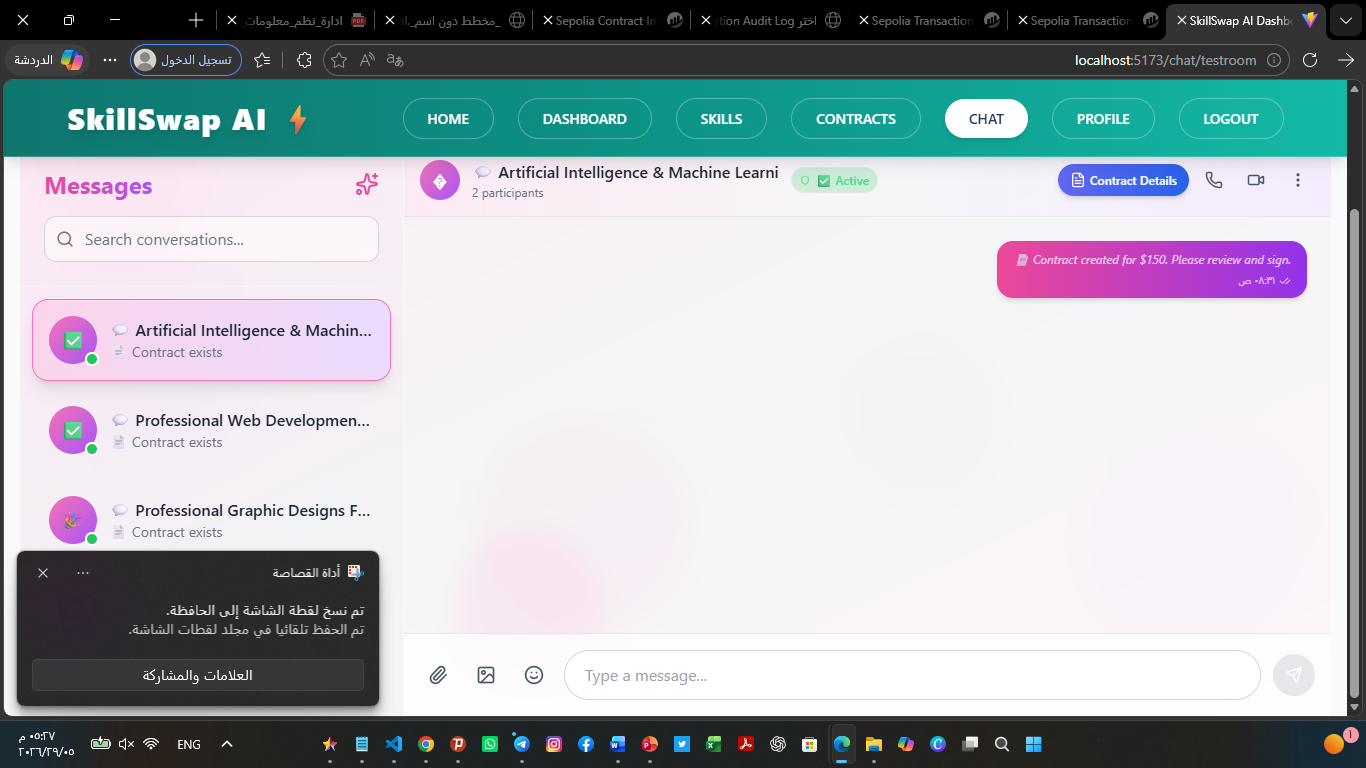
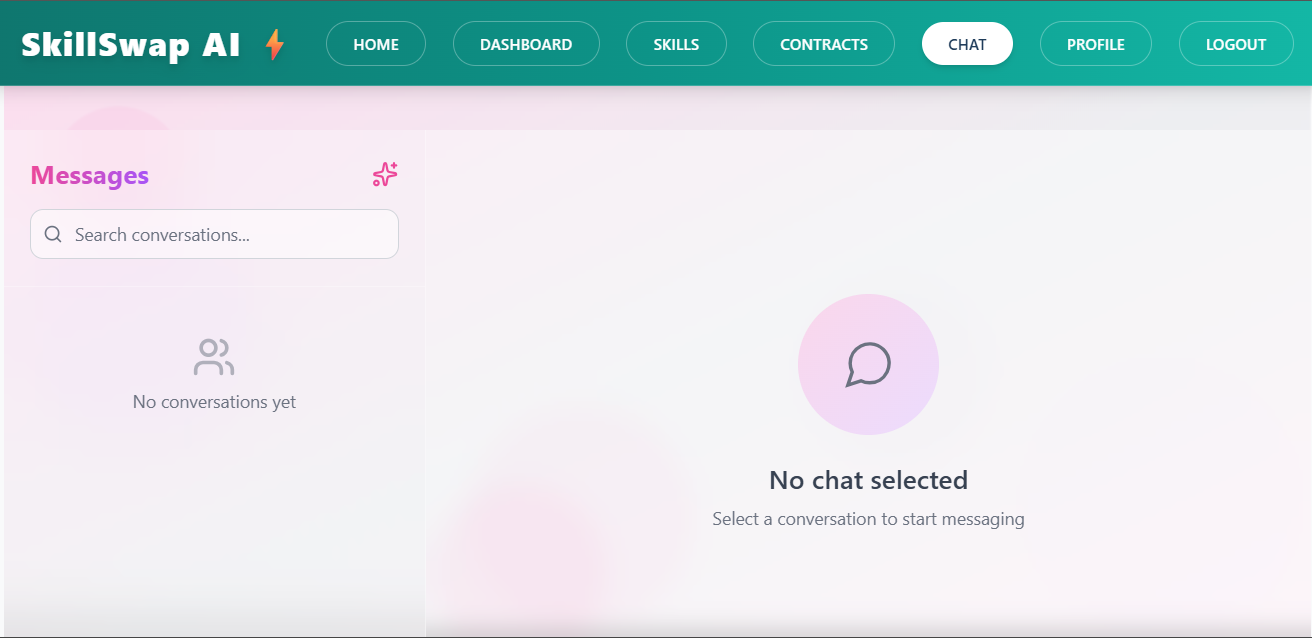
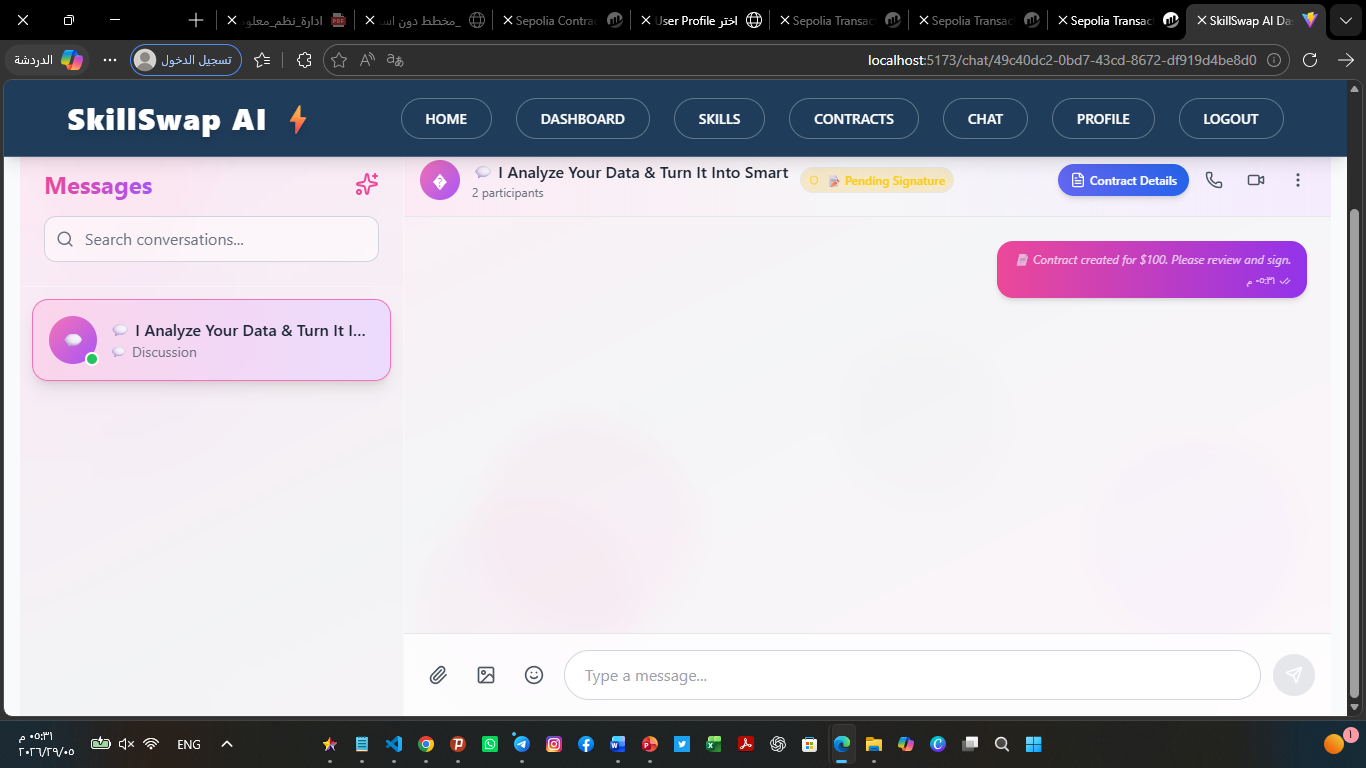
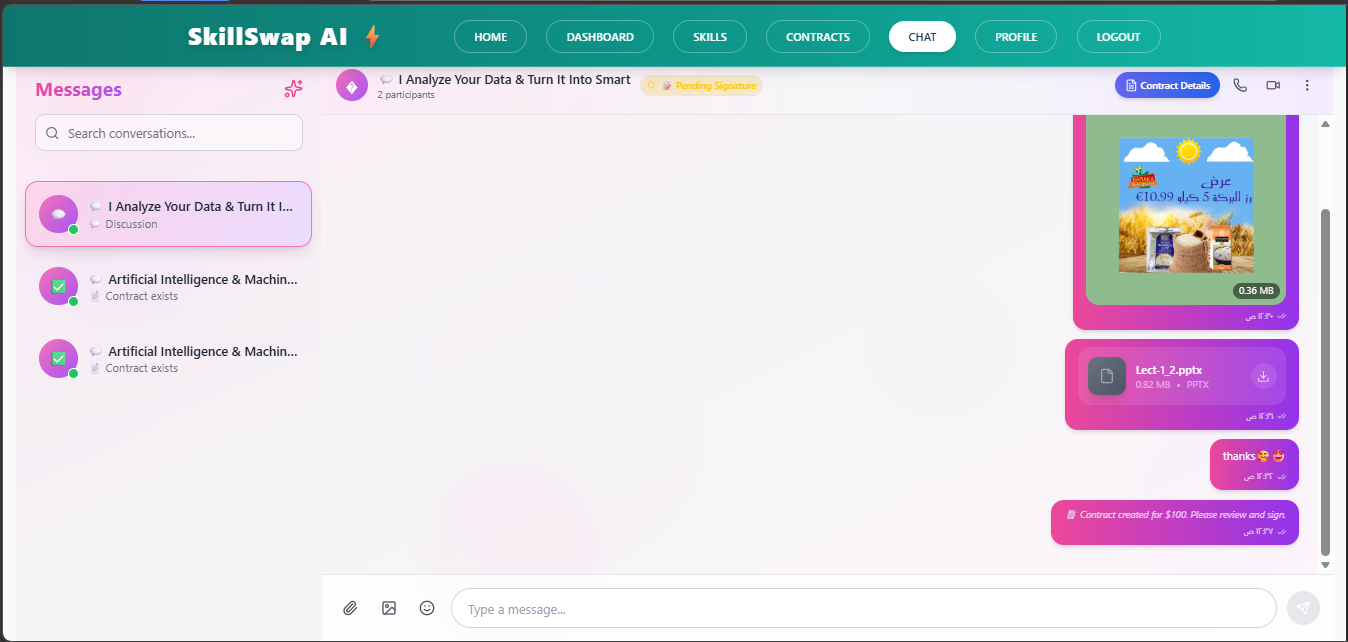
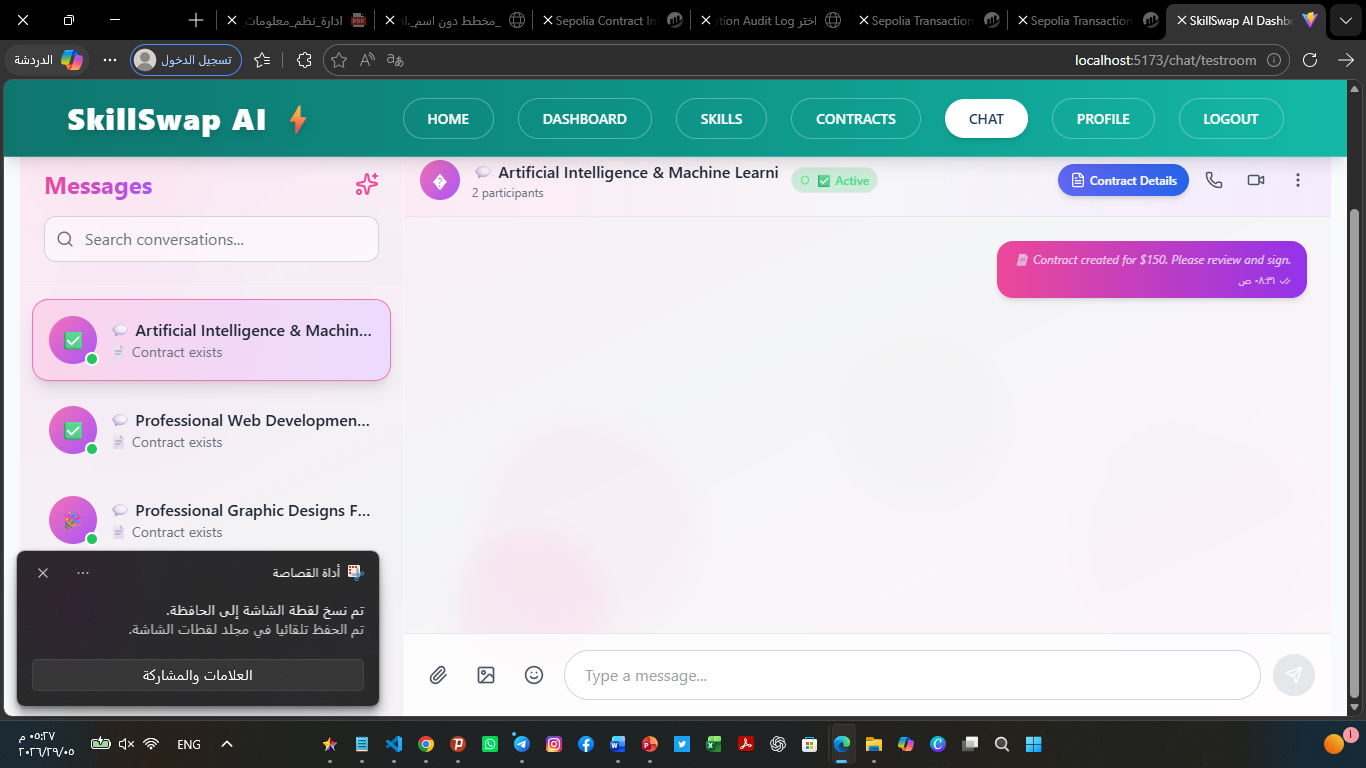
Real-time communication (WebSockets, Django Channels): Building encrypted chat rooms with JWT authentication.
Decentralized storage (IPFS): Storing contract documents permanently without a central server.
I also learned that integration is harder than learning individual technologies. Making Django talk to Web3, React talk to WebSockets, and biometric models run efficiently - that was the real challenge.
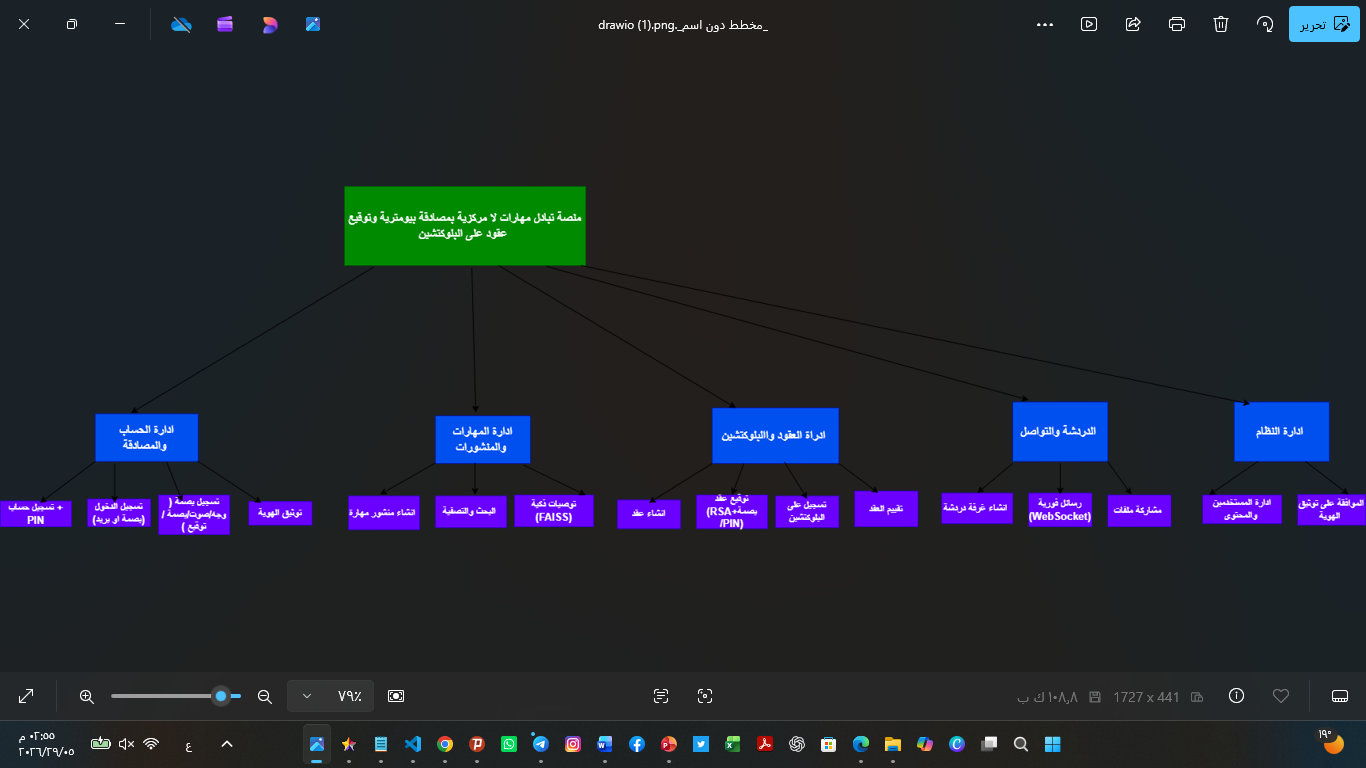
How did you build it? Backend (Django + Django REST Framework + Django Channels)
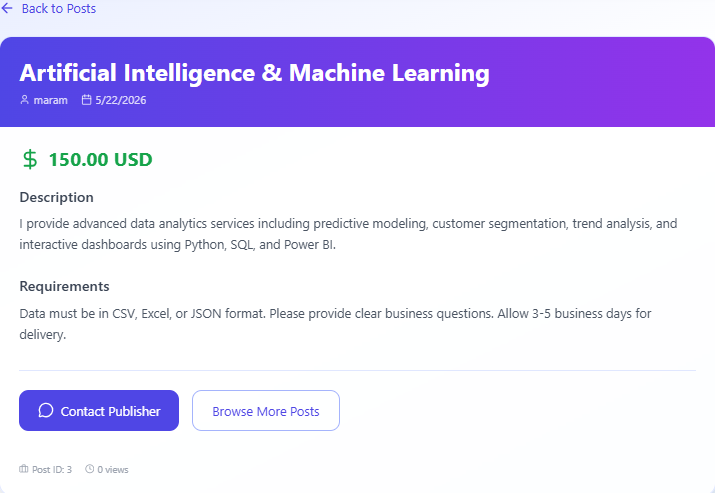
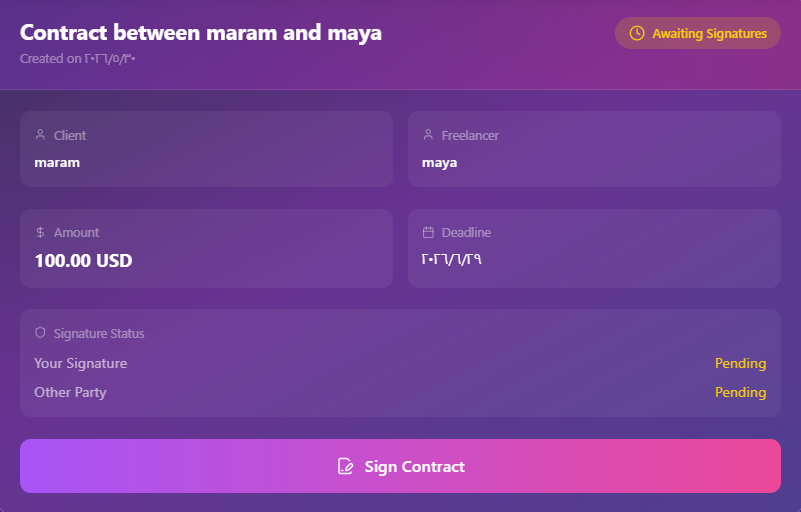
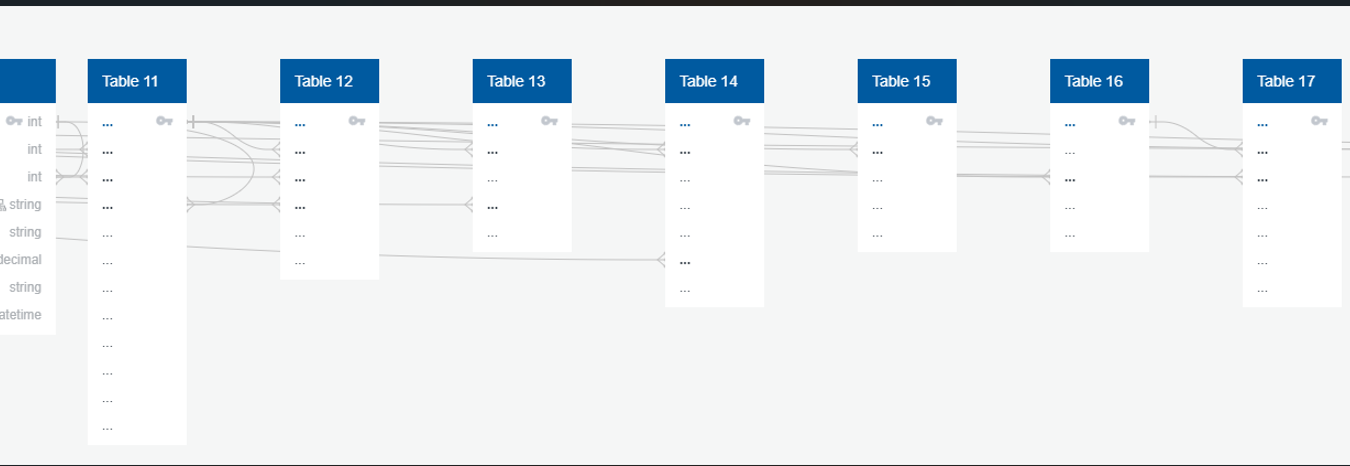
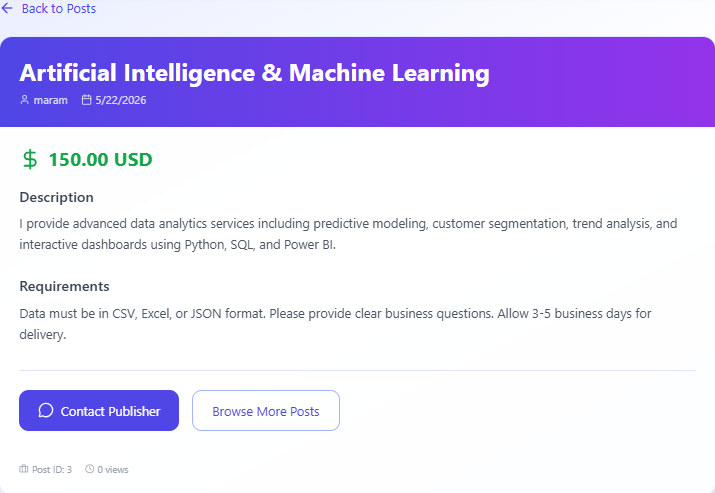
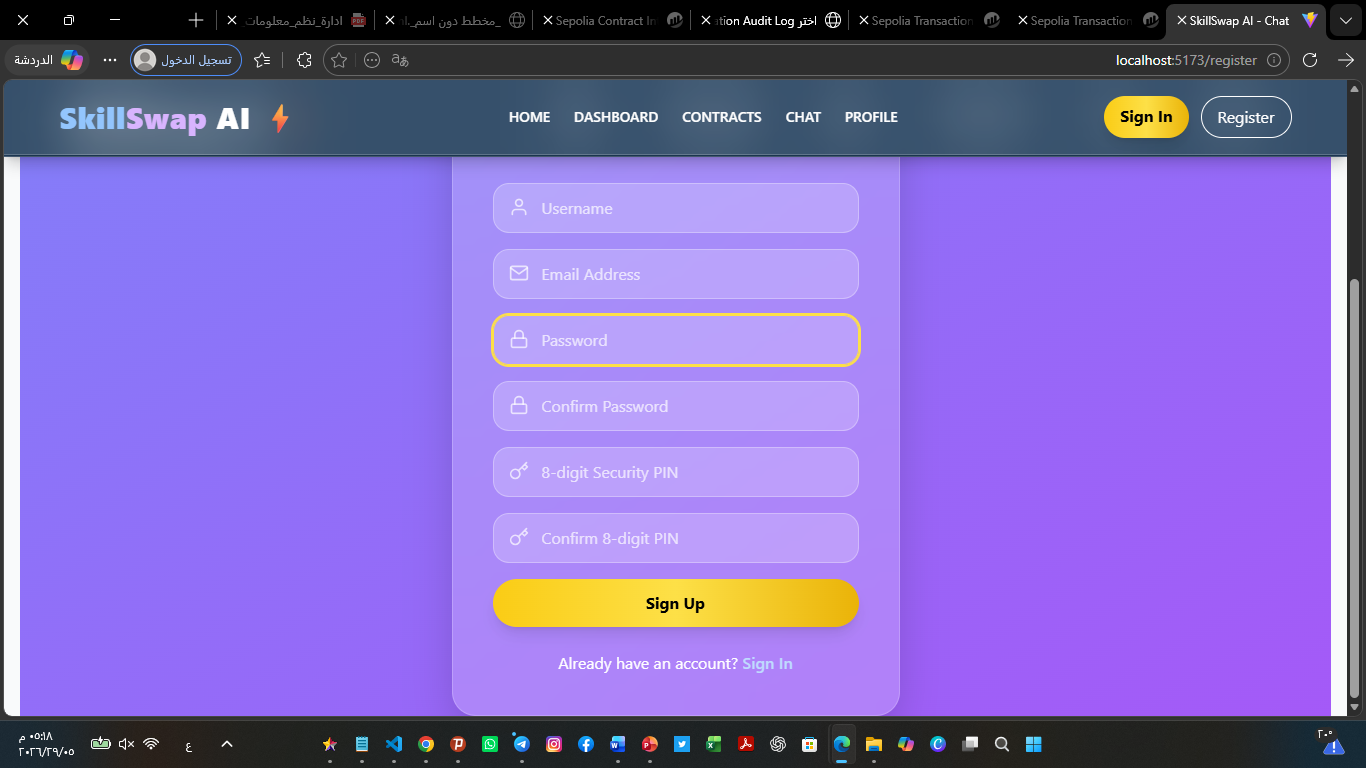
REST APIs for user management, contracts, skills
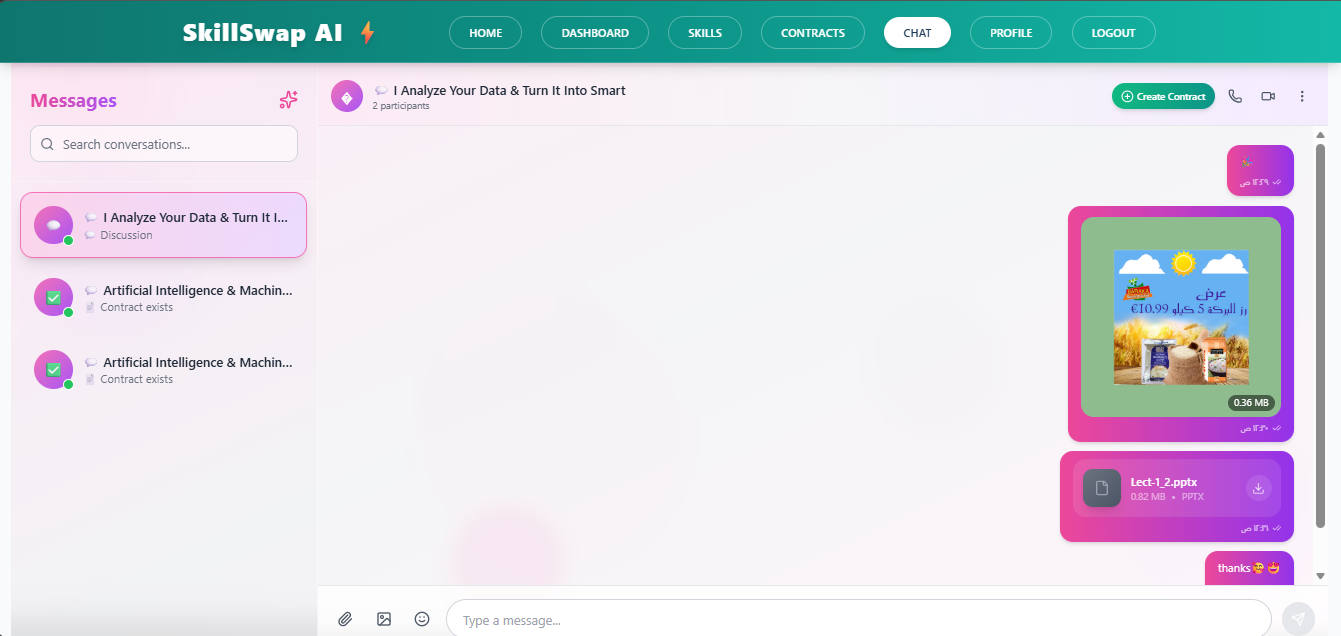
WebSocket consumers for real-time encrypted chat
Celery for async tasks (email notifications, blockchain confirmations)
Frontend (React.js + Tailwind CSS)
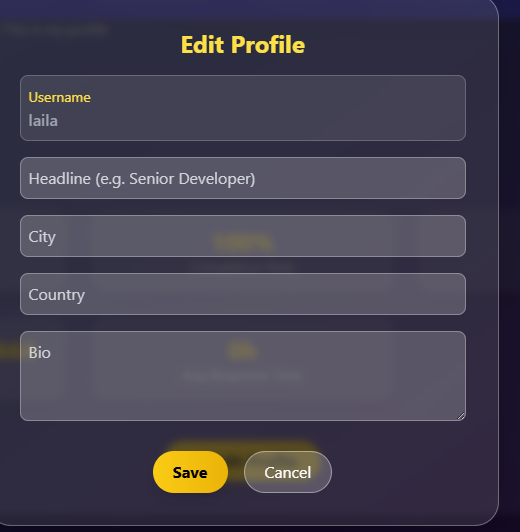
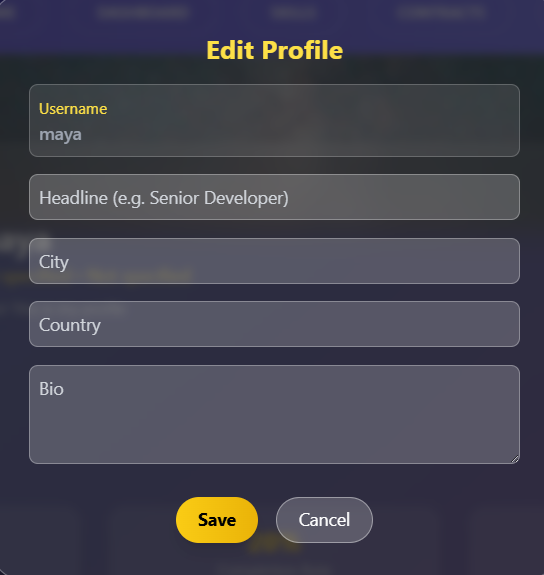
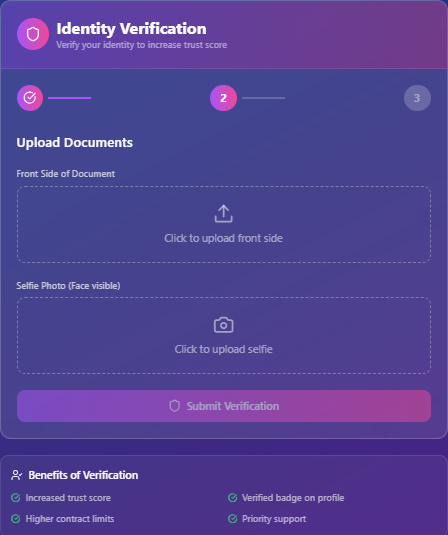
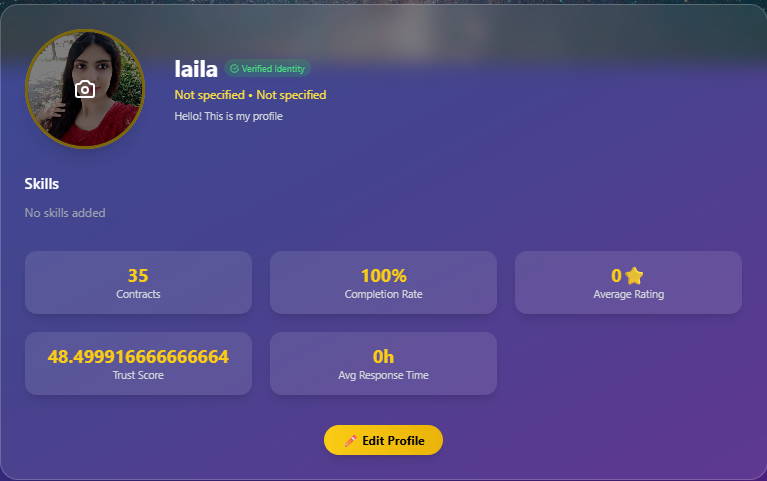
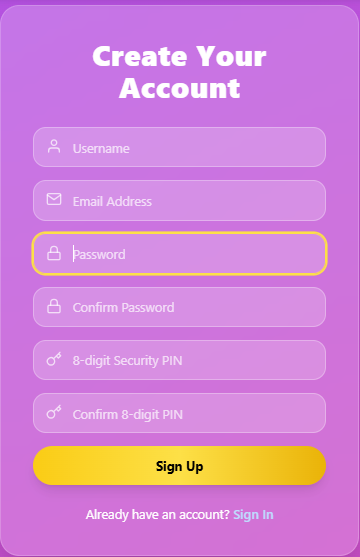
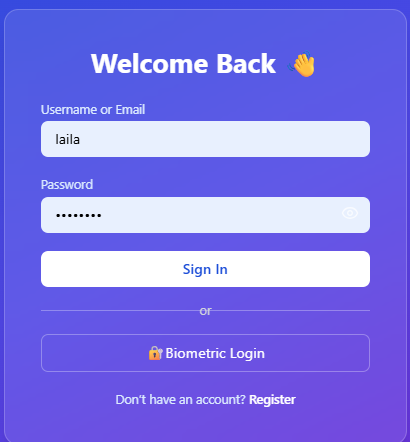
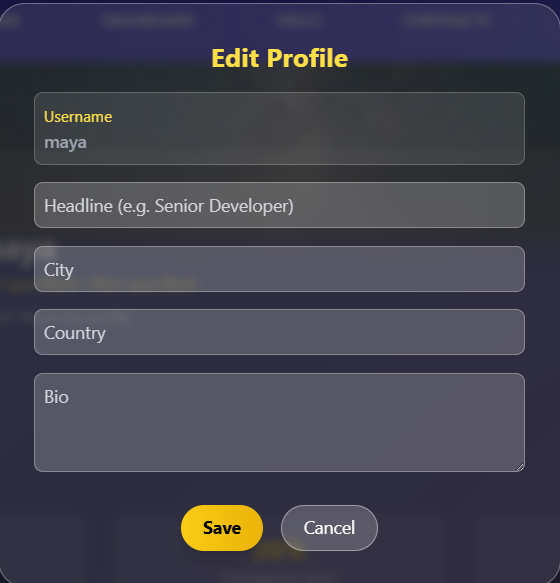
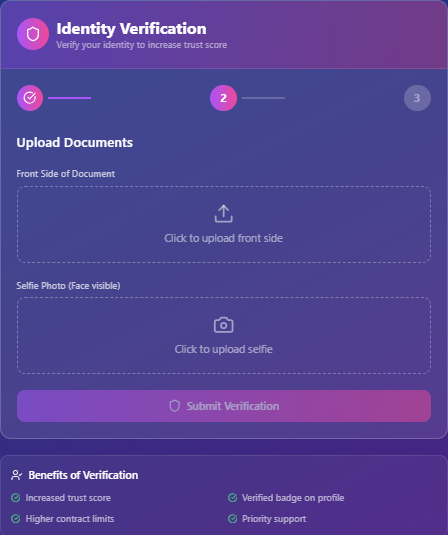
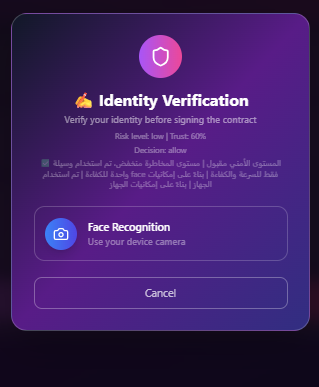
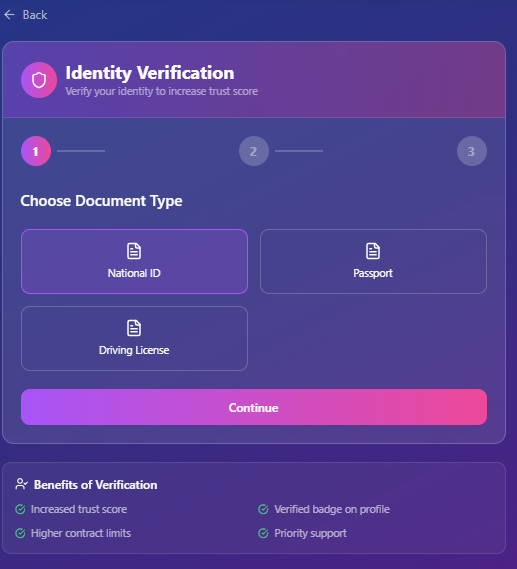
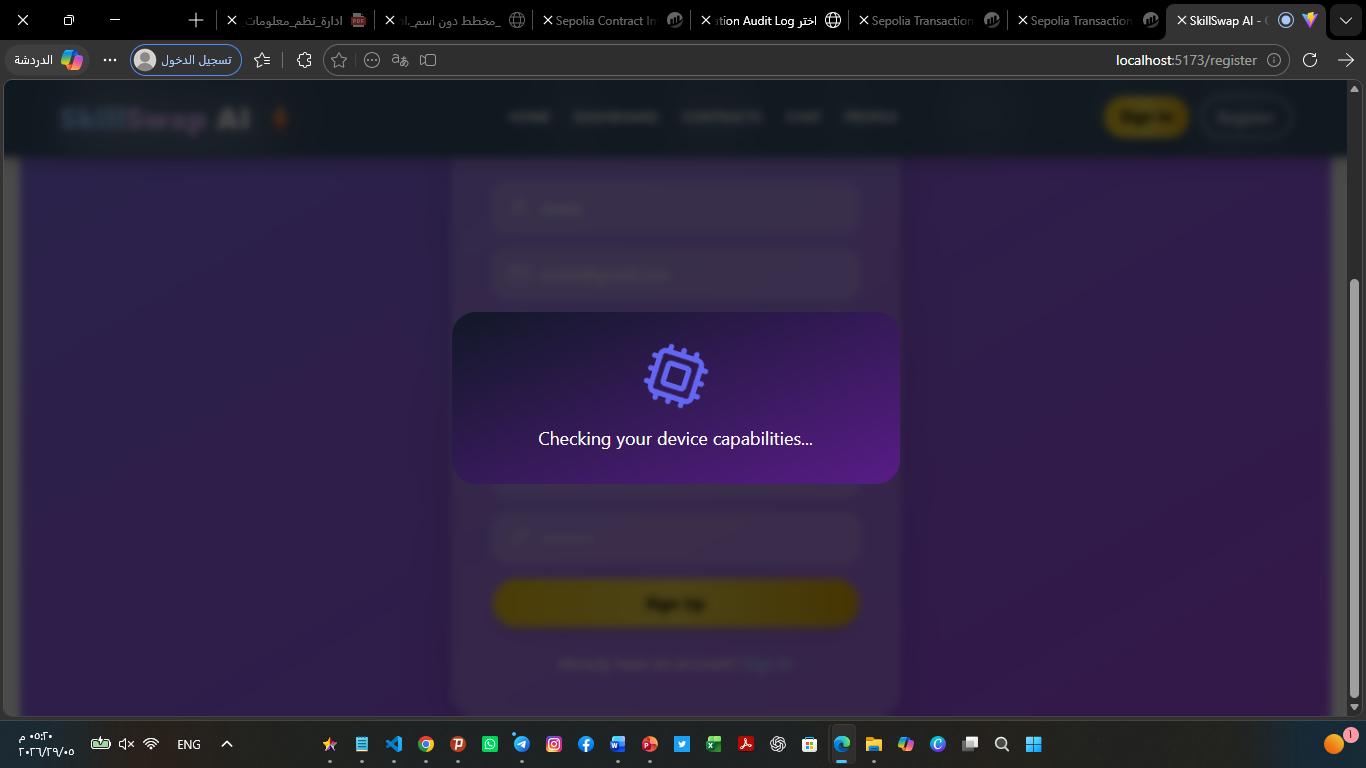
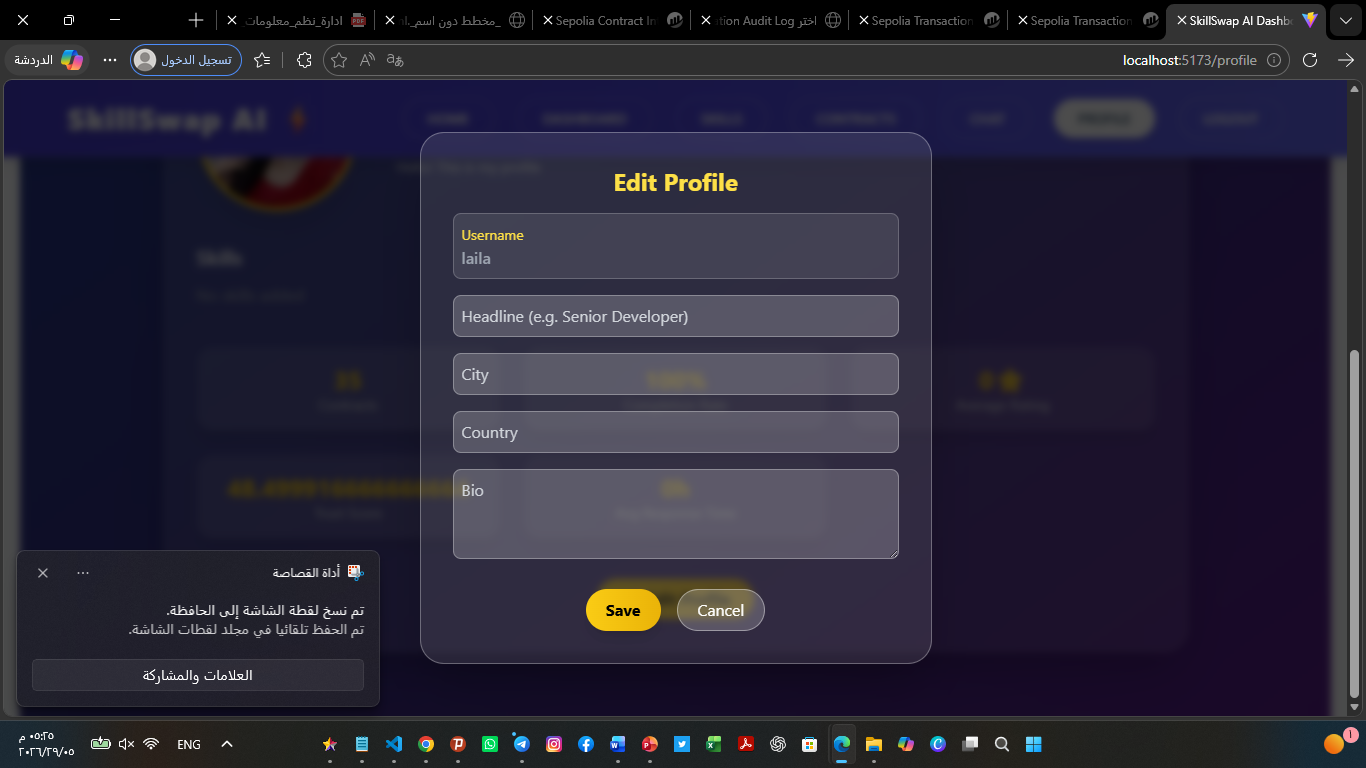
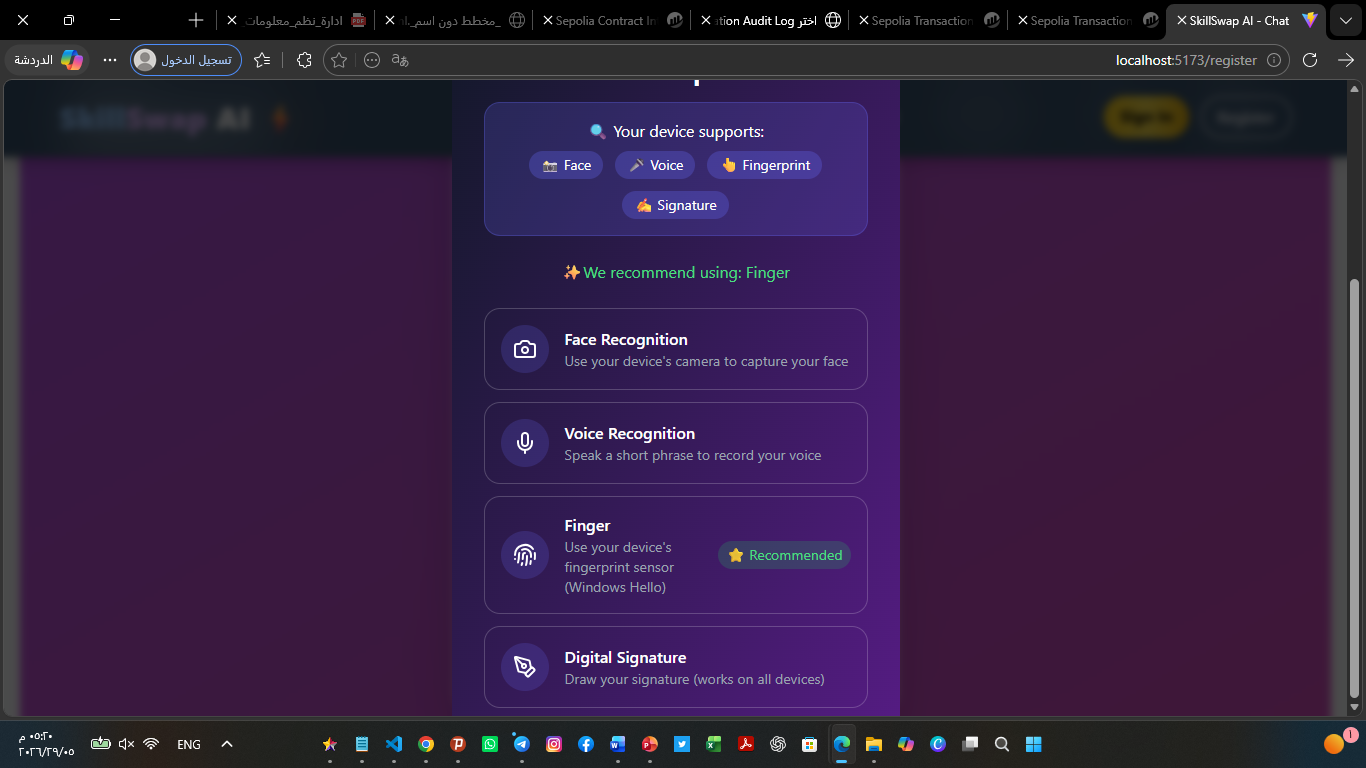
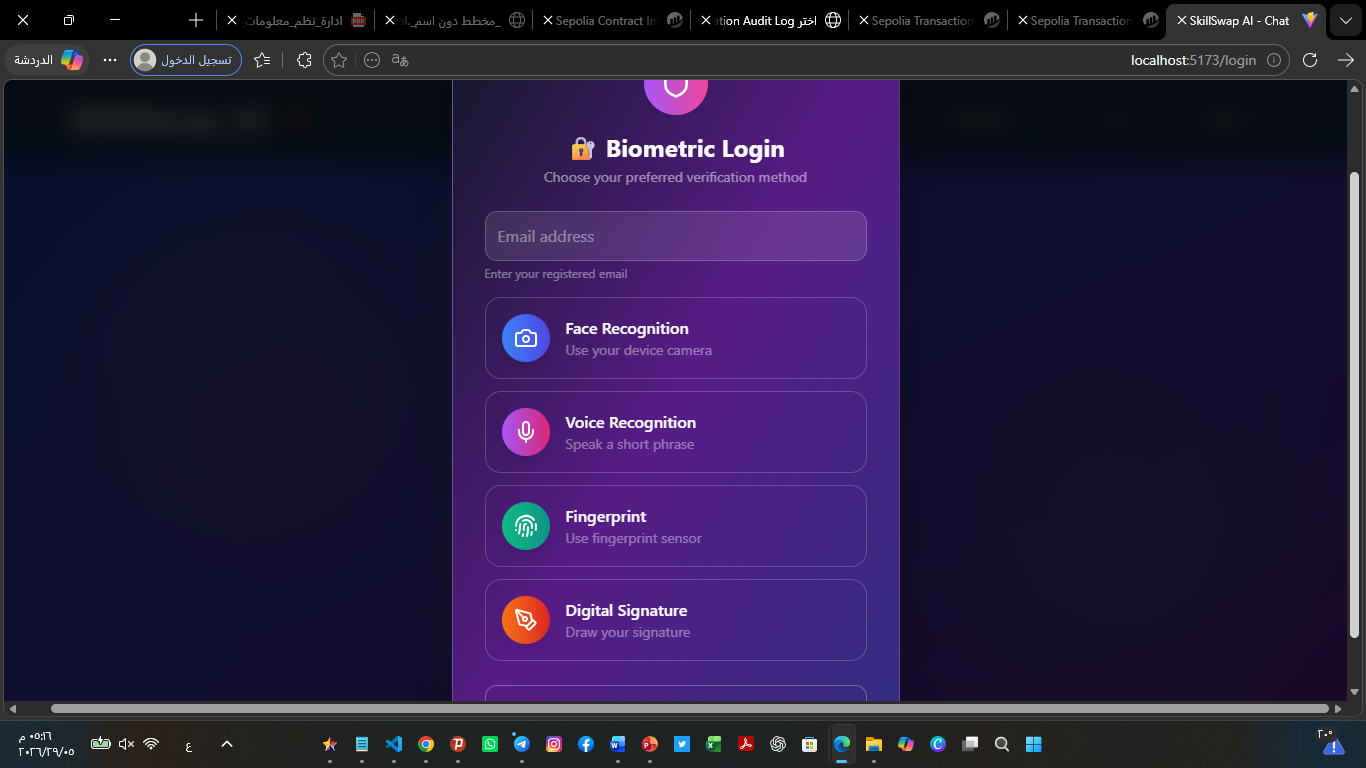
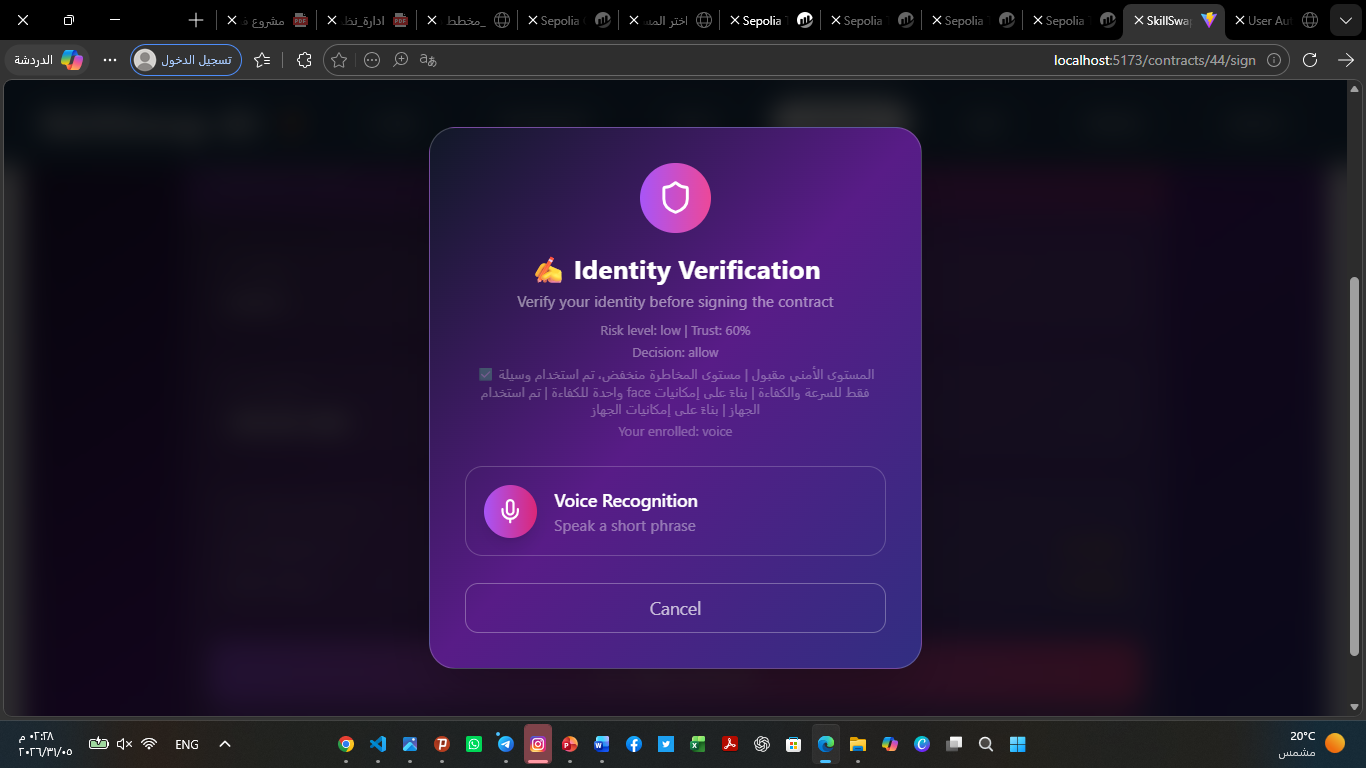
Biometric enrollment modal (face, voice, fingerprint, signature)
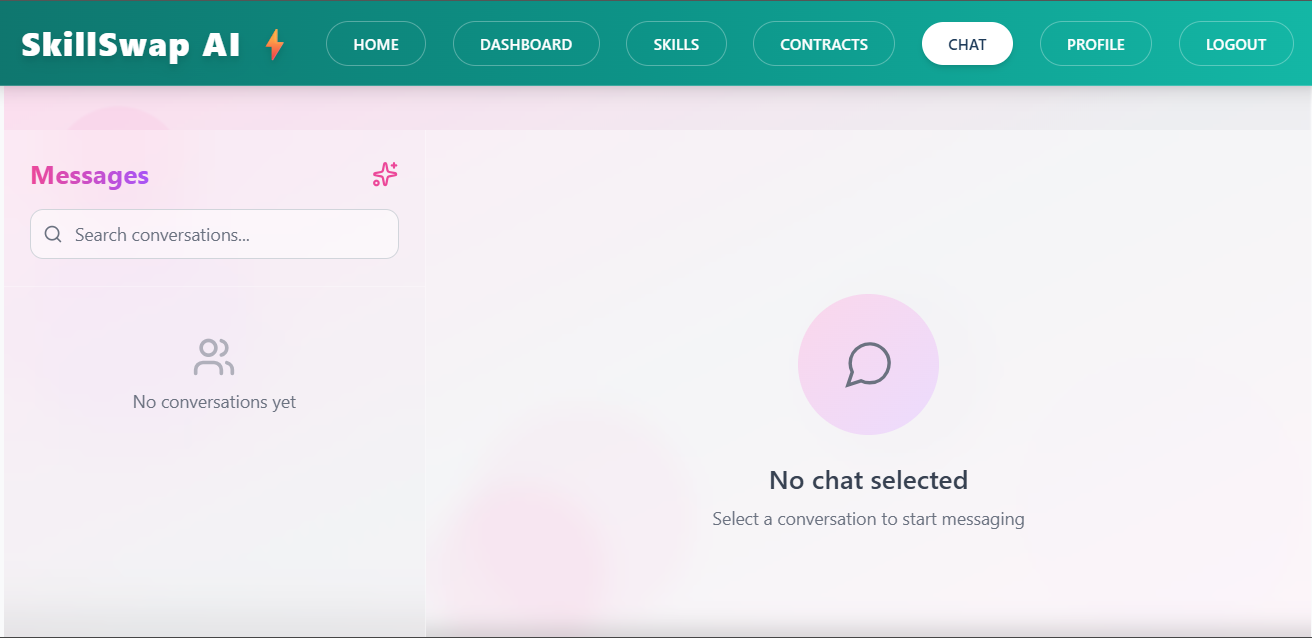
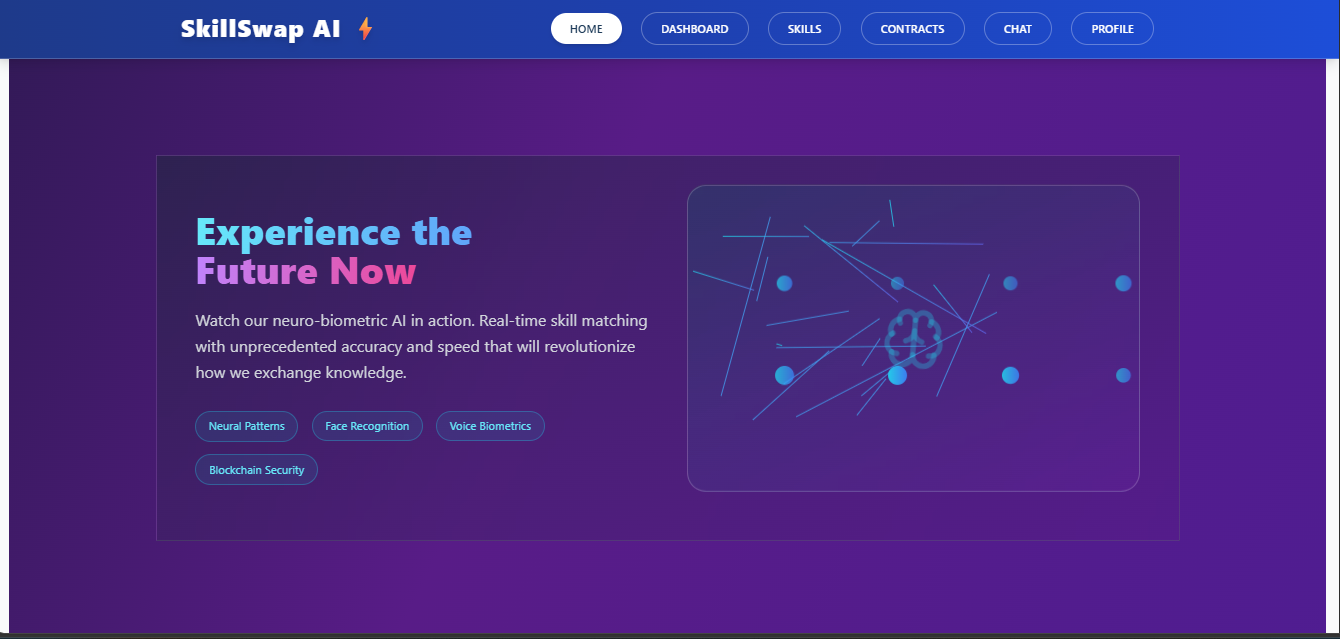
Real-time chat interface with typing indicators and read receipts
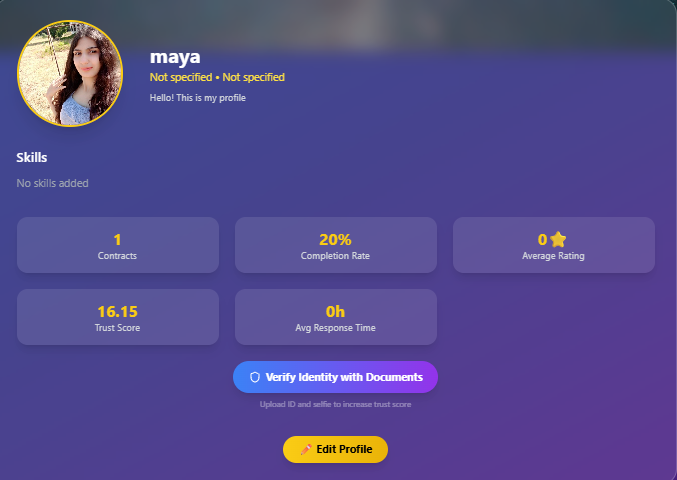
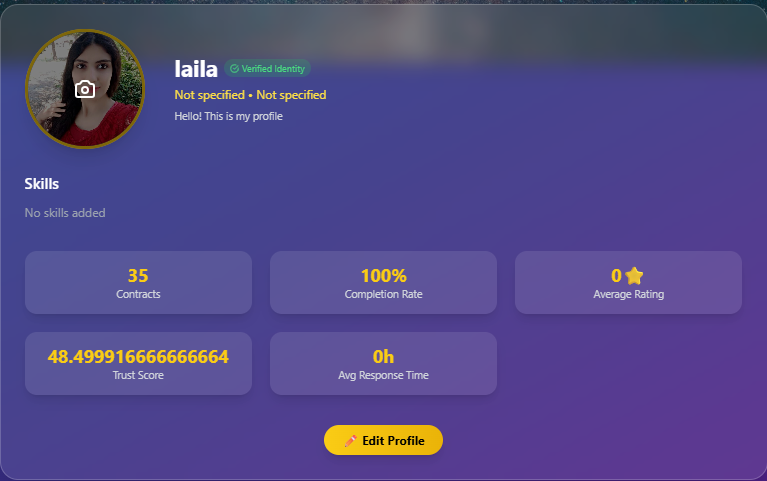
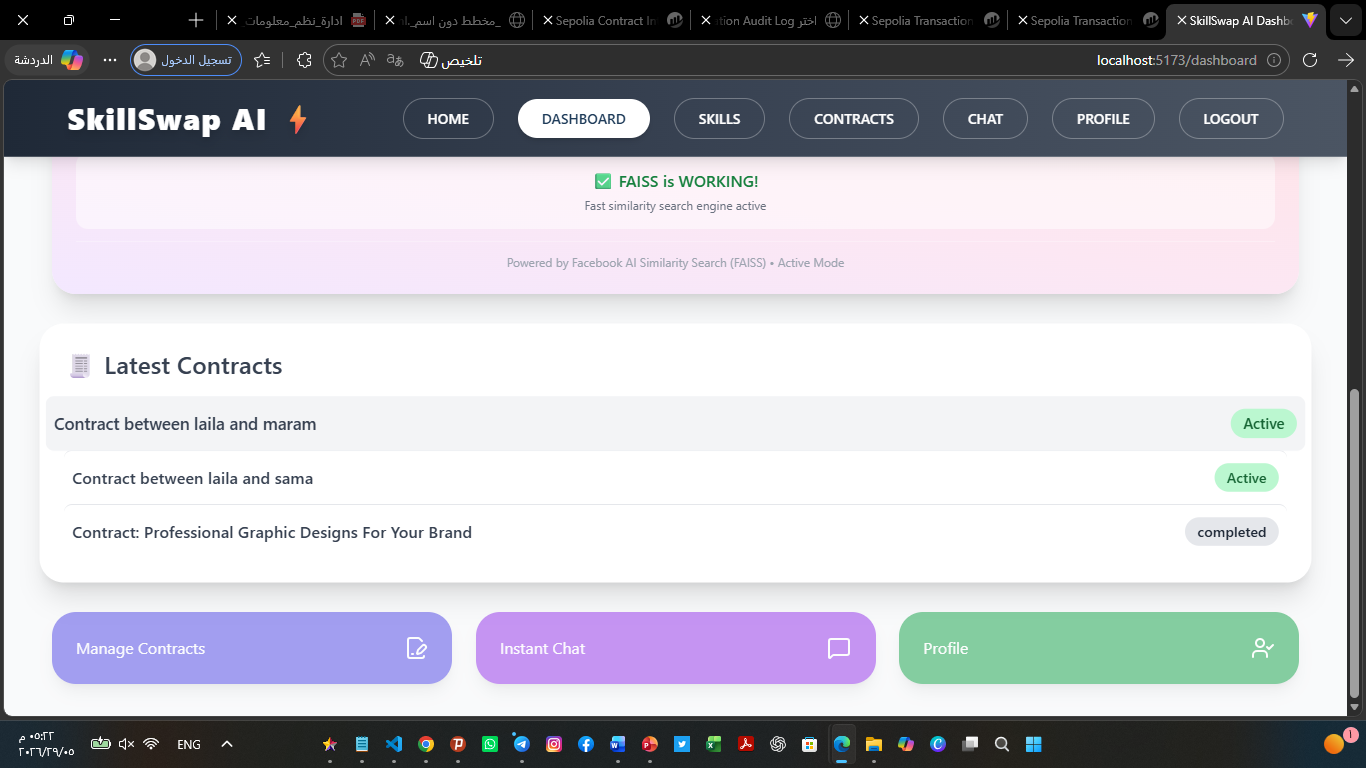
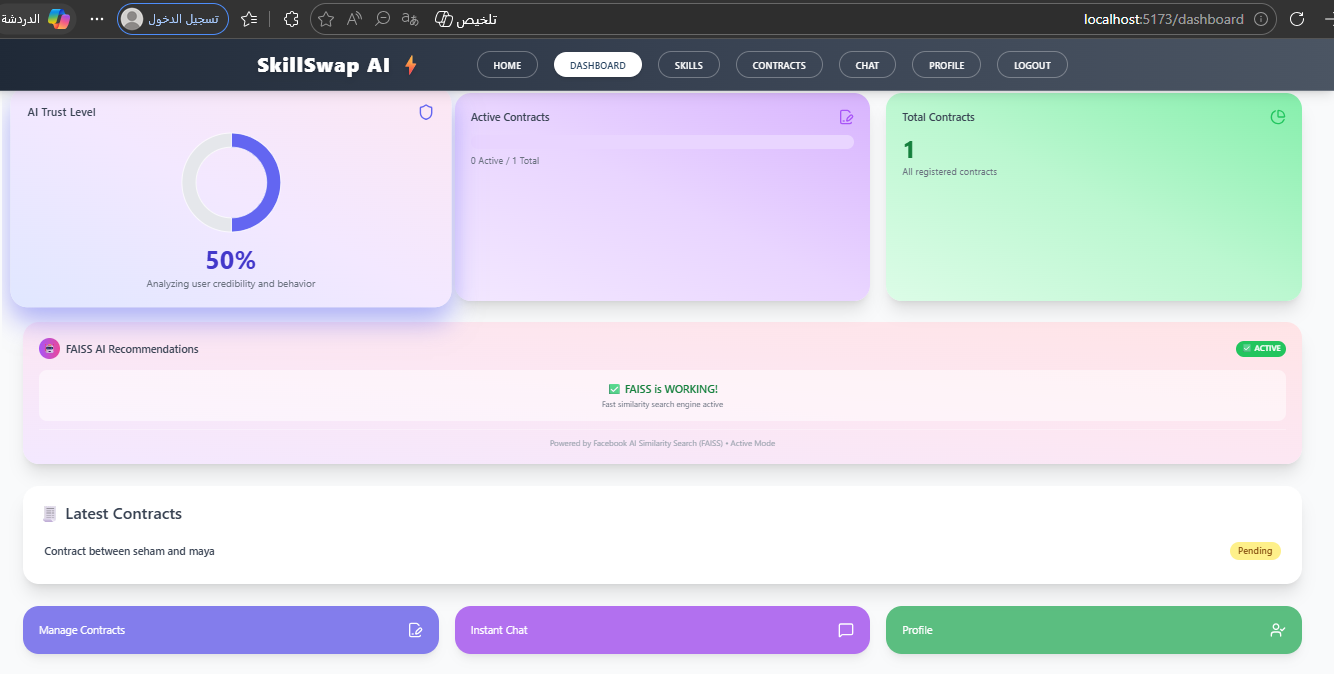
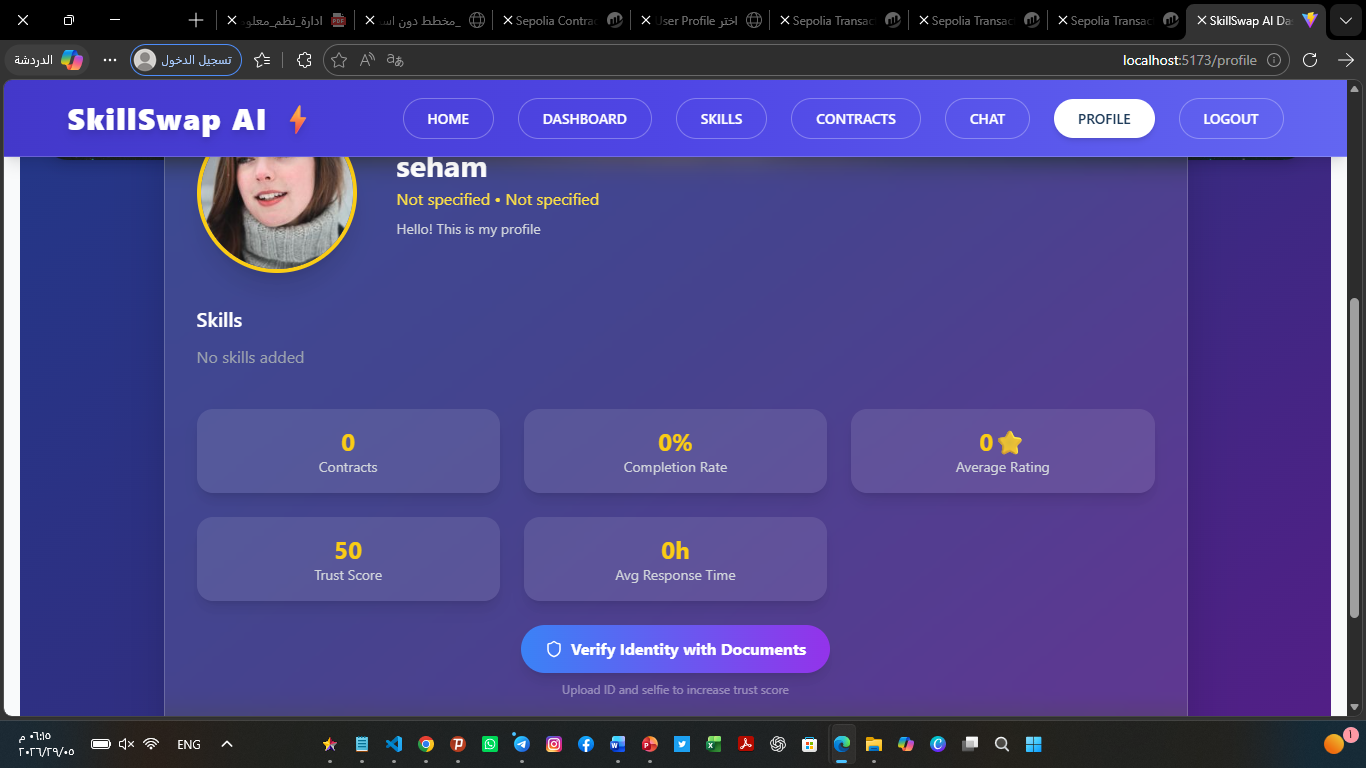
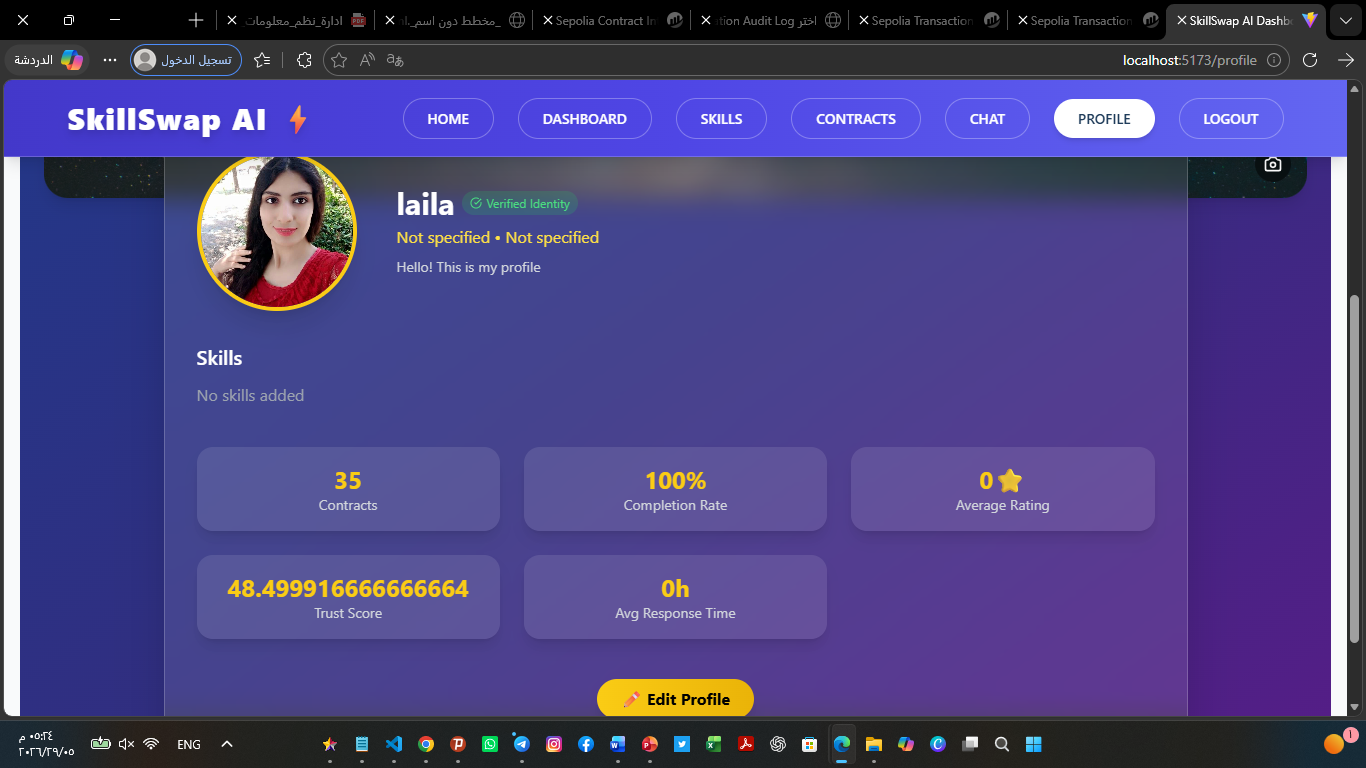
Dashboard with trust score analytics
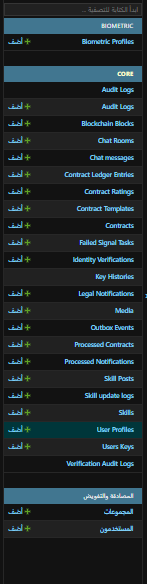
Biometric Engine
Face: MTCNN detection + DeepFace embedding extraction + cosine similarity
Voice: SpeechBrain ECAPA-TDNN + anti-spoofing
Fingerprint: ORB feature matching + PBKDF2 hashing
Signature: DTW (Dynamic Time Warping) + canvas capture
Blockchain Layer
Sepolia testnet for zero-cost deployment
IPFS for decentralized document storage
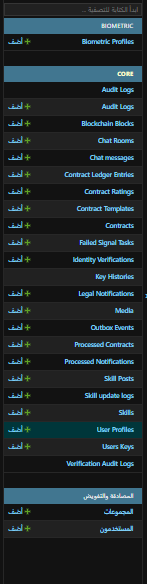
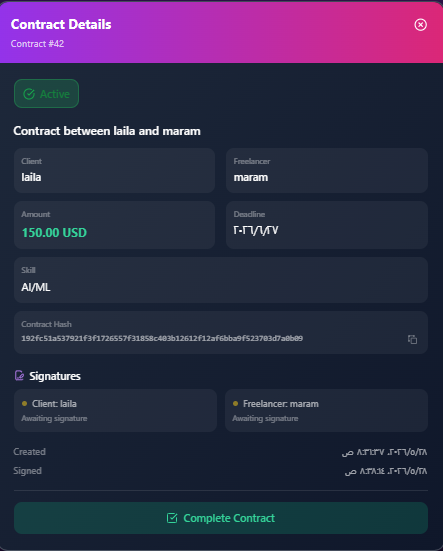
Smart contract registration with event-driven ledger
AI Recommendations
FAISS vector search (384-dimensional embeddings)
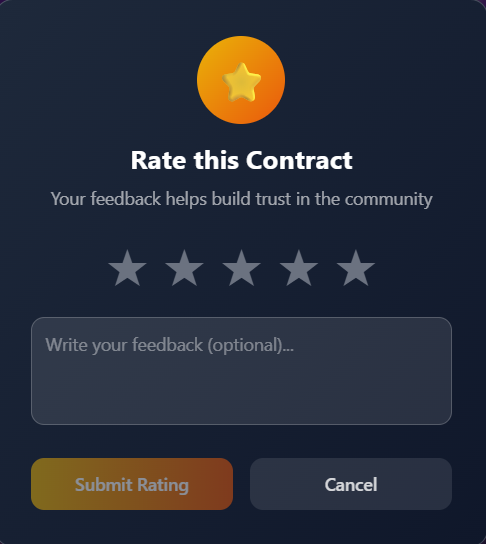
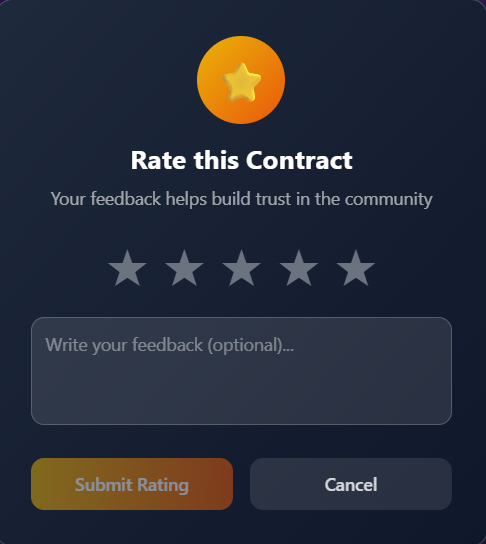
Hybrid scoring (skills, trust, ratings, completion rate)
Explainable AI (shows why each user is recommended)
Security
JWT authentication with refresh tokens
Rate limiting (Redis sliding window)
Distributed locks for race condition prevention
Audit logs for every transaction
What challenges did you face?
WebSocket + JWT Integration Connecting WebSockets with JWT authentication wasn't straightforward. Django Channels expects session-based auth by default. I solved this by passing the token in the WebSocket connection URL and manually authenticating in the consumer's connect() method.
Biometric Threshold Tuning Finding the right similarity thresholds for face, voice, and fingerprint was trial and error. Too high → users get rejected. Too low → security risk. I ended up with adaptive thresholds based on user behavior history.
FAISS Index Building FAISS expects vectors of the same dimension. My face embeddings (512-dim) and voice embeddings (192-dim) had different sizes. I solved this by padding and normalizing all vectors to 384 dimensions.
IPFS + Blockchain Latency Waiting for blockchain confirmations (15-30 seconds) made the user experience slow. I implemented an event-driven ledger that caches contract status locally while the blockchain confirms in the background.
Mobile Camera Access WebRTC APIs work differently across browsers. Getting the camera to work reliably on both desktop Chrome and mobile Safari required several fallback mechanisms.
What's next for SkillSwap AI? Mobile app with Flutter (iOS/Android)
Apple FaceID and TouchID integration
Cross-chain support (Polygon, Binance Smart Chain)
DAO governance for dispute resolution
Scaling to 10,000+ concurrent users with Kubernetes

Log in or sign up for Devpost to join the conversation.