-
-
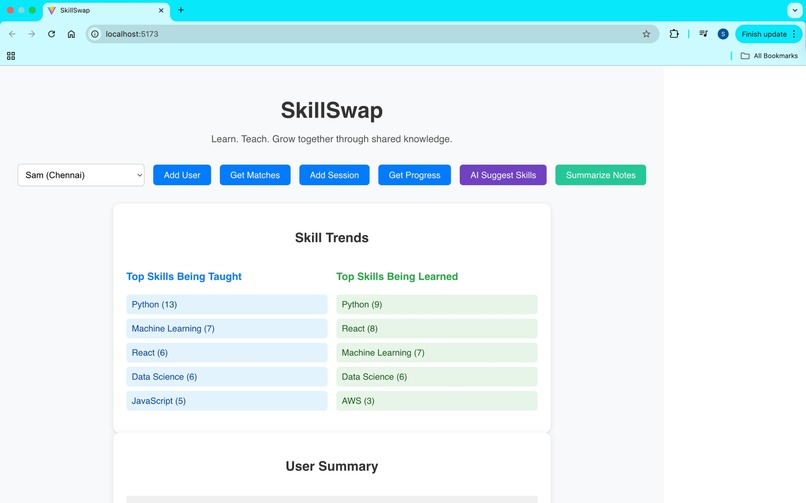
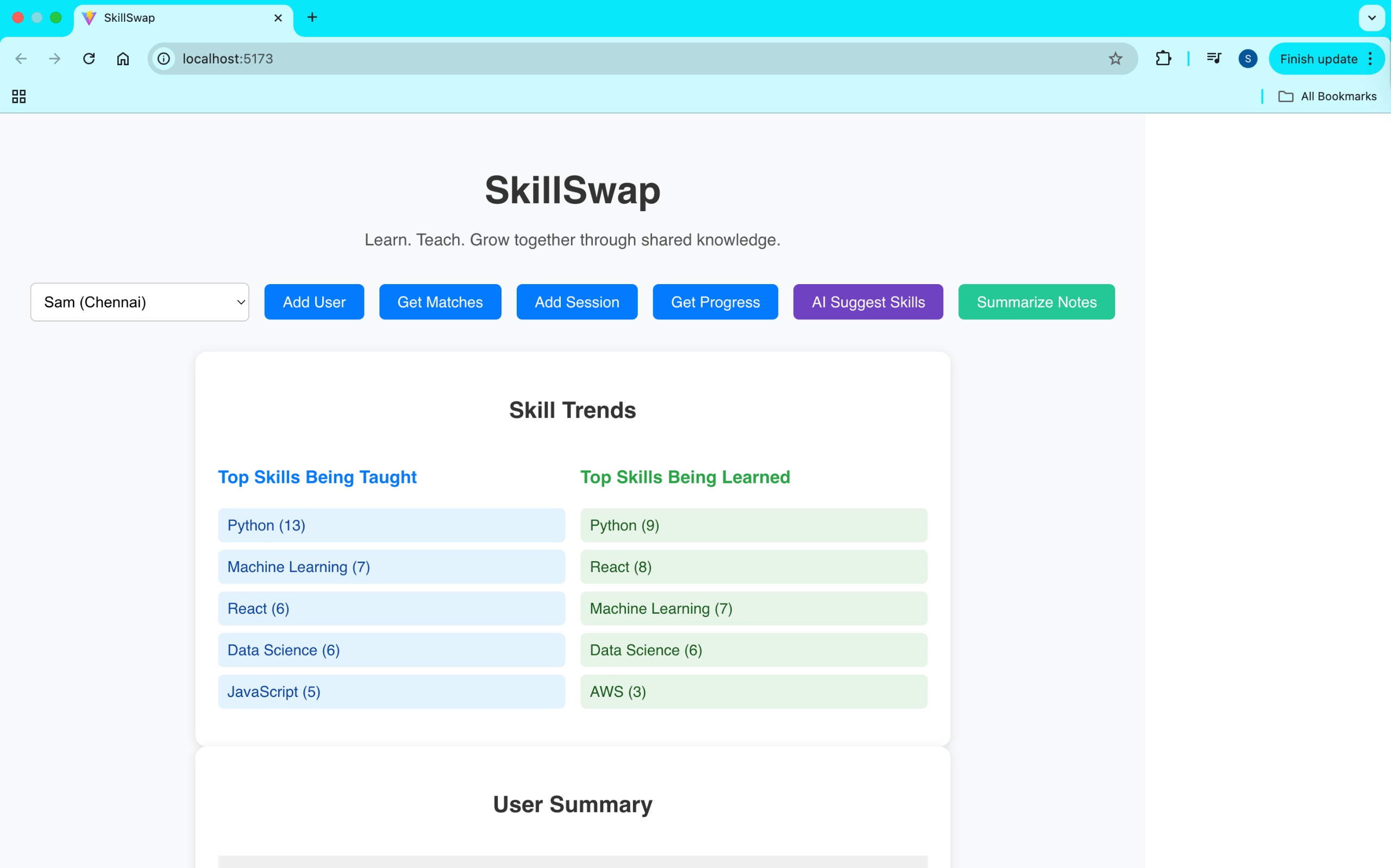
Homepage of SkillSwap
-
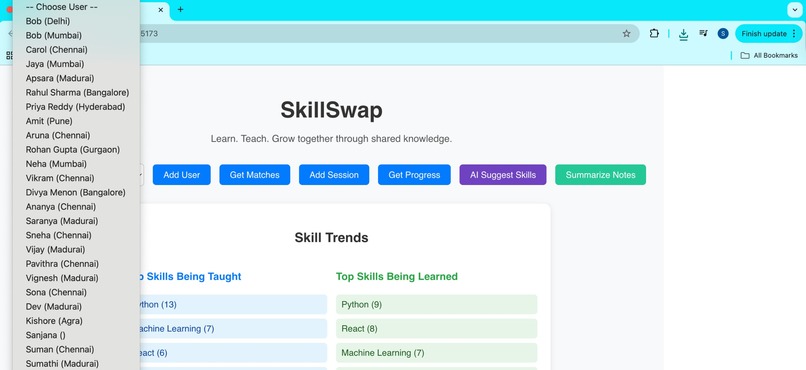
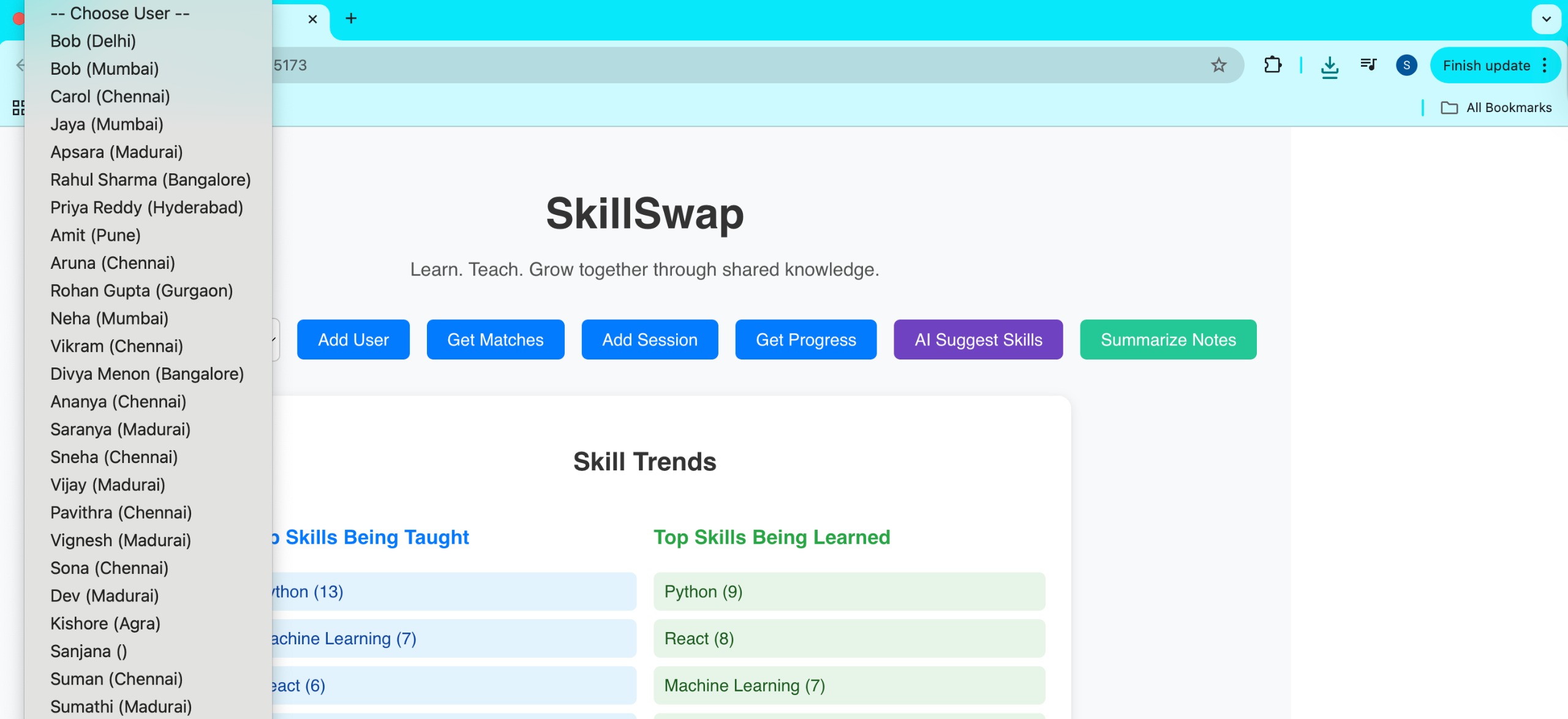
Choose User DropDown Menu
-
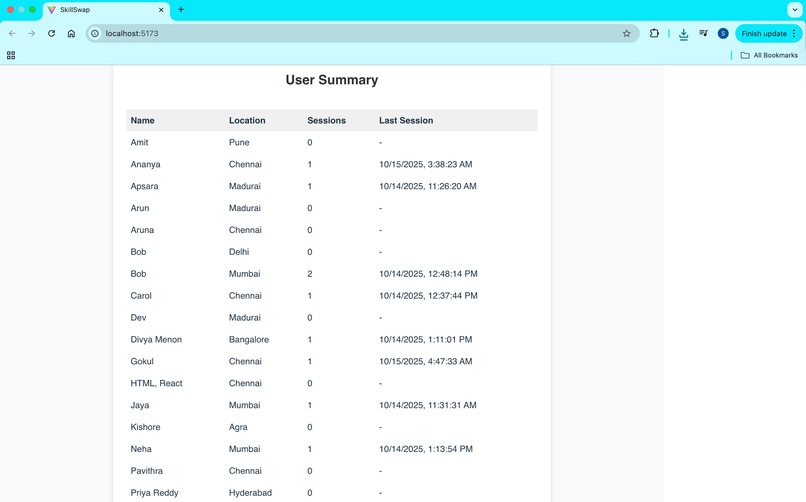
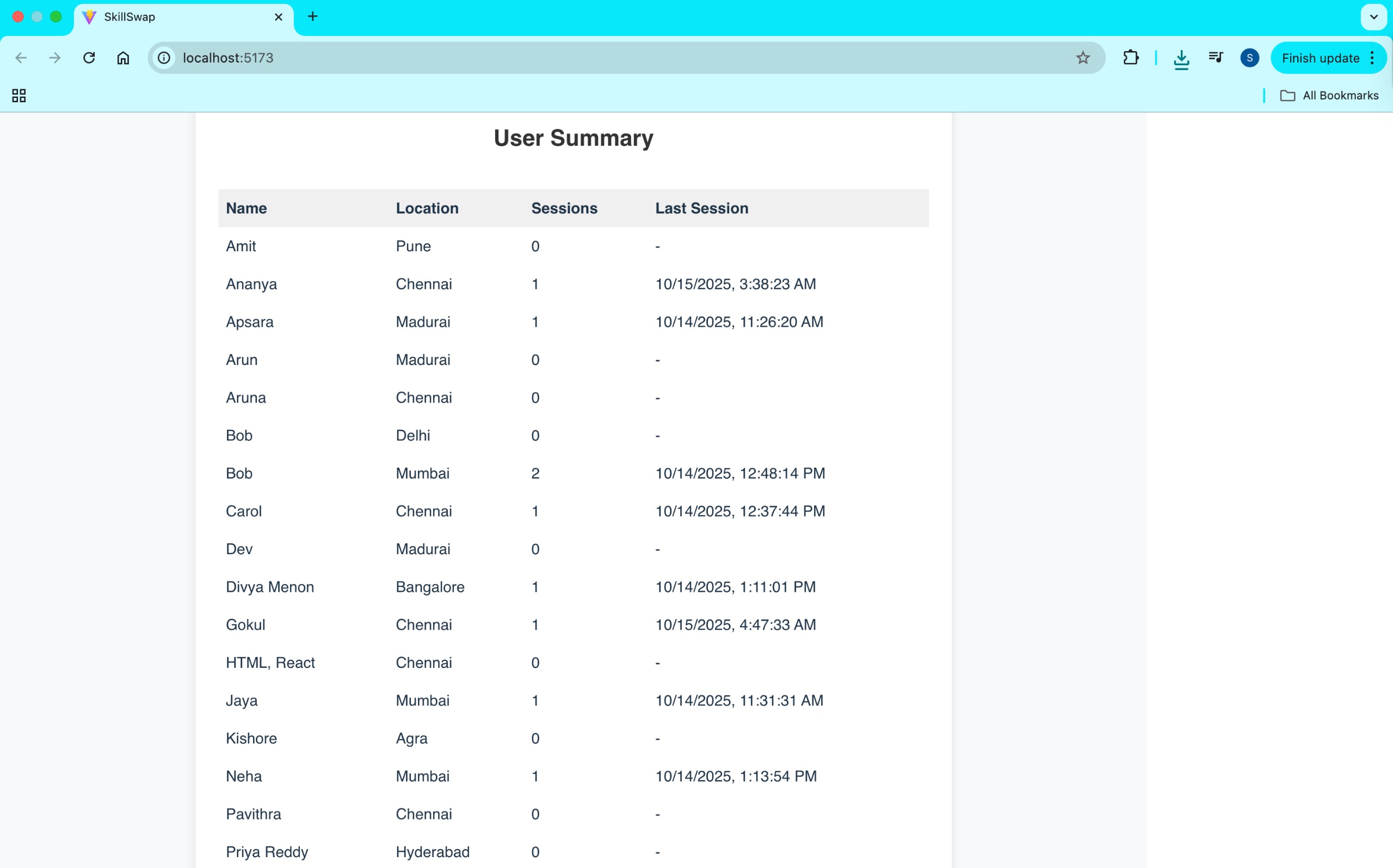
Registered Users' Summary Table
-
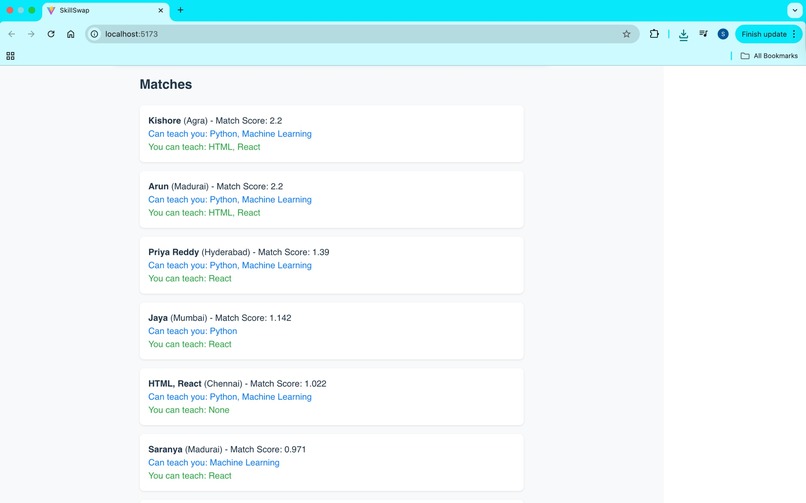
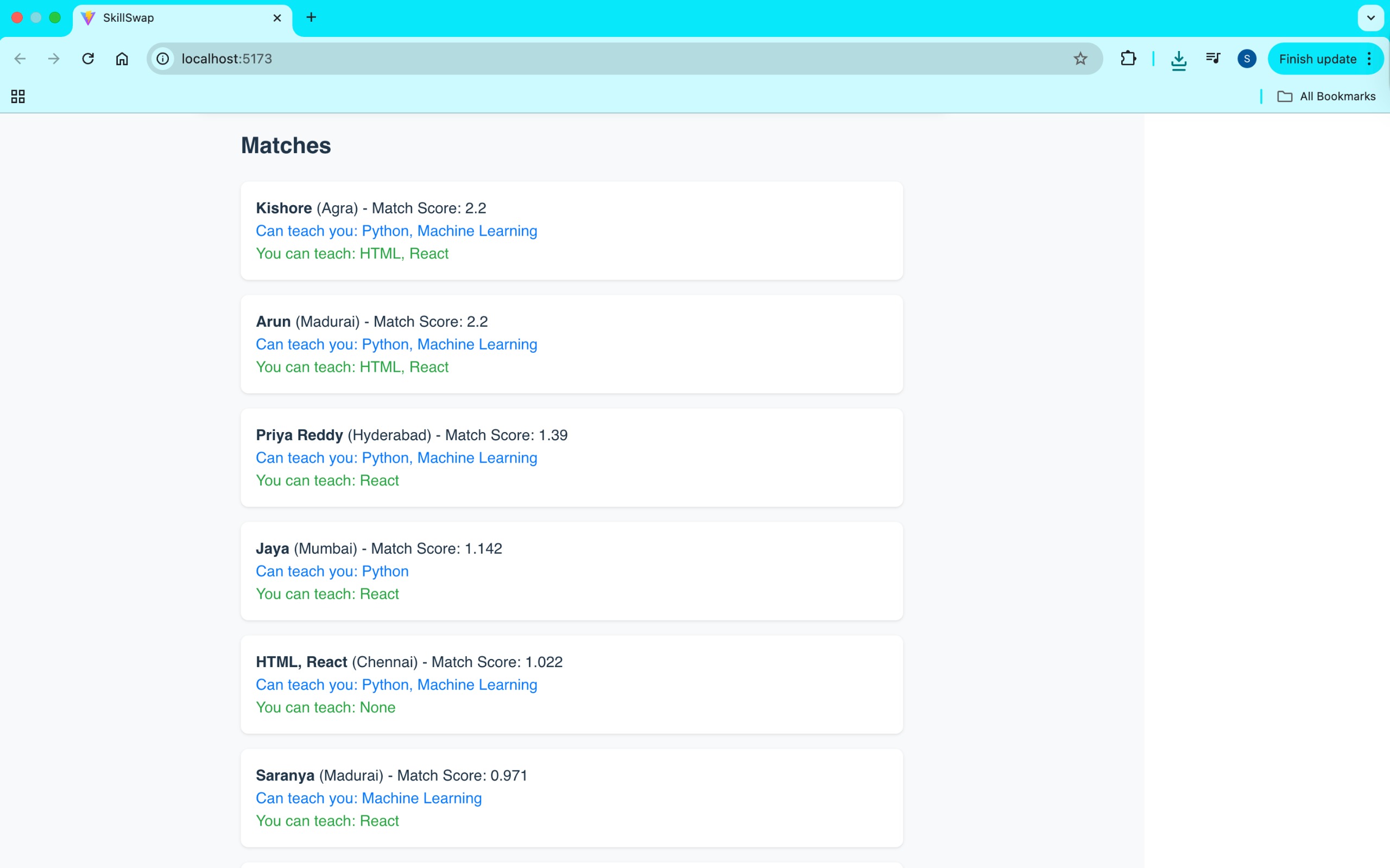
Matching Learners with Teachers
-
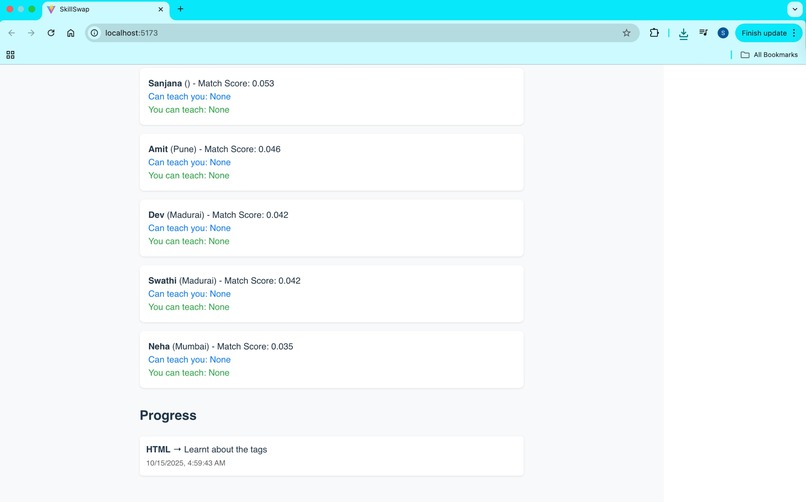
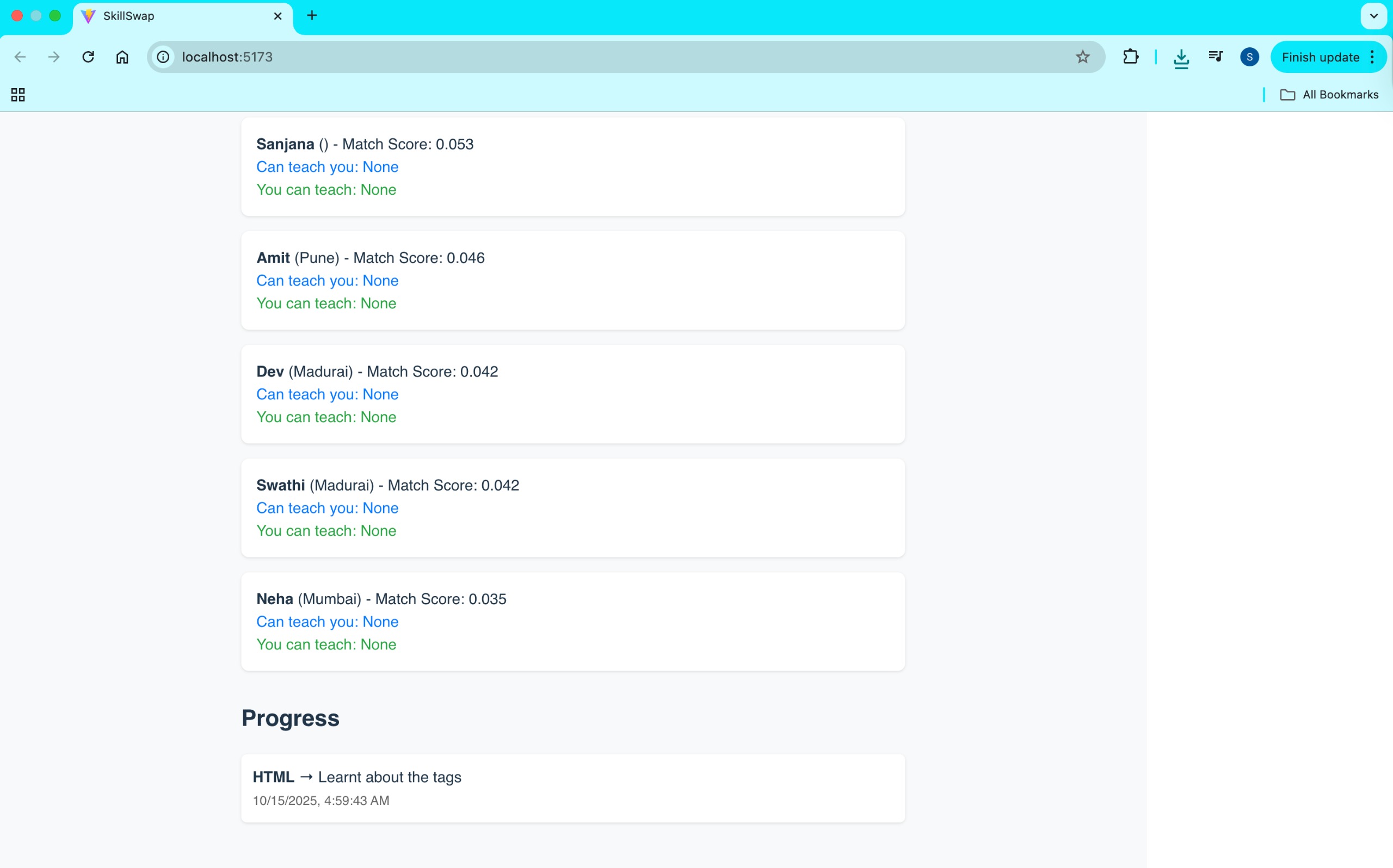
Getting the Individual Progress of a Learner
-
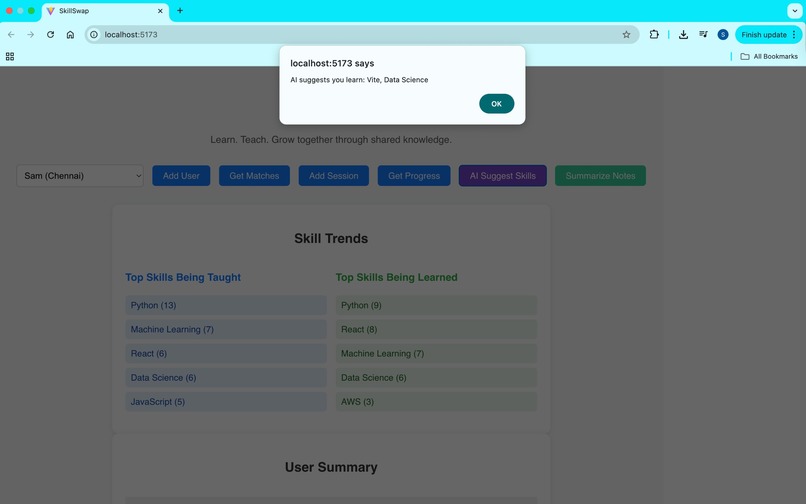
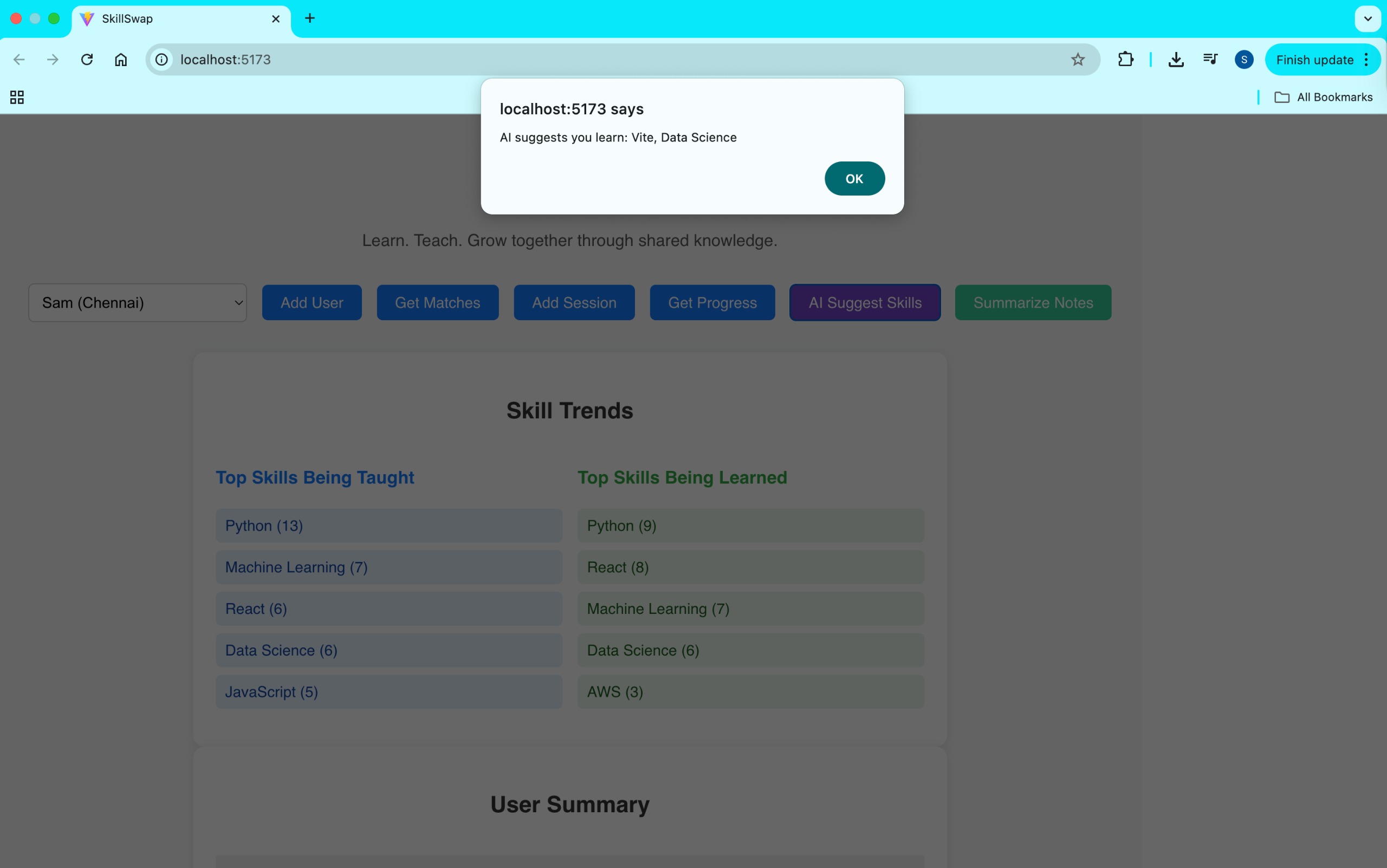
AI suggesting skills to learn for a user
-
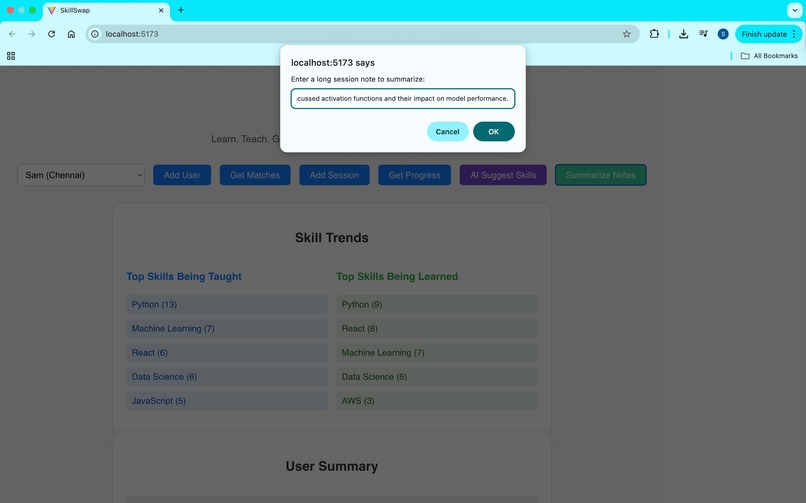
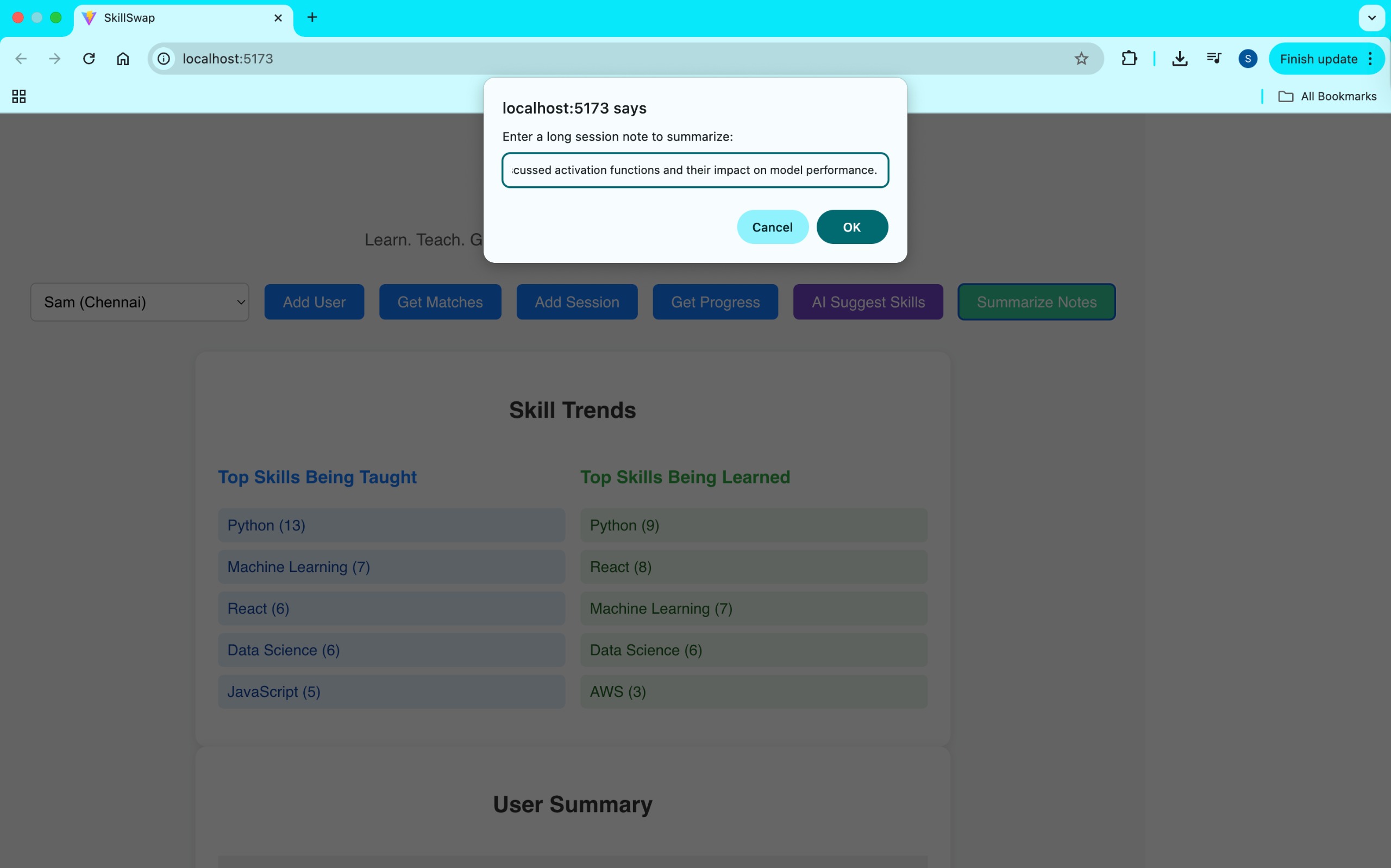
Text Input for Session Notes Summariser
-
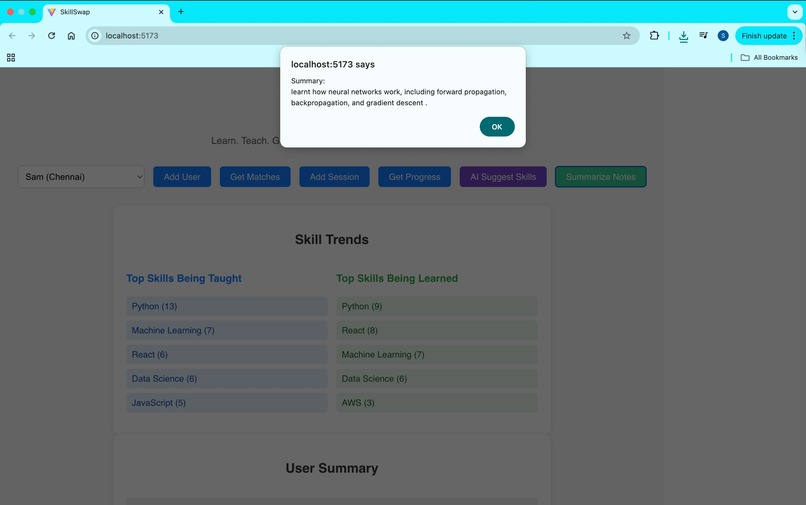
Session Notes Summariser Result
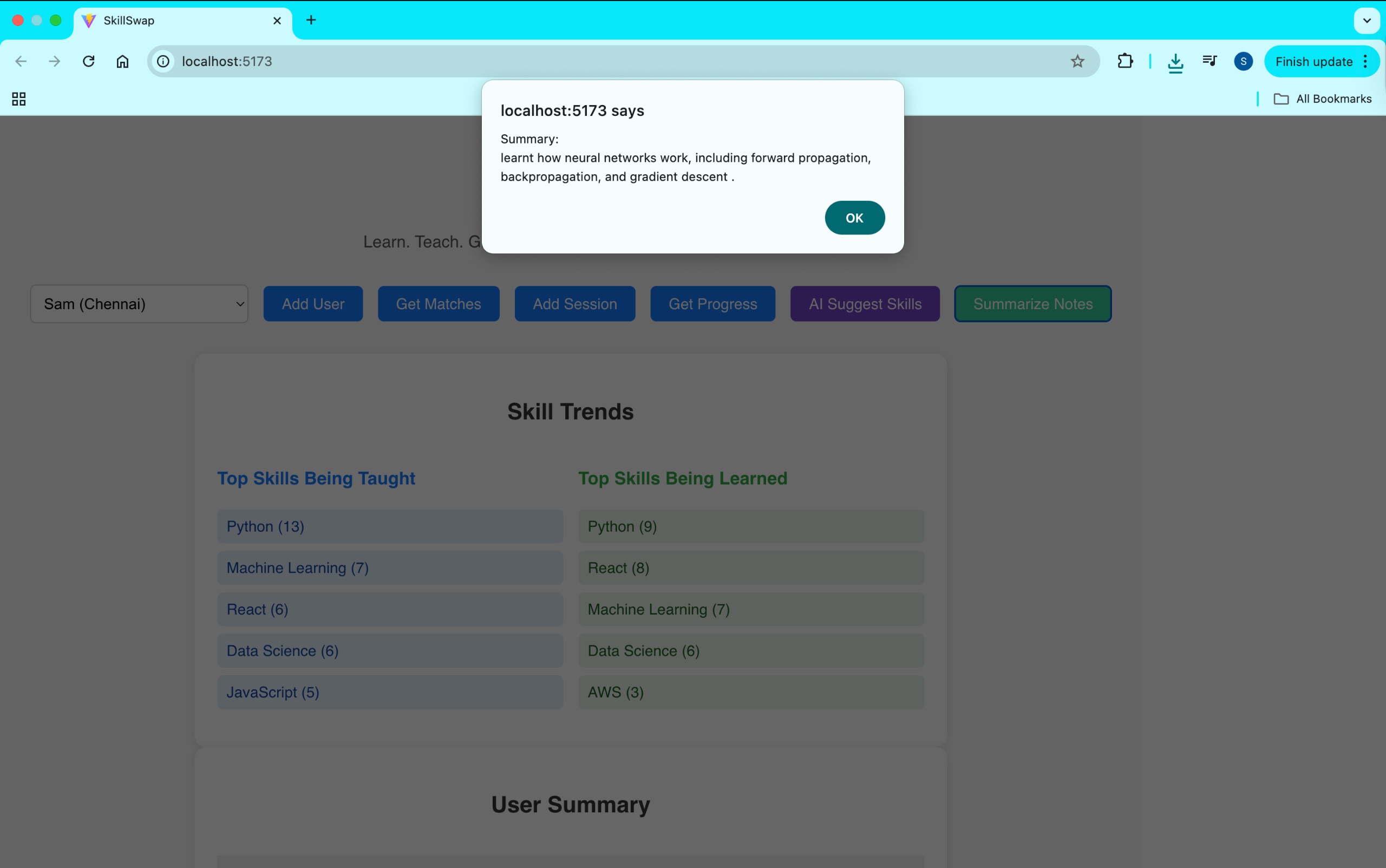
SkillSwap: Democratizing Knowledge Exchange
Empowering communities to learn and teach together — AI matches skills, breaks barriers, and transforms education from a privilege into a shared, accessible right.
Inspiration
The inspiration for SkillSwap came from observing a fundamental problem in education:
Millions of students and professionals want to learn new skills but cannot afford expensive courses or tutors, while countless talented individuals possess valuable expertise with no structured way to share it.
This creates an educational divide that perpetuates inequality.
We asked ourselves:
What if we could democratize knowledge exchange by connecting people who want to learn with those who can teach, using artificial intelligence to make these connections intelligent and meaningful?
SkillSwap was born from this vision — to break down barriers and make quality peer learning accessible to everyone, regardless of their economic background.
What It Does
SkillSwap is an AI-powered peer learning platform that intelligently connects learners and teachers based on complementary skill sets.
The platform enables users to:
- Create profiles listing skills they can teach and skills they want to learn
- Discover AI-matched learning partners through a hybrid algorithm combining semantic similarity (TF-IDF + cosine similarity) with logical skill overlap
- Track collaborative learning sessions with detailed notes
- Receive automatic AI-generated summaries of session notes using the T5-small transformer model
- Visualize individual progress through interactive dashboards showing top skills taught and learned over time
- View community-wide activity through a user summary dashboard
By leveraging artificial intelligence for both skill matching and progress summarization, SkillSwap makes peer learning more efficient, personalized, and accessible to all.
How We Built It
Frontend
- Built using React.js with Vite for fast development and optimized builds.
- Framer Motion handles smooth animations and transitions.
- The design follows a clean, minimalist approach with plain CSS for accessibility and responsiveness.
Backend
- Powered by Flask (Python) with SQLite as the database for lightweight and efficient data management.
- RESTful API endpoints handle user creation, session logging, match generation, and progress tracking.
AI/NLP Components
1. Skill Matching Algorithm:
- Implemented TF-IDF vectorization using Scikit-learn to convert skill descriptions into numerical representations.
- Applied cosine similarity to measure semantic relationships between skills.
- Developed a logical overlap scoring system to validate bidirectional learning compatibility.
- Combined both approaches using weighted scoring to produce ranked match recommendations.
2. Session Summarization:
- Integrated the T5-small transformer model from Hugging Face.
- Used PyTorch for efficient model inference.
- Implemented preprocessing pipelines to clean and prepare session notes for summarization.
- Optimized token length and generation parameters for concise, meaningful summaries.
Development Workflow
We followed an iterative development process, building core features first (user management, matching), then integrating AI components, and finally adding visualization and progress tracking features.
Challenges We Ran Into
1. Balancing Semantic and Logical Matching
Our initial matching algorithm relied solely on semantic similarity, which sometimes produced irrelevant matches.
We solved this by implementing a hybrid approach that combines semantic understanding with logical skill gap analysis.
2. Optimizing T5 Model Performance
Running transformer models for real-time summarization initially caused latency issues.
We optimized this by using the smaller T5-small variant, caching model weights, and tuning token lengths for efficiency.
3. Handling Diverse Skill Descriptions
Users described skills differently ("ML" vs "Machine Learning" vs "AI"), which caused mismatches.
We resolved this with text normalization, stemming, and expanding the TF-IDF vocabulary.
4. Creating Meaningful Progress Visualizations
Transforming session data into actionable insights required thoughtful aggregation and visualization design.
We iterated multiple times to ensure the dashboard provides motivating feedback to users.
Accomplishments We’re Proud Of
- Successfully implemented a hybrid AI matching algorithm that identifies complementary skill pairs.
- Integrated real-time transformer-based summarization for learning sessions.
- Built a socially impactful platform that reduces educational inequality.
- Completed an end-to-end full-stack implementation within the hackathon timeframe.
- Designed an intuitive user interface for accessible AI-driven learning.
What We Learned
Technical Learning
- How to effectively combine traditional NLP (TF-IDF) with modern deep learning (Transformers).
- Importance of model selection: balancing accuracy and performance.
- Best practices for optimizing transformer inference in real-world environments.
- Structuring scalable full-stack systems with integrated AI pipelines.
Design Learning
- Balancing multiple matching metrics for meaningful results.
- Designing visual feedback loops that engage and motivate learners.
- Importance of simplicity in AI interfaces for non-technical users.
Collaboration and Problem-Solving
- Effective strategies for dividing tasks between frontend, backend, and AI.
- The significance of clear API design for smooth integration.
- Applying user-centered design principles to real-world educational problems.
What’s Next for SkillSwap
Immediate Enhancements
- Deploy on Render (backend) and Netlify (frontend).
- Add user authentication and personalization.
- Enable real-time chat for direct peer learning sessions.
Advanced AI Features
- Fine-tune transformer models on educational datasets for personalized learning paths.
- Implement skill level assessments for better matching.
- Integrate an AI learning assistant for contextual recommendations.
Community and Engagement
- Add gamification: badges, streaks, and leaderboards.
- Create forums and collaborative spaces for learners.
- Build recommendation systems for skill discovery and upskilling.
Scaling and Impact
- Partner with educational institutions and NGOs to reach underserved learners.
- Develop mobile applications (iOS and Android).
- Implement multi-language support for global accessibility.
- Build analytics dashboards to measure social and learning impact.
Long-Term Vision
Our goal is to build a global peer-learning ecosystem where knowledge flows freely, barriers to education disappear, and every person can both teach and learn.
SkillSwap is just the beginning of democratizing education through intelligent technology.
Built With
- artificial-intelligence
- cosine-similarity
- css
- flask
- framer-motion
- hugging-face
- javascript
- machine-learning
- natural-language-processing
- python
- pytorch
- react
- scikit-learn
- sqlite
- tfidf
- transformers
- vite


Log in or sign up for Devpost to join the conversation.