Inspiration
In an era of rising education costs and fragmented online tutorials, we realized that the most valuable knowledge often sits untapped within our peers. We were inspired by the concept of the "Barter Economy"—the idea that a developer’s coding session is just as valuable as a linguist’s Cantonese lesson. We wanted to build a platform that removes the financial barrier to learning, replacing tuition fees with mutual contribution and verifying that growth through blockchain.
What it does
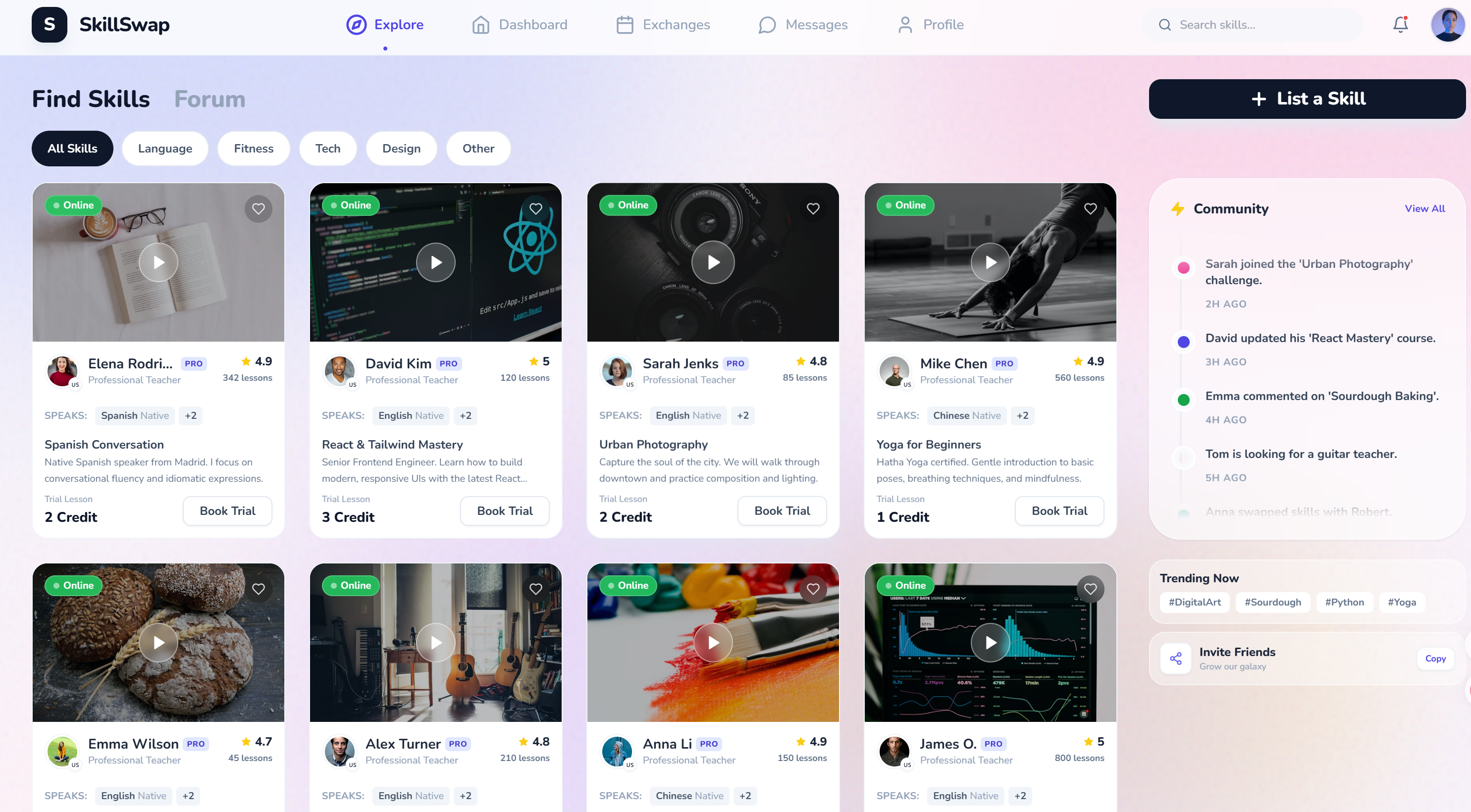
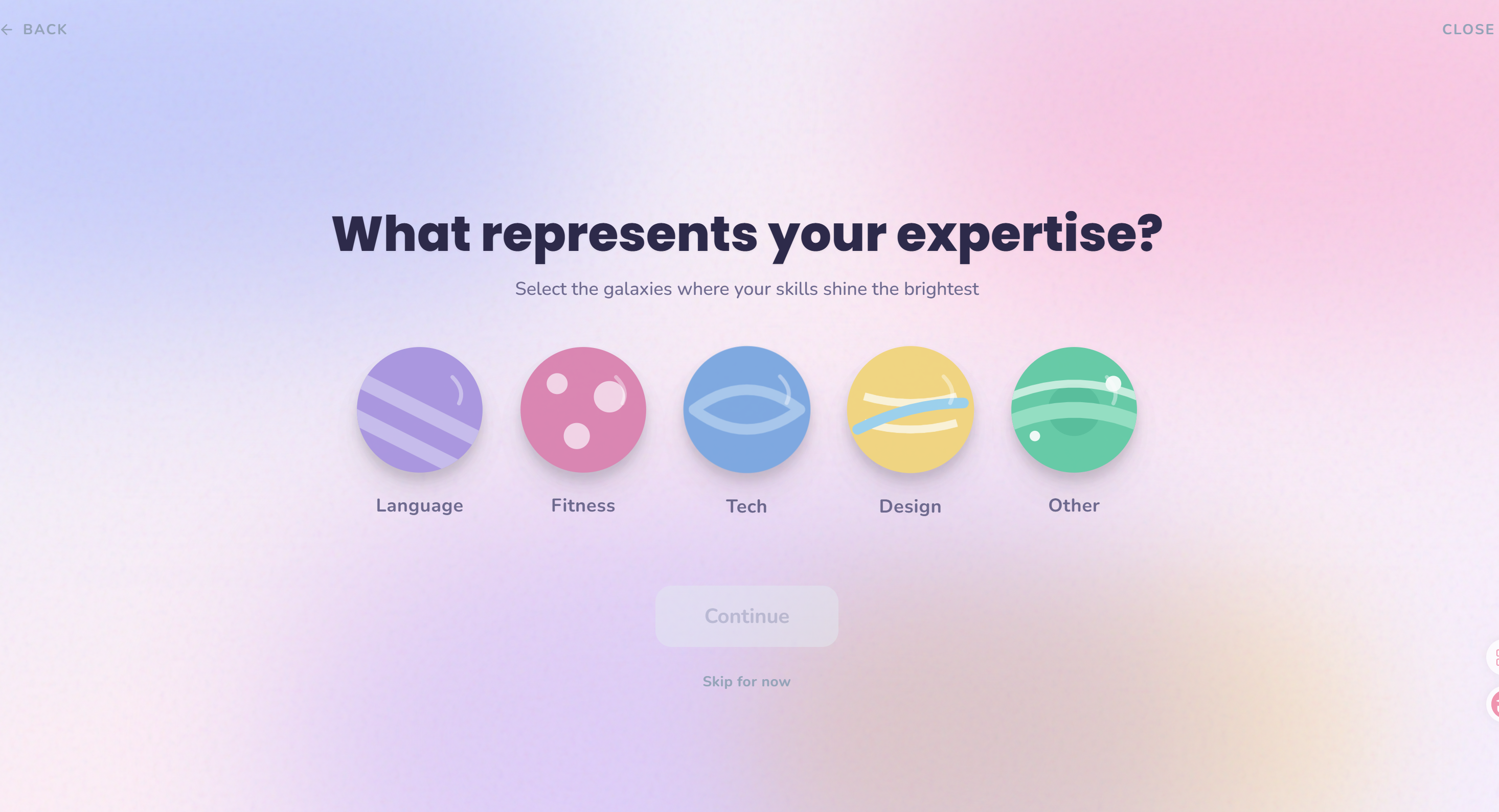
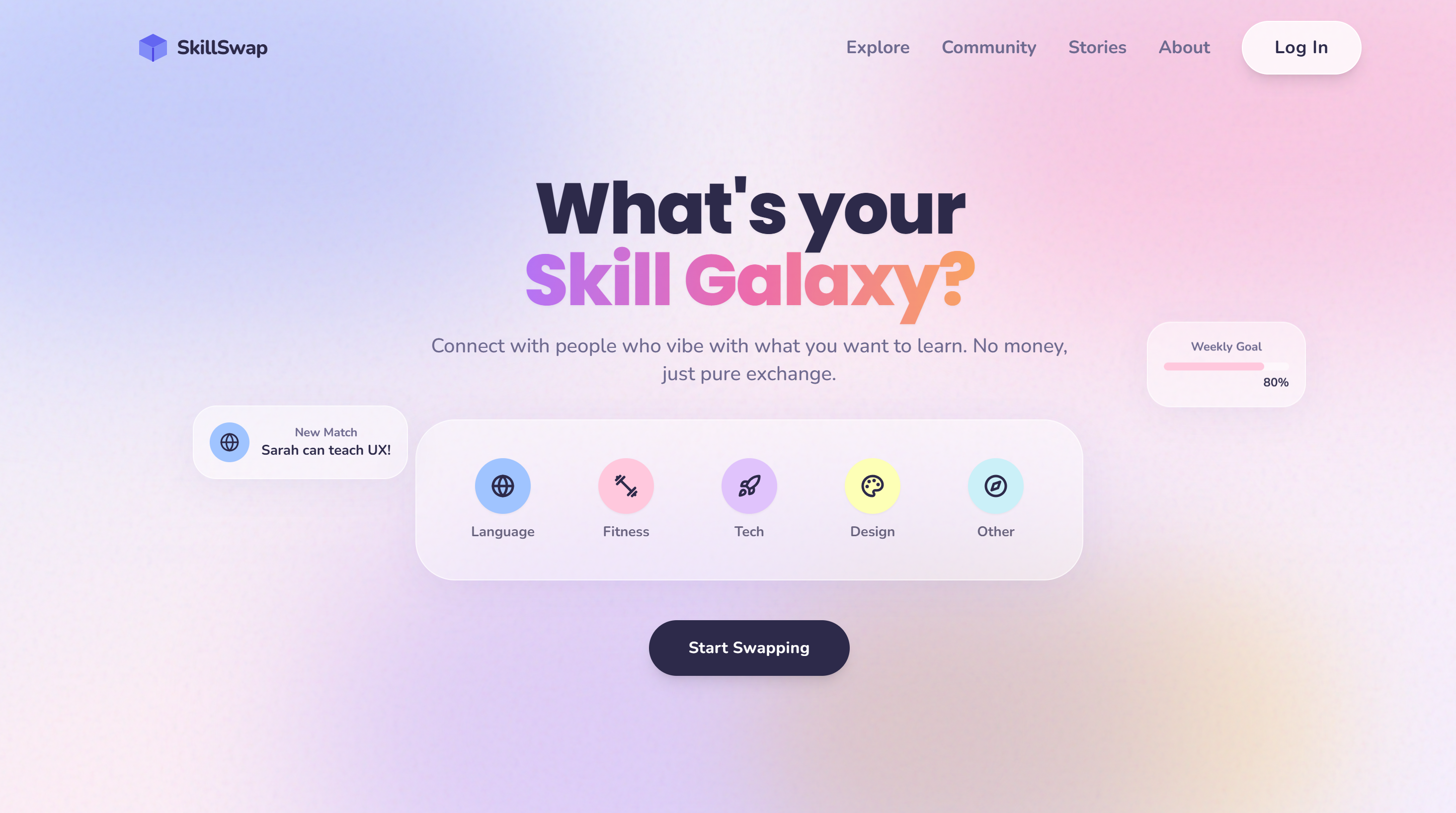
SkillSwap is an AI-driven, decentralized social network where users exchange skills across four core "Galaxies": Tech, Language, Sports, and Creative (plus an "Others" category for niche interests). Smart Matching: Uses Gemini 1.5 Flash to understand the deep semantics of what you can teach and what you want to learn. Trust & Verification: Upon completion of a skill exchange, the platform mints an NFT Skill Badge on the Polygon network. Gamified Ecosystem: Users build a professional, on-chain portfolio of verified expertise, turning personal knowledge into digital assets.
How we built it
We architected SkillSwap with a modern, high-performance stack: Backend: Built with FastAPI (Python 3.11+) for high-concurrency asynchronous processing. AI Engine: Integrated Gemini 1.5 Flash for dual-phase matching. We use semantic embeddings stored in Supabase (pgvector) for initial recall, followed by Gemini-powered reranking to ensure high-quality matches. Authentication: Leveraged Clerk for seamless Web3 onboarding, allowing users to connect via traditional socials or crypto wallets. Database & Storage: Utilized Supabase for managed PostgreSQL and asset staging, with Polygon for final NFT minting. DevOps: Deployed on Render with a dual-environment strategy (api.skill.lat for production and develop-skillswap.site for staging).
Challenges we ran into
Challenges we ran into One of our primary hurdles was managing the Gemini API Free Tier limitations. With a 15 RPM (Requests Per Minute) cap, we had to design a robust "Pressure Protection" layer. We implemented an asynchronous rate limiter and a Semantic Caching system using Redis to prevent redundant API calls. Additionally, mapping the "Others" galaxy was challenging; we solved this by using Gemini to perform dynamic semantic mapping rather than strict category filtering.
Accomplishments that we're proud of
Accomplishments that we're proud of Precision Matching: Developing a reranking algorithm that doesn't just match keywords but understands that a "UI Designer" might be a perfect match for a "Front-end Developer." Seamless Web3 UX: Hiding the complexity of the blockchain so that users only see "Skill Badges" while the Polygon network handles the underlying trust layer. Architecture Integrity: Successfully implementing a strategy-based backend that remains scalable as we add more "Galaxies."
What we learned
We gained deep insights into the synergy between LLMs and Vector Databases. We learned that while vector search is fast for broad retrieval, LLMs are essential for the "human-like" reasoning required to judge if two people will actually get along. We also mastered the art of building "Serverless-friendly" backends by leveraging the power of Supabase and Clerk to focus purely on business logic.
What's next for SkillSwap
We plan to expand the "Galaxy" ecosystem by introducing Community-Governed Validation, where high-ranking users in a specific galaxy can peer-review exchanges. We also aim to develop a mobile-first experience and explore Cross-Chain Skill Passports, allowing users to carry their verified expertise across multiple decentralized platforms.


Log in or sign up for Devpost to join the conversation.