-
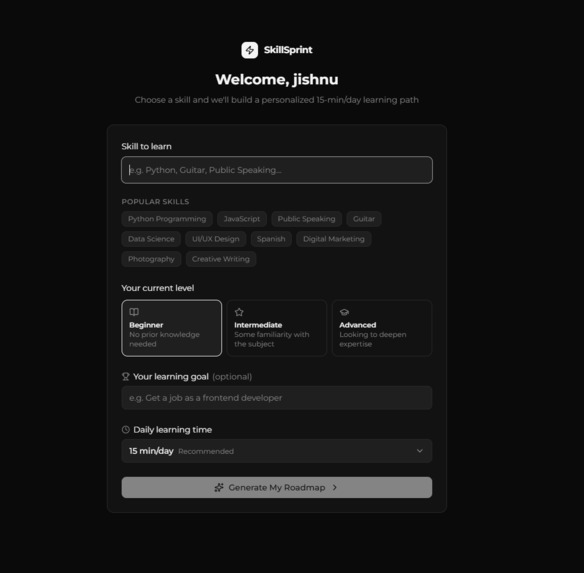
Add a skill
-
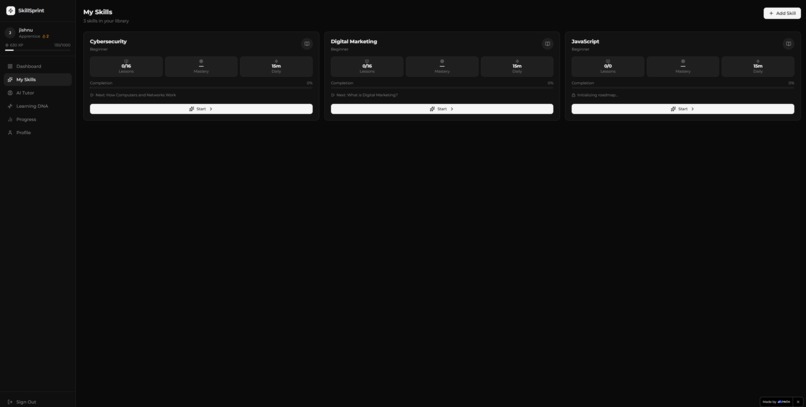
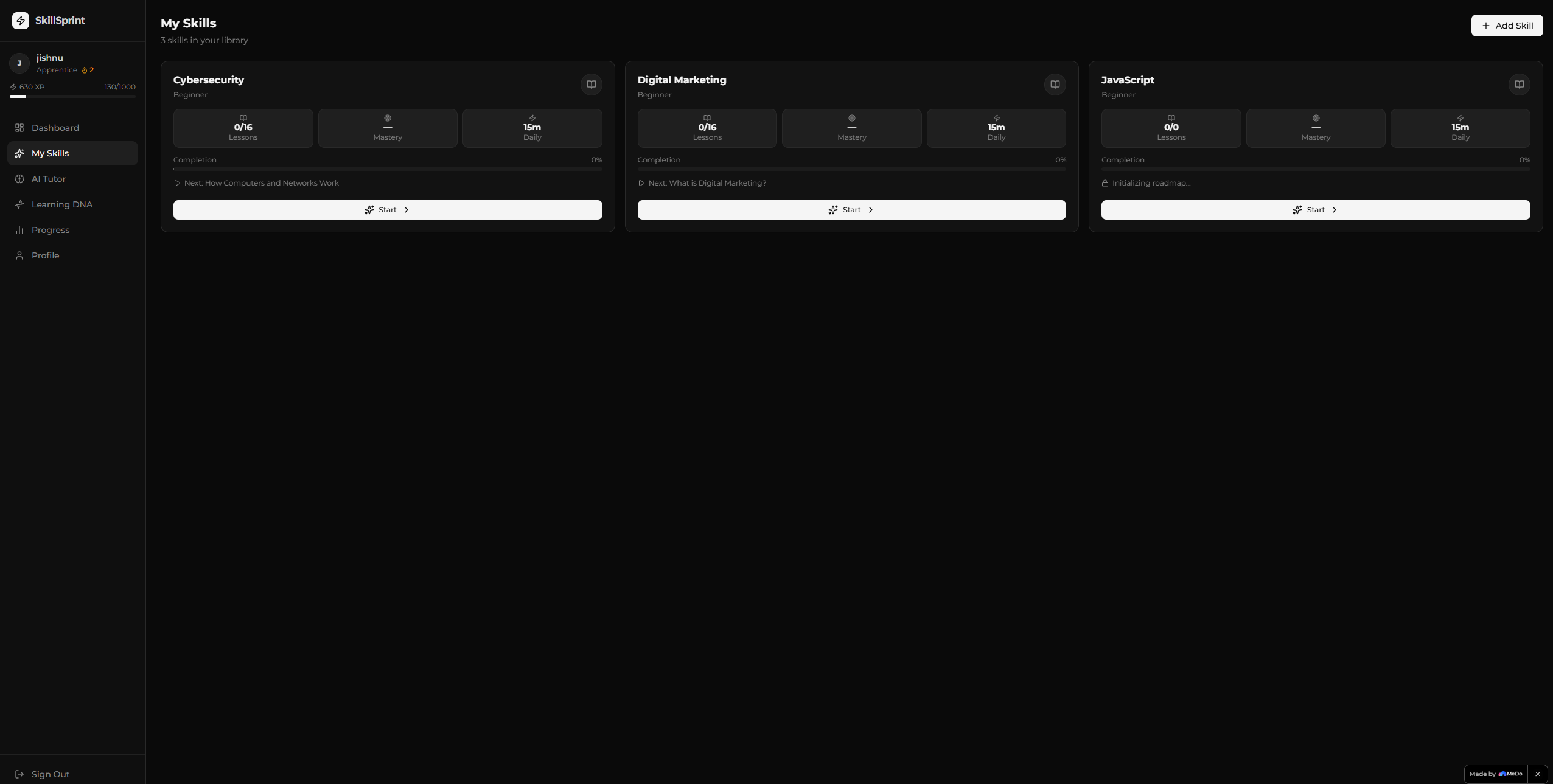
Skills Page
-
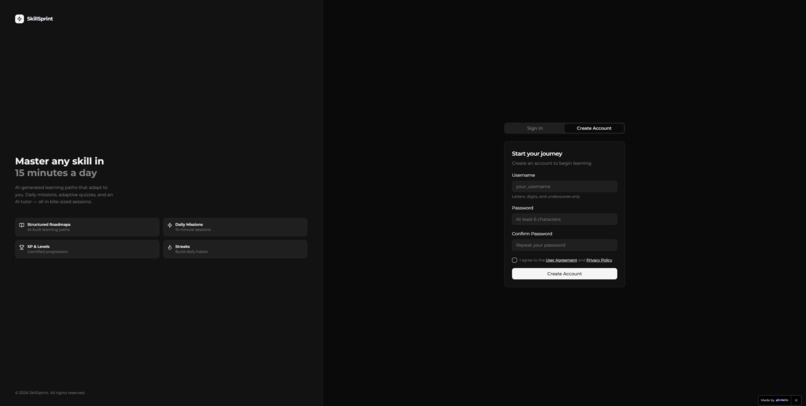
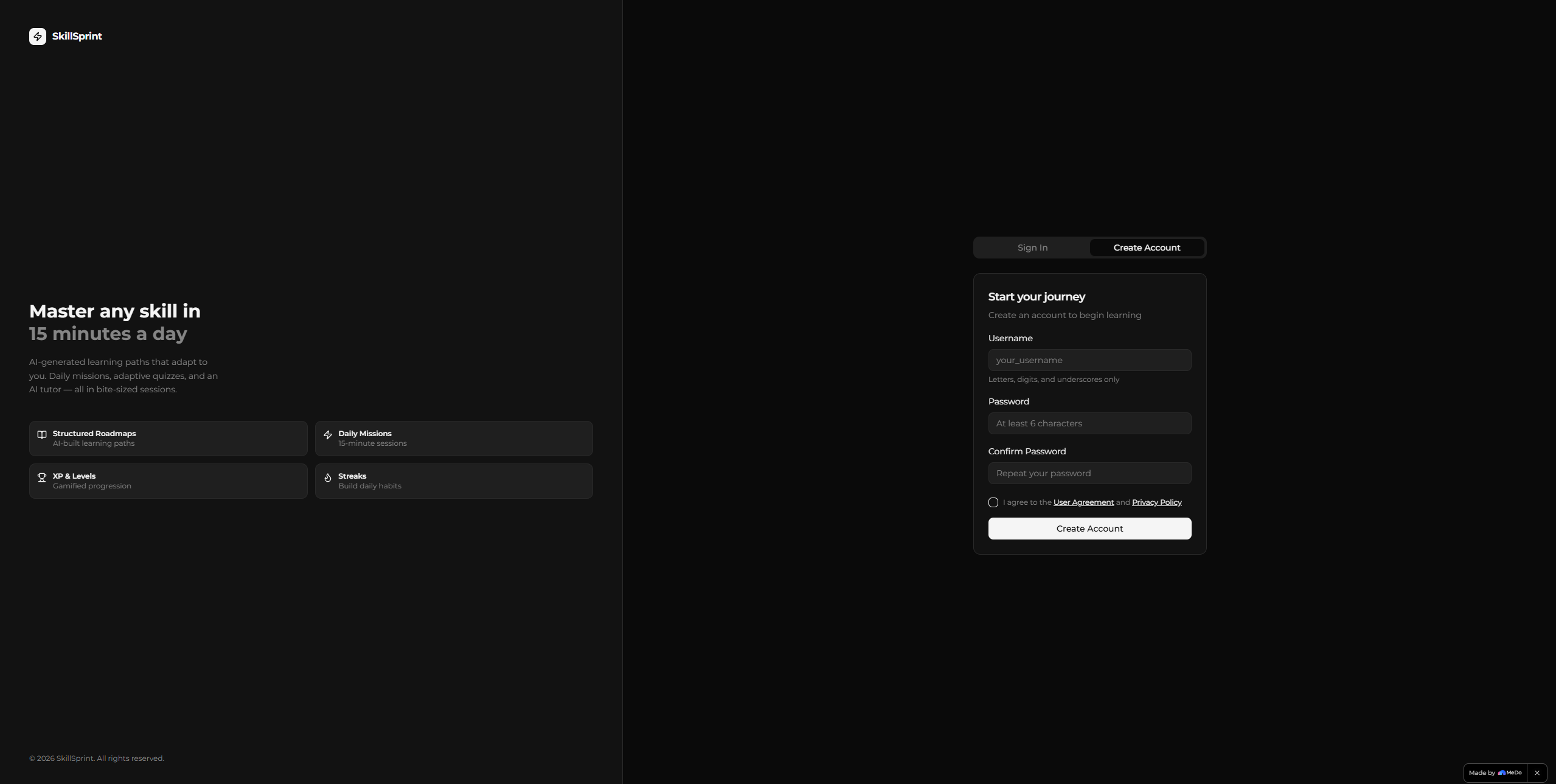
Sign Up
-
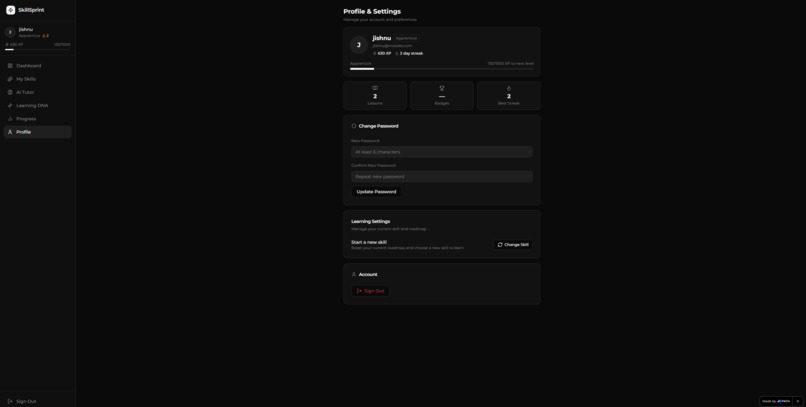
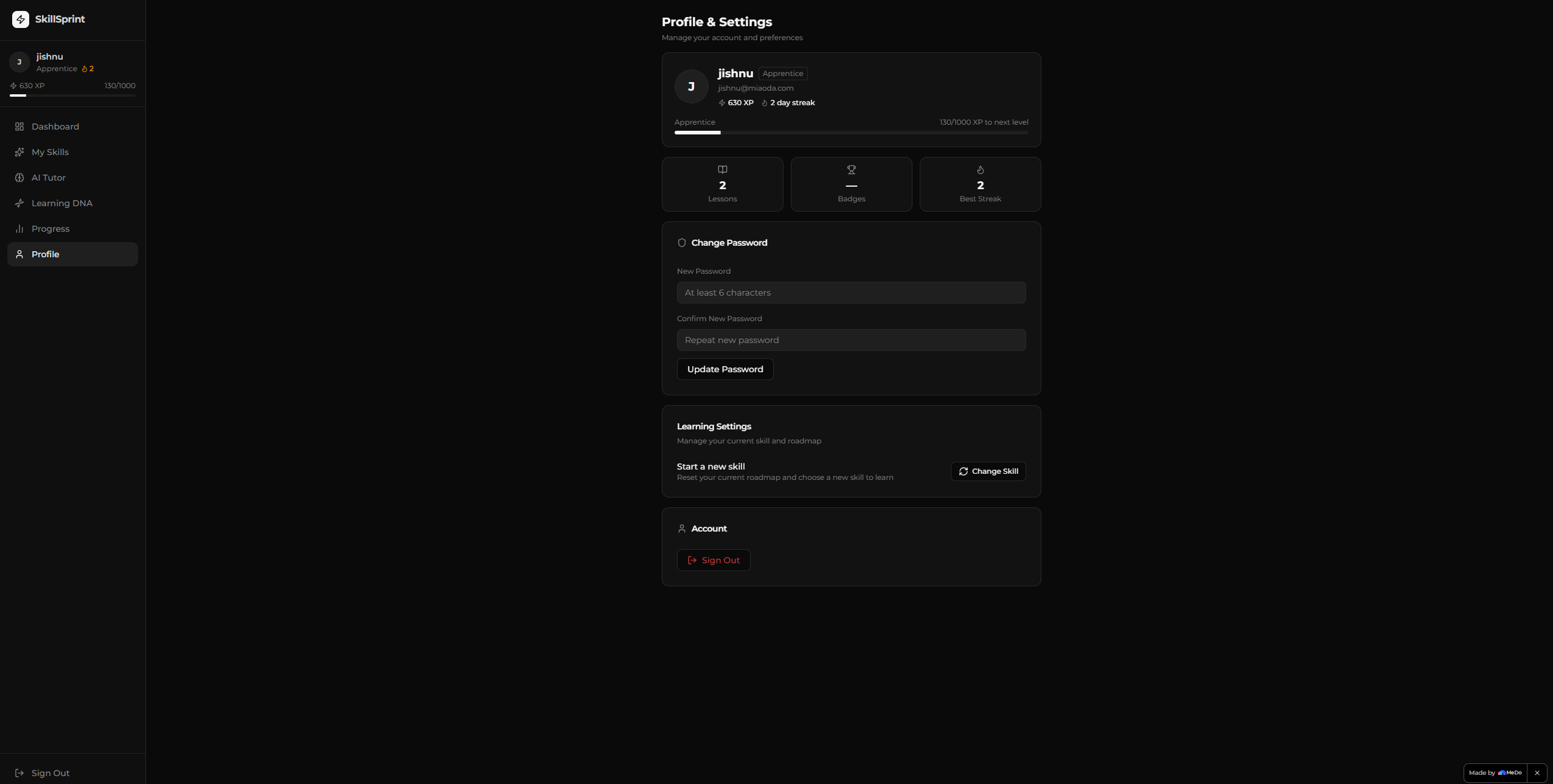
Profile Settings
-
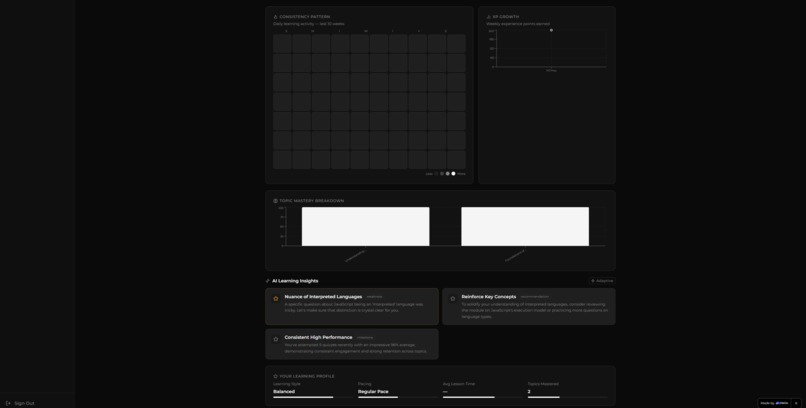
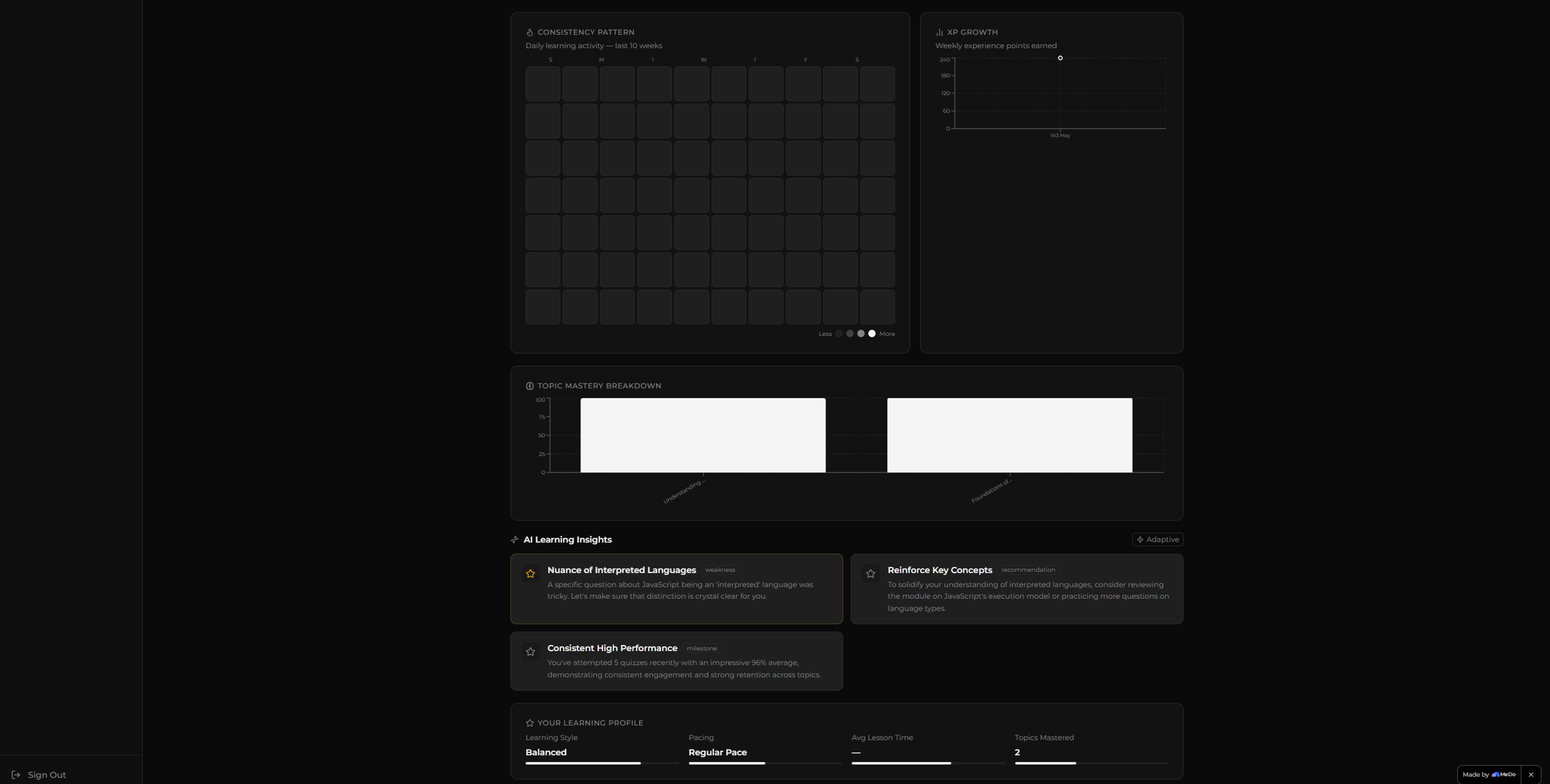
Learning DNA - 2
-
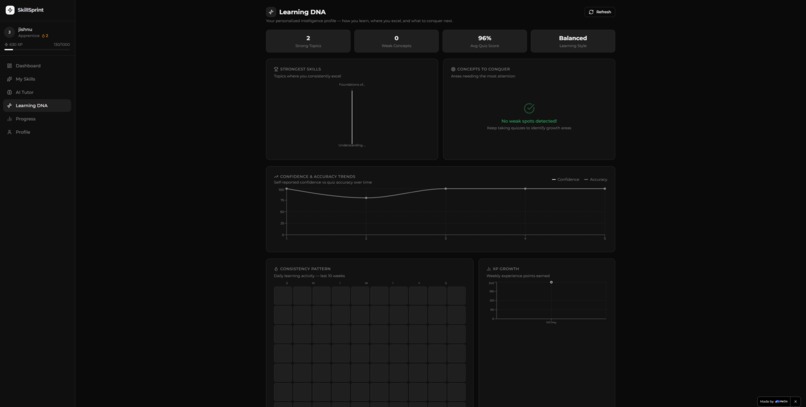
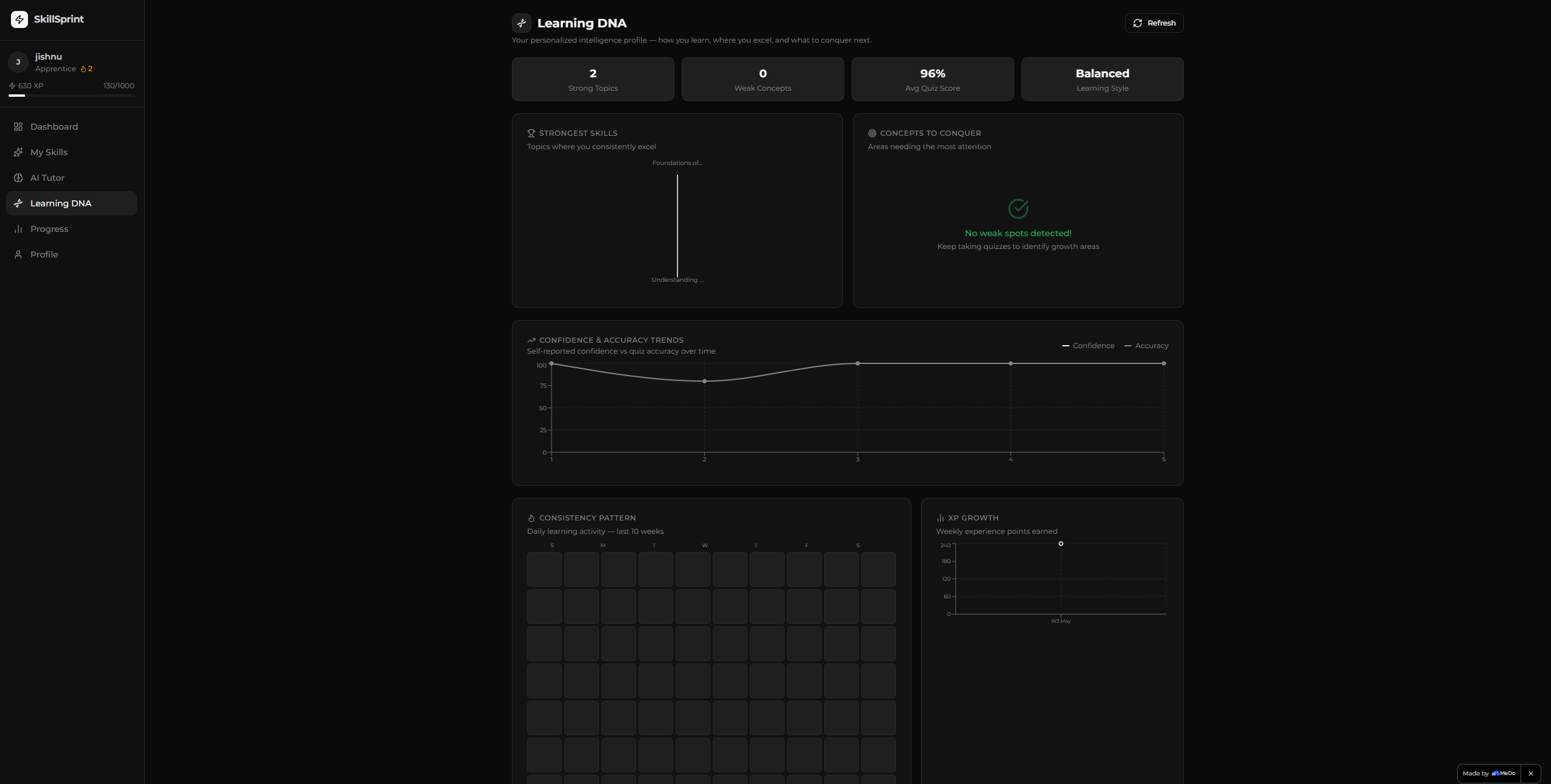
Learning DNA - 1
-
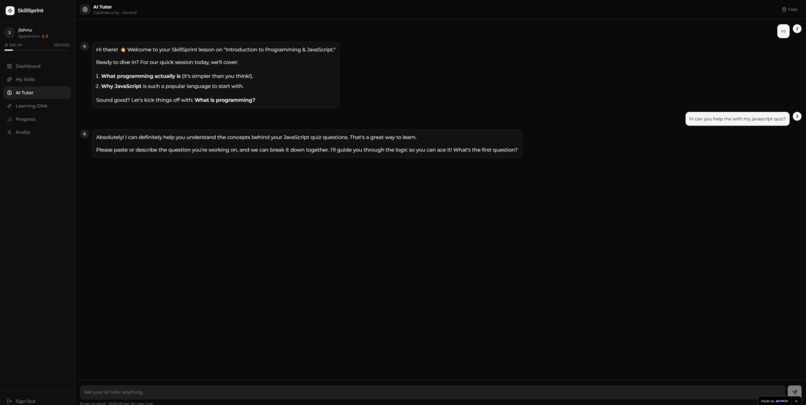
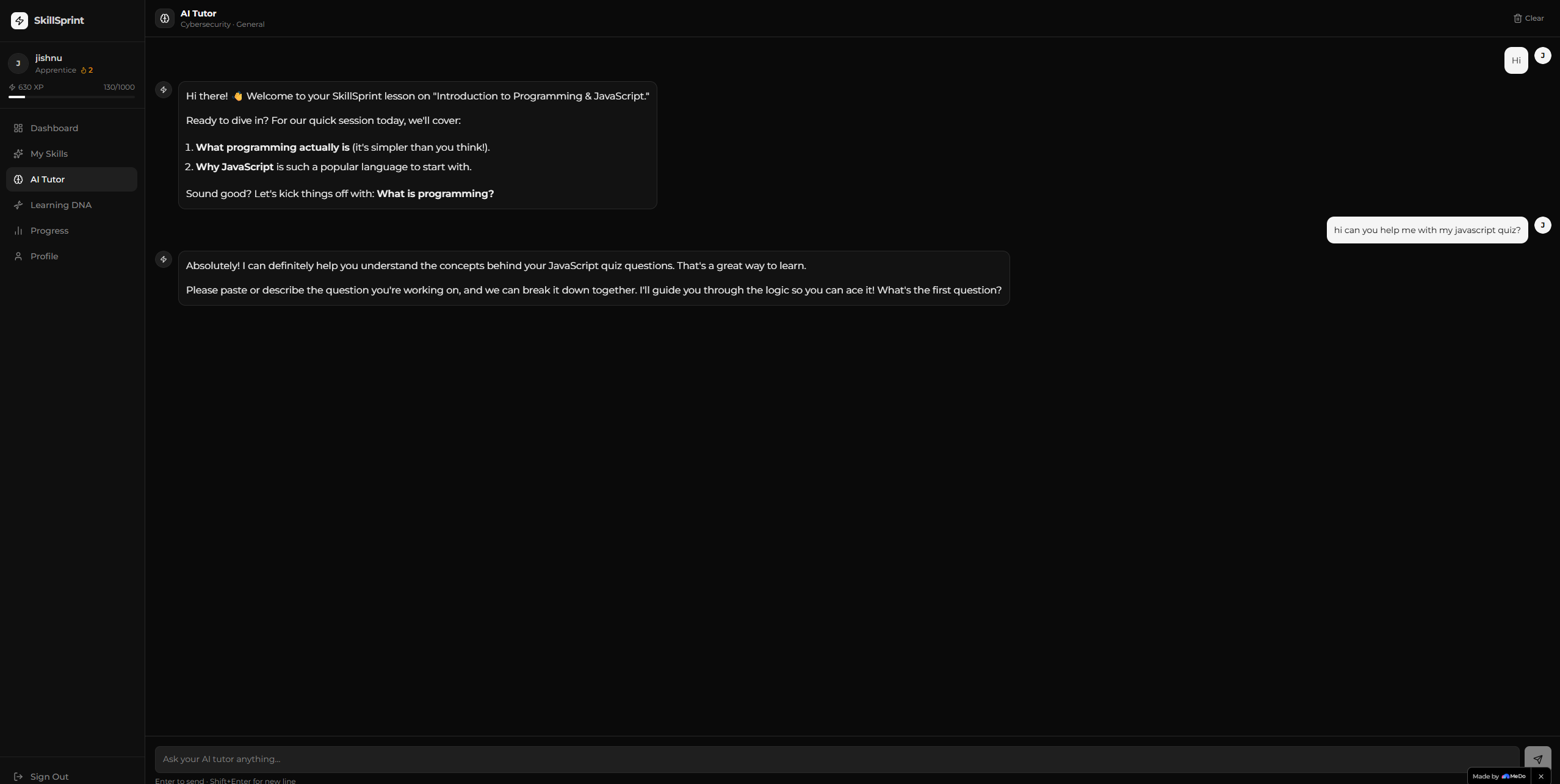
AI Tutor
-
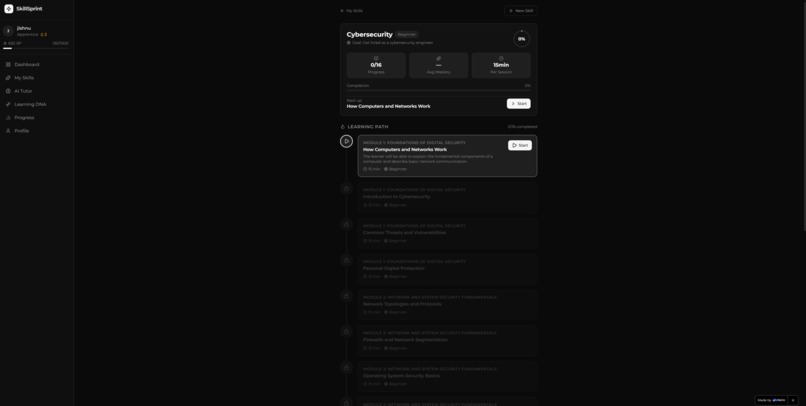
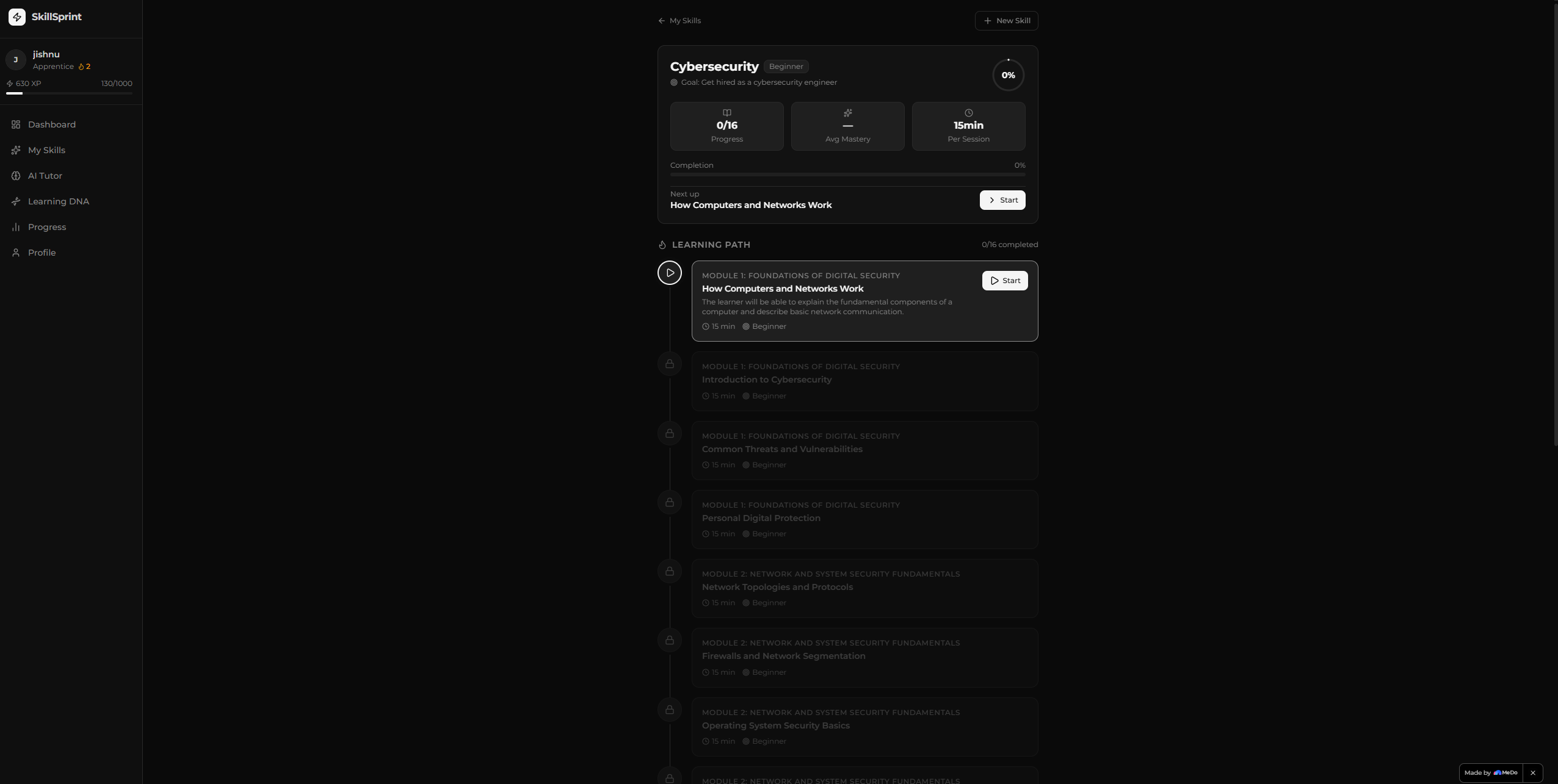
Roadmap
-
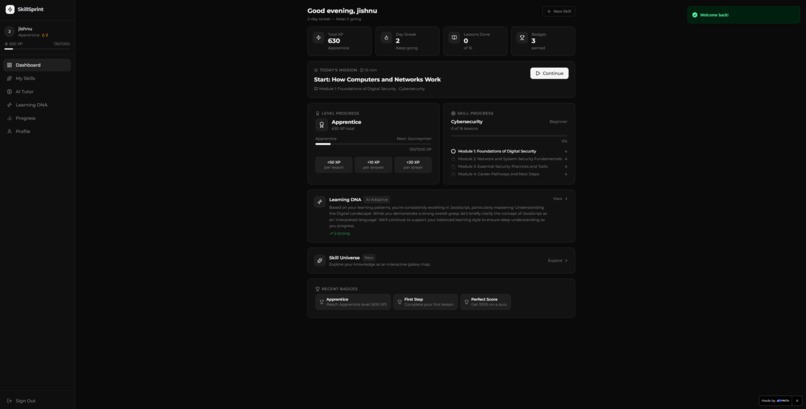
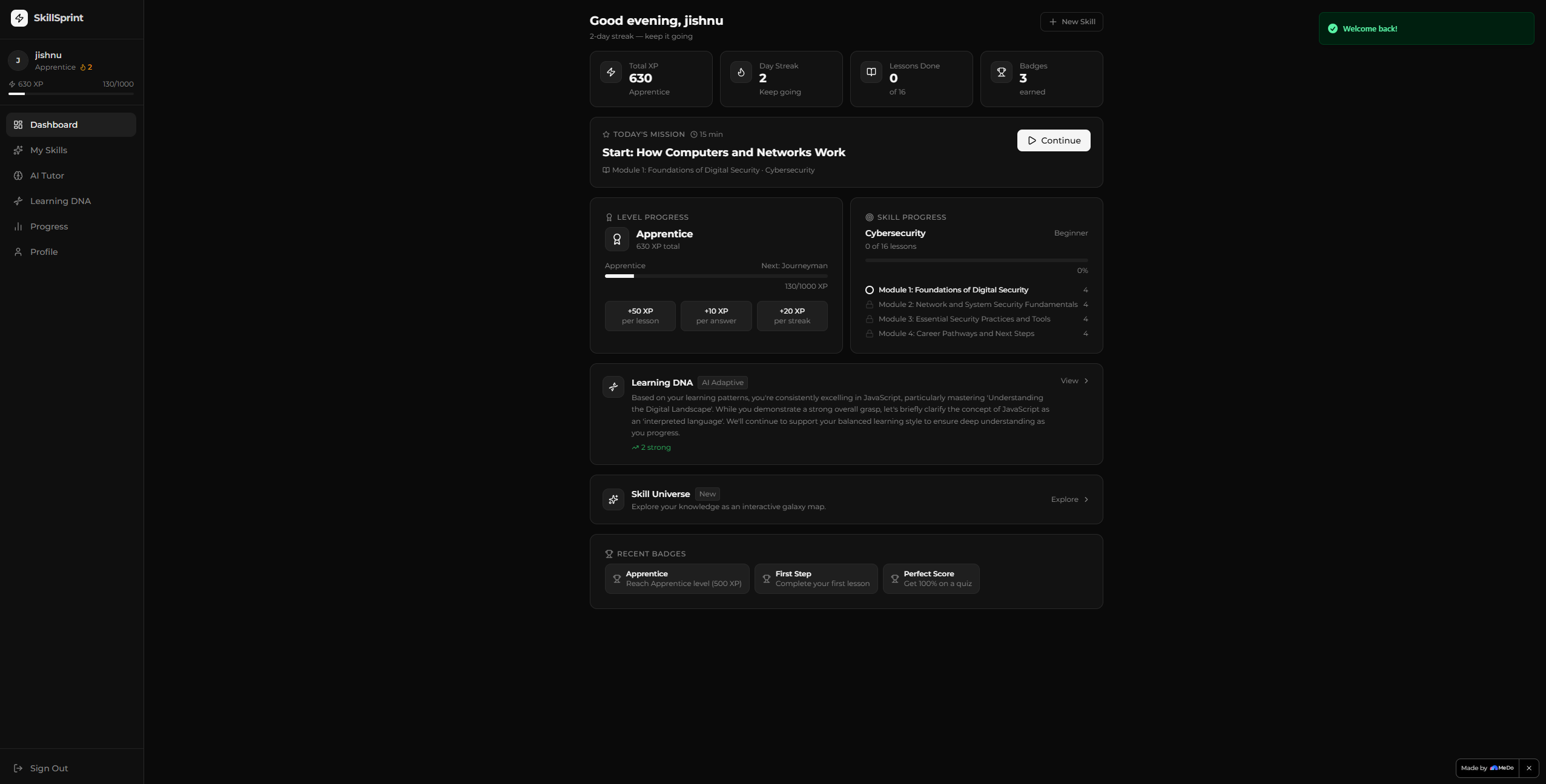
Dashboard
-
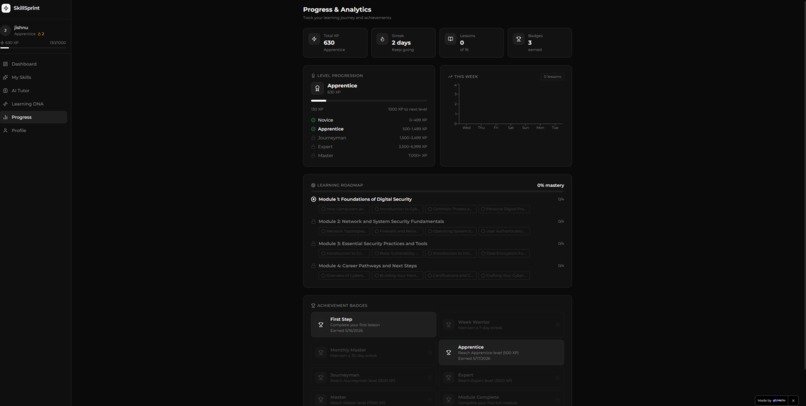
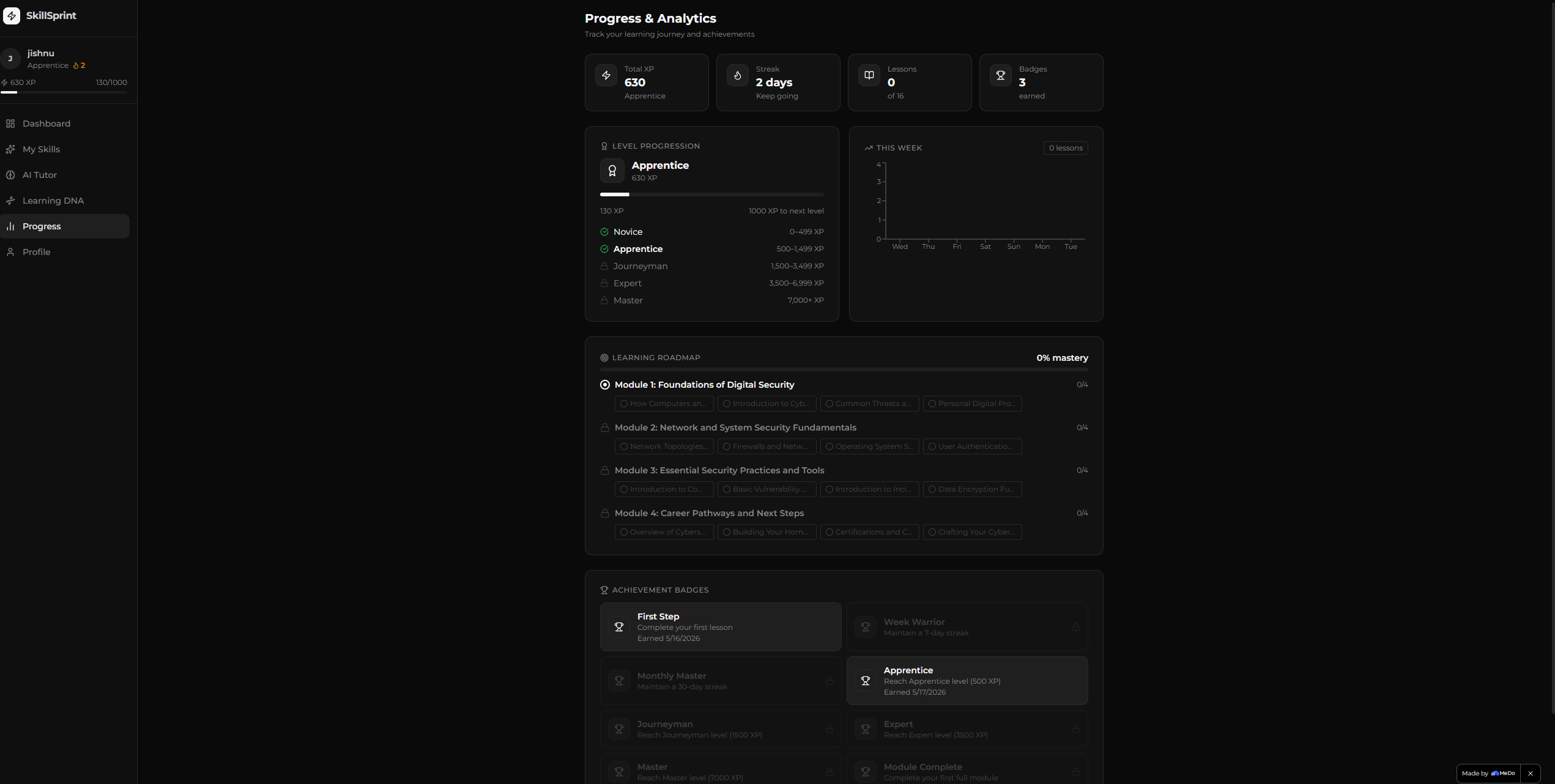
Progress
SkillSprint
💡 Inspiration
In an era of information overload, infinite scrolling has replaced deep focus. While AI has made information more accessible than ever, it has also created a new problem: passive consumption and overdependence. I found myself relying on AI to think, summarize, and solve problems for me instead of actually learning.
At the same time, I noticed that most AI education platforms feel stateless. They generate lessons and quizzes, but they do not truly understand how a person learns over time.
I was inspired by Duolingo’s gamified consistency and Anki’s cognitive science principles, but I wanted to push the idea further:
What if learning worked like a progression system in a game? What if the AI actually remembered how you learn?
That became the foundation of SkillSprint.
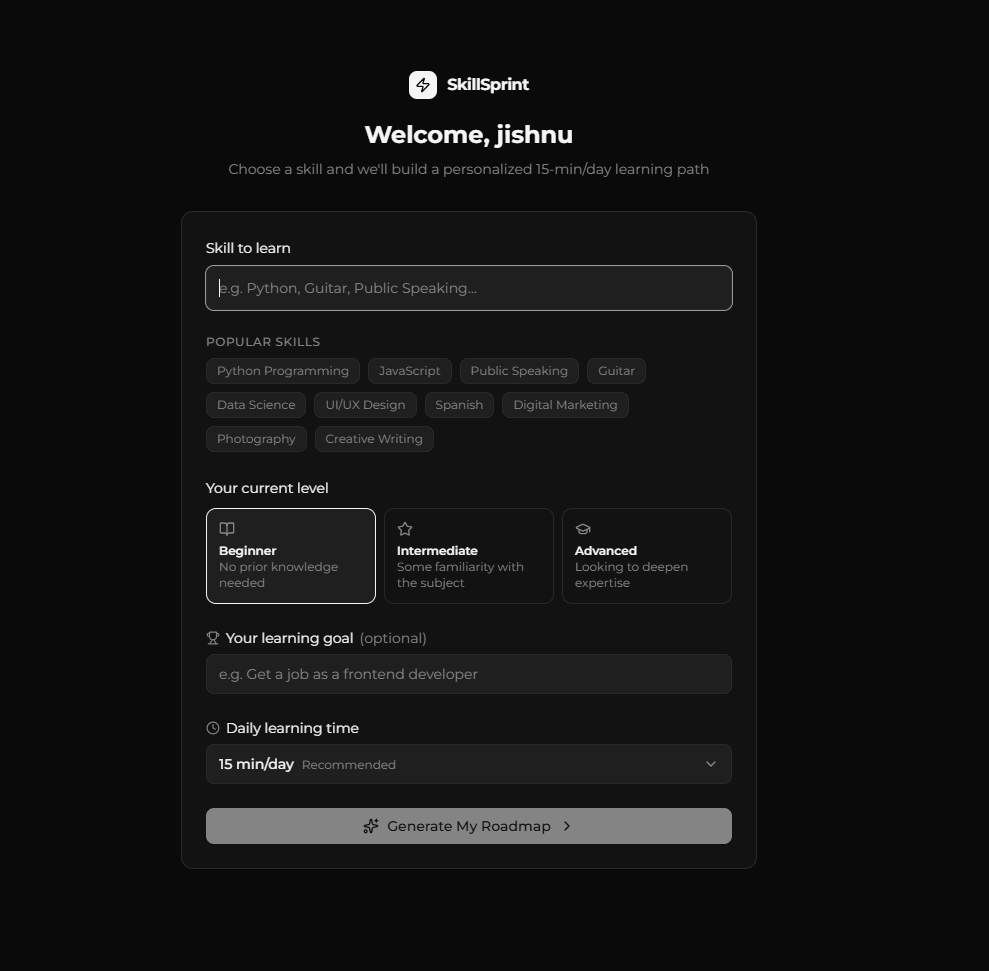
SkillSprint transforms any skill into a structured 15-minute daily progression path where the curriculum evolves dynamically based on:
- user mastery
- weaknesses
- confidence trends
- prior performance
Instead of generating random lessons repeatedly, SkillSprint generates a persistent roadmap once, then adapts future lessons intelligently as the learner progresses.
The result is an AI mentor that evolves with the learner instead of resetting every interaction.
🛠 How I Built It
I built SkillSprint end-to-end using MeDo, which allowed me to rapidly iterate on product architecture, UX design, and AI workflows without getting slowed down by infrastructure complexity.
Frontend
I built the interface using:
- React 18
- TypeScript
- Vite
- Tailwind CSS
- shadcn/ui
The UI follows a minimalist monochrome aesthetic inspired by Linear and Duolingo to reduce cognitive overload and keep learners focused.
Backend & Orchestration
I used:
- Supabase Auth
- PostgreSQL
- Supabase Edge Functions (Deno)
The Edge Functions orchestrate:
- AI generation workflows
- roadmap persistence
- adaptive lesson generation
- mastery tracking
AI Engine
I integrated Gemini through an API gateway and designed a custom Adaptive Context System.
Instead of sending isolated prompts, every lesson generation request includes:
- prior mastery scores
- weak concepts
- learning preferences
- confidence trends
- previous node performance
This allows lessons to adapt dynamically to the learner’s behavior.
Progression Architecture
One of the most important decisions I made was separating:
- roadmap generation from
- lesson generation
When a user creates a skill, SkillSprint generates the entire roadmap structure once and persists it permanently.
Each roadmap node contains:
- skill metadata
- unlock requirements
- lesson context
- mastery thresholds
Lessons are generated only when a user opens a node, which reduces unnecessary LLM calls while improving consistency and scalability.
I implemented a Duolingo-inspired progression system using a roadmap_nodes architecture where users unlock subsequent levels only after achieving sufficient mastery.
Mastery is calculated using:
$$ M = \max(M_{current}, S_{new}) $$
Where:
- $M$ = mastery score
- $S$ = latest quiz score
A mastery threshold of 80% is required to unlock the next node.
Learning DNA System
I built a Learning DNA Engine that continuously tracks:
- repeated mistakes
- pacing patterns
- preferred explanation styles
- confidence levels
- weak concepts
Future lessons and quizzes adapt dynamically based on this evolving learning profile.
🚀 Challenges I Faced
Contextual Continuity
One of my biggest challenges was solving what I call the Memory Gap.
Most AI learning systems generate isolated lessons with no long-term continuity. I needed lessons to feel connected and cumulative.
To solve this, I built a retrieval pipeline that injects:
- previous lesson objectives
- weak concepts
- prior mistakes
- mastery trends
directly into future lesson generation prompts.
This made the AI feel far more like a real mentor than a static chatbot.
Prompt Engineering for Structure
Generating structured roadmaps consistently was surprisingly difficult.
Early AI responses often returned malformed JSON or inconsistent module structures.
I solved this by implementing:
- schema validation
- retry logic
- strict response formatting
- structured roadmap templates
This ensured the UI remained stable even during failed generations.
The “Sameness” Problem
Early quizzes became repetitive over time.
To solve this, I introduced adaptive difficulty scaling using an attempt-aware system.
Question complexity and formats evolve dynamically depending on:
- previous score
- retry count
- mastery level
The relationship follows:
$$ Difficulty \propto \frac{\text{Attempt Count}}{\text{Previous Score}} $$
This helped prevent repetitive learning loops and kept sessions engaging.
🎓 What I Learned
Atomic Learning Works
I discovered that limiting users to focused 15-minute learning “nodes” dramatically increases completion rates compared to traditional open-ended courses.
Smaller, structured sessions reduce overwhelm while improving consistency.
AI Works Best as a Curriculum Architect
I learned that LLMs are surprisingly effective at structuring learning progression when given:
- clear learning goals
- difficulty constraints
- mastery thresholds
- progression rules
Instead of replacing learning, AI becomes a system for sequencing and adapting learning.
UX Matters as Much as Intelligence
Building an AI-first product taught me that perceived responsiveness is critical.
I introduced:
- animated generation states
- progression feedback
- unlock animations
- “brewing” transitions
to transform AI latency into an engaging experience.
Why MeDo Was Essential
MeDo fundamentally changed how I built this product.
The most impressive part was that it successfully one-shotted complex integrations:
- LLM orchestration
- Supabase Edge Functions
- authentication
- database workflows
all from the very first implementation prompts.
I believe this worked especially well because I structured the project carefully upfront using a detailed REQUIREMENTS.md specification before beginning implementation.
Instead of spending most of my time wiring integrations or managing infrastructure, I focused almost entirely on:
- product design
- learning architecture
- adaptive workflows
- rapid iteration
I used MeDo iteratively and conversationally to:
- refine roadmap structures
- redesign progression systems
- evolve the Learning DNA architecture
- restructure lesson generation logic
- rapidly test different UX approaches
Several core systems went through multiple iterations before reaching the final architecture.
This iterative workflow allowed me to think like a product architect instead of getting stuck in implementation details.
MeDo enabled me to prototype, test, and refine an adaptive AI learning system at a speed that would have been difficult with traditional development workflows.
Most importantly, it allowed me to focus on what mattered most:
building a deeply adaptive learning experience that feels intelligent, persistent, and personal.
Built With
- medo

Log in or sign up for Devpost to join the conversation.