Inspiration
As students, we constantly saw a very real problem around us: Some students have valuable skills — writing, designing, tutoring, PPT creation — but no platform to earn from them. At the same time, another large group of students struggles daily with small academic tasks that could easily be done by someone nearby.
This gap inspired us to build SkillSphere — a student-to-student micro-jobs marketplace where students help each other, save time, and earn money.
What it does
SkillSphere is a simple, fast, mobile-friendly platform that allows students to:
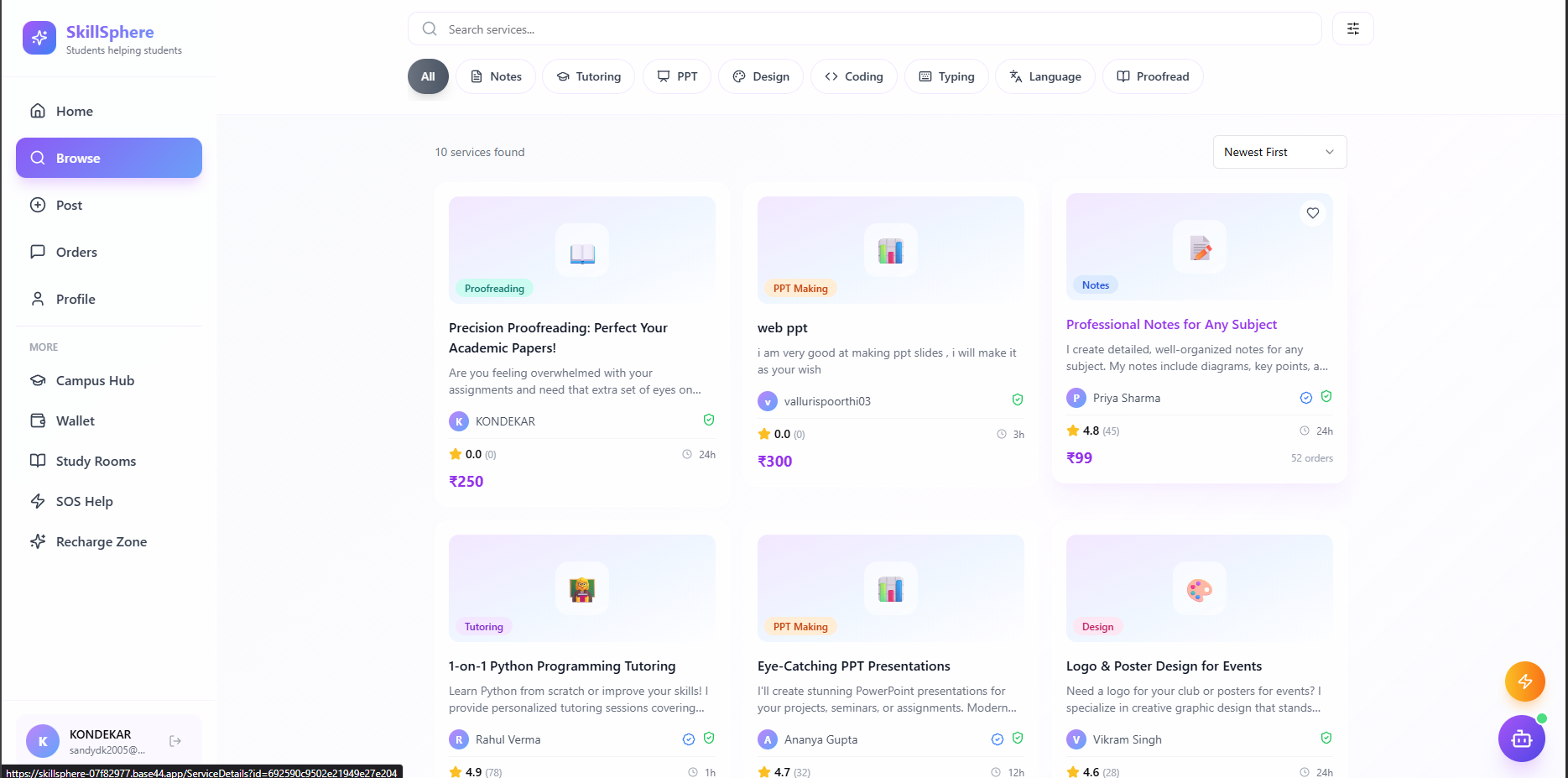
- Post small academic tasks (notes making, assignments, PPTs, tutoring, design help, proofreading, etc.)
- Earn money by completing tasks using their existing skills
- Track work, manage tasks, and check their wallet
- Browse opportunities and accept tasks instantly The platform is designed to feel like a campus economy — quick, trust-based, and student-centered.
How we built it
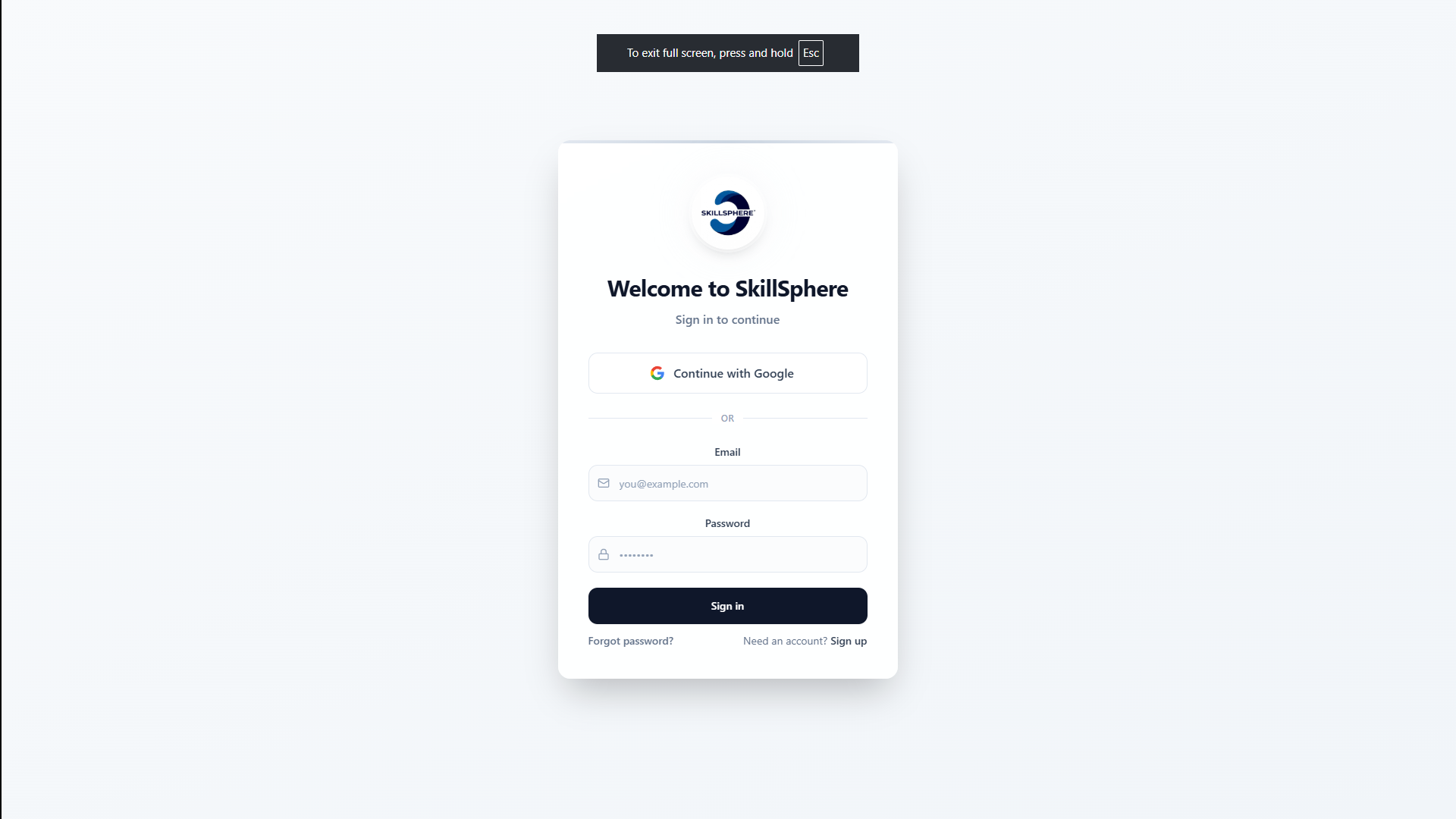
We built the prototype using Base44, focusing on a seamless user flow:
- Clean, minimal UI
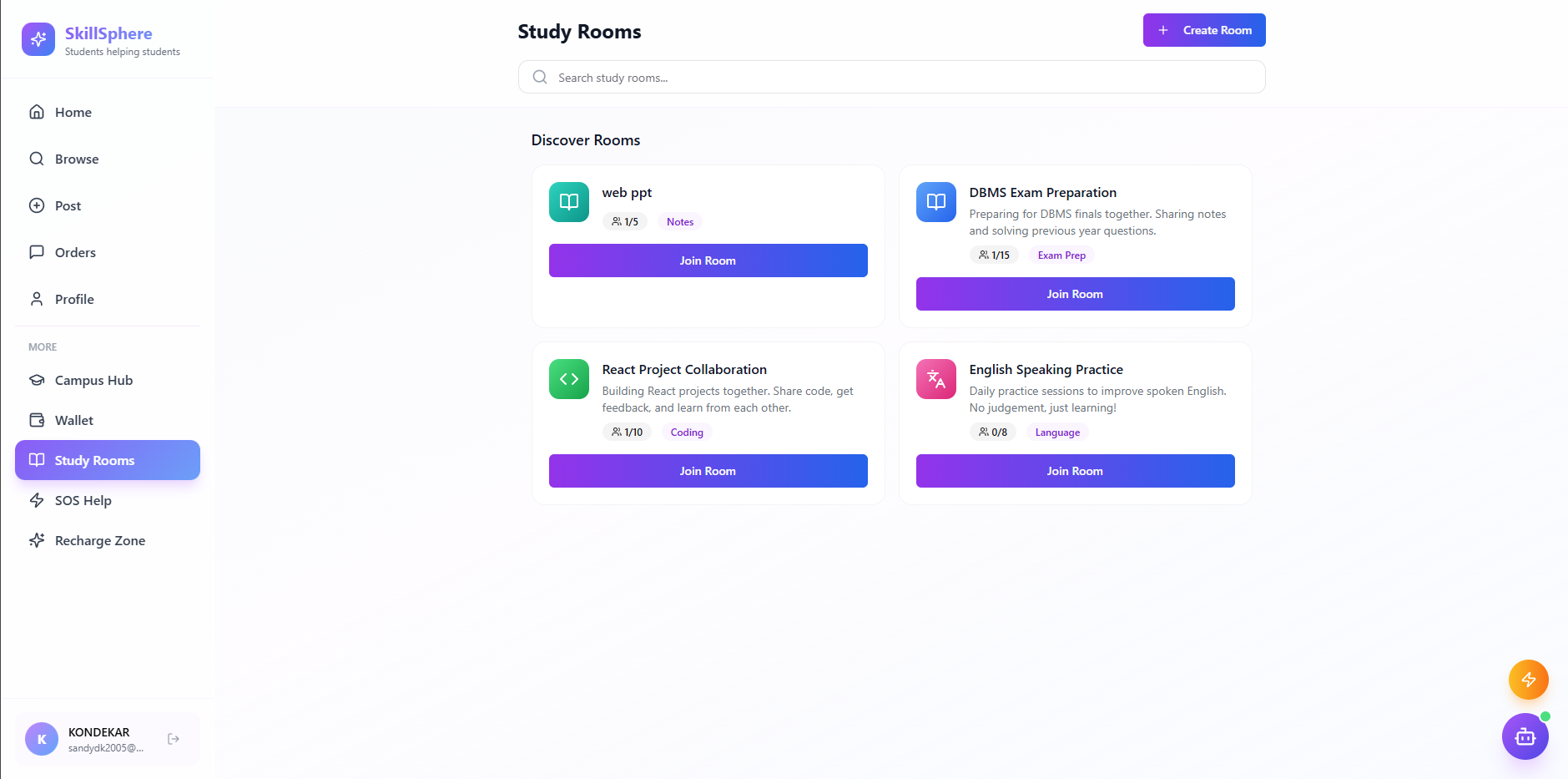
- Smooth navigation between pages
- In-app wallet simulation (₹100 dummy balance)
- Realistic stats (10,000+ tasks completed as sample data)
- Task listing, task acceptance, and confirmation screens
- Dedicated feedback system and profile dashboard We kept the design simple but impactful, focusing on the real user experience students would expect.
Challenges we ran into
Some challenges we faced during the build:
- Designing a layout that feels professional yet friendly for students
- Creating realistic user flows inside a prototype environment
- Balancing multiple screen states (buyer mode, seller mode, wallet, task status)
- Embedding consistency in UI/UX across all screens
- Working within time constraints and ensuring smooth navigation Each challenge helped us refine SkillSphere into a cleaner and more intuitive app.
Accomplishments that we're proud of
- A fully functional, smooth prototype built in a short time
- A clean marketplace flow that feels natural for students
- A polished interface with consistent branding
- Earning + hiring pathways that actually work
- A concept that solves a very real problem in campuses
What we learned
- How to design for real-world users (students)
- How to build rapid prototypes using Base44
- Importance of simplicity in UX
- How to communicate value through UI
- How to divide tasks efficiently under a deadline
What's next for SkillSphere
We plan to take SkillSphere beyond the prototype stage by adding:
- College ID–based verification
- Secure payment system
- AI skill-matching
- Ratings, reviews, and portfolio pages
- Student communities (department/hostel/group-based)
- Leaderboards and skill badges
- Campus partnerships Our long-term vision is to make SkillSphere a full-fledged student freelancing ecosystem.
Additional features
- Deadline Server Mode (Auto-Rush Assistance) What it does:
- Automatically detects when an order is nearing its deadline and activates Rush Mode. How it helps:
- Reminds sellers before time runs out.
- Suggests backup sellers if current one is unresponsive.
- Offers buyers a one-tap “Rush Request” to speed delivery.
- Rewards quick completion with bonus XP. Why it matters:
Students often forget deadlines or struggle with last-minute tasks — this ensures work never gets stuck and builds trust through reliability.
Skill Verification Through Mini-Tests What it does:
Before offering a service, students take short quizzes to verify their proficiency. How it helps:
Assigns Bronze, Silver, or Gold badges depending on test results.
Badges show credibility on listings.
Buyers instantly know who’s trustworthy and skilled. Why it matters:
Prevents fake listings and promotes real expertise — making SkillSphere the safest student marketplace.
Anonymous Mode (For Sensitive Requests) What it does:
Allows users to hide their identity while posting or buying certain services. How it helps:
Displays them as “Anonymous Student.”
Keeps chat encrypted and names hidden until both agree to reveal.
Perfect for sensitive tasks (e.g., proofreading personal statements). Why it matters:
Builds psychological safety and inclusivity — users can seek help without fear of embarrassment or exposure.
StudySwap — Exchange Skills Instead of Paying What it does:
Introduces a barter-based system where students swap skills instead of money. How it helps:
“You design my PPT; I’ll proofread your essay.”
Both users earn XP and verified work credit (no cash exchange).
Makes learning accessible even for students without budgets. Why it matters:
Promotes collaboration and equality — knowledge becomes the currency.
Anti-Scam Shield (Safety Layer) What it does:
An AI-based fraud detection system that monitors listings, chats, and transactions. How it helps:
Flags suspicious messages (external payment links, spam).
Warns users: “Stay safe — complete transactions only inside SkillSphere.”
Adds a visible “Trust Meter” on profiles. Why it matters:
Prevents scams and creates a safe, secure student community — essential for campus-wide trust.
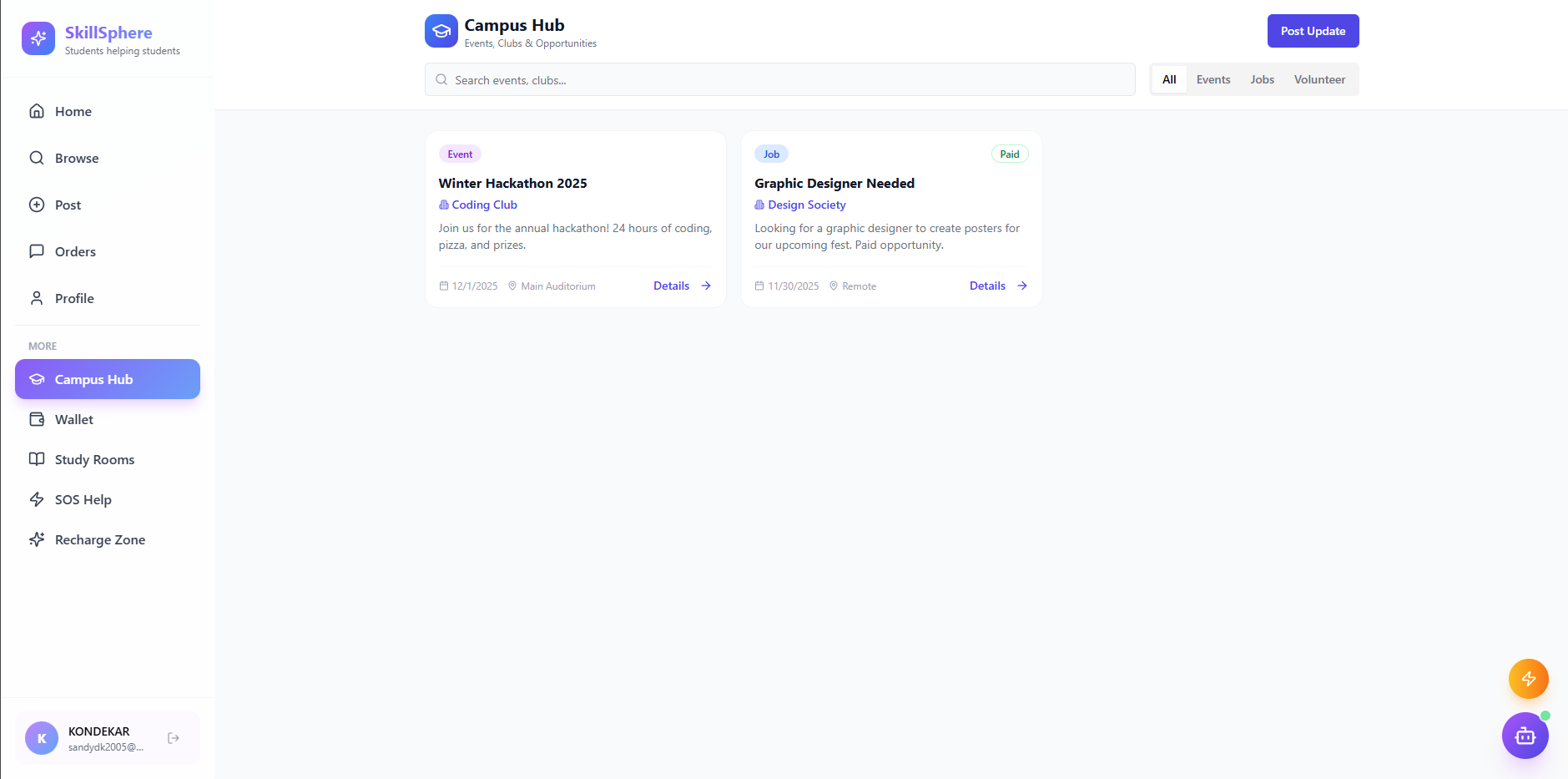
Marketplace for College Clubs & Events (Campus Hub) What it does:
A dedicated section where college clubs can post opportunities like design help, event roles, and micro-internships. How it helps:
Tabs for All, Events, Jobs, Volunteer.
Clubs post real needs; students apply directly.
Builds practical experience and connects learning with real campus life. Why it matters:
Transforms SkillSphere from an app into a campus ecosystem — bridging education and experience.
Proof-of-Work Portfolio What it does:
Automatically saves completed gigs to a personal portfolio page. How it helps:
Displays project title, rating, and buyer feedback.
Lets users export a “SkillSphere Proof Sheet (PDF)” — ready for résumés.
Shows “SkillChain Verified” badges for each verified job. Why it matters:
Turns student micro-tasks into career-building credentials.
Dispute Resolution Flow (Evidence-Based System) What it does:
Allows buyers or sellers to raise disputes with clear evidence and admin mediation. How it helps:
Upload files/screenshots as proof.
Track case status: Pending → Under Review → Resolved.
Transparent, fair decision flow with refund or payout outcomes. Why it matters:
Protects both sides, preventing conflicts from damaging trust or reputation.
Gamified Points & Leveling System What it does:
Rewards engagement through XP, streaks, and levels. How it helps:
Gain XP for completing tasks, good reviews, and quick responses.
Levels: Rookie → Skilled Creator → Rising Star → Pro → Legend.
Unlock badges, profile frames, and bonus features as you level up. Why it matters:
Makes growth fun and addictive — keeps students motivated to improve skills and stay active.
SkillChain – Verified Blockchain Badges (Proof of Authentic Work) What it does:
Every completed job generates a blockchain-style immutable record. How it helps:
Verifies authenticity of completed work — timestamped and tamper-proof.
Employers or recruiters can view proof certificates via QR code.
Adds a “SkillChain Verified ✅” mark to user portfolios. Why it matters:
Adds transparency and permanence — converts campus freelancing into trusted digital credentials.
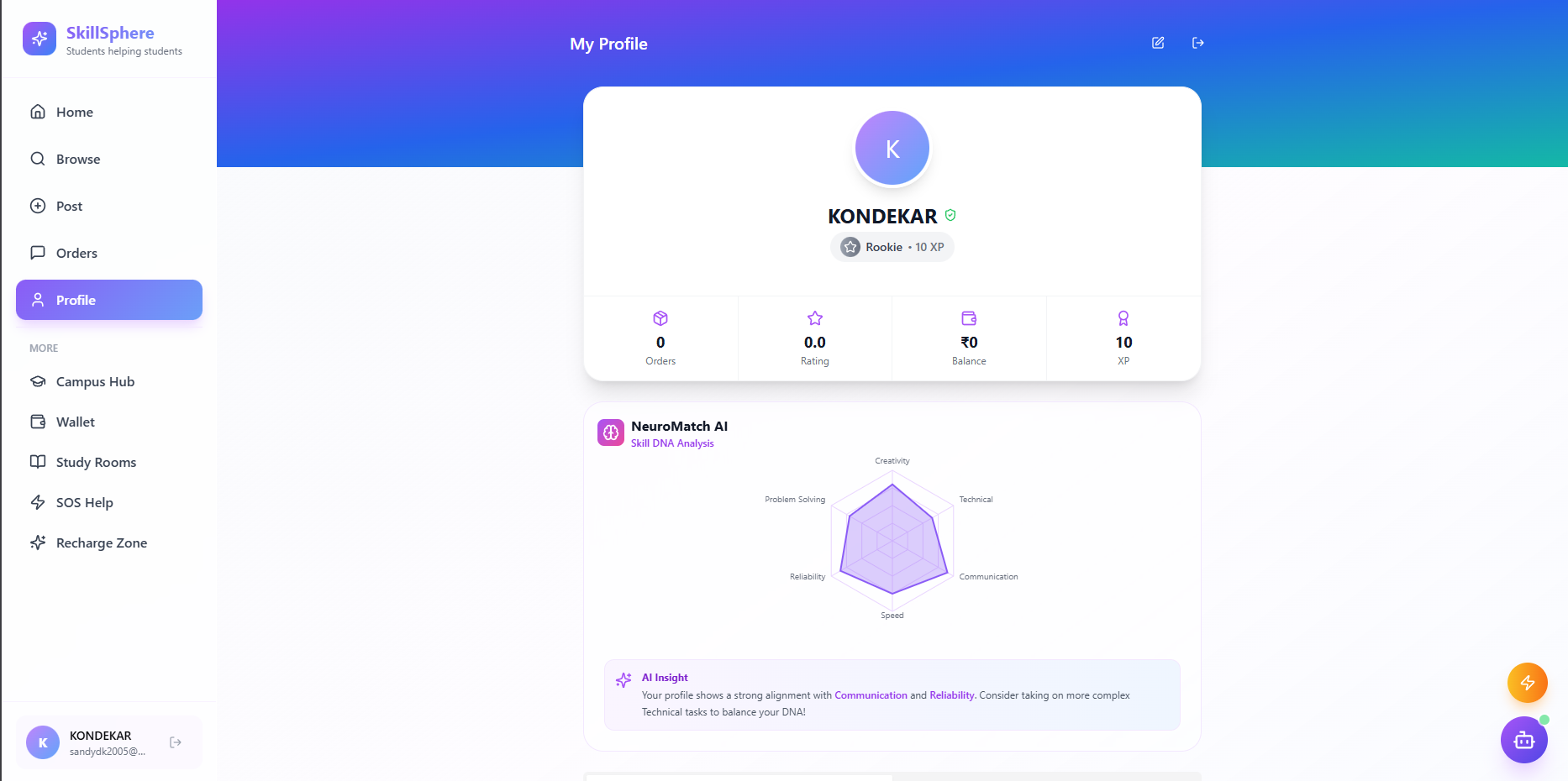
NeuroMatch AI – Smart Skill DNA Mapping What it does:
Analyzes user activities, ratings, and job success to detect strengths and suggest new skills. How it helps:
Displays a Skill DNA wheel with top and emerging abilities.
Suggests learning paths (“You’re 90% matched for UI Design!”).
Encourages continuous skill growth and self-discovery. Why it matters:
Transforms your app from a marketplace into a personal growth engine.
Voice-to-Task AI – Talk, Don’t Type What it does:
Lets users create job requests through voice instead of typing. How it helps:
Say: “I need a PPT made for my AI notes by tomorrow.”
AI converts speech into a complete gig listing (title, description, price).
Speeds up job posting and improves accessibility. Why it matters:
Delivers futuristic convenience and inclusion — everyone can use the app easily, even on the go.
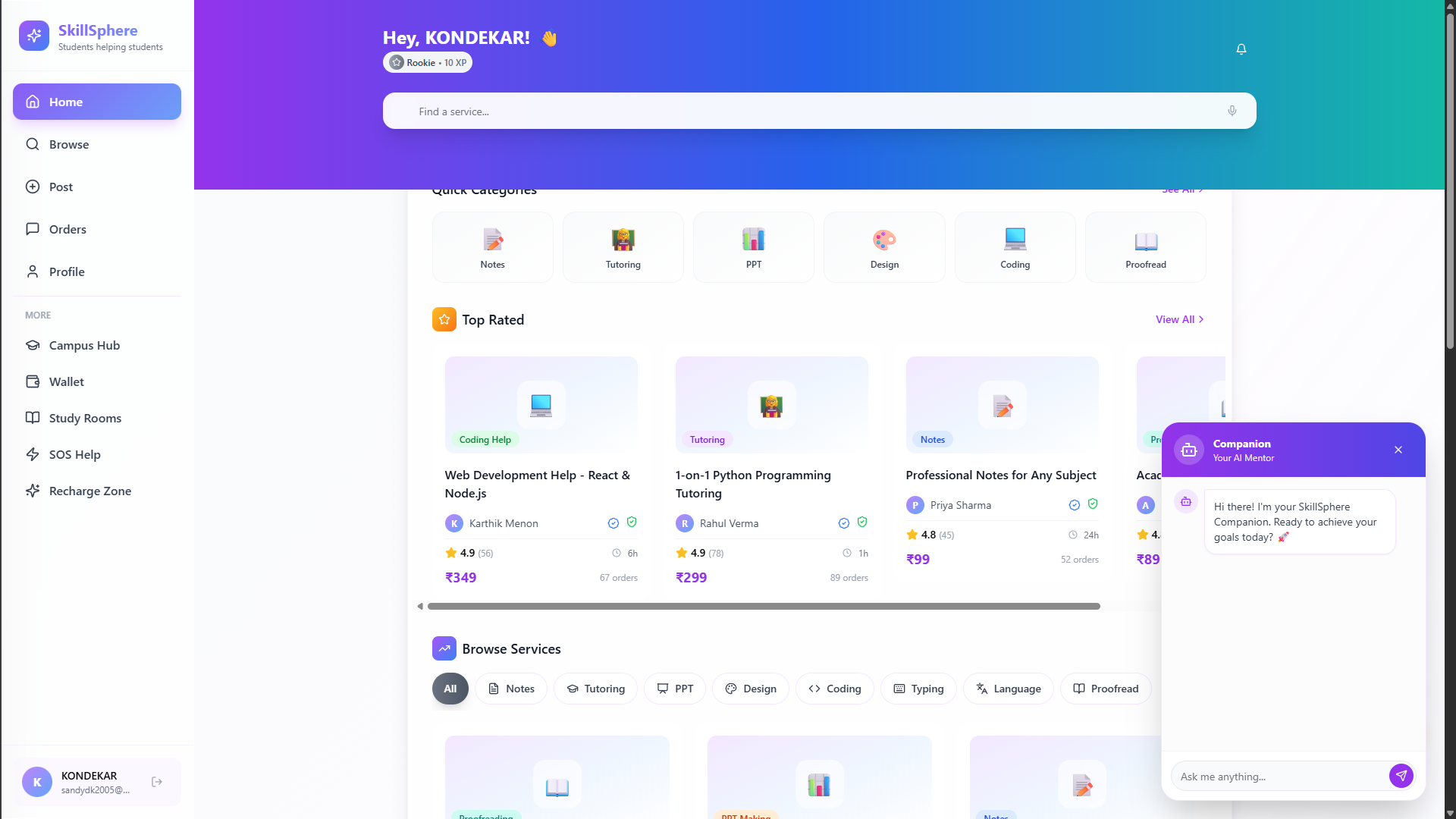
SkillSphere Companion – AI Mentor That Grows With You What it does:
An in-app AI mentor that learns your habits, celebrates your progress, and guides your next steps. How it helps:
Motivates users (“You’ve earned ₹400 this week, keep going!”).
Recommends gigs and learning material.
Sends focus reminders, balance tips, and performance insights. Why it matters:
Creates emotional engagement — transforms a marketplace into a personal mentor experience.
Built With
- base44
- css
- design
- html
- javascript
- mobile-first
- prototype
- ui-ux
- workflow


Log in or sign up for Devpost to join the conversation.