-
-
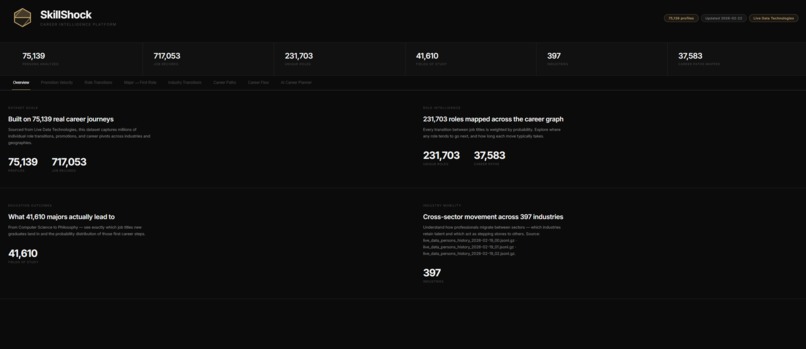
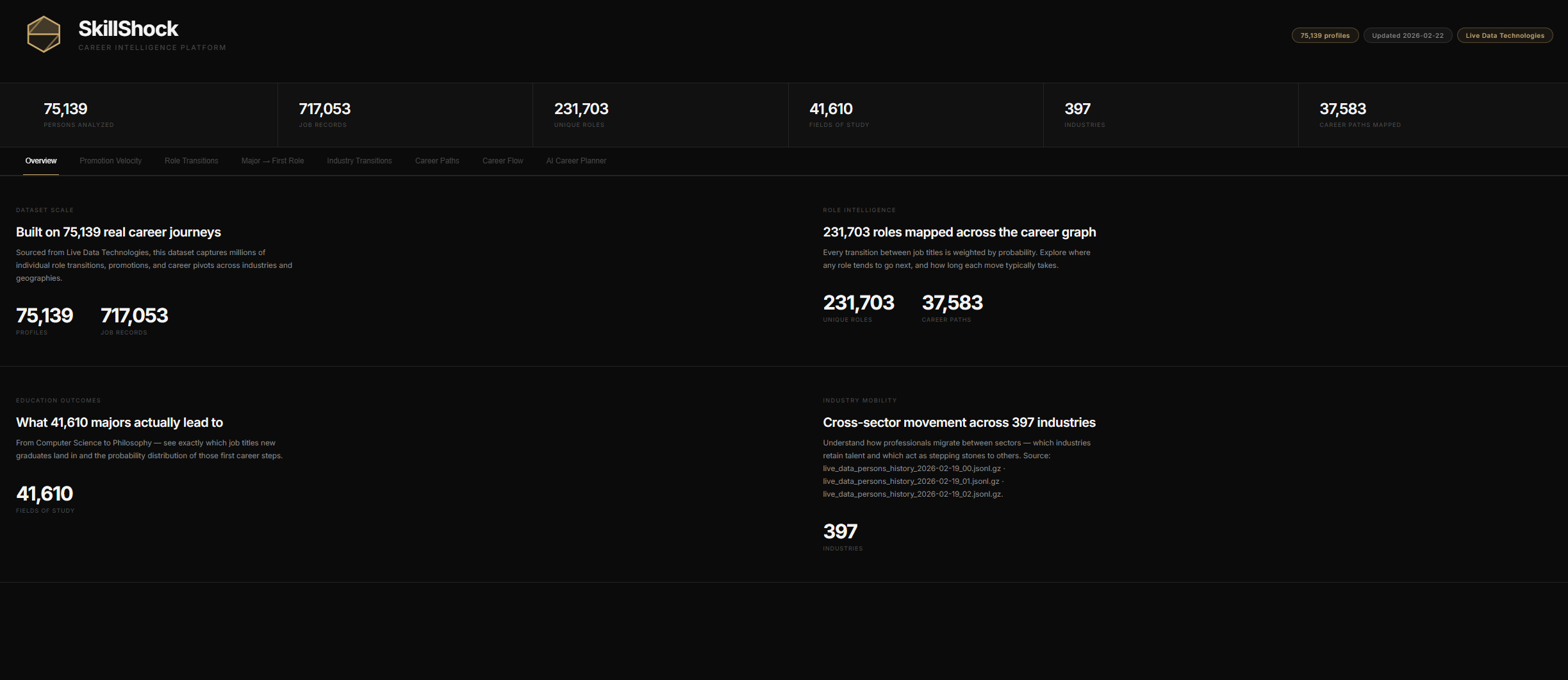
Main Webpage Overview
-
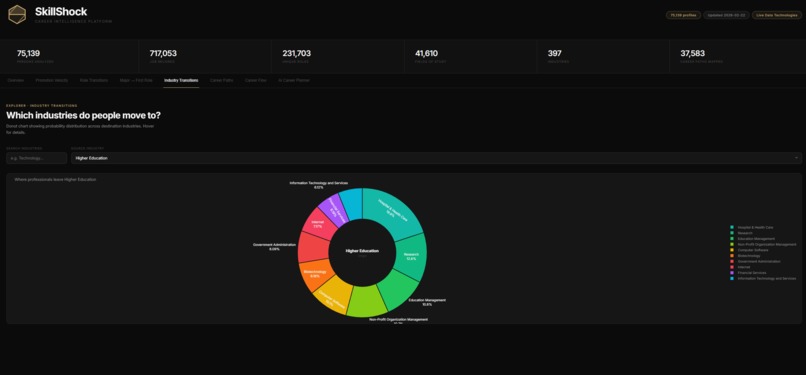
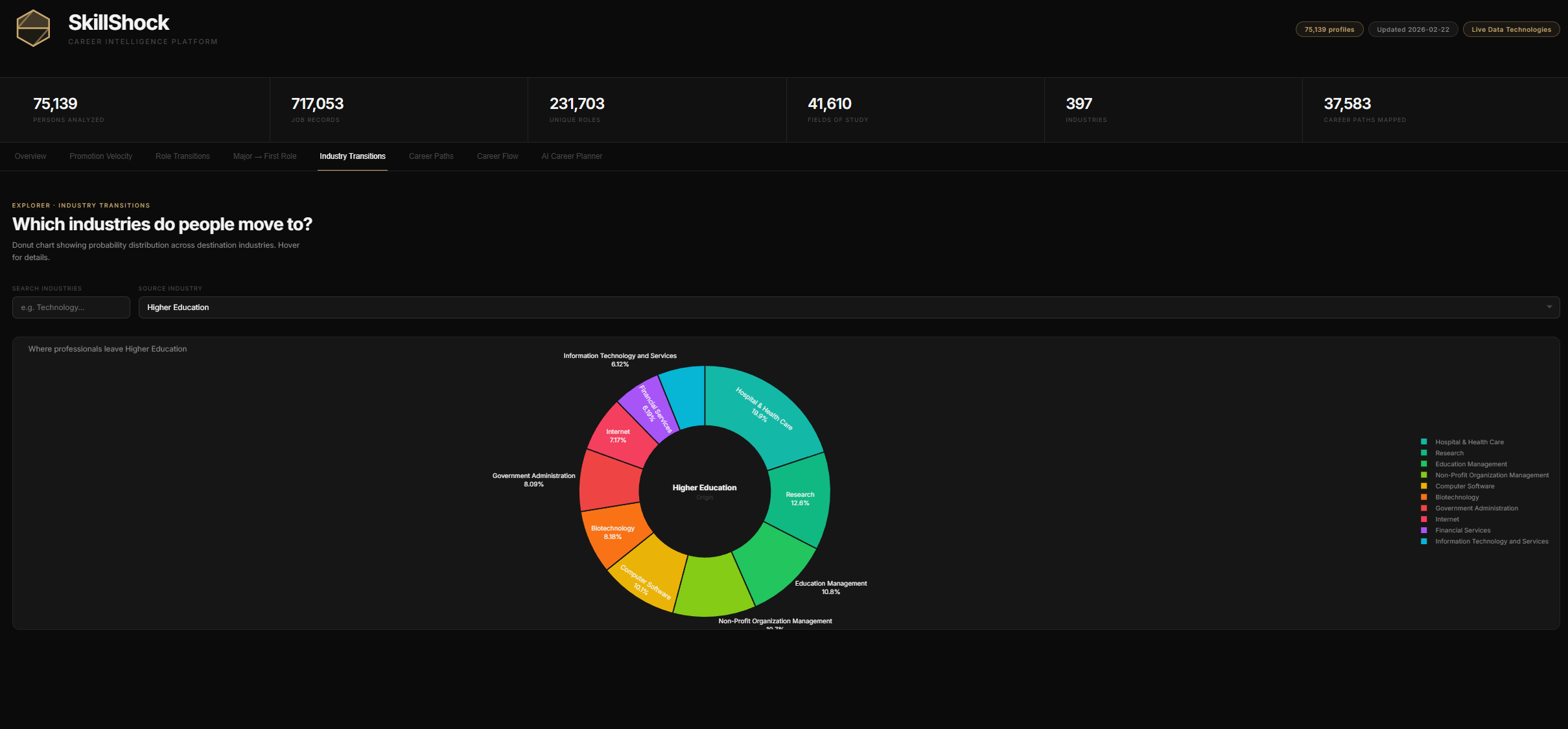
Pie Chart Industry Transitions
-
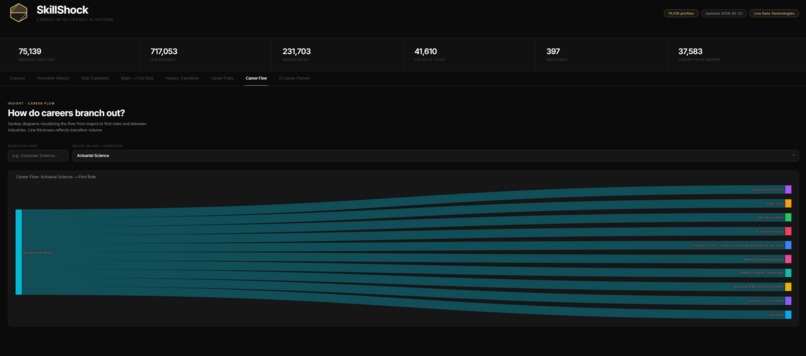
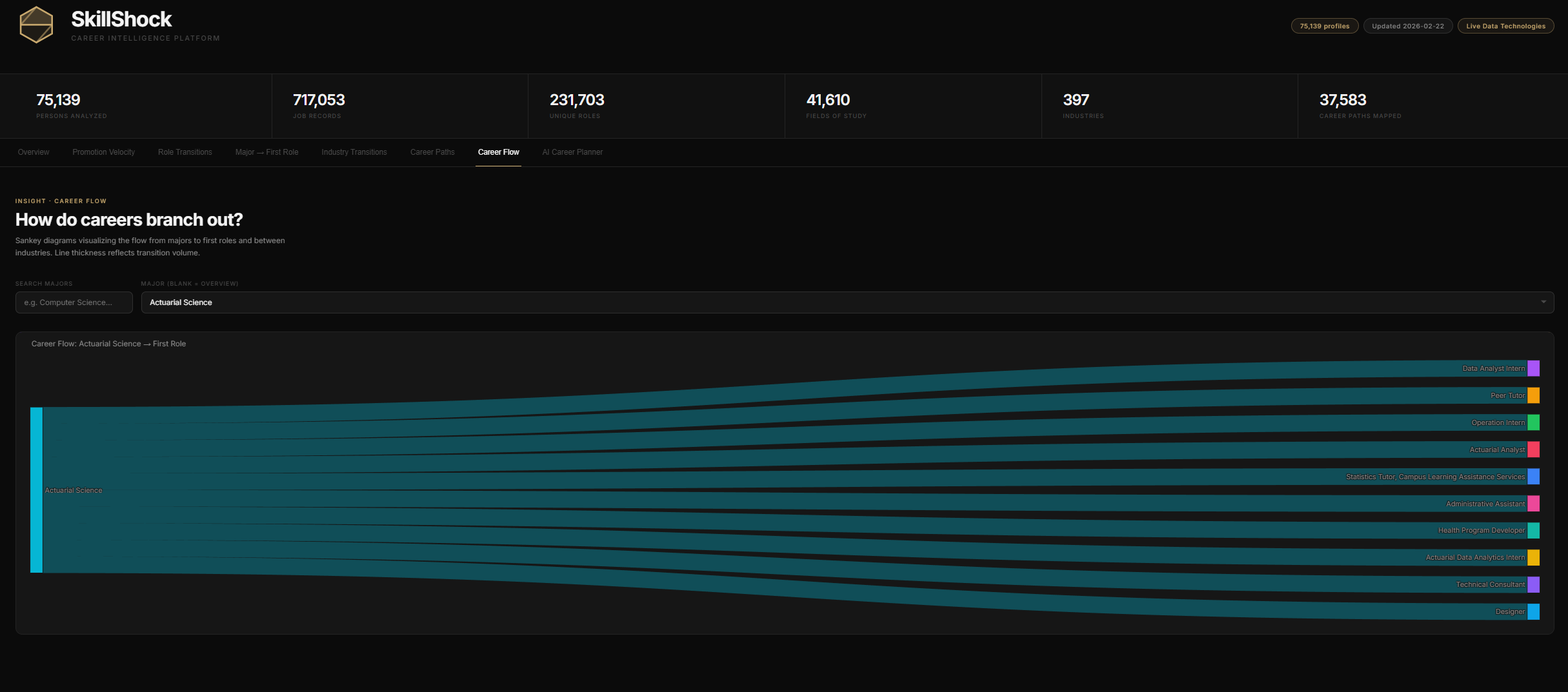
Career Paths Flowchart
-
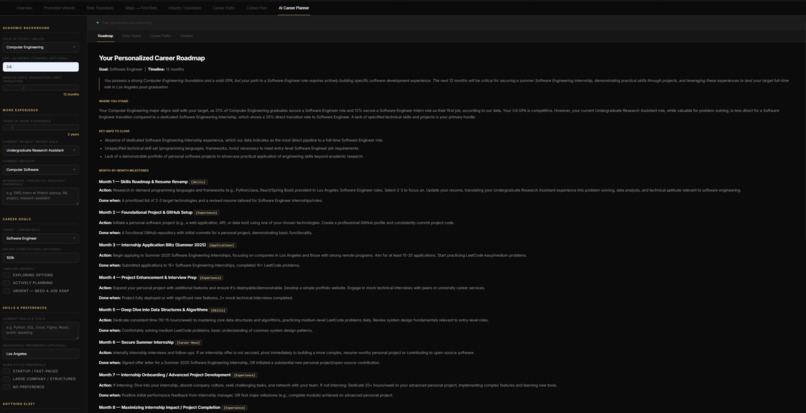
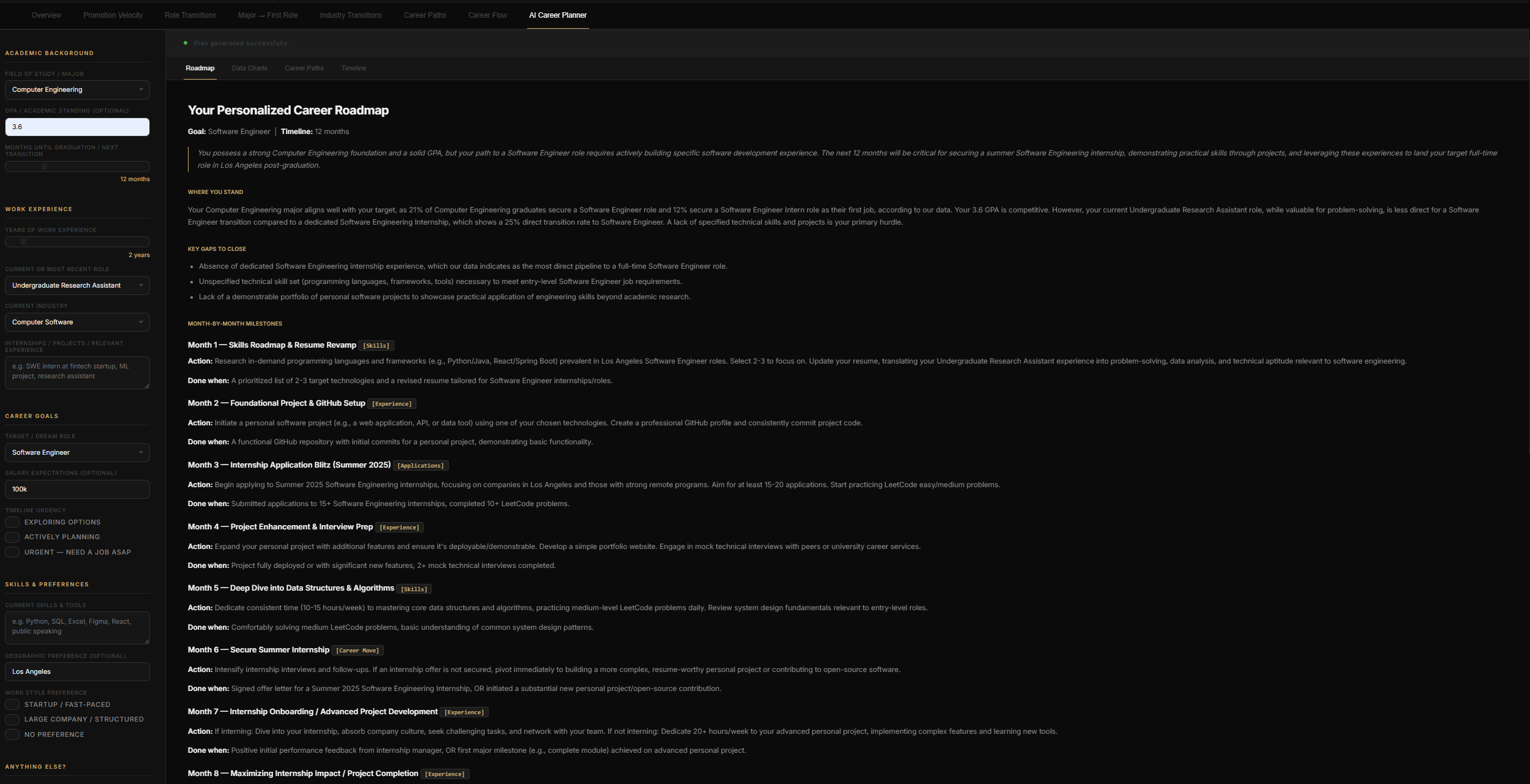
Career Mapping AI Agent Model
Inspiration
Currently, people data is messy, inconsistent, and scattered across disconnected systems. Because of this fragmented data, career pathways are nearly impossible to study at scale without structured tools. Organizations currently lack the structured insights needed to make evidence-based workforce decisions. This creates an impact gap where social impact initiatives do not have the reliable talent data required to measure their outcomes. We were inspired to build an intelligence layer for workforce mobility, making the kind of talent intelligence that is usually only available to Fortune 500 companies accessible to schools, nonprofits, and civic institutions.
What it does
SkillShock is a complete, 5-step automated intelligence pipeline that transforms raw people data into actionable career insights. It helps impact-driven organizations with the following use cases: It identifies who is advancing and who is being left behind in workforce mobility. It surfaces bias patterns to support equitable hiring and fair talent strategies. It allows education programs to verify whether graduates actually land roles aligned to their education. It helps nonprofits measure program outcomes and place participants in better jobs
How we built it
We utilized real-world people data from two industry partners: RapidFire AI (providing career histories, skill taxonomy, and job title normalization) and Live Data Technologies (providing live employment datasets and real-time hiring signals). We combined these datasets to build a real-world, scalable career intelligence system using the following tech stack:
Ingest & Normalize: We built our data pipeline architecture using Python for the ingestion, cleaning, deduplication, and normalization of unstructured people data from multiple sources. Store: The normalized career records are stored in SQLite, which serves as a lightweight and portable relational database. Compute Trajectories: A custom analytics engine computes trajectories by calculating role tenure, mobility scores, and skill progression. Export & Deliver: The pipeline generates AI-ready, structured JSON outputs. These outputs are designed for direct ingestion by downstream AI models, forecasting models, and decision support systems.
Challenges we ran into
Handling Data Fragmentation: People data is inherently messy and scattered across disconnected systems, making it difficult to consolidate into a single source of truth. Processing Unstructured Files: We had to develop logic to process messy, unstructured people data files from multiple different sources. Normalization Complexity: A major hurdle was cleaning and deduplicating data to perform skills taxonomy and job title normalization so the records could be analyzed at scale.
Accomplishments that we're proud of
End-to-End Pipeline: We successfully built a complete intelligence pipeline that transforms raw people data into actionable career insights. Custom Analytics Engine: We engineered a system that calculates complex metrics like role tenure, mobility scores, and skill progression. Democratizing Intelligence: We created a scalable system that makes high-level talent intelligence—usually reserved for Fortune 500 companies—accessible to the schools and civic institutions that need it most. AI-Ready Exports: We developed a structured export format that allows our intelligence to be directly ingested by LLMs and predictive workforce models.
What we learned
The Need for Structure: We learned that without structured tools, studying career pathways at scale is nearly impossible due to the inconsistency of the data. Impact of Workforce Visibility: We discovered how structured data can surface bias patterns and identify exactly who is being left behind in the workforce. Education-Career Alignment: We learned that tracing whether graduates actually land jobs in their field is a critical missing link for policy decisions and workforce development.
What's next for Skillshock
We built SkillShock for the Data4Good Datathon 2026, focusing on Education & Digital Equity and Civic Responsibility. Moving forward, this pipeline can be expanded for AI workforce forecasting by feeding our structured career data into predictive workforce models. This will allow organizations to study upward economic mobility patterns across different regions and identify pipeline gaps to optimize recruiting funnels.

Log in or sign up for Devpost to join the conversation.