SkillsForge
Inspiration
AI coding agents are powerful but their workflows are a total mess right now They load the wrong skills paste endless terminal outputs into context and rely on sketchy skill packs that are hard to trust or reuse across Codex Claude Code Cursor OpenCode and other AI CLIs
We built SkillsForge because agent productivity isnt just about throwing more prompts at the model Agents need an actual work system the right skill the right workflow compact context and clear safety gates
unlike everything claude code or superpowers style plugins that just dump more skills into one host SkillsForge is a cross-CLI Work OS it routes the right skill and workflow shrinks context with map/slim/digest and ships with validate→package→receipts so agents get faster without blowing up the prompt or wasting tokens
What it does
SkillsForge is a Work OS for Agent Skills
It helps AI agents:
- Pick the right skill or workflow for the task instead of guessing
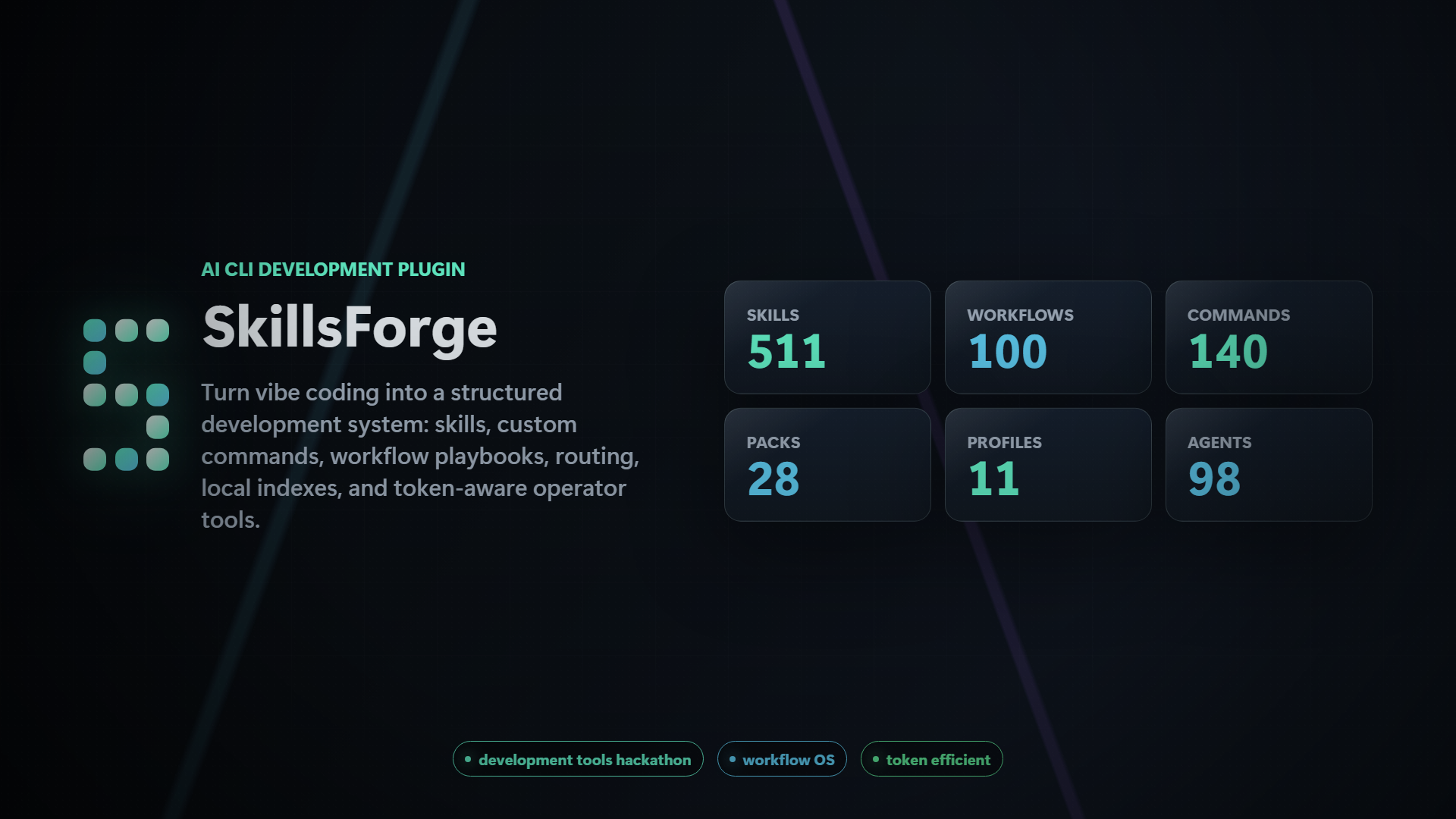
- Use a local skill library with 499 skills 28 packs 11 profiles and 100 dry-run workflows
- Reduce noisy terminal output with compact operator commands like
sf mapsf slimsf wbsf digestandsf next - Work across Codex Claude Code Cursor OpenCode ZCode Hermes Gemini and custom AI CLI skill folders
- Stay safer with validation packaging policy hooks where supported and receipts
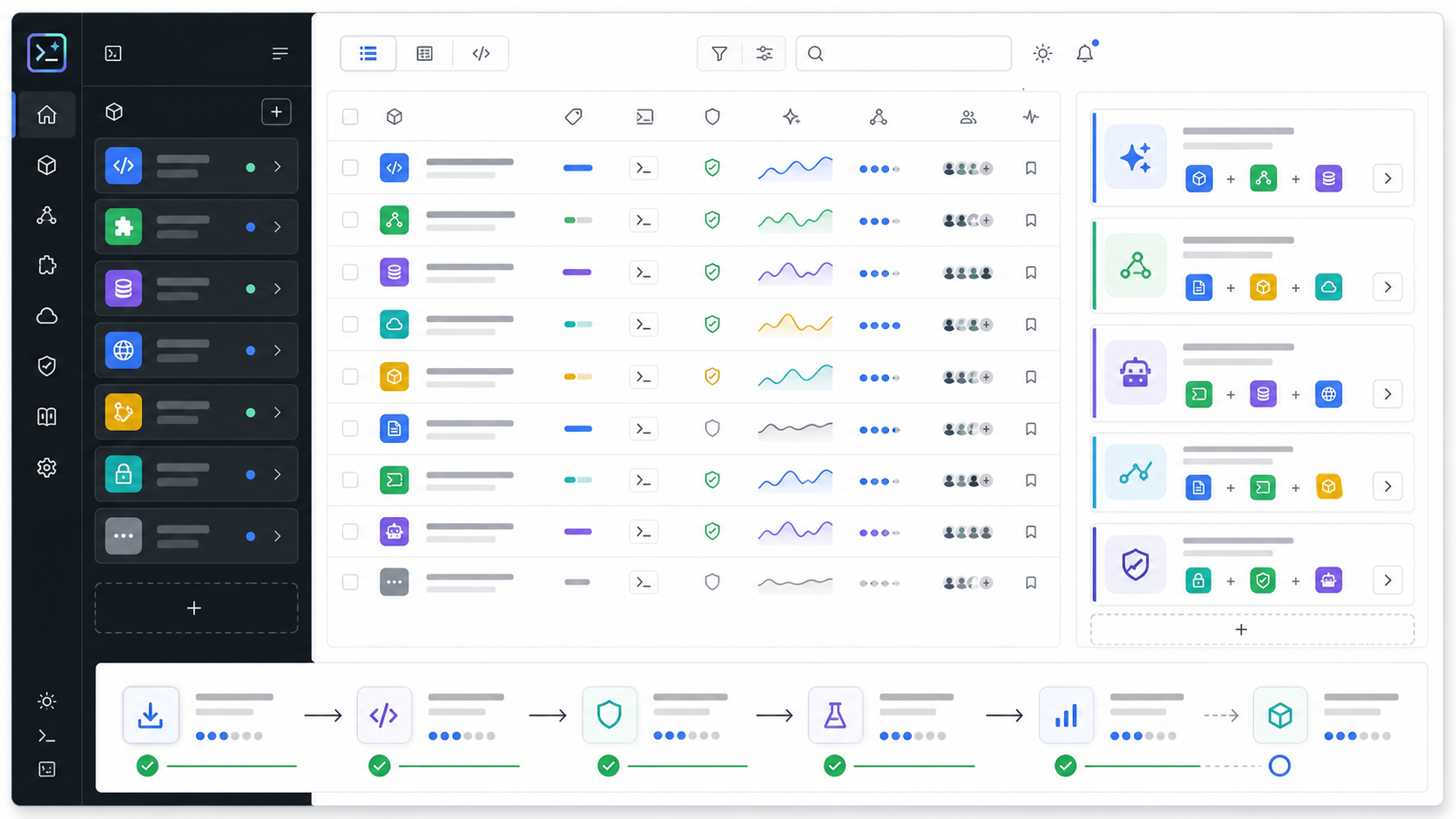
- Give users a local HTML library UI and AI-readable index so agents quickly understand what skills are installed and which one to use
In short SkillsForge turns scattered AI skills into a practical system agnets can actually use
How we built it
We built SkillsForge as a Node.js 20 ESM developer tool with a bundled CLI skill catalog workflow engine local library UI MCP server and multi-host installer
The core pieces are:
- A catalog of skills packs and profiles
skillsforge.jsonsidecars beside every shipped skill for routing capability and trust metadata- A local library builder that indexes repo skills installed user skills plugin-cache skills and host-specific skill roots
- 100 dry-run workflows for coding testing security design docs ops data product media and agentic work
- Compact operator commands for AI CLIs so agents do not waste context on raw shell output
- A trust layer validate package hooks where supported receipts evidence and demo proof
- A thin MCP server with read-only tools for routing library lookup settings quality checks and workflows
We kept it local-first with no heavy frontend framework and no fake cloud dependency The library UI is just a single-file local HTML dashboard plus a JSON index
Challenges we ran into
The hardest part was keeping the proejct useful without making dishonest claims
We had to solve several problems at once:
- Making a large skill catalog searchable without forcing agents to load everything at once
- Keeping recommendations session-aware instead of hardcoded
- Supporting multiple AI CLIs while being honest that not every host has the same runtime policy support
- Reducing token waste without claiming fake 100x savings
- Making workflows useful in real agent sessions not just nice-looking JSON
- Building a local HTML library that is fast readable and useful for both humans and AI agents
- Keeping write/delete/install behavior safe by default
Accomplishments that we're proud of
We are proud that SkillsForge is not just another folder of markdown prompts
It now has:
- 499 skills organized into 28 packs and 11 profiles
- 100 dry-run workflows agents can preview before acting
- 98 specialist agent roles and 135 command shims
- A local skill library UI and AI index
- Multi-host install support with clear fidelity boundaries
- Compact AI CLI operators through
mapslimwbtokensdigestandnext - A judge-friendly demo path unsafe action denied safe package generated scoreboard emitted
- A trust layer that validates skills and creates reproducible evidence instead of asking users to blindly trust a prompt pack
The main accomplishment is the product shape SkillsForge combines skills workflows library operators host install and safety into one practical tool
What we learned
We learned that agnet performance improves most when context is organized
Better prompts help but the bigger unlock is giving agents:
- A small number of relevant skills
- Clear stop gates
- Compact terminal output
- A workflow they can dry-run
- A local source of truth for installed tools
- Safety rules that are visible and testable
We also learned that trust has to be part of the workflow not a separate feature A skill catalog without validation is risky but validation without routing and productivity tools is not enough
What's next for SkillsForge
Next we want to make SkillsForge even more useful in real AI coding sessions:
- Better default integrations for Codex and Claude Code
- More precise ForgeMap code intelligence
- Measured token-saving reports from real sessions
- Stronger workflow replay and evidence bundles
- Better local library UI for installed skills sources problems and recommendations
- More host adapters for emerging AI CLIs
- Higher-quality skill evaluation so every skill proves it improves agent output
The goal stays the same make AI agents faster safer and more useful by giving them a real operating system for skills
written by TLKH201313 , codex structered the md
Built With
- agnets
- codex
- ecc
- github-ecc
- github-superpowers
- goal-command
- gpt
- gpt5.5
- gpt5.6
- loop-command
- plguins
- skills
- superpowers
- workflows

Log in or sign up for Devpost to join the conversation.