SkillScan X — Predictive Career Intelligence
🌟 Inspiration
Every year, millions of talented students graduate with degrees, certifications, portfolios, and ambition — yet remain invisible to recruiters.
We watched friends apply to 80, 120, sometimes 200 jobs with no responses, no interviews, and no explanation why.
The most painful part wasn't rejection.
It was the silence.
No recruiter feedback. No visibility into missing skills. No understanding of market demand. No roadmap. No signal.
Just endless guessing.
We realized modern hiring has become a hidden optimization problem:
- Recruiters use ATS filters.
- Skills change faster than university curricula.
- Market demand shifts weekly.
- Students don't know which skills actually matter.
- Learning paths are chaotic and inefficient.
The problem wasn't lack of talent.
The problem was lack of intelligence.
So we asked:
What if employability could be measured, predicted, optimized, and continuously improved like a real-time intelligence system?
That idea became SkillScan X.
Not a resume builder. Not a chatbot. Not another job board.
SkillScan X is an Autonomous Employability Intelligence System that uses:
- AI agents,
- graph intelligence,
- predictive analytics,
- labor-market intelligence,
- and optimization algorithms
to help students understand exactly:
- why they are getting rejected,
- what skills they are missing,
- what recruiters actually want,
- and the fastest path to becoming employable.
⚙️ What It Does
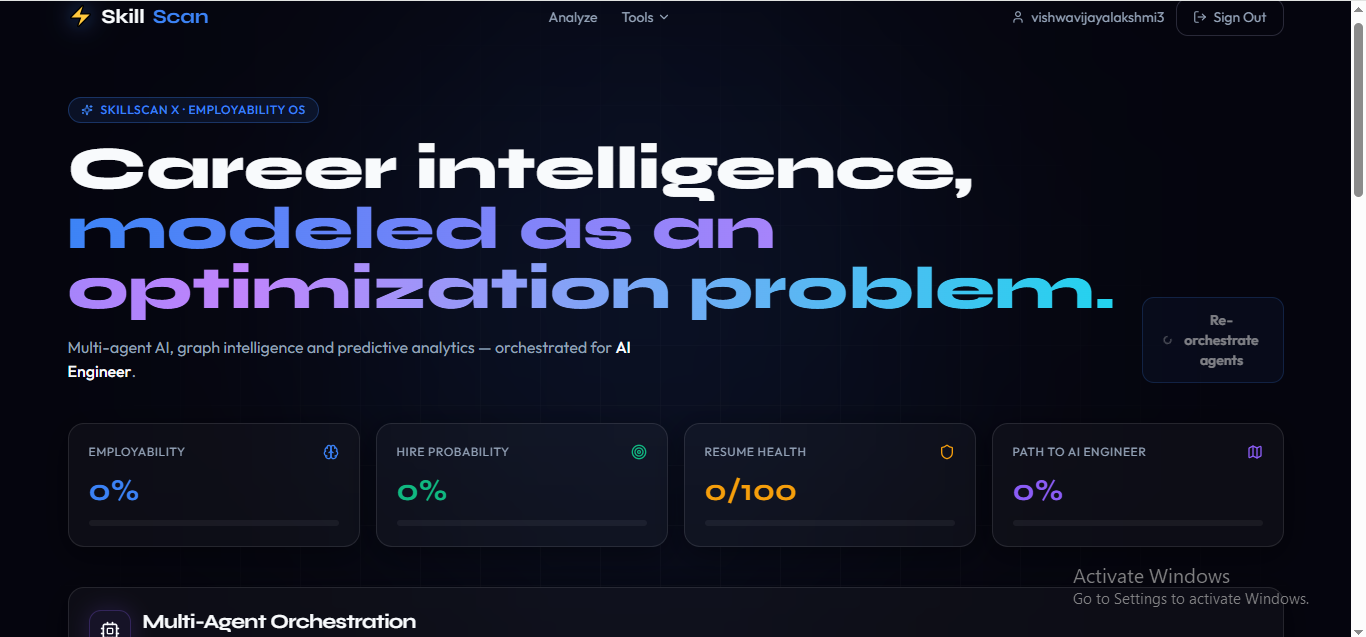
SkillScan X transforms employability into an optimization problem.
The platform analyzes:
- resumes,
- GitHub profiles,
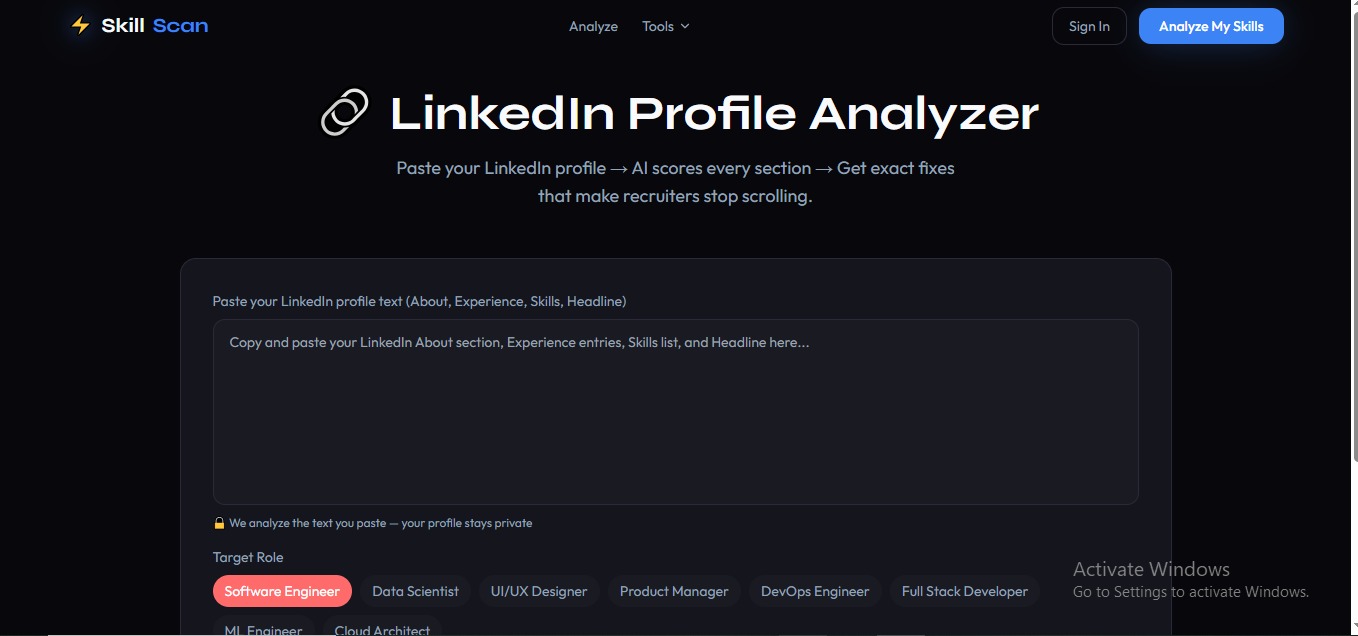
- LinkedIn profiles,
- job descriptions,
- market demand,
- and skill relationships
to generate a complete AI-powered employability strategy.
🧠 1. AI Resume Intelligence Engine
Users upload their resume or connect LinkedIn/GitHub profiles.
The AI system:
- parses resume structure,
- extracts technical skills,
- evaluates project quality,
- detects ATS weaknesses,
- identifies missing recruiter signals,
- and benchmarks the profile against real-world hiring expectations.
Instead of generic advice, users receive:
- Employability Score
- ATS Compatibility Score
- Technical Depth Score
- Recruiter Trust Score
- Resume Health Score
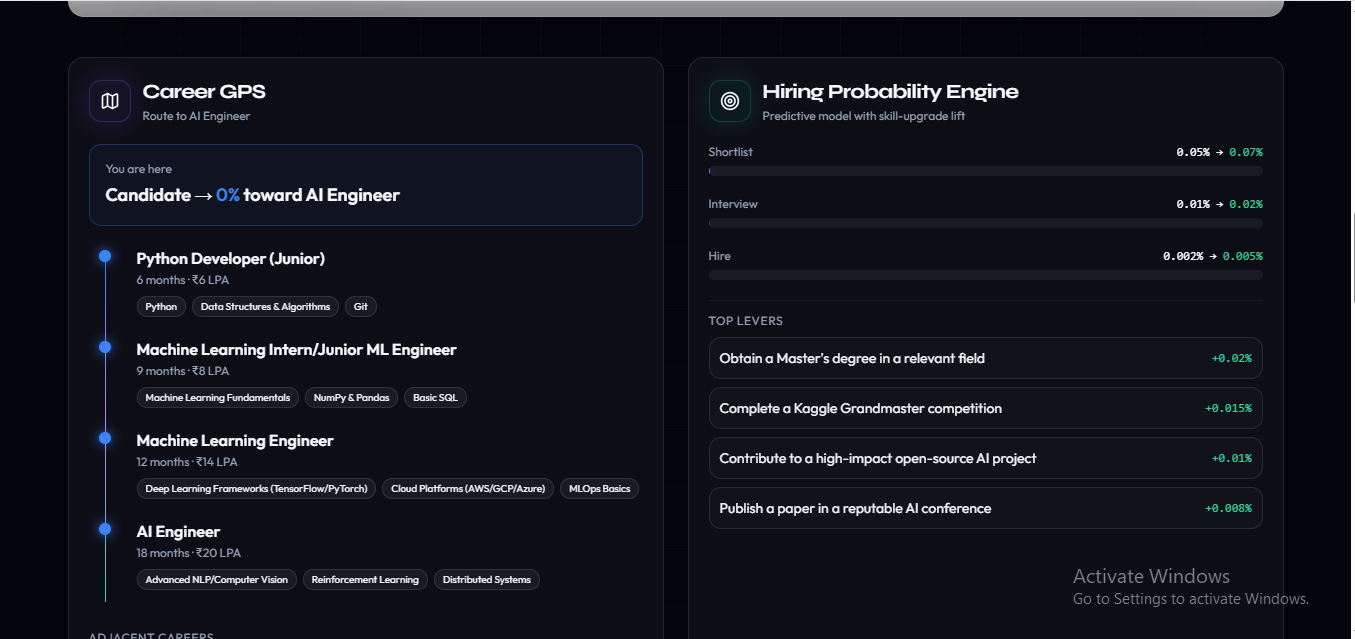
📊 2. Hiring Probability Prediction
SkillScan X predicts:
- shortlist probability,
- interview probability,
- and hiring probability.
Example:
| Scenario | Hiring Probability |
|---|---|
| Current Resume | 18% |
| Add SQL + Cloud Project | 37% |
| Improve GitHub Activity | 52% |
| Complete Optimized Roadmap | 71% |
The system doesn't just analyze resumes.
It forecasts outcomes.
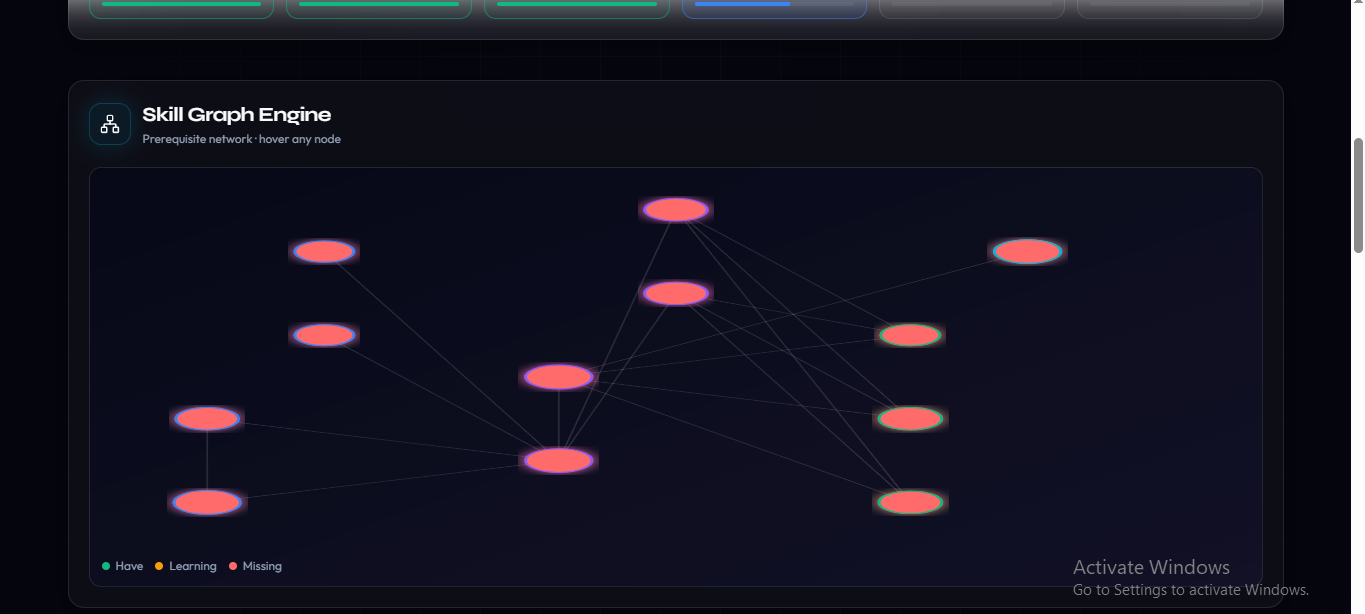
🕸️ 3. Graph-Based Skill Intelligence Engine
Instead of simple keyword matching, SkillScan X builds a dynamic Skill Knowledge Graph.
Skills become interconnected nodes.
The system maps:
- dependencies,
- transferable skills,
- adjacent careers,
- and shortest learning paths.
Example:
Python
 ├── Data Science
 │     ├── Pandas
 │     ├── NumPy
 │     └── ML
 ├── Backend Development
 └── AI Engineering
This allows SkillScan X to:
- detect hidden career opportunities,
- calculate high-impact skill paths,
- and optimize learning progression intelligently.
🧭 4. Career GPS
One of our most powerful features.
SkillScan X shows users:
“You are currently 47% toward becoming an AI Engineer.”
Then it calculates:
- shortest skill path,
- estimated learning timeline,
- employability gain,
- and salary trajectory.
Instead of random learning, students receive:
- optimized progression,
- milestone checkpoints,
- and a structured career navigation system.
It feels like Google Maps for careers.
⚡ 5. AI Roadmap Optimization Engine
Most career platforms generate generic learning plans.
SkillScan X generates:
Minimum-Time Employability Optimization Plans
The roadmap engine considers:
- current skills,
- target role,
- market demand,
- learning constraints,
- available study time,
- and skill dependencies.
Then it computes:
- highest ROI skills first,
- dependency-aware sequencing,
- realistic milestones,
- and employability gain per task.
The result is a roadmap that is:
- realistic,
- optimized,
- and measurable.
🤖 6. Multi-Agent AI System
Instead of using one generic AI prompt, SkillScan X uses specialized AI agents.
AI Agent Pipeline
Resume Agent
↓
Skill Graph Agent
↓
Market Intelligence Agent
↓
Roadmap Optimization Agent
↓
Career Forecast Agent
↓
Interview Agent
↓
Recruiter Simulation Agent
Each AI agent:
- has its own responsibility,
- prompt structure,
- validation layer,
- and output schema.
This architecture dramatically improves:
- reliability,
- modularity,
- and reasoning quality.
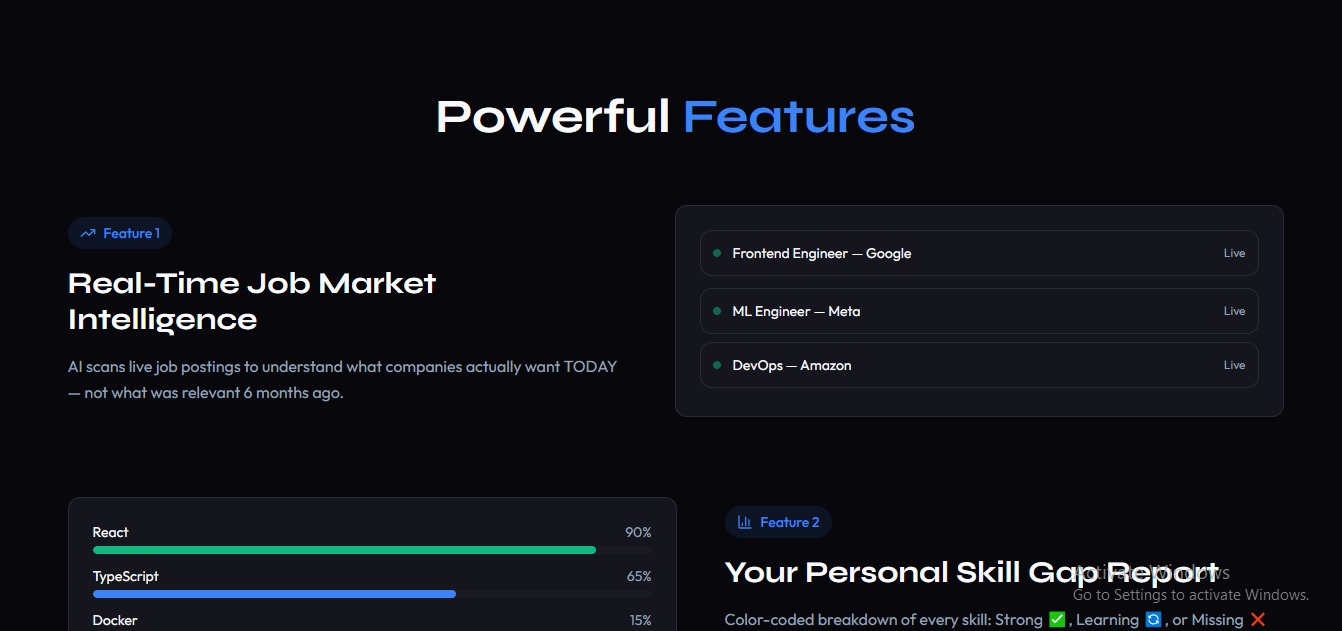
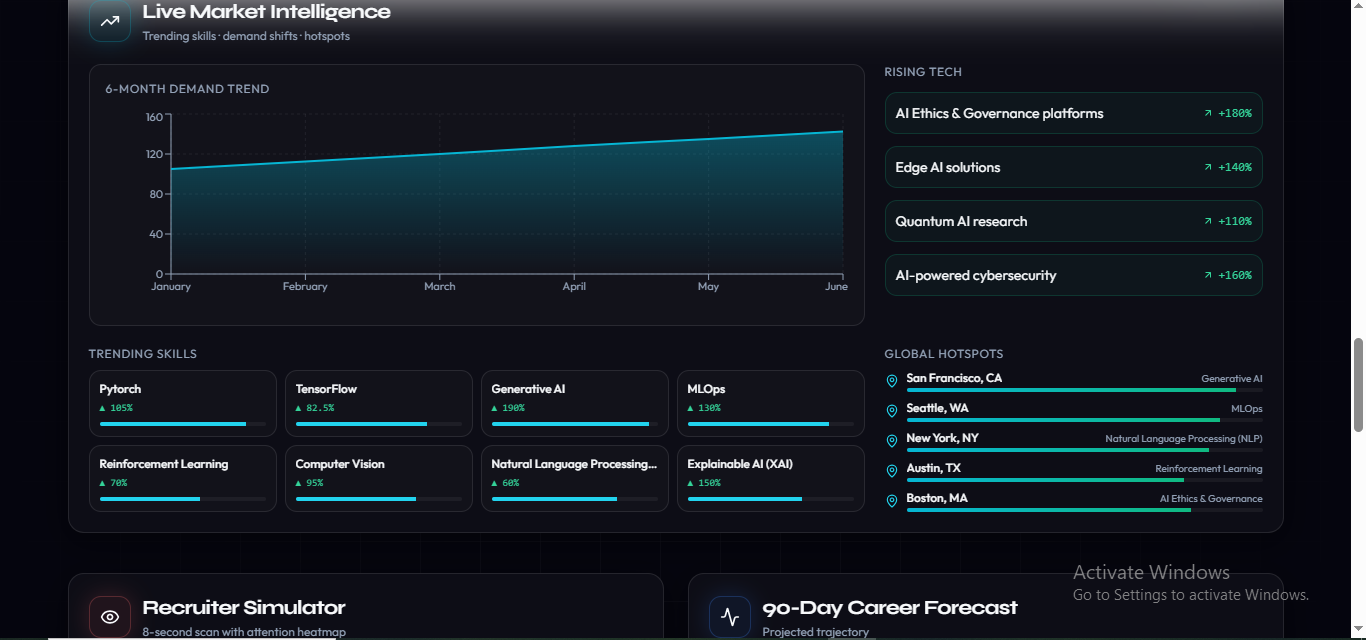
📈 7. Live Labor Market Intelligence
SkillScan X continuously tracks market trends and emerging skills.
The platform analyzes:
- hiring demand,
- salary growth,
- technology trends,
- and regional skill shortages.
Users can see:
- trending technologies,
- rising roles,
- declining skill demand,
- and future hiring opportunities.
Example insights:
- AI Infrastructure demand ↑
- Vector Database jobs ↑
- Cloud Security demand ↑
- Legacy frontend demand ↓
This transforms SkillScan X from a resume tool into a real-time labor market intelligence platform.
🎯 8. Recruiter Simulation Engine
One of our most innovative features.
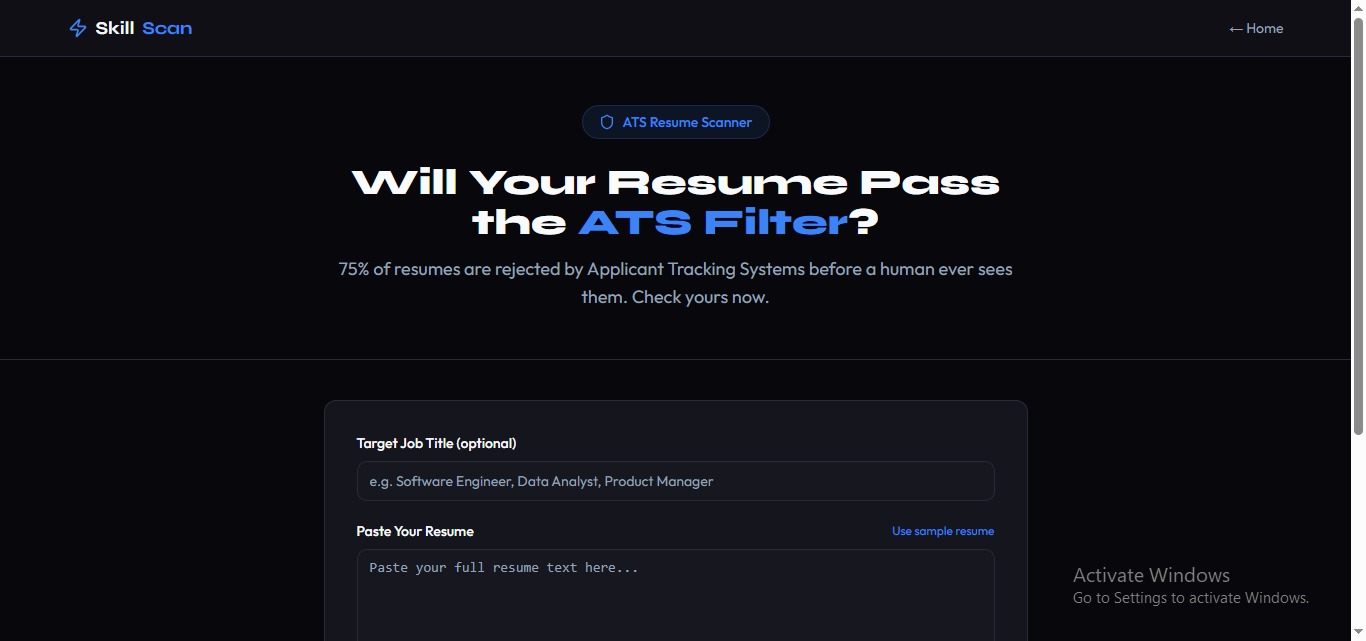
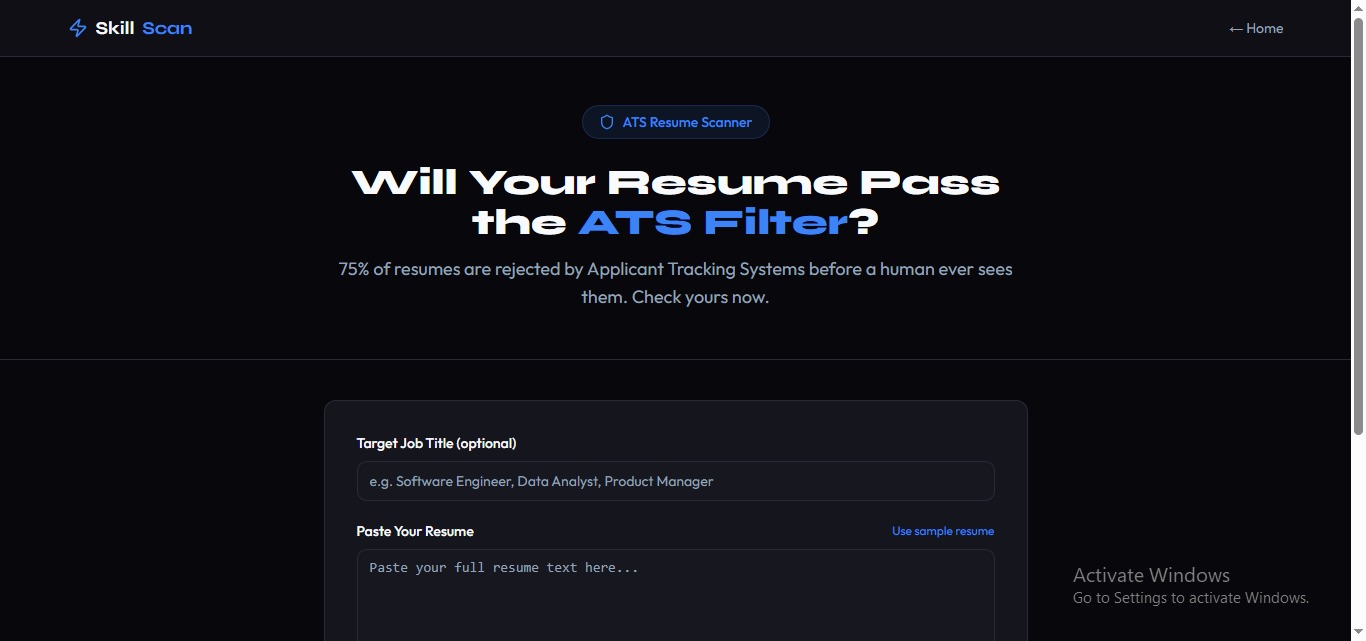
SkillScan X simulates how recruiters evaluate resumes.
The system:
- scans resumes like an ATS,
- highlights weak sections,
- detects missing impact metrics,
- and explains likely rejection reasons.
Example:
“Low recruiter confidence detected due to weak project quantification and missing cloud deployment experience.”
This gives students something they almost never receive in real life:
actionable recruiter feedback.
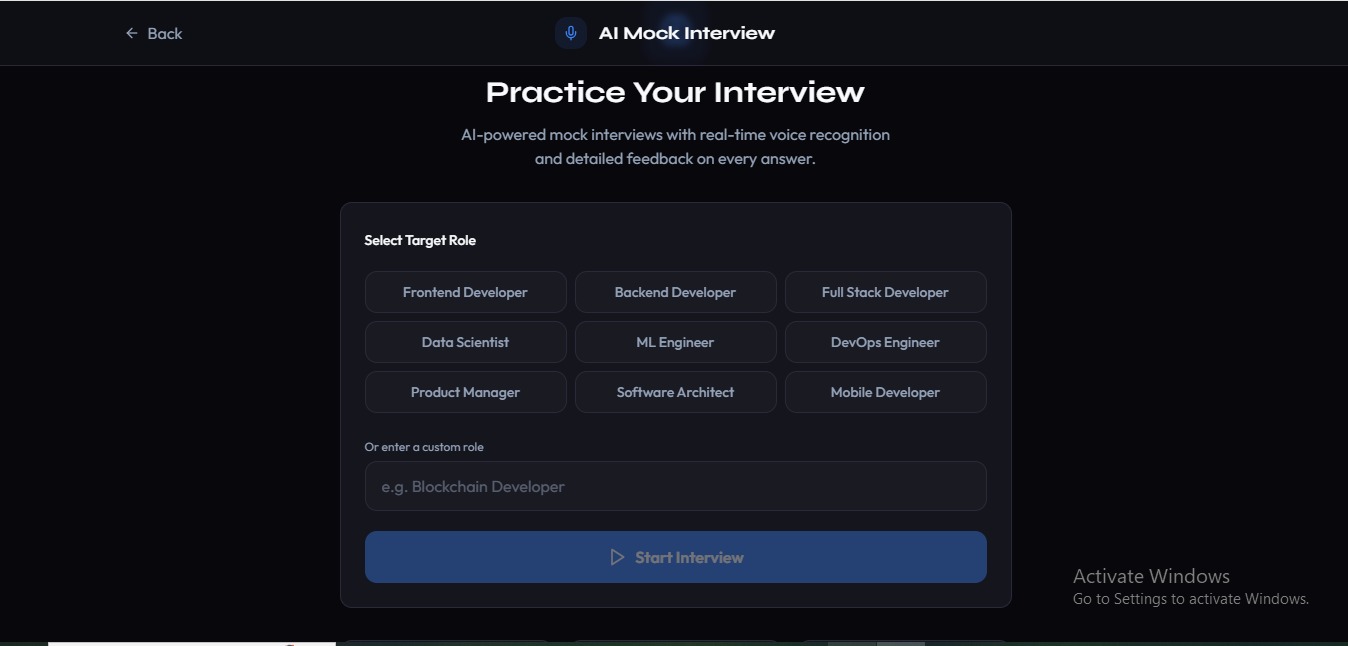
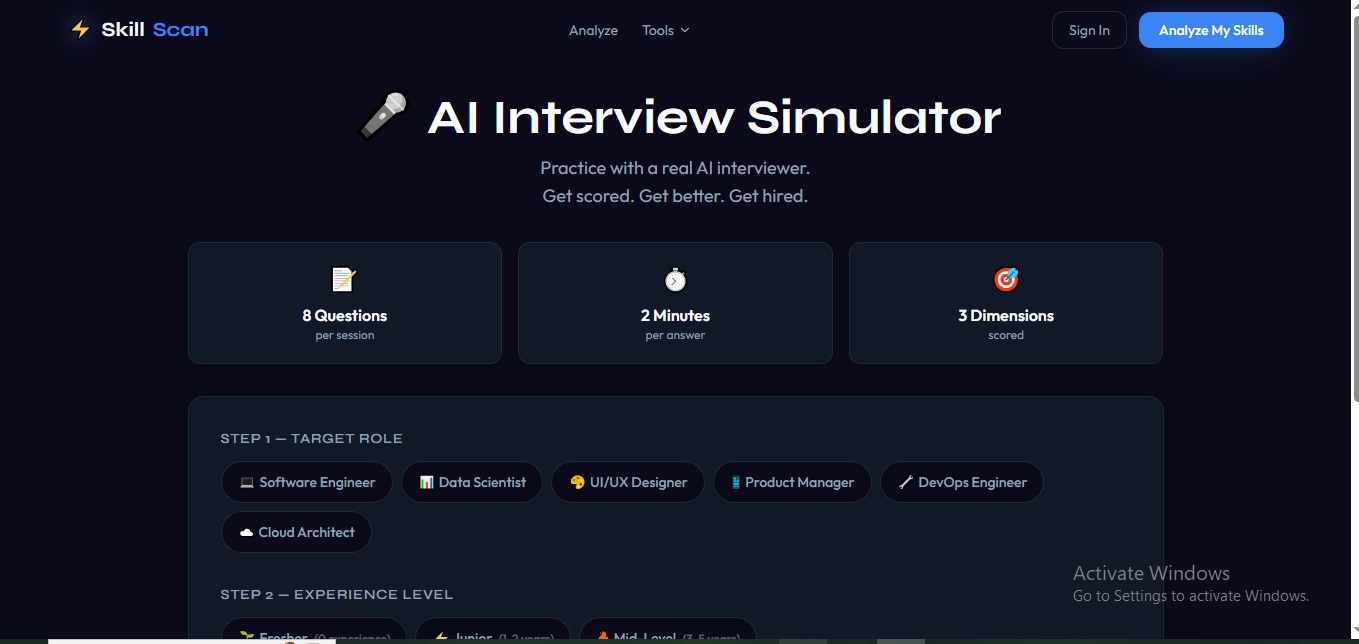
🎤 9. AI Mock Interviews
Users can practice role-specific interviews with adaptive AI interviewers.
The system evaluates:
- technical accuracy,
- communication clarity,
- speaking confidence,
- filler words,
- leadership signals,
- and storytelling quality.
Students receive:
- real-time scoring,
- rubric-based feedback,
- and improvement suggestions.
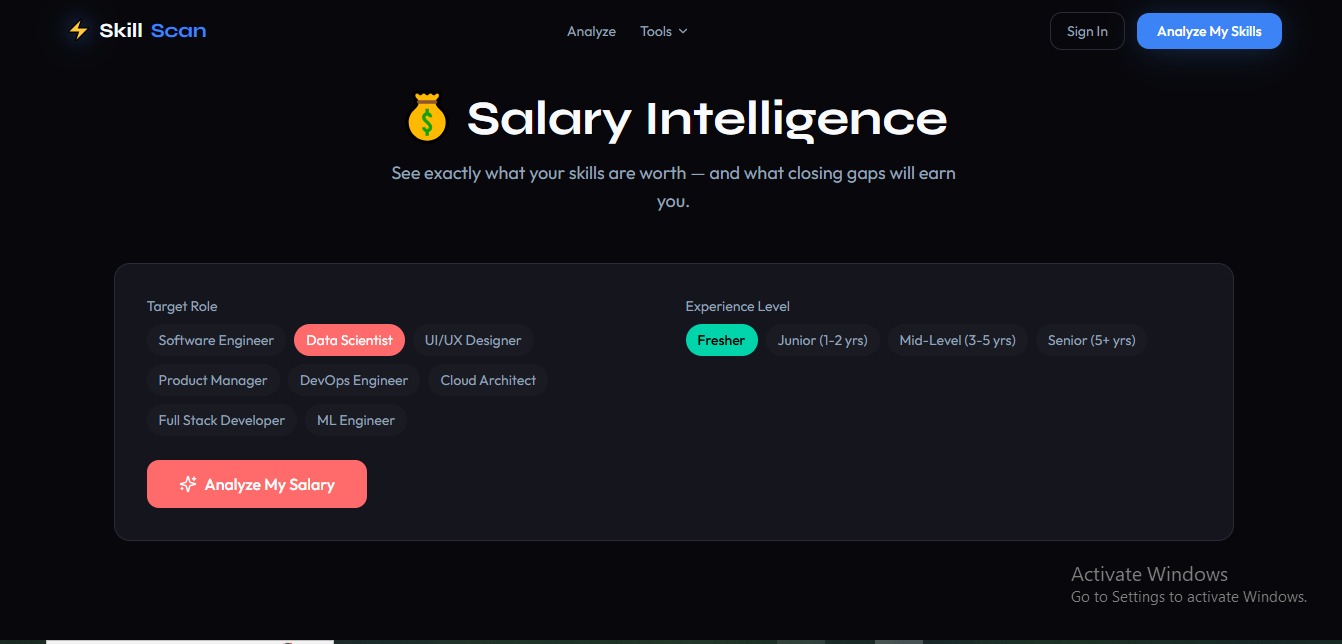
💰 10. Salary Intelligence & Career Forecasting
SkillScan X predicts:
- expected salary ranges,
- future salary growth,
- employability improvement,
- and projected interview success.
Example:
90-Day Forecast
----------------
Interview Rate: +42%
Employability Score: +31%
Expected Salary Growth: +58%
This creates a measurable vision of progress rather than vague motivation.
🧪 11. GitHub & Portfolio Intelligence
SkillScan X analyzes:
- GitHub consistency,
- repository quality,
- project complexity,
- README quality,
- and engineering activity.
The platform generates:
- Engineering Credibility Score
- Portfolio Strength Score
- Technical Consistency Score
This allows evaluation beyond resumes alone.
🌍 12. Global Hiring Gap Map
SkillScan X visualizes:
- city-wise hiring demand,
- regional skill shortages,
- technology growth patterns,
- and labor market gaps.
Example:
- Bangalore → AI Infrastructure Demand
- Mumbai → FinTech Growth
- Pune → DevOps Shortage
Our long-term vision is to build a public Hiring Gap Index that helps:
- students,
- universities,
- recruiters,
- and policymakers
understand the global employability landscape.
🛠️ How We Built It
We built SkillScan X using a modern AI-native architecture designed for scalability and real-world deployment.
Frontend
- React
- TypeScript
- Tailwind CSS
- Framer Motion
- Recharts
We designed the interface as a futuristic intelligence dashboard with:
- animated skill graphs,
- probability visualizations,
- dynamic forecasting,
- and real-time AI system feedback.
Backend & Database
- Supabase
- PostgreSQL
- Edge Functions
We used relational modeling to connect:
- users,
- resumes,
- skills,
- job roles,
- roadmaps,
- forecasts,
- and market intelligence.
This structure enabled scalable querying and intelligent recommendation systems.
AI Architecture
Powered by:
- Gemini API
- Multi-agent orchestration
- Structured prompting
- Validation pipelines
Every AI response:
- follows strict schemas,
- validates output consistency,
- retries malformed generations,
- and returns structured intelligence rather than generic text.
Intelligence Layer
We implemented:
- weighted skill scoring,
- semantic similarity matching,
- graph-based skill mapping,
- roadmap optimization logic,
- probabilistic hiring prediction,
- and adaptive employability forecasting.
🧱 Challenges We Ran Into
1. Reliable Structured AI Output
The hardest problem wasn't generating AI responses.
It was generating:
- reliable,
- parseable,
- structured,
- production-safe outputs.
We solved this with:
- schema-constrained prompting,
- validation pipelines,
- and retry mechanisms.
2. Modeling Employability Computationally
Employability is messy.
Different companies prioritize different signals.
We had to design weighted scoring systems that balanced:
- skill rarity,
- market demand,
- role relevance,
- and recruiter expectations.
3. Building Realistic Roadmap Optimization
Most AI systems generate unrealistic learning plans.
We solved this by adding:
- dependency sequencing,
- time constraints,
- skill prioritization,
- and employability ROI calculations.
4. Graph Intelligence Complexity
Building a dynamic skill graph capable of:
- adjacent role prediction,
- transferable skill mapping,
- and shortest-path recommendations
was one of the most technically challenging parts of the project.
5. Balancing Complexity with Simplicity
SkillScan X performs extremely sophisticated analysis internally.
But students should never feel overwhelmed.
Designing an interface that felt:
- intelligent,
- powerful,
- yet easy to use
was one of our biggest UX challenges.
🏆 Accomplishments That We're Proud Of
We transformed employability into a measurable system
Instead of vague career advice, SkillScan X generates:
- predictions,
- probabilities,
- optimized pathways,
- and measurable outcomes.
We built a true multi-agent AI architecture
Rather than using one chatbot prompt, we created specialized AI agents with:
- dedicated tasks,
- structured outputs,
- and orchestration pipelines.
We introduced graph intelligence into career analysis
Our skill graph system enables:
- transferable skill detection,
- shortest learning paths,
- and adjacent career discovery.
We built a working end-to-end intelligence platform
SkillScan X is not a concept.
It is a functional platform capable of:
- resume analysis,
- roadmap generation,
- interview simulation,
- hiring prediction,
- and market intelligence analysis.
We solved a real human problem
Students are rejected every day without explanation.
SkillScan X closes that feedback gap.
📚 What We Learned
Prompt engineering is real systems engineering
Reliable AI systems require:
- constraints,
- validation,
- orchestration,
- and structured reasoning.
Intelligence is more valuable than information
Students don't need more tutorials.
They need:
- prioritization,
- direction,
- optimization,
- and clarity.
Algorithms matter
The real power came not from AI text generation alone, but from combining:
- graph intelligence,
- predictive analytics,
- optimization logic,
- and market intelligence.
Simplicity is difficult
Making a computationally sophisticated system feel simple required constant iteration.
Feedback loops drive improvement
The same principle behind SkillScan X applies to development itself:
Without feedback, improvement becomes guesswork.
🚀 What's Next for SkillScan X
Phase 1 — Real-Time Market Integration
Connect live hiring APIs and labor market feeds to improve forecasting accuracy dynamically.
Phase 2 — Adaptive Intelligence Layer
Train the system using anonymized outcome data:
- interviews,
- roadmap completion,
- hiring success,
- and salary progression.
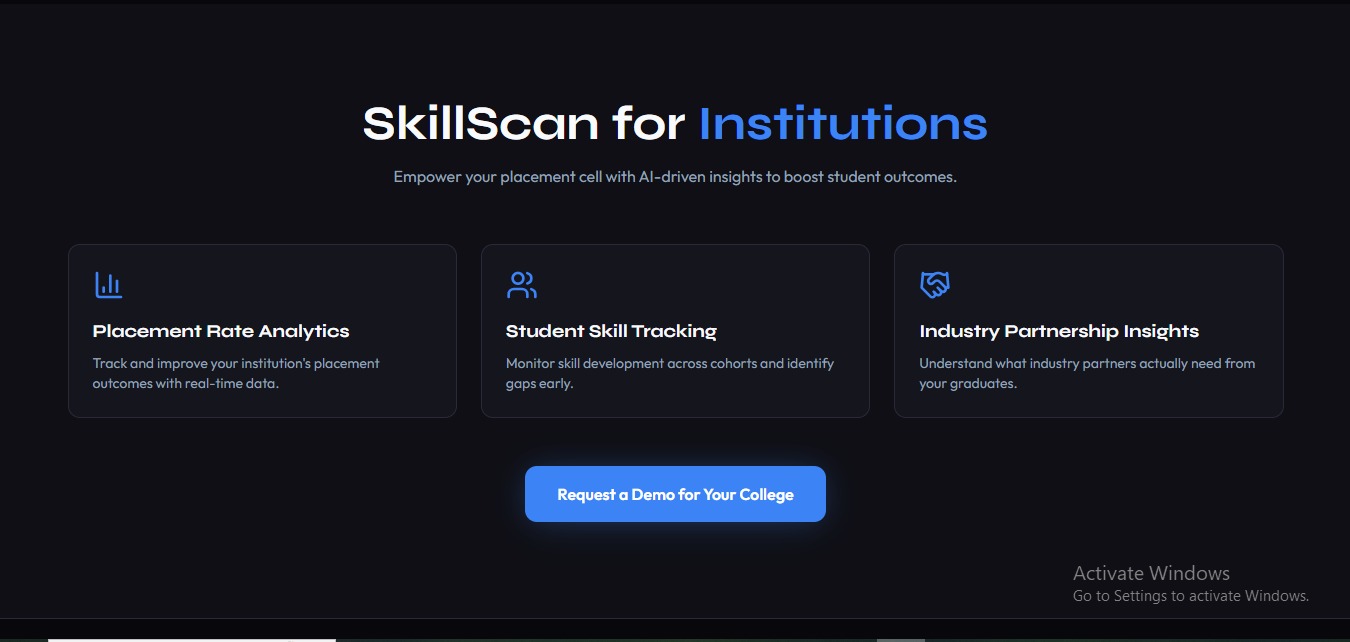
Phase 3 — University Intelligence Dashboard
Allow colleges to identify:
- curriculum gaps,
- cohort weaknesses,
- and emerging industry demand.
Phase 4 — Recruiter Intelligence System
Enable recruiters to:
- define ideal candidate profiles,
- compare applicants probabilistically,
- and discover high-potential candidates earlier.
Phase 5 — Global Employability Intelligence Network
Build the world's largest open employability intelligence layer.
A system capable of mapping:
- skill shortages,
- labor-market inefficiencies,
- and career mobility patterns globally.
The future of hiring should not depend on guesswork.
It should depend on intelligence.
# SkillScan X ### Transforming Employability Into an Optimization Problem *The gap isn't talent.* *The gap isn't effort.* # The gap is intelligence.
Built With
- api
- css
- framer
- gemini
- lovable
- motion
- postgresql
- react
- recharts
- speech
- supabase
- tailwind
- typescript
- web

Log in or sign up for Devpost to join the conversation.