-
-
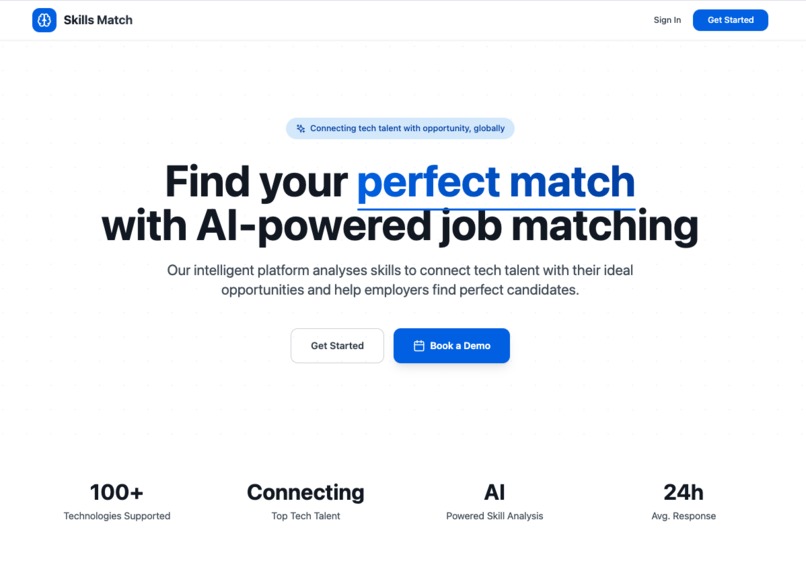
Skills Match - Landing Page
-
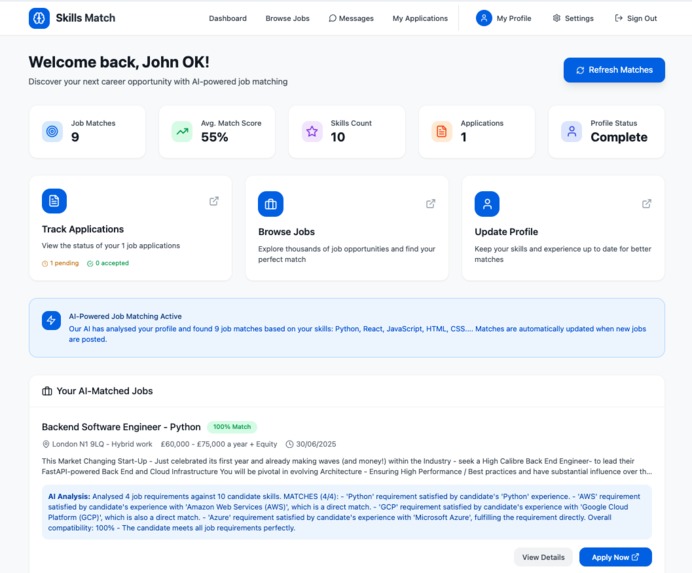
Skills Match - Dashboard
-
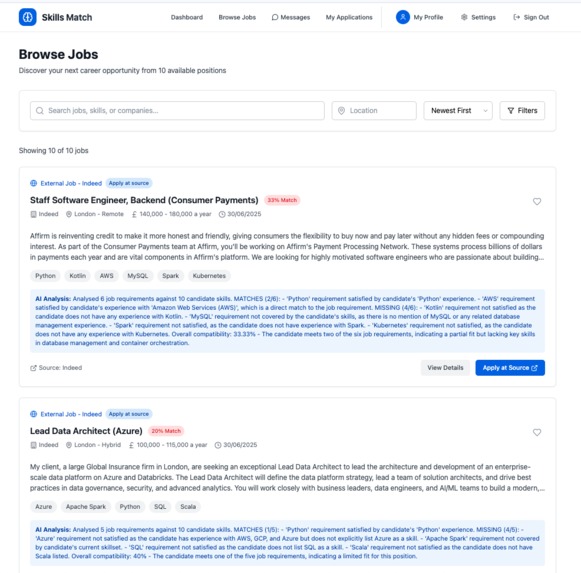
Skills Match - Jobs
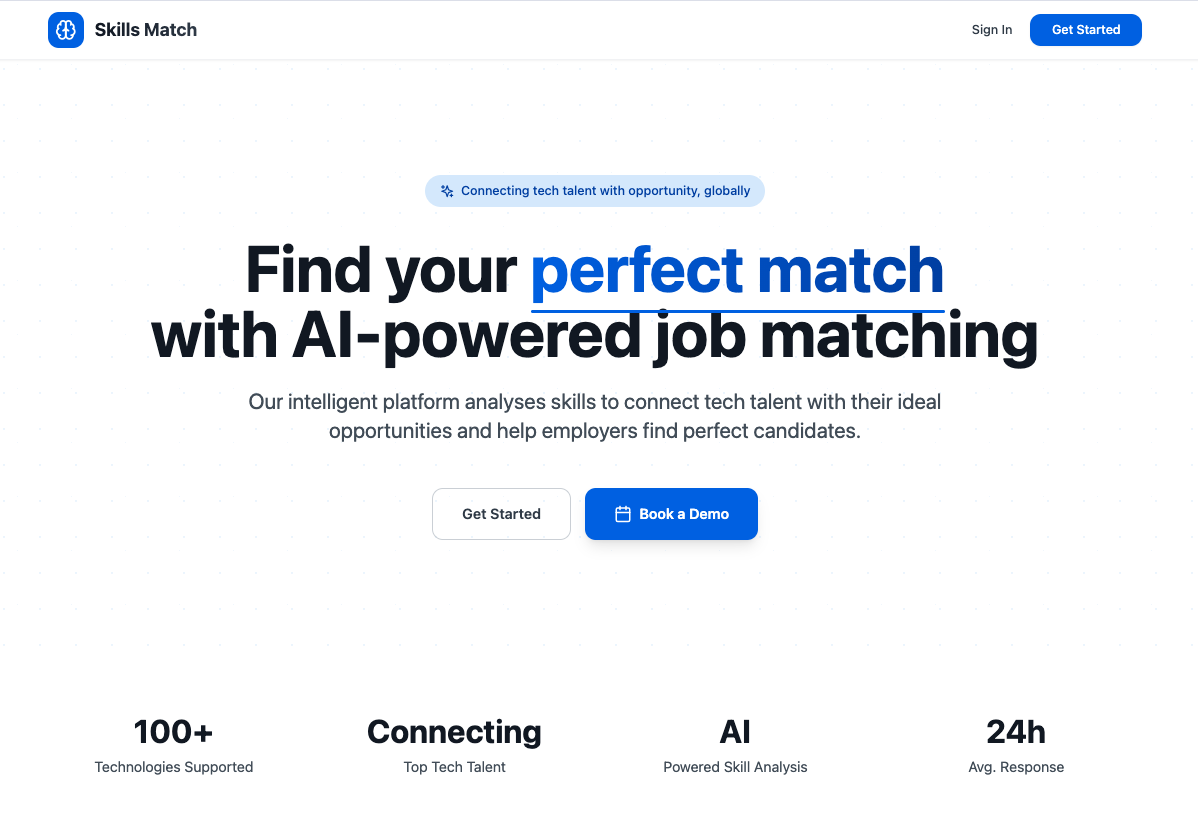
Inspiration
The idea for SkillsMatch came from something I envisioned a few years ago. I’ve always had a diverse range of skills, everything from SEO to training. Back then, I thought, what if there was a platform where people could enter their skills, and employers or hiring managers could post jobs with the specific skills they’re looking for?
The goal was simple: let the platform intelligently match job seekers and employers based on actual skills, not just job titles or years of experience. Back then I imagined an algorithm doing this work, bringing the right people and the right roles together.
At the time, I didn’t have the resources to build it, no team, no developers, and the technology just wasn’t accessible. But today, with platforms like Bolt.new and openAI that vision is finally becoming a reality.
What it does
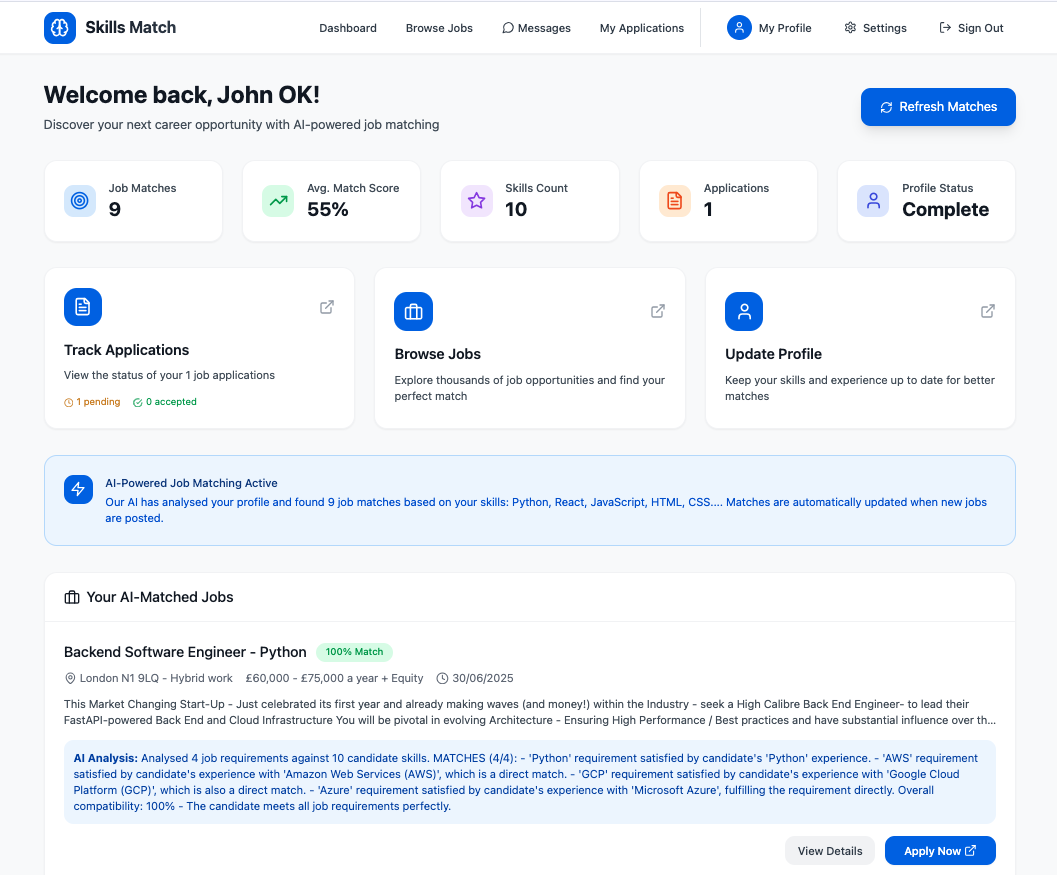
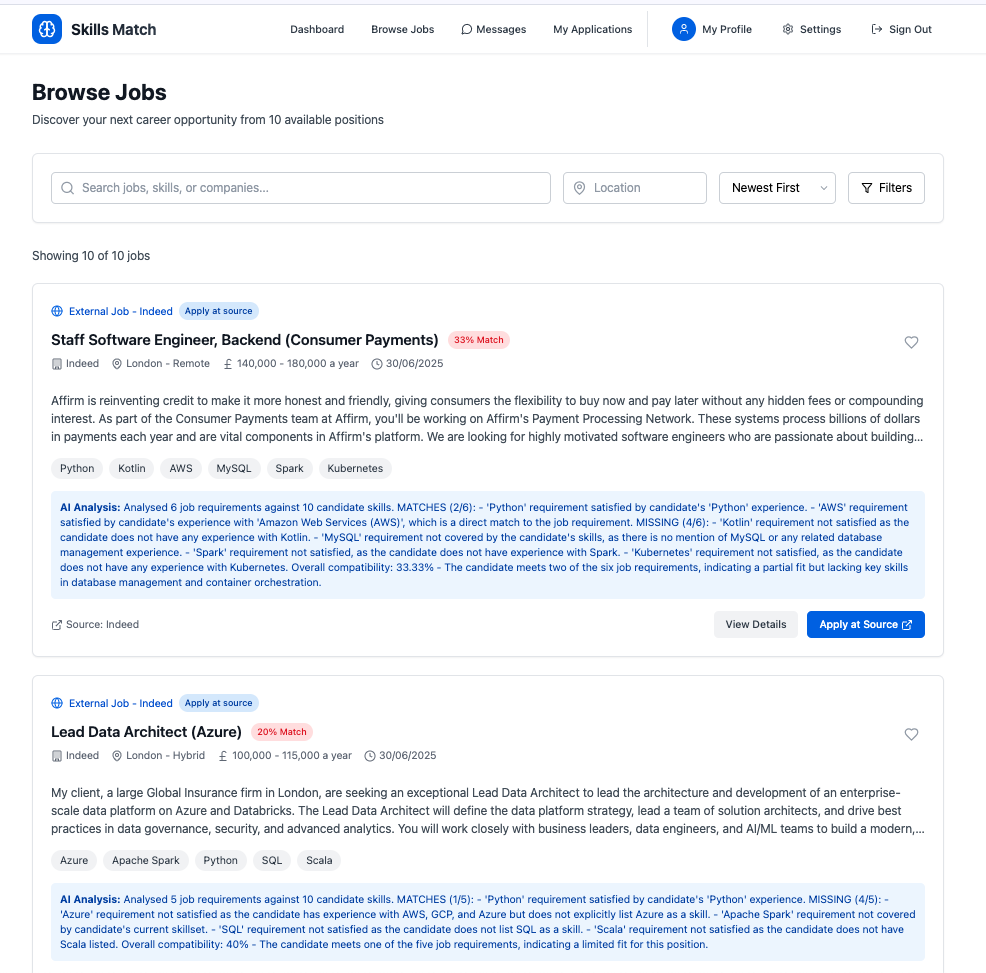
Job seekers create a profile by entering their skills, such as Python, SEO, AWS, or WordPress. Employers post jobs along with the specific skills required for each role. Then, AI does the heavy lifting by matching candidates to jobs based on skills alignment.
Each match is given a percentage score out of 100, so the job seeker instantly sees how well they fit the role. For example: If a backend developer role requires Python and AWS, and the candidate has both skills, they’ll receive a 100% match. If they have just one of the two, it’s a 50% match. This saves time on both sides: Job seekers don’t have to scroll endlessly through job descriptions, they can focus on high match roles.Hiring managers avoid filtering through under-qualified applicants, as AI ensures only relevant talent is surfaced.
In short, SkillsMatch makes hiring smarter and faster by putting skills, not just job titles at the centre of the process.
How we built it
SkillsMatch was built entirely using Bolt.new, prompting the AI agent to create the platform from the ground up.
The platform is powered by a modern tech stack: Supabase handles the database, authentication, file storage, and backend logic, giving the app a scalable and secure foundation.
OpenAI’s GPT-4 Mini is used to power the AI skill-matching engine, which intelligently compares job requirements with candidate skills to calculate a real time match score.
Challenges we ran into
While building SkillsMatch, most of the development process went surprisingly smooth. However, one challenge did stand out.
The main issue arose with Supabase, specifically around file download functionality for CVs. I wanted hiring managers to be able to download resumes submitted by applicants. I set up a dedicated “resume” storage bucket in Supabase, created the required access policies, and integrated it into the app.
Despite prompting and setting everything up as instructed, I ran into persistent issues with getting the file downloads to work reliably. There was a bit of trial and error and back and forth debugging to get the Supabase policies aligned correctly.
Once that hurdle was resolved, the rest of the build was relatively smooth. Supabase worked well for auth, storage, and backend functionality, and integrating OpenAI’s GPT-4 Mini for the matching algorithm was seamless.
Accomplishments that we're proud of
One of the biggest accomplishments I’m proud of is bringing an idea I had a few years ago into reality. SkillsMatch started as a simple concept: match people to jobs based on their actual skills. Today, it’s a live, working platform.
What makes it even more special is that I built it on my own using Bolt.new, Supabase, and OpenAI’s GPT-4 Mini. Taking it from idea to execution without a development team has been incredibly rewarding.
What we learned
One of the biggest lessons I took away from this project was the importance of perseverance. There was a point during the build where I hit a frustrating roadblock trying to get Supabase’s download functionality and policies to work properly for CVs. Everything else was ready, but this one piece wasn’t falling into place. It tested my patience, but I was determined to see it through. And when it finally worked, no errors, smooth download, it was a moment of real satisfaction.
Beyond that technical win, I also learned the value of thinking like the user. Building SkillsMatch wasn’t just about making something that worked, it was about making something that felt right for the people using it. From testing and quality checks to improving the user experience, I learned how important it is to see the product through the eyes of the users it's built for.
What's next for Skills Match
SkillsMatch is now live on the internet, and the next chapter is about growth.
The first step is to bring talent onto the platform, skilled professionals who are looking for meaningful job matches based on what they can actually do.
Once there’s a solid base of talent, I’ll begin reaching out to companies and hiring managers, inviting them to post roles and connect with qualified candidates through SkillsMatch. The goal is to offer a smarter, faster, skills focused hiring experience, and to monetise through subscription plans and flexible pricing models.
From there, it’s all about steady, step by step growth. The vision is to build SkillsMatch into a successful SaaS platform that helps both job seekers and employers connect with clarity, accuracy, and confidence.
Built With
- bolt
- openai
- supabase

Log in or sign up for Devpost to join the conversation.