Inspiration
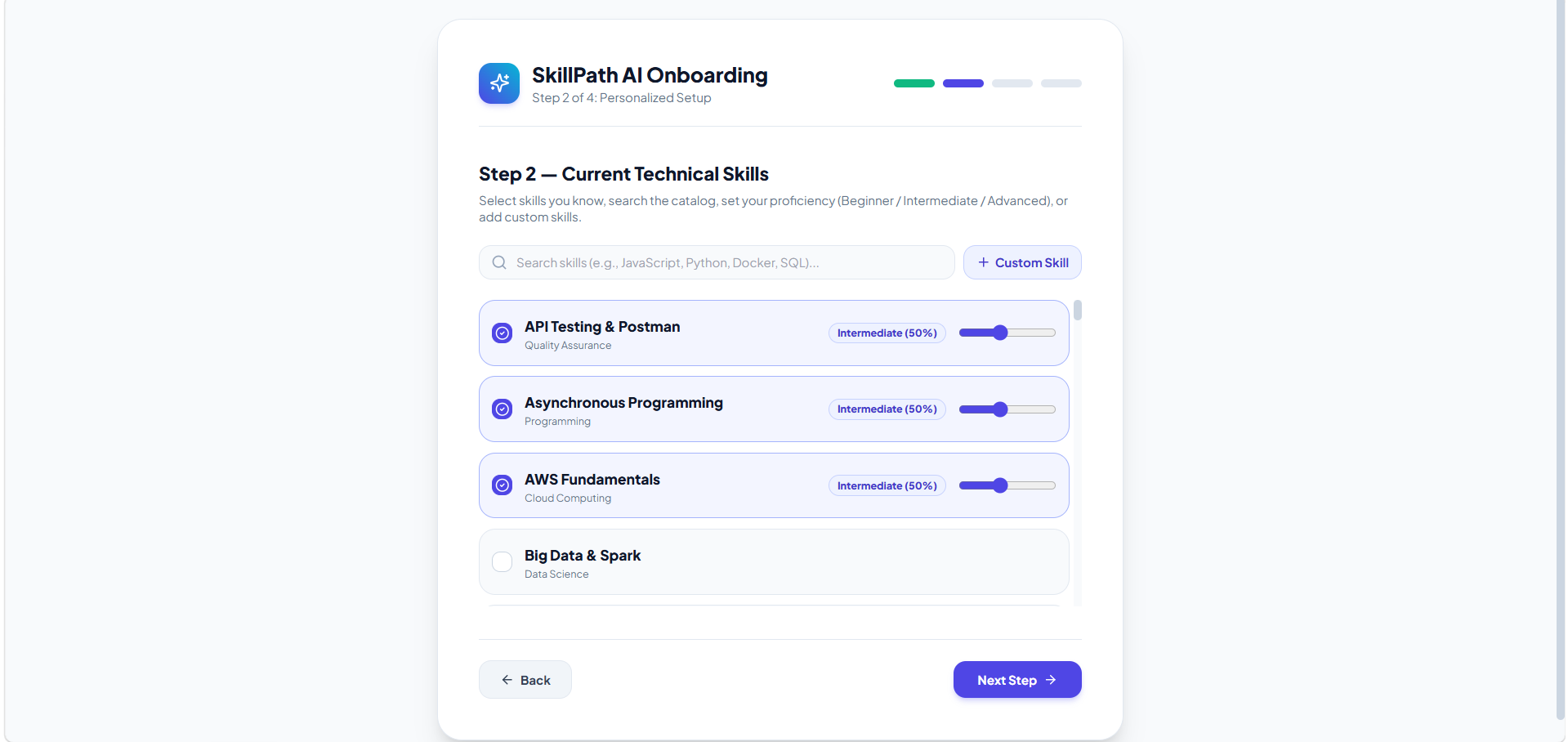
Many students know they want a career in tech but don't know which role fits their current skills or what to learn next. Most learning platforms recommend generic courses and often make learners repeat topics they already know. We wanted to build a system that shows a student which roles they are closest to, what is actually missing, and the shortest path to becoming job-ready.
What it does
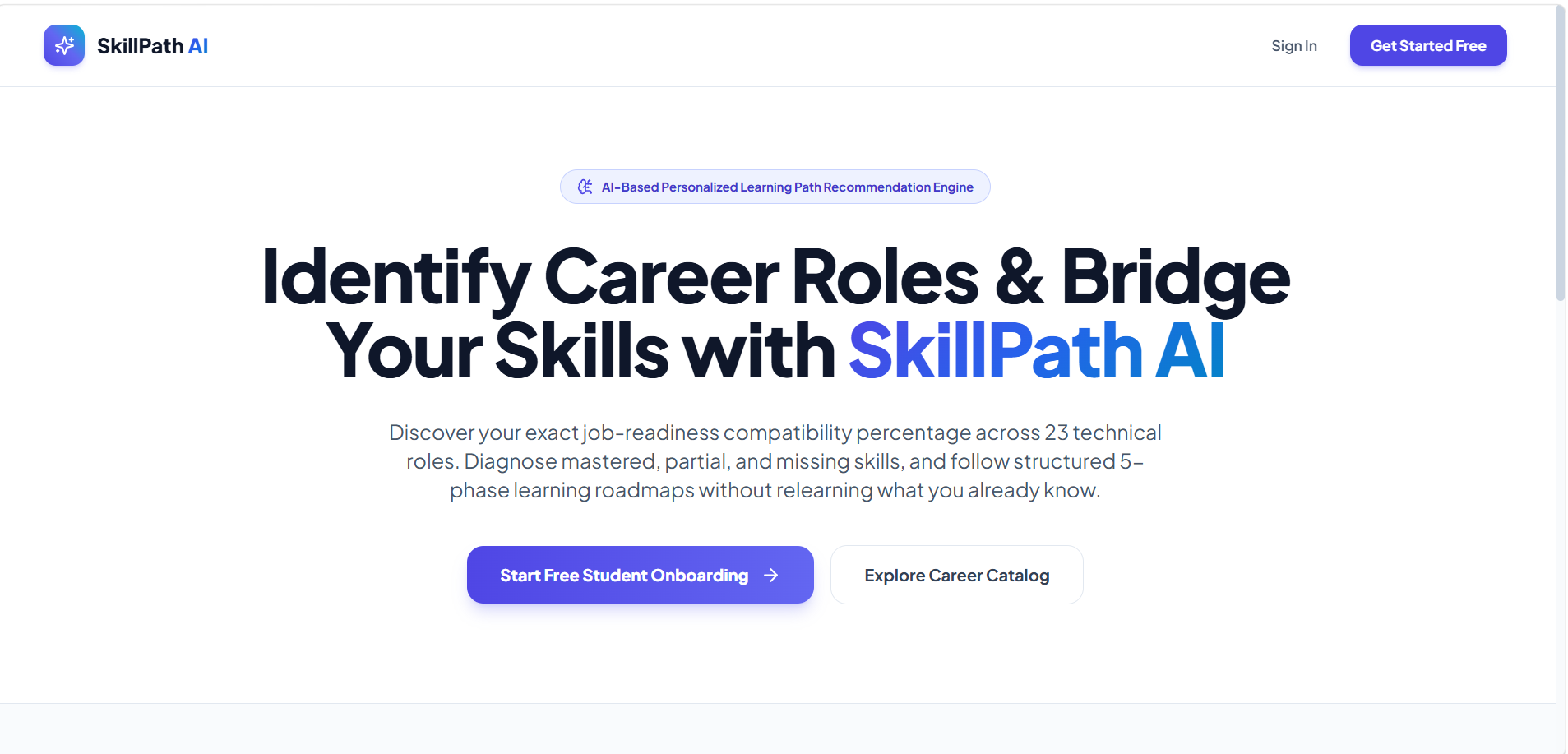
SkillPath AI is a full-stack, AI-based personalized learning path recommendation engine for students.
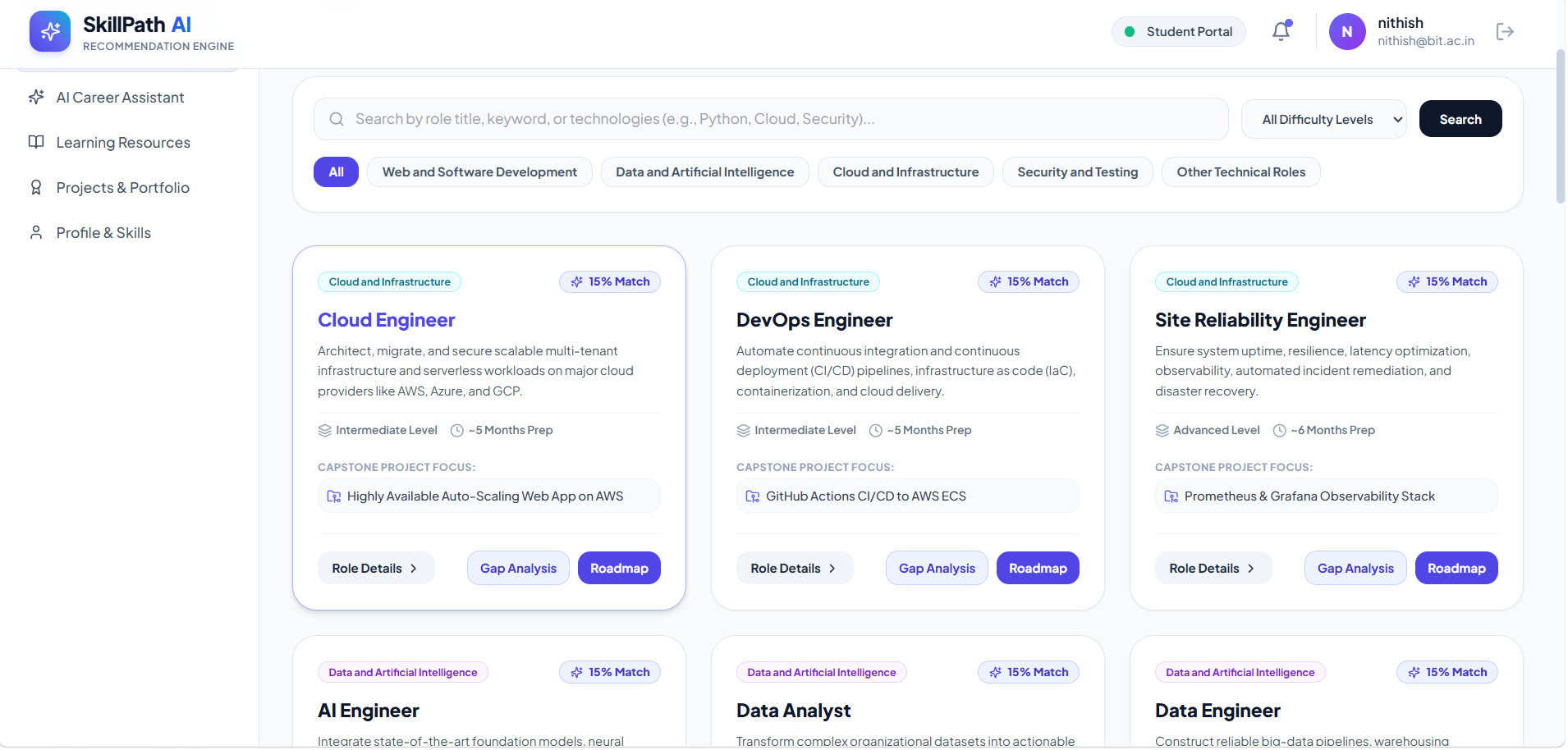
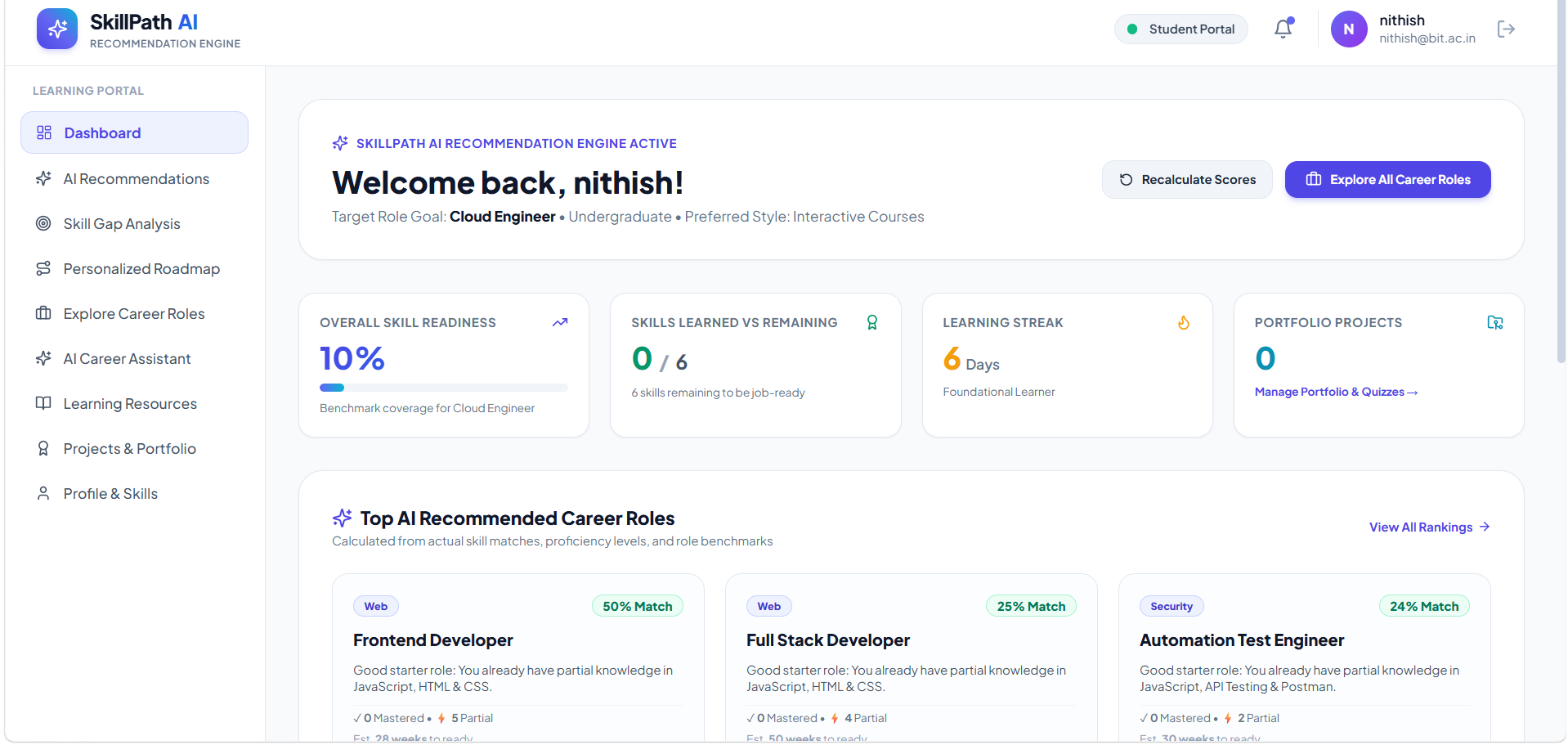
- Career matching: Compares a student's skills against 23 technical roles across 5 domains. Each role gets a transparent compatibility percentage and a plain-English explanation of why it was recommended.
- Skill gap analysis: Sorts every required skill into Mastered, Partially Known or Missing, so students never relearn what they already know.
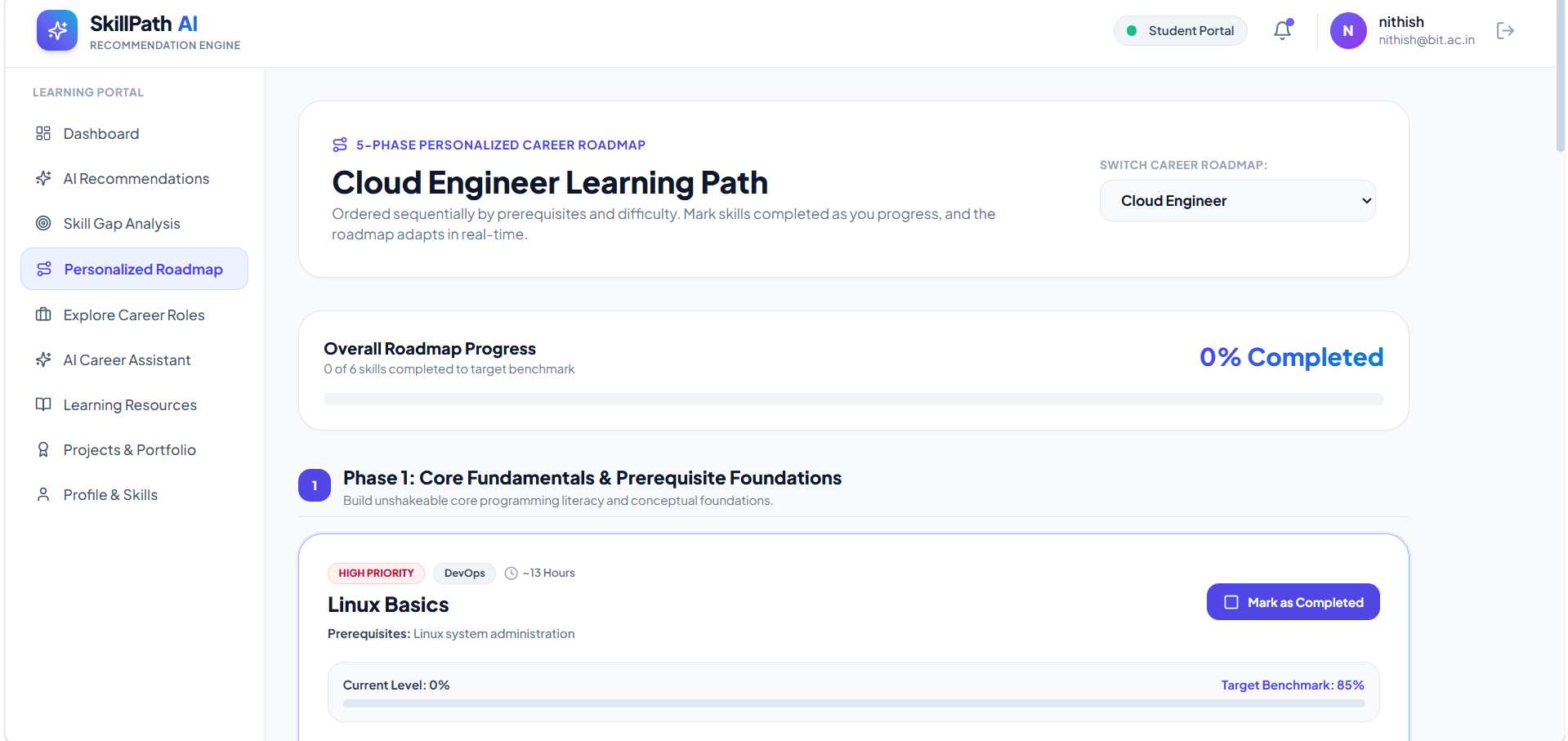
- 5-phase learning roadmap: Turns the gaps into a roadmap ordered by prerequisites. Each skill comes with estimated study hours, curated resources, practical exercises, a mini-project and a completion tracker.
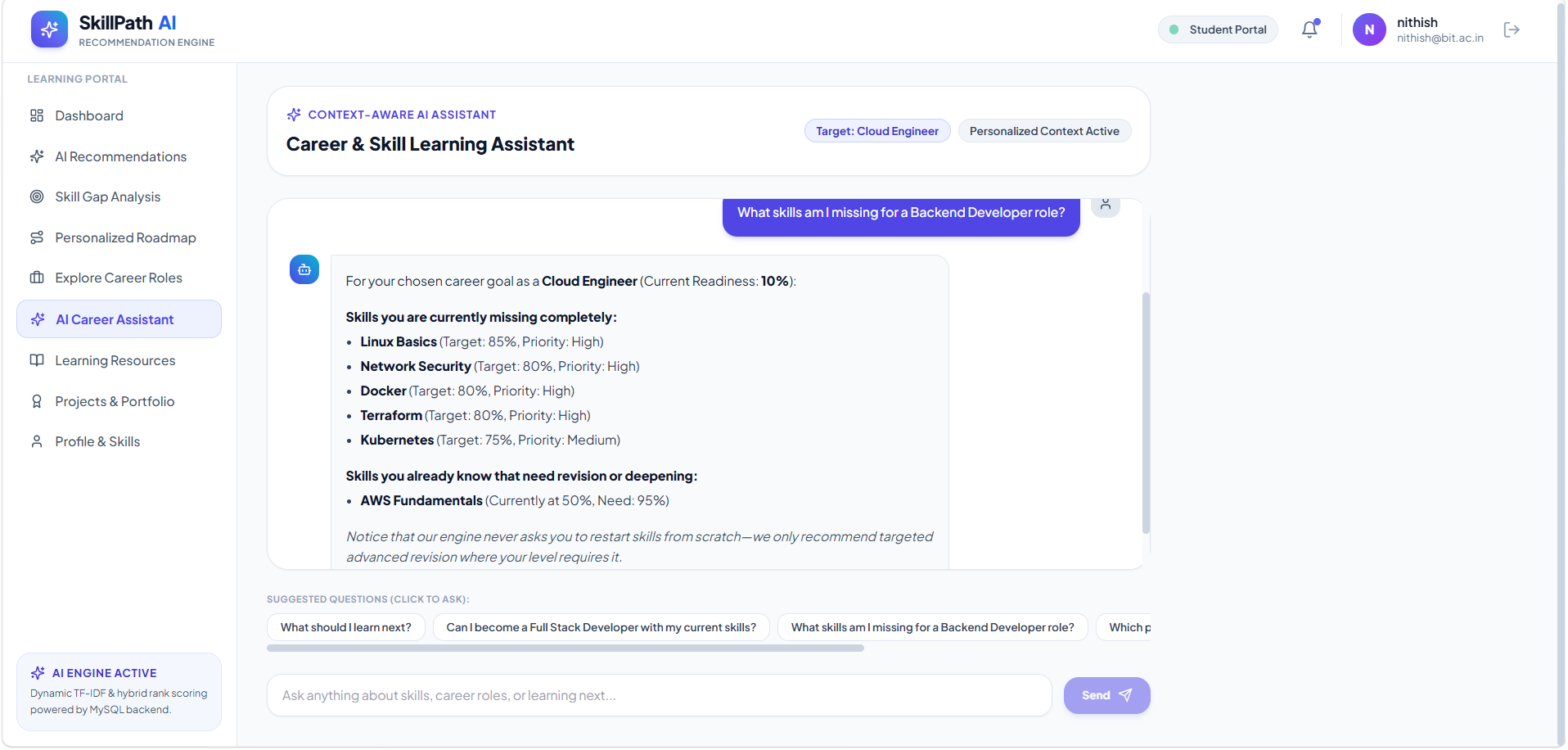
- AI career assistant: Answers questions like "What should I learn next?" using the student's saved skills, target role and roadmap.
- Projects and assessments: Students log portfolio projects with GitHub and demo links, and take skill assessments that update their proficiency.
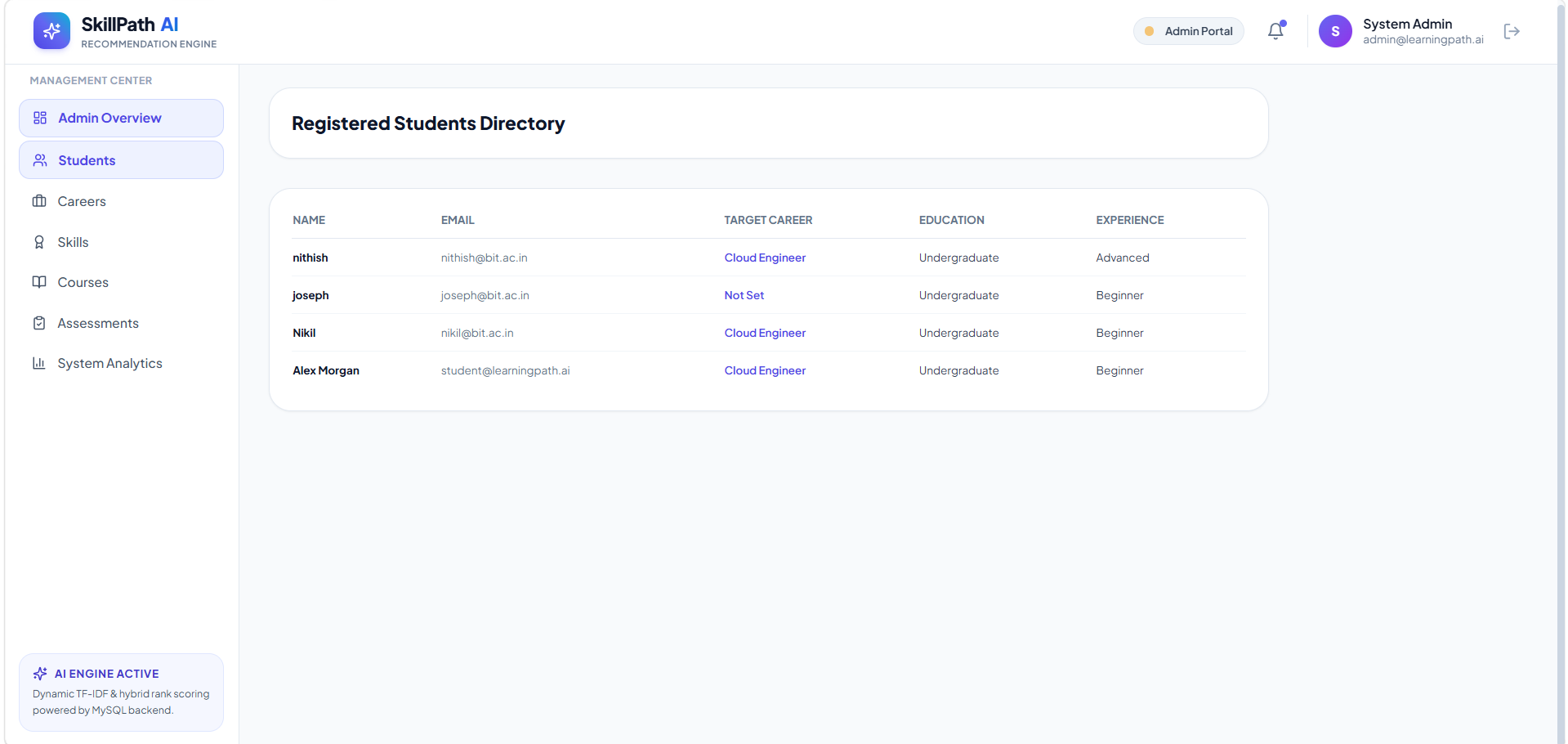
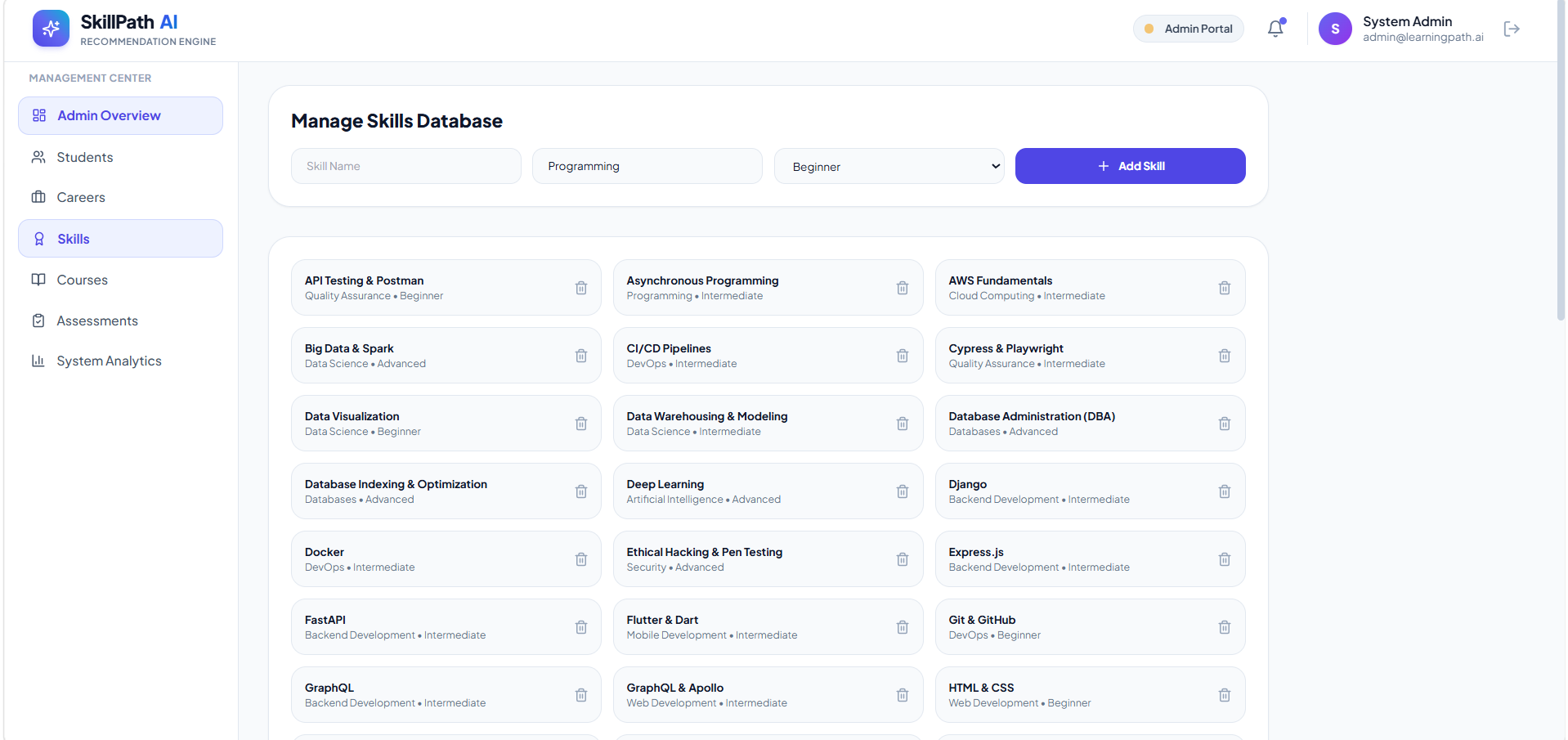
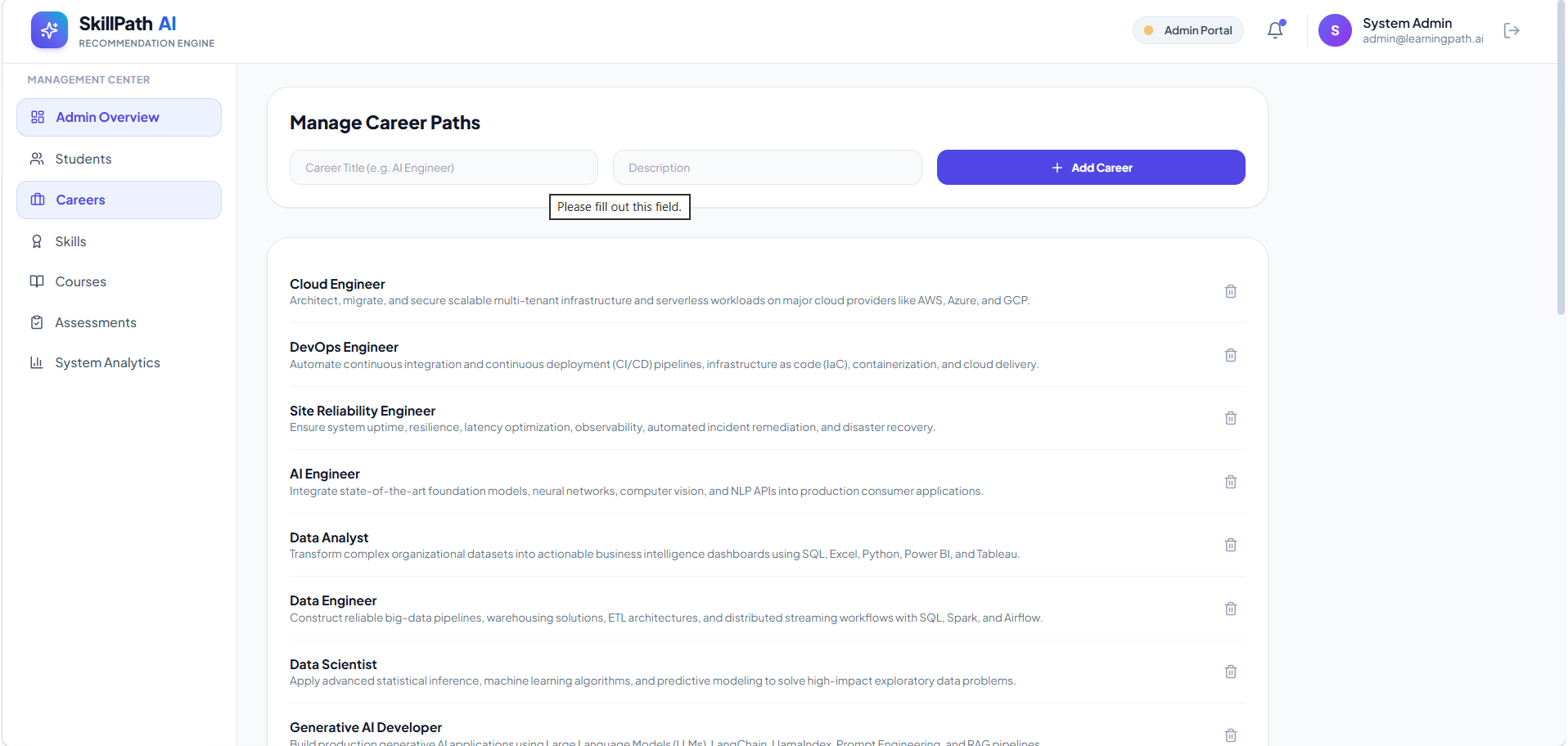
- Admin panel: Admins manage courses, skills, careers and students.
How we built it
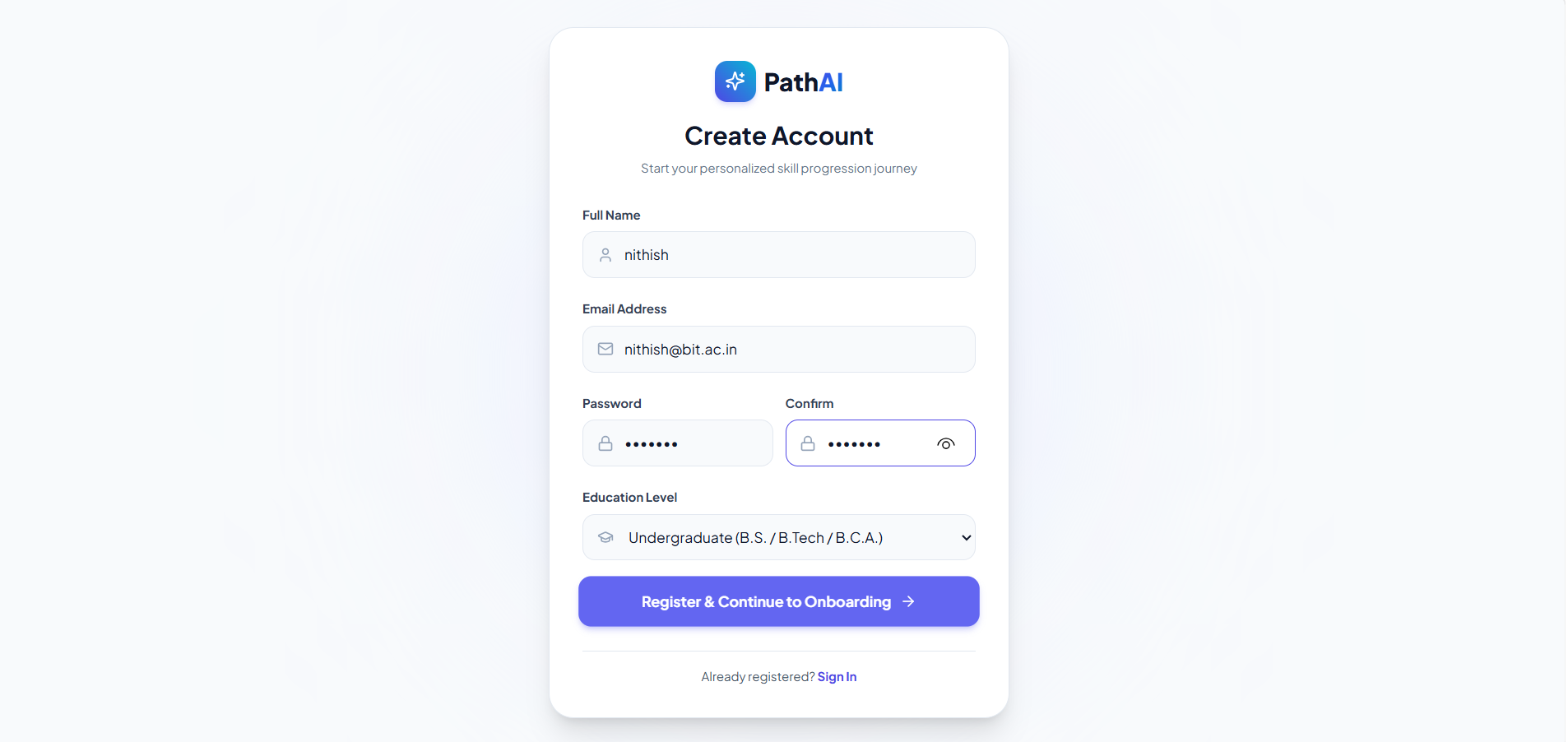
The frontend uses React 18, Vite, Tailwind CSS, React Router and Recharts. The backend is a RESTful Node.js and Express API with JWT authentication and bcrypt password hashing. Data is stored in a relational MySQL 8 schema with foreign keys, constraints and automated seeding for 23 roles, 60 skills and curated learning resources.
- Skill gap: how far the student is from the target role's requirements.
- Prerequisite match: whether the course's prerequisites are already completed.
- Relevance: TF-IDF cosine similarity between the target career context and course content.
- Performance: recent assessment and quiz results.
- Difficulty fit: how well the course level matches the student's proficiency.
The weights live in a central config file, so they can be tuned without changing the engine code. Each recommendation also comes with an explanation generated from its score components.
Challenges we ran into
- Designing a scoring model that is explainable rather than a black box, so students can see why something was recommended.
- Modelling partial mastery, so a student with foundational knowledge gets targeted advanced topics instead of a repeat of the basics.
- Ordering roadmap phases correctly by prerequisites and difficulty.
- Keeping one consistent data model across roles, skills, courses, assessments and progress tracking.
Accomplishments that we're proud of
- A working end-to-end platform with 13 student-facing pages, an admin panel and a documented REST API.
- A transparent, configurable recommendation engine with automated tests.
- Personalization that respects what the student already knows instead of pushing generic content.
What we learned
We learned how to combine content-based techniques (TF-IDF similarity) with rule-based scoring in a hybrid recommender. We also learned how to design a relational schema for a multi-role platform and how to build secure, authenticated APIs. Along the way we saw how much explainability matters for user trust in AI-driven recommendations.
What's next for SkillPath AI
- Integrating a large language model for richer, more conversational mentoring
- Pulling in live job-market data to keep role benchmarks current
- Adding collaborative filtering based on the outcomes of similar learners
- Adding progress reminders, learning streaks and a mobile-friendly experience
- Deploying publicly with institution-level dashboards for teachers and placement cells
Built With
- express.js
- javascript
- jwt
- machine-learning
- mysql
- node.js
- react
- rest-api
- tailwindcss
- vite

Log in or sign up for Devpost to join the conversation.