-
-
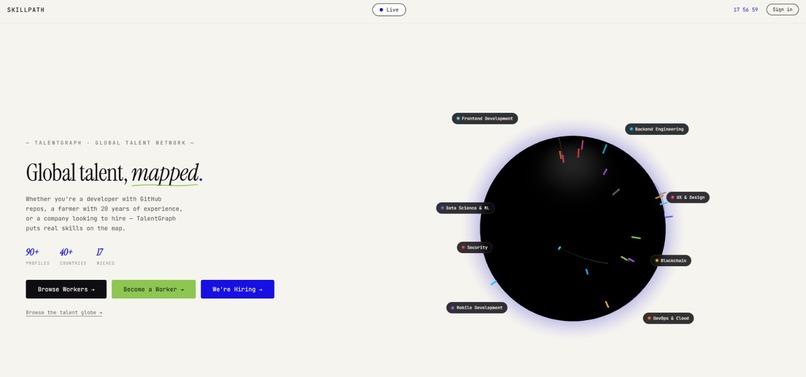
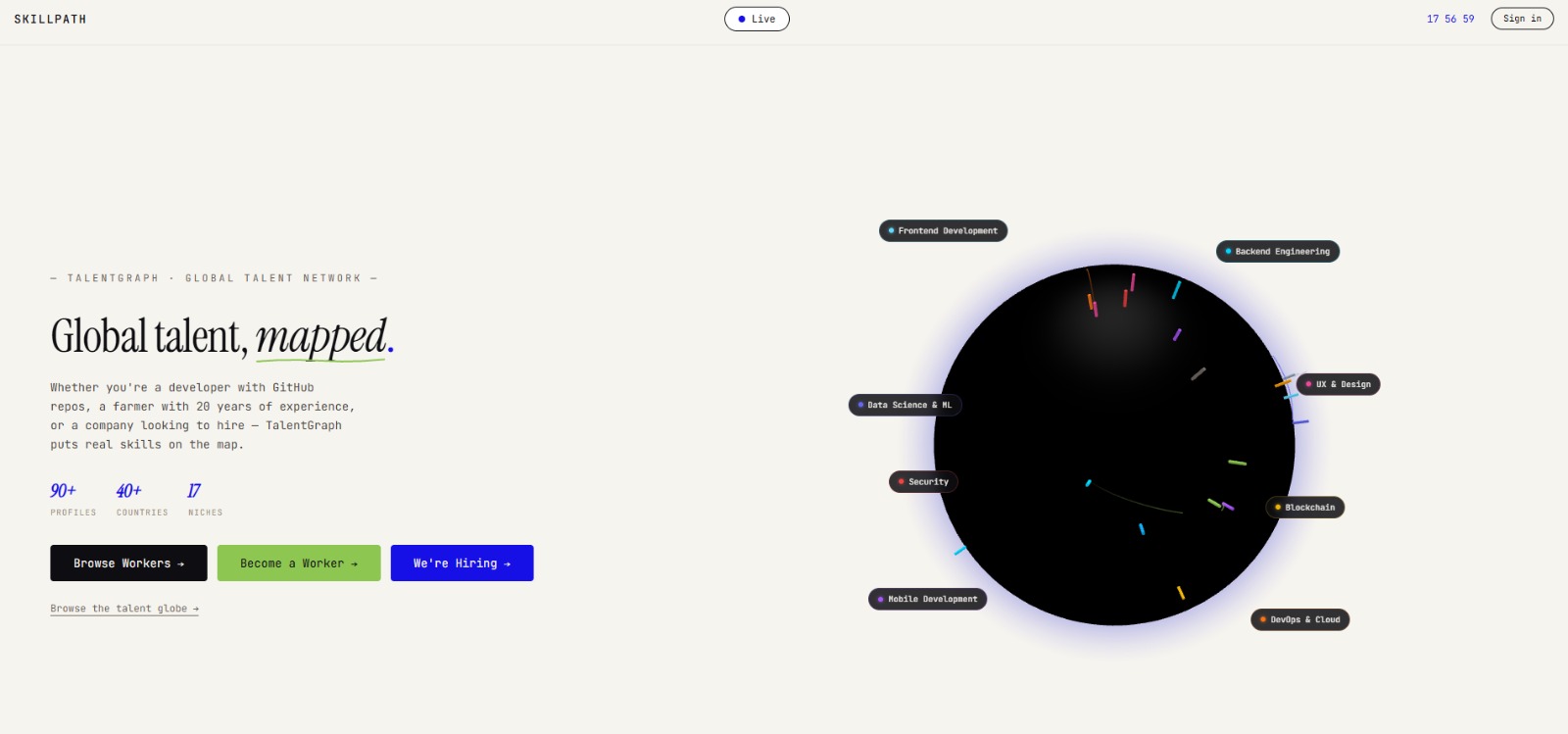
homepage
-
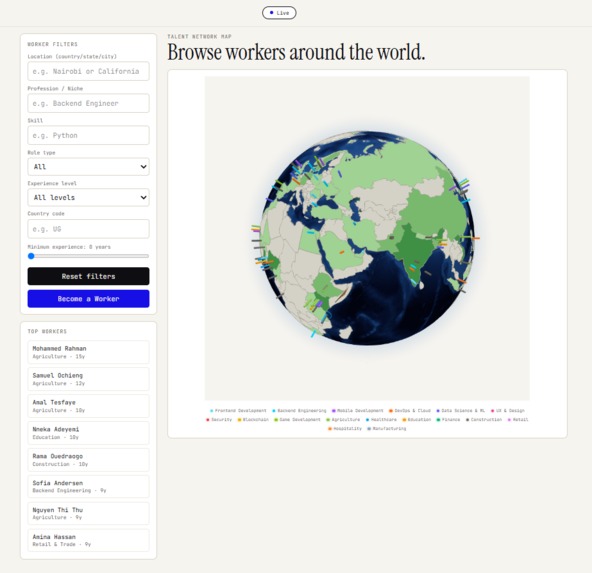
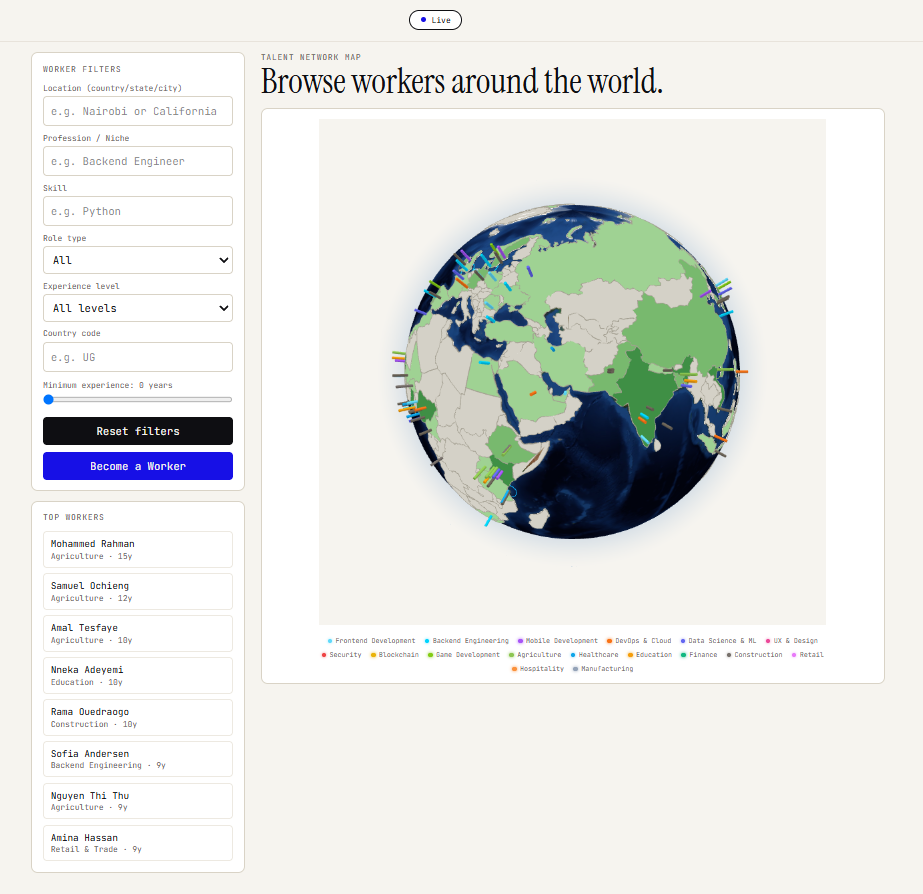
Dashboard
Inspiration
We got the idea for SkillPath from the "UNMAPPED" challenge. It made us think about the hundreds of millions of people in low-income countries who have real skills that are not recognized.
These skills are valuable. They are not formal so employers, training systems and digital platforms can't see them.
For example workers, like Amara do not show up in these systems.
At the time AI is changing job markets fast.
These workers do not have tools to understand what it means for them.
That is why we built SkillPath to close this gap.
We want to help these workers.
They have skills. They are not recognized.
SkillPath aims to change that.
What it does
SkillPath is a tool that helps turn the things you're good at into a list of skills that people can understand. It does this by using computers to look at what you have done and matching it to jobs that're available.
It has three parts:
Skills Signal Engine. This part takes the things you have done and puts them into a list of skills that people can read and understand.
AI Readiness Lens. This part shows you which skills might become less important because of computers and suggests skills you can learn to stay useful.
Opportunity Matching Dashboard. This part helps you find jobs that you can do using information from trusted sources like the International Labor Organization and the World Bank.
It also has a part, for governments and organizations that want to help people, where they can see what skills are missing and what jobs are available.
How we built it
We made SkillPath using a building block style for the whole system.
Here are the parts that make it work:
Frontend: We used React 19 TypeScript, Tailwind CSS and react-globe.gl to make the maps and things you can interact with.
Backend: We used FastAPI with Python 3.12 to make the server work. We made separate parts for skills, matching and opportunities.
AI Layer: We used computer programs called LLM to find and normalize skills and we used Claude and GPT-4o-mini as backups.
Data Layer: We put together data from different places like ILOSTAT, World Bank WDI, ESCO/ISCO taxonomies and datasets that show which jobs are, at risk of being automated.
Infrastructure: We used AWS to make sure the system can handle a lot of users and Supabase to manage the database and make sure people can log in.
The best part is that SkillPath can be changed for each country using a file called JSON and you do not have to change the main code to do it.
Challenges we ran into
One big problem we had was dealing with labor market information that was over the place and different from one country to another. We had to make sure this information matched up with lists of skills like ESCO and ISCO.
Another thing we struggled with was creating results from intelligence that labor market users could understand easily even if they are not good, with computers or technology. We wanted to make sure labor market users can read and understand the results easily.
We also had to build a system that works well when the internet connection is slow. The system had to be able to work with labor market information that's not complete or not formally written down rather than just using traditional resumes or official papers.
Accomplishments that we're proud of
We are really happy that SkillPath is able to connect the skills people have with the jobs that're available using real information about the economy instead of just making guesses.
We made a system that does a things:
It takes the skills people have from their everyday work and puts them into a format that is easy to understand
It uses real information about jobs like how much money people are paid and how many jobs are available in certain areas
It is like a foundation that other things can be built on not just something that stands alone
It can be used in many different countries without having to change the way it works
We also made a working model that combines artificial intelligence, information, about jobs and the real rules that match people with jobs and it works from start to finish. SkillPath is really important here because it helps people use their skills to get jobs. SkillPath makes this happen by using information and connecting people to the right jobs.
What we learned
We learned that the core problem is not lack of jobs, but lack of visibility and structured representation of skills.
We also learned that effective labor systems in LMICs must be designed around incomplete data, informal work histories, and low-resource constraints rather than formal resumes.
Finally, we learned that AI is most impactful when used to structure and interpret real-world economic data rather than generate abstract recommendations.
What's next for SkillPath
Next the plan is to do a things.
We will make sure SkillPath works in countries by using information about workers from those places.
We want to get better at figuring out what skills people have so we will use computer models that understand languages.
We will add a system that always looks for job openings and checks if the companies that posted them are real.
We will make it possible for people to use SkillPath when their internet connection is very slow.
We will work with groups that help people and organizations that train workers to try out SkillPath in the world.
The main goal for SkillPath is to make it a tool that people, around the world can use to find jobs that match the skills they have even if they did not learn those skills in a classroom. We want SkillPath to be a system that helps people find economic opportunities by mapping informal skills to jobs.
Built With
- amazon-web-services
- claude
- duckdns
- fastapi
- loveable
- python
- react
- typescript
- uv
- vercel

Log in or sign up for Devpost to join the conversation.