-
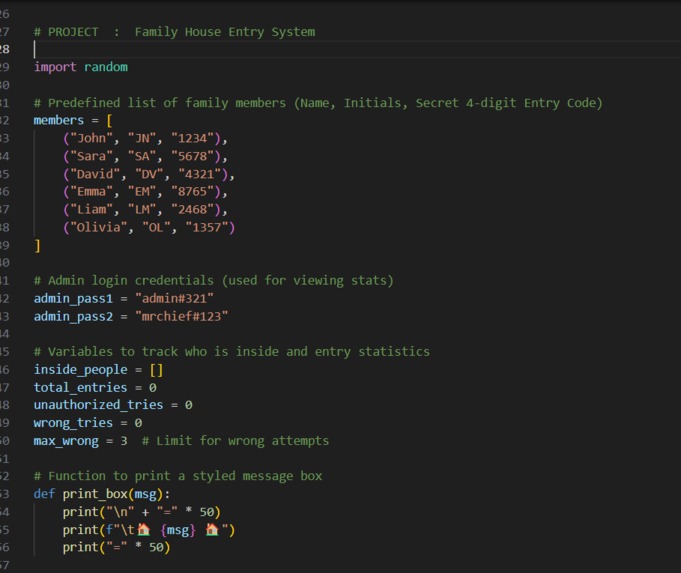
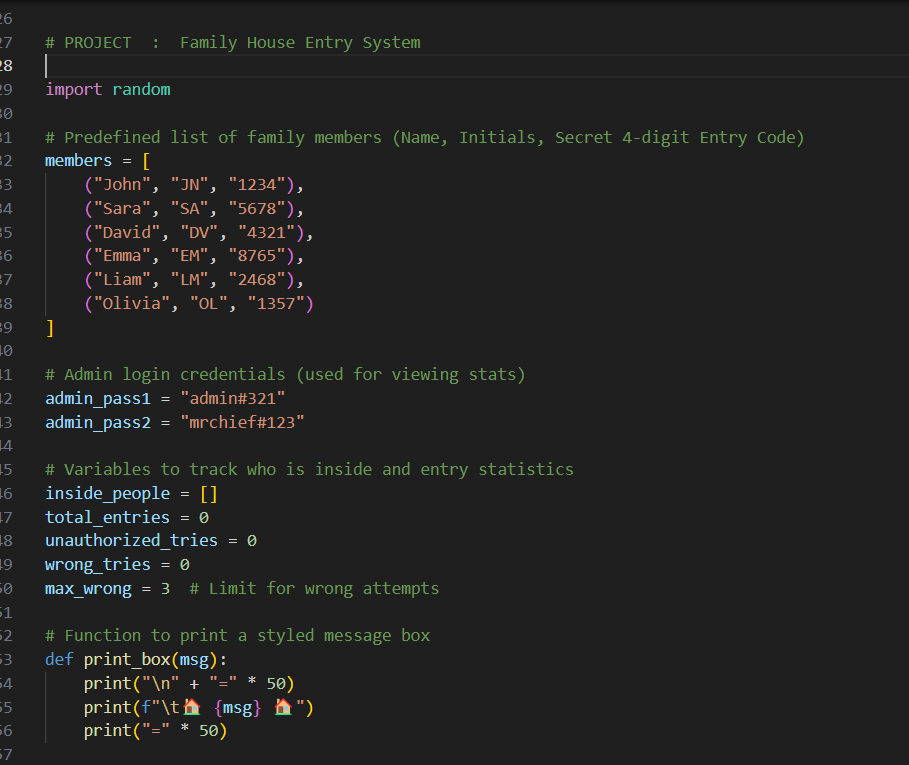
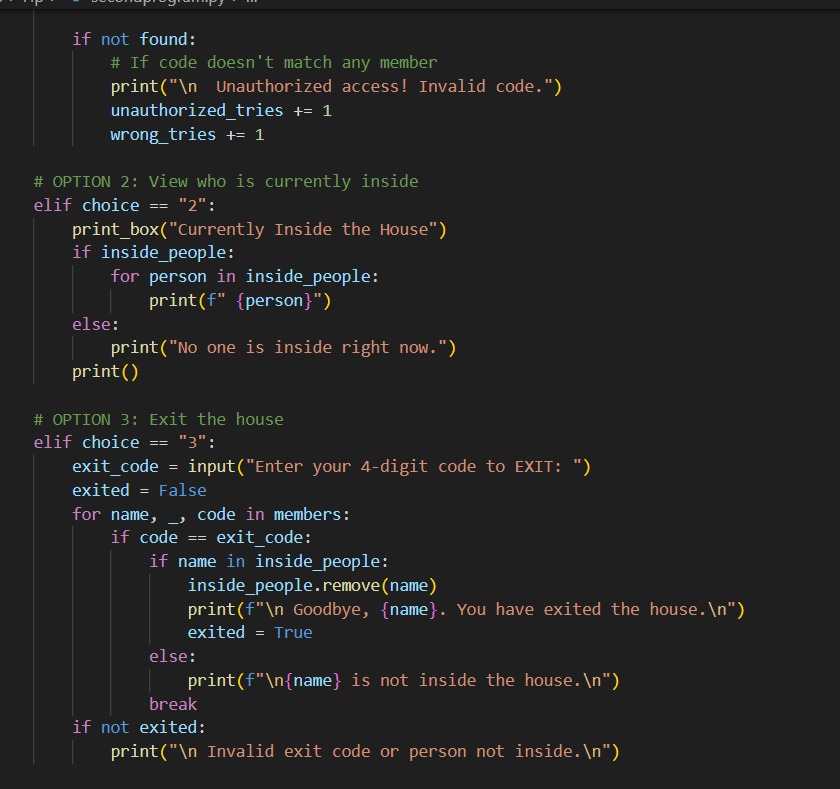
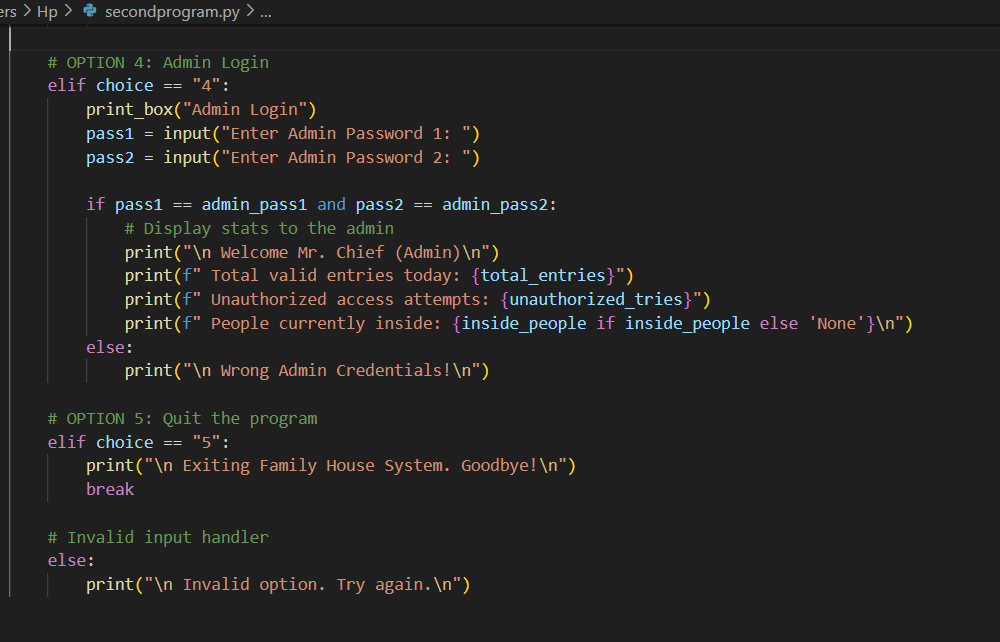
Code part 1
-
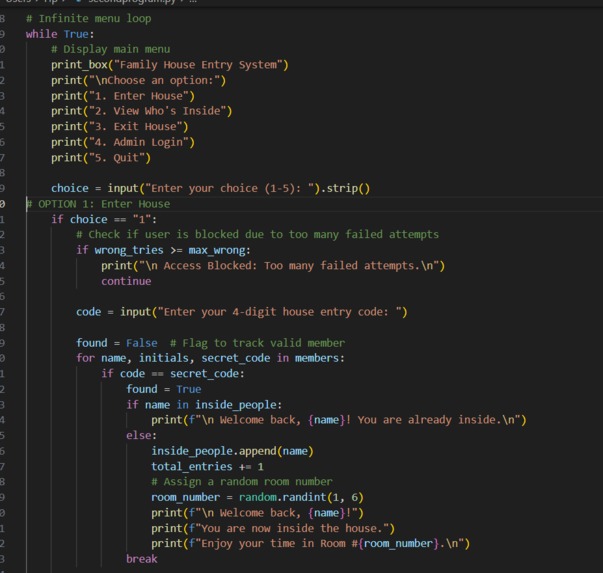
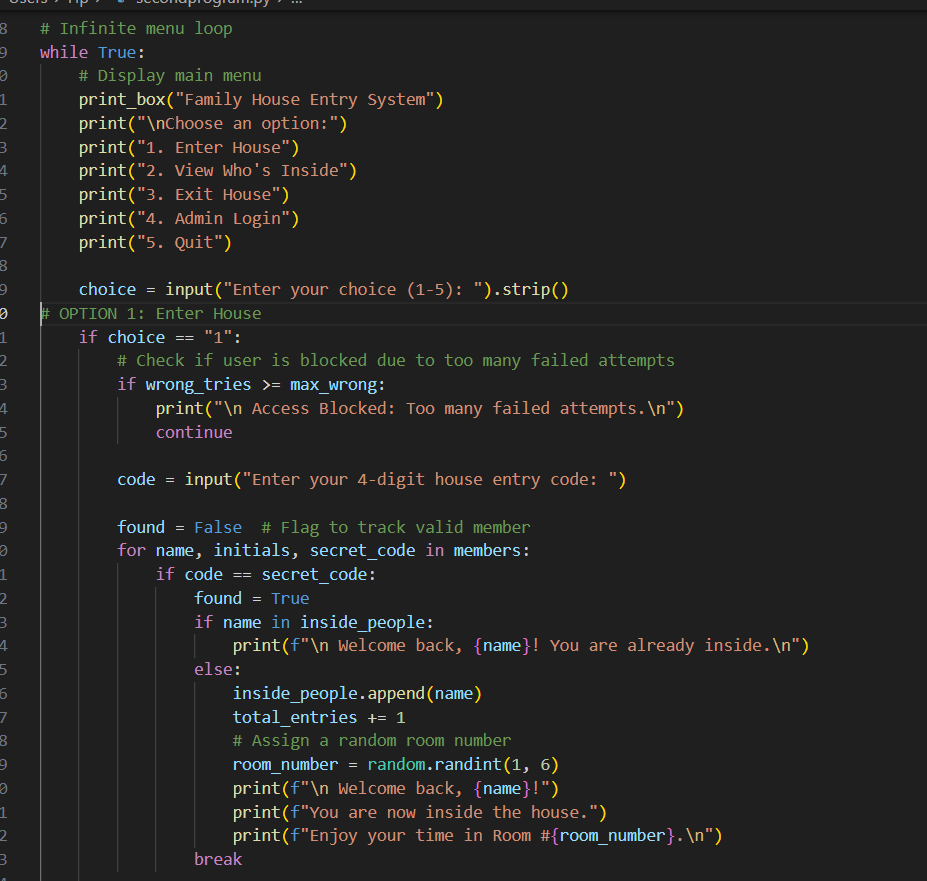
Code part 2
-
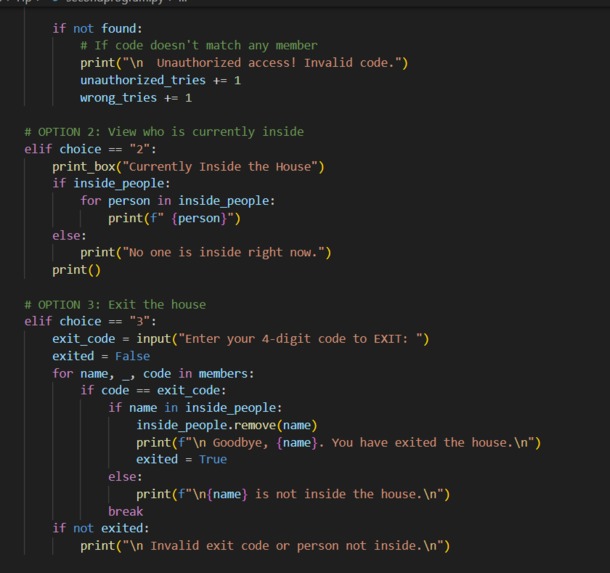
Code part 3
-
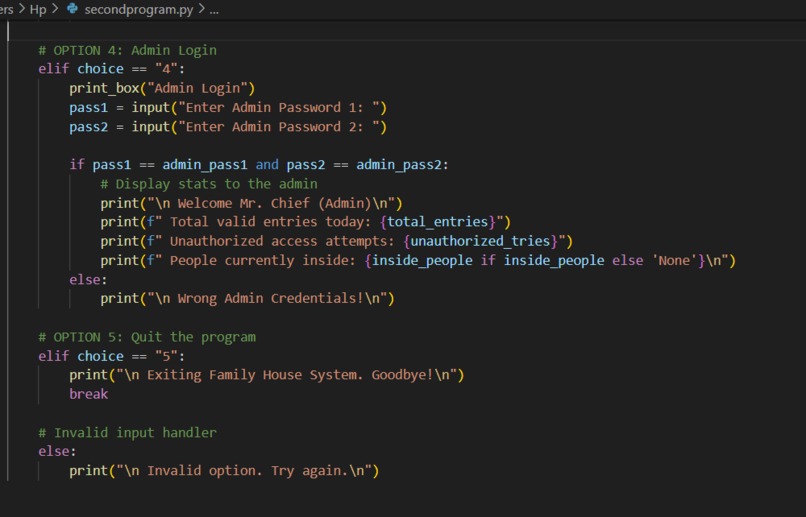
Code part 4
-
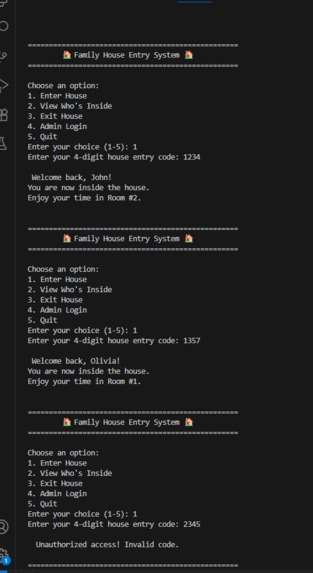
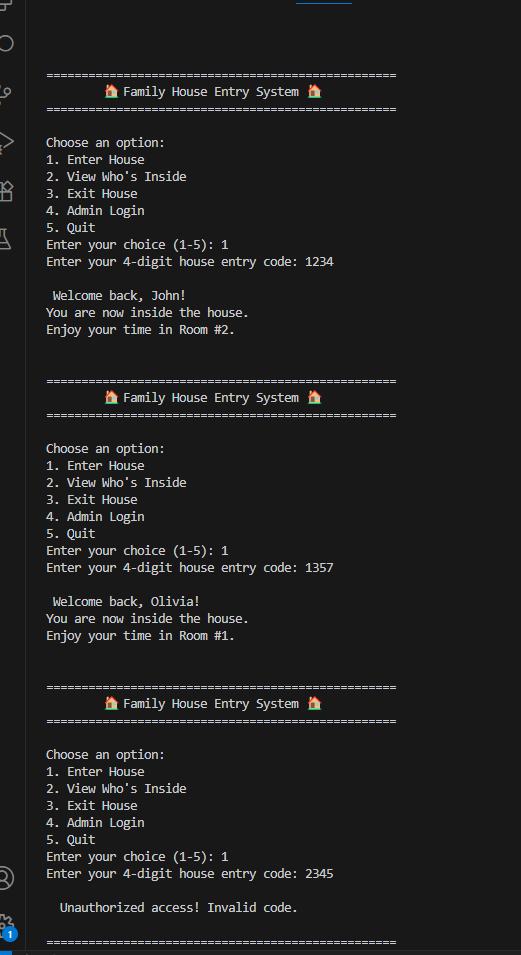
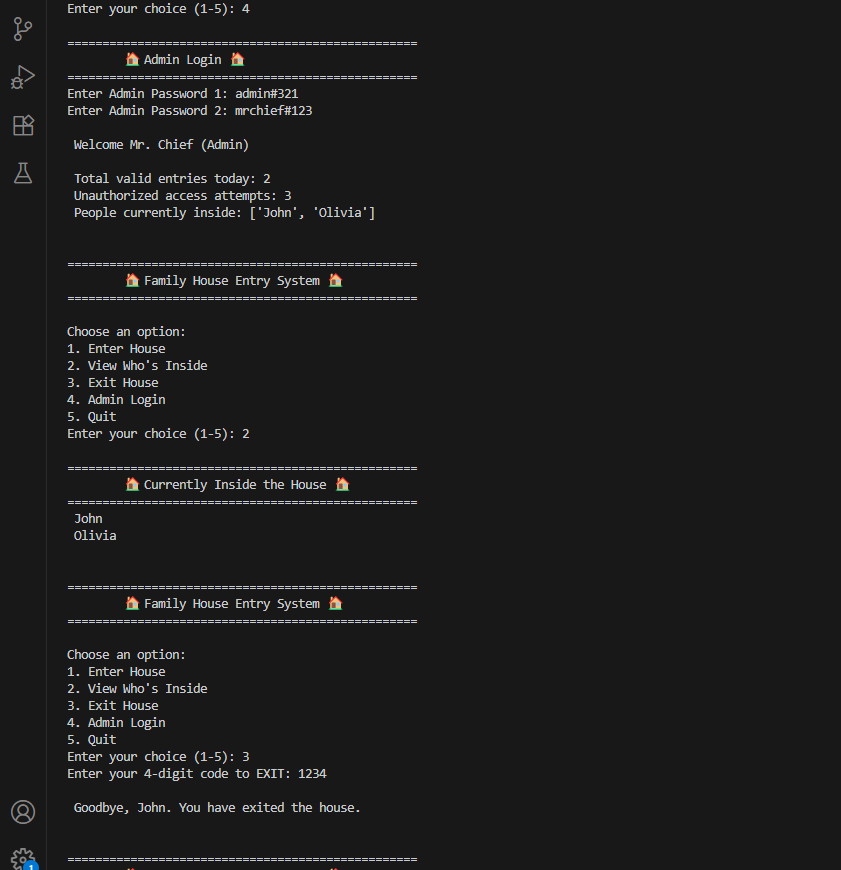
Output part 1
-
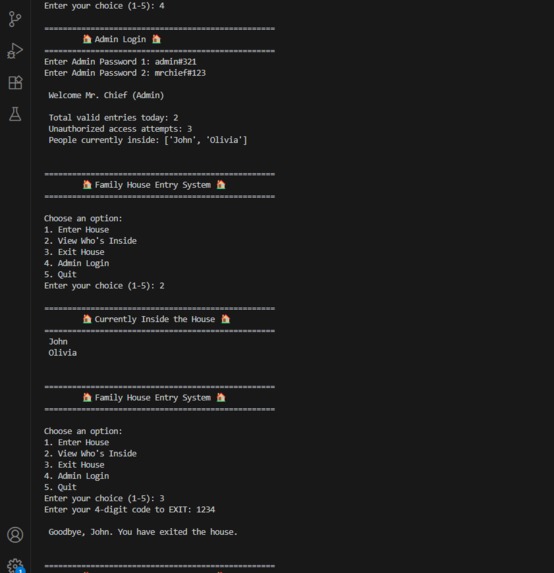
Output part 2
Inspiration
The idea for this project came from a simple thought: how can I build a basic security simulation using only beginner Python concepts? I wanted to create something that feels real but doesn't require advanced coding knowledge. This led me to develop a small system that tracks who enters and exits a house — just like a digital check-in log for a family. It helped me combine my interest in tech with a fun, real-life scenario.
What it does
The Family House Entry System – Secure Edition allows up to six pre-defined family members to enter the home using unique 4-digit access codes. It validates each entry, prevents duplicate entries, allows members to exit, and provides a live list of who is currently inside the house. It also features a simple text-based menu for interaction and hides invalid users, keeping the system secure.
I considered a small family of 6 for simplicity, but the concept is scalable.
How I built it
I built this project using pure Python in VS Code, with no external libraries or advanced modules.
I used:
- Strings and lists to store names and access codes
- Tuples to store and secure unchangeable member data
- Conditional statements to control program logic
- Loops to manage menu navigation
- List methods like
append(),remove(), and slicing for logic handling
Everything was kept beginner-friendly, so even someone new to Python can follow the logic and learn.
Challenges I ran into
One challenge was creating a functioning entry/exit logic without using object-oriented programming or file storage. Ensuring users couldn't enter more than once or exit if they weren’t already inside took careful list tracking. Designing a clean menu system and keeping the interface user-friendly (without GUI tools) was another fun challenge.
Accomplishments that I'm proud of
I’m proud that I created a fully working, logic-based system using only beginner-level tools. It's satisfying to simulate a real-world use case like secure check-ins while using only simple Python. I also liked how it trains the mind in handling data securely and cleanly.
What I learned
I learned how to manage logic smartly using lists and conditionals. I also understood the importance of keeping code readable and clean. This project improved my skills in thinking through real-world problems, especially with input validation, menu handling, and data restrictions.
What's next for Family House Entry System – Secure Edition
In the future, I plan to enhance this project by:
- Adding a timestamp feature using the
datetimemodule - Logging all entries and exits to a text file for records
- Creating a basic GUI using Tkinter
- Introducing an admin panel for better control (e.g., resetting access, viewing logs)
- Making it scalable for use in offices or apartments instead of just homes
- Adding optional face or voice recognition integrations later
With these additions, this could evolve into a lightweight security prototype for small offices or institutions.

Log in or sign up for Devpost to join the conversation.