-
-
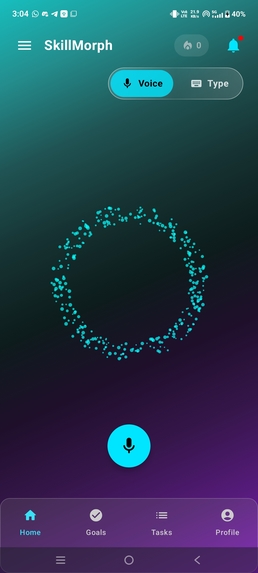
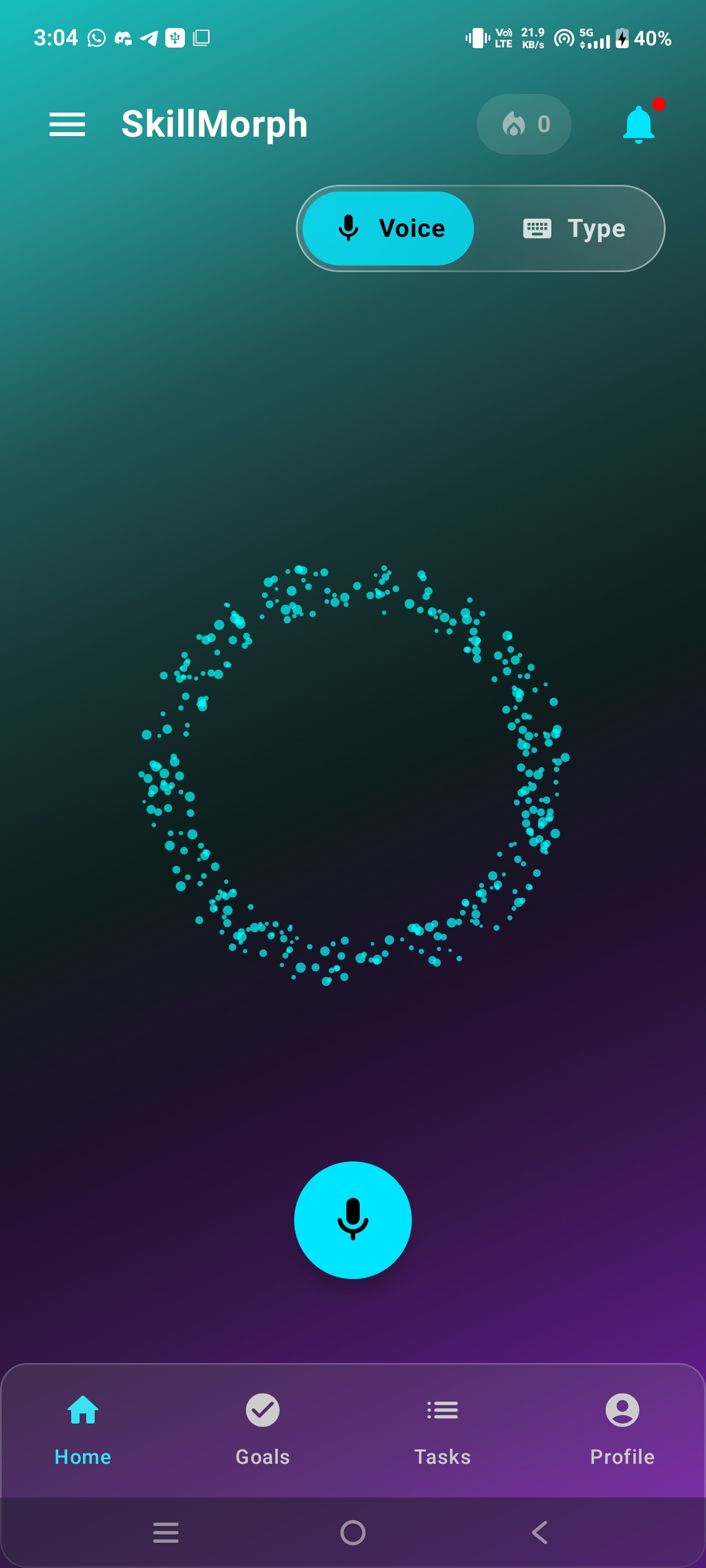
Home Screen (Agent)
-
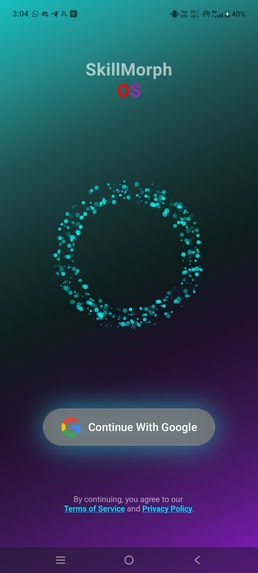
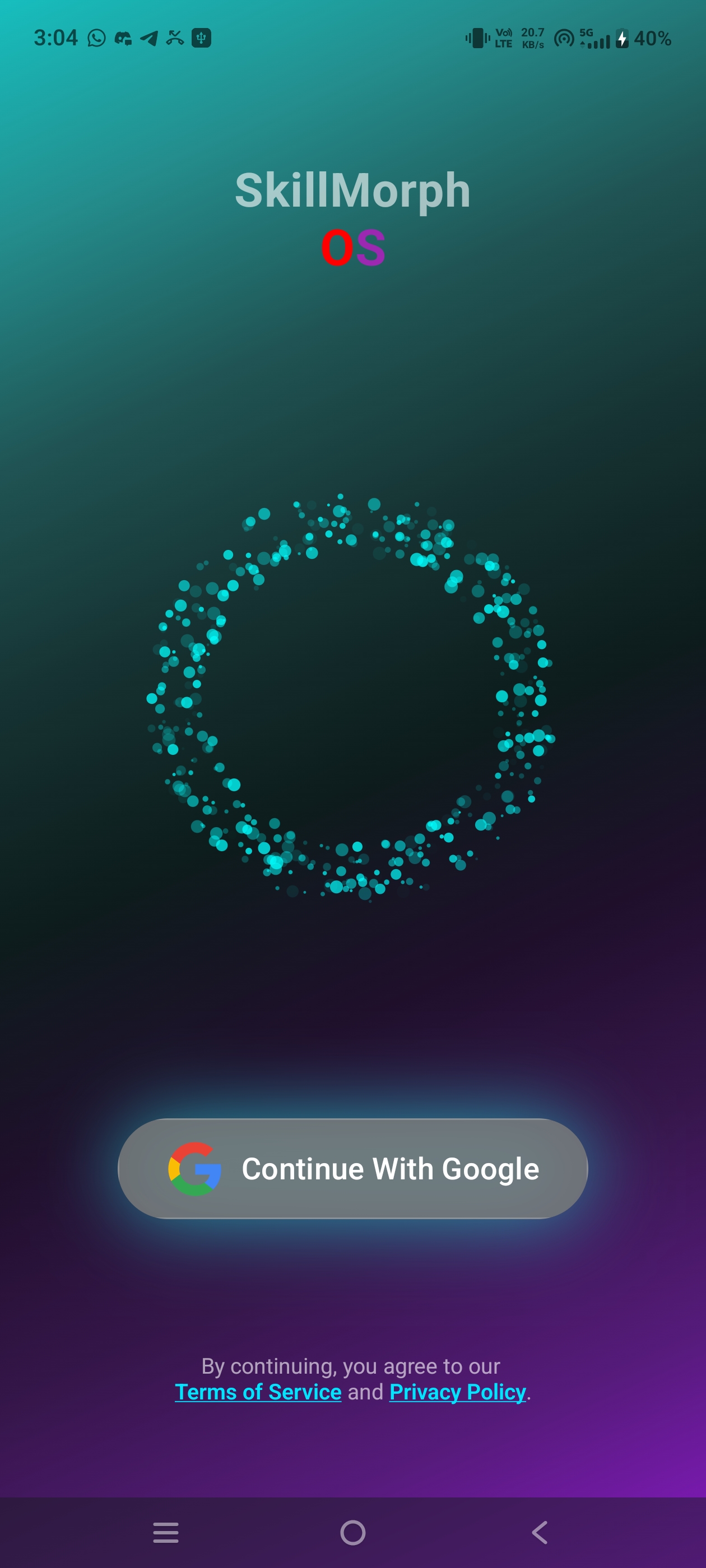
Login Screen
-
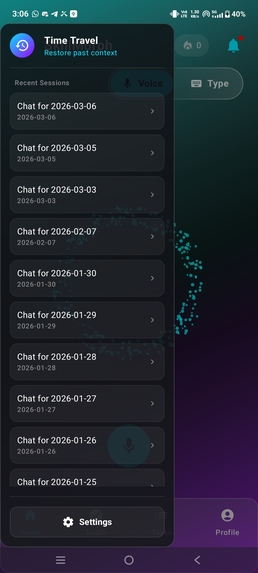
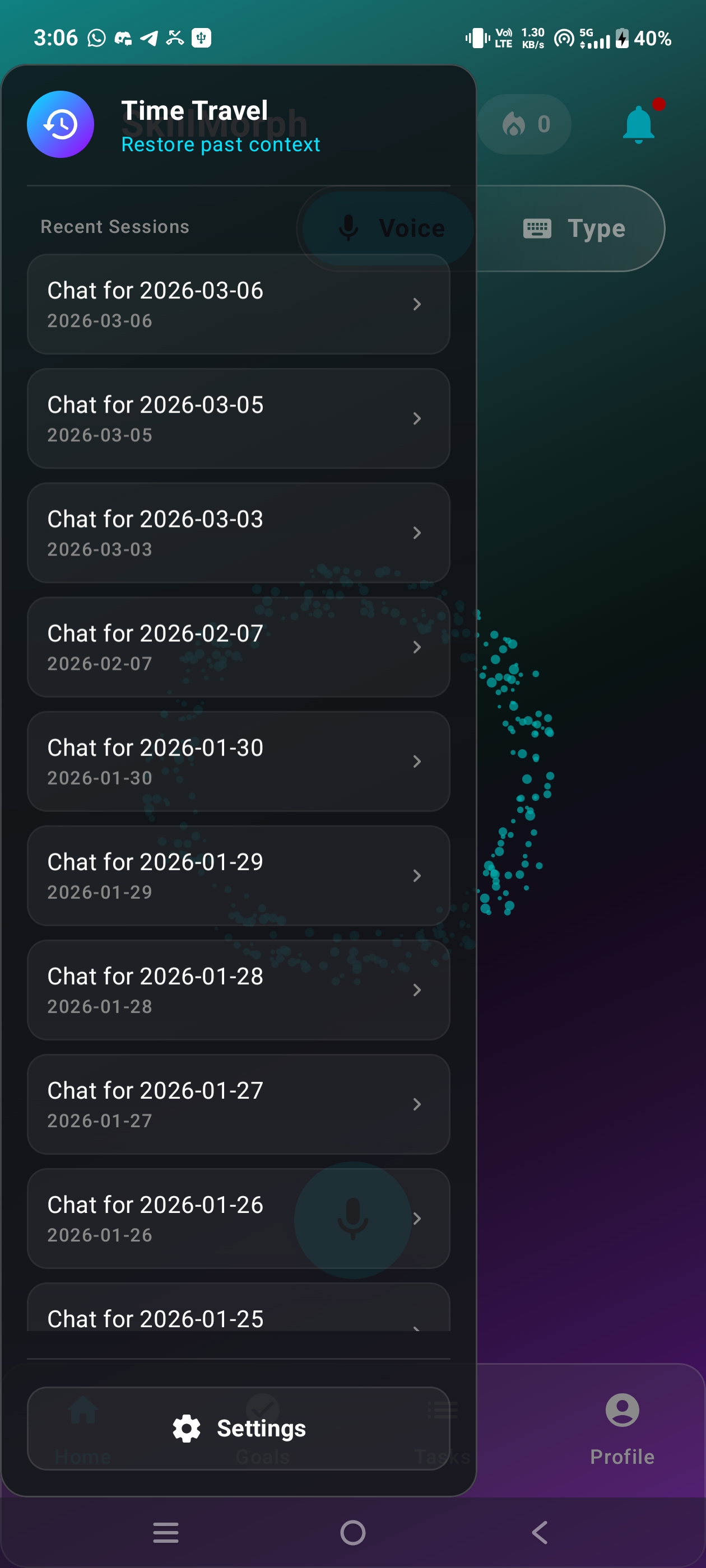
History/Sidebar
-
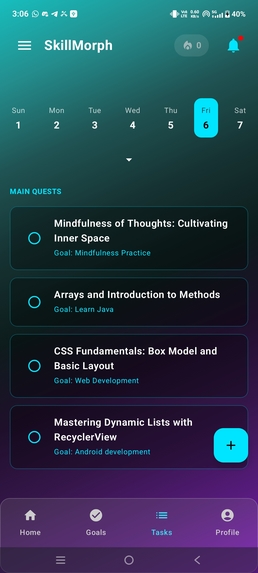
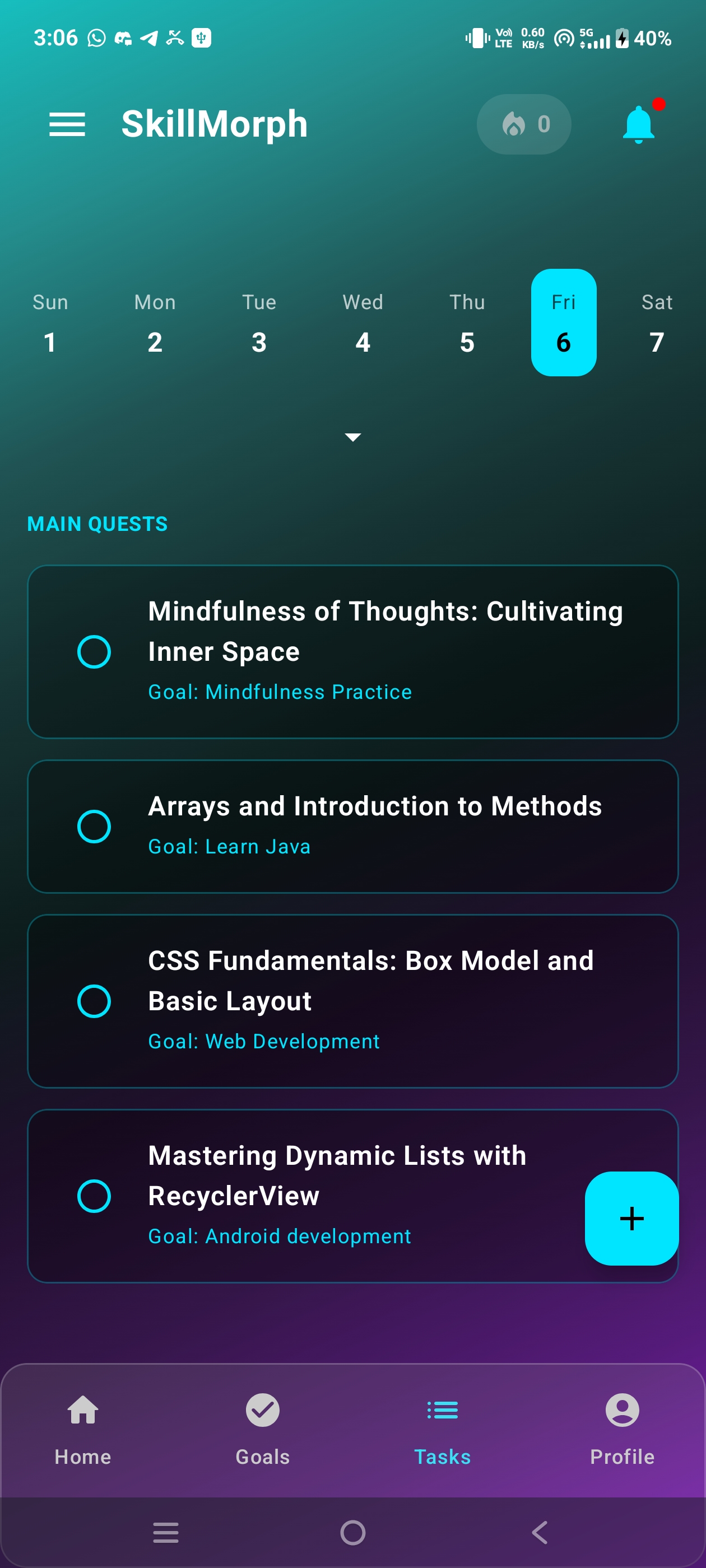
Task Screen + Calendar
-
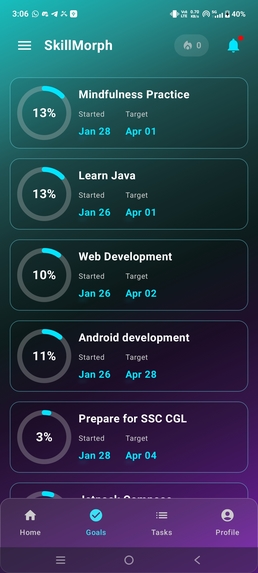
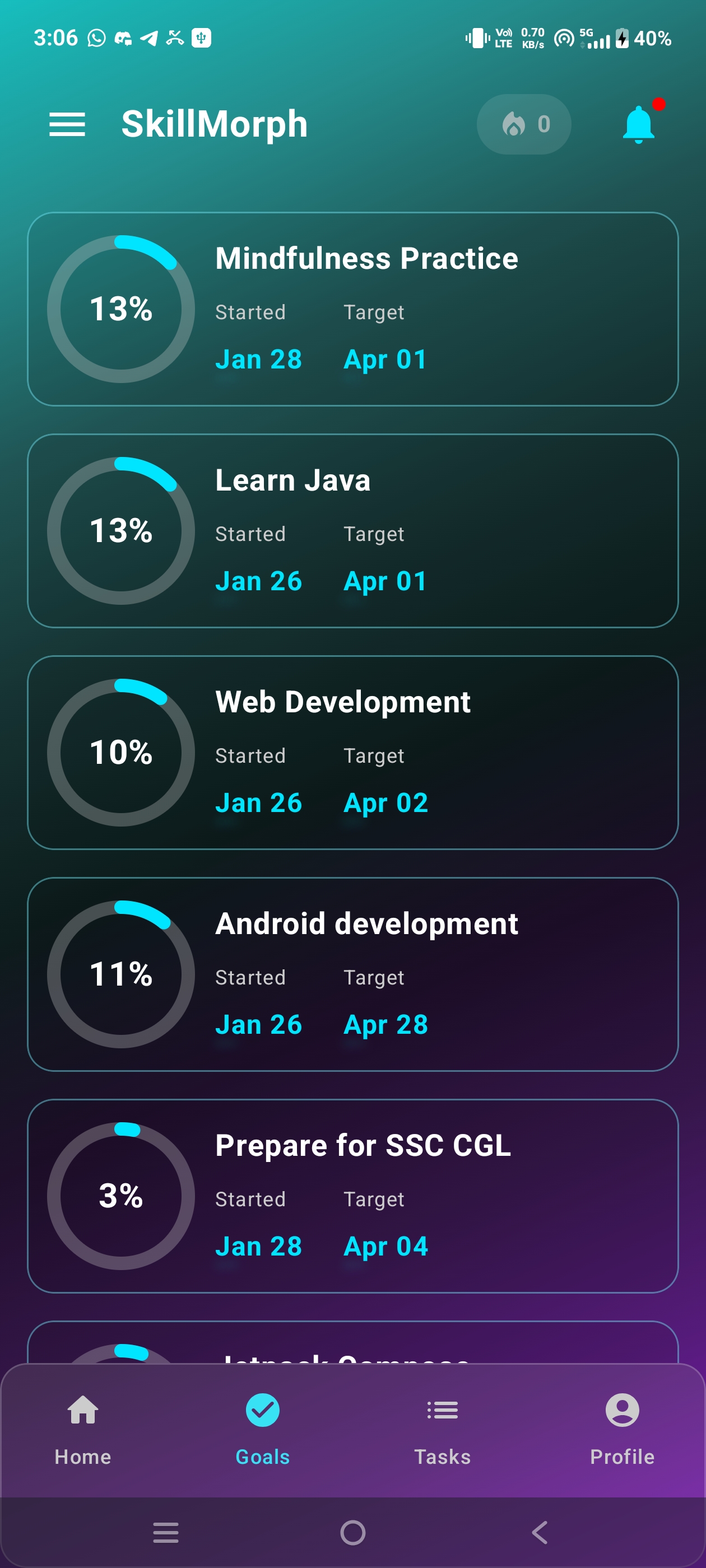
Goals Screen
-
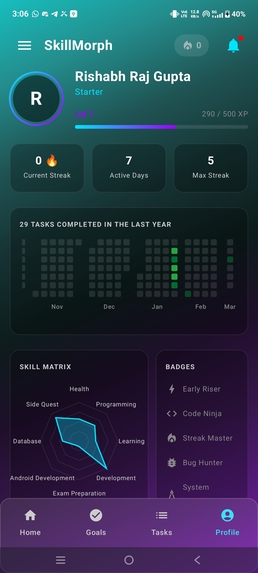
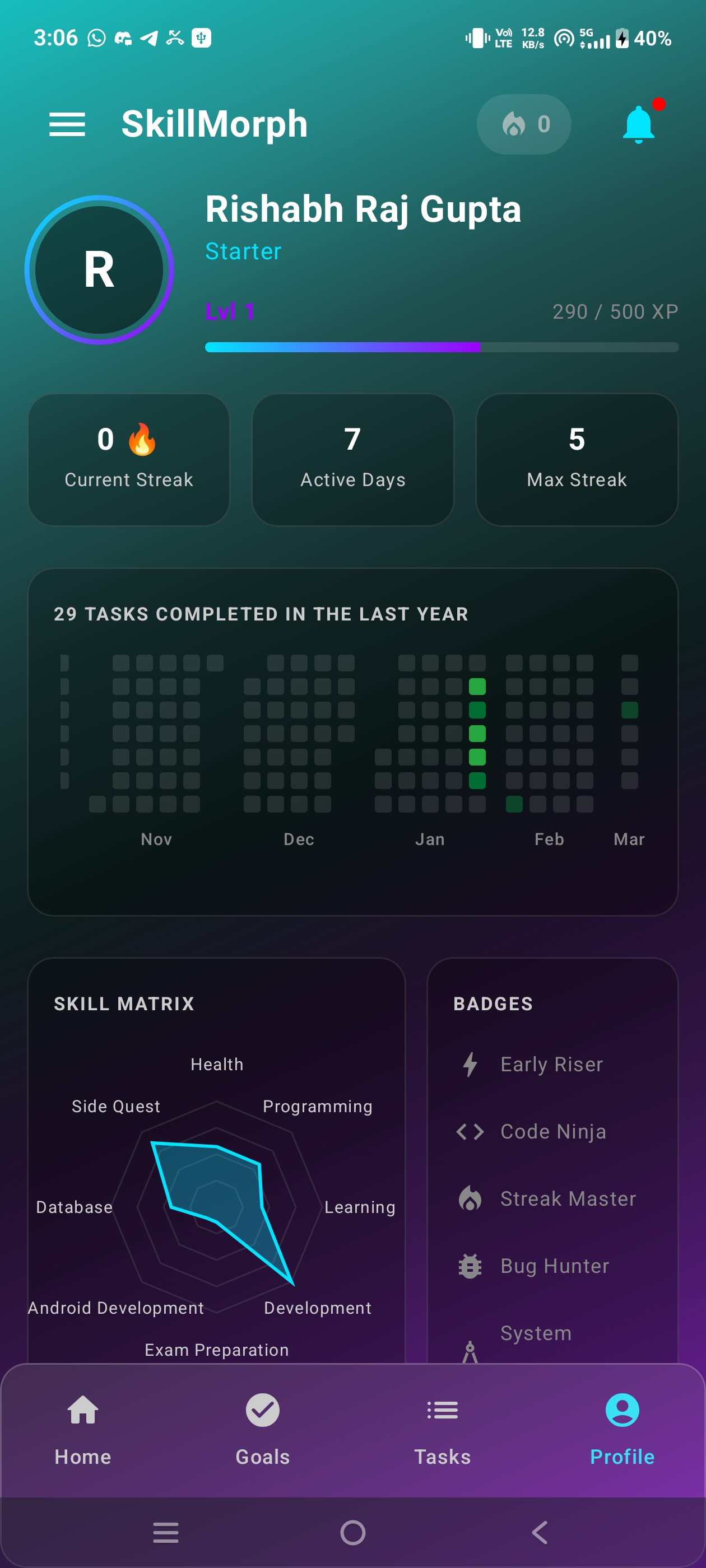
Profile
-
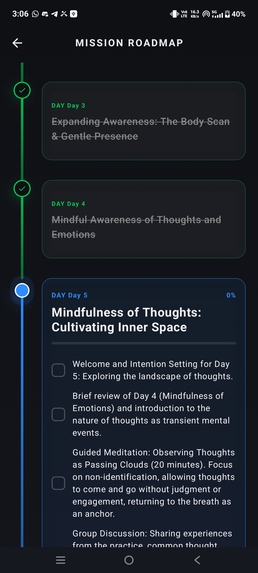
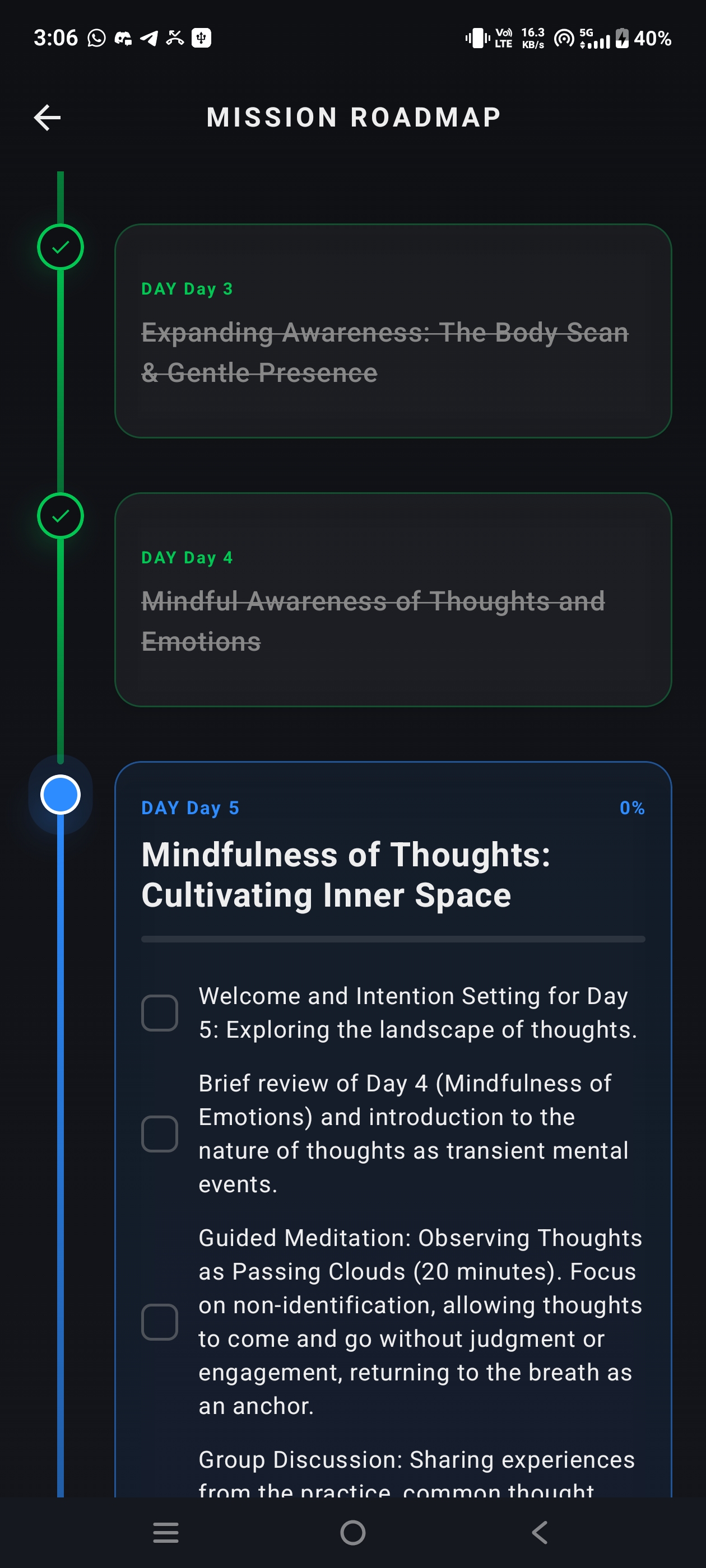
Metro Map
Inspiration
Productivity apps are fundamentally broken. When users manage their lives across fragmented digital silos, a calendar for time, a Notion board for notes, and LLMs for advice, none of the systems communicate. Users are forced to act as the manual bridge, leading to massive cognitive overload.
The breaking point comes when life happens. You miss a day of studying, and traditional apps punish you with overdue notifications and a sea of red text. They give you guilt instead of guidance. I realized that current AI wrappers provide static walls of text but completely lack state tracking and long-term memory.
I wanted to build what high-profile executives have: a personal manager that absorbs the chaos. If an executive misses a meeting, their team reschedules the rest of the day seamlessly. I built SkillMorph to bring that exact level of autonomous life management to everyone.
What it does
SkillMorph is the first Agentic Operating System designed for life continuity. Moving beyond passive chatbots, it acts as a proactive life manager.
- The Metro Map Engine: Instead of flat to-do lists, SkillMorph converts vague user intent (e.g., "I want to learn SQL") into a live, directed dependency graph.
- Elastic Scheduling: If a user misses a deadline, SkillMorph does not nag. It automatically refactors the graph, ripples deadlines forward, and adjusts task intensity dynamically.
- Consent-First Architecture: The AI manages daily tasks autonomously, but requires human-in-the-loop UI confirmation for critical, destructive, or external actions (like booking external calendar events).
How we built it
SkillMorph is built on a highly scalable Nested Agent Architecture. A Master Agent holds the user's core identity and routes intents to specialized Domain Agents (starting with our active MVP: the Education Agent).
The Tech Stack:
- Client: A fully native Android experience built with Kotlin, Jetpack Compose, and Material 3 Design. It uses Android Speech/TTS for voice interaction and Room DB for local state.
- Intelligence: Google Gemini 2.5 Flash powers the core reasoning and tool-calling capabilities. We utilize LangGraph for cyclic state management between the agents.
- Infrastructure: The backend runs on Google Cloud Run, authenticated via Firebase.
- Database: To handle dependencies natively, we replaced SQL with a Neo4j Graph Database. The agent executes over 10 custom Python tools to directly modify the database state.
Challenges we ran into
Our biggest hurdle was The Latency Problem. Generating a highly detailed, 30-day adaptive curriculum takes too long for standard LLMs to process synchronously. The user experience would have been ruined by massive loading screens.
To solve this, we engineered the N+2 Infinite Pacing Engine.
Let the learning curriculum be represented as a directed acyclic graph $$G = (V, E)$$, where execution of task $$v_i$$ strictly requires the completion of $$v_{i-1}$$. Generating the entire set $$V$$ at runtime introduces unacceptable latency. Instead, our engine generates Day 1 ($$v_1$$) instantly. While the user is engaging with the UI for $$v_1$$, a background thread asynchronously triggers the agent to generate and link $$v_3$$ (Day 3). This mathematical offset ensures the computation time $$T(v_{n+2})$$ is entirely hidden within the user's dwell time on $$v_n$$, resulting in a 'Zero Loading Time' experience.
Accomplishments that we're proud of
- Zero-Guilt UX: Successfully engineering the Elastic Scheduling system that adapts to human reality rather than punishing it.
- Graph-Based Execution: Moving from text-based LLM outputs to an architecture where the AI literally modifies database relationships autonomously.
What we learned
I learned that continuity is more valuable than intelligence. A smart model that forgets yesterday's progress is useless for long-term goals. I also discovered that Graph databases are vastly superior to traditional relational tables for modeling human learning paths, as dependencies and prerequisites map perfectly to nodes and edges.
What's next for SkillMorph
Currently, our Education Agent is live and validating our core memory architecture. Next, i am scaling to a comprehensive "Life OS" by deploying new child agents:
- Health Agent: Integrating with Google Fit and wearables. If the system detects high physical stress or pain (e.g., a menstrual cycle), the Master Agent will automatically signal the Education Agent to lighten the study load for the day.
- Admin & Legal Agents: To handle routine document parsing and life management.
- Speech-to-Speech (S2S): Upgrading our voice interface to native S2S models to push latency under one second, making the personal manager feel completely human.
Built With
- ai
- amazon-ec2
- amazon-lambda
- amazon-web-services
- compose
- gemini
- graphdb
- kotlin
- langchain
- langgraph
- sqlite
- vectordb


Log in or sign up for Devpost to join the conversation.